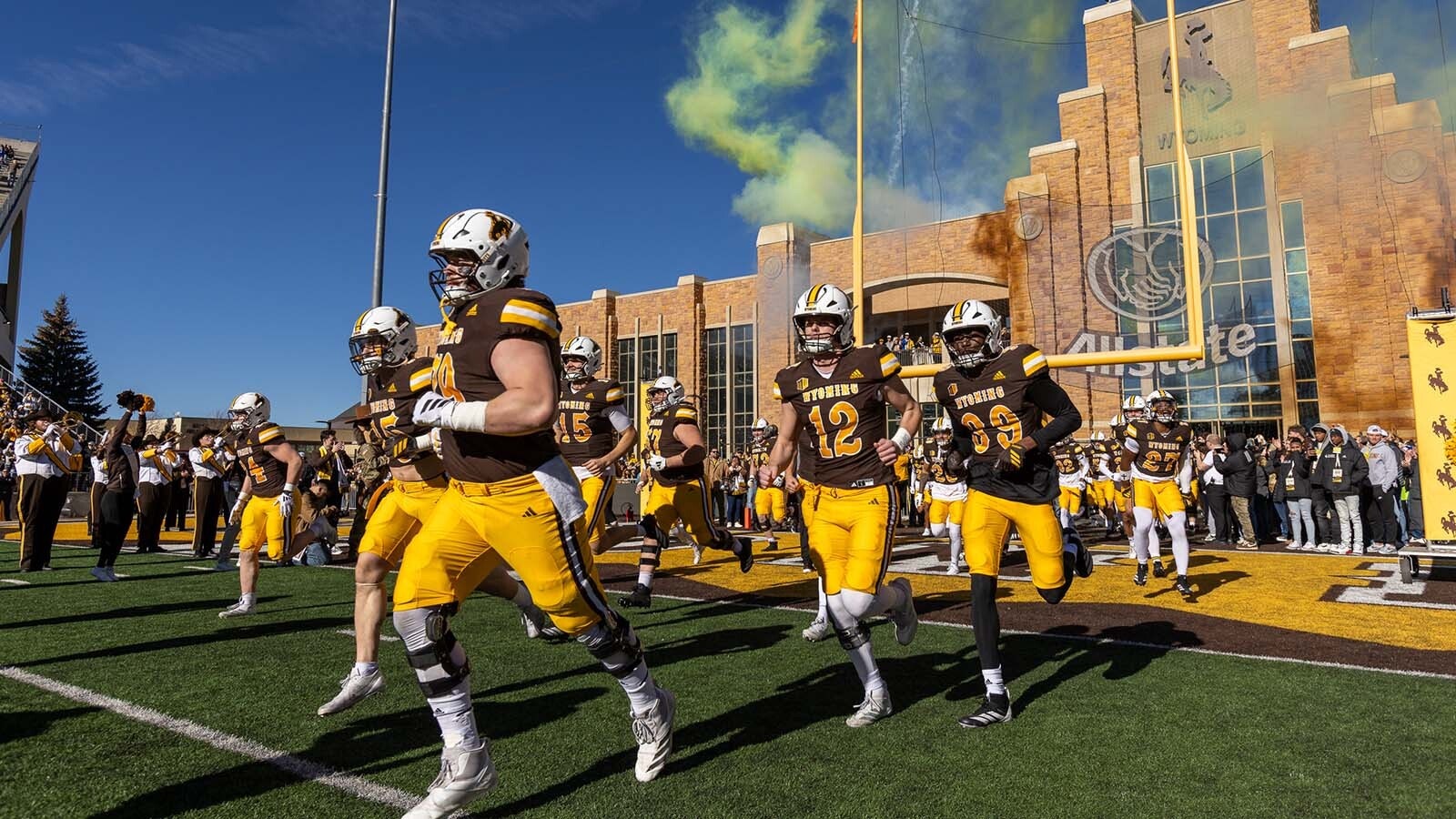
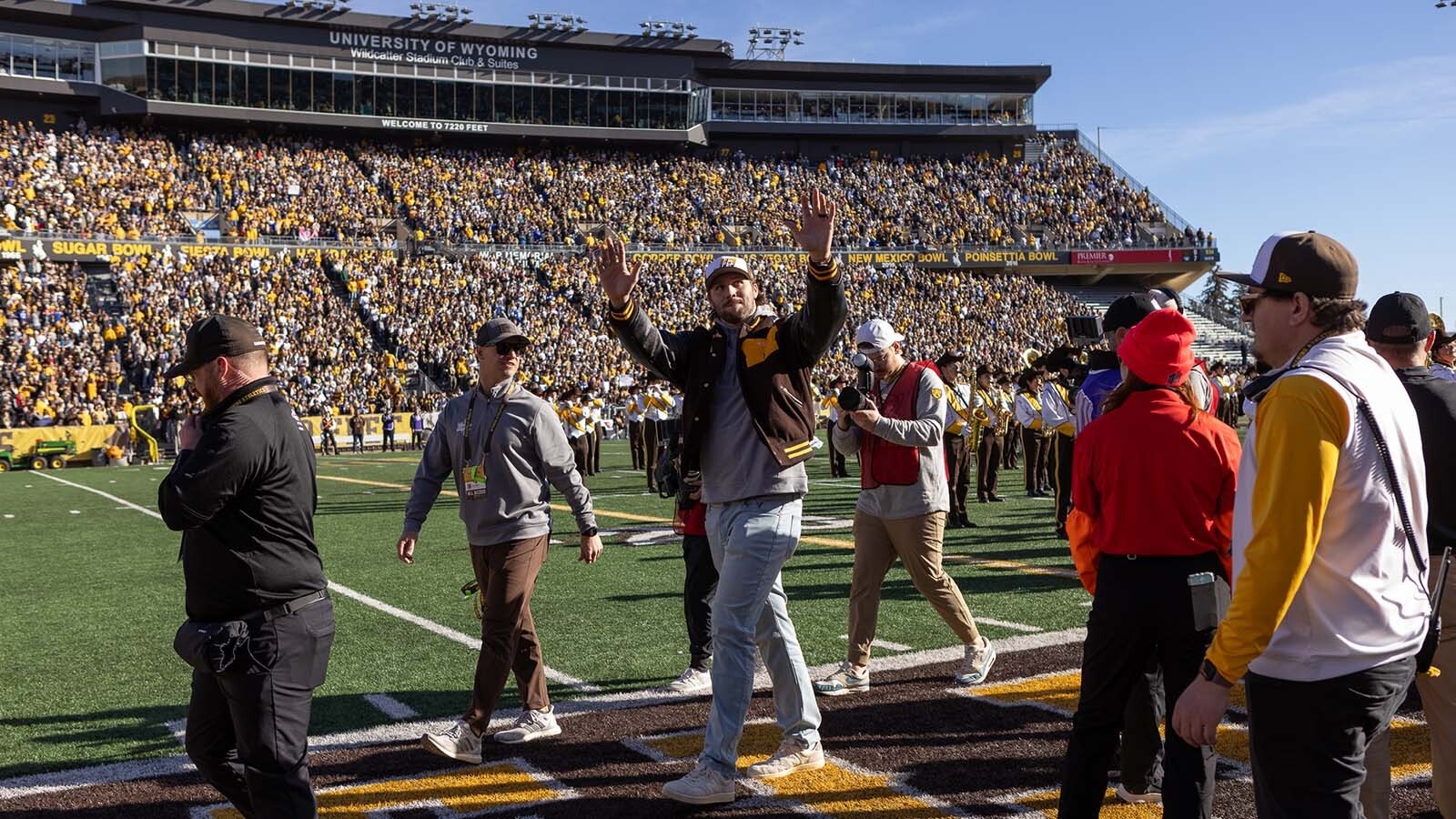
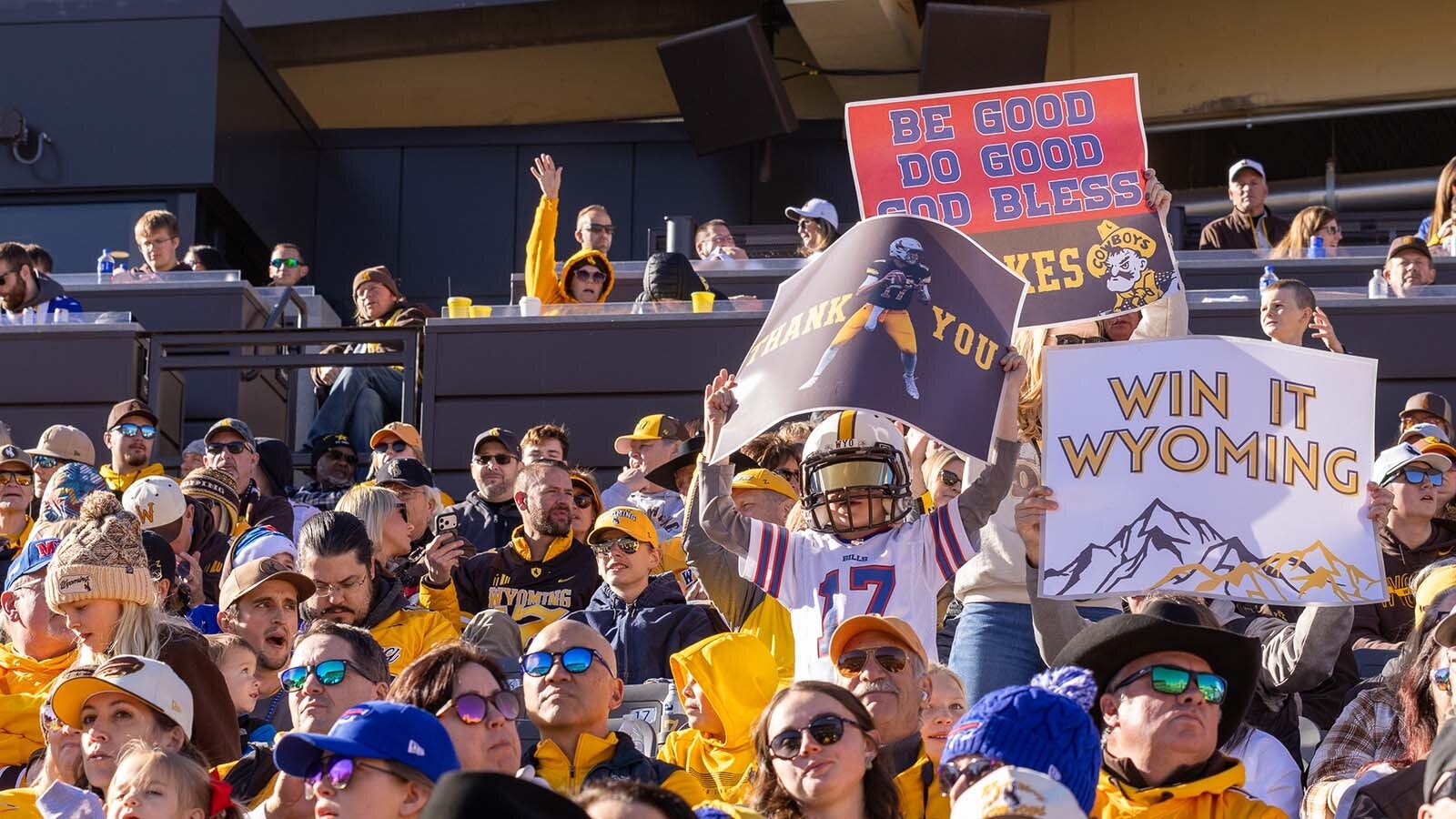
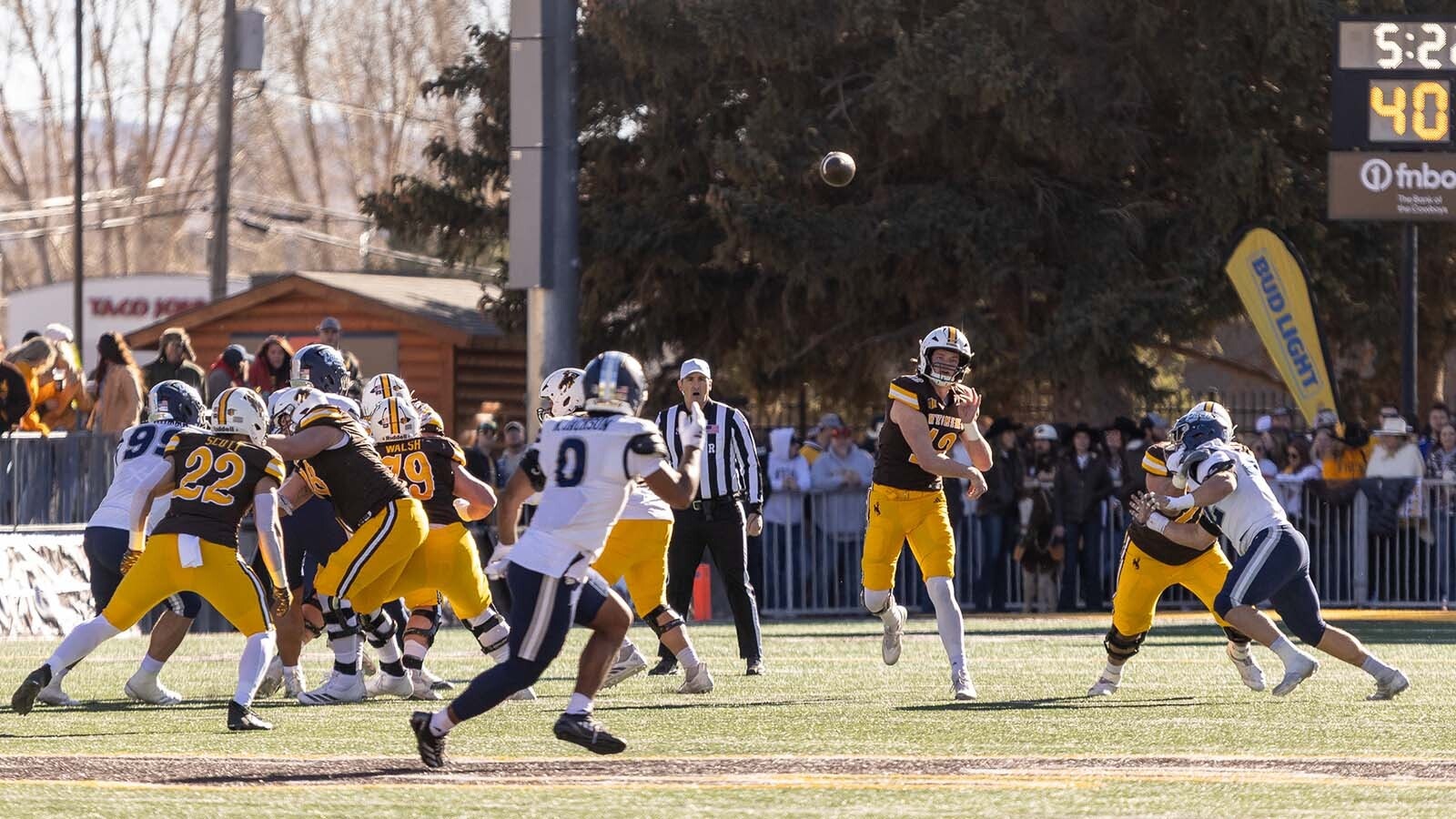
Scott Ortiz watched from the stands at War Memorial Stadium on Nov. 22 as the University of Wyoming Cowboys faced Nevada in what should have been a season-defining moment for the school’s football program.
The atmosphere was electric — one of the most charged Ortiz had experienced since star quarterback Josh Allen was slinging passes for the Brown and Gold.
The crowd roared.
The energy crackled through the crisp November air.
On the field, however, the Cowboys couldn't convert when it mattered.
"You're watching the game and you're realizing that if we had money to spend at certain skill positions, we could easily convert these third downs, we could keep drives alive, and we just don't," Ortiz told Cowboy State Daily. "Our inability to move the ball to score in that electric atmosphere was just painful."
The 13-7 loss to Nevada was only the beginning.
Wyoming went on to score just seven points total in its final four games — a stunning collapse that left the Cowboys out of bowl eligibility and left the Casper attorney and longtime UW booster convinced that without action, Wyoming athletics faces an existential crisis.
The Pokes’ dismal end to the 2025 season kept them out of a bowl game.
Now in the heart of football bowl season and the college football playoffs, sports fans around Wyoming will continue to debate how best to shape the future of UW football.
Should UW do all it can to pay for the best players in an effort to climb the totem pole of television ratings and one day contend for a playoff berth in big-time Division I competition?
Or should Wyoming go the way of Saint Francis University, one of a growing number of schools voluntarily dropping out of the rat race for TV revenue and voluntarily leaving the Division 1 ranks?
College Is Pro
Chase Horsley has watched college athletics transform from his perch at "The 5 Horsemen" podcast in Gillette, where he covers Wyoming sports for Horseman Broadcasting and Entertainment.
"Nothing is the same anymore," Horsley told Cowboy State Daily. "It kind of feels like more of the NFL type of thing.”
The NIL era of paying players has created a new reality where talent flows toward money.
Horsley sees it affecting Wyoming's ability to keep homegrown talent and recruit out-of-state prospects to choose UW. Then there’s the challenge of keeping talented players from being lured away by other universities with larger NIL war chests.
"The Wyoming kids aren't really trying to go to the University of Wyoming," Horsley said. "Some of them are going, some of them aren't going."
The lure is obvious.
"Would you not want to go play if you're going to get paid, like, a million bucks or $500,000?" Horsley asked. "I mean, we've got college kids that are getting out of college and are millionaires."
For Ortiz, the comparison to schools within Wyoming's own competitive tier is damning.
Research shows that Montana and Montana State — schools competing in the Football Championship Subdivision, a tier below Wyoming's Football Bowl Subdivision — are spending about $2.2 million on NIL, while Wyoming hovers around $1.4 million.
"Isn't that shockingly embarrassing to think about?" Ortiz said. "Schools that don't sit on the wealth of money we do are outspending us."
Ortiz said he’s speaking with legislators about tapping into a tiny fraction of the state’s mineral-wealth rainy day fund to help back UW athletics.
He points to what he considers a wake-up call from neighboring Utah: Brigham Young University reportedly paying $7 million to one basketball player.
Left Behind
Not everyone in Wyoming is convinced the answer is more spending. Some voices have quietly suggested the Cowboys consider stepping down in the Division I ranks and from FBS competition entirely.
Alan Stuber, a Gillette Police Department patrol officer and lifelong Wyoming fan who wrestled collegiately at Dakota Wesleyan, has heard the arguments.
"There's always been an argument of, 'Well, why don't we just go to the Big Sky (Conference) and kind of deal with the South Dakota States,'" Stuber told Cowboy State Daily. "Their football program is very successful year after year at making the (FCS) playoffs."
But Stuber rejects that reasoning.
"In my mind, it's still a step down," he said. "Those are the schools that have the least amount of NIL money. So they're going to be content where they're at."
Stuber points to the career trajectory of former Wyoming head coach Craig Bohl as evidence of Division I's value.
"If it wasn't such a big deal to be a D-1 college, why did Coach Bohl make the move from North Dakota State to Wyoming?" Stuber asked.
For Stuber, the choice is binary: "You either roll with the changes or get left behind. And I feel that Wyoming is kind of on that verge of getting left behind."
Cautious Dissent
One Laramie resident who contacted Cowboy State Daily took the opposite view, arguing Wyoming should follow the lead of Saint Francis University in Pennsylvania, which announced in March it would transition from Division I to Division III.
"That is exactly what Wyoming should do," the reader wrote, suggesting the university examine "the zero athletic scholarship Division III" model or even "club sports."
The reader, who asked to remain anonymous, explained the reason for his reluctance to go public.
"I do not wish to stimulate even more harassment or other adverse actions from the university's administration by being made part of this story," he wrote.
Saint Francis is part of a small but growing list of schools reconsidering their Division I commitments. The University of Hartford completed its transition from D-I to D-III in September 2025.
Another St. Francis — St. Francis College in Brooklyn — eliminated all athletics programs entirely in 2023. Sonoma State University in California cut all 11 intercollegiate athletic programs in January 2025.
But such moves remain the exception.
Before 2025, only two schools in the previous quarter-century had voluntarily dropped from Division I to Division III: Centenary College in Louisiana (2009) and Birmingham-Southern College in Alabama (2006).
Begging To Get In
UW Athletic Director Tom Burman offered a pointed rebuttal to those suggesting Wyoming consider the FCS route.
"The better question is, why are Montana, Montana State begging to get into the Mountain West?" Burman told Cowboy State Daily. "I can tell you that the top tier of the FCS is willing to pay money to join the Mountain West."
Horsley, despite his concerns about NIL pressures, agrees that dropping down would be a mistake.
"I think they would do well with the Big Sky," Horsley said. "But I think revenue-wise and like booster clubs, things like that, I think they would want to just keep D-1 and in the FBS."
The financial gap between the two levels remains substantial.
Mountain West schools receive about $3.5 million annually from the conference's television deal with CBS and Fox — a six-year, $270 million agreement running through 2025-26, according to The Associated Press.
The Big Sky Conference's ESPN deal, while recently extended through 2029-30, does not publicly disclose per-school distributions, though Big Sky Commissioner Tom Wistrcill has said the new contract includes a "very nice increase in dollars."
New upstart members like Utah Tech have agreed to receive no media revenue until 2030-31, according to membership agreements obtained through public records requests by the sports website Hero Sports.
Total athletic department budgets tell a similar story.
Wyoming's annual budget sits around $50 million, according to NCAA financial reports compiled by USA Today.
In the Big Sky, budgets range from Sacramento State's $35.8 million down to Idaho State's $12.1 million, with Montana and Idaho around $22-23 million, according to the USA Today database.
Yet on NIL specifically, the picture is more complicated.
Montana's estimated $2.2 million in collective spending actually exceeds Wyoming's, according to NIL tracking data compiled by nil-ncaa.com, placing it ahead of even some Big 12 teams in the NIL arms race.
"We struggled from the time NIL started really in '22 until the end of June this past year," Burman said. "We struggled getting people — Wyoming fans, alumni, donors — to invest in the collective.
"It's just not something Wyoming people embraced."

At A Crossroads
For Ortiz, the stakes extend beyond wins and losses. He sees Wyoming at a historical crossroads, comparing the current moment to the program's darkest chapter.
"We are now at probably the biggest low point since the Black 14 in 1970," Ortiz said.
The Black 14 incident actually happened in October 1969, when 14 Black players planned to wear black armbands during an upcoming game against Brigham Young University.
They sought to protest the LDS Church's policy barring Black men from the priesthood, amid broader racial tensions that included racist taunts directed at Wyoming's Black players during BYU games.
When the players approached head coach Lloyd Eaton for permission, he expelled them on the spot, citing team rules against demonstrations.
"It took Wyoming a decade to recover from that when they lost all those players," Ortiz said. "And I see this as exponentially more dangerous."
Without action, Ortiz fears a spiral that could fundamentally alter Wyoming's place in college athletics.
"Once people say, ‘OK, you're on a losing slide anyway, and you're not an exciting team, and you've already been passed over to go to a better conference, and you don't have any money to pay us anyway' — I mean, we could become the doormat of the Mountain West,” he said. "Or worse."
Does worse mean dropping down to the Big Sky Conference?
"Maybe the Big Sky doesn't want us,” Ortiz said. "Maybe we're in a league with Chadron State. From an enrollment standpoint, there's a lot of Division II and Division III schools that have the same enrollment as Laramie does.”
He warns those calling for self-relegation that, "You literally might as well say, ‘Fine, we'll just be a rodeo school and have a good science department.’"
Contact David Madison at david@cowboystatedaily.com
David Madison can be reached at david@cowboystatedaily.com.