In journalism, you don’t get paid more money for stories you consider more important. Often the opposite is true. In my case, the most meaningful story this year is roundaboutly the one I lost money to write.
Though technically I didn’t lose it. I gave it away.
In March I wrote about Casper’s "Invisible Couple,” Malachy Springer and his partner Kayla Riley.
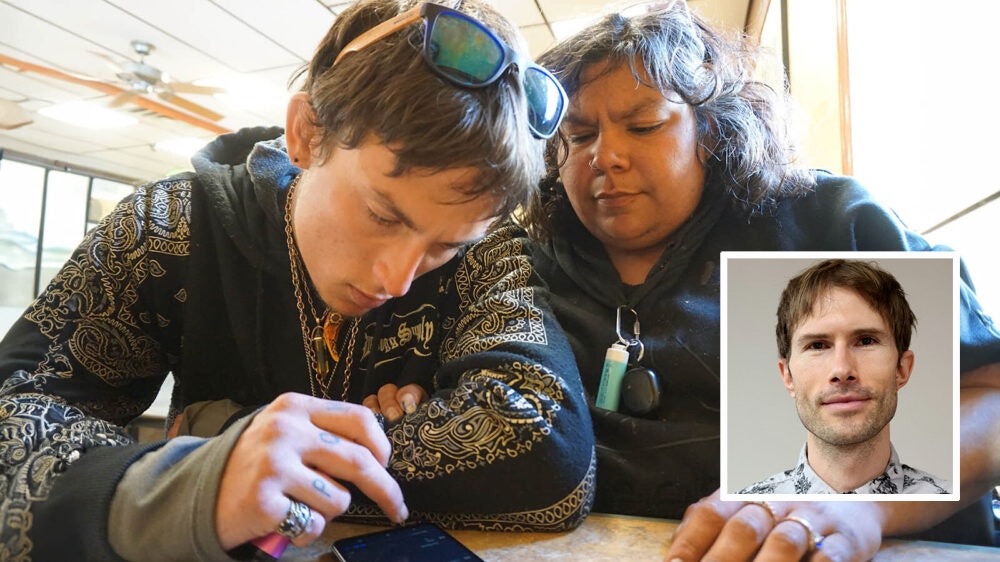
It began on a biting winter day in February. They were huddled against a brick building, charging their phone from an outlet. I approached, and to my surprise our rapport was instant and natural.
They were excited to share their story, and in the coming weeks I’d get an immersive view of what a Wyoming winter looks like while living on the streets – and how that can be especially daunting for a couple who’s expecting a child.
They slept in an abandoned sedan on an unoccupied lot near the train tracks in north Casper. They dove dumpsters for dinner, squeezed extra meals from the volunteer food pantry, and walked fence lines and other foot-trafficked areas with an eye for lost change.
They hung out at the downtown bus stop, where on lucky days a member of the “street family” would share a pint of vodka or a joint of synthetic weed. It was here where Springer would regularly announce me: “This is the journalist I told you guys about. He’s writing a story on us!” he’d say with boyish pride.
They came from harsh backgrounds of abuse and addiction, which is why I found their optimism so inspiring. Springer’s buoyant playfulness. Riley’s stoic resolve.
And it's also why I felt so terrible to learn they were “evicted” from their only shelter – the abandoned sedan – as a result of the story I wrote: The day after it published, Casper Police knocked on the roof of the car early in the morning and explained they were on private property and needed to leave immediately, Springer told me.
The pair relocated beneath a freeway in east Casper, far from their community and their only reliable resources. They began to lean on me more and more, calling at odd hours for rides, each time asking for a few more bucks to get by.
Five spots turned to 10 spots turned to 20 spots and so on. I felt in some way responsible to them, but as my own financial situation tightened, I couldn’t help from also feeling a quiet resent.
Eventually, I stopped taking their calls entirely. But I couldn’t keep them from my mind. I imagined what it was like to sleep beneath the roar of freeway traffic, and the feeling of shivering winds eddying around you in the night.
After months of no contact, I reached back out on Facebook to ask about their child. Weeks later, I got a response from Riley.
“We lost our son Ezra at 8 months pregnant due to somebody kicking me in the stomach,” Riley said.
She explained that after that loss, they went to live on the streets in Denver, where Springer was picked up and put in jail violating his felony probation in Wyoming. He has no one to go to for help posting bail.
I ask myself, Would anything be different if I hadn't written about them, if they’d not been kicked out of their winter shelter in the broken-down sedan?
It’s a thought as frustrating as it is futile.
What I can say is that I believe stories like theirs need to be heard. These are the stories that shed light, touch readers and motivate people to be a part of important discussions. Because you can’t address an issue if it’s invisible.
Casper’s Invisible Couple: Homeless, Pregnant And Living In Abandoned Car