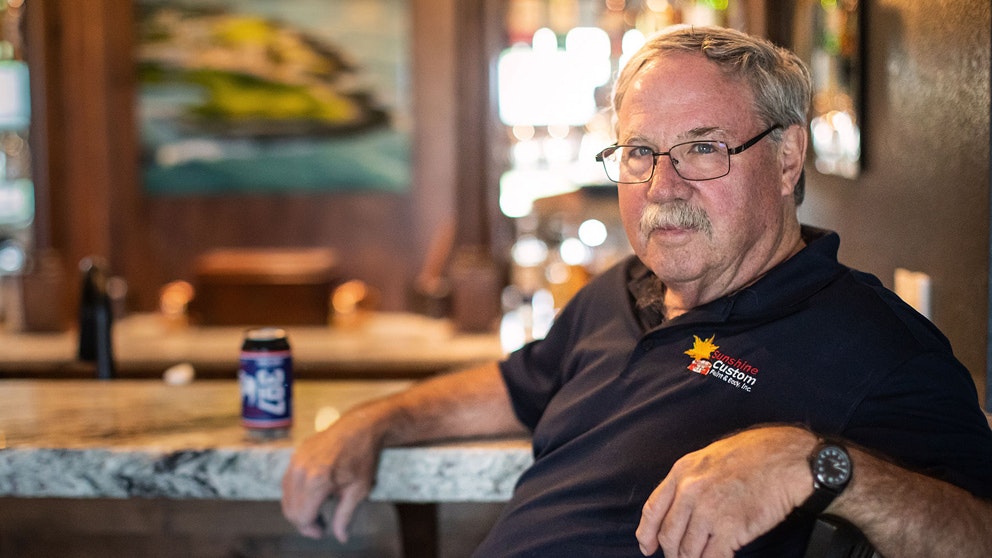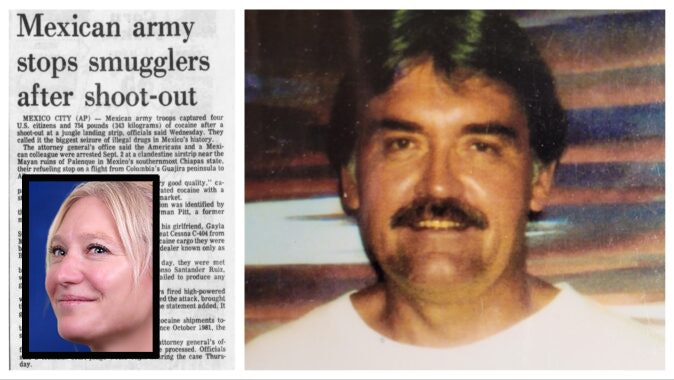
For me, this story is deeply personal for reasons I’ll explain.
I learned about Richard Pitt from one of my salty, curmudgeonly retired law enforcement sources (AKA one of the nicest guys I know), who sent me a couple pages of Richard’s then-memoir in progress, “Stabbing Mercury.”
“I think you need to interview this guy,” he said, before adding a firm disclaimer that I had to promise not to meet him in person because he’s been told Richard was “dangerous.”
Like most reporters, those types of disclaimers just make us more curious.
I scanned the pages about Richard’s story that read more like a spy novel full of action-packed moments of flying planes feet above the ocean in the dark dodging radars, outwitting bandits and drug lords hellbent on stealing his loot, and years in a Mexican prison where he was tortured. In short, the life of a drug runner for the notorious cartel head, Pablo Escabar, during the height of the cocaine epidemic in the 1980s.
I immediately messaged my source back: “This a Wyoming guy????”
“Yeah, Thermopolis,” he replied. “A Wyoming kid gone bad.”
I contacted Richard immediately and set up a time to speak. Our first conversation was a head-spinning three hours, after which I tried – but failed – to make sense of my notes because Richard is a circular storyteller whose tales take hours to unravel with embedded lessons and truths that may take weeks to sneak up on you.
I told my editor this story would take weeks to write as I scheduled more phone calls with Richard until my editor finally put down his foot.
What followed was a Herculean feat with lots of hair pulling and pacing on my part to squeeze many hours of conversation into a 3,000-word story to try to do justice with his life, which is a responsibility I don’t take lightly.
Apart from the action-packed life of a spy thriller, at its heart is a guy trying to make sense of his life, who now, facing down his twilight years is looking back with humility and regret for the cost of his choices while trying to figure out what the heck just happened.
This is the grace that stories afford us: they allow us to hold up our lives in vitro to examine, turn over and study from all angles in an attempt to search for meaning, purpose, growth and the connective threads that bind and tether us to our truths.
In this humble way, I wrote Richard’s story, but for me, it didn’t end there.
There are reporters who draw firm, uncrossable lines in the sand between sources and subjects, and then there are those like me who get swept up in the humanity of the exercise and unconsciously form connections that last well beyond the news cycle.
Richard is one of those, and after his story ran, we continued to stay in contact. He’d call to update me on his book’s progress or just to check in with his trademark, “Hey girl, how’s it going?”
He’s also one of few people in the world who actually use their cell phones for phone calls, so perhaps it’s not surprising that it was Richard who called me just a couple hours before my long-time partner, Phil, went on hospice and died from a fast, but furious, bout with cancer.
I looked to see who was calling and “Richard, Cartel Pilot,” flashed on the screen. I smiled at his moniker; this is something that normal, non-reporter types like my little sister can’t understand, worrying instead about my friendships with former criminals.
Without thinking, I answered and tried to be normal, reminding myself to be professional before promptly falling apart. There are no consoling words as anyone who’s been here well understands, but there are stories and Richard wanted to hear them, starting with how the two of us met.
“All love stories begin with magic,” he said, noting that it’s what bolsters us to risk our hearts as we careen toward the inevitable end.
I talked and Richard listened, and true to style, ended our conversation with a story of his own that wound in and out of several rabbit holes for another 10 minutes until he ultimately came to his point. His story was about coaxing timid skydivers to take the leap and jump out of the plane. Most wanted reassurances that their chutes would open and they’d walk away to see another day.
Richard couldn’t give them that. More than likely their chutes would open, he told them, but there’s always the chance that a person is going to die. But still, they had nothing to fear.
“It’s just air,” he said, explaining there’s nothing to be afraid of because the worst thing that can happen is that you end up in a better place or doing something even more fun.
“And who doesn’t want another adventure?” he said.
Richard Pitt: Wyoming Pilot And Vietnam Vet Who Smuggled Drugs For Pablo Escobar