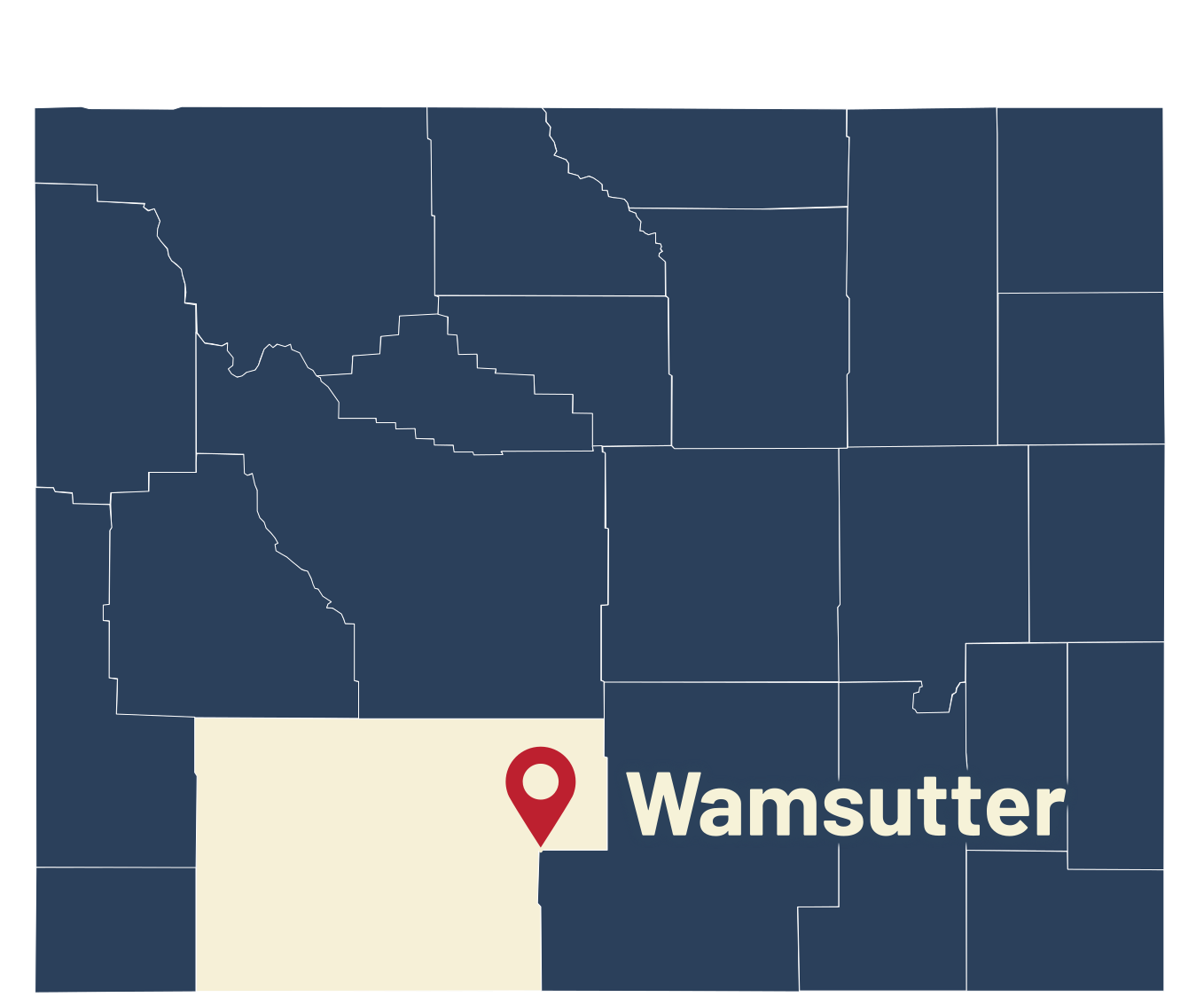
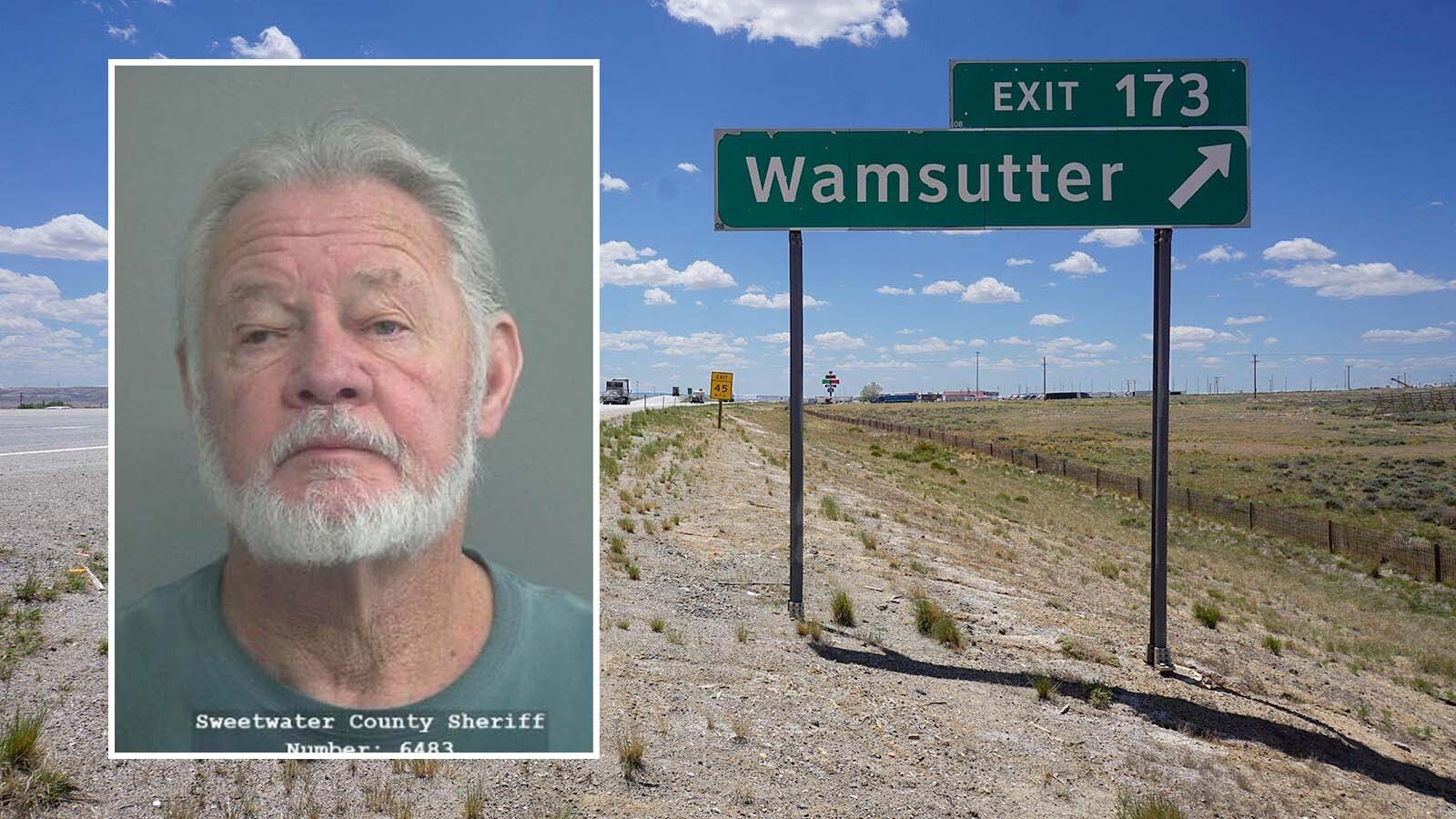
Even under a tougher standard of proof the Wyoming Supreme Court required, the state of Wyoming has shown enough evidence that it can keep a Wamsutter trucker’s $54,226 because it’s drug money, a judge has ruled.
The order concludes a two-year battle for 77-year-old Ronald Mickulin, who was caught in October 2023 with drugs in his car.
He pleaded guilty in February 2024 in Rawlins Circuit Court to possessing a misdemeanor amount of cocaine.
He was sentenced to 20 days in jail plus a year of probation and ordered to pay a $250 fine and other court costs and fees.
But in the course of a Rawlins traffic stop on Oct. 22, 2023, where his rear taillights weren’t operational, during a subsequent warrant search and his arrest, police found $54,226 in Mickulin’s Honda Civic, according to court documents.
The state called that drug money and asked Carbon County District Judge Dawnessa Snyder to let the government seize it.
Mickulin protested, having told police that nearly half the money was from a 401(k) that he cashed out, and an insurance settlement.
A bench trial unfolded in Snyder’s court, after which she concluded that the state could seize the money since it had shown by a “preponderance of the evidence” that it was drug money and qualified for seizure under state law.
The Wyoming Supreme Court reversed Snyder’s decision in September, saying the judge used the wrong standard of evidence.
The law calls for the state to meet a tougher standard of showing “clear and convincing evidence.”
Even So
Under the “clear and convincing evidence” standard, the state still gets to keep Mickulin’s money, Snyder ruled in a Dec. 1 order recounting the case evidence from his civil forfeiture trial.
In Wyoming, civil forfeiture actions like this one use a lighter standard of evidence, generally, than do criminal trials, which hinge upon a beyond-a-reasonable-doubt finding of guilt.
That is not the case for trials contemplating a mental-illness acquittal, however.
Here, the judge concluded, evidence of marijuana, psilocybin mushrooms, a digital scale, and envelopes containing matching $5,000 sums found in Mickulin’s two vehicles implicated the money came from drug exchanges of which he himself was not convicted — and gave the state legal grounds to keep his money.
A lack of legitimate explanations for the money also cut against him, the order indicates.
“Review of the evidence regarding the source of Mr. Mickulin’s income is illuminating,” wrote Snyder.
He had asserted that his only income was $1,400 per month from Social Security, deposited directly into a bank account, and that his monthly expenses are roughly equal to his income, the judge added.
A prior drug “customer” also testified against Mickulin, saying he saw Mickulin packaging cocaine for sale, and that he’d bought cocaine from Mickulin at least twice.
“Based on the evidence and testimony,” wrote Snyder, “the Court finds that the State met their burden of proof and have shown by clear and convincing evidence that the $54,226 in currency meets the requirements of property ‘furnished in exchange for a controlled substance.’”
Mickulin had conceded that at least half of the money was involved in drug trade, the order says.
“The state has shown … that the entire amount was more likely than not intended for those acts,” Snyder added.
Mickulin had argued back that the money was his life savings, and that the state would leave him destitute by taking it.
Snyder countered this by pointing to his $1,400-per-month income.
Mickulin's attorney Andrew Holcomb told Cowboy State Daily the ruling is a disappointment, and that he and his client are exploring their options and whether a new, different appeal is possible.
It seems like the odds are stacked in the government’s favor in cases like these, said Holcomb, since property owners don’t have the same right to appointed counsel as criminal defendants do - though they're resisting a government action.
“So it leaves you in this limbo, where you can’t afford to hire an attorney anymore because they took your money,” said Holcomb. “Obviously bummed about (the ruling) but hopefully we can do something else. It’s not over ‘til it’s over, I guess.”
Clair McFarland can be reached at clair@cowboystatedaily.com.