After a massive derailment near Cheyenne last week, the BNSF Railway was left with an enormous task — clearing more than 100 blown-over freight cars and getting trains moving again.
Alicia Brown, who lives on the Spring Creek Ranch near the crash site, understood the enormity of the task when she saw several trucks and dozens of personnel mobilizing on Friday.
“They told us it was going to be an all-nighter,” she said. “That’s how we knew to go back later that night.”
Brown returned to the scene around 7 p.m. Friday and watched the exceptional effort unfold.
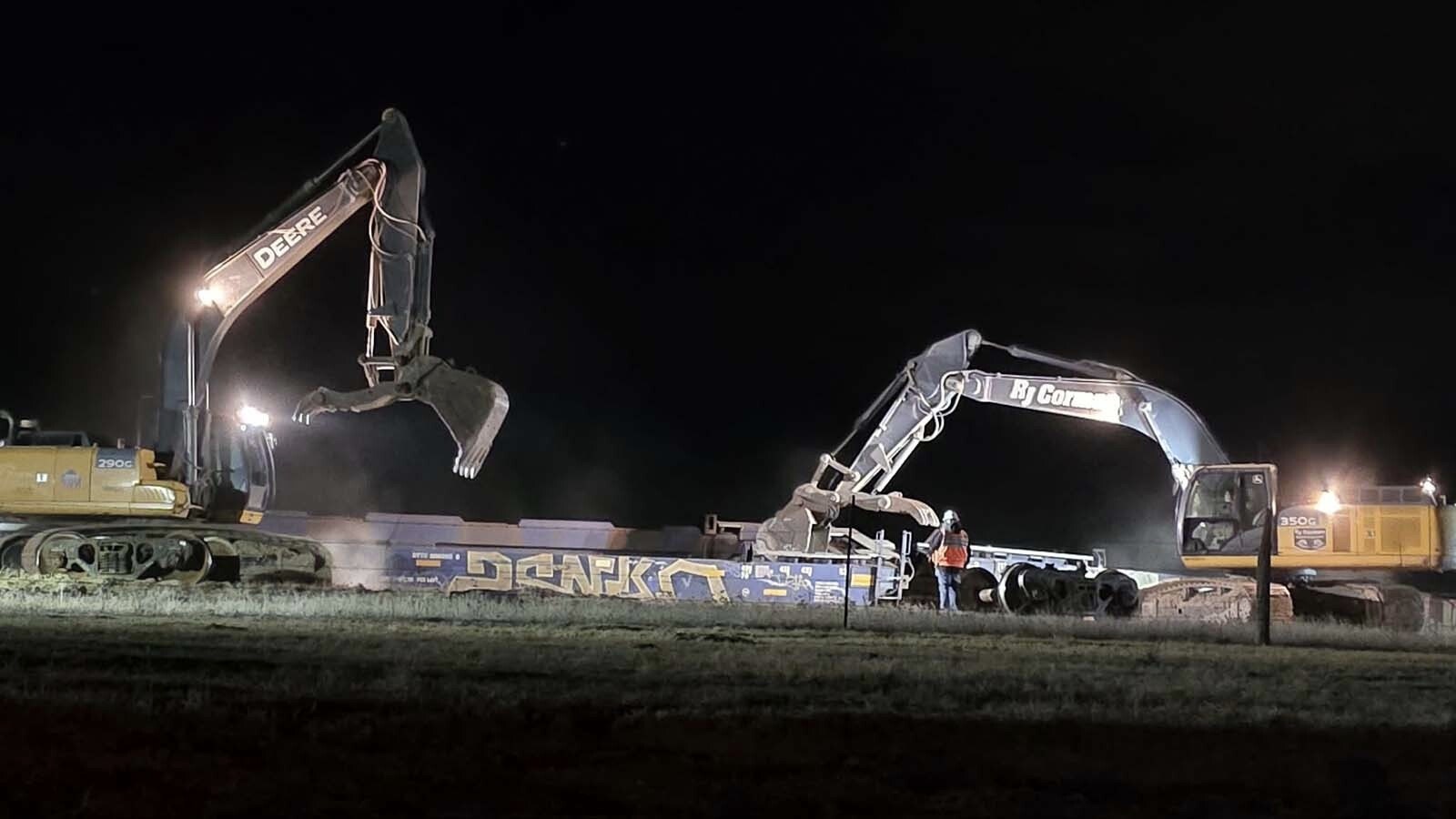
Heavy machines worked in perfect coordination to get everything cleared, hauling the flatbed rail cars to one side of the track and the shipping containers they were carrying to the other.
Within 18 hours, the tracks were clear, and all the derailed freight cars had been sufficiently dealt with.
Brown captured several videos of the effort and was astounded by the coordination of everyone at the site.
“They knew exactly what they were doing and how they were going to do it,” she said. “They were moving three cars at a time, and had people walking around helping them do it. It was amazing.”
'Derailment'
After reviewing several photos and videos of the scene, retired Union Pacific Railroad employee and former Wyoming legislator Stan Blake was confident that Friday’s incident wasn’t a traditional derailment.
Dozens of intermodal freight cars each carrying two stacked shipping containers had been derailed, but the rails weren’t the cause.
“That was definitely a wind event,” he said. “It blew everything over right where it was sitting.
"I don't know for sure, but I’m pretty sure that train was parked or was sitting there, and the wind blew it over.”
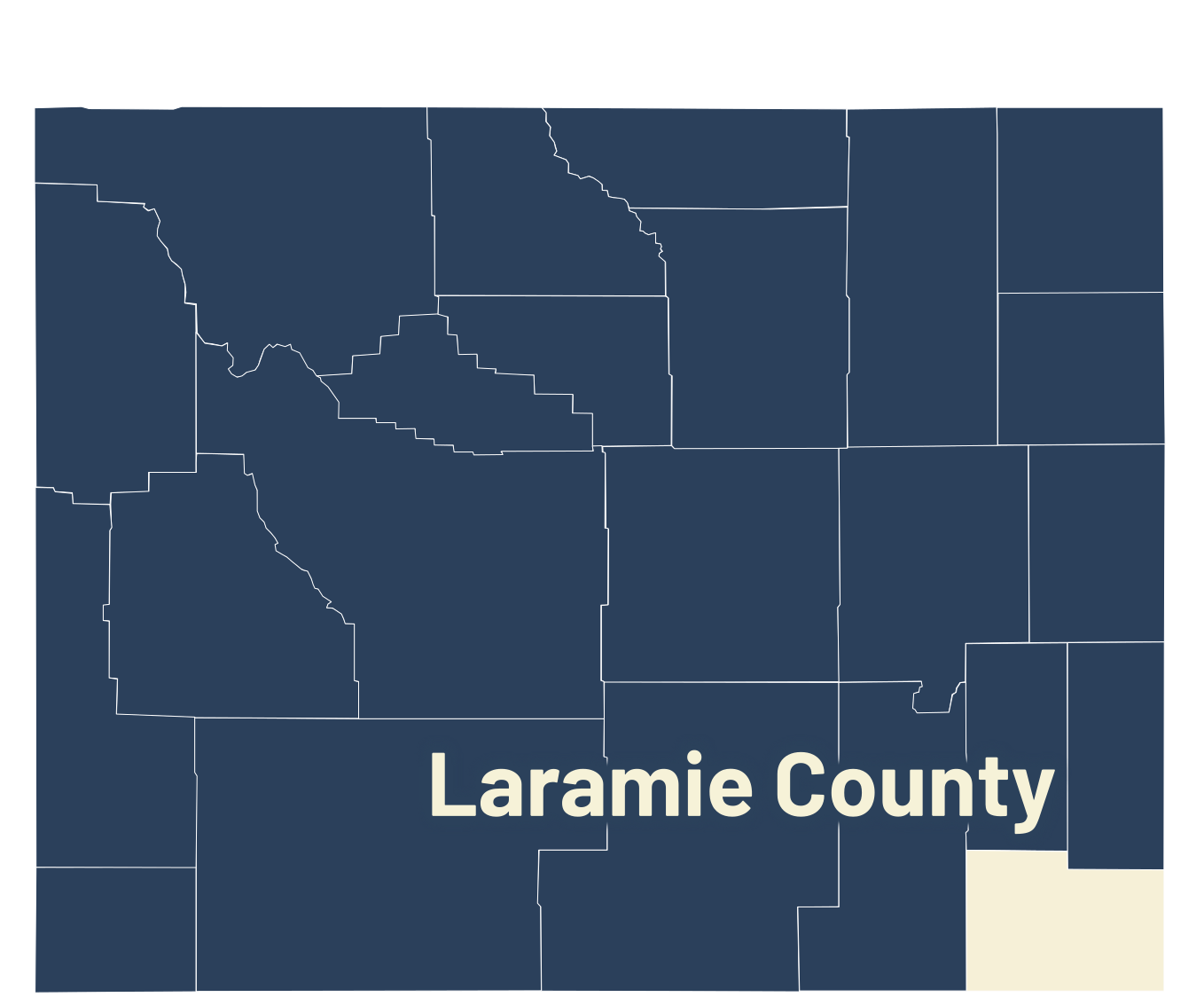
Sustained winds of over 50 mph, with gusts as strong as 75 mph, were recorded between Laramie and Cheyenne on Friday.
A single freight car, hit with a particularly strong wind gust, is all it would take to cause a chain reaction and derail the entire train, Blake said.
Blake said that’s distinctly different from a typical derailment.
“Derailments are usually caused by a broken rail or wheel that causes things to start crashing into each other,” he said. “I’ve never seen that many cars in a derailment, and most of those cars were no longer on the rails, but I’d say that was a blow-over event.”
Cleanup Crews
Railroads used to have their own crews and heavy equipment to respond to incidents like last week's.
Now, Blake said most of that work is contracted to companies that specialize in quick, efficient responses to derailments wherever they occur.
“Union Pacific used to have derricks and gigantic cranes,” he said. “They had one in Green River until they cut it up and got rid of it.
"Now, the thought process is to contract it out because it reduces liability. Nobody from BNSF or Union Pacific gets hurt.”
Durbano Metals is one of those contractors offering railroad services in southwest Wyoming, Utah, Idaho, and Nevada.
Hulcher Servicers is one of the largest of these companies, with 25 divisions in 16 states and Mexico.
“They have crews on call 24/7,” Blake said. “When they get a call, they hop in their equipment and go to wherever that derailment is.
Brown wasn’t sure which contractor was called to deal with the derailment near Cheyenne, but she saw BNSF personnel and several red trucks on-site.
The red trucks may have been from Hulcher Services, which has a Denver division based in Arvado, Colorado.
“It was obvious they do this for a living,” she said. “The teamwork was amazing.”
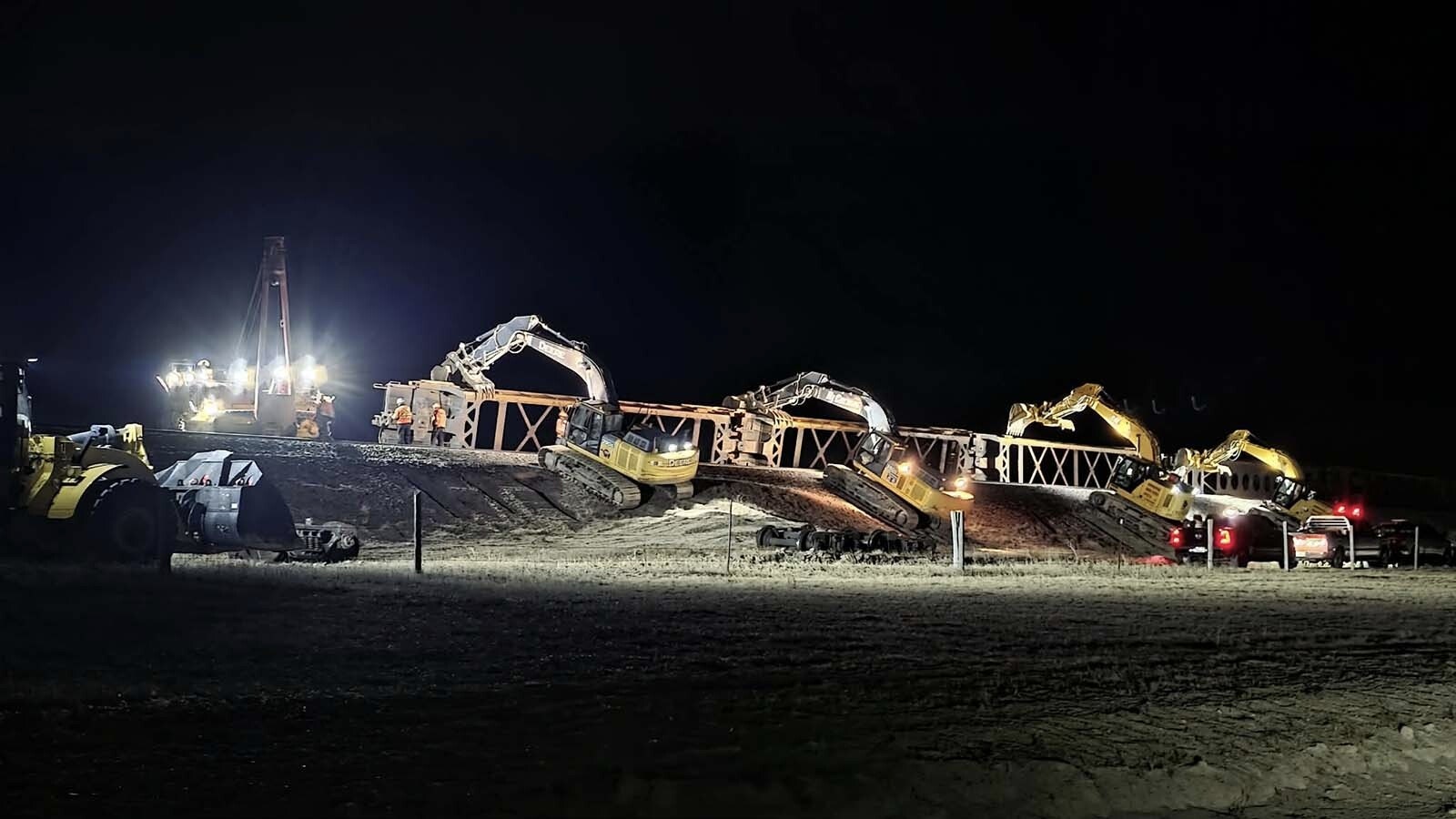
After strong winds blew more than 100 stacked freight cars off BNSF Railway tracks near Cheyenne on Friday, crews mobilized to clean it up. Within 18 hours, the tracks were clear again. (Courtesy Alicia Brown) 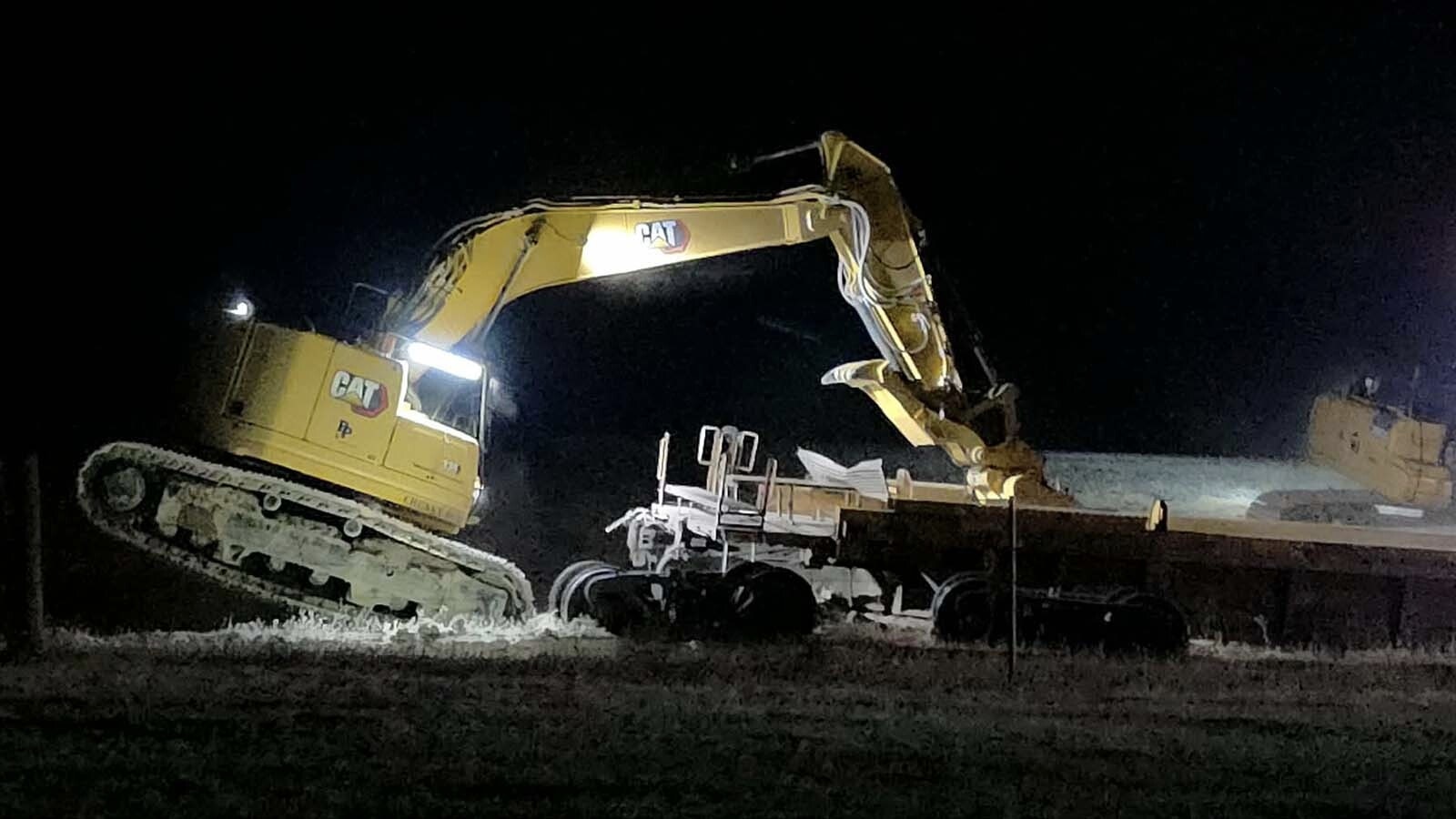
After strong winds blew more than 100 stacked freight cars off BNSF Railway tracks near Cheyenne on Friday, crews mobilized to clean it up. Within 18 hours, the tracks were clear again. (Courtesy Alicia Brown) 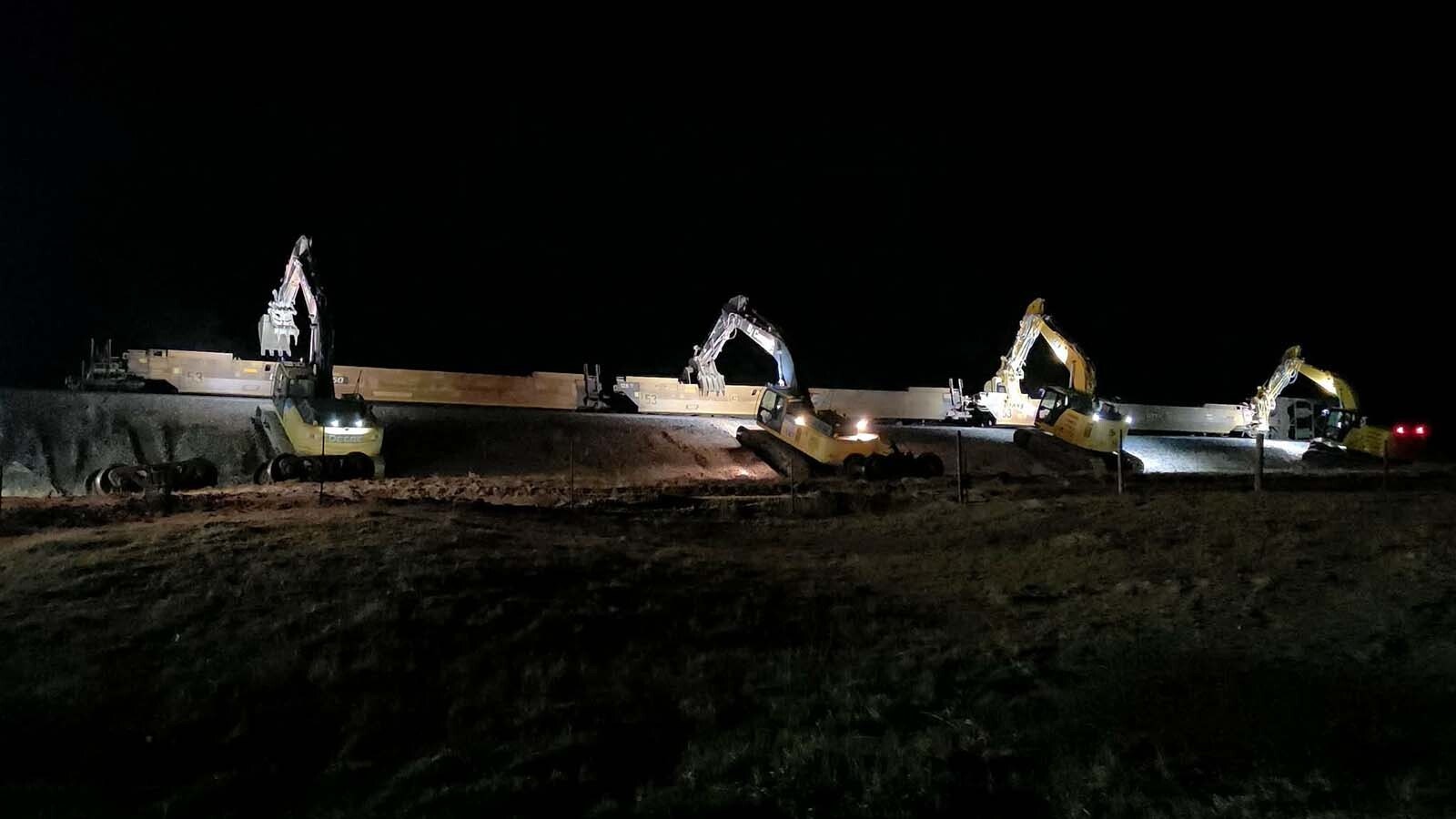
After strong winds blew more than 100 stacked freight cars off BNSF Railway tracks near Cheyenne on Friday, crews mobilized to clean it up. Within 18 hours, the tracks were clear again. (Courtesy Alicia Brown)
Clear The Line
When there’s a derailment of any scale, the top priority is clearing the line to keep trains moving. From what Brown could see at the scene, that was the priority for the crews working there Friday.
“The cargo tipped over to the east, so we watched them pull the actual cars back onto the railroad and off to the side, clear down the embankment so they could remove them later,” she said.
Blake said this would have been an exhaustive, but relatively straightforward, cleanup.
He believes most of the shipping containers were empty when they blew over, which means it would’ve been easy to set them aside.
“When there's a derailment, they'll put in new track and enforce a speed restriction over maybe 20 mph over that track until they get it all settled in and fixed up,” he said. “If there's a hazardous substance leaking, you've got to fix that first.”
The crews try to salvage whatever they can, but salvaging is secondary to reopening the rails. Even then, there’s always a priority in what’s saved and what isn’t.
In this instance, Blake thinks most of the shipping containers could easily be salvaged, but the flatcars carrying them were much more important.
“The rail cars are more important than the containers themselves, because they sell those containers nationwide,” he said. “I think the damage was minimal based on how they tipped over, but their priority is to recover those rail cars intact so they can be rerailed and hauled away.”
The recovery team's coordination astonished Brown.
They had as many as four excavators working in perfect coordination to get the railcars down the embankment where they could eventually be collected.
“They had all that equipment, and over 30 people on the ground, working through the night and in the wind,” she said. “The wind had died down, but it was still windy that night.
"That’s why we stayed there for so long. It was incredible to watch.”
Trains On-Time
By Saturday morning, the same crews Brown saw clearing the line were leaving the scene. She estimated that the entire endeavor took around 18 hours.
“We saw them leaving and picking up the big claws and heavy equipment the next day,” she said. “They had a lot of work to do, but they were doing three or four cars at a time, and it was obvious that they had done this many times before.”
When the crews left the scene, everything was organized but hadn’t been collected. They’ll be back to collect the freight cars and shipping containers when it’s more practical to do so.
The important thing is that the rail is clear.
Brown hasn’t seen or heard a train on the line since the derailment, but BSNF and the contractor crews clearly accomplished what they needed.
Blake said they’ll be back when things “slow down.” Cleanup wasn’t the objective.
“They just moved everything out of the way so they could start running trains,” he said. “They'll slowly start getting that stuff hauled away."
Andrew Rossi can be reached at arossi@cowboystatedaily.com.