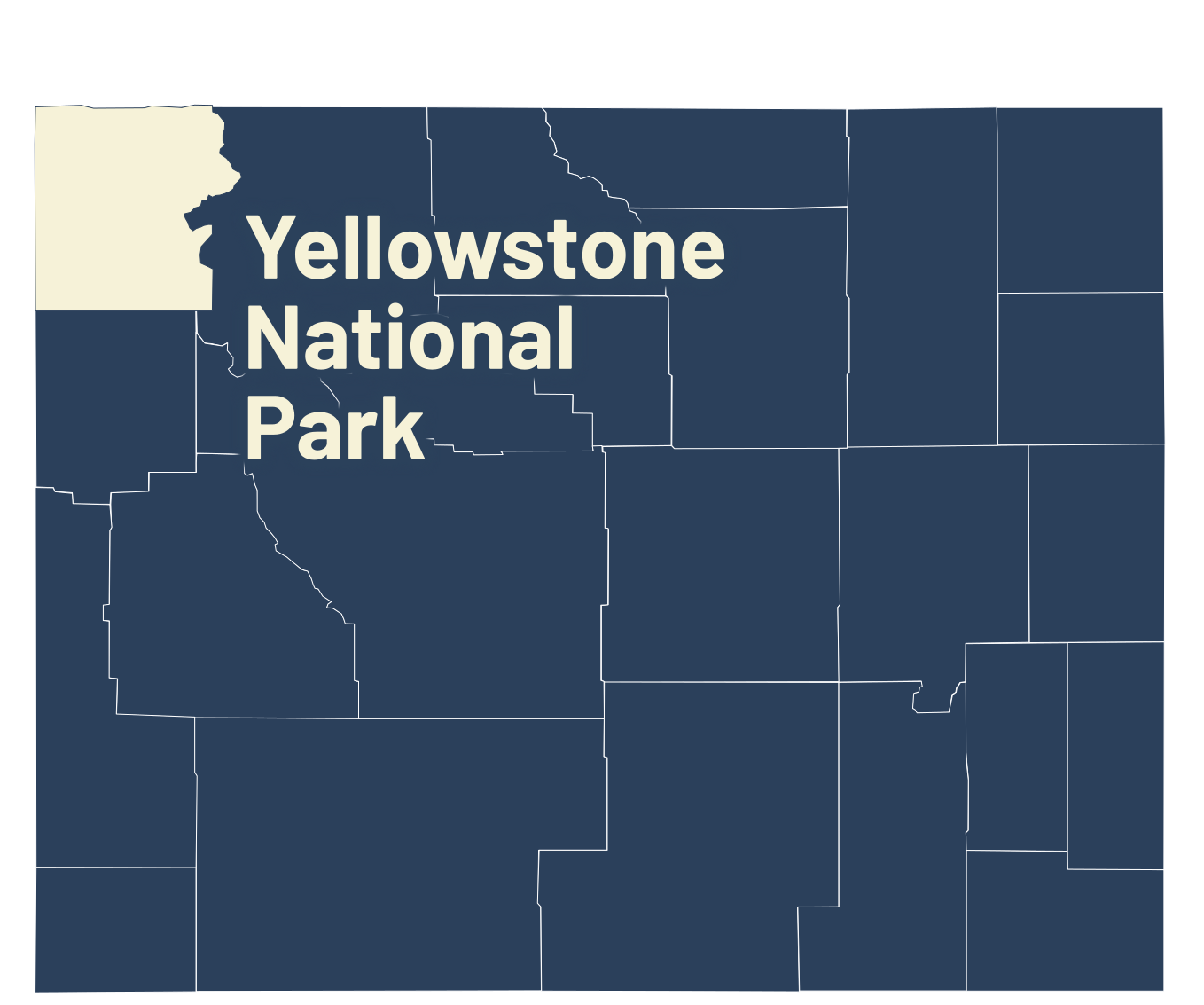
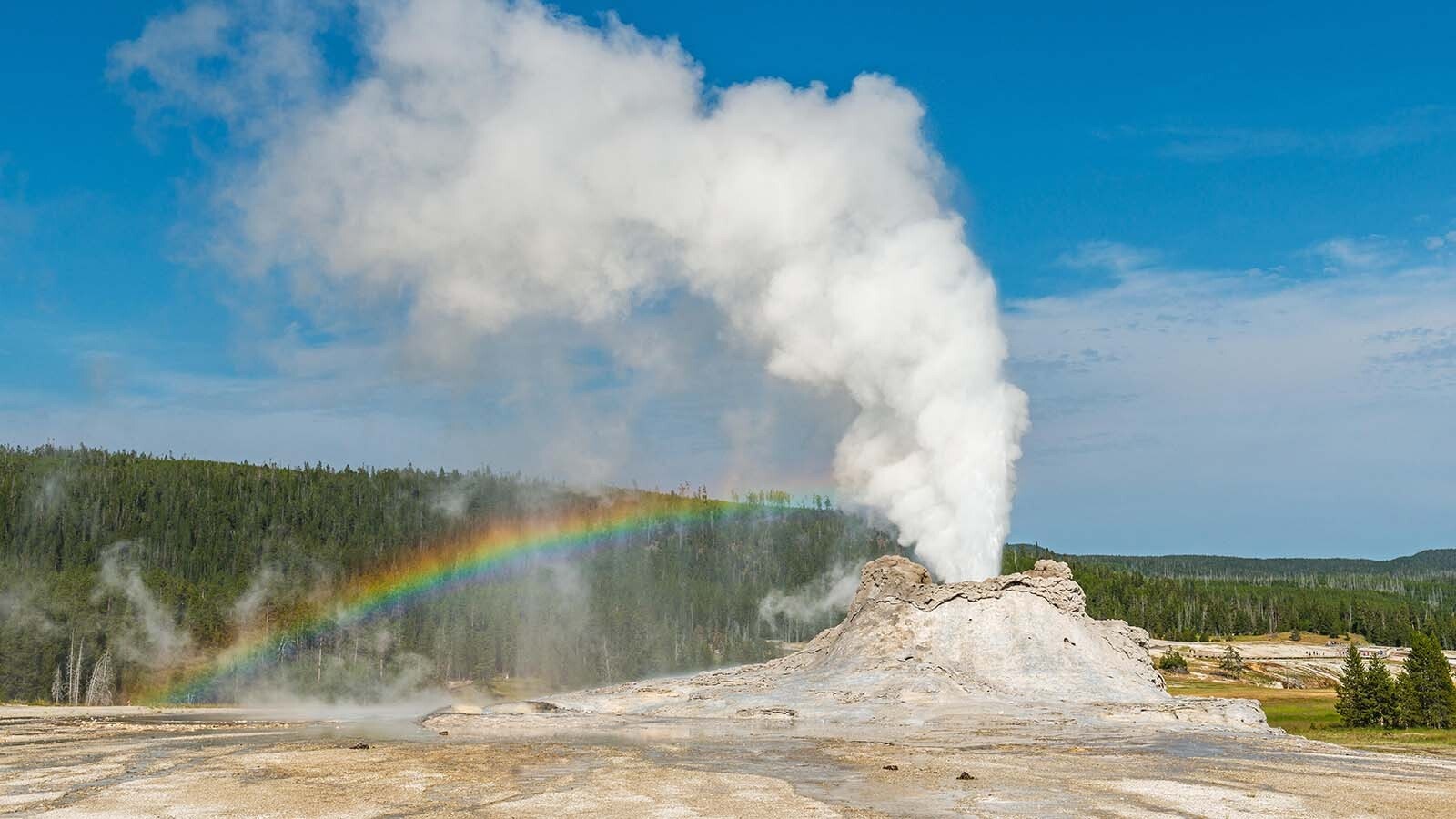
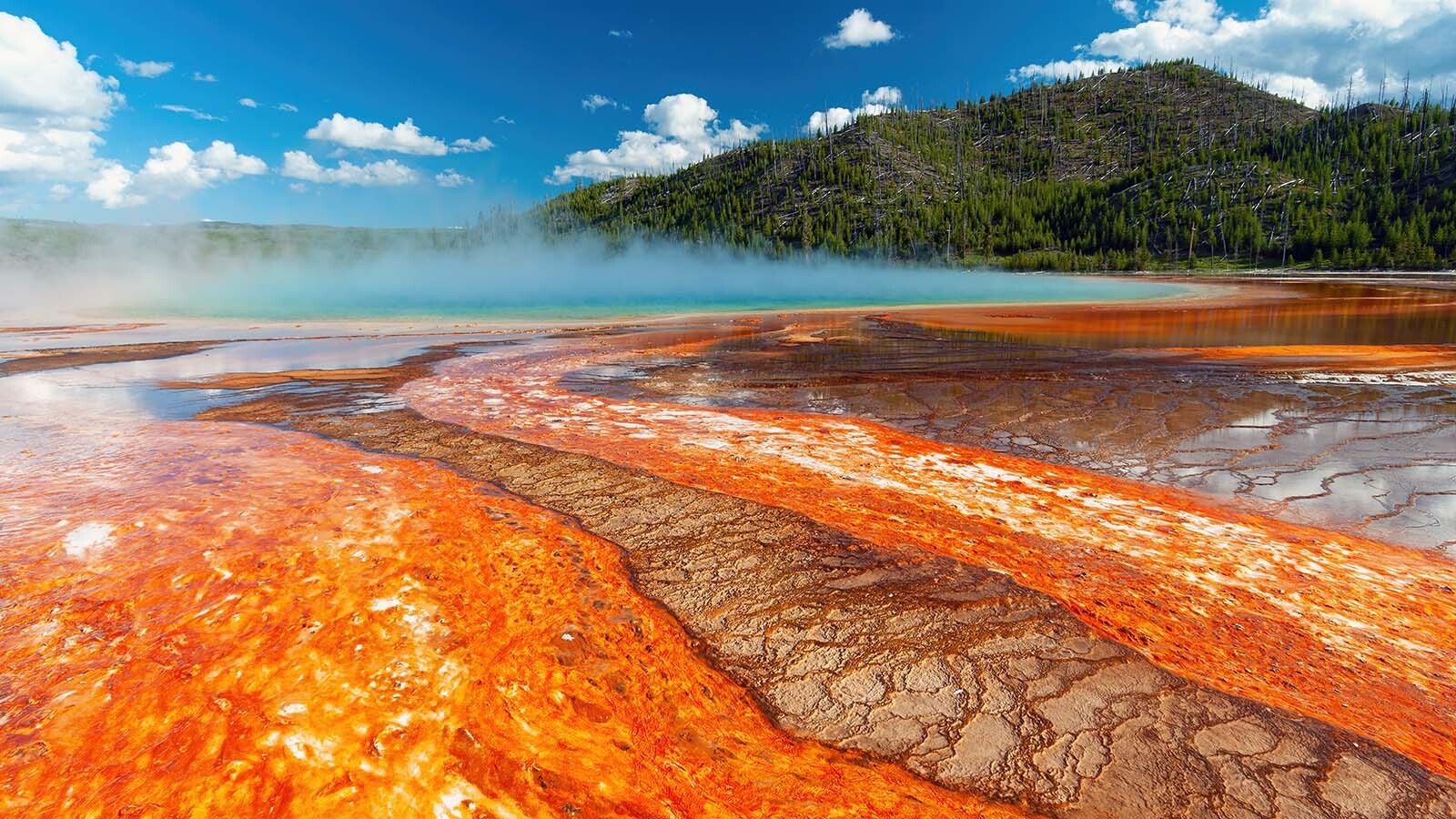
Yellowstone National Park is often touted as a primordial landscape, which is part of its charm. The thermal basins throughout the park provide a glimpse of what the world was like billions of years ago and offer insights into how life on Earth evolved into what it is today.
But how did it all happen?
That's a question Eric Boyd, a professor of microbiology at Montana State University — and a diverse group of microbiologists, chemists, and geologists — have sought to answer in Yellowstone.
Their recently published research found a connection between earthquake swarms and the biodiversity of subsurface microbial systems. It's an insight into the origins of life on Earth, provided by the many experiments ongoing in the natural laboratory that is Yellowstone.
"We got a glimmer into a glimpse into how earthquake swarms change microbial microbiomes," Boyd told Cowboy State Daily. "It's reminiscent of the world as it was when the earliest forms of life appeared, which would be hard to see and sample anywhere else. That's one of the keys of Yellowstone."
Life Under Earth
There is "life on Earth" and "life in the Earth." The distinction might seem minor, but any microbiologist will say these worlds are vastly different.
"There's the life that we're familiar with that lives on the surface of Earth, powered by the sun," Boyd said. "A large portion of the biomass on Earth is in the subsurface, living in the fractures and the pore spaces of rock, and it's different from life on the surface."
The biospheres in Earth's subsurface are sustained by chemical energy rather than photosynthesis. Hydrogen, carbon, and other essential elements are introduced into these biomes and sustain bacteria and other organisms living in pockets of water trapped below the surface.
The problem Boyd and his colleagues wanted to explore is how those essential elements are introduced into these isolated biospheres, especially over prolonged periods of geological time. How does life survive and thrive underground?
"When those minerals react with water, they're consumed," he said. "They go from being fertile to essentially being infertile. To sustain these biospheres, you need a continual source of minerals, but how can that be? Something doesn't add up."
The hypothesis they came up with was that earthquake swarms could create the kinetic energy to introduce minerals into subsurface biospheres. In a volcanically active area, like Yellowstone, they could be continuous enough to keep the biospheres thriving.
"If earthquake swarms were a solution to that problem, we should be able to see it," Boyd said. "If we're lucky enough to observe earthquakes happening in real time, we could be fortunate enough to sample subsurface microbial communities over that time period. That's exactly what we did."
Subsurface Sampling
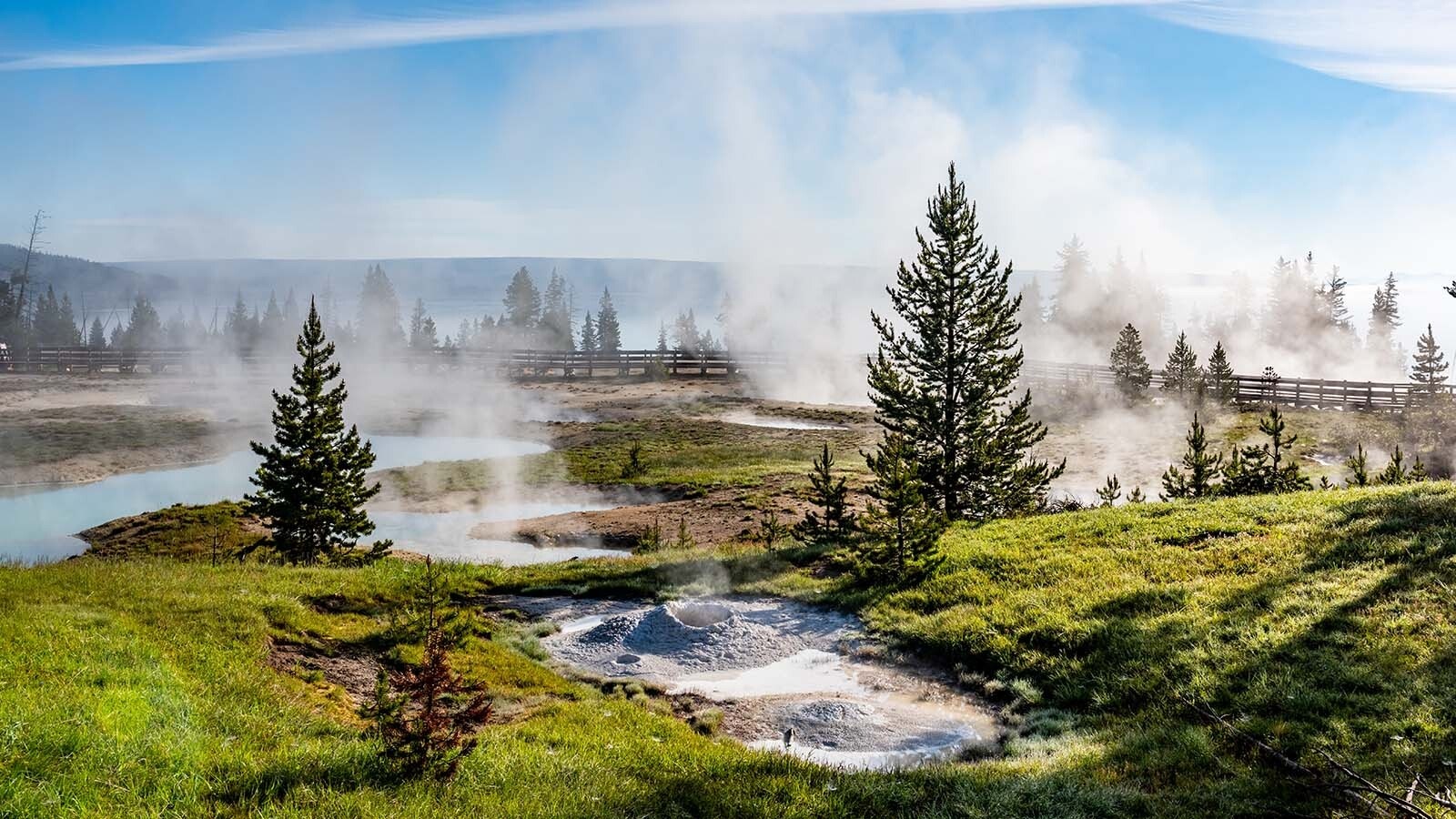
In 2021, Boyd's team got permission to make a borehole south of the West Thumb Geyser Basin. The borehole was over 500 feet deep and tapped into an aquifer where two types of chemolithotrophic bacteria were living.
"We used a bladder pump to collect water samples," Boyd said. "You lower the bladder pump into the borehole and use compressed gas to push the samples up to the surface, where we collected them."
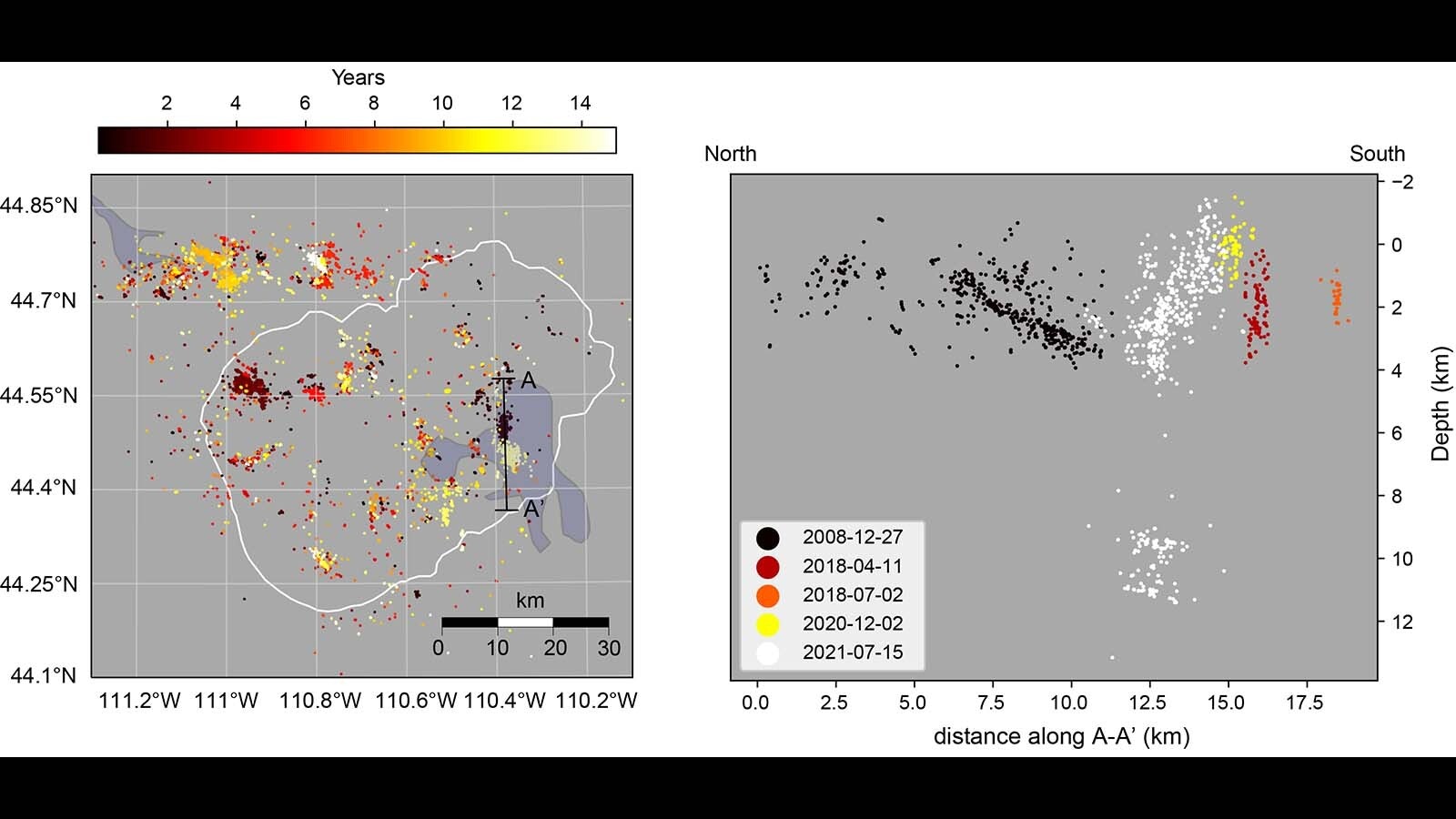
Samples were collected over seven months, during which a series of earthquake swarms were detected in Yellowstone. That's not uncommon for the park, which typically experiences between 1,500 and 2,000 earthquakes every year.
Earthquake swarms were significant, as they were the crux of the hypothesis. Isolated earthquakes might not be frequent enough to provide a continuous source of minerals to the biosphere.
Once collected, Boyd's team analyzed the chemical composition of the aquifer water while extracting and sequencing the DNA of the bacteria living in it. According to Boyd, they discovered that the geochemical and microbial composition of the aquifer biosphere changed over the sampling period.
"We started sampling before the earthquake swarm, and sampled through it as it dissipated," he said. "During that time, we observed the chemistry and microbiology of this aquifer change. You wouldn't expect that to happen in an isolated subsurface community over those kinds of timescales."
After ruling out other likely explanations, such as aquifer recharge from precipitation, Boyd's team concluded that the "driving factor" in the biosphere's changes was the kinetic energy of the earthquake swarm.
"We were lucky enough to capture it in real-time," he said.
Life There And Elsewhere
The overall takeaway from the study was that "seismic-induced generation of chemical disequilibria can support the persistence of complex subsurface microbiomes."
What that means is that earthquake swarms can provide the energy needed to introduce life-sustaining minerals to subsurface biospheres. The implications are exciting.
For one thing, Boyd indicated that further study in Yellowstone can provide more information on the origins of life on Earth. It has environments, on and below the surface, reminiscent of the world as it was when life first appeared.
"Yellowstone is a primitive landscape in the sense that it's a volcanically active landscape," he said. "Once you get outside of the geothermal areas, it's not such a primitive landscape, but it's reminiscent of the type of volcanic terrain that many people believe was involved in originating and supporting the earliest forms of life."
Boyd also noted that working in Yellowstone provides an opportunity to study biospheres that haven't been impacted by oxygen. Photosynthesis by surface plants generates the oxygen in Earth's atmosphere, but that was a byproduct of life on the surface that wouldn't have been anywhere near as abundant when life originated.
"One of the neat things about these aquifer fluids is that they're deep enough where there shouldn't be a whole lot of oxygen," he said. "Going deep is a good way to maximize the resemblance of that primitive environment, because it's removed from photosynthesis."
Scientists are fairly confident that there's life on Earth, but is the same true for Mars and other celestial bodies? Boyd's research provides clues on where life might be thriving elsewhere in the universe and where to find it.
"Seismic activity isn't restricted to Yellowstone," he said. "These processes are relevant across the globe."
An Intriguing Idea
Mike Poland, scientist-in-charge of the Yellowstone Volcano Observatory, already knew that Yellowstone is a renowned natural laboratory for the study of microbial life. It's been the site of intense scientific scrutiny for decades.
"There are several aspects of Yellowstone that resemble the conditions that might have existed when life really started to get going," he said. "The hot springs are reminiscent of deep-sea thermal vents, where we know there's life, except you don't have to go to the bottom of the sea to look at these. It's right there in front of you."
Poland had seen an earlier version of Boyd's research so that he couldn't comment on the entire scope of the new paper. From what he's seen and heard, the hypothesis that earthquake swarms provide the minerals to sustain subsurface biospheres makes a lot of sense just from a geological perspective.
"Earthquakes are always cracking rock, and that could crack previously impermeable reservoirs of material, gas, or whatever," he said. "That could then make its way to the surface or support some microbial communities. It's an intriguing idea."
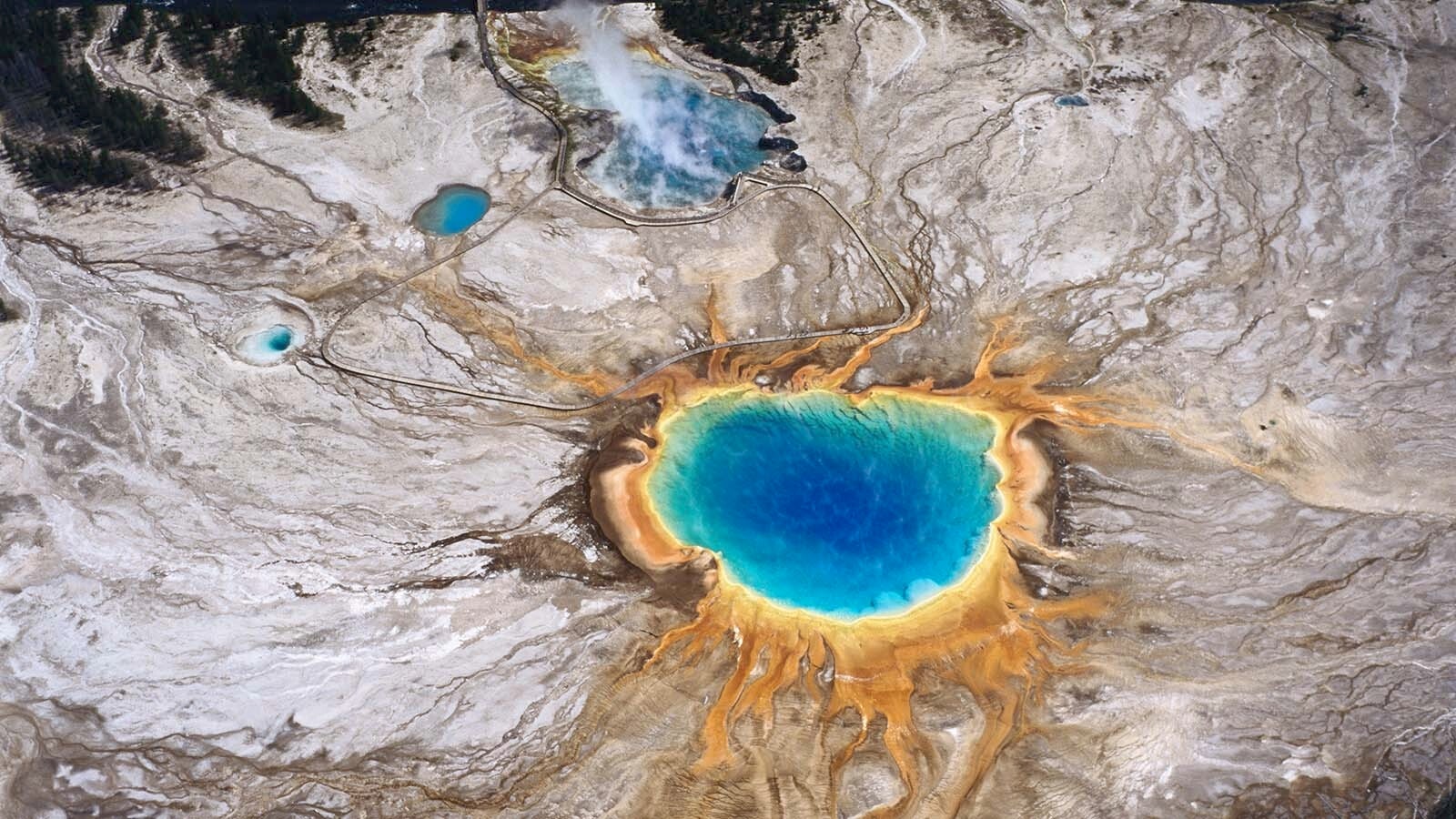
The Best Backyard Laboratory
Once again, Yellowstone has proven to be an ideal natural laboratory for another team of scientists. It's still a four-hour drive from Bozeman, Montana, to Yellowstone, but Boyd sees that as an easy and worthwhile trek for his ongoing research.
"It would be hard for most other researchers across the United States or the world to do something like this, unless they were located proximal to a volcanically active area," Boyd told Cowboy State Daily. "In Yellowstone, you're sitting on top of an active volcano that's emitting gases and stress in the form of these earthquake swarms, and you get to sample it in real-time."
Many scientists tout Yellowstone for being a dynamic living laboratory. Recent studies have yielded everything from a life-saving enzyme that could treat genetic diseases to a patent for retaining moisture on a hydrophobic surface, revealed during the study of a unique heat-adapted beetle.
In the future, Boyd would like to conduct studies with more frequent sampling. That could be achieved with automatic sampling triggered by an earthquake sensor, rather than solely relying on the once-a-month trip by a graduate student.
"We really want to understand the nature, timescales, and extent of the aquifer's response to earthquake swarms," he said. "We got a glimmer into a glimpse of that response in this current study, but I think there needs to be a much higher resolution effort to get better answers to that question."
Fortunately, Yellowstone isn't going anywhere and remains as dynamic as ever. The keys to understanding Earth's past and insights into humanity's future are emerging from the everyday activities that have made Yellowstone National Park one of the most popular places on Earth, for everyday people and scientists alike.
Andrew Rossi can be reached at arossi@cowboystatedaily.com.