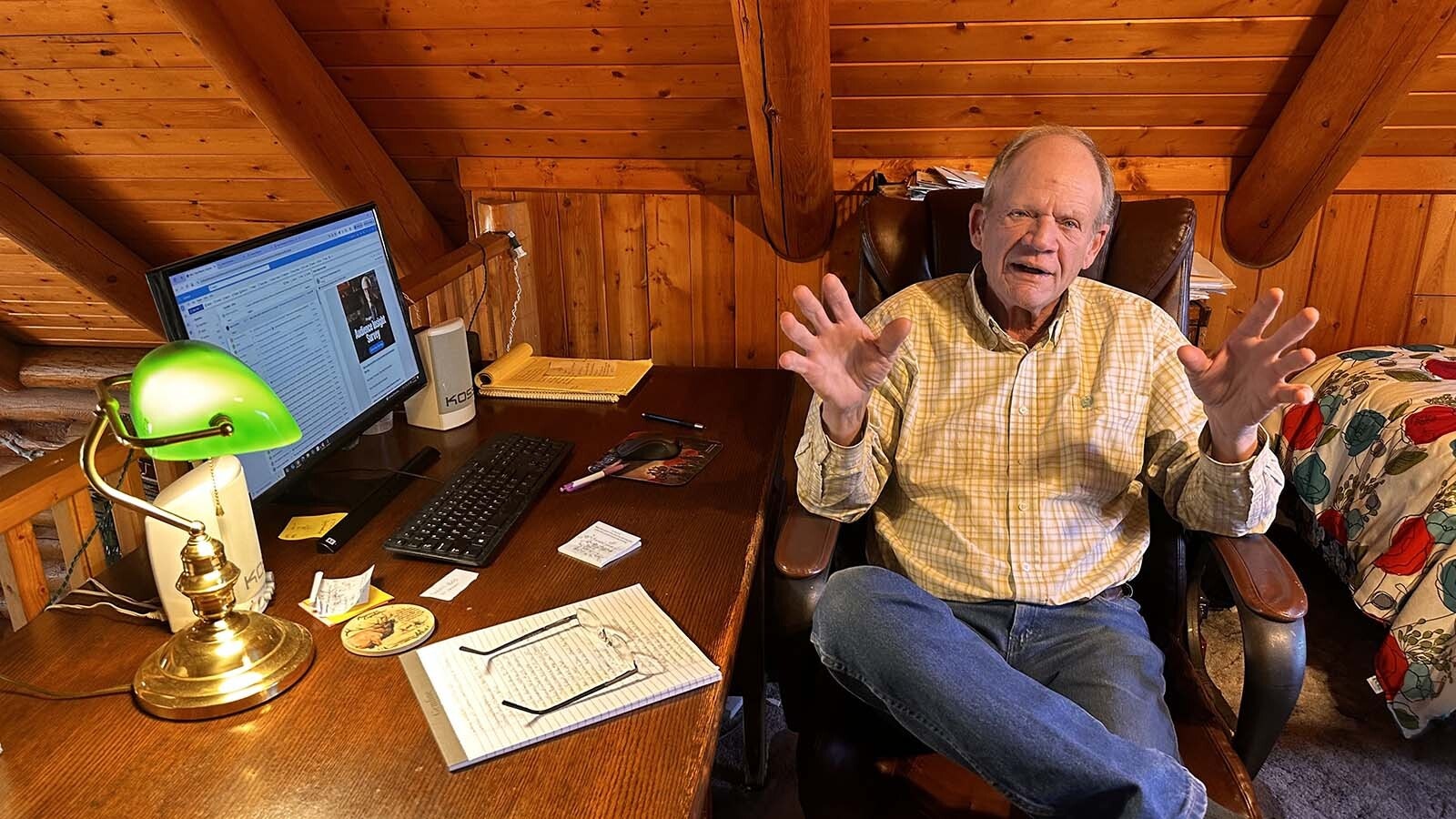
Clay Gibbons doesn’t just read or recite history, he lives it.
“I live in the past,” Gibbons said. “I've read so much about it that I want to go back and experience it for myself.”
Since that's not possible, Gibbons has instead revisited important Wyoming historic sites exactly 100 years after the incident, including the shooting of 14-year-old Willie Nickell, the hanging of Tom Horn and the Spring Creek Raid.
Gibbons is a Wyoming historian and storyteller. For years, he has tracked down authentic stories of the Cowboy State to share in person or on his podcast , "The Sweet Smell of Sagebrush."
He won the 2025 best history podcast from the Wyoming Historical Society and has had many accolades over the past 40 years as he works to ensure Wyoming history isn't forgotten.
His love of Wyoming history, especially in Washakie County, began in his childhood.
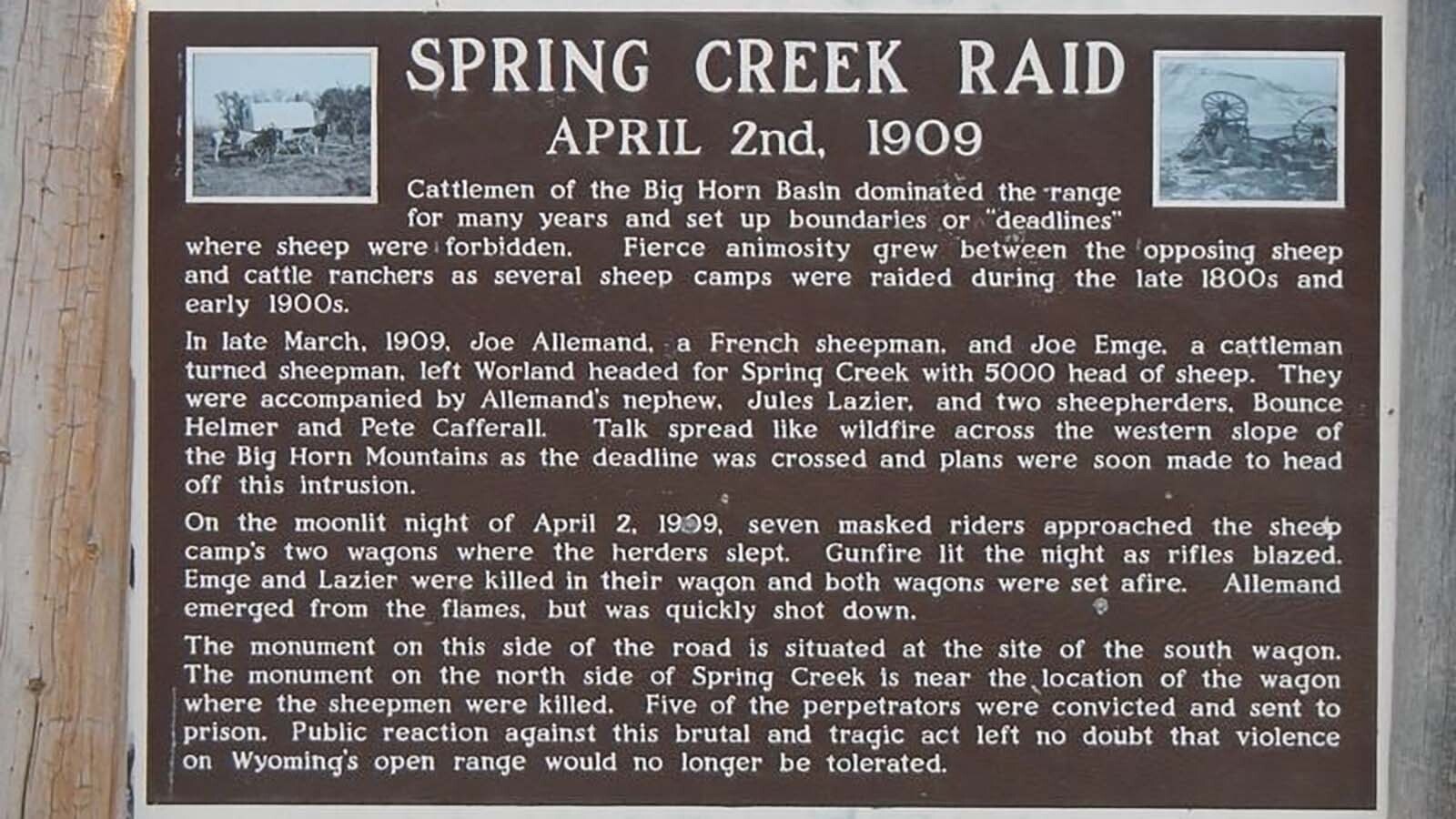
Growing up, Gibbons knew the story of the Spring Creek Raid since the incident happened not far from his own home. On the night of April 2, 1909, seven masked riders had approached a sheep camp and murdered three sheepmen, Jules Lazier, Joe Allemand, and Joe Emge.
Gibbons remembers vividly crossing a creek when he was about 8 years old and asking his dad where exactly the Spring Creek Raid had happened.
“Dad waved his arm out there and he said, somewhere over there,” Gibbons said. “I'll never forget when he said, somewhere over there, I wondered why no one knew for sure.”
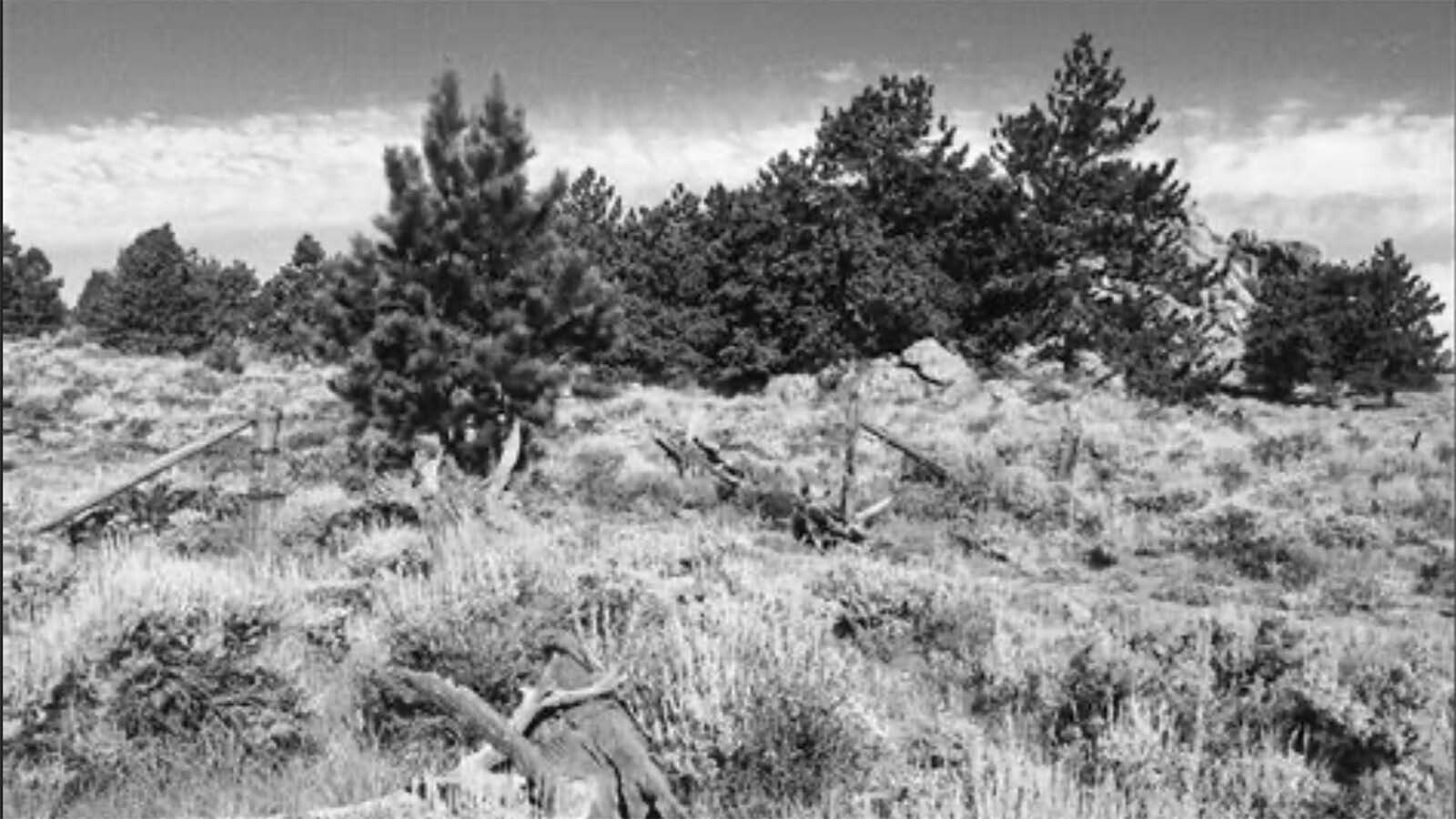
This question continued to haunt him and Gibbons started to search out old county records to discover the exact location. In 1989, he found the spot exactly where the bodies had fallen and where the shells lay scattered among the sagebrush.
Finding the Exact Location
This discovery came through a lot of hard work and good luck.
Gibbons had gone through the trial transcripts and discovered that the sheriff kept asking the county surveyor to show him on the plat map where he had found the shells and bodies.
This meant, Gibbons surmised, that there was a map that had been created showing the events following the raid.
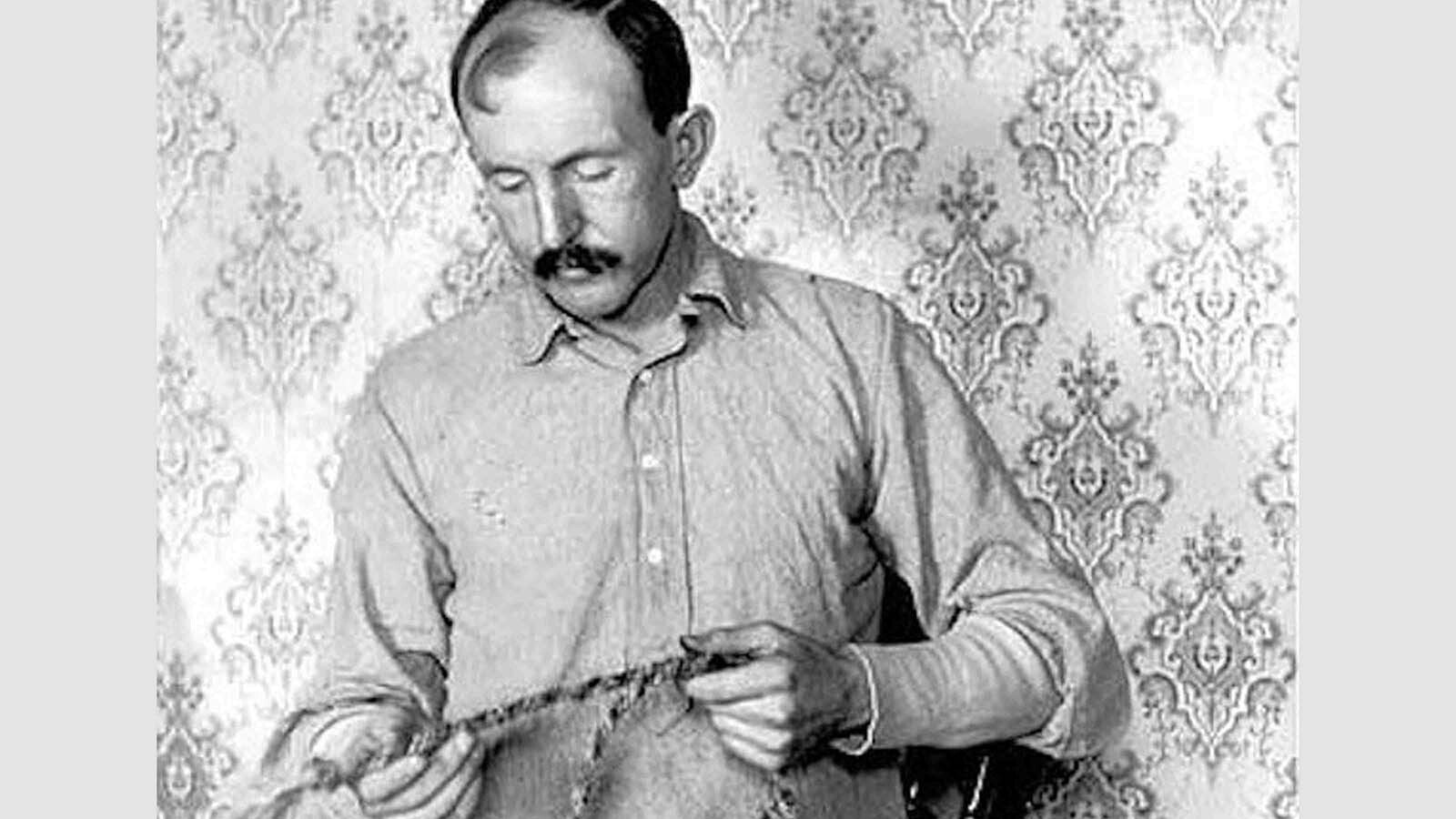
Following this lead, Gibbons was able to track down the actual surveyor field notes and then, in another stroke of luck, Rick Hudson, a surveyor in Thermopolis contacted him just a few weeks later.
“It was right before the 100-year centennial for Wyoming,” Gibbons said. “Rick Hudson was the president of a professional surveyor group of northwestern Wyoming, and they were looking for a project for Centennial.”
Hudson wanted something historic to survey and his group were excited to help survey the area to identify the exact spot of the Spring Creek Raid.
“I remember standing on the site where Joe Allemand's body lay,” Gibbons said. “Once I stood on that site, I thought, well, this has been a really fun day, but I can't just walk away.”
Gibbons next project was to erect a state historical marker at the site and it was dedicated on April 2, 1989. It was the 80th anniversary of the Spring Creek raid and Gibbons was blown away by the experience.
100 Years After Willie Nickell
As Gibbons continued to visit historic sites in the region, he realized that many of the events would soon be experiencing their 100th anniversaries.
This realization has led Gibbons to be at eight sites exactly 100 years after their defining events, and said that the experiences have been profound.
“I've been at the gate where Willie Nickell was killed on Iron Mountain,” Gibbons said. “It was just amazing the emotions that being there brought up 100 years later.”
Nickell was a 14-year-old boy who had been shot and killed in 1902. Tom Horn, a former Pinkerton agent, had been accused of the murder and later hanged.
Gibbons was at the spot 100 years after the murder with author Chip Carlson who had written about Tom Horn.
Gibbons said that Willie Nickell had ridden up to the gate that morning, got off his horse, undid the gate, took his horse through, and was in the process of putting the gate back together when two shots rang out behind these rocks above him.
“They both hit him and he started running towards home for about 50 feet,” Gibbons said. “A third shot rang out and he fell over dead."
The assailant had then emerged from his hiding spot in nearby rocks and stood next to his body.
The gunman turned the body over to see the exit wound. When Nickell’s father found the body, he put a circle of rocks around where his son lay and so the exact spot was known.
A century later, Gibbons took the same type of gun, a 3030 Winchester, and went behind the same rocks.
“At the same appropriate time, 100 years to the hour, I fired two quick shots,” Gibbons said. “Right through that gate. And then that third shot where Willie was killed.”
Gibbons then walked out of the rocks and stood at the circle of rocks where Nickell’s body had laid.
“I felt guilty as hell,” Gibbons said. “That country heard those same rifle shots that I just fired a hundred years later and I just felt so much guilt.
“It's amazing being there on those 100-year anniversaries like that.”
100 Years After Tom Horn Was Hung
The next year, Gibbons attended another 100-year anniversary, this one was in 1903 and the anniversary of Tom Horn being hung.
The original courthouse had been torn down and a new one built. However, Gibbons was able to still go up to the second floor and stand on the approximate spot where Tom Horn had been hung.
“There's actually a little area dedicated to Tom Horn, right where those gallows were,” Gibbons said.
This time, instead of reenacting the hanging, Gibbons found the song that had been sung the moment Tom Horn was hung.
It was called “Life's Railway to Heaven” and Gibbons was able to find the words. He brought a cowboy and a guitar with him to remember the moment Horn was hung.
“We went out in the stairway with these words and played this tune,” Gibbons said. “They were the last words that Tom Horn heard.”
It was 100 years to the moment that they had sung the song and Gibbons said that you could feel the sadness in the air.
“You know, it's one time in your life that that hundred-year moment will pass by,” Gibbons said.
Experiencing History
Gibbons does not just experience history on historic anniversaries.
He has also participated in the retrial of Tom Horn that author Carlson had arranged that was not on a significant day but was still very meaningful. This trial was held with evidence that the original jury had not heard and was held in an actual courtroom with an actual judge.
An accountant, who was a look alike for Tom Horn, was put on trial for two days, unaware of what the verdict would be for this second trial.
“At the second day when they announced the verdict of the retrial, the verdict was not guilty,” Gibbons said. “The accountant’s knees actually buckled with relief.”
The actor later admitted that he was so into the reenactment that he felt that his life was in the jury’s hands. When he heard the verdict and realized he was not going to hang like the original Tom Horn, he was overcome with emotion.
“It was just amazing to watch him because he had just been given a reprieve for his life,” Gibbons said. “He was so caught up into the whole thing.”
Another 100-year anniversary Gibbons had commemorated was the Spring Creek Raid which he visited in 2009, exactly 100 years after the three men had been murdered.
“To be able to be there and celebrate that moment and to experience that moment is really something,” Gibbons said. “It's sobering to be able to do that 100 years to the day can never be repeated. Everything is in the same alignment that it was at that time."
Contact Jackie Dorothy at jackie@cowboystatedaily.com
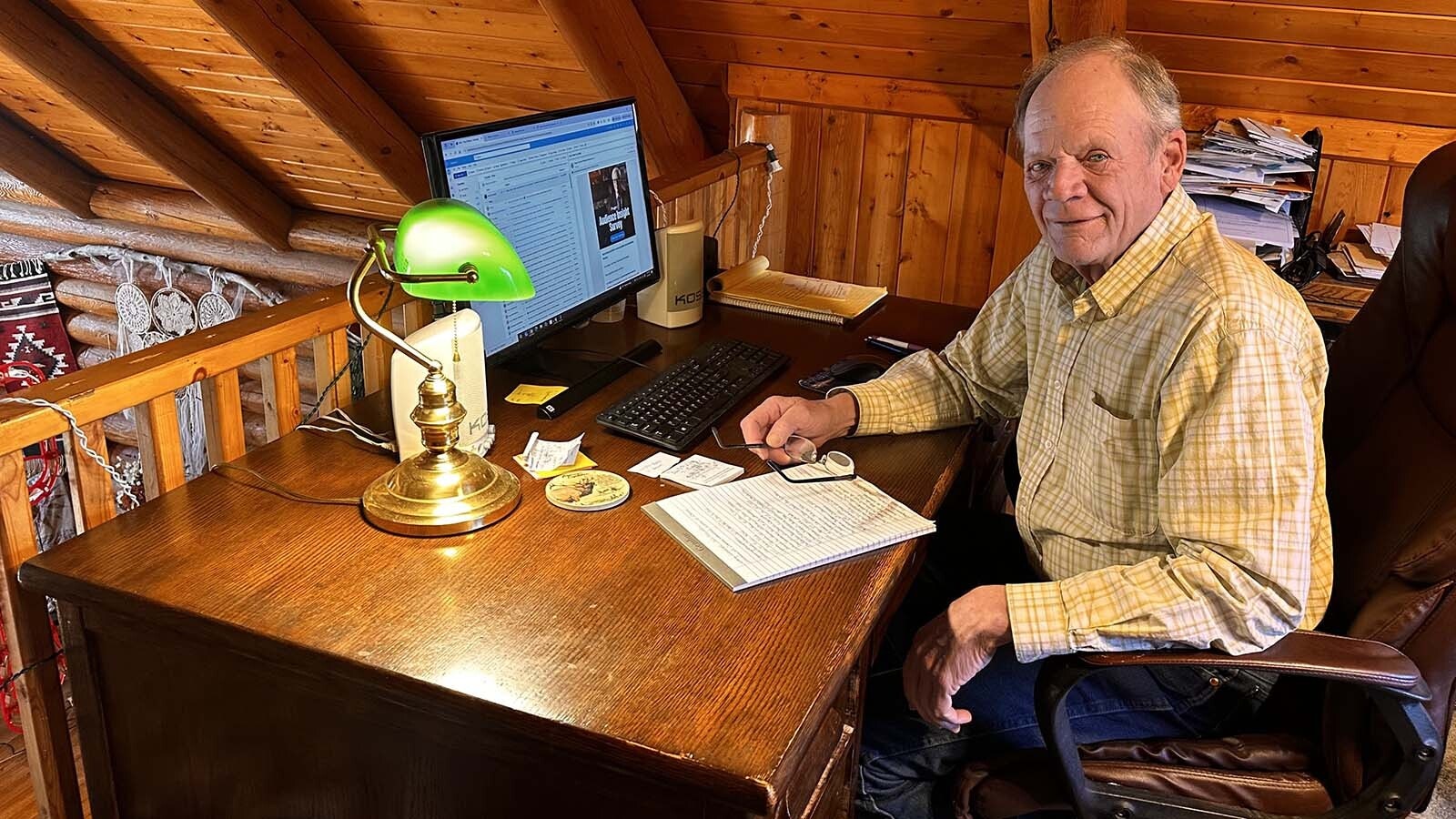
Clay Gibbons, Washakie County Historian, has stood on several historic sites exactly 100 years after the event occurred. He said that it is a profound experience. (Jackie Dorothy, Cowboy State Daily) 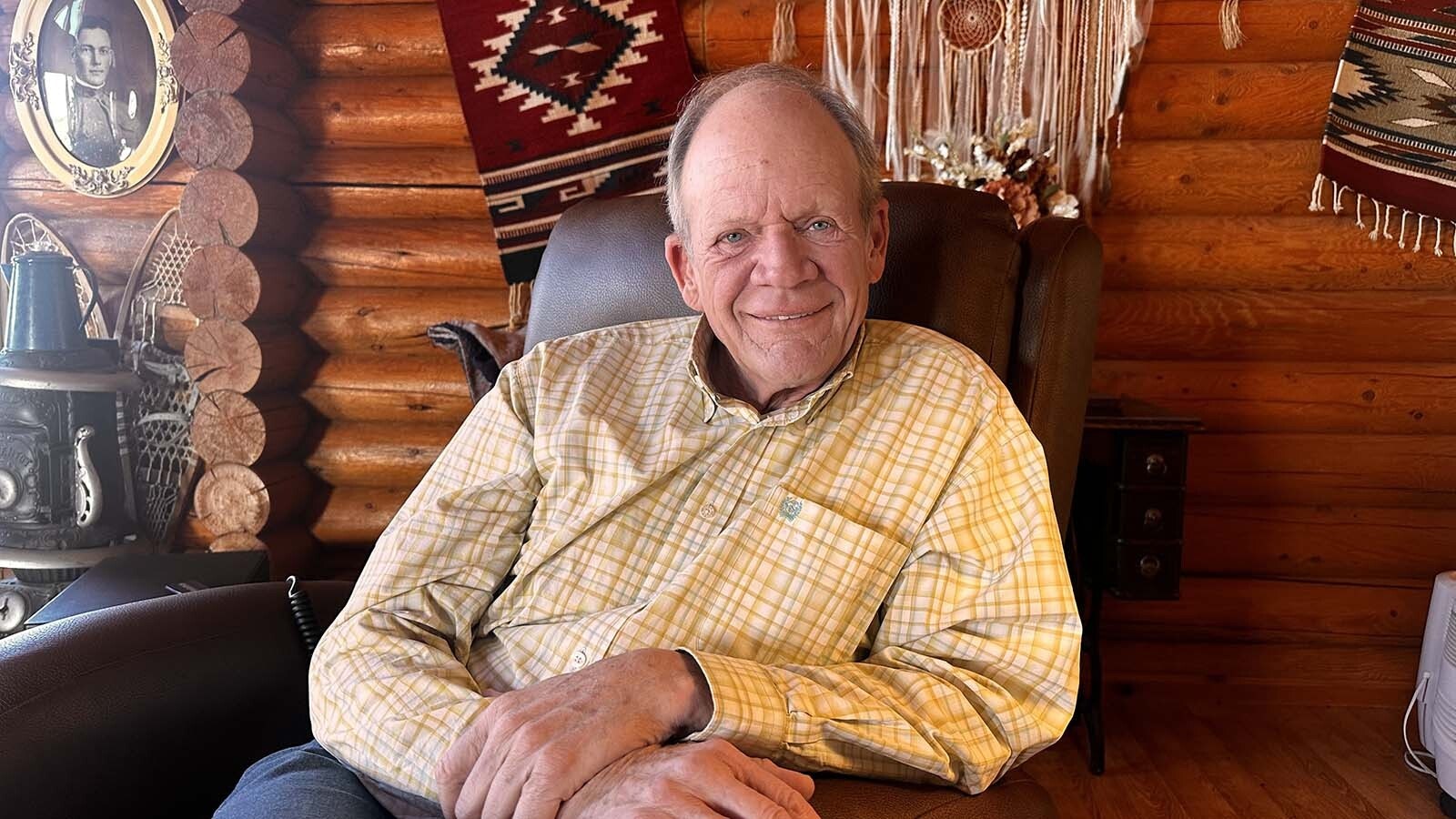
Clay Gibbons, Washakie County Historian, has stood on several historic sites exactly 100 years after the event occurred. He said that it is a profound experience. (Jackie Dorothy, Cowboy State Daily)
Jackie Dorothy can be reached at jackie@cowboystatedaily.com.