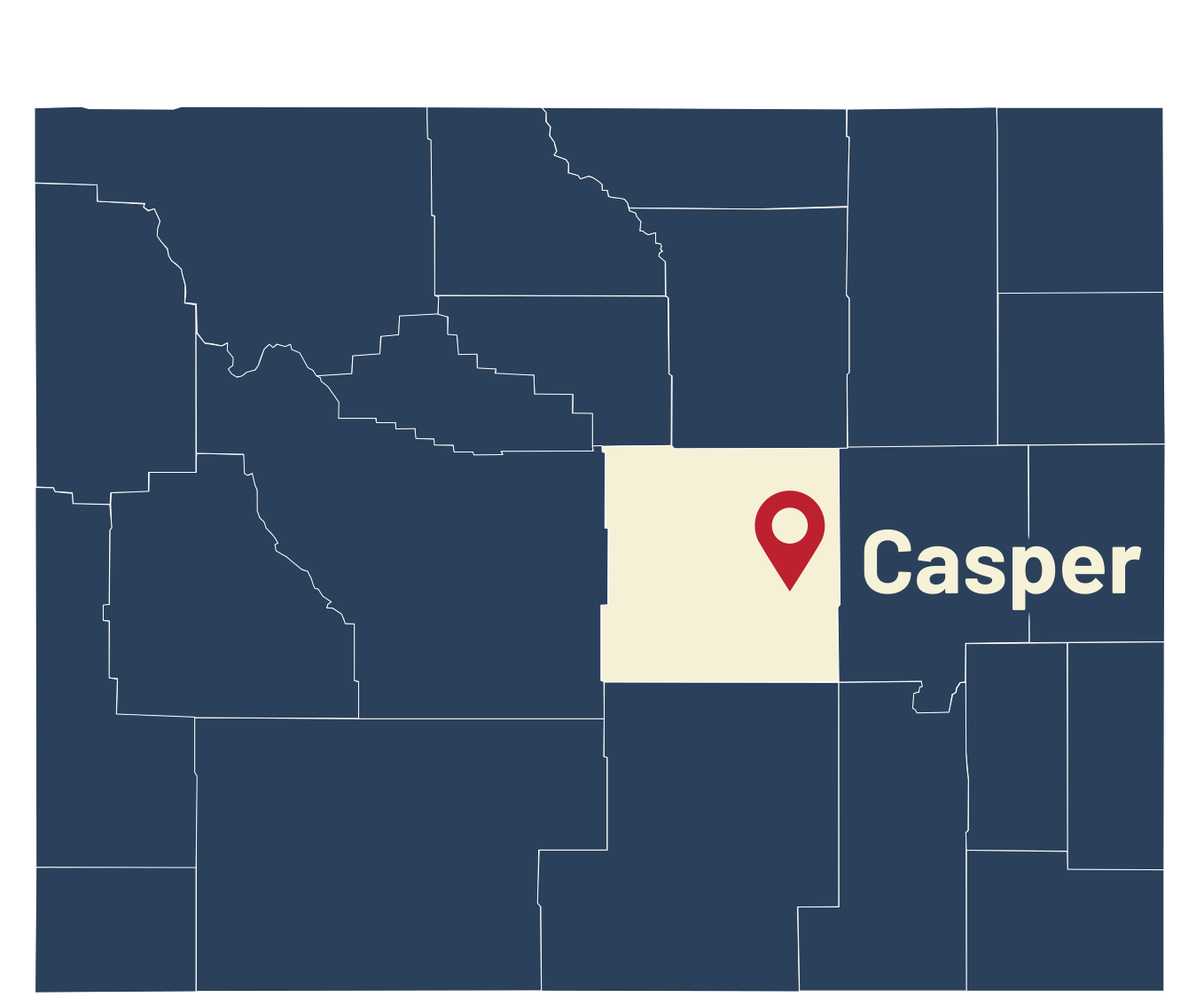
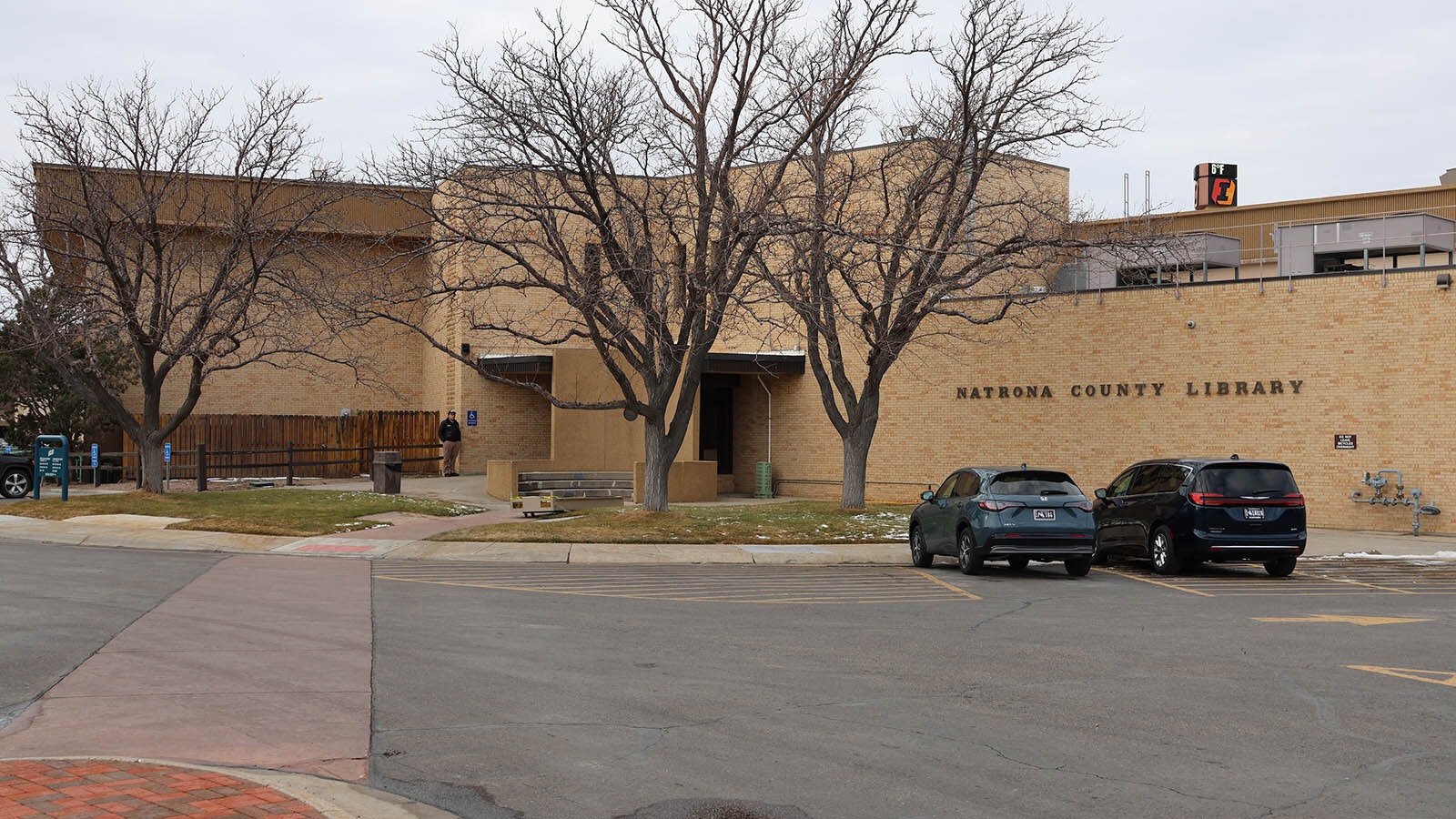
CASPER — Staff at the Natrona County Library on the corner of Second and South Durbin streets do more than check out books, answer questions, and make recommendations on good reads.
They can help an entrepreneur film a commercial with professional equipment and a green screen or provide a special room for someone to connect with their provider on a telemedicine visit or offer hands-on assistance with a 3D printing project using a printer on site.
Daily interactions with the homeless and sometimes the mentally ill bring out their knowledge of area resources as well as the need to discern when individuals just need kind words or potentially an intervention.
Library Executive Director Lisa Scroggins said in Fiscal Year 2025 there were 236,088 in-person visits and 14,657 other community residents who were part of outreach stops and library programs in Natrona County.
“We get a lot of people walking through this building,” she said. “In fact, our annual traffic competes with that of the Ford Wyoming Center. They get lots of people in bursts, we get consistent (visitors) all the time.”
The four-level building houses areas for fiction, non-fiction, children’s and teen books. There are DVDs, video games, and a “library of things” such as a radon detector that can be checked out.
Outside are vans that the library uses to take services out into the community. A bookmobile does a weekly route of outreach in Casper area neighborhoods and facilities.
Need a passport? The library will help you complete the process and take the required photo.
Those who want to visit a state park but can’t afford the entry fee can check out a pass at the library.
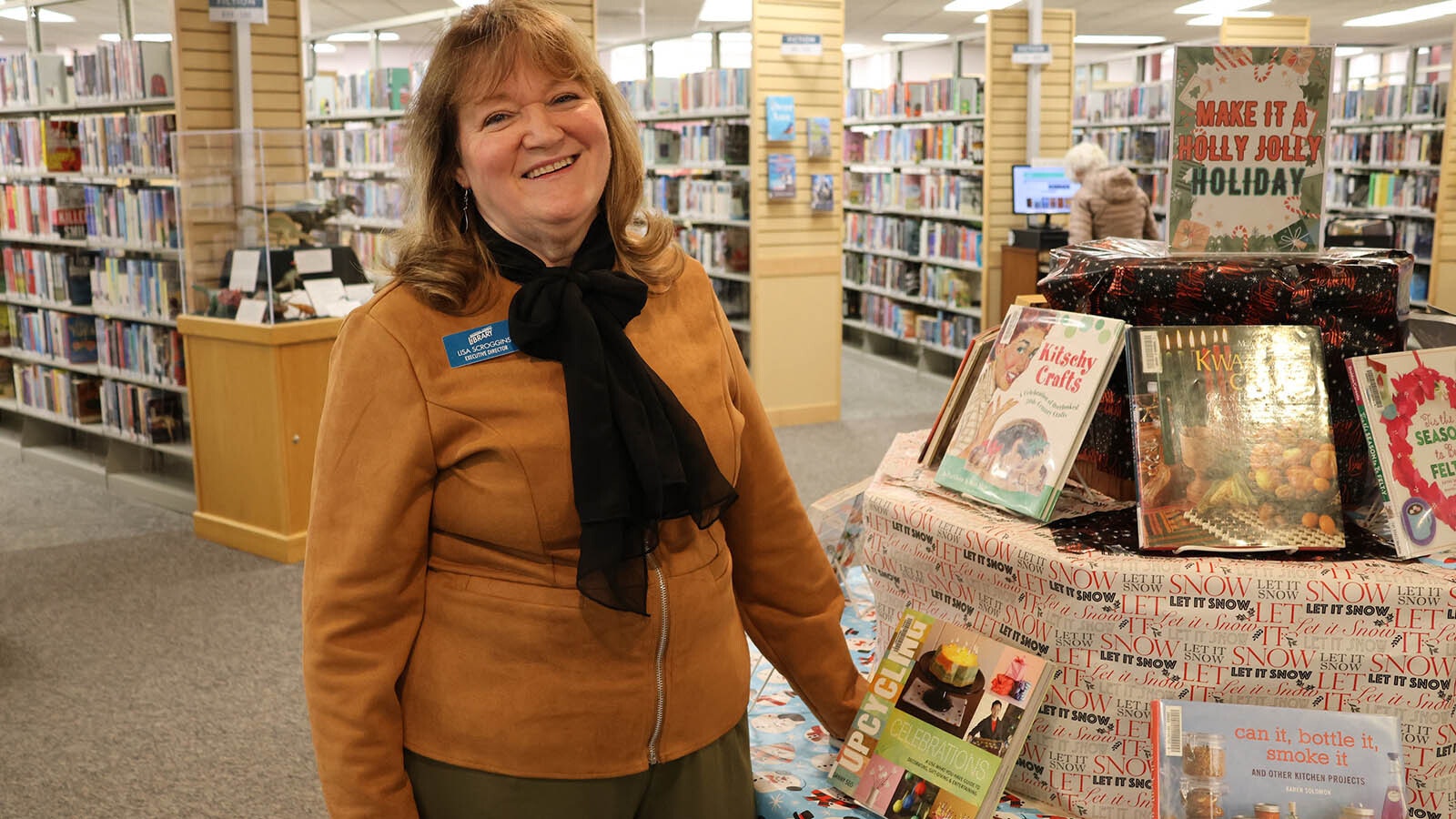
Natrona County Library Executive Director Lisa Scroggins sees the library’s role and helping build a sense of community in Casper. (Dale Killingbeck, Cowboy State Daily) 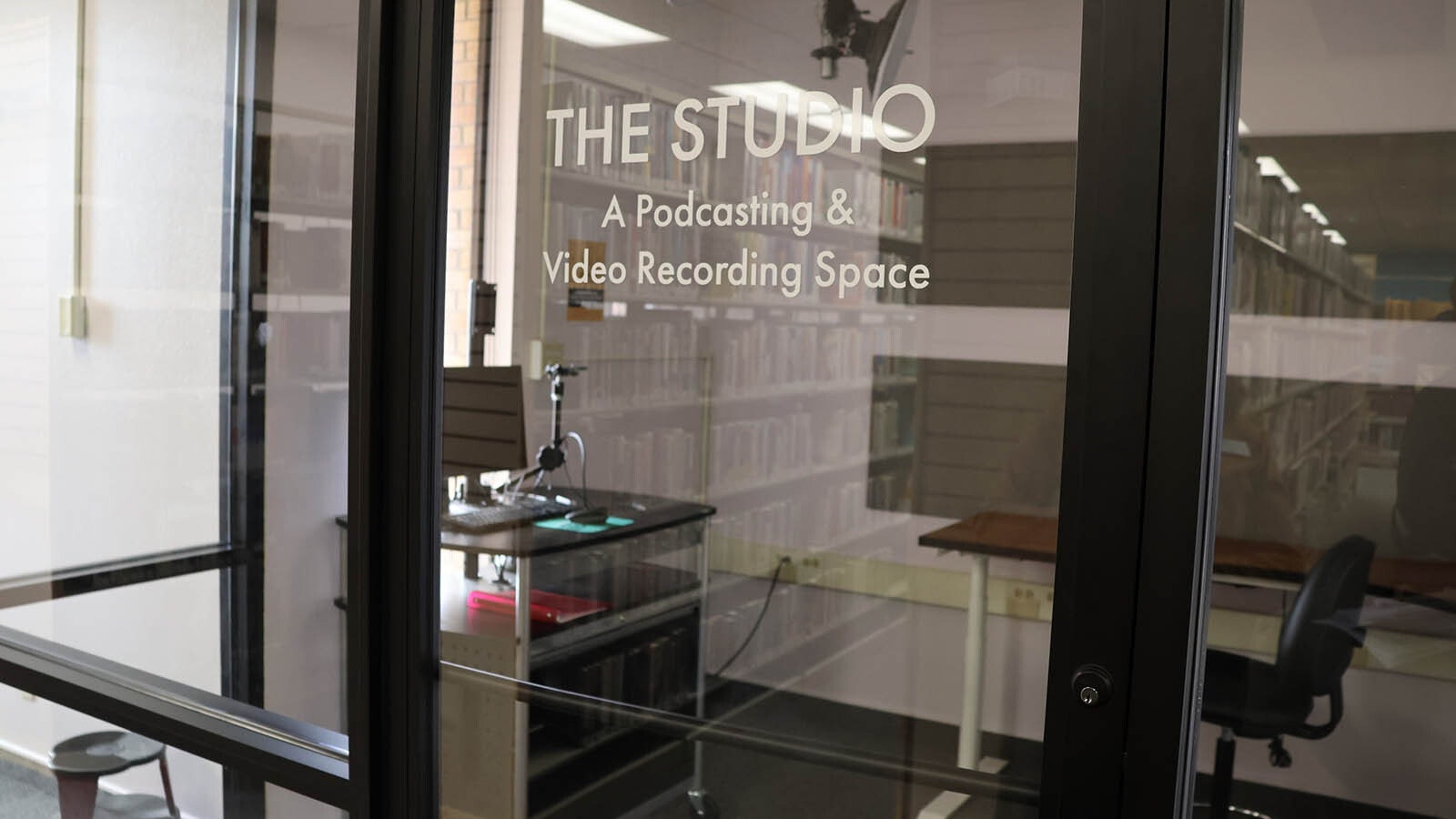
A studio room on the second floor of the Natrona County Library can be reserved to record and edit a commercial or podcast. The room offers different backgrounds for the camera, including a green screen that allows for another video background to be inserted during the editing process. (Dale Killingbeck, Cowboy State Daily) 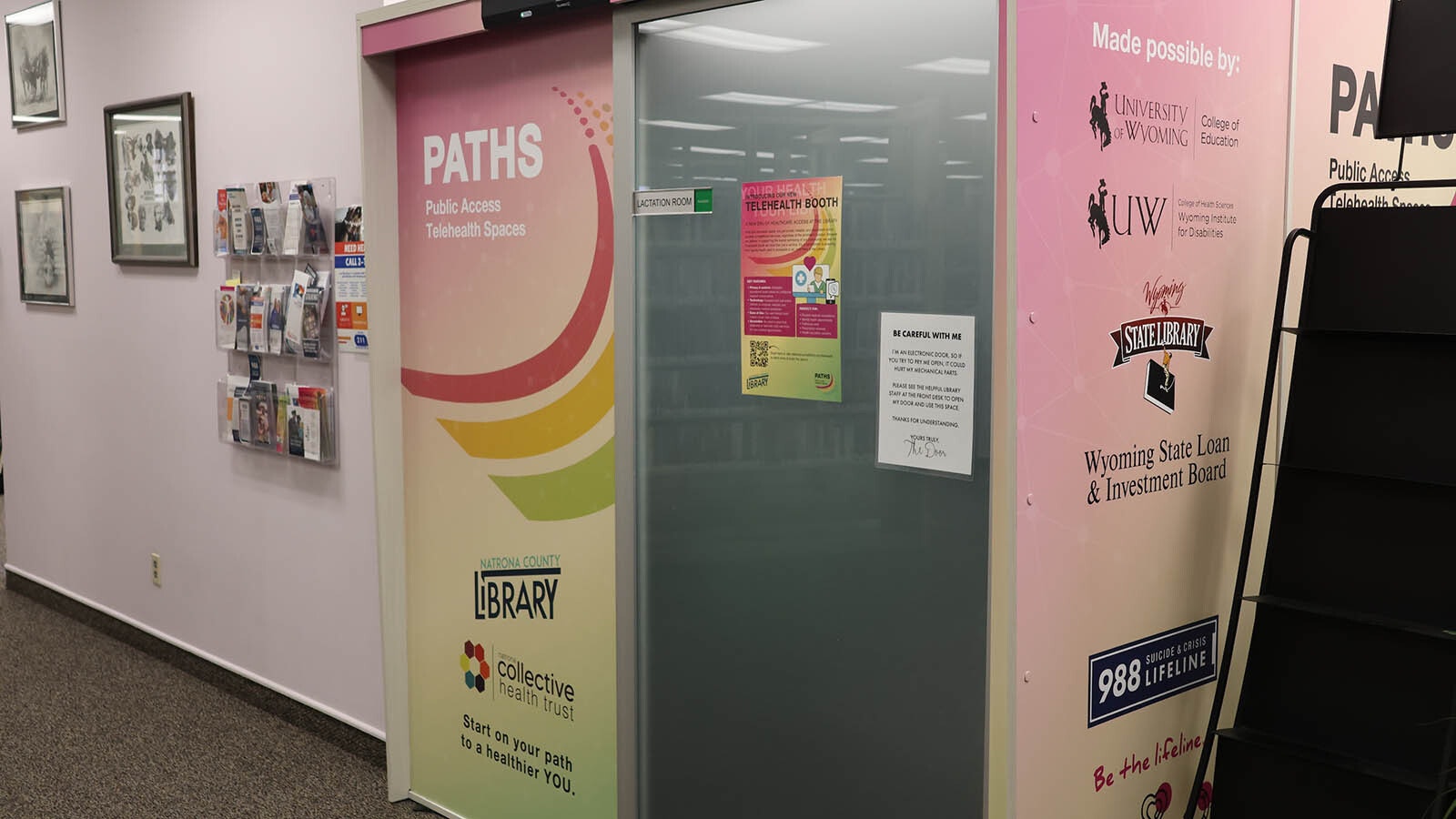
A telemedicine booth on the first floor of the Natrona County Library allows area residents to connect with specialists and other providers outside of the area for medical visit. (Dale Killingbeck, Cowboy State Daily) 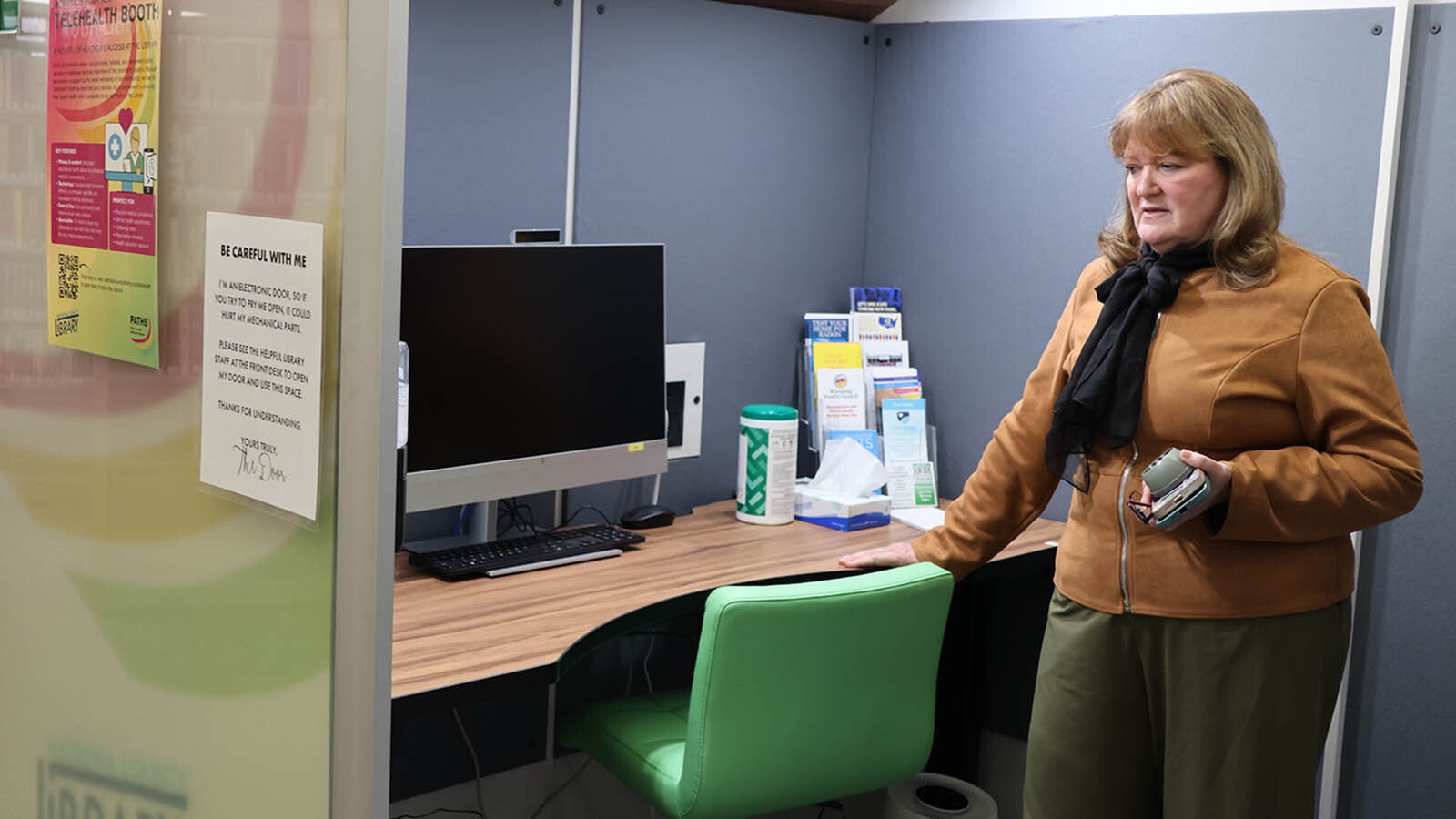
Natrona County Library Executive Director Lisa Scroggins talks about the telemedicine booth service at the library. (Dale Killingbeck, Cowboy State Daily) 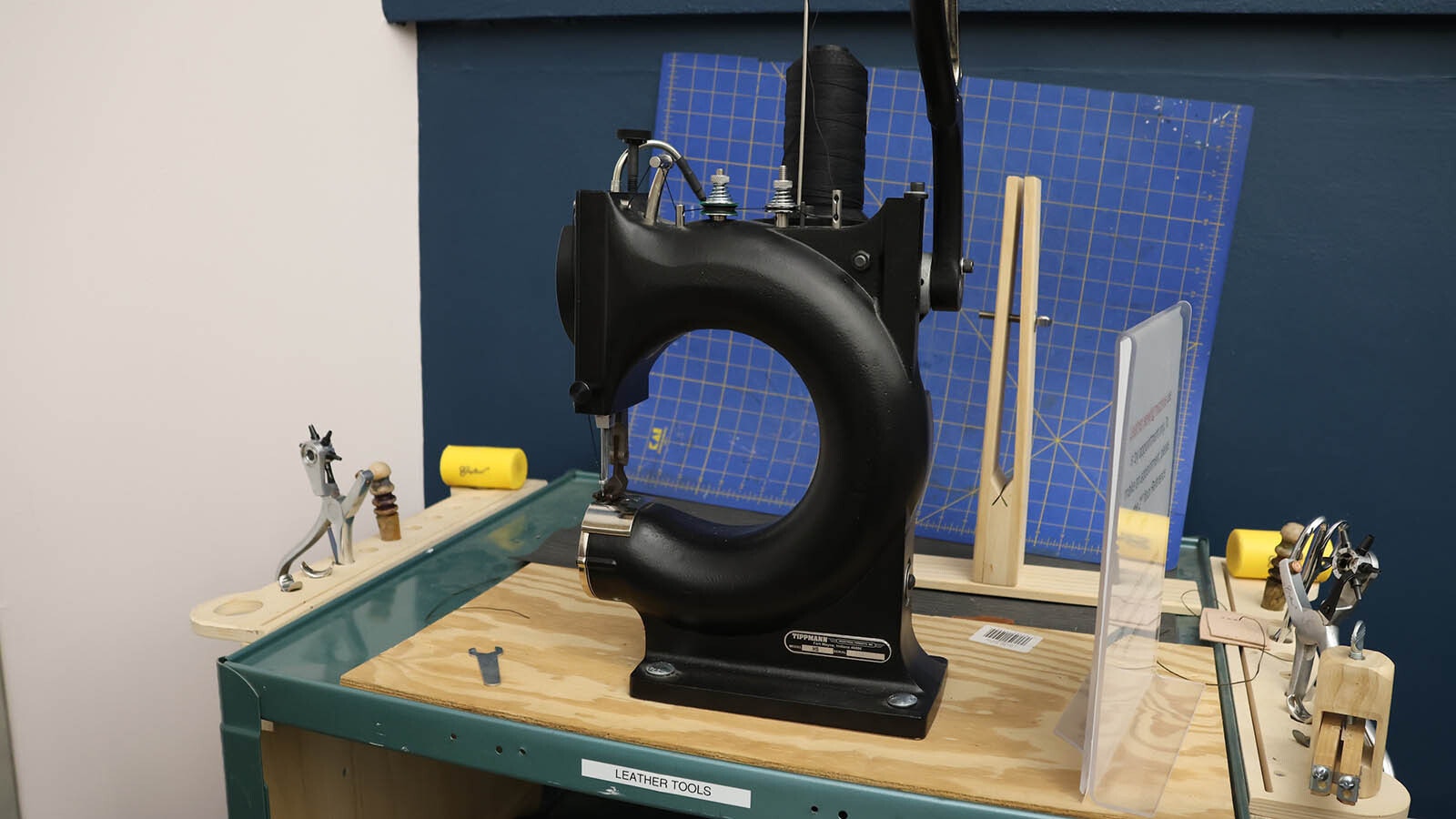
A leather sewing machine is available for use in the library’s Creation Station. (Dale Killingbeck, Cowboy State Daily)
Changing Role
Scroggins said the role of the “librarian” has changed dramatically since the inception of public libraries back in the days of Ben Franklin and even during her 20-year career that began in Texas.
“As technology and community needs evolve, so do libraries,” she said. “Libraries really kind of exist to help empower people to be the best that they can be. So, what we do is really a wonderfully diverse and wide breadth of roles in our community.”
Scroggins said the Natrona County Public Library has 34 staff members and all of them go through training that focuses on a “trauma-informed approach” to communication.
The library sits 100 yards away from a public bus stop where bus passengers in the city transfer and where the homeless often congregate.
Visitors to the library often see patrons with backpacks and those whose appearances lead to assumptions of homelessness and need.
Scroggins said she and her staff work hard to “balance helping people” and “making sure that we are all following the social rules that are set in front of us.”
“A person who’s living a life in trauma may not necessarily understand or be processing the same way I do what is socially appropriate behavior,” she said. “Sometimes it’s as simple as using very clear communication skills to say this is what we expect.”
The best-practice trauma communication training focuses on a respectful tone of voice, listening skills, and eye contact. The communication training curriculum used by the library has an analogy of pennies in a bucket, Scroggins said.
She said people experiencing trauma have nothing to give emotionally and “no pennies in their bucket.”
“Every time you do something nice for a person you are putting a penny in their bucket,” she said. “You have to be kind and respectful to a person four or five times before they really have enough in them to necessarily return that.”
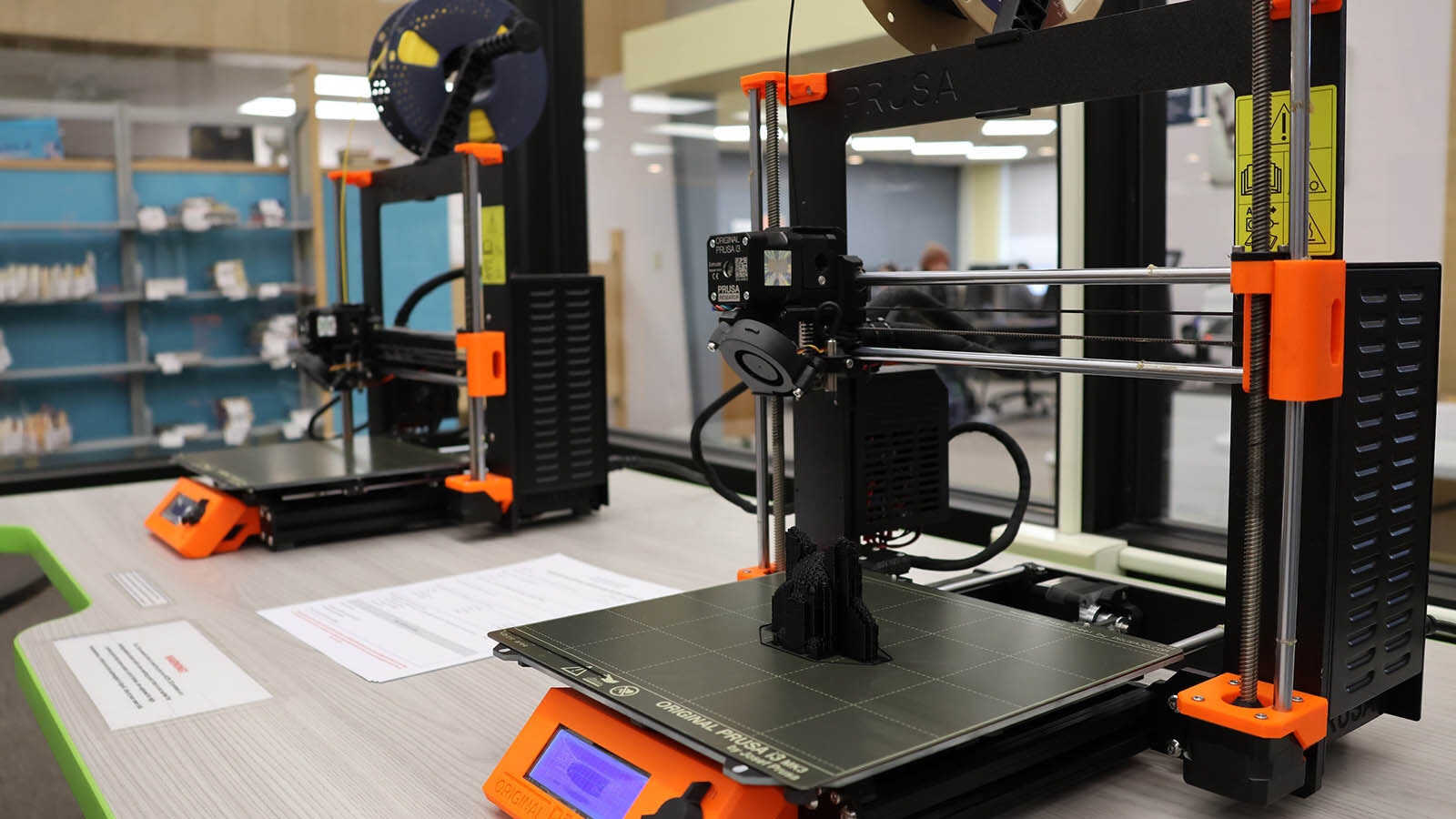
PRUSA 3D printers are available for Natrona County Library patrons to use to make things. Library staff offer instruction on the printers. (Dale Killingbeck, Cowboy State Daily) 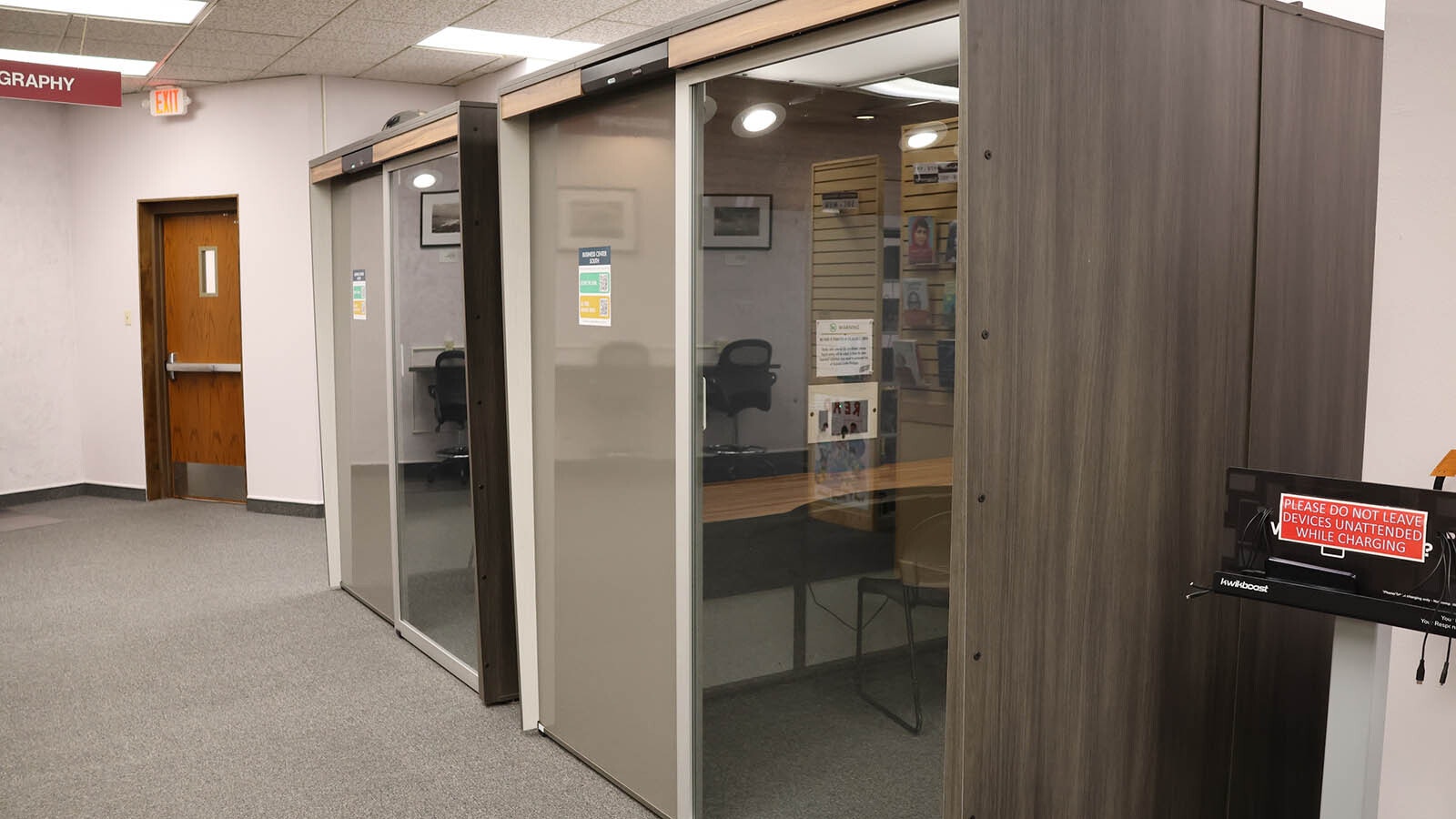
Sound-proof booths for business entrepreneurs were recently installed on the second floor of the Natrona County Library. (Dale Killingbeck, Cowboy State Daily) 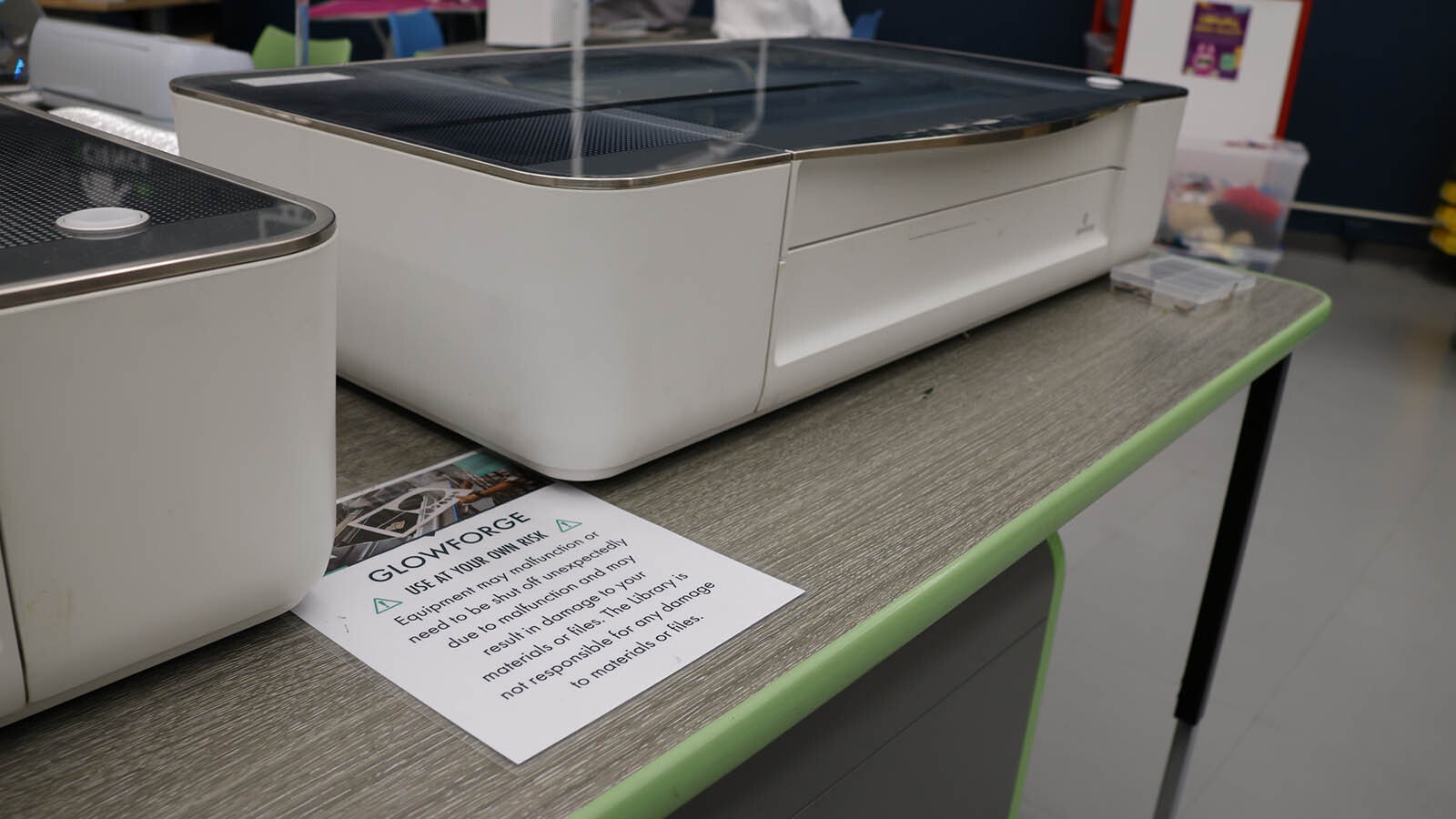
Glowforge machines use lasers to cut and engrave material and objects for crafts and other purposes. (Dale Killingbeck, Cowboy State Daily) 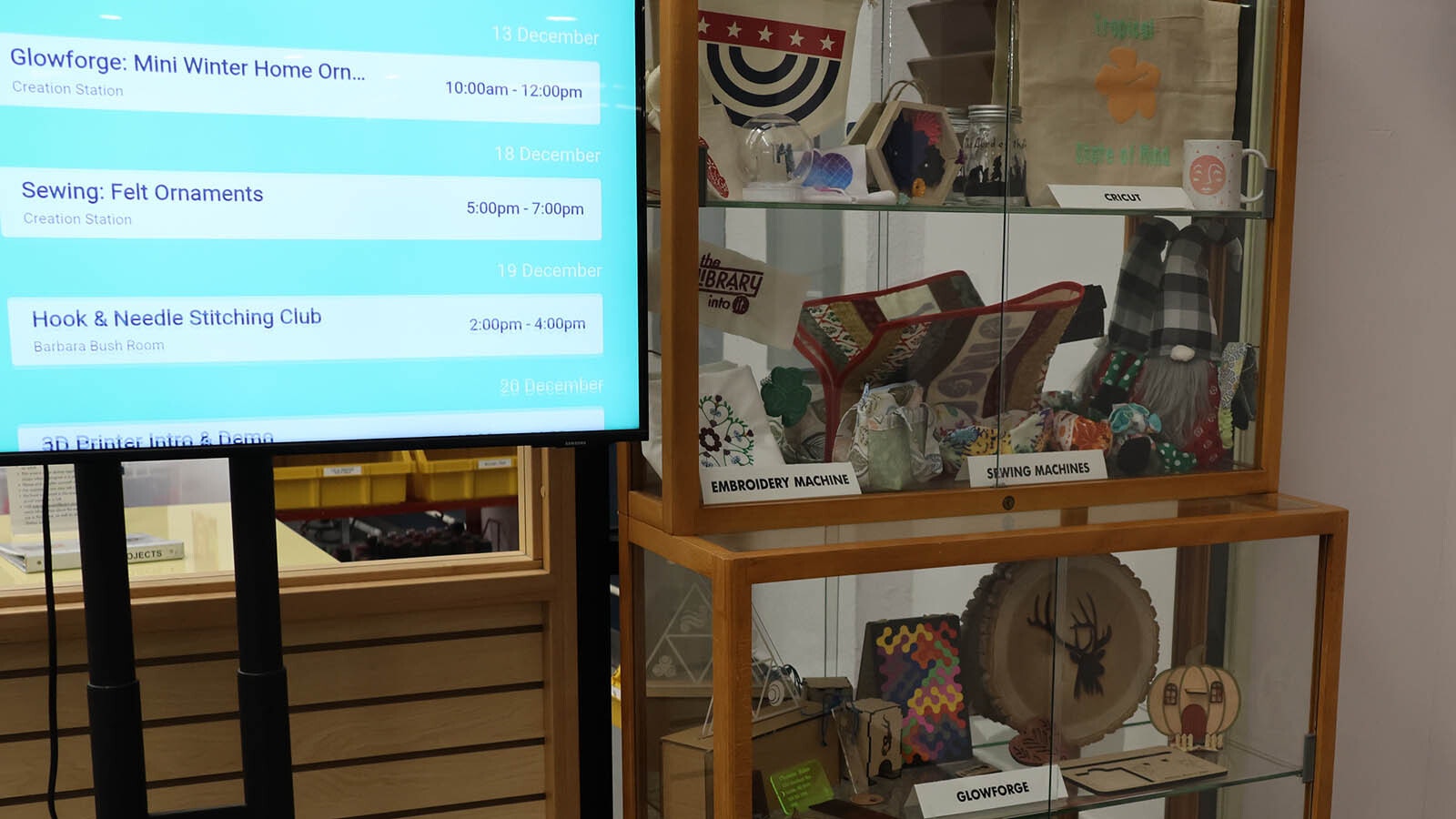
A cabinet outside the Creation Station features items that can be made with the equipment available for patrons. (Dale Killingbeck, Cowboy State Daily) 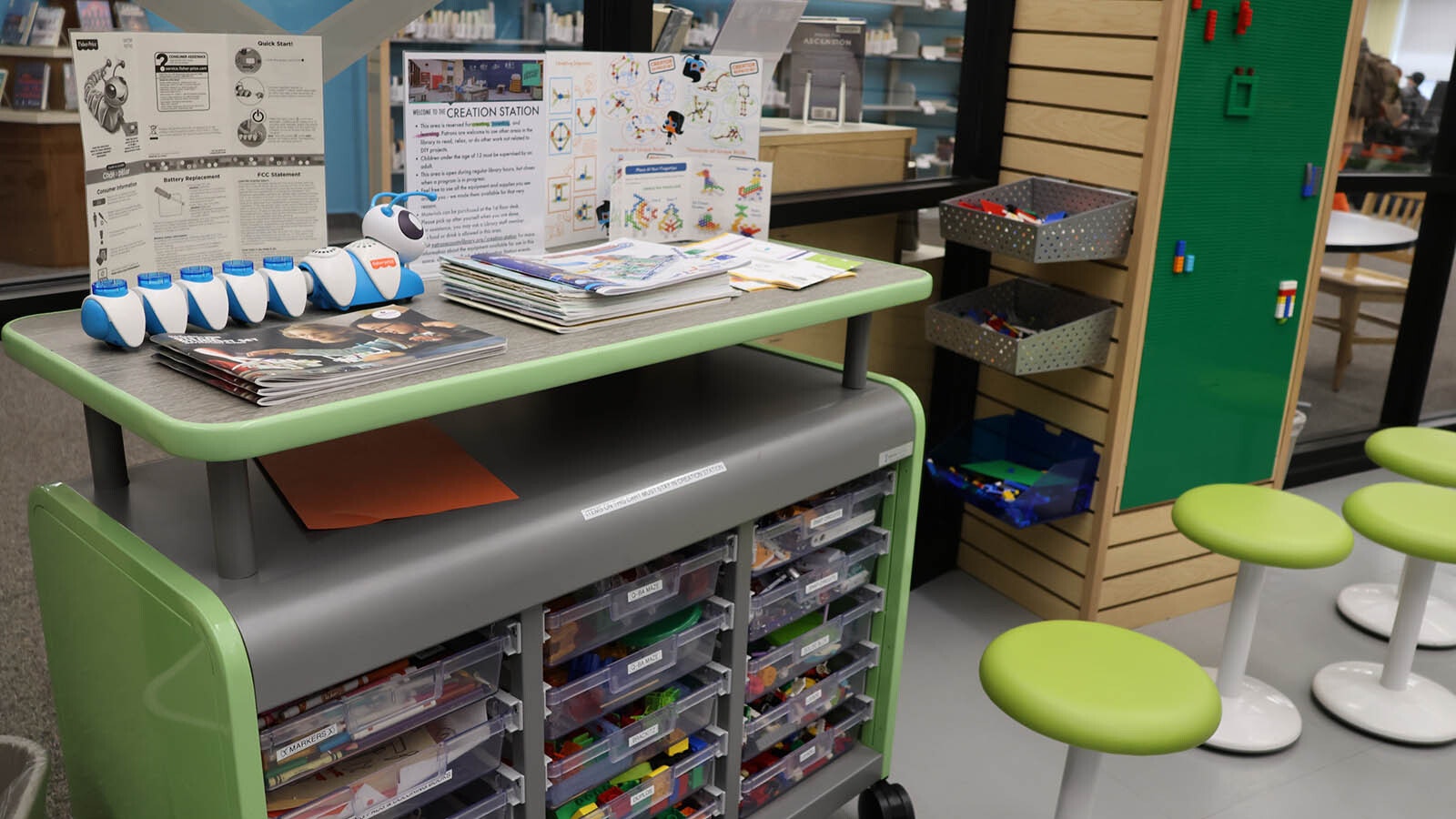
A toy in the children’s section of the creation station helps young children start to think in an “if-then” mindset, preparing them to learn how to think in terms of coding computers. (Dale Killingbeck, Cowboy State Daily)
Extra Security Guard
The library has added security outside and inside in the past couple of years. The outside guard keeps eyes on the library’s parking lot and nearby bus stop. Outdoor lighting has been beefed up so that the “feeling of safety just grew tremendously,” she said.
One of the rules in Casper involves sleeping in public spaces. Scroggins said the homeless do come in and sometimes try to use the facility as a safe place to rest.
Staff use those opportunities to point people in the right direction for community-based resources, she said.
One of the pushbacks Scroggins said she receives from the community is that the library is a homeless shelter.
Her response is if homeless people are in the library and following the rules, their opportunity to use library services is no different than anyone else’s.
“We do have people of all walks of life, including sometimes homeless people,” she said.
Casper resident Christian Fritzler who was walking into the library from the bus stop said he appreciates having the facility in the community.
“It means a place to warm up, a place to socialize and a place to learn,” he said. “It’s just a place to relax after a hard-working day.”
From Casper to Cheyenne, Jackson and beyond, county libraries have become resources and community centers that go well beyond just stamping a due date on the back of a book and handing it out to a patron.
There is entertainment, educational programming and babysitting for stuffed toys.
The Teton County Library in Jackson recently advertised a sleepover for stuffed animals. Kids are invited to bring them in, listen to a story as darkness falls, and then leave their stuffed toy behind for them to enjoy an evening without their owners before getting picked up the next day.
In Cheyenne, the Laramie County Library offered guitar playing tips, and a concert by a musician. There are writing clubs for teens and adults as well as a “Lunch & Learn” scheduled about Cheyenne Little Theater Players' production of the “Miracle On 34th Street.”
Teen Programming
In Casper, Scroggins said the library continues to look for ways to meet needs and offer creative programming as well.
The library has received a $35,000 grant from the Natrona Collective Health Trust for its teen area and is currently reaching out to teens to ask them what services or items would benefit them.
“That’s to be determined,” Scroggins said. “I think they are going to want some things like study spaces or gaming spaces, but we don’t know what this is going to look like.”
A grant to Laramie County a few years ago benefited Natrona County, as well by providing funds to create a studio on the library’s second floor that allows business entrepreneurs to record a commercial or a podcaster to produce a podcast.
The studio includes a camera, microphone, editing equipment and a green screen to allow for different backgrounds behind the performer.
Grant money also funded tables on the second floor that allow for people to use their own computer devices and recharge while there.
The library also wants to help start-up businesses. There is a fax machine and copier on the second floor alongside recently installed private glass booths that can be reserved for business purposes, interviews, and other personal meeting needs.
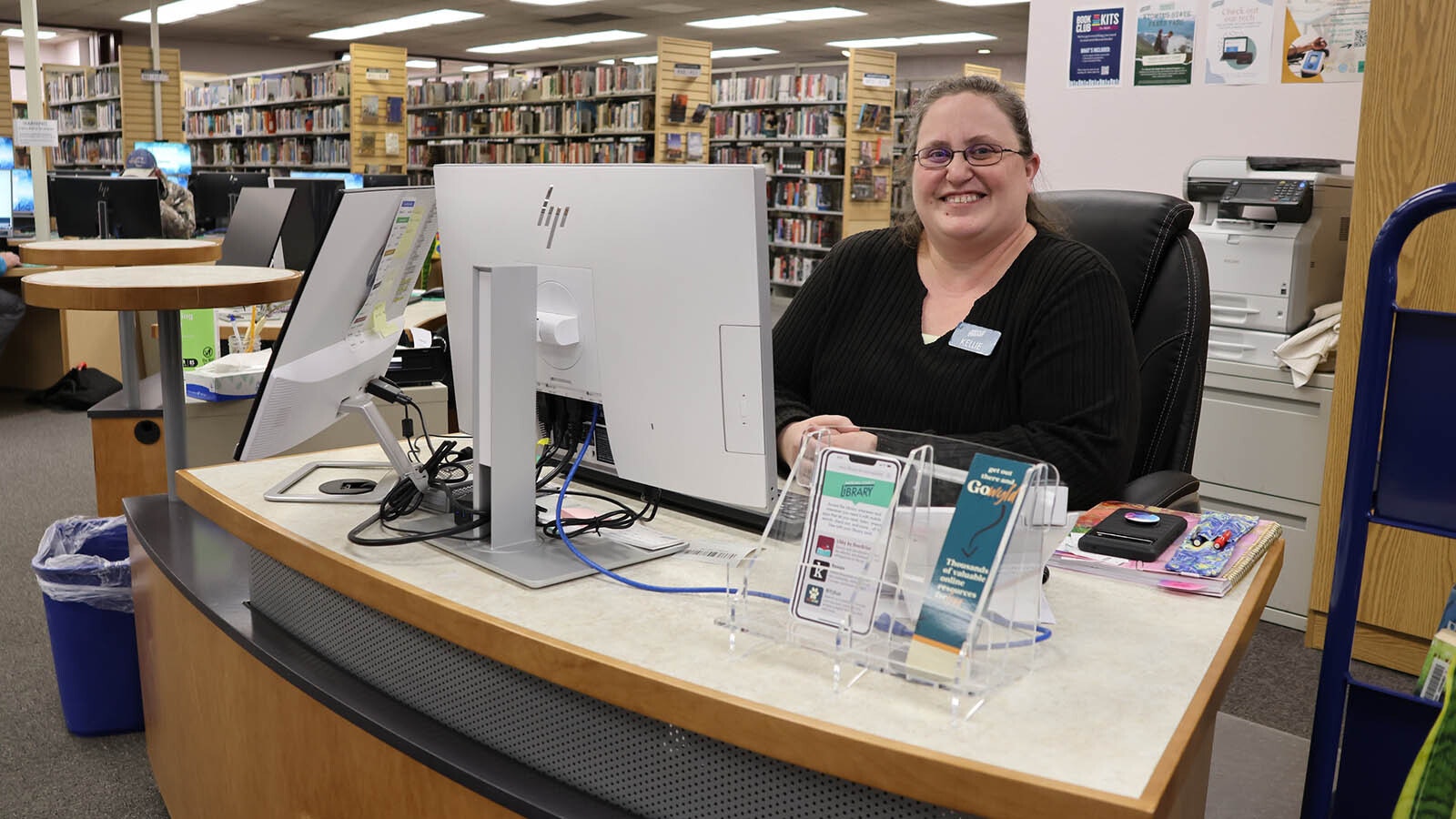
Kellie Humphries sat at a library desk on the second floor near the booths. She has been at the library for three years and previously worked in children’s services at a library in Lincoln County.
“I do adult programming, I do Creation Station classes, I work with the genealogy society, there is just a whole bunch of different hats and stuff that we do up here to help our patrons out,” she said. “I like working with people, it’s a lot of fun.”
Creation Station
The Creation Station on the first floor of the library offers 3D printers, Cricut machines that cut vinyl and paper using a digital design, sewing machines, Glowforge laser cutter and engraving machines.
Classes are offered on all the equipment, and the goal is to help people learn skills and connect with one another.
“When people come to a class in here, not only are they learning leatherwork or how to sew something, or cut something out, but they are doing it around a group of people and they are connecting with other Casperites,” Scroggins said. “And that is another way to build community.”
On the first floor behind the fiction section, a large booth offers patrons a special private place to talk with their health care provider anywhere in the state via a telemedicine link. The booth features a heater, a white noise blower that cancels the conversation for anyone outside the booth, a screen, camera, blood pressure cuff and scale.
An instruction sheet inside the booth informs users how to set up the equipment for the visit.
Scroggins said the provider sends an email link to their patient for the visit and the library offers all the items such as a computer, big monitor screen and camera to make it happen. While patrons must reserve the telemedicine booth, the library keeps no record of past reservations or anything associated with the visit to ensure privacy, she said.
The pandemic isolated people, and Scroggins said the library numbers are still not back from where they were before the pandemic. She knows the internet and associated digital services have probably had an impact.
However, the library still has 28,369 active card holders — about 36% of the county’s population.
Library programs and collaboration with groups in the community continue to grow and build momentum — some of it out in the community. Scroggins sees the library as still relevant and important for the patrons it serves.
“Giving opportunities for people to come together, that’s another one of our strategic goals … to help build a thriving community,” she said. “And communities don’t thrive if the people don’t connect. That’s part of what we do too, get people together.”
Dale Killingbeck can be reached at dale@cowboystatedaily.com.