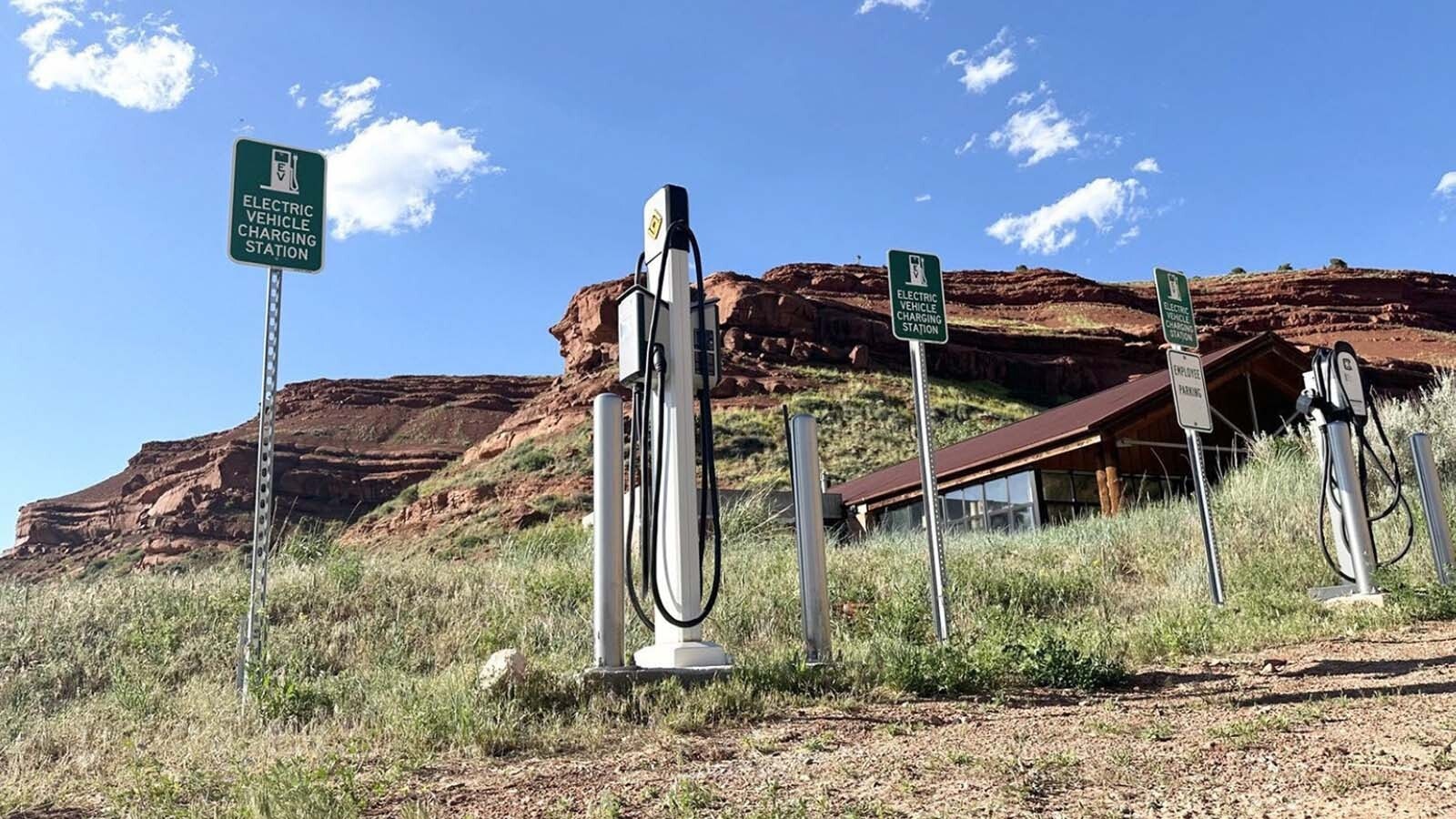
As more drivers accelerate into the post-gas pump chapter of their driving lives, the United States will need an estimated 28 million more electric vehicle charging ports to keep up with the number of EV owners projected by 2030.
Building that infrastructure could require up to $127 billion in investment, according to a study by the National Renewable Energy Laboratory in Golden, Colorado.
Green Rain Energy Holdings, a California company registered as a business in Wyoming, envisions some of these charging stations powered directly by the sun, with solar arrays feeding Level 3 gear that will charge an EV in about 15 minutes.
Marketing materials describe Green Rain as "a clean-energy infrastructure company focused on high-value EV charging assets across major U.S. travel corridors."
Its webpage shows a solar array directly powering an EV charger, but Green Rain CEO Alfredo Papadakis told Cowboy State Daily creating a seamless flow of energy from the sun to the battery in an electric vehicle isn't feasible in every location.
Instead, said Papadakis, EV charging stations rely on a customized combination of power sources and distribution to make them work.
"There's a bunch of different ways that this type of technology investment can be implemented," said Papadakis. "One might need a battery component, another one might need natural gas. I think that the point is one size does not fit all."
Green Rain is currently managing 29 EV charging projects at hotel properties around the U.S., but none in Wyoming. It's also considering an EV charger opportunity at a gas station in Bozeman, Montana.
What’s Next In Wyoming
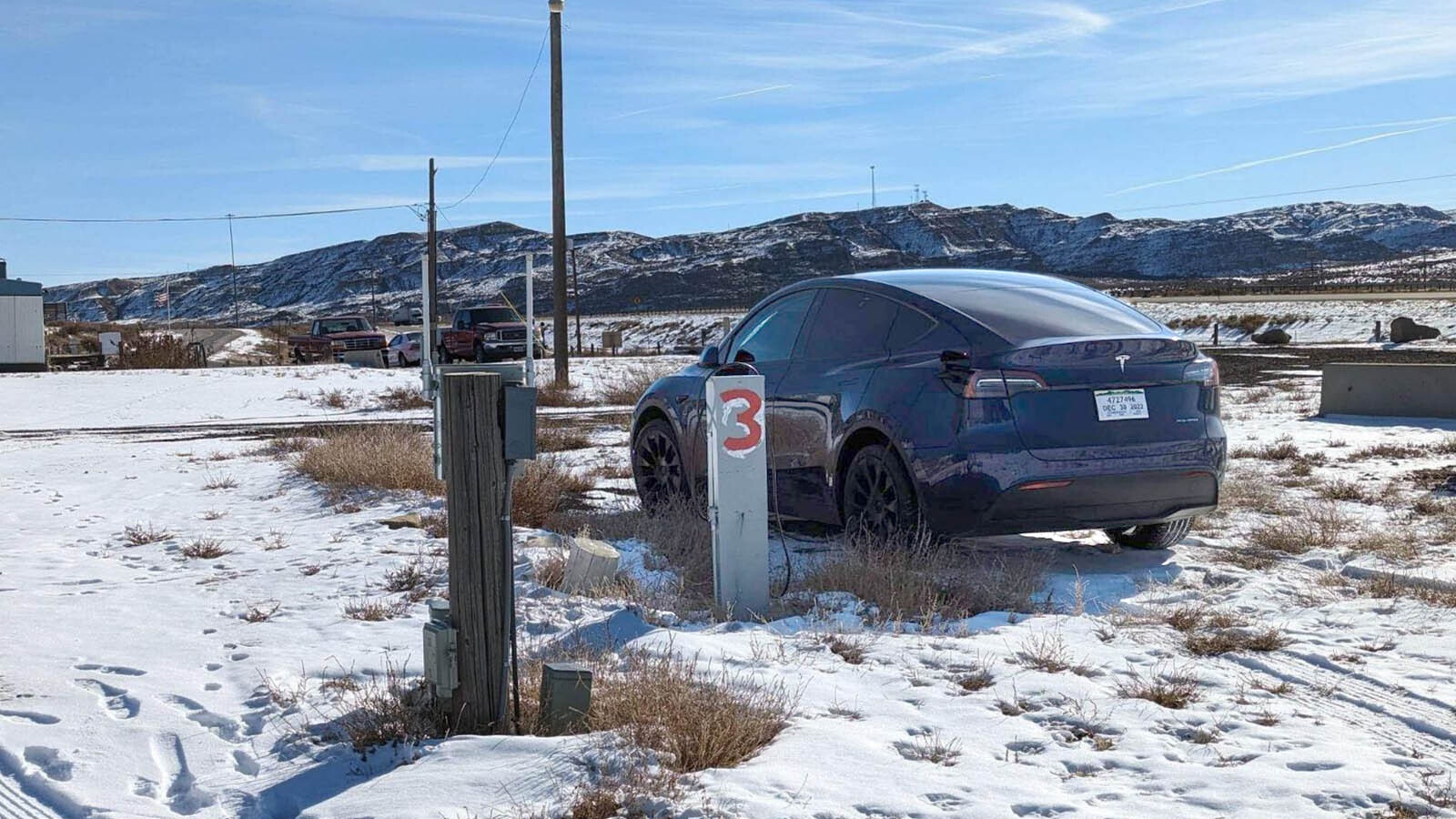
Companies looking to compete for a place in the emerging EV charger installation industry will be drawn to Wyoming in 2026, as the Wyoming Department of Transportation evaluates candidates applying for federal incentive grants.
In October, the Federal Highway Administration approved the state's Electric Vehicle Infrastructure Deployment Plan, which includes federal development funds through 2026.
The approval marked a turning point for Wyoming's approach to EV infrastructure, according to Jordan Young, deputy public affairs officer for WYDOT.
"Our most recent plan has some pretty major changes from previous plans," Young said. "Namely, wanting to spend the money away from the alternative fuel corridors, which in Wyoming are the interstates. We felt that there was enough coverage of chargers on these routes that we wanted to move the federal money to the other routes to get folks from the interstates to tourist communities, closer to Yellowstone and other areas that aren't right off the interstate."
WYDOT has no plans to own or operate charging stations, said Young. Instead, the department is trying to stoke private investment.
"We fully intend for this to be a grant program for interested businesses who think they can make good business sense in a certain location," Young said.
The grants would typically cover 80% of costs, with private companies putting up the remaining 20%.
"The private company would have to put some skin in the game, so to speak, with the matching funds for the federal dollars," Young said.
The cost of building a fully compliant charging station — one capable of simultaneously charging four vehicles with Level 3 fast chargers — runs between $500,000 and $800,000 per site according to WYDOT, depending on existing infrastructure and power availability.
Young said WYDOT is still developing its request for proposals, with applications opening sometime next year.
According to WYDOT, the state was allocated $3.9 million in 2022 and expects $5 million each year for the following four years for a total of $26.8 million for EV infrastructure.
Economics of Charging
Patrick Lawson knows firsthand how the business of EV charging works. The Riverton businessman owns Wild West EV and operates 24 charging stations across Wyoming.
"You're paying 10 cents a kilowatt for the electricity you charge and 40 cents a kilowatt to the end customers," Lawson said. "When somebody pulls up and it costs 30 bucks, your cost on the actual electricity part of it might be $10, but the other fees and the actual charging equipment are pretty expensive. So you've got to calculate that out. It takes a while to get payback."
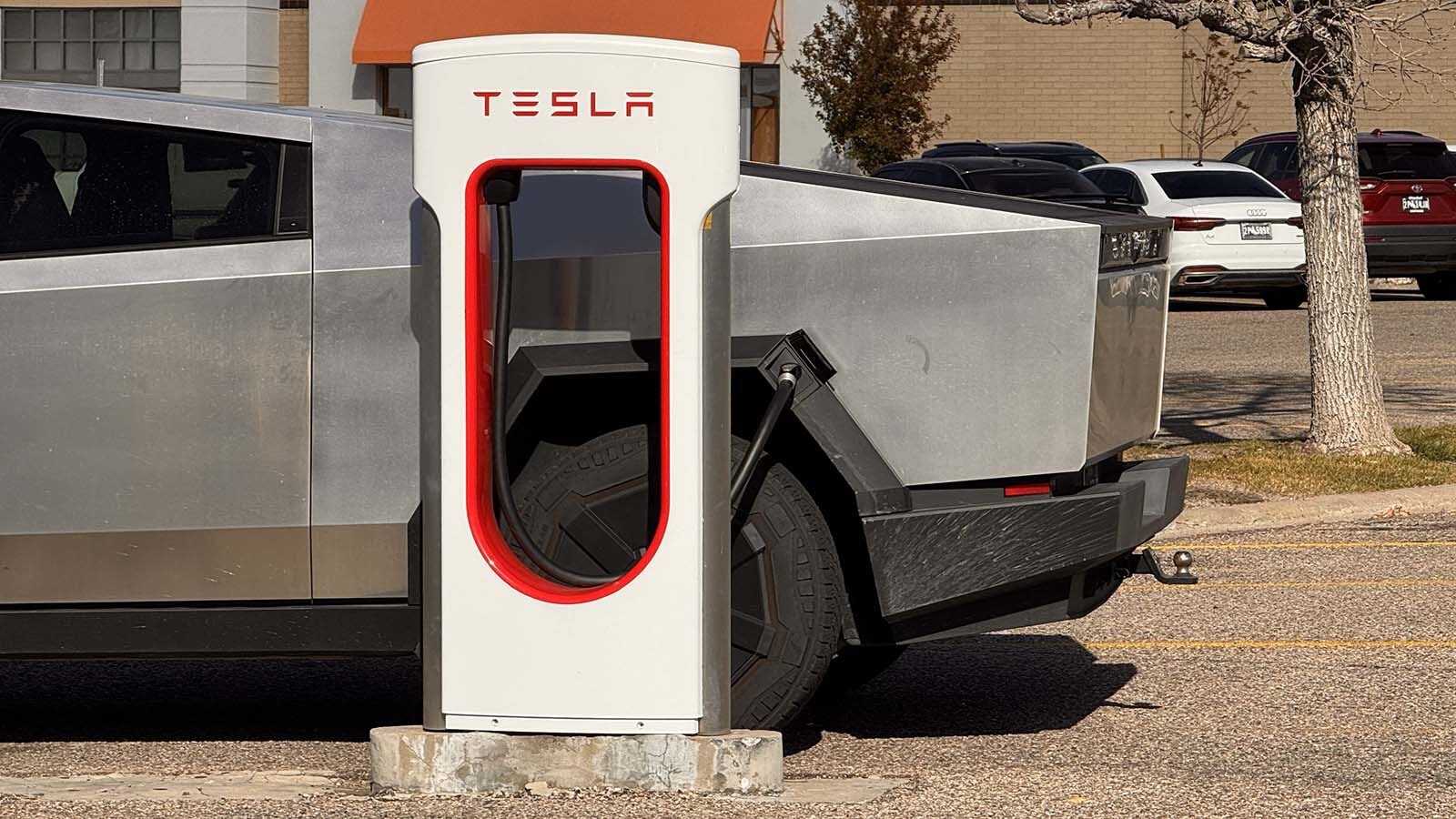
Currently, Tesla stations in Wyoming charge around 39 cents per kilowatt, while non-Tesla stations typically run in the 50-cent range. The wholesale cost of electricity in Wyoming runs between 10 and 14 cents per kilowatt.
Lawson said the cheapest and fastest approach is often connecting to the existing power grid. But solar remains the long-term goal for many operators.
"That's the dream, right? That's the ideal scenario," Lawson said. "And it works. That's how I charge on my personal fleet and the rentals here. I've got a 25-kilowatt solar array, and when sunny, it goes directly into the tank per se on any vehicle plugged in. And if they're not here, it fills up another battery that comes from the battery at night."
But scaling that model takes volume.
"Upfront costs are prohibitive until there's a lot of usage," Lawson said. "So I think as the usage goes up, we'll add those solar canopies and potential battery systems. You just need more usage to justify the upfront investment."
Tailoring Power to Place
The diversity of charging solutions reflects the patchwork nature of America's energy landscape, according to Papadakis.
"Every site is different as every power company, every gas-electric company is different," Papadakis said. "There's going to be different standards and different situations."
He pointed to two hotels in Green Rain's portfolio as examples of how location shapes technology choices.
"I would treat a hotel in Saratoga, New York, differently from a project that we're looking at developing in Tempe, Arizona, at the Tempe Hilton," Papadakis said. "They're two different properties. There are two different circumstances. One might be better use for a Level 3 charging station. Another one maybe for a level two to begin with. One might need a battery component, another one might need natural gas."
In Wyoming, WYDOT is looking for experienced companies ready to build the right charging solution in the right places away from major interstates.
"We do see this as a way to use federal funds to help bridge the gap with the help of private industry because they've done all the work already,” said WYDOT’s Young. “So we're going to let the market keep doing its thing."
David Madison can be reached at david@cowboystatedaily.com.