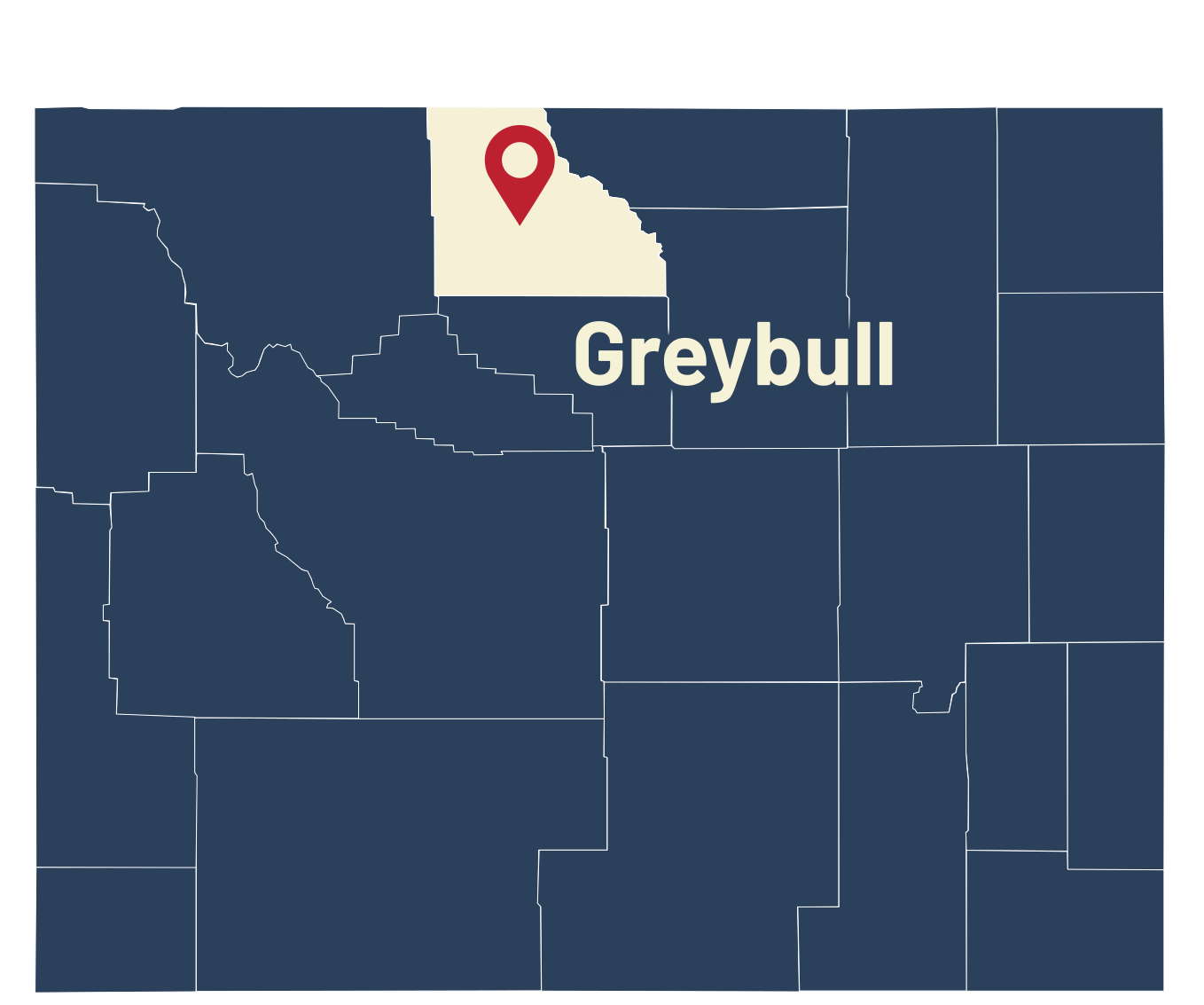
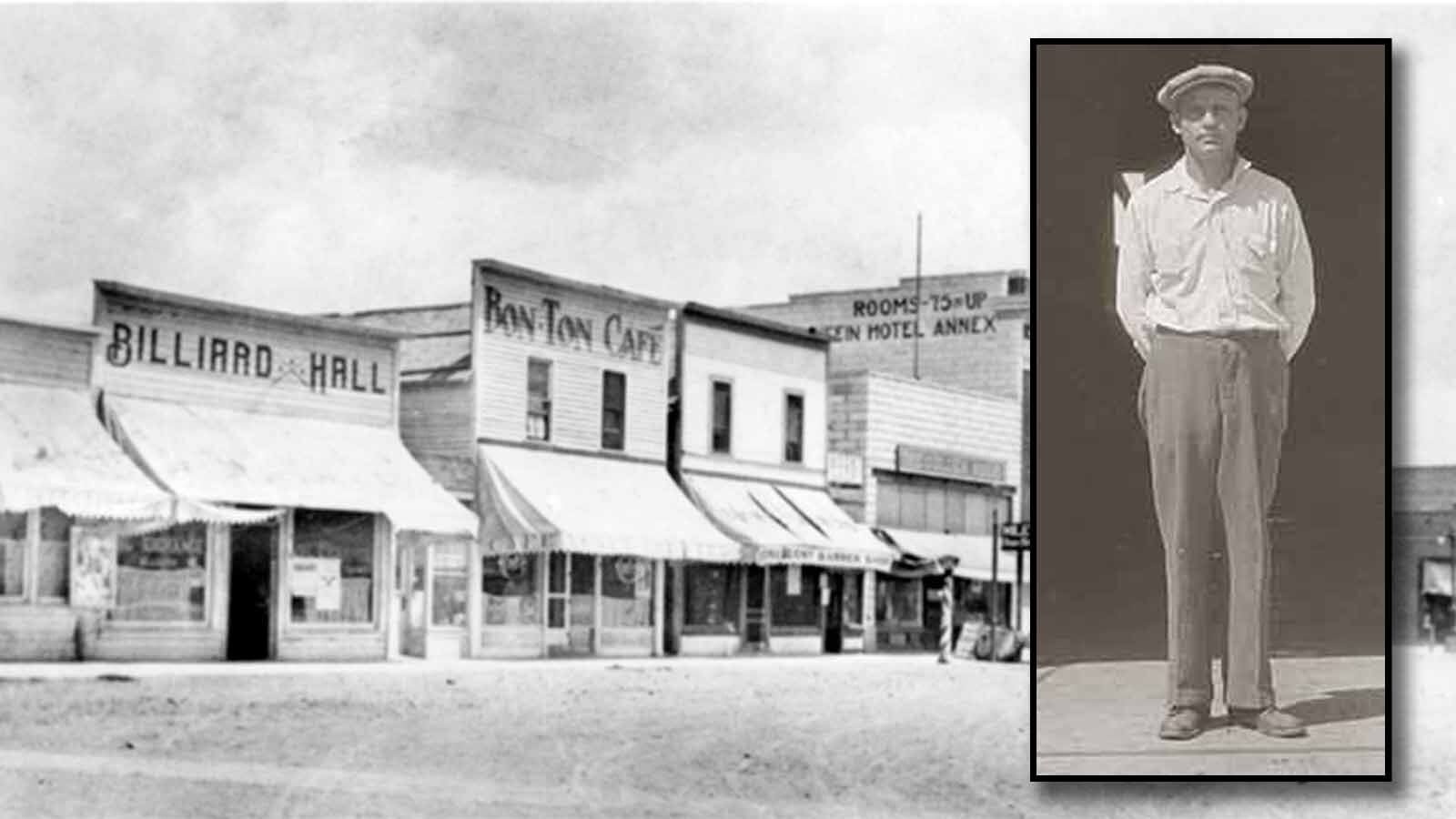
Joe Carey of Greybull was just 23 years old when Prohibition became law in America on July 1, 1919.
Liquor distillers were given a certain amount of time to dispose of their suddently illegal stocks and Canadian liquor dealers immediately offered to buy everything U.S. distillers and breweries had on hand.
As millions of gallons of bonded United States liquor headed to Canada, enterprising Americans began figuring out various ways to get this now illegal elixir back across the border.
Carey was one of those who immediately saw a business opportunity and successfully approached the local bank to finance his new import business.
According to Historian Tom Davis, for the next four years, Carey supplied the good people of Greybull, Wyoming, with their coveted underground liquor as a rum runner, making frequent trips to Canada for bourbon whiskey and scotch.
In his book “Glimpses of Greybull’s Past,” Davis wrote that Carey had the experience needed to drive the fast cars and the cool head to stay calm. He had been an ambulance driver during World War I and was driving a delivery truck for the Greybull Market.
The Silent Partner
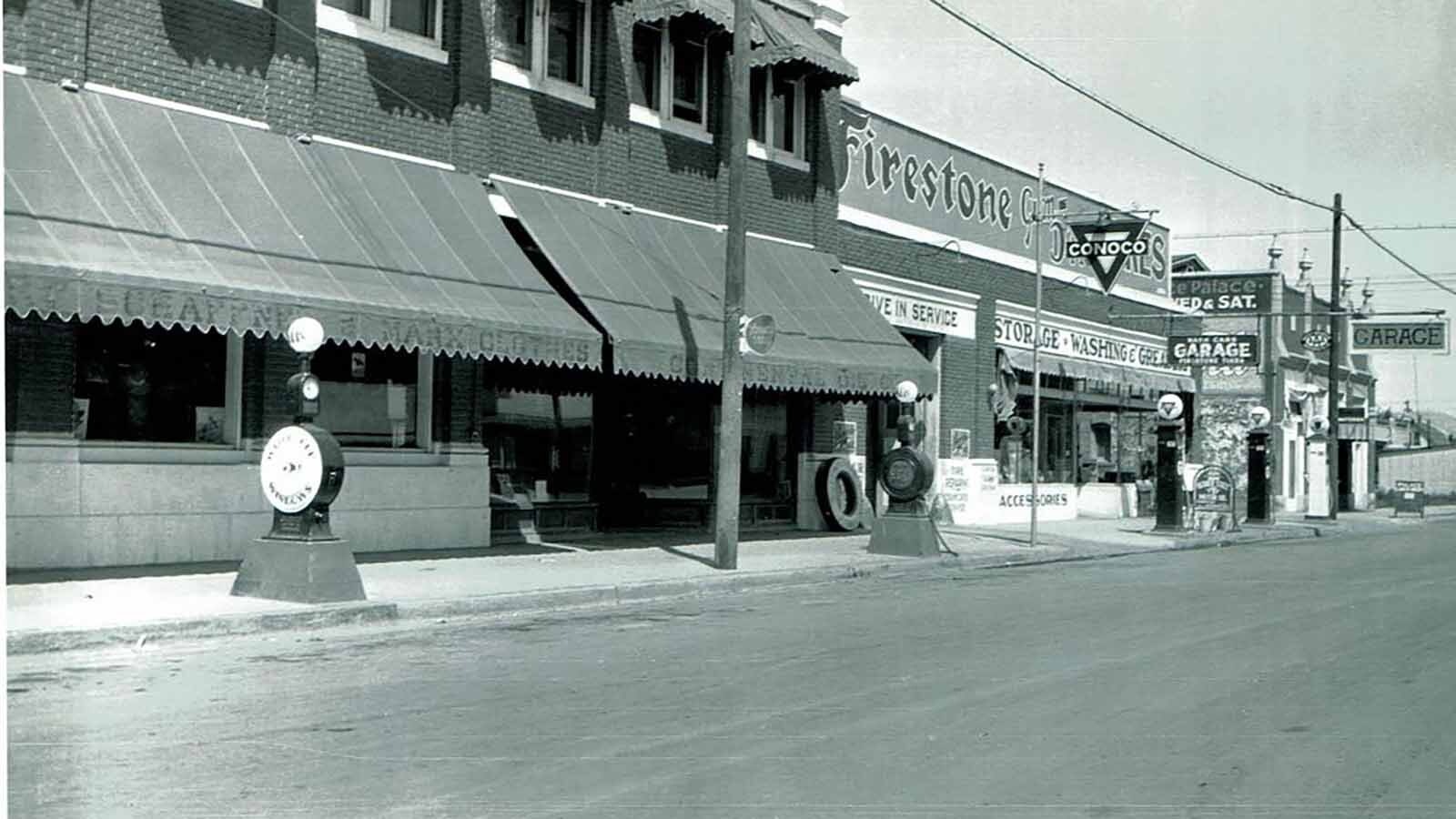
Carey had no money to buy large quantities of liquor in Canada, according to Davis, so like any enterprising young businessman, his first step was to the First National Bank in Greybull to see if it would consider financing his new business venture delivering booze instead of groceries.
In the fall of 1979, Carey's niece, Jean Godden, taped an interview about his adventures supplying Greybull with "imported liquor." Carey candidly answered her questions, giving a glimpse into the life of a Wyoming rum runner.
Carey said his silent business partner was George Hinman, the banker he first approached for a loan.
“He didn't want any of his board to know anything about it,” Carey said. “I don't think anybody ever knew anything about it, only one clerk.”
The bank made a substantial profit on the first run, but Hinman was still concerned about losing money.
After Carey made his first successful run, Hinman asked, “Suppose you get knocked over and lost this liquor?”
“If I do, I’ll come home in a wooden overcoat, I’ll tell you that,” Carey said.
“Let’s don’t hope that happens. We need our money!” Hinman responded.
Carey told him not to worry and that the bank would get its money. He delivered on that promise, tripling the investment.
Carey had people congratulating him on his newfound fortune, but he would respond that it was his and the bank’s.
Attempted Shakedown
Carey had a young partner named Charlie that he said was not "worth a damn." Charlie had once driven the car into a telephone pole, so Carey no longer let him drive.
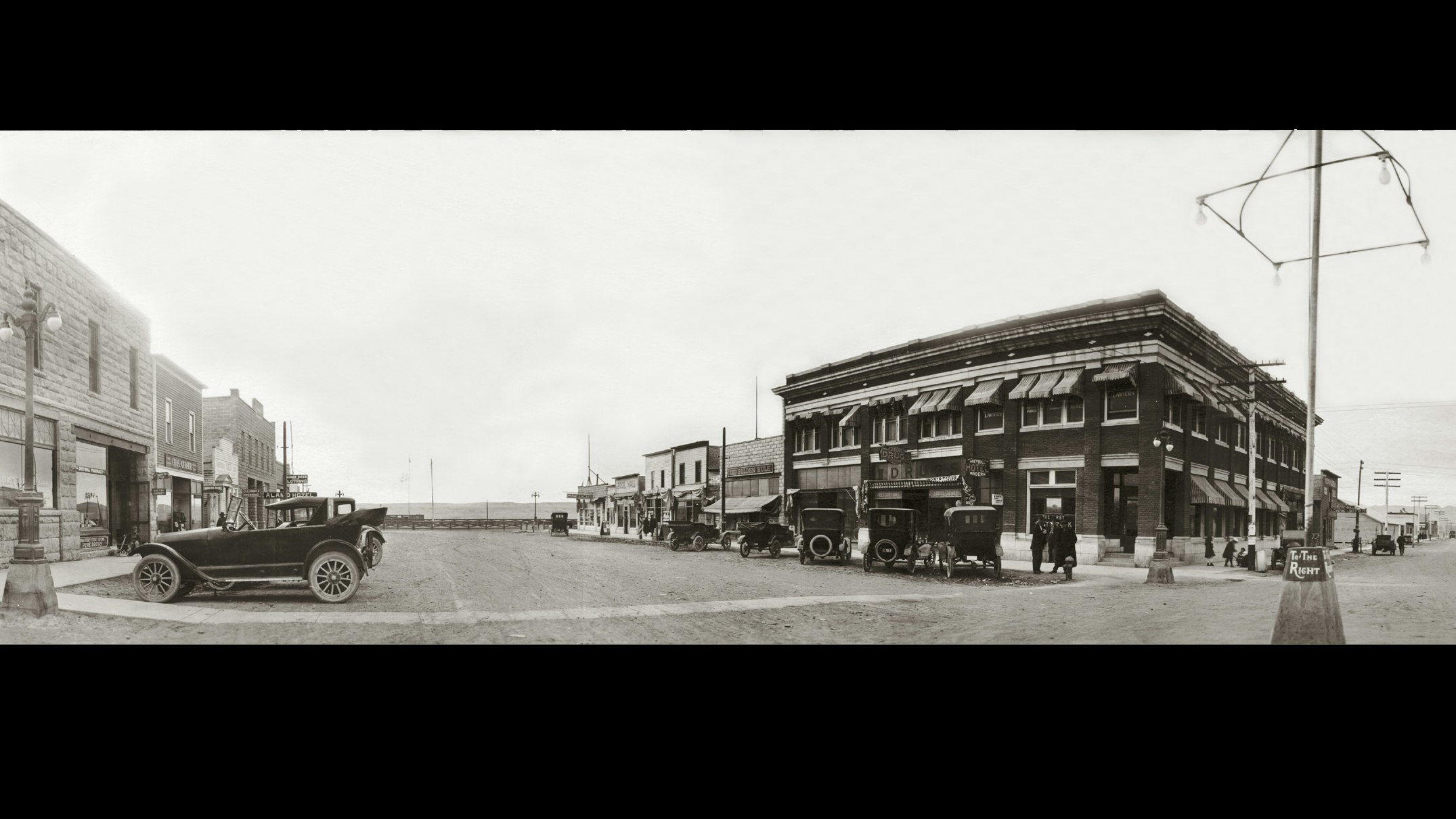
On one run, Carey left Charlie in a garage in Square Butte, Montana, while Carey went uptown to eat.
Unknown to Carey at the time, the owner was a deputy sheriff and had seen the load hidden in the car.
“When we came back, the owner had Charlie packing these sacks of liquor down to his garage basement with a gun,” Carey said.
Fortunately for Carey, the deputy sheriff was half deaf and did not see the rum smugglers walk into the garage.
“When we saw what was going on, I ran out to the car and got my gun,” Carey said. “I came up behind him and told him to drop his gun.”
Carey then made that deputy pack all the whiskey back up and load it in the car.
“Then we locked him in the clothes closet in the office of the garage and we proceeded over the hill to Lewistown, with four horses hitched to the front of the car to get over the hump,” Carey said.
He then pulled into a garage in Lewistown to have a new clutch installed and the local sheriff came over to the garage.
“He wanted to know where we were headed for, and I told him we were headed to Canada for a load of liquor,” Carey said.
In actuality, Carey had already made his trip to Canada and was on his way back.
The deputy told him that they were looking for a car from Square Butte coming this way and didn’t “have all the dope on it.”
The deputy complained that it was hard to get all the details over the telephone and didn’t even know what type of car they were looking for.
Realizing it was them the deputy was after, Carey played it off and said that they might have run into the car on their way, but he couldn’t say for sure.
"If you see anything about it when you get on down the line, give me a ring," the deputy said.
Carey agreed. He finished getting his clutch fixed and headed out of Lewistown as soon as possible. Outside town, they grabbed the liquor that they had stashed in a snowbank and took off.
“They'd seen us pull out that way, toward Canada, so they figured that we were not the guys they were looking for,” Carey said. “I drove around the outskirts of Lewistown and then come back onto the highway and took off for Billings. Everything was OK then.”
The Elks
The first load that Carey had picked up in Canada, he offloaded right at the bank. After that, he would take the liquor to the boarding house where he was staying.
“I could drive right in and cache it at my convenience,” Carey said. “Nobody ever knew when I got in or anything else.”
Carey turned the liquor over to the Elks Committee.
These committees were responsible for the alcohol rather than the Elks Lodge themselves so that they had nothing to do with the purchase of the illicit drink. It was one of the many ways that Carey found to skirt the letter of the law.
Once, Carey said, the committee was short $500 and Carey took them over to the bank for a loan. He was then able to get his money immediately that way and the committee had to pay the bank loan back.
“I knew most of the people in the Elks,” Carey said. “They were engineers on the railroad or firemen and one thing and another, and workers at the refinery.”
Liquor Medicine
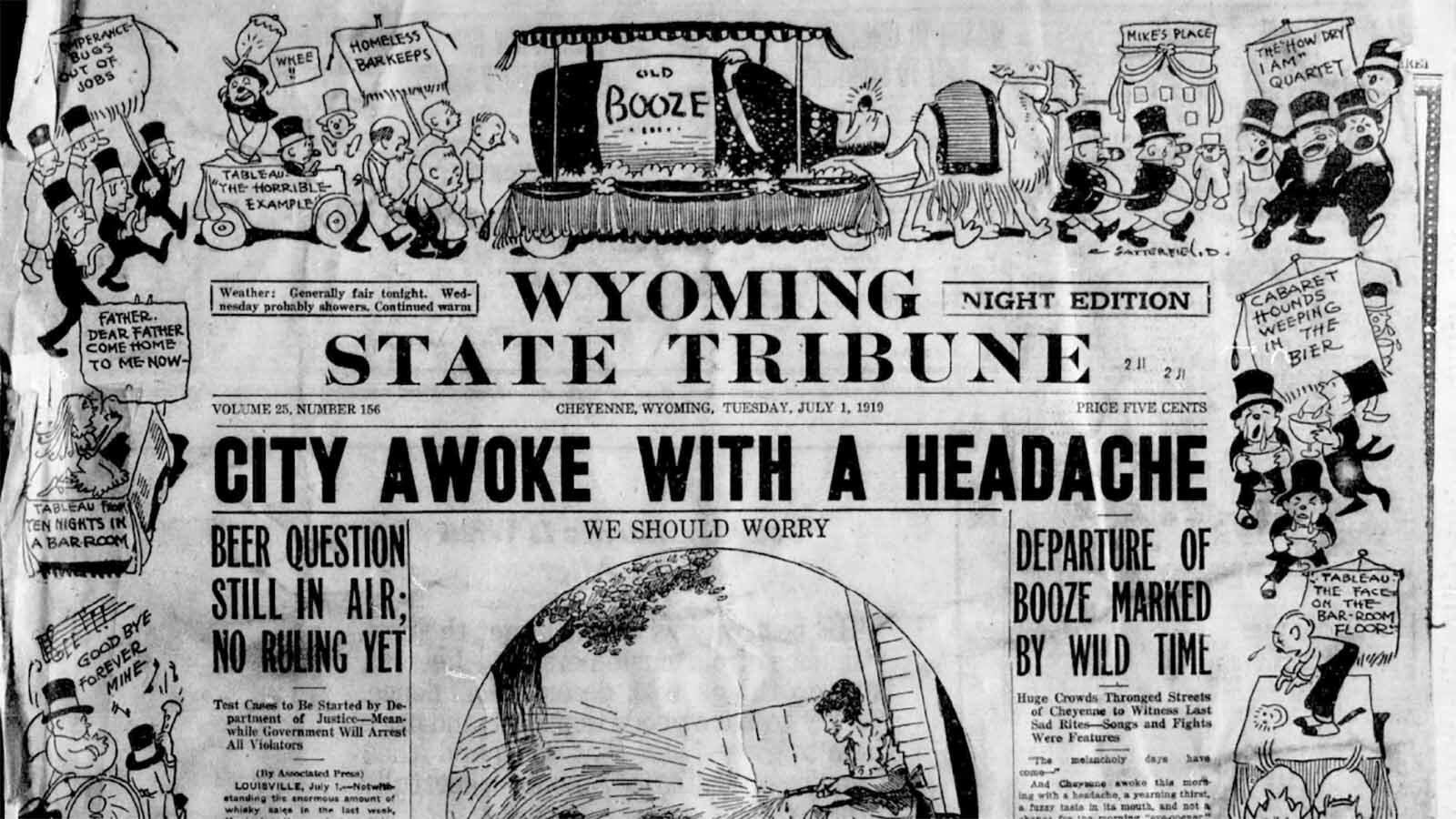
A provision in the liquor laws allowed small amounts of booze to be sold legally for “medicinal purposes.”
“There was a certain amount they could hold back and then it was sold by druggists, and that way people purchased it through a prescription from the doctor,” Carey said. “I bought liquor at the drug store here in Greybull by prescription.”
Carey said that he would pay up to $5 for a pint of 100-proof whiskey from the pharmacist because the "doctors recommended it." The drug store had a license which was called a federal license stamp that would be monitored by the feds.
“Shows you how crooked the whole thing was politically,” Carey said. “The doc was allowed to carry it in his suitcase in case he ran into somebody who had the flu, you know, or something like that. Alcohol, and 180 proof too.”
To get a prescription, patients just had to convince the doctors that they had a bad cold and they would be instructed to take a tablespoonful of whiskey 16 times a minute.
“If that didn't cure you, it would kill you,” Carey said.
Carey’s last run was in 1923, and by 1926, he was married to the daughter of a police officer.
His four children were raised in Greybull and all graduated from high school there.
Carey ran his hotel and bar in Greybull once Prohibition was over, maintaining all the relationships he had built during his four years as the town's brazen rum runner.
Jackie Dorothy can be reached at jackie@cowboystatedaily.com.