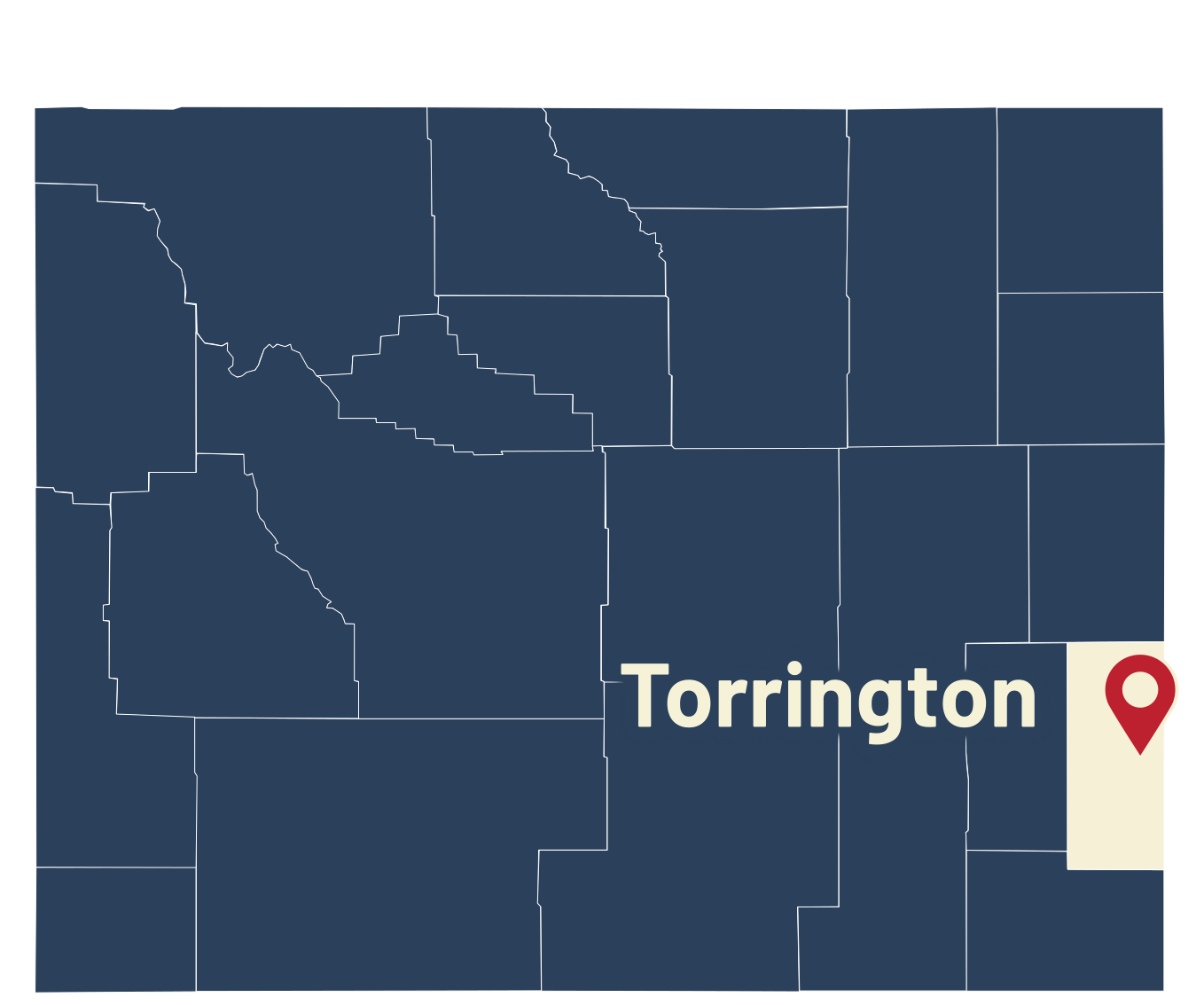
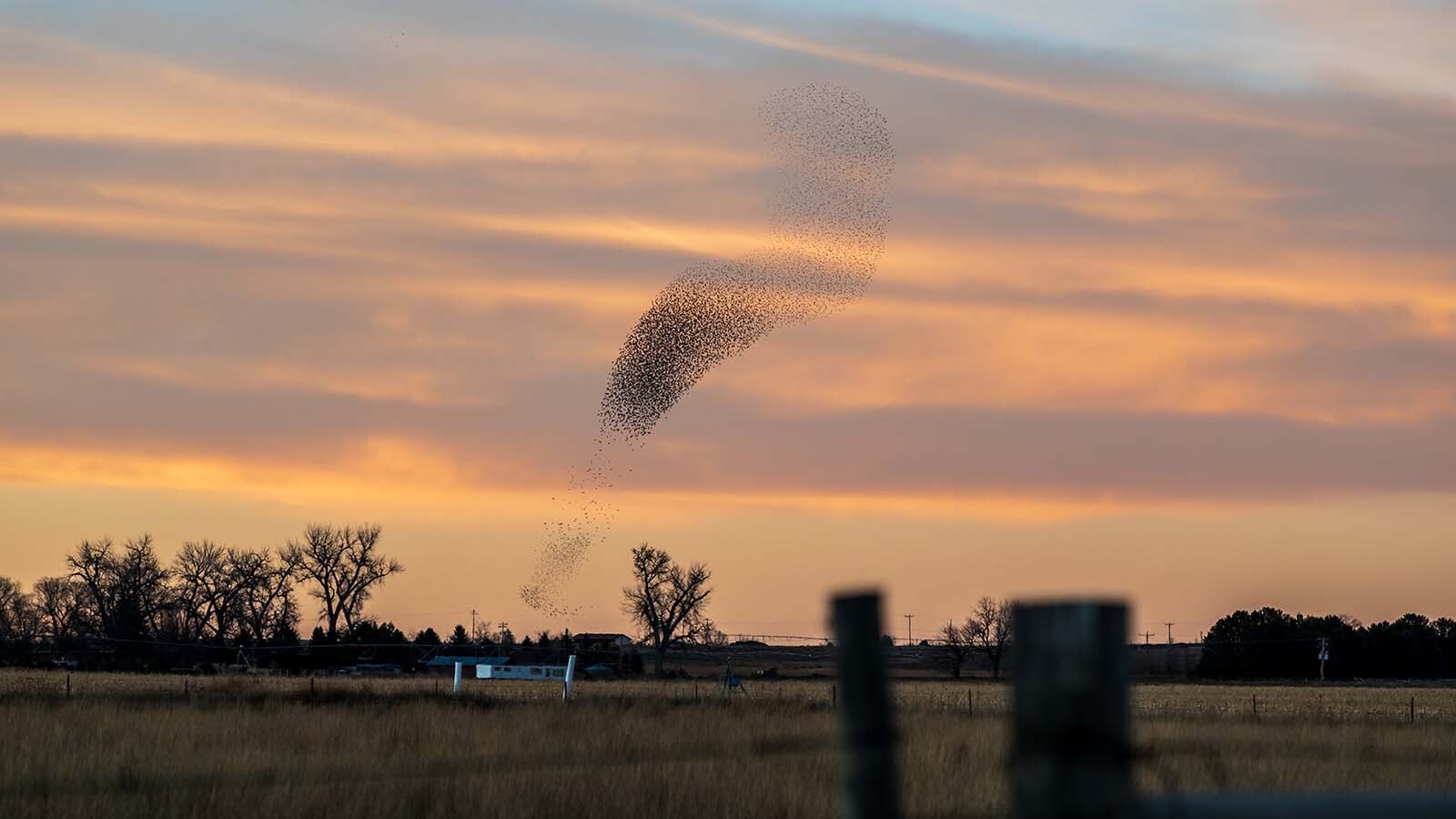
A tight, swirling pattern of birds, almost like a “bird tornado” was mesmerizing to watch over farmland north of Torrington, said a local man who took photos of the phenomenon.
“I saw those darn things, and I wasn’t sure what they were at first,” Ed Schreiner told Cowboy State Daily.
The birds weren’t ill or possessed. They’re European starlings, and the dizzying formation in which they were flying is a perfectly natural behavior for them, called a murmuration.
‘Bad-News Birds’
While the behavior might be spectacular, the birds themselves aren’t highly regarded in Wyoming. They’re considered an invasive species here, and across North America.
“They take over habitat. They out-compete native species and they’re prolific. They’re bad-news birds,” Red Desert Audubon Society president Andrea Orabona told Cowboy State Daily.
Even so, a murmuration is “pretty cool to watch. That’s the only cool thing I like about starlings,” said Orabona, a retired Wyoming Game and Fish Department bird biologist.
Starlings are classified as a predacious, or predatory bird species in Wyoming. They damage crops and destroy the eggs or kill the young of native bird species.
They may be killed at any time, with no bag limit and no permit or license required.
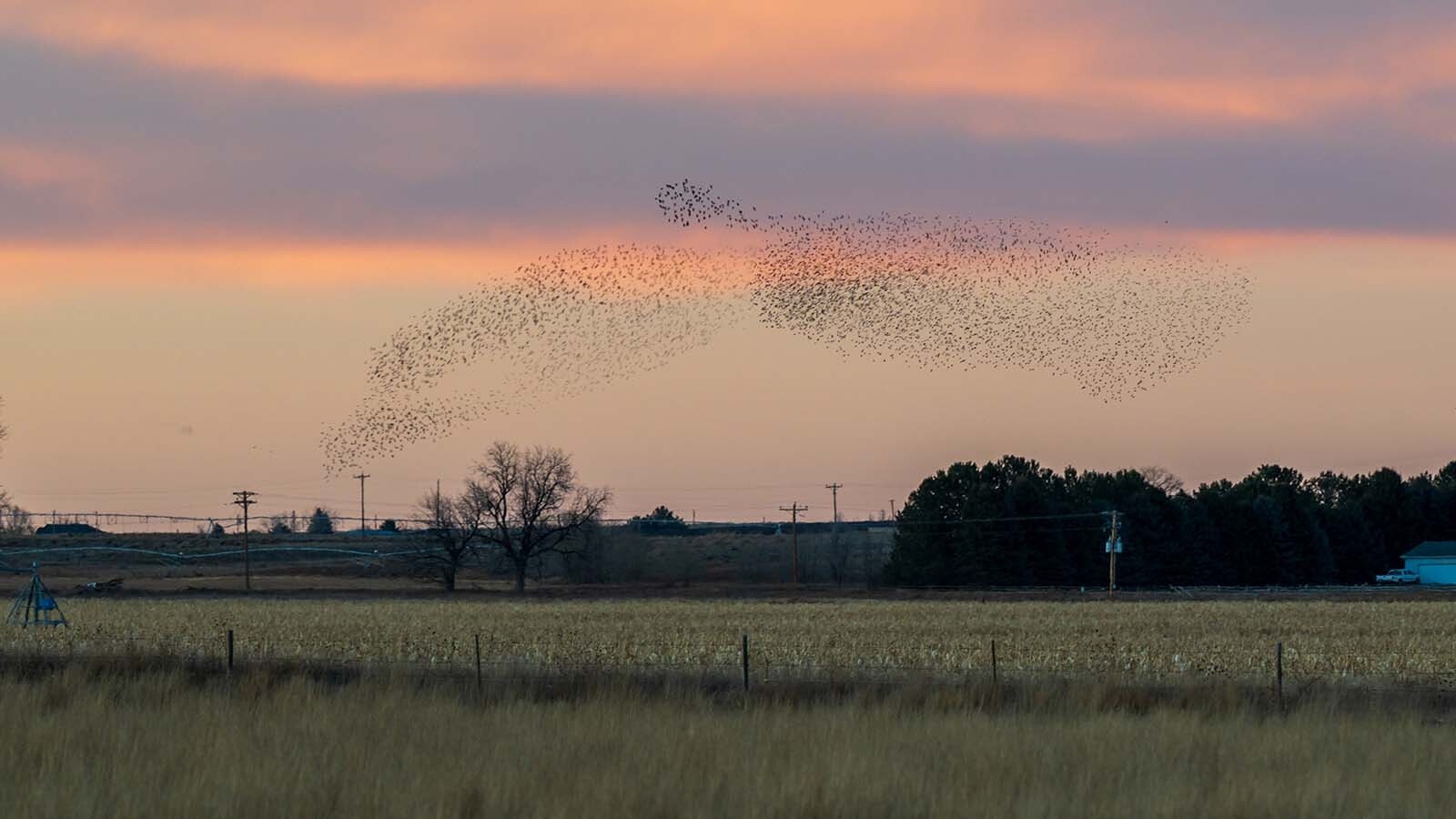
Starlings flock in a normal pattern, before flying into a tight, swirling pattern called a “murmuration” over farmland north of Torrington. (Courtesy Ed Schreiner) 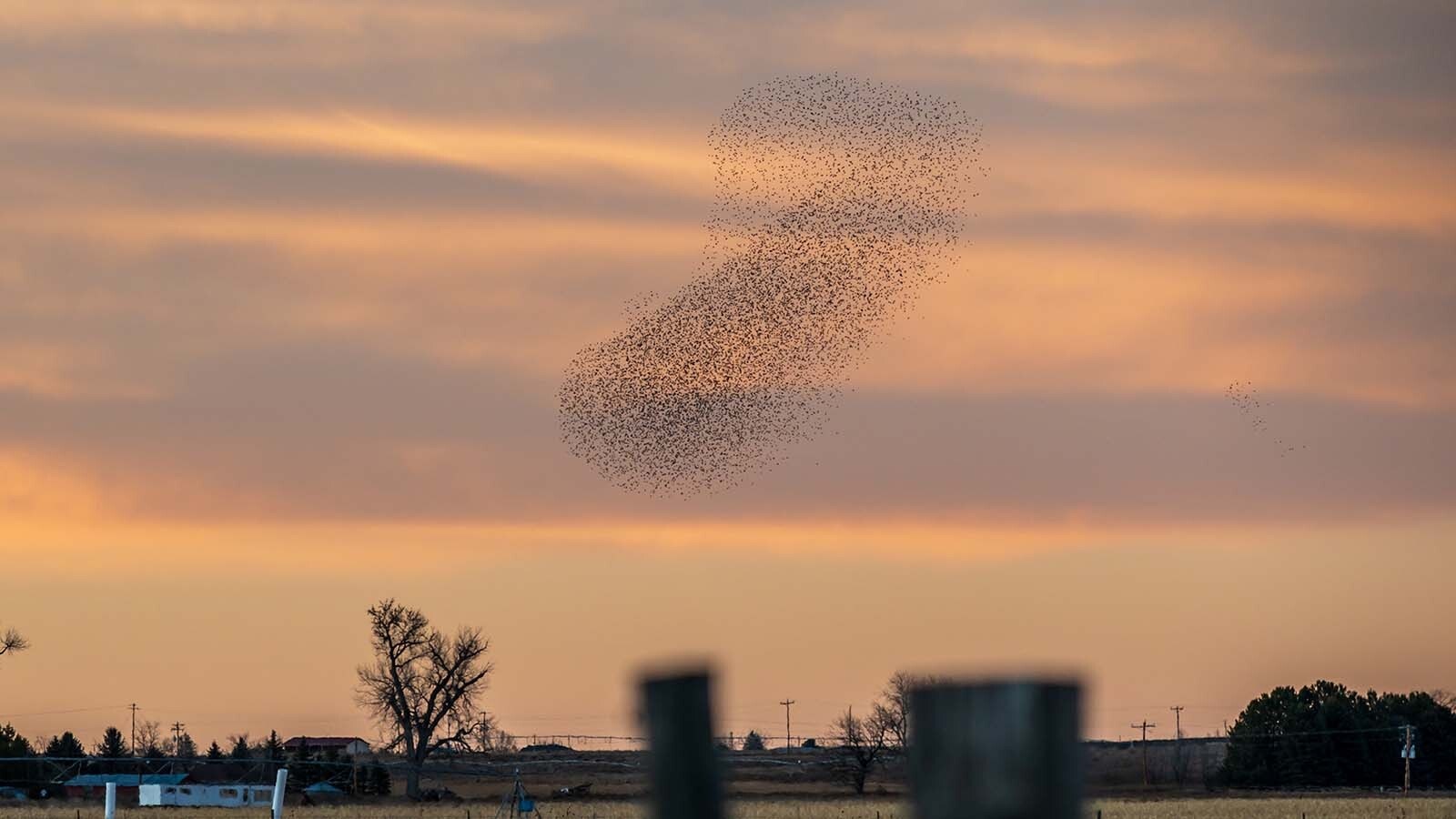
Starlings fly in a tight, swirling pattern called “murmuration” over farmland north of Torrington. (Courtesy Ed Schreiner) 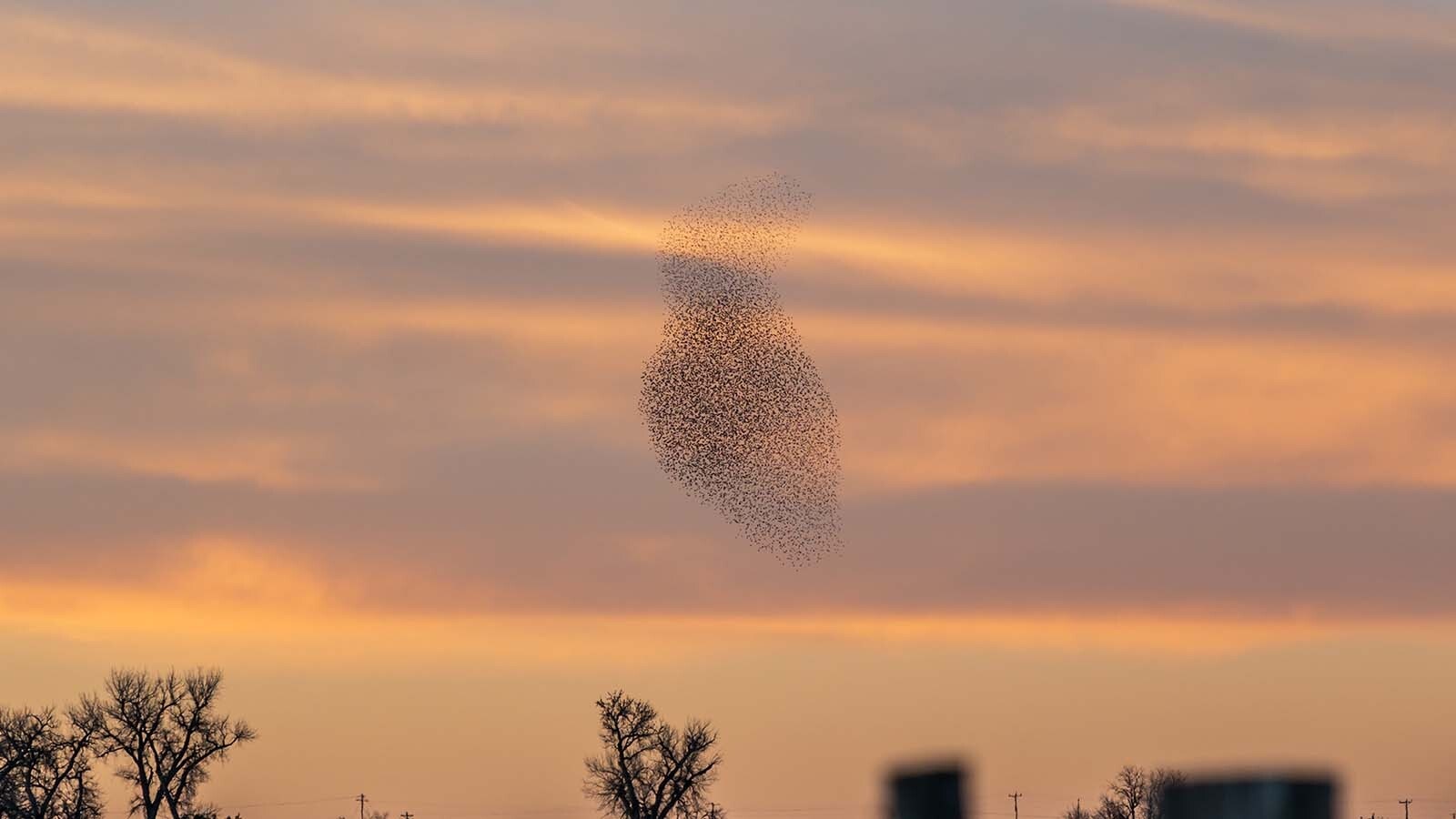
Starlings fly in a tight, swirling pattern called “murmuration” over farmland north of Torrington. (Courtesy Ed Schreiner) 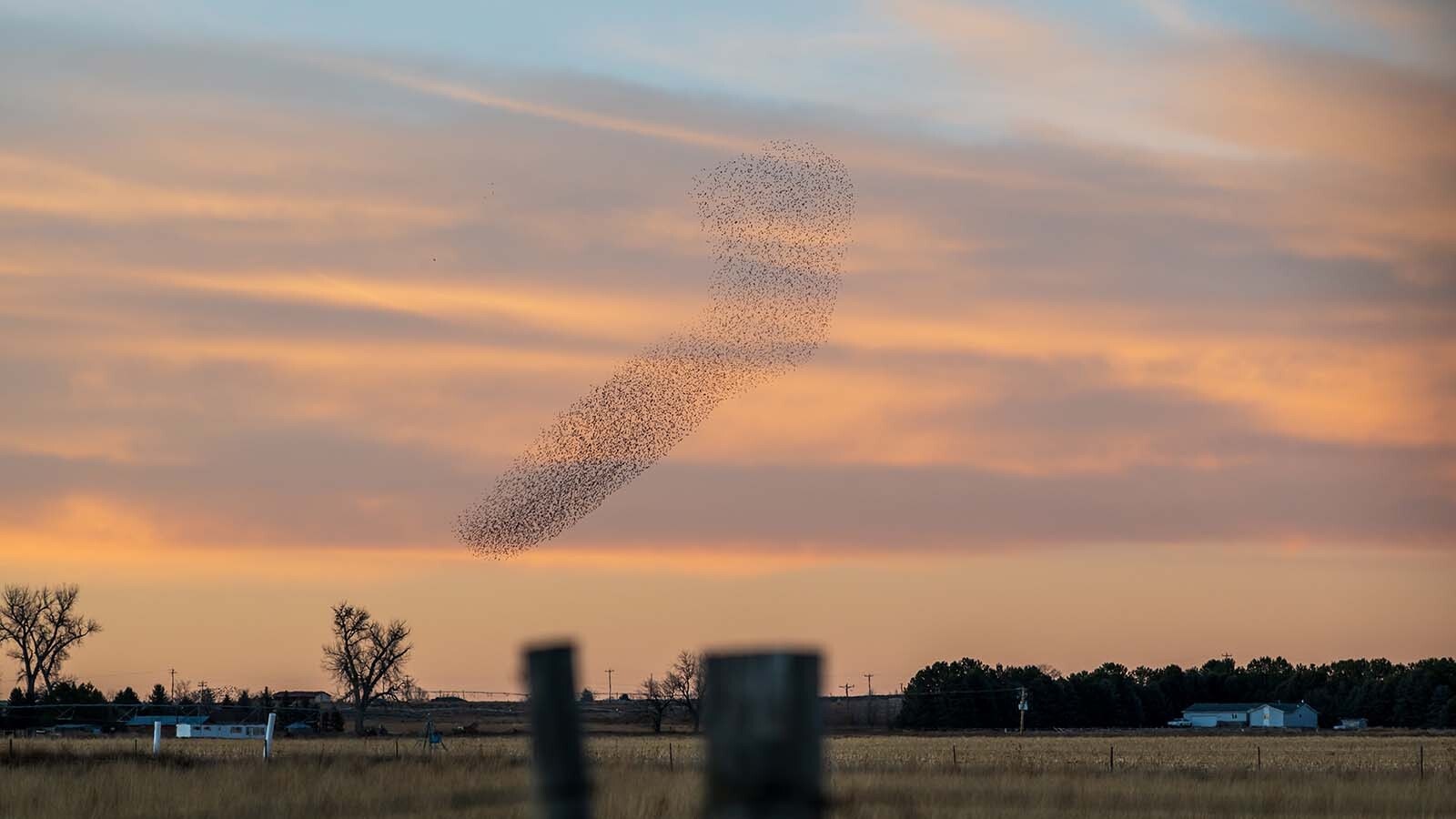
Starlings fly in a tight, swirling pattern called “murmuration” over farmland north of Torrington. (Courtesy Ed Schreiner) 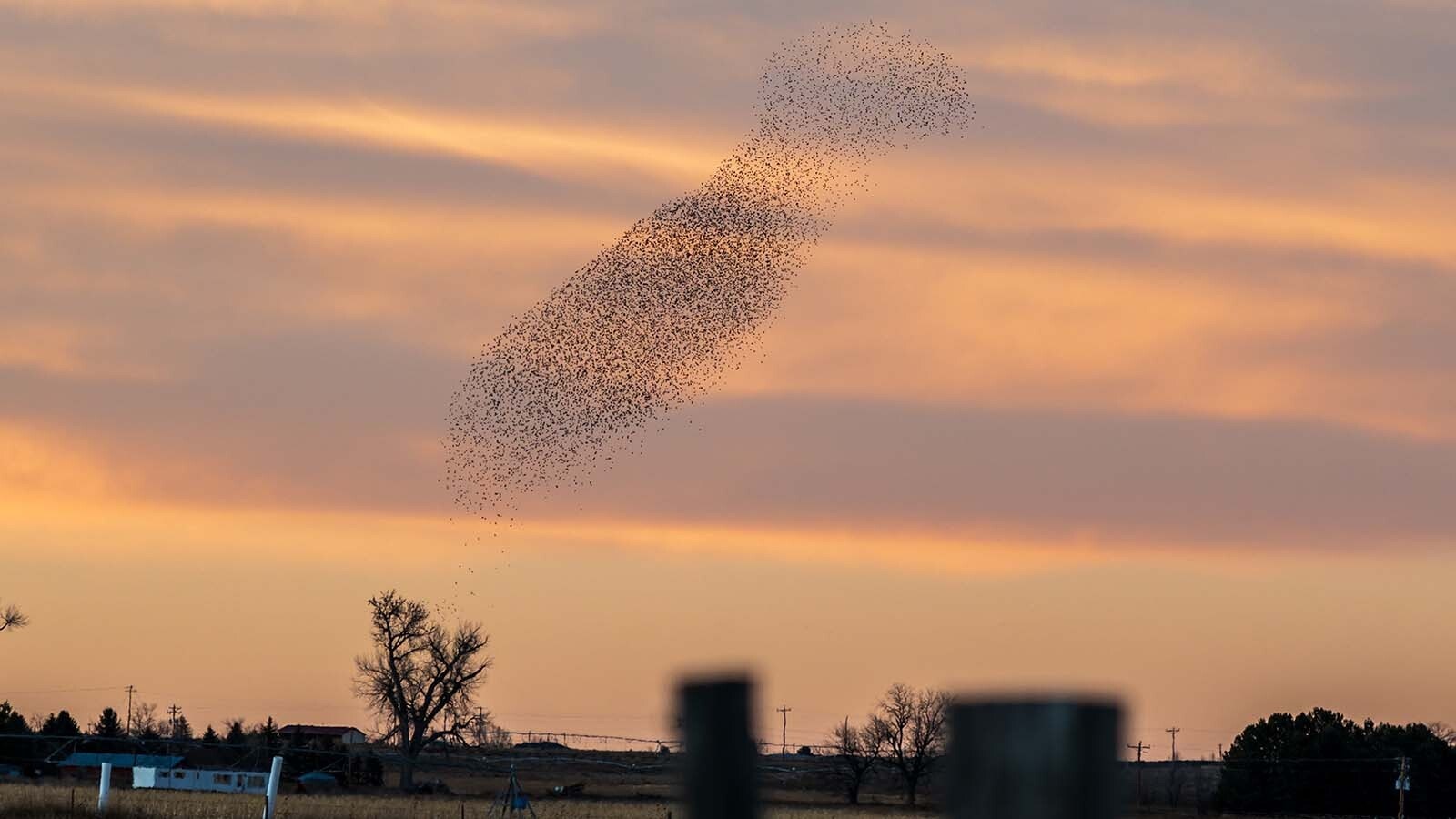
Starlings fly in a tight, swirling pattern called “murmuration” over farmland north of Torrington. (Courtesy Ed Schreiner) 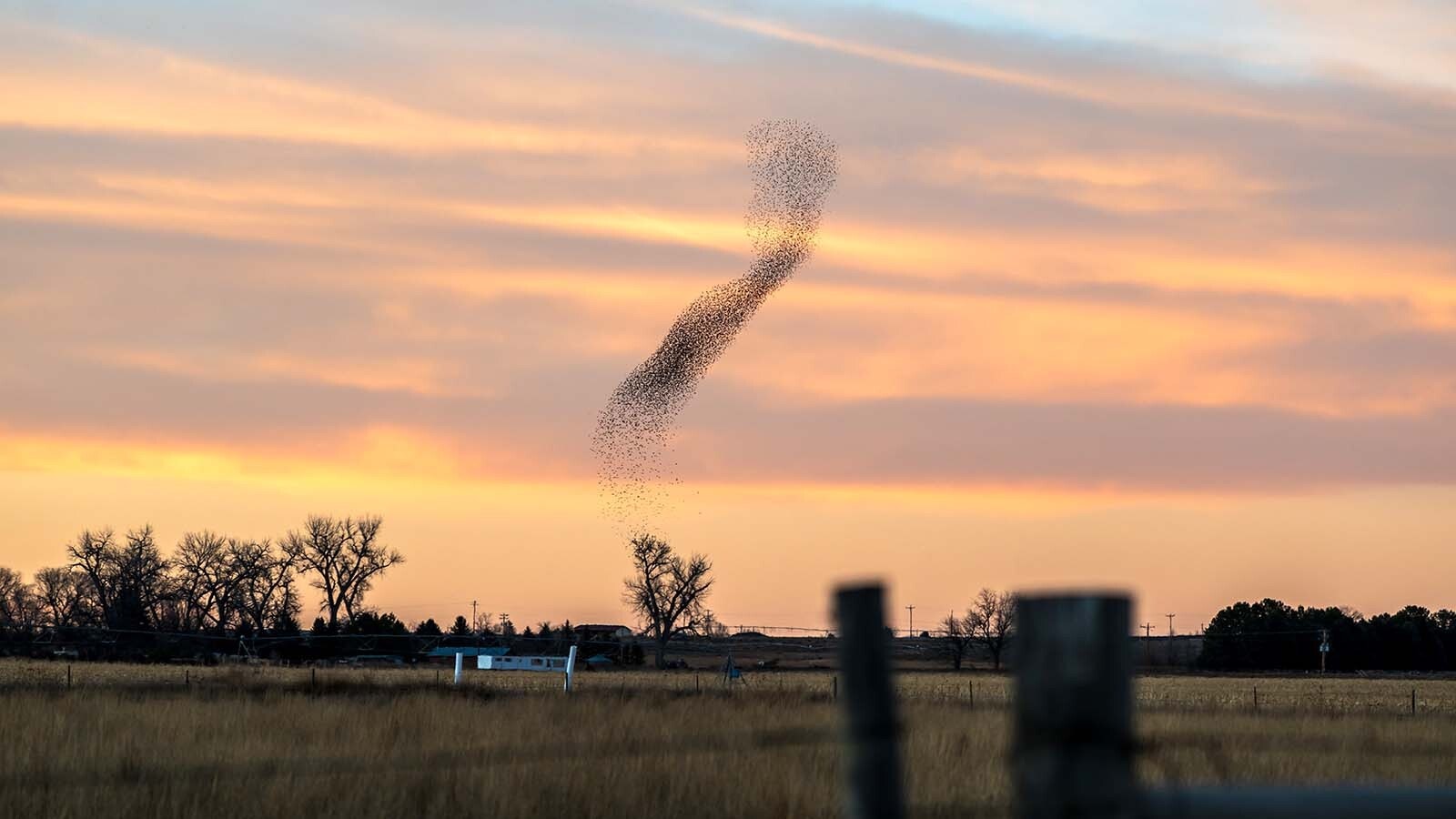
Starlings fly in a tight, swirling pattern called “murmuration” over farmland north of Torrington. (Courtesy Ed Schreiner) 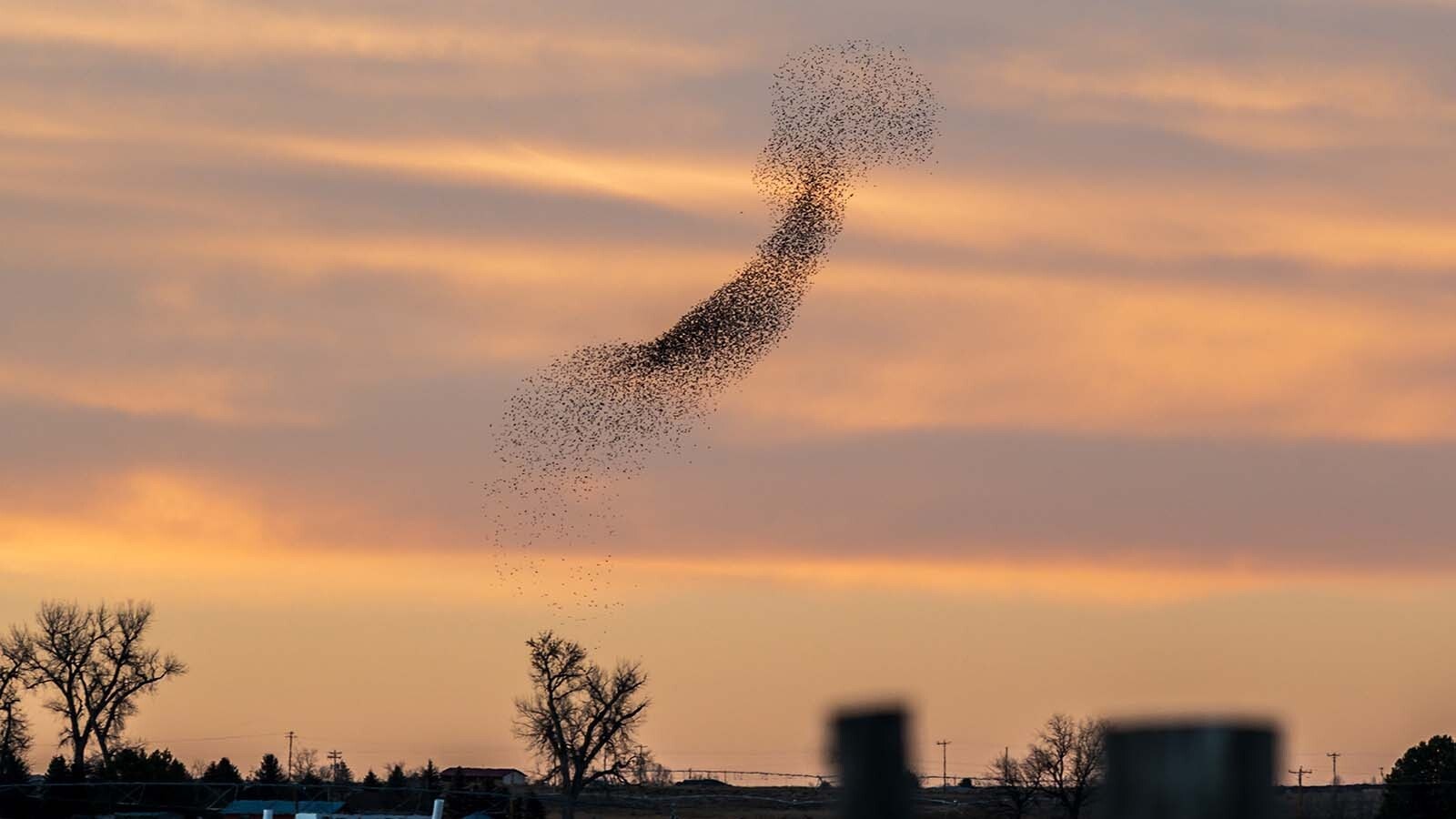
Starlings fly in a tight, swirling pattern called “murmuration” over farmland north of Torrington. (Courtesy Ed Schreiner)
Why Do They Do That?
Murmuration is so called because of the murmuring sound it produces.
It’s thought starlings might do it to seek safety in numbers, or to confuse predators.
It might also help the flocks produce warmth, as starlings don’t typically migrate south for the winter.
Murmuration requires amazing skill and coordination on the starlings’ part.
As birds go, they're pretty fast, capable of reaching speeds of up to 48 miles per hour, according to the Cornell Lab All About Birds website.
Schreiner said he observed the starlings in murmuration for brief periods, about five minutes at a time, during the evenings. He took several photos of the activity on Dec. 15.
Brought Over From Europe
Starlings are considered pests across most of North America and are native to Europe.
They were first brought to North America in the late 1800s, according to All About Birds. The population took hold after introductions in Central Park in New York City in 1877, 1890 and 1891.
From there, they bred prolifically and spread far and wide. Today, there are an estimated 93 million starlings on this side of the Atlantic, ranging from Alaska to Mexico, according to All About Birds.
They are also talented mimics and can imitate the calls of roughly 20 other bird species.
Orabona said she admires starlings’ murmuration skills.
“How can they do that specific, tight flight pattern without crashing into each other?” she said.
However, from an ecological and native bird conservation standpoint, it would be better if starlings had stayed on their home turf, she added.
“It would be better if we could travel to Europe to watch murmuration,” she said.
Mark Heinz can be reached at mark@cowboystatedaily.com.