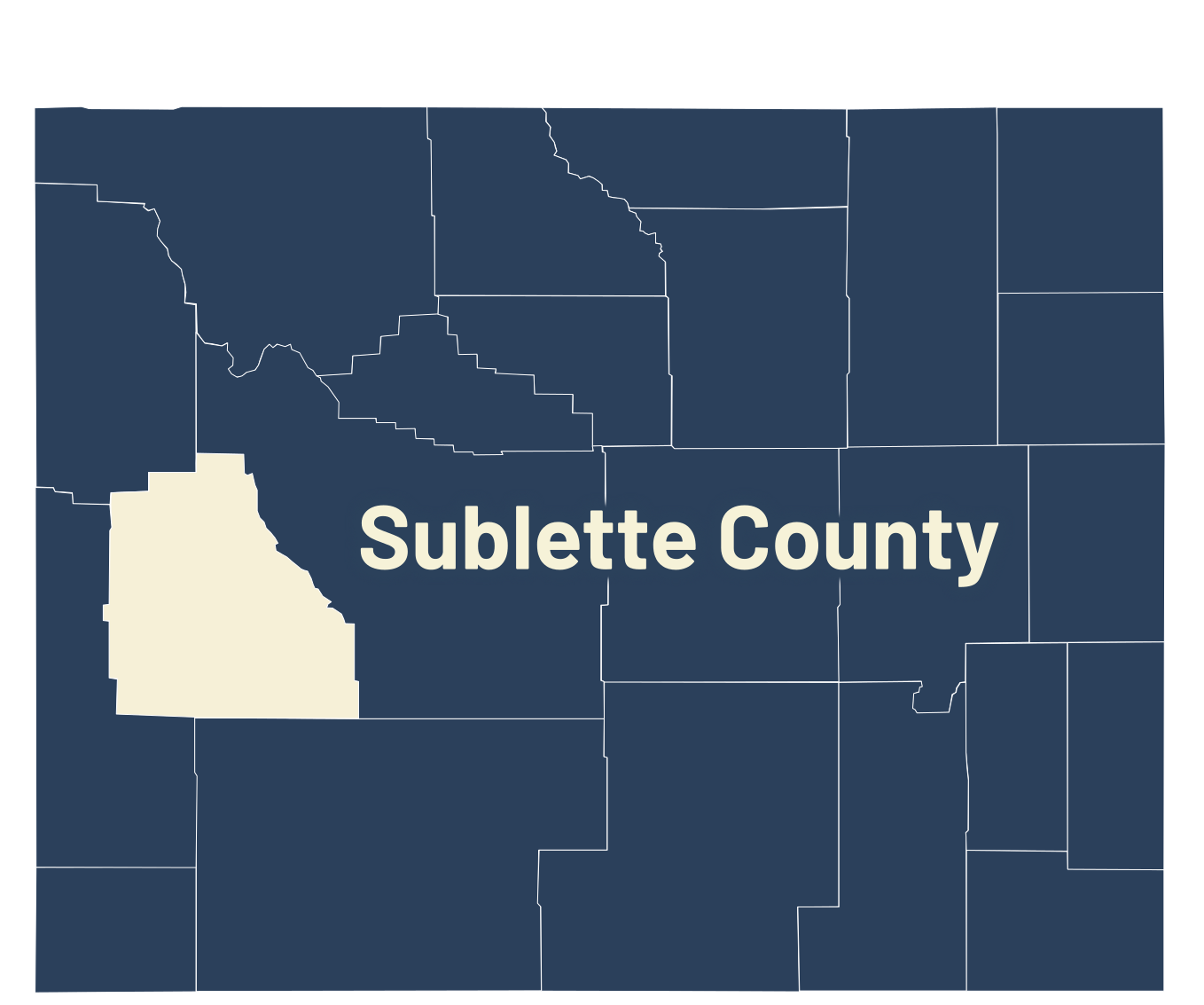
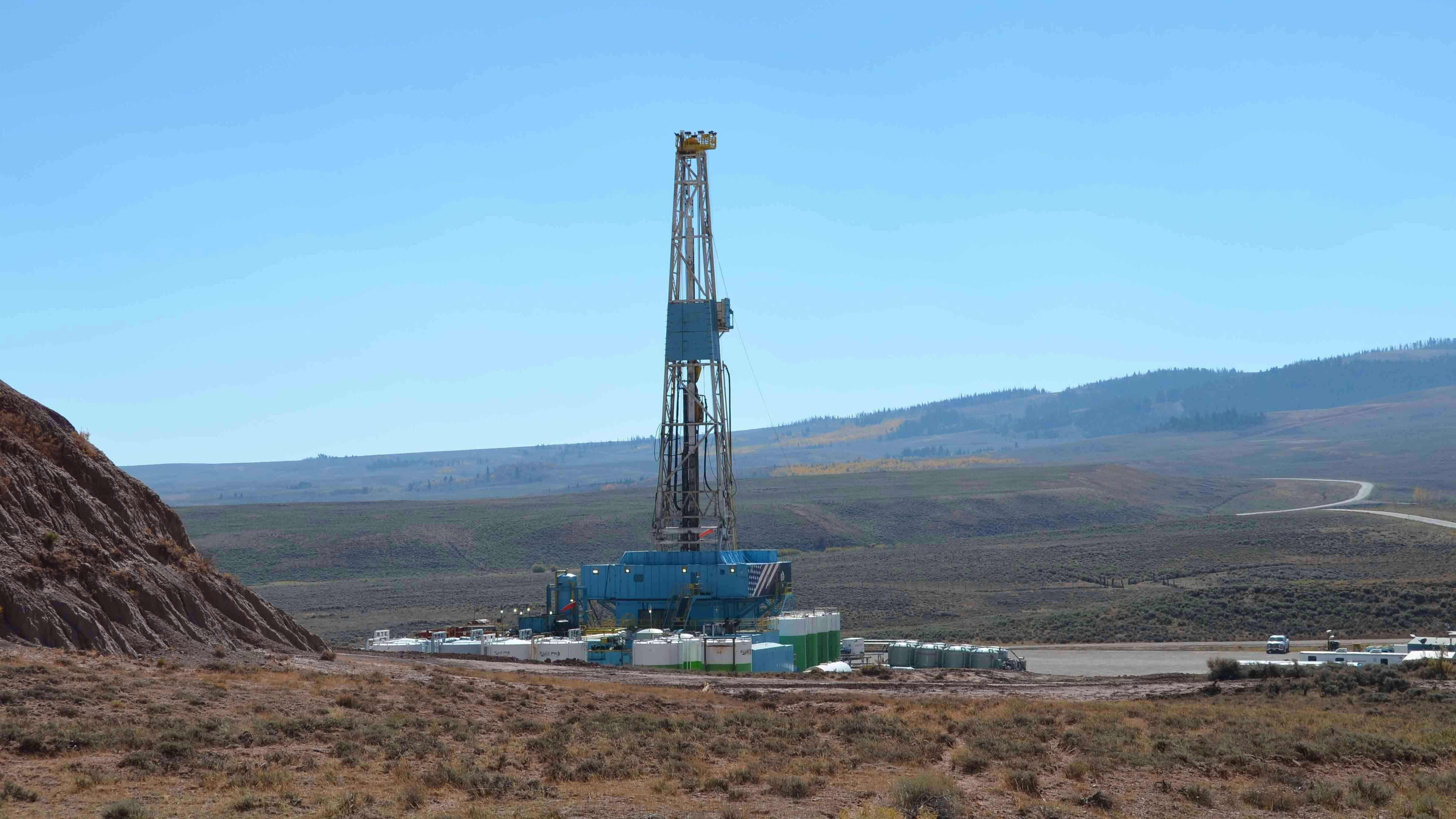
A new helium plant that will be locating in Sublette County is 90% of the way through all of its regulatory hurdles, which means it’s nearing a finish line that should allow it to begin construction next year on May 1.
That’s going to put a number of oversized, space-age pieces of metal floating down the I-80 corridor very soon, Blue Spruce cofounder Andrew Moses told Cowboy State Daily on Wednesday.
“We’ve designed the gas processing facility so we can basically haul in big modules and hook them up in the field,” Moses said. “Rather than doing all of the construction and fabrication on site.”
Doing it that way allows the company to minimize impact to wildlife during a critical window, from Nov. 15 through April 30.
“We’ll have three construction seasons that are pretty much summers only,” Moses said. “May 1 to Nov. 15. — that’s when we’ll be doing all of our drilling and construction efforts.”
The facility is so far right on schedule for its May 1 construction start, thanks to the BLM Pinedale Office signing off on a “finding of no significant impact” for the plant’s big environmental study.
“And a few days ago, we received our industrial siting permit from the DEQ’s Industrial Siting Council,” Moses said. “That’s a big one for the gas processing plant.”
Meanwhile, the metal pieces that will be used to build the plant are actually under fabrication right now, at manufacturing plants in different locations across the United States.
Why Helium Is A Gold Mine
Once complete, Blue Spruce Helium anticipates its Dry Piney Helium and Carbon Sequestration Project near Big Piney will add 10% of the world’s supply of helium to the market, bringing Wyoming’s total to a whopping 30%.
Wyoming was already a world leader in helium production, thanks to ExxonMobil’s next-door LaBarge-Shute Creek facility, which produces around 20% of the world’s supply.
Most people may think of party balloons and chipmunk voices when they think of helium at all, but the noble gas is actually a critically important component for a wide array of advanced technology.
It is considered state-of-the-art for rocket coolant and for medical devices like magnetic resonance imaging machines. The latter are vital for diagnosing many illnesses like cancer, brain and spinal cord injuries, and stroke or heart conditions. Helium is also used for semiconductors as well as a number of other high-tech, high value uses.
The supply of helium, meanwhile, has been up and down at times, creating acute shortages of supply for an element that’s crucial to so many important industries.
One of the most recent supply shocks was an explosion in Russia at the Amur gas processing plant, which dampened Russian production and sent helium prices soaring. Russia produces about 40% of the global helium supply.
“They have since kind of pieced everything together and they have that plant up and running again,” Moses said. “So, we’re kind of coming out of that helium shortage. But, at the same time we’re expecting a lot of demand growth in the semiconductor manufacturing industry.”
There are also more frequent rocket launches being planned by both Elon Musk’s SpaceX and Jeff Bezos’ Blue Origin.
“About a third of helium is just to cool MRI maintenance in the medical field,” Moses said. “So, we expect that to kind of stay there, and then we see plenty of growth ahead.”
Sublette County’s Magical Geology
Those market conditions make helium yet another multi-million-dollar opportunity for mineral-rich Wyoming. Helium is typically a byproduct of natural gas production, and the Cowboy State has a lot of natural gas pockets across the state.
It takes a particular geology, however, to trap helium alongside natural gas deep beneath the earth. Helium is a lightweight molecule, present in the earth’s crust as a byproduct of radioactive decay. But, left to its own devices, it would just float away, out into space.
It takes the right kind of rock to put helium in its place long enough to accumulate in an economically feasible amount for mining. Sublette County is one of those few places in the world with the right kind of rock in the right kind of configuration.
“They are on the La Barge platform, which is this big, buried structure that allowed gases to accumulate for probably close to 70 million years,” Center for Economic Geology Research Director Fred McLaughlin told Cowboy State Daily in a previous interview. “And that’s one of the secrets to getting helium to slowly build up, because helium is a small atom, and it’s super buoyant and slippery.”
Moses said his company expects to mine an associated trillion cubic feet of methane alongside helium over the life of its project.
One Man’s Trash Becomes Another’s Treasure
Moses and his partners on the project learned about the Dry Piney site when they were working for Questar Gas Corporation, which eventually became QEP Energy.
“(QEP) had explored the possibilities of developing this project numerous times over the years and for various reasons just never got around to pulling the trigger on it,” Moses said. “One thing led to another, the oil and gas industry changed. They started going to a lot more oil-focused horizontal drilling in shale plays, rather than these conventional gas opportunities.”
When QEP decided to divest some assets to buy a position in the Permian Basin, Moses and his colleagues recognized a great opportunity for their own company.
“We pooled our resources together and acquired the asset from them,” Moses said. “Then we were able to bring in an investor, which is actually a U.S. subsidiary of Japex, which is the Japan Petroleum Exploration Company.”
Japex funded drilling two appraisal wells as well as a feed study and has helped with permitting efforts.
“They’ve been a great strategic partner and have really helped us get to the point where we are at, ready to begin construction on May 1,” Moses said.
That date puts production of helium from the Dry Piney project in the late 2028 to early 2029 timeframe.
More Than $2 Billion In Tax Revenue Incoming
Moses was among those who accompanied Gov. Mark Gordon on a trade mission to Japan in April, and helium from the Dry Piney plant was among the topics of conversation.
“They love the helium and clean natural gas,” Moses said.
Natural gas from the Dry Piney plant will likely be sold to the Opal hub, before going on to its final destination, Moses added.
“We’ll still be sort of a smaller company on the natural gas side, compared to like the Jonahs and the Pier West types of companies,” he said.
While being a smaller natural gas company, the impact they will have for Wyoming is substantial.
“We will be generating over $20 million per year in severance taxes to the state of Wyoming,” Moses said. “And over $20 million a year in ad valorem taxes to Sublette County, where the project is located.”
Over a 50-year project lifespan, that’s close to $2 billion in combined tax revenues, Moses said. There will also be about $300 million in helium royalties sent to the Wyoming Office of State Lands and Investments.
Building the $1.3 billion plant will employ around 325 people, all of them in skilled trades ranging from construction to electricians and pipefitters, for three years. After that, the plant will have around 50 full-time employees to run the plant, who will likely predominantly live in the LaBarge, Big Piney, and Marbleton areas.
The plant already has at least one area resident, however.
“I always remind everyone that I am a Pinedale resident,” Moses said. “So, I will be here. We’re not a fly-by-night company from somewhere else. I’ve lived in Pinedale for about five years, and I absolutely love Wyoming.”
Renée Jean can be reached at renee@cowboystatedaily.com.