Wyoming's attorney general is appealing a Converse County District Court judge's decision to reverse the state government's approval of the Pronghorn H2 wind project.
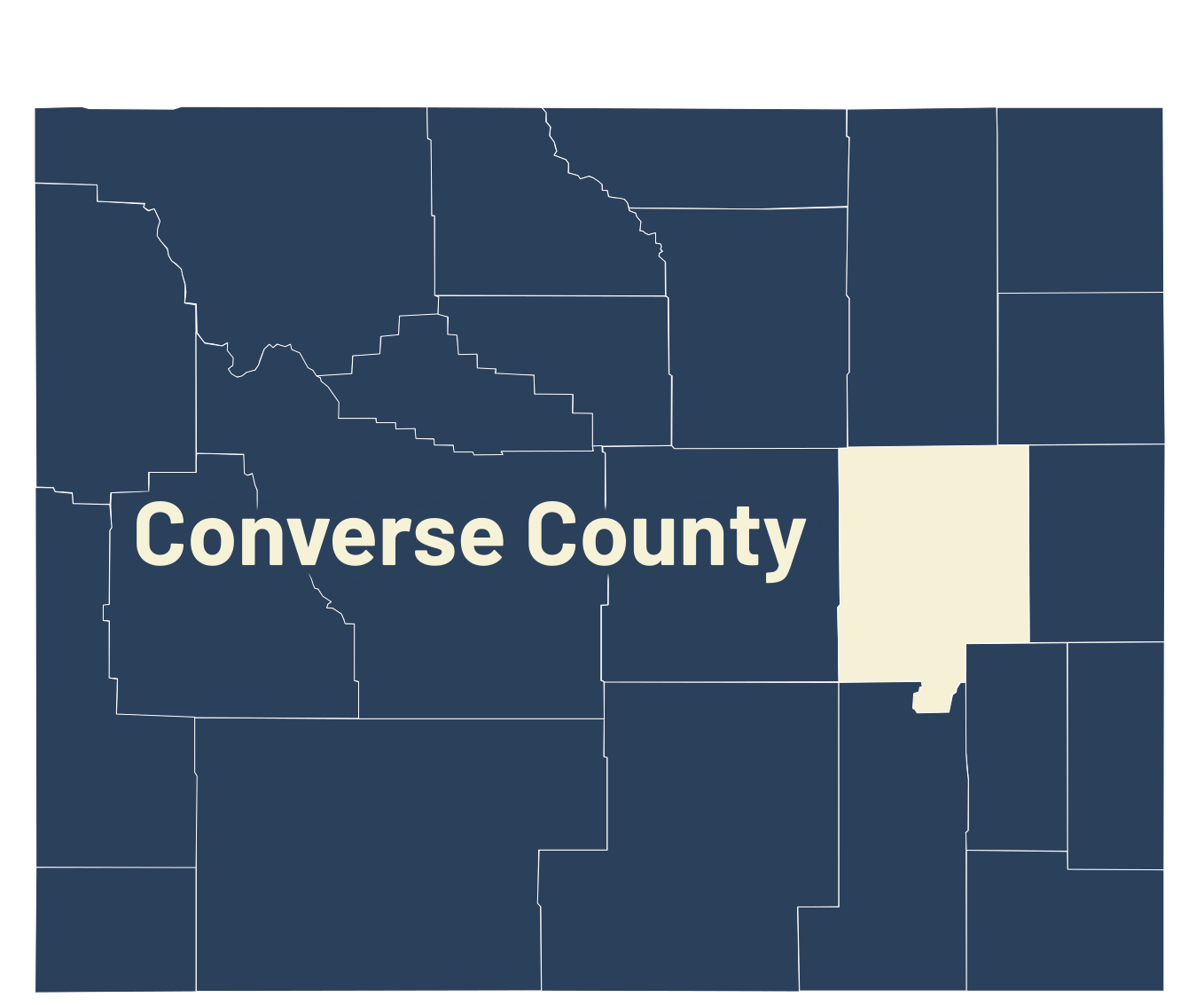
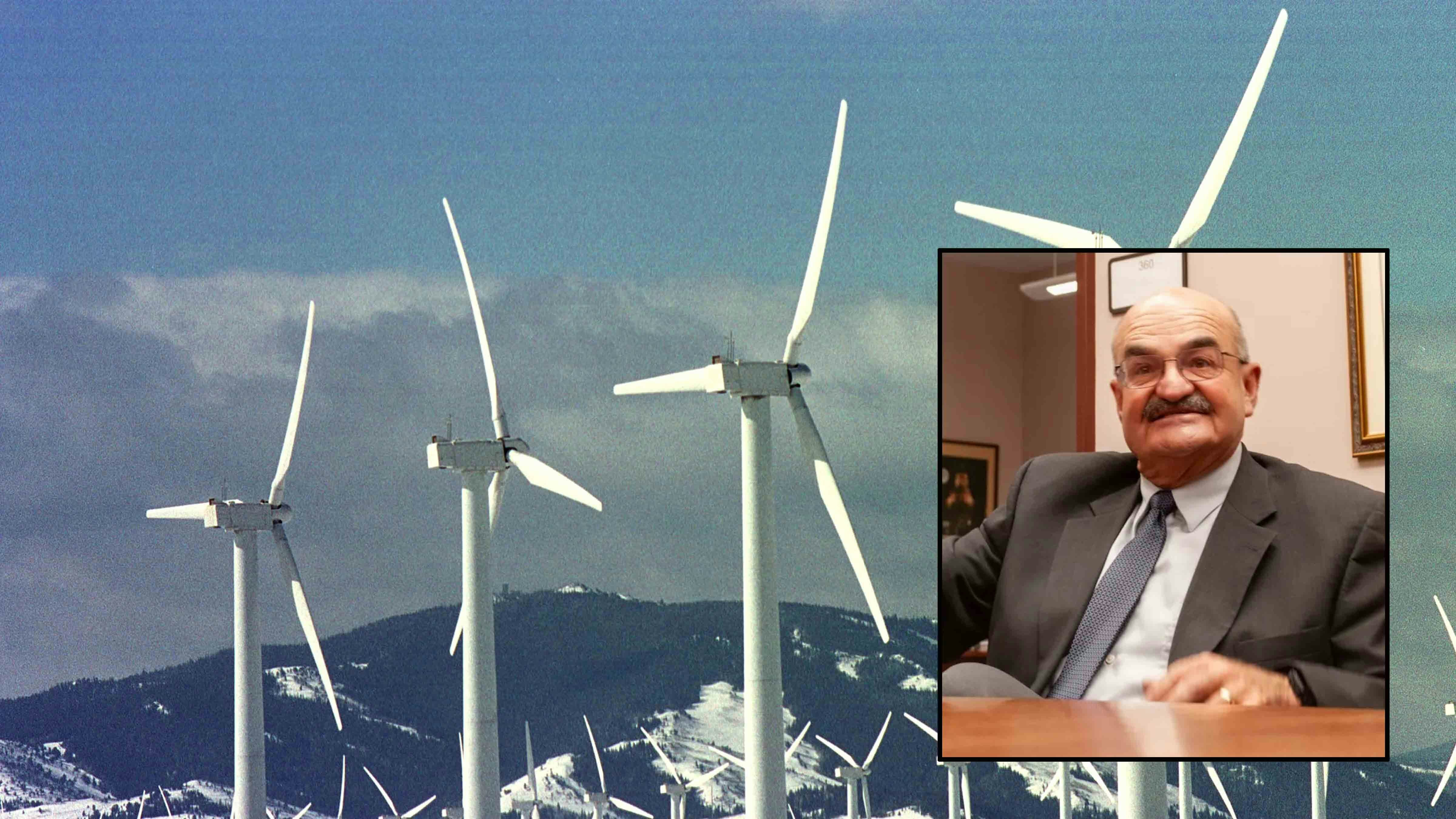
The crux of the case is whether the Wyoming Board of Land Commissioners' rules can authorize the lease of a 267-wind-turbine project planned for about 15,500 acres of state trust lands in the northern Laramie Range mountains.
But a larger issue — of how courts interpret the language of Wyoming's laws and rules — is also at stake, Wyoming Attorney General Keith Kautz told Cowboy State Daily Thursday.
Kautz's dispute on appeal is over the definition of the word "including," he said.
Converse County District Court Judge Scott Peasley on Dec. 5 struck down the Wyoming Board of Land Commissioners' approval of the lease.
He had dissected the board's rule that allows leasing of land for "the exclusive right to convert wind energy into electrical energy including collecting and transmitting the electrical energy … to the interconnection of the transmission grid."
Peasley concluded that the verb "including" limits the board's lease authorizations to wind projects that will feed the grid.
The energy generated by the Pronghorn project will not necessarily be transmitted to the electrical grid. It will be a key component in producing clean hydrogen, court documents say.
The local ranch suing the state "adequately" showed that the term "including" should limit the state's wind-leasing operation here to wind projects that will feed the grid, the order says.
Nope, Says AG
According to Kautz, that reading is not correct, and risks upending a standard reading of the word "including," which is widespread across state law and rules.
"So the standard — the overwhelming — every case that I could find that interprets that kind of language says… that word 'including' expands the definition (on which it hinges)," said Kautz in his Thursday phone interview.
When adding the word "including" to a definition, Kautz asserted, "then you can get more things included."
Reading the verb as a restrictor of the definition would implicate hundreds of state statutes, contracts and regulations, he said.
"It's everywhere. It has to be an expansive term," said Kautz. "I've got to appeal it."
Gordon Backs Appeal
Gov. Mark Gordon, who voted with the board majority to approve the lease in April, issued a statement Thursday supporting the attorney general's decision to appeal.
"This ruling was a novel interpretation of several parts of Wyoming law and needs to be clarified by the Wyoming Supreme Court," Gordon said.
Gordon framed the case as having implications far beyond this single wind project.
"This is more than just about wind turbines on state lands. This is about future state leases that could allow a wind turbine solely for stock watering, or to run a generator for an oil and gas rig," Gordon said. "This is about the ability to meet the constitutional duty to use state lands to help fund our schools. This is about private property rights."
The governor argued that blocking the lease would harm Wyoming students without stopping the project itself.
"Denying a lawful, higher-value lease doesn't stop the Pronghorn Wind project from happening, a step, by the way, that would put the government's thumb on the scale of the free market and declare a winner," Gordon said. "Rather it just cheats Wyoming schools out of much needed revenue as the bulk of the project remains on private lands."
Gordon also defended Kautz's authority to pursue the appeal independently.
"The Attorney General Kautz has a career in knowing and interpreting the law. He is following the law, this office supports the law and will follow his lead," Gordon said. "The Governor will not neglect his constitutional and fiduciary duty to the law and our public schools."
Gray Counters
Secretary of State Chuck Gray, the lone board member to vote against the lease in April, issued a blistering response Thursday, calling the board meeting "another complete Gordon-engineered fiasco with an assist from his allies."
Gray said he was "extremely disturbed" by how the meeting was conducted, claiming the governor reneged on allowing public comment.
Gray also objected to the attorney general announcing the appeal without a board vote.
"The Governor's appointed Attorney General made an announcement that the Attorney General will appeal Judge Peasley's decision on his own, without any approval of the Board," Gray said. "As a member of the Board, I was prepared to vote against any motion to appeal Judge Peasley's decision. The woke wind lease violates the Board's rules and the lease should be reversed as Judge Peasley did in his decision."
Gray called for "a new meeting of the State Board of Land Commissioners where public comment will be taken and motions can be considered to reverse this outrageously wrong decision."
Gordon fired back in his statement, defending the closed meeting format.
"I feel for those who were misled about the purpose of today's meeting, but the meeting notice was very clear that the Board of Land Commissioners were there for the sole purpose of receiving legal counsel during the executive session. No action was, or could be, taken during the executive session," Gordon said.
"To allow public comment for this particular meeting is not only a violation of the Public Meetings Act, but is prejudicial and unfair to members of the public who understood there would not be public comment and therefore did not show up," Gordon added. "If the Secretary claimed public comment would be considered regarding the executive session, he apparently does not understand the law, or was grandstanding."
What's Next
Patrick Lewallen, the Casper attorney representing rancher Mike Stephens in the lawsuit, said the appeal is one of several options the state had following Peasley's ruling.
"The decision by the district court vacated the lease. And so there's no further proceedings to be had, at this point that we know of, subject to an appeal or additional action by the state board," Lewallen told Cowboy State Daily.
Lewallen noted that Focus Clean Energy, the Colorado-based developer behind the project, was also a party to the lawsuit and retains the right to appeal independently.
"Whatever decision the state makes, there still could be another party that may appeal it as well,” he said.
The attorney said there are essentially two issues that could be appealed: the standing question and the lease interpretation itself.
Lewallen said he was particularly pleased with the judge's ruling on standing, which established that his client had legal grounds to challenge the lease. Stephens and his family operation, Stephens Land and Livestock LLC, own a 172-acre homestead parcel directly adjacent to the proposed wind farm where they live.
"If we lost that in the district court, it really would have given very, very limited parties or people the ability to have a neutral court review these types of leases," Lewallen said.
Paul Martin, president of Focus Clean Energy — which holds the state lease in question — issued a statement following the Dec. 5 ruling.
"The Pronghorn project team remains committed to advancing this project lawfully and responsibly," Martin said. "Challenges often occur during the development process, but we intend to continue our efforts to develop the Pronghorn project, which is located primarily on private land, while adhering to Wyoming laws and regulations. We look forward to creating an opportunity that offers significant benefits for Converse County."
The state land portion represents about 30% of the total Pronghorn project. The company estimates the project would bring $1.7 billion in private investment to Converse County, with total taxes paid over the 35-year project life estimated at $471 million.
Clair McFarland can be reached at clair@cowboystatedaily.com and David Madison can be reached at david@cowboystatedaily.com.