
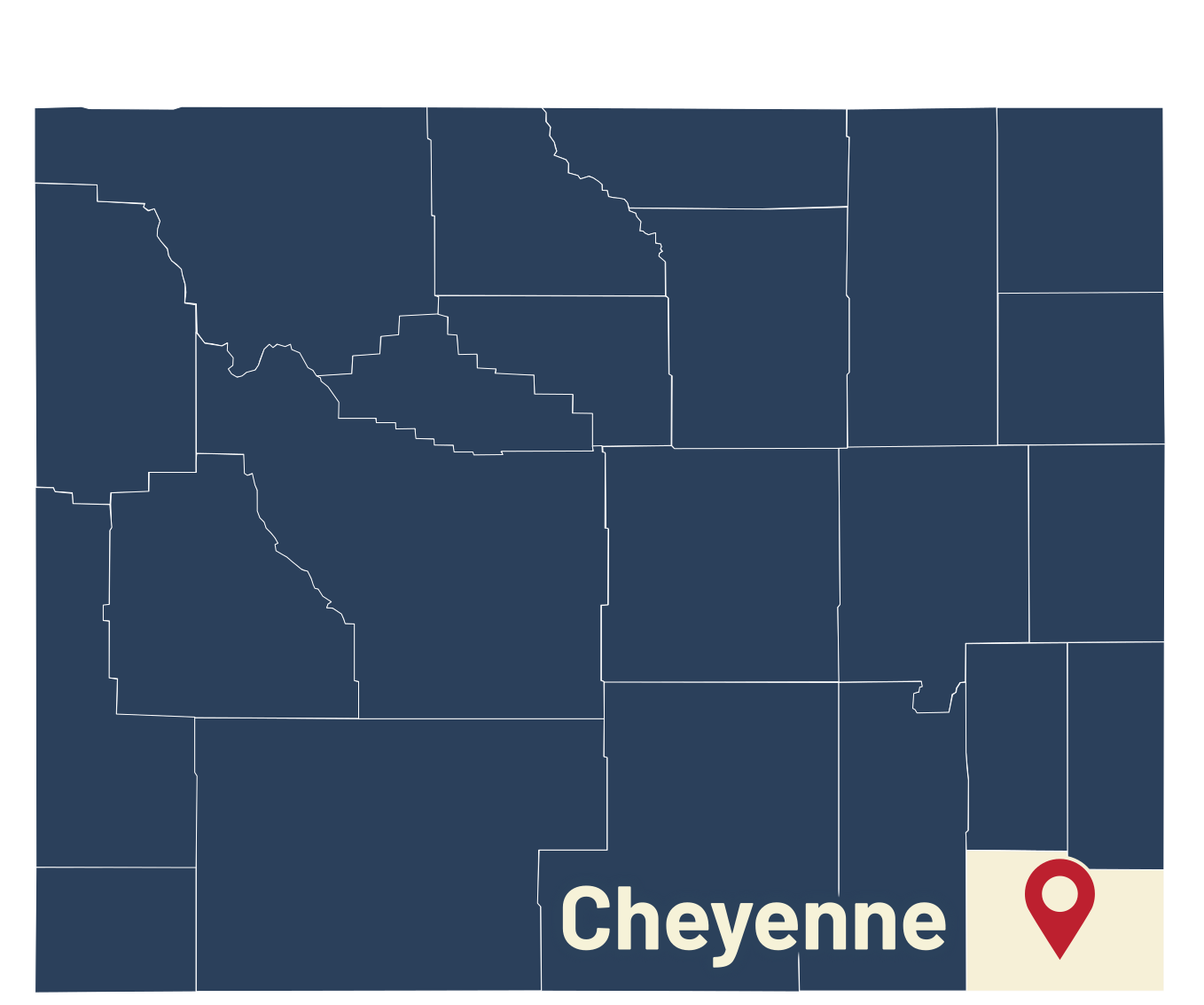
CHEYENNE — Dogs, cats, and people squeezed in together at South High School’s cafeteria Wednesday night, many with just the shirts on their backs and the smartphones in their back pockets.
They were the sudden refugees of a grass fire, pushed by wind gusts that ranged between 45 and 70 mph that drove flames straight toward their homes in the Winchester Hills and Hyndman subdivisions.
None of these refugees knew at the outset of their excursion to South High what was going to happen. All of them faced the possibility of losing everything except the clothes they were wearing and the cell phones or iPads they’d managed to grab on their way out.
Family photographs, Christmas presents, medications — they could all disappear in the sudden emergency. It had many of the shelter seekers rethinking their approaches to emergency planning.
Even some who had thought they were ready found themselves flat-footed when fate called their number.
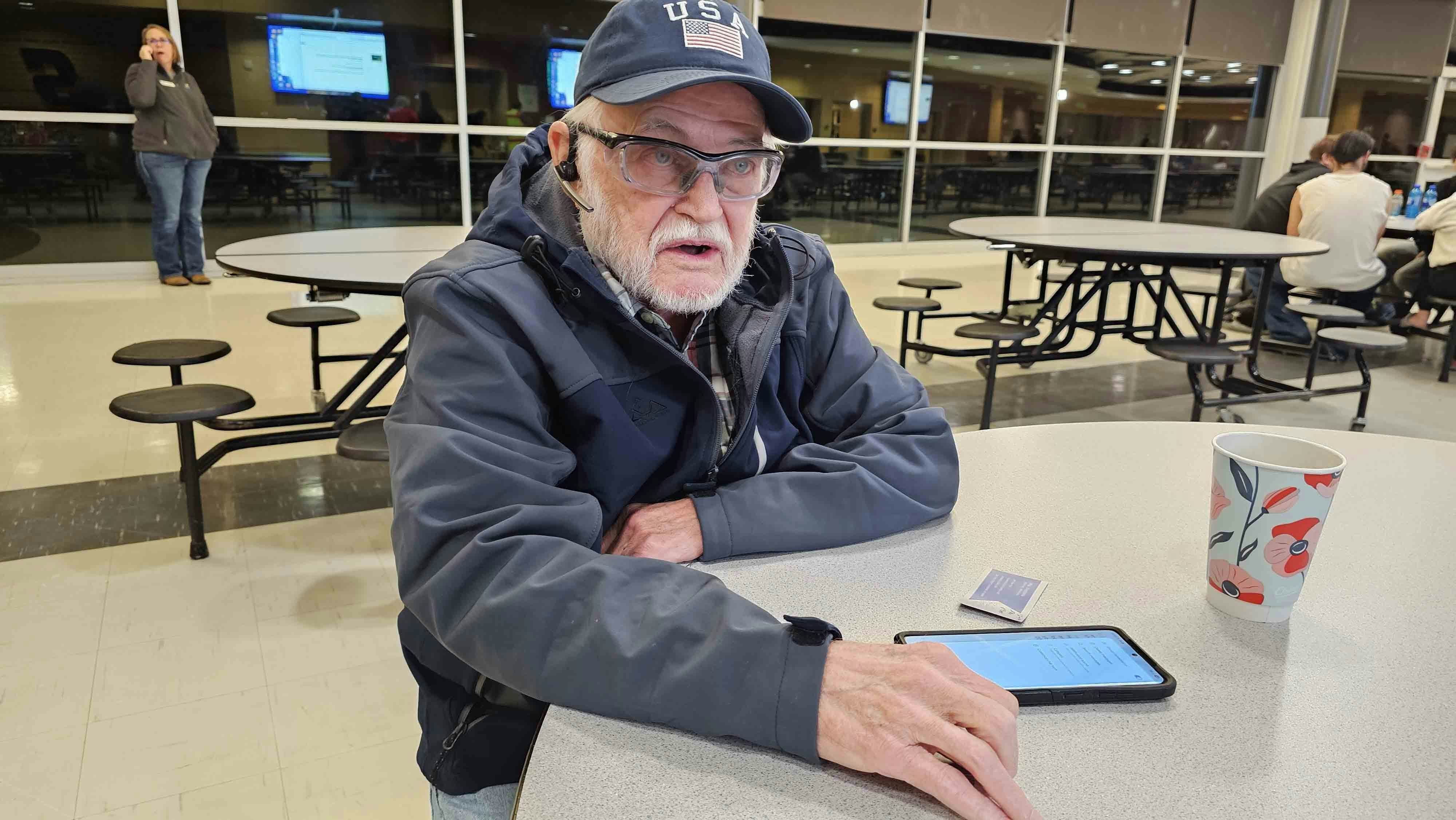
Mike Linholm, for example, has always kept a go-bag in his basement. But when the time came to use that go-bag, he found himself momentarily stunned.
Linholm was puttering around his home at the time the fire started, just doing some routine cleaning up. When he smelled smoke, he thought maybe it was just someone barbecuing a steak. But the smell sent him checking all the rooms of his house, to make sure a house fire hadn’t started.
It was while he was in the midst of doing this that a sheriff’s deputy knocked on his door and informed Linholm that he had to leave.
Right now. Immediately. No time to pass go. No time to think about it at all.
The readied go-bag wasn’t his first thought in that moment. Instead, it was, “Now what?”
“And I’ve planned for this,” he said, shaking his head.
Linholm ultimately did regain equilibrium and remember his bug-out bag, which he had pre-packed with five days' worth of rations, as well as a change of clothing.
“I had just bought a case of water, so I grabbed that, too, and threw it in the truck and put my bag in there,” he said.
The truck, fortunately for him, was still partially packed up for a November camping trip in Florida that didn’t pan out.
“I was ready without even knowing it,” he said with a chuckle. “But that was just luck.”
There’s one area where he wasn’t so lucky, though.
“I was talking to my daughter and she asked me, ‘Dad, do you have your medications?’” Linholm said. “And I was like, ‘No, I never thought of it. I just walked off and left them in the bathroom.’”
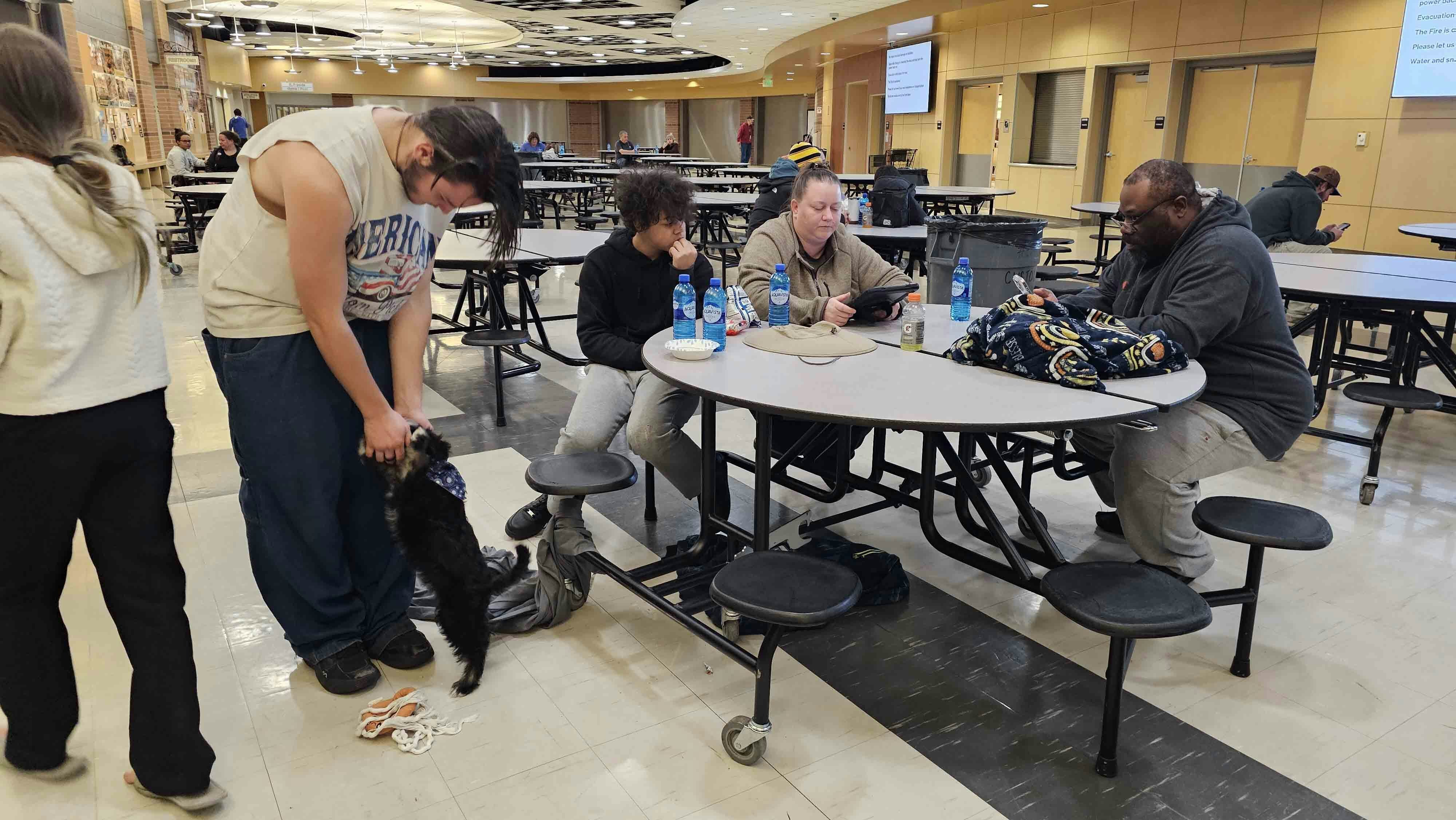
Sheets Can Be Dog Leashes Sometimes
Forgotten medications, forgotten leashes, abandoned Christmas presents — these were all common among Winchester and Hyndman subdivision refugees, surprised out of their evening routines on a blustery winter day in Wyoming.
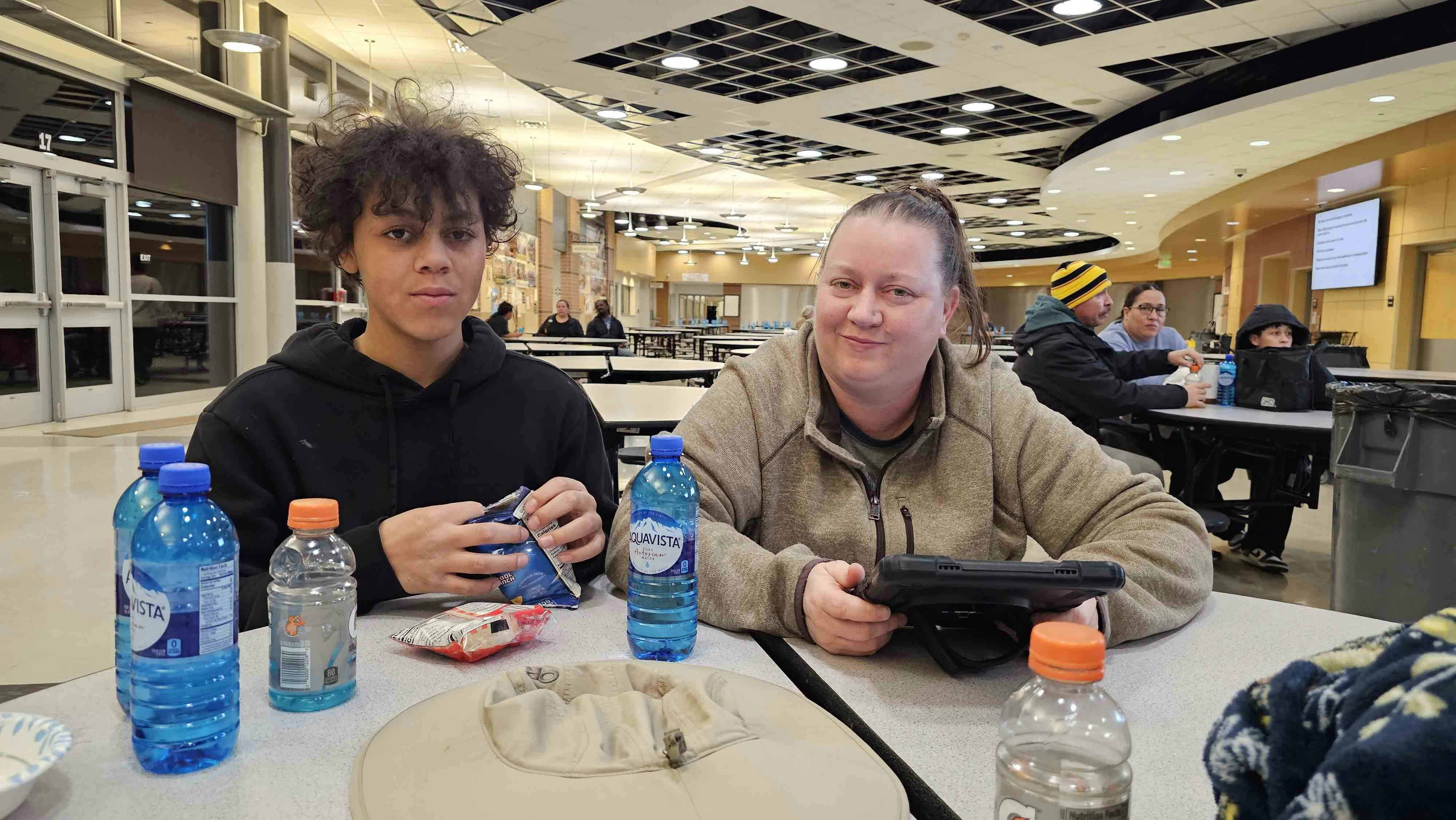
Amanda Plunkett and her significant other, Dennis Wallace, had been in the midst of a little hump-day cleaning when a sheriff’s deputy knocked on their door to tell them a huge grass fire was headed straight for them and that they had to evacuate immediately.
They had minutes to get all five children and their dog, Mellow, safely bundled into the car and drive away from what was about to become the scene of a huge battle between fire and firefighters.
“We left everything behind,” Wallace said.
That included all the kids’ Christmas presents. And a leash for Mellow, so eager to make everyone’s acquaintance, including this reporter, or how about those cats meowing over there?
Mellow had been tied up to the leg of a cafeteria table with a sheet serving as a makeshift leash. The sheet had been in lieu of a coat for one of the children, who had forgotten to grab a jacket on the way out.
Wallace said the whole experience had him rethinking his family’s emergency preparedness, especially given that this kind of situation, caused by wind downing a power line, could happen again in the foreseeable future.
“We need to have a plan,” he said. "A go-bag or something. Get the kennel ready for the little pup, with some dog food. And some food for the kids — snacks or something.”
Only then did Plunkett admit she’d managed to grab a couple of snack bars before leaving the house, hiding them in her pockets to share later. A rabbit from her magic pockets — if and when the children later became hungry.
Not long after, shelter officials announced free pizza had arrived for everyone. There were Pepperoni and cheese slices all around while people waited anxiously to learn whether they would have homes to return to.
Holding The Line With Fire Just A Few Feet Away
Far from South High, out in the Winchester Hills and Hyndman subdivisions, more than 100 firefighters had converged on the scene of the sudden grassland fire as quickly as possible.
They had no time for the usual, safer approach to fighting a grass fire like this one, Laramie County Fire District #1 Chief of Operations George Marcott told Cowboy State Daily.
“Grass fires are a little bit different animal,” he said. “You can’t treat them like any other wildland fire. With most wildland fires, you basically wait and anticipate where it’s going to be and then hit, basically cover the area where you anticipate it’s going to be, to get it to stop.”
But grass fires are too fast for that kind of measured, planned-out approach.
“Usually, we get into the black and fight it from the black, so you don’t get burned over,” he said, where black refers to areas that have burned already, and so are safer to stand in. “But this one was moving so fast, we couldn’t even do it that way.”
Instead, firefighters had to get right in front of the houses they were protecting, Marcott said.
Fire was literally a few feet away from some of these firefighters, who stood their ground in spite of the danger, doing their best to save everyone's homes.
“You could feel the heat of the fire,” Marcott said.
Wind Was Against Them
Meanwhile the wind, which blew 45 to 55 mph with occasional wind gusts of up to 70 mph, was throwing everything Wyoming had to offer at the firefighters — grit and dirt, hair, caterpillar poop, anything that’s not nailed down. It all came flying at the firefighters as they stood their ground against a wall of fire ready to eat people’s homes and futures.
“Most of the time our wildland gear does have goggles,” Marcott said. “However, this came on so fast, depending on where people responded from, some of them didn’t have their wildland gear. So, they had to wear structure gear, which doesn’t have goggles.”
Getting the fire to something resembling under control took the 100 or so firefighters around 30 to 45 minutes, Marcott said. But it was another couple of hours of effort before the situation was safe enough for civilians to return to the area.
“We had pretty much all the resources from the whole county, including the city, respond to this as we dispatched them out to areas we needed to control,” Marcott said. “I think we only lost one shed and maybe a car.”
A few houses might also have scorch marks, Marcott said, where there were some closer calls than others.
About 40 homes in the Hyndman subdivision also did have to remain evacuated throughout the night, Marcott added. Firefighters were working through the night in that area, to ensure nothing reignited and flamed up again.
Firefighters Christmas Is Never All Ho, Ho, Ho
Marcott said firefighters have been especially busy this December.
“Just in the last week, we’ve had five or six structure fires, and then the week before, we had lots of accidents on the freeway,” he said, adding, “This is normal for this time of the year.”
He expects the high wind conditions will cause other similar situations in the area and advised residents that they do need to consider things like go-bags and what their plan will be if they have to immediately evacuate an area.
“We got the initial call in the afternoon around 4:21 p.m.,” he said. “And we had to evacuate within 10 to 15 minutes of arrival.”
Wind had been gusting, off and on, upward of 45 to 55 mph, which caused the downed power line and the sudden blaze in the first place. Then, when wind picked up, that quickly carried the fire over an eventual 500-plus acre area, forcing the rapid, surprise evacuation of that area.
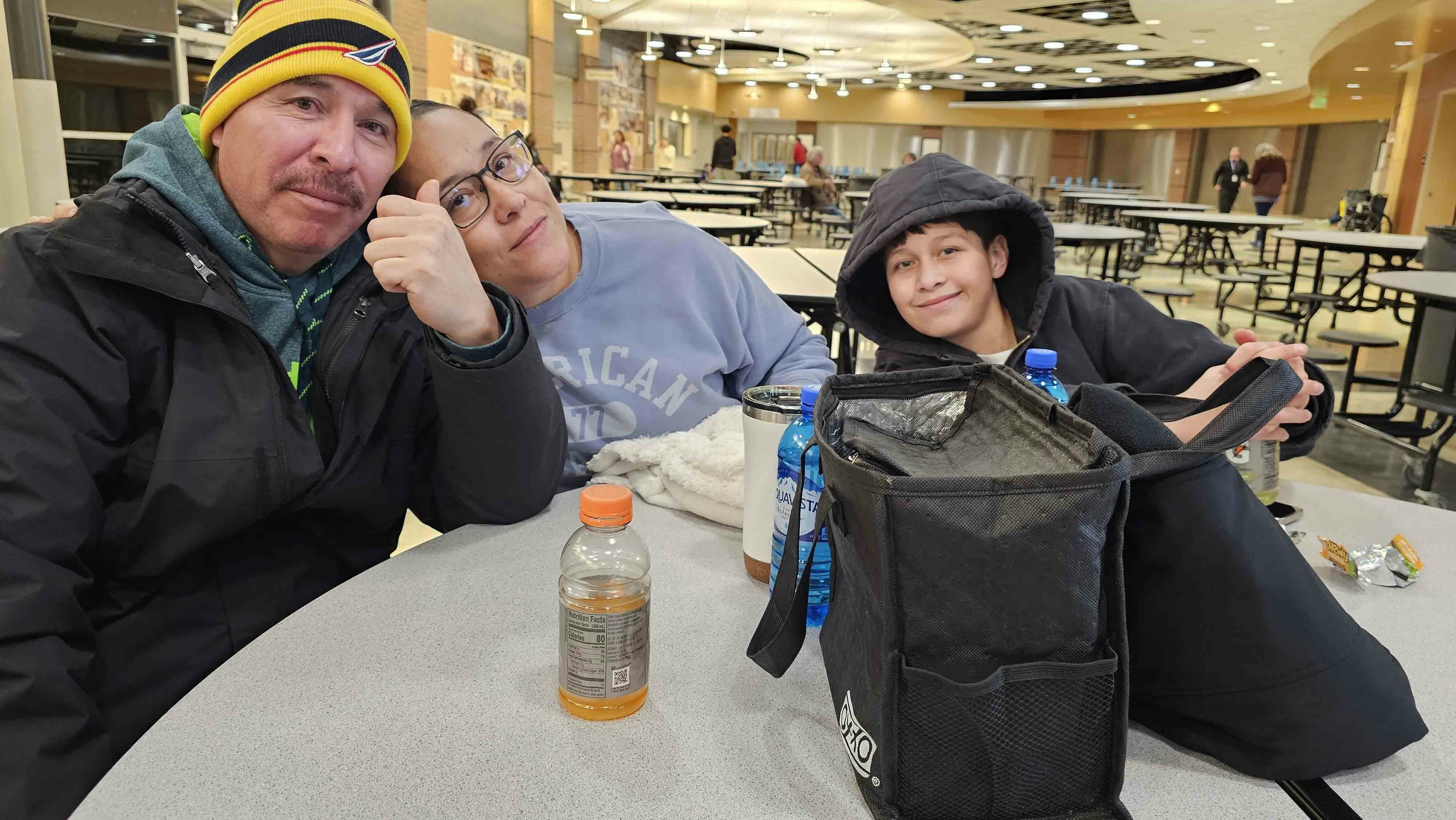
Hector Ibanez and his wife Joanna, among the many refugees, told Cowboy State Daily they had left a pile of Christmas presents behind. They arrived at the shelter with a picnic bag of snacks, the clothing on their back, and little else.
They were stoic about that, even though they couldn’t yet know whether their home was safe.
“Life’s more important than the presents and everything left in the house,” he said, looking at his wife and son, Alex.
The fire came too quickly to do much this time, he said. Next time, though, he, like many of the other refugees forced out by a wildland grass fire that wind started, plans to be better prepared.
Renée Jean can be reached at renee@cowboystatedaily.com.


