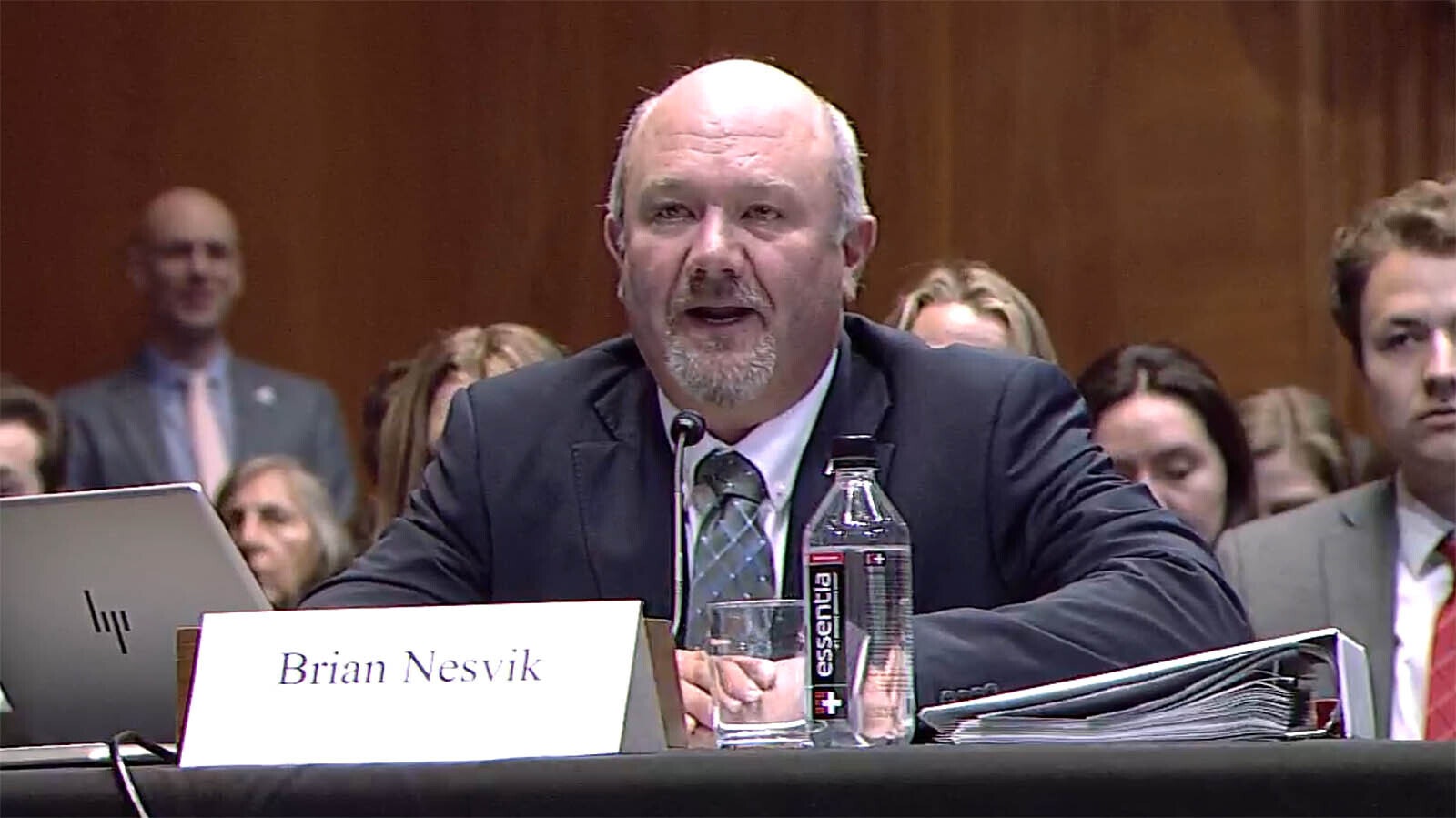
A few months into his tenure as the nation’s chief wildlife officer, Wyoming native Brian Nesvik has adjusted to huge changes while staying on track with some core missions such as resolving grizzly management in the Lower 48.
In September 2024, Nesvik retired from the Wyoming Game and Fish Department, having worked for the agency for roughly 30 years and serving as its director since 2019.
In 2021, he retired from his other career — 35 years of service with the Wyoming Army National Guard, during which he achieved the rank of assistant adjutant general.
He planned to go live quietly on the family’s ranch.
But President Donald Trump nominated him as chief of the U.S. Fish and Wildlife Service (FWS). He was confirmed by the U.S. Senate on Aug. 1, and took charge of FWS on Aug. 18.
Relocating to Washington, D.C., and taking over wildlife management on a nationwide scale has been a big adjustment, he told Cowboy State Daily during a remote video interview Thursday.
“Now I’m dealing with marine mammals and coastal issues,” he said.
And he’s become keenly aware of things he took for granted living in Wyoming.
“Like being able to walk out your door and not see people,” he said.
What’s Up With Grizzlies?
The status of grizzlies in the Lower 48 has been hotly debated for decades. Nesvik hopes some resolution could come within “a couple of years.”
Grizzlies once roamed across a vast swath of North America.
By the early 1970s, they’d been all but killed off in the Lower 48 and pushed back into a tiny patch of habitat, mostly in or near Yellowstone National Park.
They were placed under federal Endangered Species protection in 1975 and began to recover.
Their numbers have since grown to include an estimated 1,000 or so bears in the Greater Yellowstone Ecosystem (GYE) in Wyoming, Montana and Idaho.
There’s also thought to be at least 1,000 grizzlies included in the Northern Continental Divide Ecosystem (NCDE) Population, radiating out from Glacier National Park in Montana.
Grizzlies have also greatly expanded their range. In Montana, they’ve been pushing ever-farther eastward into their historic high plains range.
In Wyoming, grizzlies have been spotted as far south as the Kemmerer area.
There’s a proposal to reintroduce grizzlies to Washington State.
And there’s even been talk of bringing them back to California, where thousands of grizzlies once lived.
However, some experts say that isn’t realistic to think grizzlies could be reintroduced to California.
All Eyes On Nesvik
Some argue that it’s past time to delist grizzlies from federal protection and hand management of them fully over to Game and Fish and other state agencies.
That could include a hunting season for grizzlies in Wyoming.
During his tenure as Game and Fish director, Nesvik advocated for grizzly delisting. His successor, Game and Fish Director Angi Bruce, has also publicly stated that she favors delisting.
However, not everyone favors delisting some argue that grizzly habitat is still too fragmented, and sub-populations are isolated.
Contiguous habitat and robust genetic exchange, not sheer numbers, should determine when grizzlies are ready for delisting, they argue.
Nesvik taking charge at FWS has grizzly delisting advocates feeling hopeful, and delisting opponents worried.
What Would Delisting Look Like?
Nesvik remains convinced that the grizzly population is recovered, and is nearly ready to be delisted.
“Recovery was achieved, by all accounts, by federal and state biologists in the GYE in the early 2000s,” he said.
The purpose of the Endangered Species act is to get to species to the point of recovery and “celebrate that recovery,” he said.
Research also indicates grizzlies have healthy genetics, he added.
And genetic exchange will continue to occur naturally, as grizzlies wander and find new mates, or through wildlife agents occasionally transplanting bears between populations, Nesvik said.
Despite some criticism that grizzly delisting is being “rushed,” Nesvik said grizzlies have likely been more closely studied than just about any other wildlife species.
It could take perhaps another two years to work through an analysis of the data on grizzlies and reach a final decision regarding delisting, he said.
When it happens, it might be across the board, meaning all grizzlies everywhere in the Lower 48 would be delisted, he said.
Or grizzlies might remain protected in some areas but delisted in others, he said.
As far as grizzly hunting seasons, Nesvik said that decision would probably be left up to the states, if and when grizzlies are delisted.
Things Could Change For Wolves
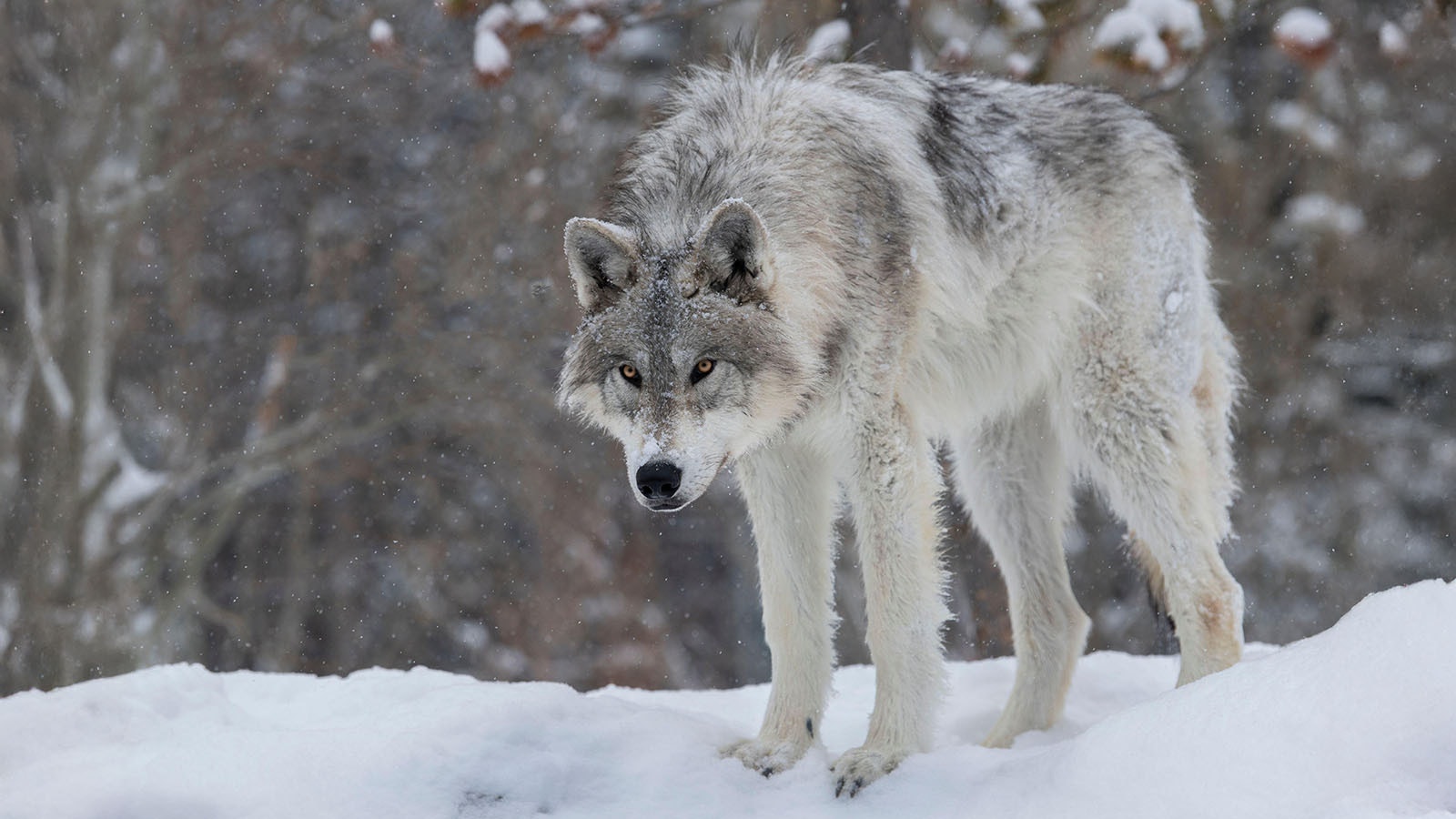
While the ultimate fate of grizzlies might not be known for a while, federal protections for wolves could soon be lifted across the Lower 48.
Wolves were previously delisted in Wyoming, Montana and Idaho, and those states all allow wolf hunting and trapping.
There is a significant population of wolves in the Great Lakes area. There are also wolves in Oregon, some of which moved south and established packs in California.
There are efforts to recover the Mexican gray wolf population in southwestern states.
And Colorado began reintroducing wolves in late 2023.
On Thursday, the U.S. House passed H.R. 845, the Pet and Livestock Protection Act, which calls for a nationwide delisting of wolves.
One of its sponsors is Rep. Lauren Boebert, R-Colorado, who has been a vocal opponent of her state’s wolf reintroduction program.
The last batch of wolves released in Colorado were flown in from British Columbia, Canada in January.
Colorado was considering getting more wolves from British Columbia, but Nesvik intervened.
In an Oct. 10 letter to Jeff Davis, then director of Colorado Parks and Wildlife (CPW), Nesvik stated that bringing wolves in from Canada violated an agreement between CPW and FWS.
CPW has stated its intent to continue with reintroductions, either later this month or in early 2026, but it remains unclear where the next batch of wolves might come from.
Nesvik on Thursday said he had no further comment on the situation, saying his letter “speaks for itself.”
As for possible delisting across the Lower 48, he said the matter is currently in Congress' wheelhouse, but “we’re certainly interested to see” what the outcome might be.
He noted that regardless of whether H.R. 845 passes, the situation on the ground in Wyoming won’t change, because wolves are already delisted here and managed by Game and Fish.
‘A Beautiful America’
The interface of energy development and wildlife conservation is another ongoing hot topic.
Nesvik said that in Wyoming, he saw the fossil fuel industry make great strides.
Technology has developed that allows for multiple gas or oil wells to be drilled with only “one surface disturbance.”
Meanwhile, there’s been growing concern over how wind and solar power development in Wyoming might disturb wildlife habitat or block big game migration routes.
Such concerns go beyond Wyoming, Nesvik said. There is worry over how wildlife might be affected as wind and solar projects continue to pop up across the country.
So, wind and solar might have to develop technology to mitigate the effect on wildlife, similar to what fossil fuel companies did.
Nesvik refuted criticism that he favored energy industry and ranching during his tenure at Game and Fish and might do the same at FWS.
People in Wyoming’s energy and agriculture industries would dispute claims that he was always on their side, he said.
He added that there is broad support for wildlife across the country. As in Wyoming, people across the country love wildlife and want to see sound conservation, he said.
He added that the Trump administration, including Secretary of the Interior Doug Burgum, is interested in a healthy balance between economic prosperity and “a beautiful America.”
Mark Heinz can be reached at mark@cowboystatedaily.com.