For the second time in as many years, a bipartisan coalition introduced a bill in the U.S. House to ban using snowmobiles to run over wolves and other predators on federal lands in all 50 states.
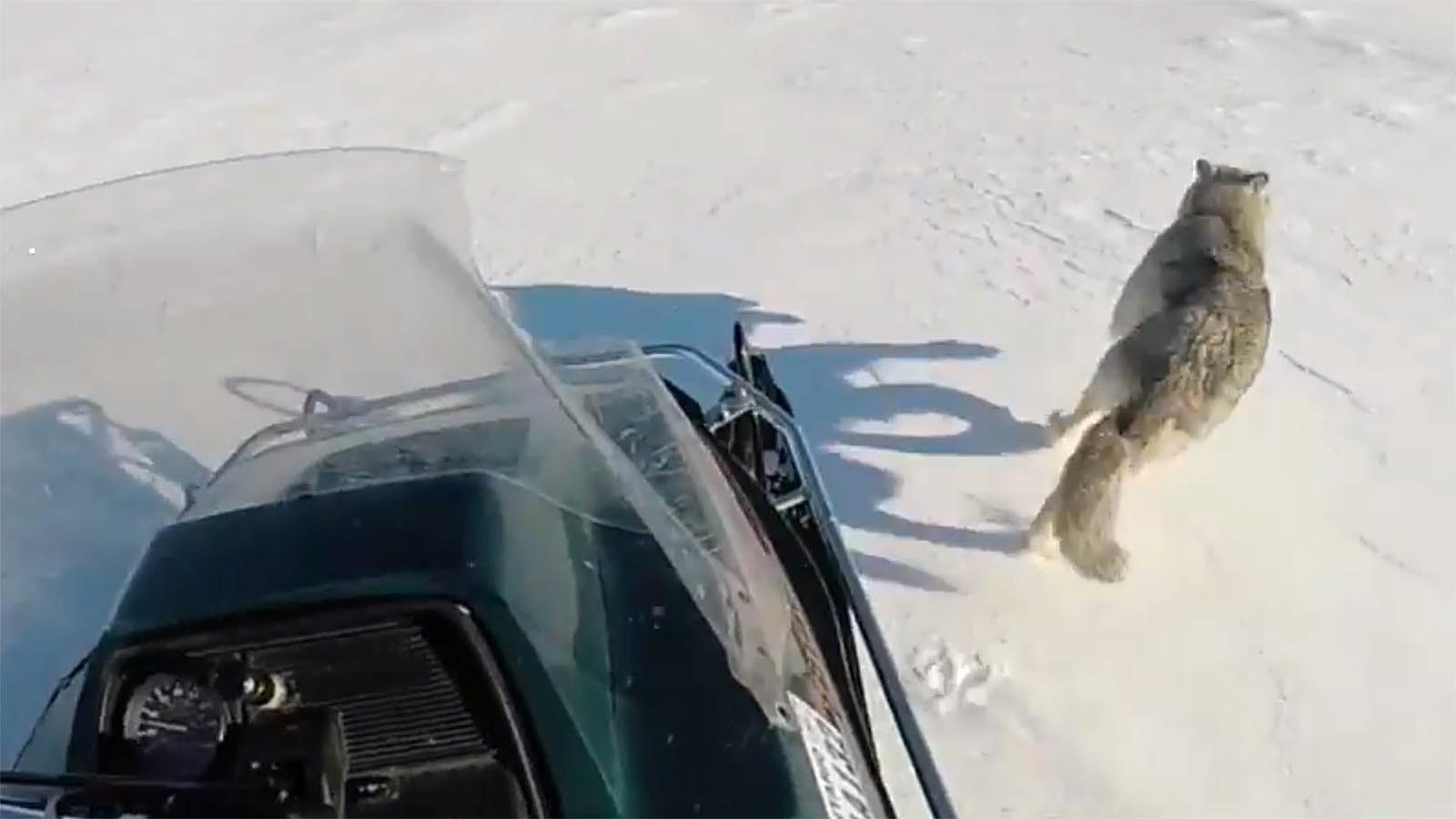
The “Snowmobiles Aren’t Weapons Act” (SAW), introduced Thursday, was inspired by a February 2024 incident near Daniel, Wyoming. Local resident Cody Roberts allegedly ran down a wolf with a snowmobile, captured and abused it before killing it behind the Green River Bar in Daniel.
Roberts’ attorney this week asked a judge to drop the felony cruelty to animals charge filed against Roberts, based upon those allegations.
“I think the Cody Roberts incident is still in the forefront of the minds of so many people,” Wayne Pacelle, president of Animal Wellness Action and the Center for a Humane Economy, told Cowboy State Daily.
Pacelle pushed for the SAW act, both this year, and in its first iteration in 2024, which failed.
Second Time Around
Rep. Val Hoyle, D-Ore., is the lead author to the 2025 version, cosponsored by Reps. Mike Lawler, R-N.Y., Debbie Dingell, D-Mich., and Brian Fitzpatrick, R-Pa.
Hoyle sits on the House Committee on Natural Resources, as does Republican Wyoming Congresswoman Harriet Hageman.
Hageman also chairs the Natural Resources Subcommittee on Water, Wildlife and Fisheries.
Hageman vocally opposed the 2024 version of the SAW Act. A request for comment from her office regarding the new version wasn’t answered by publication time.
Bans At The State Level
The Daniel wolf incident put a national and international spotlight on the practice of running down predators with snowmobiles, commonly called “whacking.”
The SAW Act would ban the practice on federal lands in all 50 states. It would not apply to state-controlled lands or private property.
State statutes banning whacking are also on the books in Oregon, Colorado and Minnesota, Pacelle said.
Whacking hasn’t been banned in Wyoming.
“Oregon was wolves, and she (Hoyle) has wolves in her district,” Pacelle said.
“Minnesota has more wolves than any other state in the country,” he added.
In Wyoming, Rep. Mike Schmid, R-La Barge, introduced a bill to ban whacking during the 2025 legislative session; it failed.
Schmid recently told Cowboy State Daily that he plans on trying again during the upcoming 2026 legislative session.
Broad Support
Pacelle said he’s hopeful that the new version of the SAW Act will succeed, because whacking is broadly opposed across party and ideological lines.
“This is something that every dyed-in-the-wool hunter and every orthodox animal welfare activist can agree on,” he said.
“Using snowmobiles is not a traditional form of killing wildlife, nor does it have anything to do with a Western way of life,” he added.
The introduction of the new SAW Act came as the House on Thursday took up H.R. 845, which calls to remove federal endangered species protection for wolves across the Lower 48. That bill is sponsored by Reps. Lauren Boebert, R-Colo., and Tom Tiffany, R-Wisc.
Wolf advocates worry that could open the door for more states to allow whacking.
Endangered species protection for wolves was previously removed in Wyoming, Montana and Idaho, and all three states allow wolf hunting and trapping.
Mark Heinz can be reached at mark@cowboystatedaily.com.