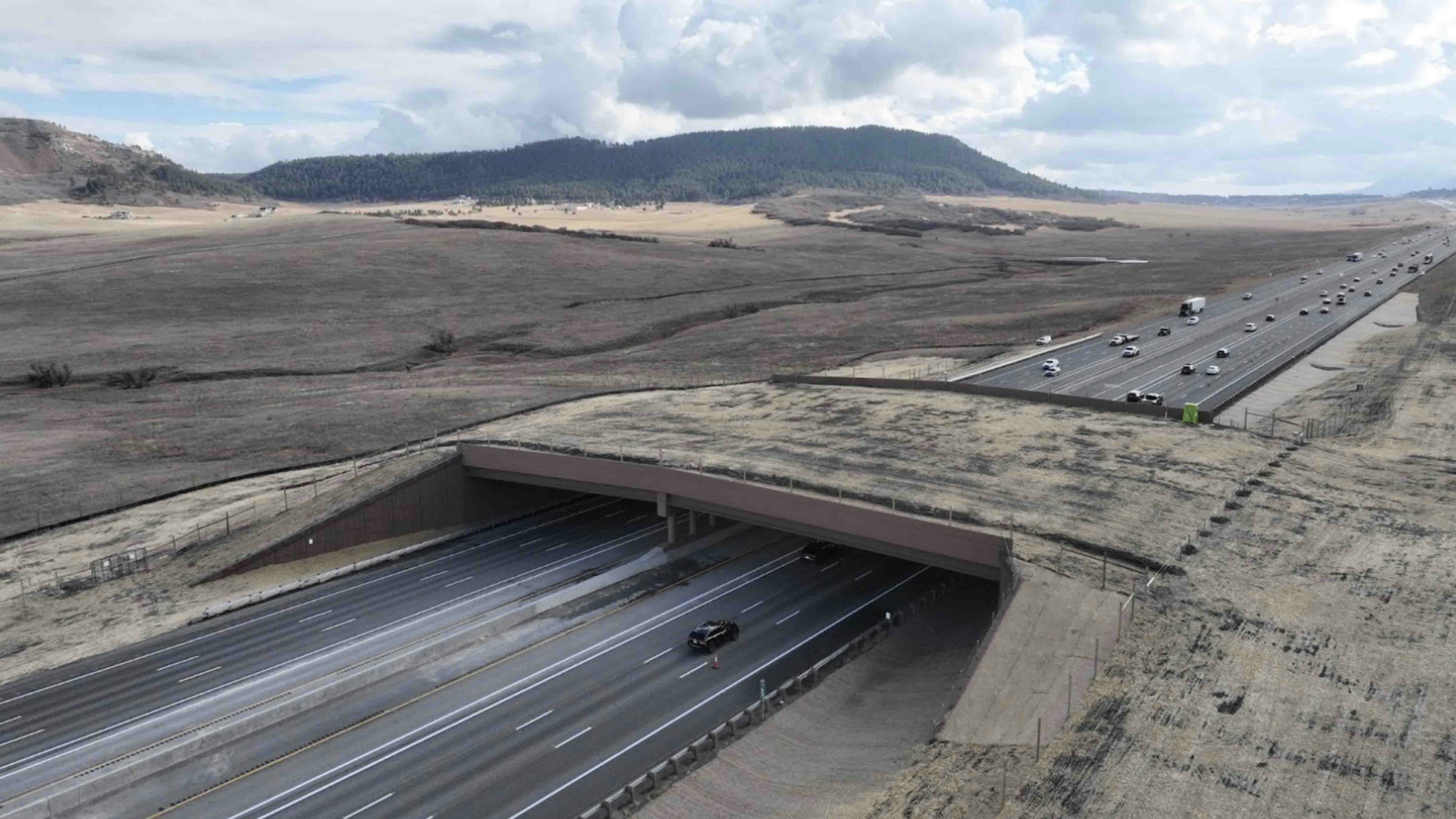
Work is finished on what’s being touted as North America’s largest wildlife crossing bridge south of Denver — but it’s been so warm, animals haven’t started using it yet.
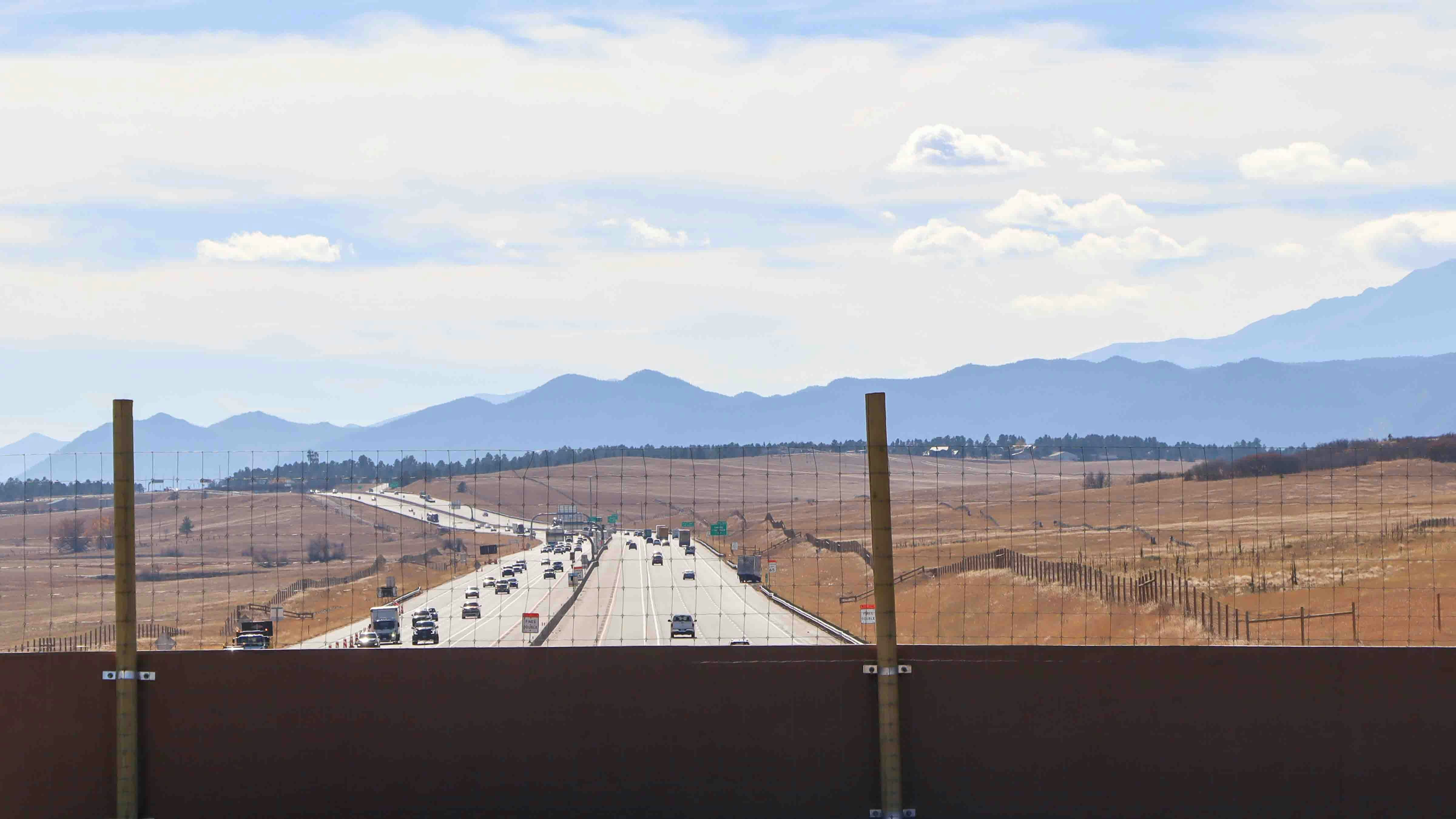
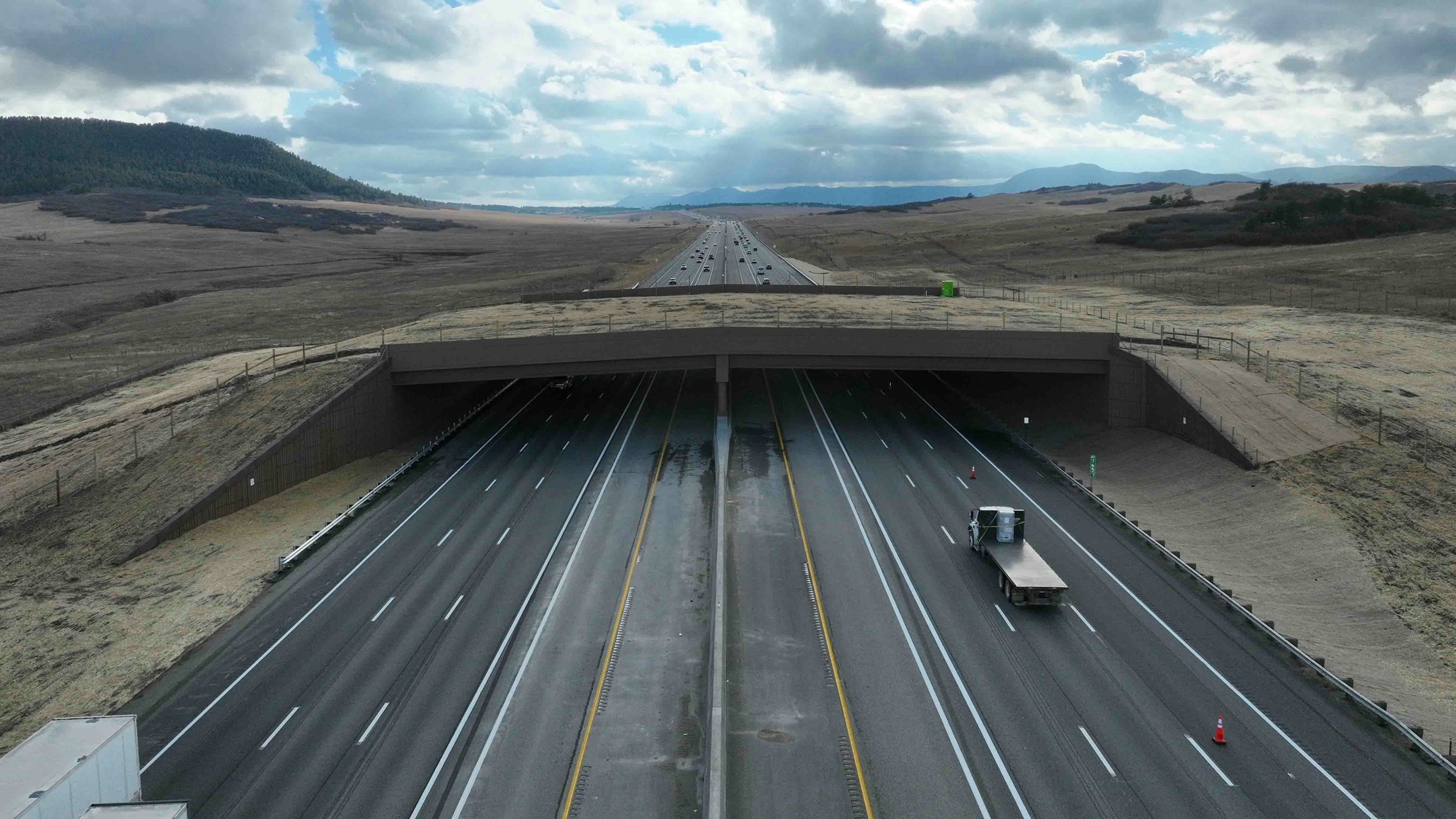
The 200-foot-wide, 209-foot-long Greenland overpass spans six lanes of Interstate 25. It sits along a key migration route between winter and summer range for antelope, deer and elk.
But without snow piling up and temperatures plunging in the high country, the mass migrations haven’t started yet. So, the overpass, completed early this month, has mostly sat empty.
Temperatures in the Denver area have been scraping 70 degrees, Kara Van Hoose, the Northeast Region spokeswoman for Colorado Parks and Wildlife (CPW), told Cowboy State Daily.
“It’s a late-starting winter,” she said, so wildlife migrations are, likewise, running late.
But once severe weather finally hits, the overpass should be well used.
There were already four wildlife underpasses in the area. But elk, deer and antelope prefer bridges, whenever possible, she said.
Going into a dim tunnel is naturally spooky for prey animals, Van Hoose said.
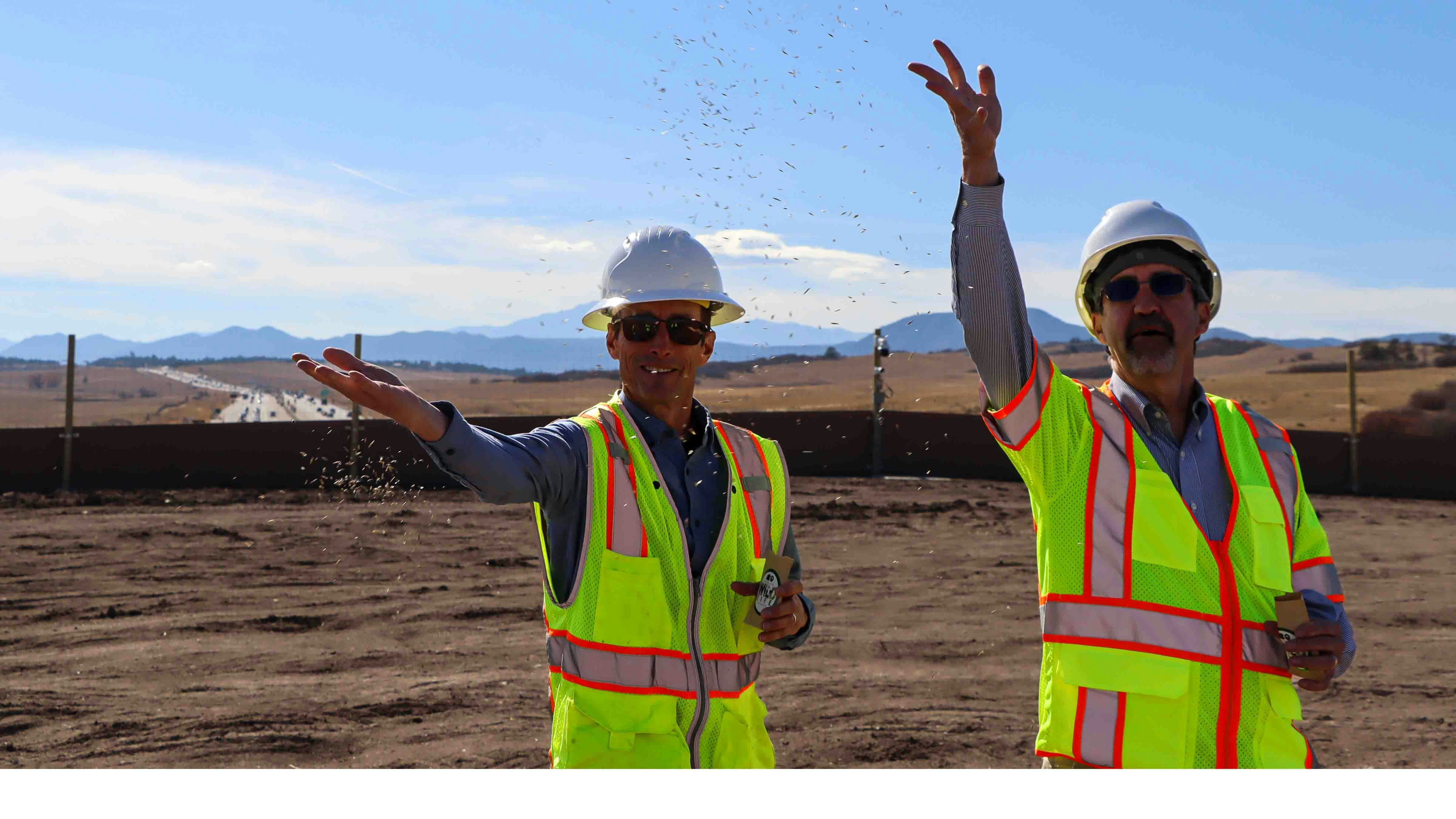
The project was completed “on time and under-budget,” with a final cost of roughly $15 million, she said.
Nine Years In The Making
The planning process for the Greenland wildlife overpass went back about nine years, Van Hoose said.
Construction began in January, near the Greenland Interchange between the towns of Larkspur and Monument.
The wildlife overpass will connect 39,000 acres of wildlife habitat on both sides of I-25, according to CPW and the Colorado Department of Transportation (CDOT)
Closing The Gap
The overpass seals a roughly 4-mile gap in wildlife crossings along I-25 between the Colorado towns of Castle Rock and Monument.
In that area, the highway cuts through a vital migration corridor for big game animals between summer and winter range.
Before the overpass was built, there was at least one wildlife collision per day there during the winter and spring migrations, according to CDOT.
Roughly 100,000 vehicles per day pass through the area, according to CDOT.
‘A New Structure On The Landscape’
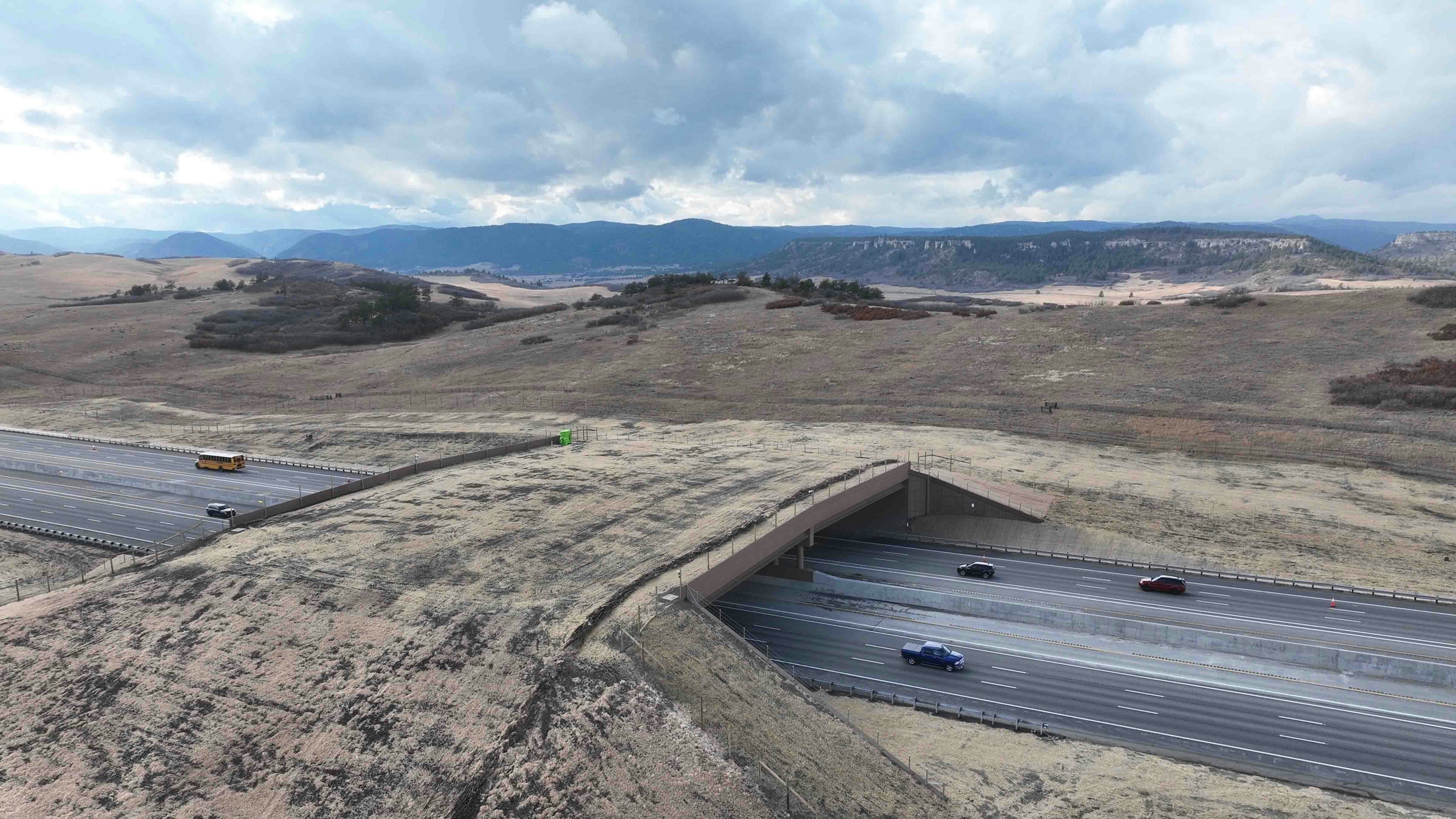
The overpass is “the single largest bridge structure for wildlife in North America and one of the largest in the world,” according to a statement from CDOT.
Its total surface area is 41,800 square feet, nearly an acre.
The structure was designed to have a “line of sight” for animals as they move between the summer range in the high country and winter range in the flatlands, Van Hoose said.
“It’s a new structure on the landscape,” so whenever winter hits and forces the herds to get moving, it will take some getting used to for the critters, she said.
The approaches to the overpass were also designed as a straight shot, because deer and elk “don’t like making turns or corners when they don’t know what’s on the other side,” she said.
The underpasses and overpass will save bears and mountain lions, as well as countless smaller animals, such as badgers and raccoons, according to CPW.
Hope Remains For Dubois Project
Wyoming’s most pressing wildlife crossing project involves plans for three wildlife underpasses and an overpass along a 25-mile stretch of Highway 26/287 near Dubois, with an estimated price of $28 million.
It’s along a vital migration route for mule deer and other wildlife, and hundreds of animals are hit every year along that stretch of highway.
Many hoped that construction on the Dubois crossing project would be finished in 2027. Hopes dimmed earlier this year, when vital federal highway funding was stalled, putting the project in limbo.
Private donors pitched in $2.7 million. There’s renewed hope that federal grant money can be cleared in time to break ground on the project in 2027.
Mark Heinz can be reached at mark@cowboystatedaily.com.