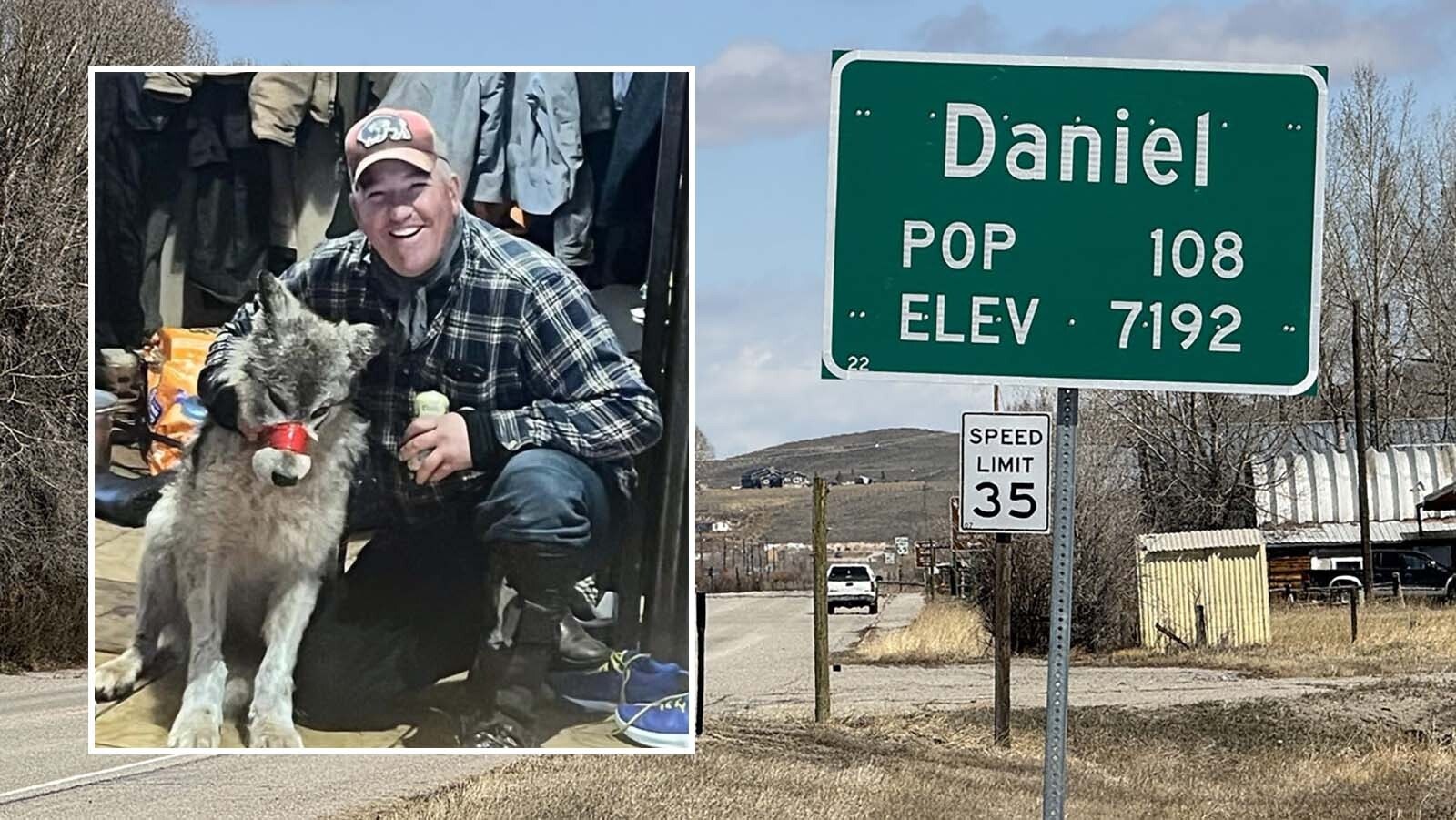
The Daniel, Wyoming, man accused of running over a wolf with a snowmobile, taking it injured into a bar and later killing it is asking a judge to drop the animal cruelty charge he now faces, saying the prosecutor is unlawfully contorting the law.
Cody Roberts was charged in August by a grand jury, with felony animal cruelty. The charge is punishable by up to two years in prison and up to $5,000 in fines.
Sublette County Attorney Clayton Melinkovich is now prosecuting Roberts under the theory that he knowingly tortured or tormented the gray wolf with the intent to cause death or undue suffering.
But the alleged torment was an act of omission, and by “maliciously allowing the undue suffering of an animal to continue,” Melinkovich asserted in a Dec. 2 court filing. The prosecutor noted that the state’s definition of torment can include omissions as well as overt acts.
Roberts’ attorney Robert Piper of Cheyenne-based Coal Creek Law countered in a Dec. 15 motion asking Sweetwater County District Court Judge Richard Lavery to dismiss the case.
The case isn’t filed in Sweetwater, but in the Sublette County District Court, which Lavery is serving as a stand-in for a judge who conflicted out of the case.
Piper pointed to Wyoming statute 6-3-1008, which says “nothing in this article,” meaning, the section of law on animal abuse, may be construed to prohibit “the hunting, capture, killing or destruction of any predatory animal, pest or other wildlife in any manner not otherwise prohibited by law.”
Definition Of ‘Predator'
Gray wolves not in trophy-game areas are within the state’s definition of “predator,” Piper wrote, adding that the state has included no allegations about trophy-game zones.
Piper referenced oft-cited Wyoming case law about reading statutes by their plain language, in a way that doesn’t render portions of it meaningless or make them yield absurd results.
“Here,” wrote Piper, “the instant statutes could not be clearer and more precise. The Legislature first issued a broad prohibition against animal cruelty.”
He continued: “Then, likely realizing that such a broad prohibition would impact animal husbandry and agriculture throughout the state, the Legislature added a specific, clearly enumerated exception” for pests and predators.
Piper then accused the prosecutor of deploying circular reasoning, saying the state argues that because Roberts’ conduct violates “the broad prohibition” on tormenting animals, then it invokes the “otherwise unlawful” carveout to its own exception.
If the rule canceled out the exception, then the exception would be rendered “completely meaningless and absurd,” wrote Piper.
He told Lavery that clinging to the state’s interpretation would run afoul of the Wyoming Supreme Court’s direction not to render legal language absurd with incomplete readings.
Piper’s filing next references the massive international publicity Roberts’ interaction with the wolf, alleged to have happened in late February 2024, have generated.
“That a defendant’s alleged conduct is unpopular or draws scorn does not deprive him of the fundamental right to be placed on notice of the accusations against him,” Piper wrote. “Nor does it negate the specificity requirements of the United States and Wyoming Constitutions.”
Those on “the wrong side of popular sentiment,” rather, “require those procedural safeguards even more,” Piper wrote.
He asked Lavery to dismiss the case with prejudice, meaning it could not be brought again.
Alternately, wrote the attorney, the judge could set his motion for a hearing, for argument.
The Just-In-Case-You-Disagree Argument
Piper inserted a point “B,” in case Lavery disagrees that the statute is unambiguous, and that Melinkovich got it wrong.
If the judge finds the statute has gray areas or ambiguity, then he should still dismiss the case, Piper wrote.
This time he referenced Wyoming rulings saying if the law is unclear, courts should resolve that uncertainty in favor of the defendant.
“Thus the state’s indictment should fail,” added Piper.
Piper in an earlier, Nov. 24 filing asking Melinkovich to give specifics about the charging mechanisms of this case threw another curveball into the mix.
Sources after the incident told Cowboy State Daily Roberts ran the wolf down with a snowmobile.
Piper’s November filing says case witnesses may say otherwise.
“In fact, the defendant anticipates that one or more witnesses of the state may offer testimony that the said gray wolf was not struck with a snowmobile,” he wrote, while also emphasizing that Roberts did not beat the wolf in the bar.
This case is ongoing.
Clair McFarland can be reached at clair@cowboystatedaily.com.