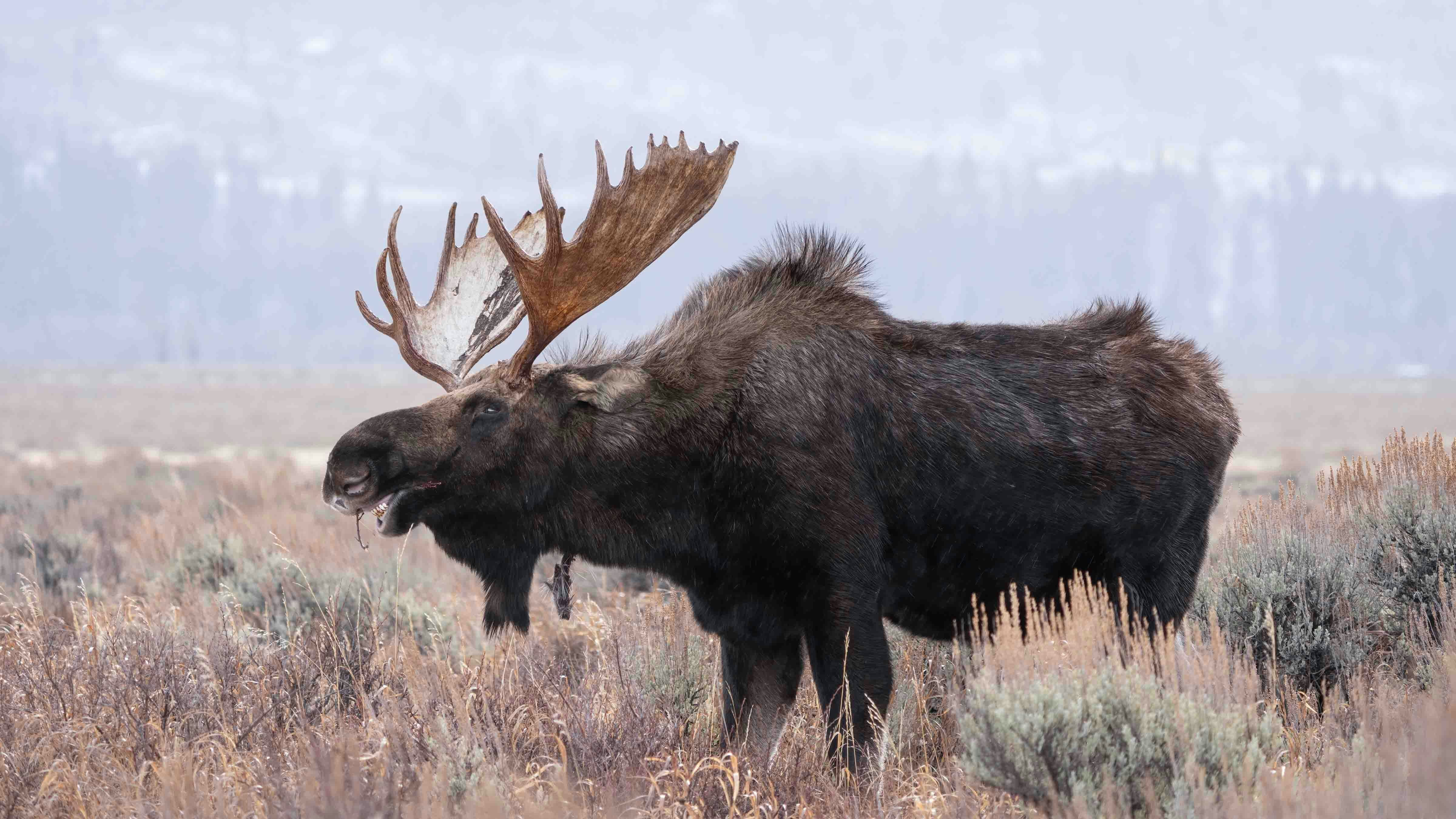
Over the past few years, Hoback has become a household name around Wyoming and across the country, as the most famous of Grand Teton National Park’s bull moose.
Indeed, his fame has gone global, wildlife photographer Deena Sveinsson, who has followed Hoback for years, told Cowboy State Daily.
However, his reign could be coming to an end. Estimated to be as much as 18 years old, “he’s definitely a senior citizen” among moose, which rarely live past 20 in the wild, she said.
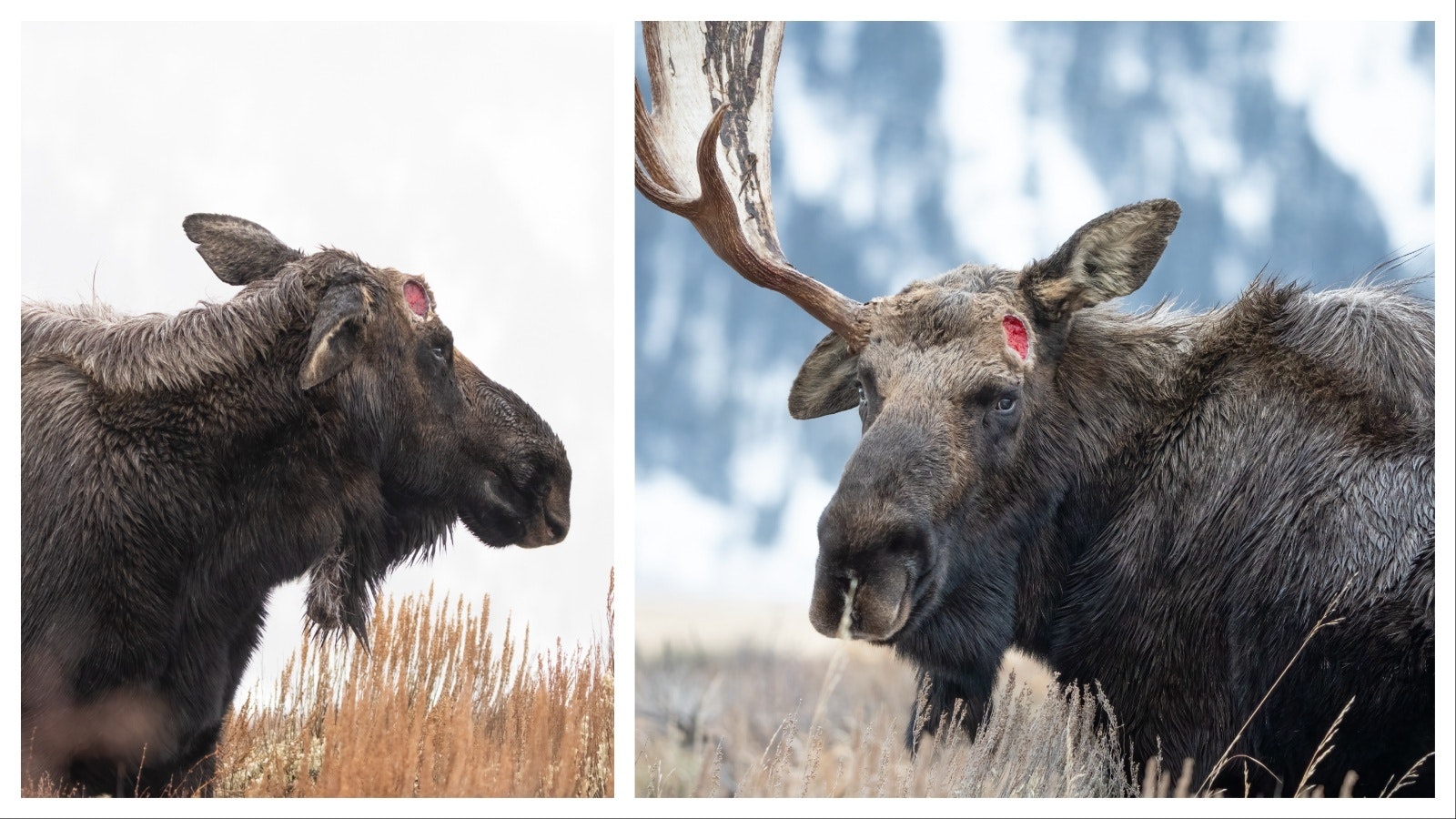
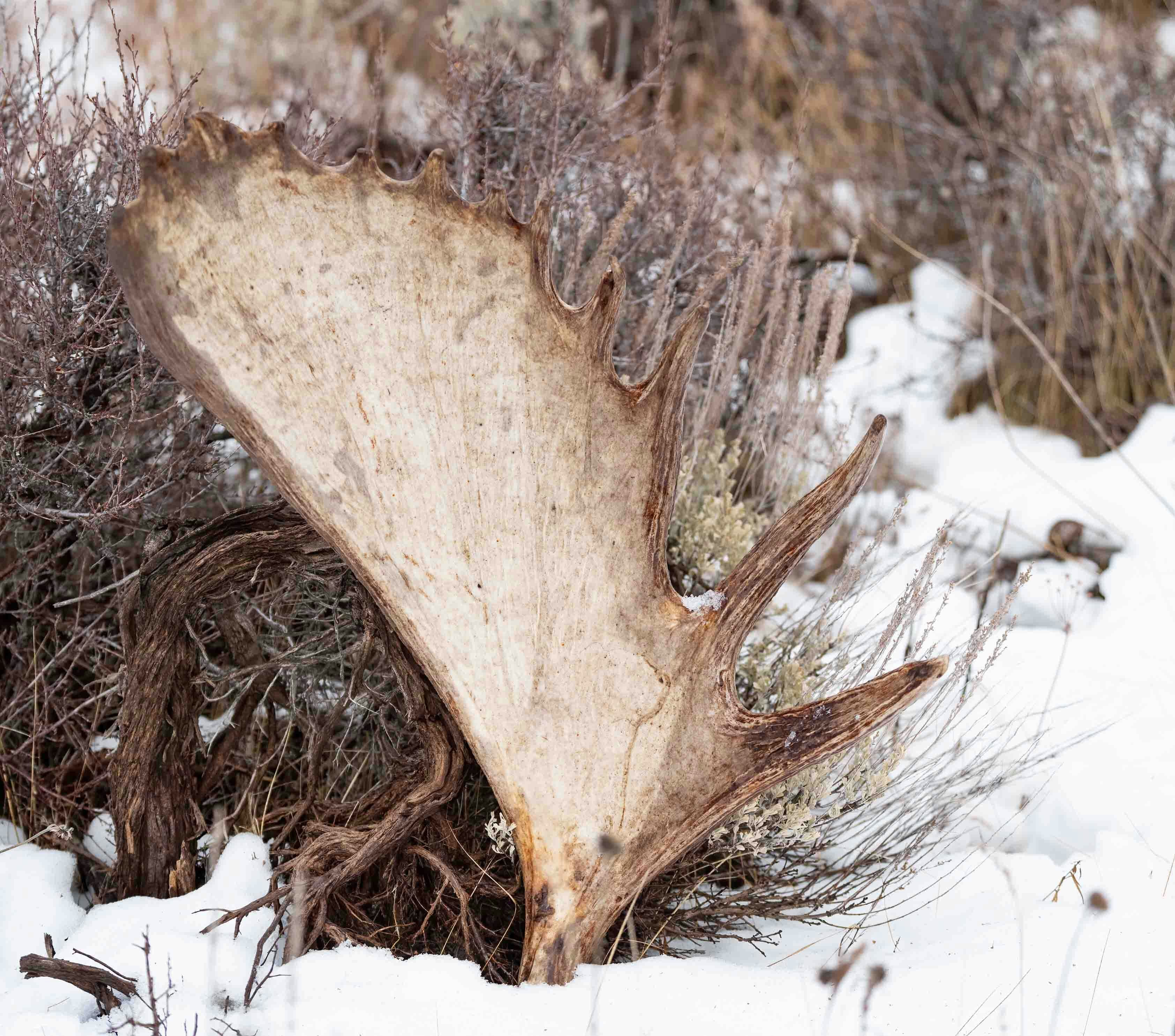
This year, he was likely the first of the Grand Teton bull moose to shed his antlers. Sveinsson and her husband, Knut, were there on the afternoon of Dec. 10, when Hoback shed his first antler.
When they returned the next morning, Hoback was antlerless, having shed the other one either late Dec. 10, or during the wee hours of Dec. 11.
Early December is a bit soon for moose to start shedding antlers. The shedding season usually really gets rolling from late December to late January.
However, lower testosterone, due to age, might have caused Hoback to start shedding his antlers early, Sveinsson said.
He’s been showing his age and “has slowed down quite a bit” past couple of years, she said.
“It was thought that last year, he might not make it through the winter,” she said.
“He’s thinned out a little bit. His antlers have thinned out a little bit” so it could be touch-and-go for him making it through the coming winter, she added.
Hoback also has what looks like a torn patch of skin and hair hanging off the lower part of his neck.
It’s thought to be an injury he suffered during a wolf attack a month or two ago, Sveinsson said.
That also might not bode well for Hoback, because wolves tend to target animals which they sense are weakening.
The Tapping Of Antlers
Sveinsson lives in Colorado, but she and her husband are frequently in Grand Teton.
She specializes in photographing moose, and has won numerous wildlife photography awards, including from the North America Nature Photography Showcase, National Wildlife Magazine, Nature’s Best Photography International Photography Awards and more.
Hoback has been one of her favorite subjects since she and Knut started visiting Grand Teton about eight years ago.
On Dec. 10, she and her husband were the only ones in spot from which they could observe a “bachelor group” of several bulls, including Hoback.
During the rut, or mating season, bull moose can get into serious battles with one another, as they fight over females.
Outside of rutting season, bulls will playfully spar with each other, in what amounts to friendly pushing matches.
During December and January, those pushing matches can help the bulls shed their antlers, Sveinsson said.
That seemed to be the case on the afternoon when Hoback lost his first antler, Sveinsson said.
She and her husband heard “the tapping of antlers” and shortly thereafter noticed that Hoback was missing one of his.
Although they missed the exact moment the antler fell off, it still felt special to be there when it happened, she said.
“It’s very rare for them to drop their antlers in front of you,” she said.
The shedding process leaves what looks like a gnarly open wound, where the antler was attached to the skull.
But it’s part of the natural process, and doesn’t seem to bother the bull moose, she said.
National Park Service (NPS) personnel came to collect Hoback’s shed antler, “for study and education purposes,” Sveinsson said.
It’s illegal for visitors to remove shed antlers from national parks such as Grand Teton and Yellowstone.
Who Is Heir To The Throne?
It’s been a rough year for Grand Teton’s moose. Several of them have been struck by vehicles, including a famed bull called Elk Antler, who was killed in October.
It’s not the first time that fans have lost moose royalty. Hoback came up in the shadow of a bull called Shoshone, who for years held the title of the park’s hugest moose.
Shoshone and Hoback got into serious tussles during the rut, but otherwise got along, Sveinsson said.
“Hoback and Shoshone were sidekicks. In the rut, they would get testy with each other. But otherwise, they were best buddies,” she said.
Sometime in 2021, Shoshone apparently suffered a leg injury, she said. He died in late 2021 or early 2022.
“Shoshone didn’t emerge that spring (2022),” Sveinsson said.
Hoback has since held the mightiest moose title, but with his age really starting to show, the question is raised – who might take his place?
In terms of sheer size, there are a few contenders, Sveinsson said.
Those include two bulls called Fremont, or “Ninja Star,” and Bondurant, she said.
There’s also Jackson and Kelly, Shoshone’s twin offspring, she added.
However, in terms of charisma, there might not ever be another Hoback, Sveinsson said.
He could be said to be to moose what Grizzly 399 was to bears. Grizzly 399, the “Queen of the Tetons” and likely Wyoming’s most famous wild critter ever, was struck and killed by a vehicle in October 2024.
Sveinsson said that the amount of people showing up during the spring, fall and winter “shoulder seasons” in Grand Teton has been growing steadily.
The park’s lumbering bull moose have been a big part of that draw, and Hoback has been the most magnetic among them, Sveinsson said.
So when he goes, many will be saddened.
“People come from all over to watch and photograph Hoback. He’s been a beloved moose,” she said.
Mark Heinz can be reached at mark@cowboystatedaily.com.