Dear editor:
In small towns across Wyoming, people are silently suffering.
Behind the beauty of our wide skies and open land lies a harsh truth: Wyoming has one of the highest suicide rates in the nation, and access to mental health care remains scarce. For too many, help is hours away — or doesn’t exist at all.
This isn’t just a policy failure. It’s a moral one.
As an Episcopal priest, I believe the way we treat those struggling with mental illness reveals what kind of society we are — and what kind of God we believe in. Scripture teaches that every human being is made in the imago Dei — the image of God. That means every person, no matter their state of mind, carries infinite worth.
When we neglect mental health, when we fail to make care accessible and affordable, we are neglecting that sacred image in one another.
Mental health is not separate from spiritual health. Jesus’ invitation — “Come to me, all you who are weary and burdened, and I will give you rest” — speaks directly to those crushed by anxiety, trauma, and depression. Healing the mind and spirit is part of God’s ongoing work of redemption.
That work belongs not only to the Church, but to the entire community — and that includes our local and state governments.
Wyoming’s small towns face unique challenges. Isolation, economic hardship, and stigma make it hard for people to reach out for help. When you live in a community where “everyone knows everyone,” admitting you’re struggling can feel risky. But silence doesn’t save lives. Support does.
This is where public leadership matters. Churches can’t do it alone.
They can offer compassion and spiritual care, but they can’t provide licensed therapy, psychiatric treatment, or long-term recovery programs. Mental health is infrastructure — as vital to a community’s health as roads, schools, or clean water.
If we believe that faith should shape public life, then investing in mental health must be part of that moral vision.
The prophet Micah said it best: what the Lord requires of us is “to do justice, to love mercy, and to walk humbly with God.”
Justice looks like a system where a person in Rawlins or Newcastle has the same chance at mental wellness as someone in Denver. Mercy looks like a community that meets suffering with care, not stigma.
There are concrete steps our government can take: expanding funding for community-based counseling centers, particularly in rural counties; investing in telehealth and broadband infrastructure so people can access therapy without driving three hours; partnering with faith organizations, schools, and first responders to train people in crisis intervention and suicide prevention.
These aren’t political ideas. They’re life-saving ones.
And while dollars and data matter, the argument for mental health care is ultimately human.
Every life lost to suicide, every family broken by untreated depression or addiction, is a sacred story cut short. These are not statistics — they’re our neighbors, co-workers, classmates, and friends.
To say that government shouldn’t be in the business of emotional or spiritual well-being misses the point.
Supporting mental health isn’t about replacing faith. It’s about giving them the tools, access, and dignity they need to become whole again.
The word salvation comes from the Latin salus, meaning health or wholeness.
To be saved is to be healed — mind, body, and spirit. That is what’s at stake when we talk about mental health care in Wyoming. We’re not just fighting despair; we’re fighting for wholeness, for hope, for the image of God alive in every person.
Our open landscapes and small communities define us — but they can also isolate us.
In that isolation, people are crying out for rest, for relief, for help. If we take seriously the command to love our neighbors as ourselves, then we must make mental health care a priority, not a luxury.
Because this work is sacred – and so are the people who need it.
Sincerely,
The Rev. Camie Dewey
Rector, St. Mark's Episcopal Church
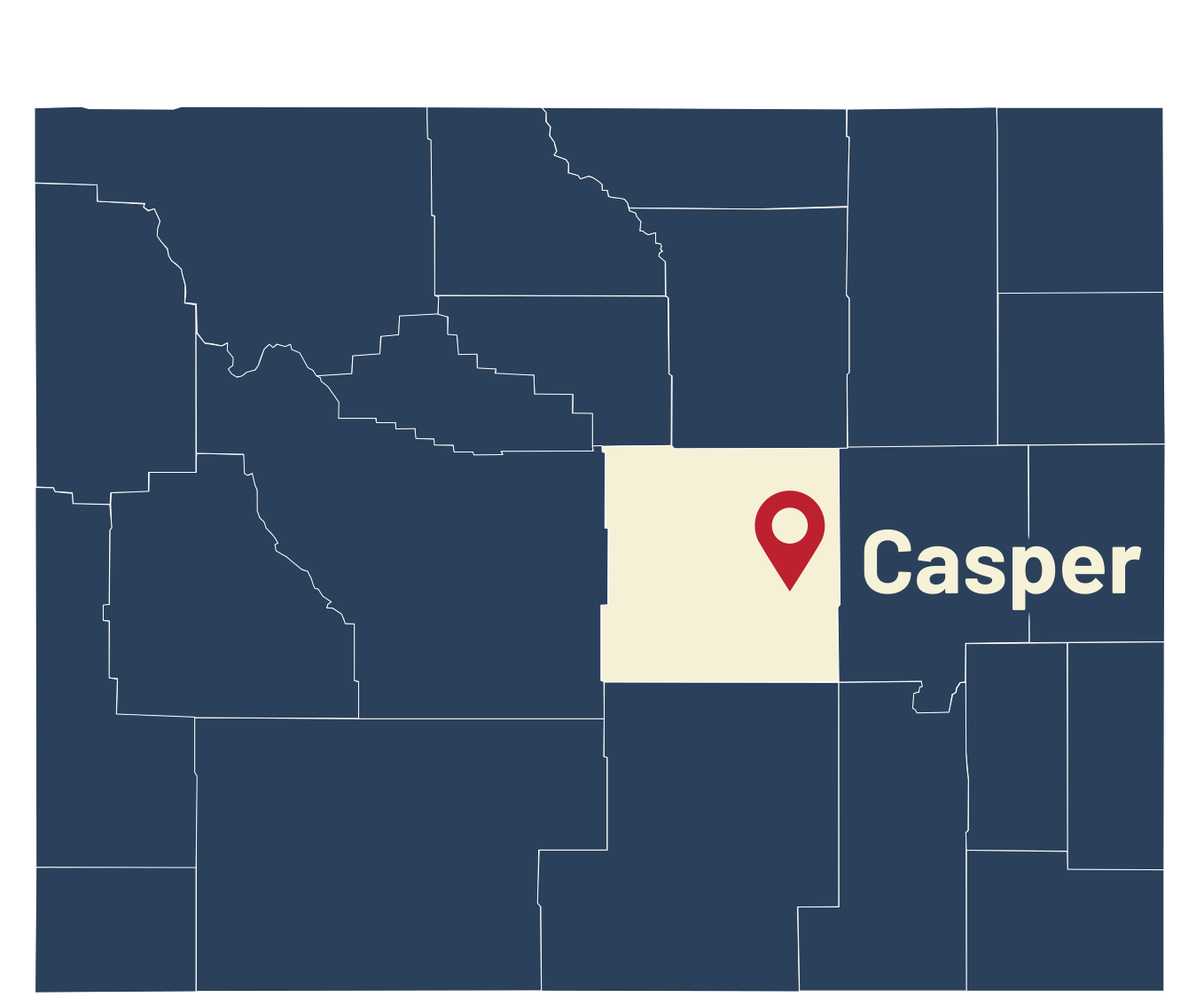
Casper, Wyoming