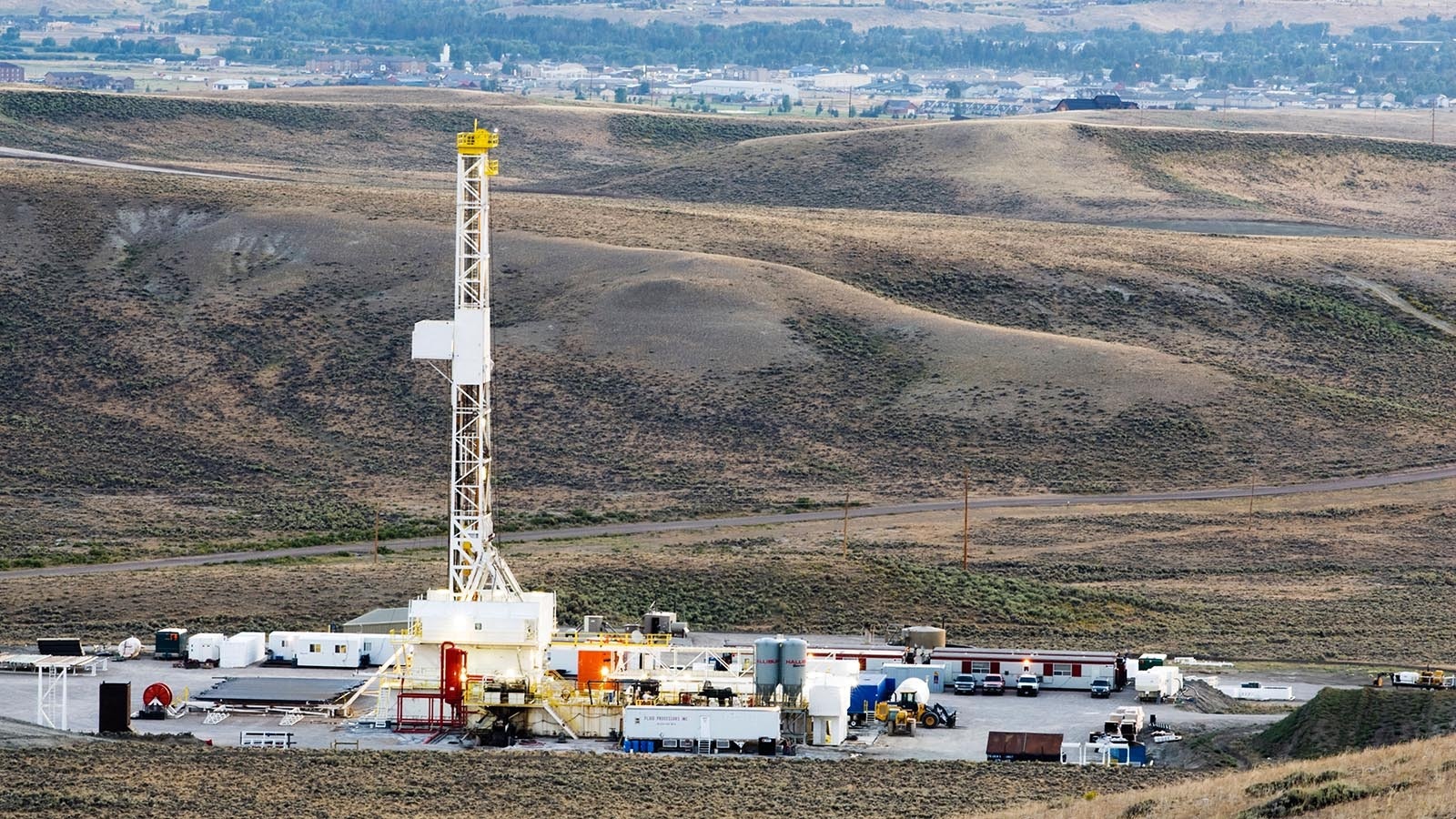
Oil and gas lease sales in Wyoming have picked up dramatically in 2025 after hitting record lows under former President Joe Biden's administration.
The Bureau of Land Management (BLM) last week announced two new oil and gas lease sales in Wyoming — one on Dec. 30 and another on March 3, 2026.
The Dec. 30 sale marks the sixth oil and gas lease sale to take place in Wyoming this year.
The latest sale took place on Dec. 3 and marked the BLM’s regularly scheduled fourth quarter oil and gas lease, generating close to $17.5 million in revenue for the state.
Last year, only two oil and gas lease sales were held in Wyoming, offering a total of 60,568 acres. Roughly half of the acreage offered was leased, generating revenue just shy of $11 million.
Concerning details about the sales still linger from the Biden administration, said Steve Degenfelder, a landman with Casper’s Kirkwood Oil and Gas.
For example, the minimum bid for a parcel used to be $1 per acre. Under the Biden administration, the minimum bid increased tenfold to $10 per acre.
That increase has remained in place in 2025. As a result, the rent gas companies pay each year to keep their leases going is higher than when the minimum bid was $1 per acre.
The Dec. 30 sale is a carryover from the Dec. 3 sale. Under Trump’s 'Big Beautiful Bill' Act, a second lease sale is required to be held within 30 days of any sale in which 25% or more of the acreage offered is not leased.
At the Dec. 3 sale, 53,118.58 acres of the 79,169 acres available were leased, leaving about 33% of the land offered unclaimed.
It is those 34 parcels, totaling 26,050 Wyoming acres, that will be offered again on Dec. 30.
Questions Remain
What happens to any parcels that do not receive bids on Dec. 30? And, if no one bids on those parcels, what happens next?
The answers aren’t clear.
Degenfelder told Cowboy State Daily he had reached out to the Wyoming BLM to ask whether they would drop the bid per acre or offer the parcels at a reduced royalty, to make the available land more appealing to gas and oil companies.
“It would be a way of making some money off of tracts that are less desirable,” he said. “I don’t know whether this next sale, for tracts that didn’t receive a bid (on Dec. 3), will they be available for noncompetitive filing, or will they just go down this rabbit hole and keep offering sales every 30 days?”
Degenfelder said he has not received an answer.
Brad Purdy, Senior Advisor for Wyoming’s BLM office, declined to comment on the future of gas and oil leases in the state or why parcels are being deferred.
“Those are questions that have to go to the politicals higher up,” Purdy told Cowboy State Daily. He acknowledged that Cowboy State Daily’s questions had been passed along, but no response had been received as of press time.
“The reason why we’re doing the second sale [on Dec. 30] is because of what’s in the Big Beautiful Bill,” Purdy said. “It’s a requirement, so we’re going to do it.
“What happens to those parcels after that, I don’t know. We’d have to wait to see what the interpretation of HR 1 (the Big Beautiful Bill Act) is,” he said.
During the Biden administration, the Wyoming State BLM deferred 605,000 acres of leases that were authorized to be leased by the local field offices.
Expression Of Interest
In Wyoming alone, the oil and gas industry has put forward an expression of interest (EOI) on more than five million acres, according to BLM documents. An expression of interest is an informal request for certain lands to be included in a competitive gas and oil lease sale.
“At the rate they are going per quarterly sale, it will take decades to work off just the deferred and EOI lists,” Degenfelder said. “All of these EOIs were made before the Biden administration increased the minimum auction bid price, yearly rentals and admin fees tenfold, which might explain why lands that were previously requested by industry do not receive a bid now,” Degenfelder told Cowboy State Daily in an email. “I sure wish they would consider doing what the State of Wyoming does, and that is to offer the parcels again at a reduced rate or reduce fees to attract bids.”
According to an email statement from the BLM, additional leases are expected in 2026 due to a reduction in the royalty rate for new federal onshore production. “There has already been a substantial increase in APDs (Application for Permit to Drill) and we expect this trend to continue,” the statement reads.
Under the One Big Beautiful Bill Act, the royalty rate for new federal onshore oil and gas production reset from 16.67% to a minimum of 12.5%, reducing the cost of doing business on public lands and giving oil and gas development more economic appeal.
As of now though, rig counts are down statewide.
The BLM manages 50% of Wyoming’s surface land and 65% of its underground mineral estate. Other oil-rich places are privately owned, often making it easier to lay claim to parcels.
“If you have all this capital that you’d like to deploy but you can’t get a drilling permit approved by the BLM, you can imagine the corporate offices saying let’s deploy this capital elsewhere,” Degenfelder said. “Capital is going to be deployed somewhere.”
Leasing is the first step in developing federal gas and oil resources, according to BLM documents.
Kate Meadows can be reached at kate@cowboystatedaily.com.