In their advertising, Diamond Cross Ranch never mentions Taylor Sheridan’s popular television series, “Yellowstone.”
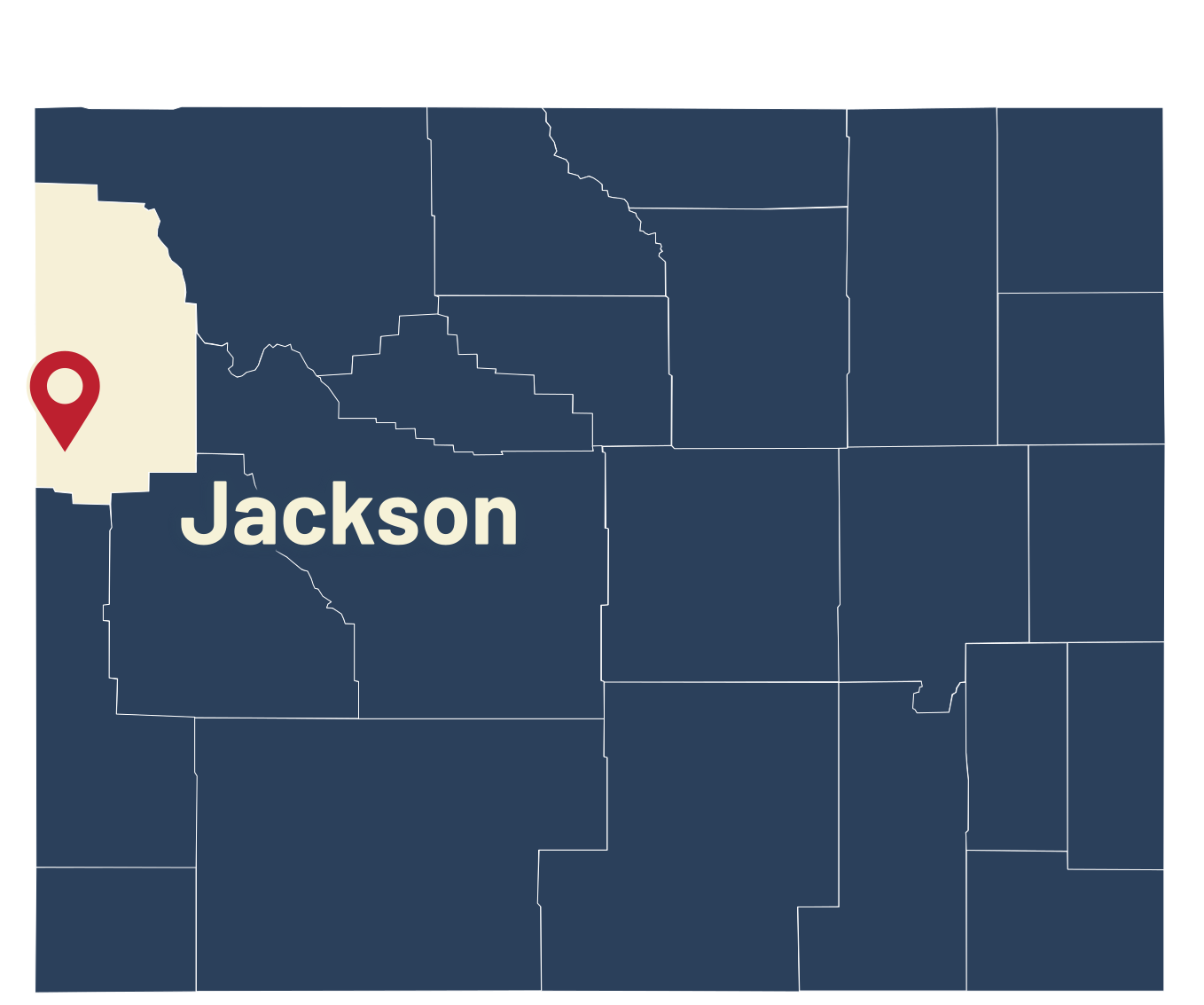
But lots of people have made the comparison, from celebrity guests to magazine writers and photographers for what is one of few working cattle ranches left in pricey Jackson Hole.
Cattle at the Diamond Cross Ranch in Jackson Hole graze on million-dollar grass, the family is fond of joking, and the markets are such that cattle have been, at times, more hobby than business.
These are telling jokes, and they frame this real-life family's struggle to keep this 115-year-ranch near Yellowstone National Park going, with hopes that there can one day be a viable path forward to sustain a fifth generation.
The struggle became particularly real in 2023, co-CEO of Diamond Cross Ranch Luke Long told Cowboy State Daily. And that struggle was captured on camera and is now playing out in an eight-part documentary called “Diamond Cross Ranch” on the Cowboy Channel, which started Sunday.
“People have sort of said, ‘Hey, this seems like the real-life Yellowstone,” Long said. “You guys are fighting to save this land. And you have different family members with different skills, but also, to some degree, fighting with each other, trying to figure it all out.”
The conflict is front and center in episode No. 1 of the documentary. The family all sit down together to wrestle with their visions of the future for the ranch.
“This is not scripted,” Long said. “It’s pretty, just raw. There was no storyboard. There was no master plan. There were just cameras following us for a summer, as we worked to figure it out.
It’s just a Wyoming family, going through the day-to-day of trying to keep the lights on and run the business,” Long continued. “Trying to figure out how the heck do we ... pass this on to the next generation and not break the business and also not break the family bonds.”
The show was “a little bit scary,” Long added.
“I think we all say, ‘Oh man, I can’t believe they got that on camera,” Long said. “It wasn’t my best day. But I think that’s probably what will make it interesting. It’s real, and it’s authentic. It’s what we were going through to get to the other side.”
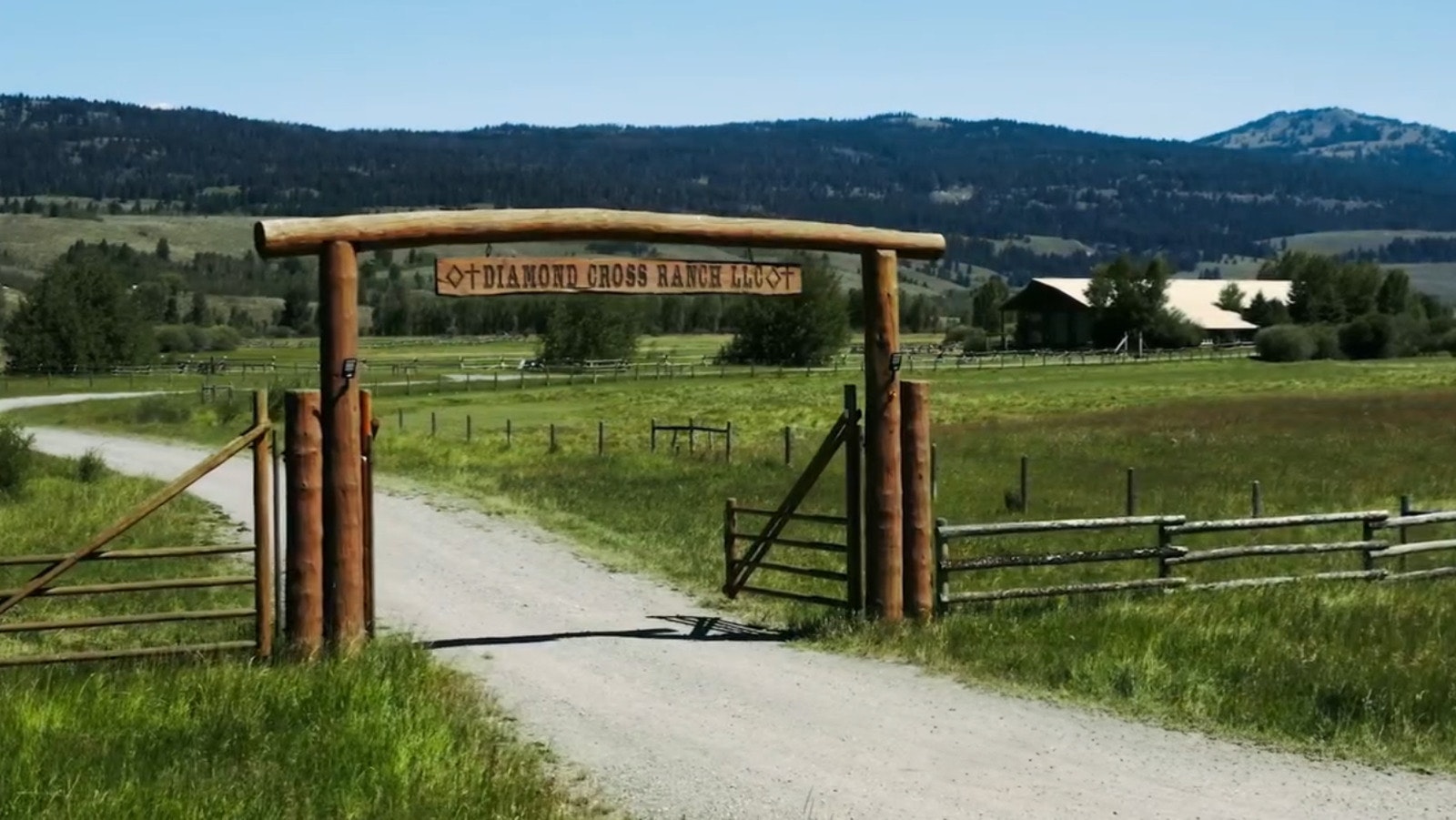
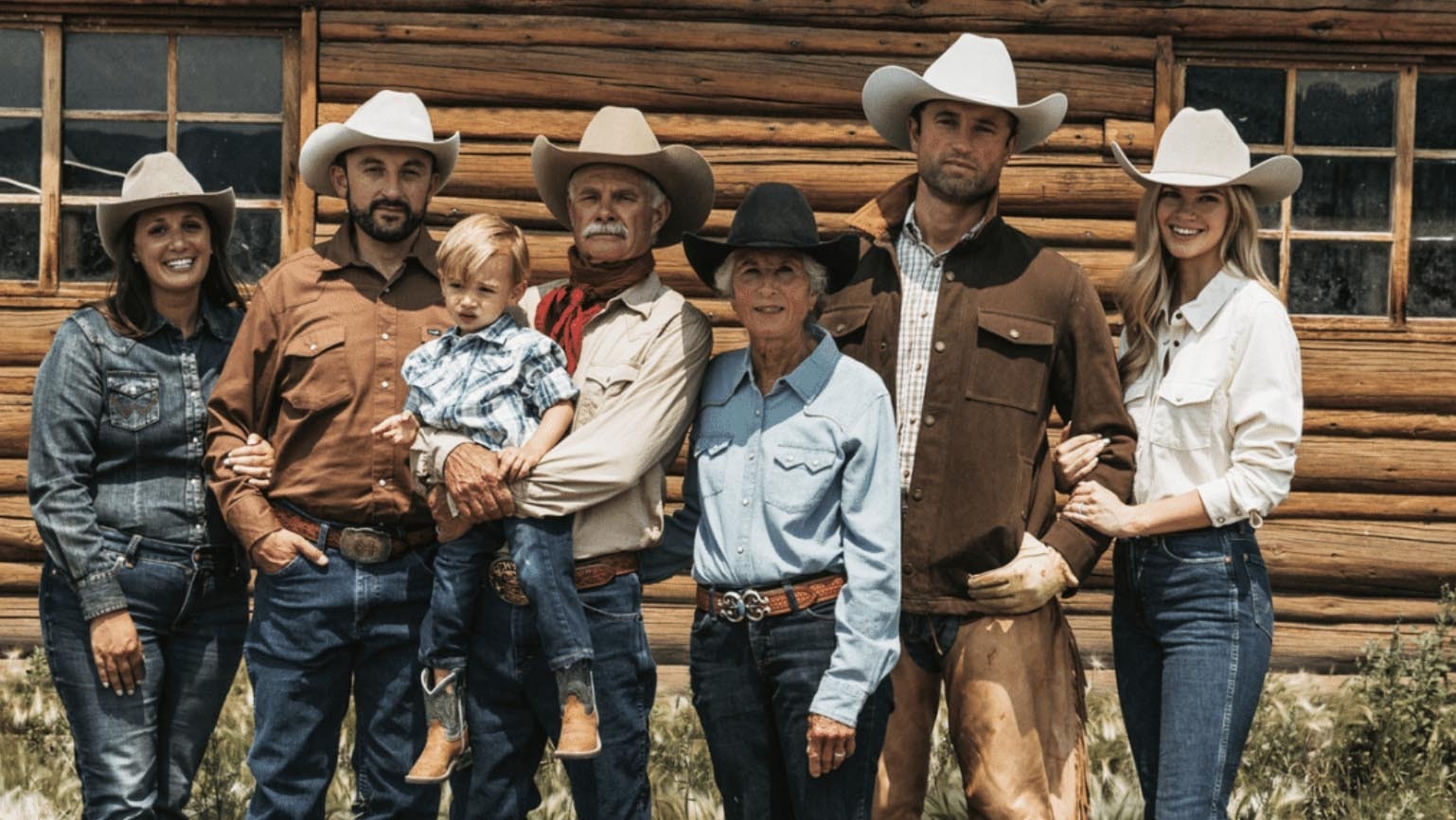
A Wyoming family shares an inside view of their struggles to ranch in pricey Jackson Hole and pass their ranch on to the next generation. It’s part of a new eight-part Cowboy Channel documentary that started Sunday. (Courtesy Cowboy Channel) 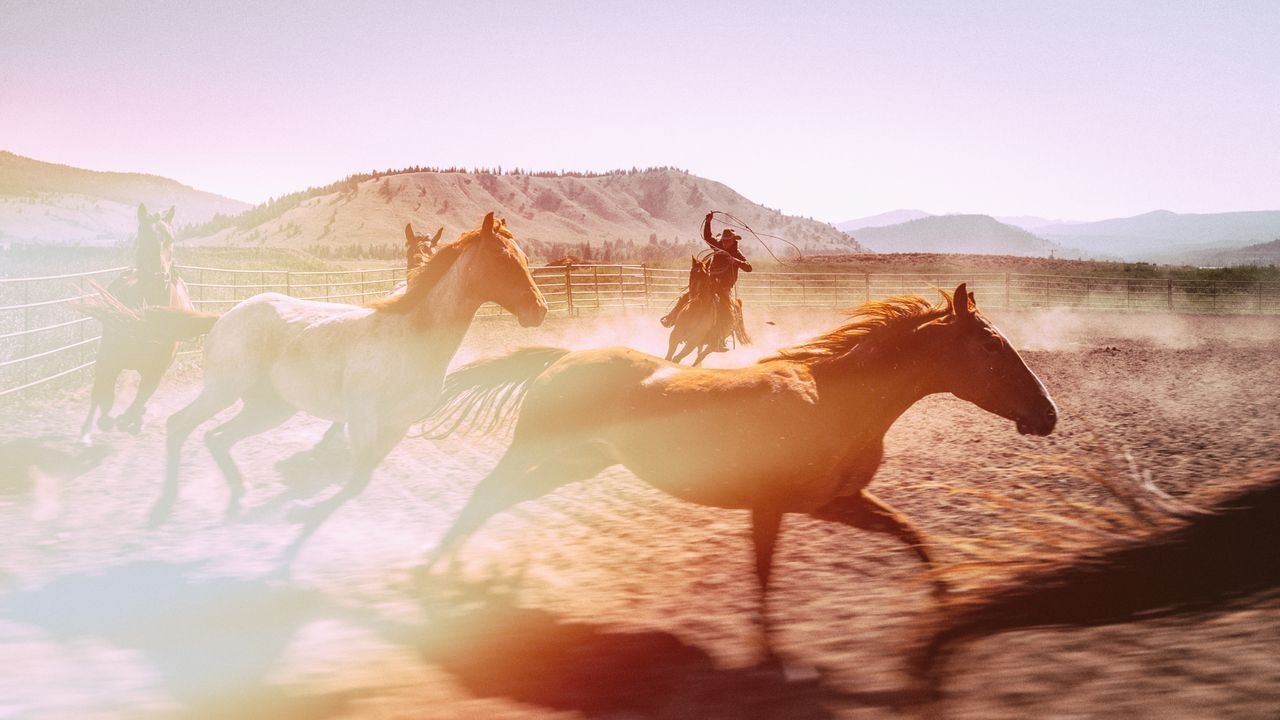
A Wyoming family shares an inside view of their struggles to ranch in pricey Jackson Hole and pass their ranch on to the next generation. It’s part of a new eight-part Cowboy Channel documentary that started Sunday. (Courtesy Tony Fay PR) 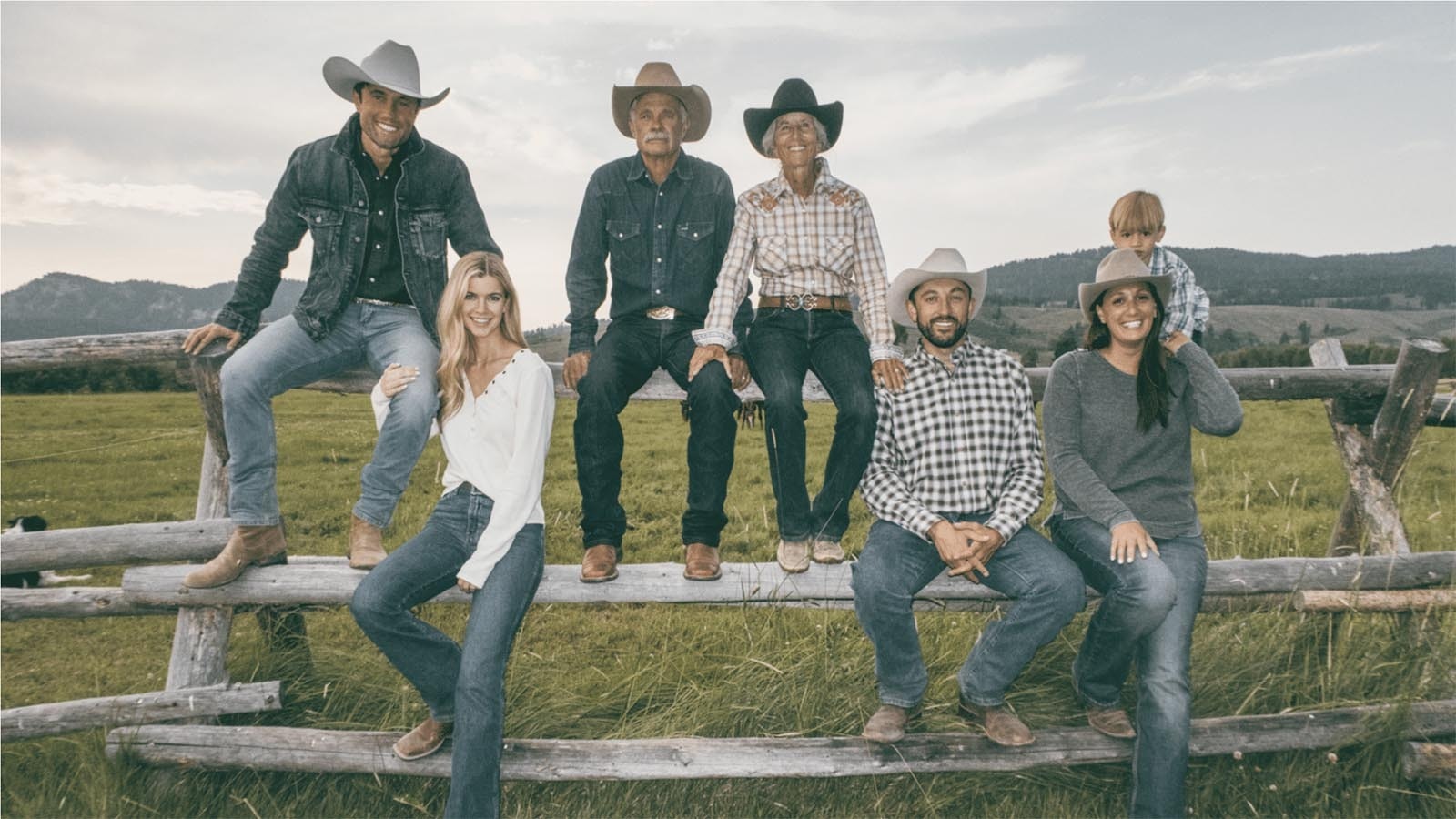
(Courtesy Tony Fay PR)
A Living Of Sorts
Diamond Cross Ranch is one of few left in Jackson that’s still owned by one of the original pioneering families of Wyoming. It hasn’t been bought by a billionaire or a millionaire yet.
The thread of its history begins in 1912, when Jane Golliher’s grandparents immigrated from Switzerland. Initially, they joined relatives in Utah, but the image of the Tetons spoke to them, because it resembled their beloved Alps.
Even though Jackson wasn’t yet incorporated at the time, most of the homestead plots had already been snapped up by hopeful families. So, Fred Feuz and his wife Caroline moved 25 miles north to Spread Creek, which is a seasonal tributary of the Snake River, to a place called Buffalo Valley.
The couple started out with a two-bedroom cabin that wasn’t quite finished in time for winter. Somehow, they toughed it out that winter and every winter since, managing a living between the potatoes Caroline grew, the elk hunts Feuz led, and the cattle they ran between them.
Saying No To The Rockefellers
Wealthy people have been trying to buy the Diamond Cross Ranch out for a long time. In the 1920s, it was the Rockefellers making the offers. But the Feuz family wanted to ranch, so they refused to sell out to him.
Eventually, decades later, the family did trade their 160-acre ranch in Spread Creek for more land at the present-day home, which is near the Hatchet Resort.
Golliher remembers growing up on the ranch with four sisters, punching cows and trailing cattle from Jackson, 35 miles to Moran.
“Dad didn’t get any cowboys,” Golliher told Cowboys and Indians in a 2023 article about her childhood. "He got us four cowgirls. My sisters and I were respected because we were some of the few girls living out in the middle of nowhere and punching cows.”
When Golliher was growing up, Jackson was still a cow town. Not the tourist trap it is today.
But, even then, making a living as a cattle ranch was hard.
It got tougher in the 1990s.
“Cattle prices were under pressure,” Long said. And I think, like a lot of small ranchers, not just in Wyoming, but all over the country, we really had to figure out how to keep the ranch going. Because the old way of making money, raising perfect cattle, wasn’t paying the bills.
“So, we sort of laughingly said, we became creative, and started doing creative agriculture,” Long continued. “Which just meant anything to make money. We took dude rides, we did chuckwagon dinners. Eventually we built a decent wedding business, which sort of solidified and allowed us to keep the ranch going.”
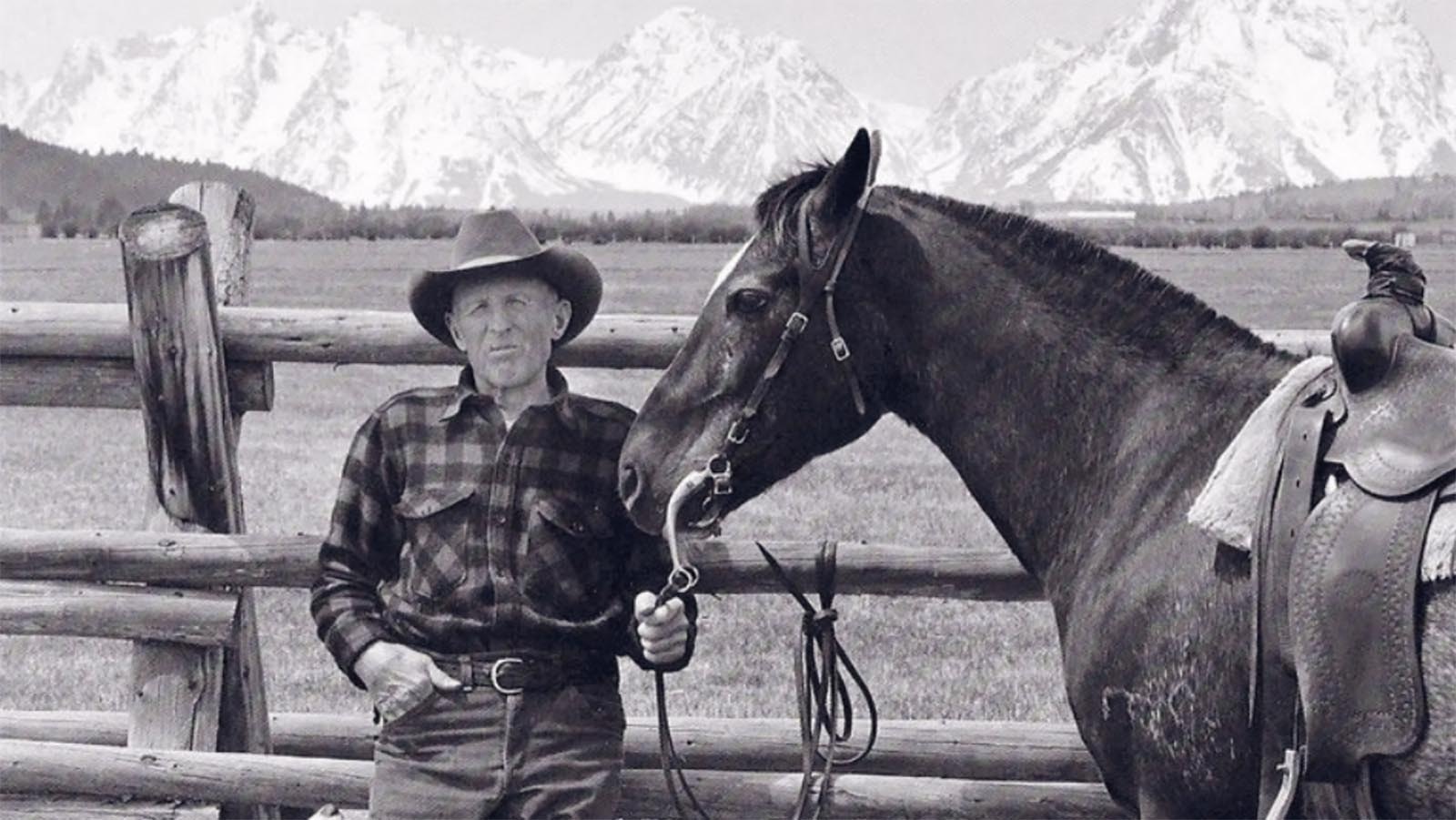
A Wyoming family shares an inside view of their struggles to ranch in pricey Jackson Hole and pass their ranch on to the next generation. It’s part of a new eight-part Cowboy Channel documentary that started Sunday. (Courtesy Tony Fay PR) 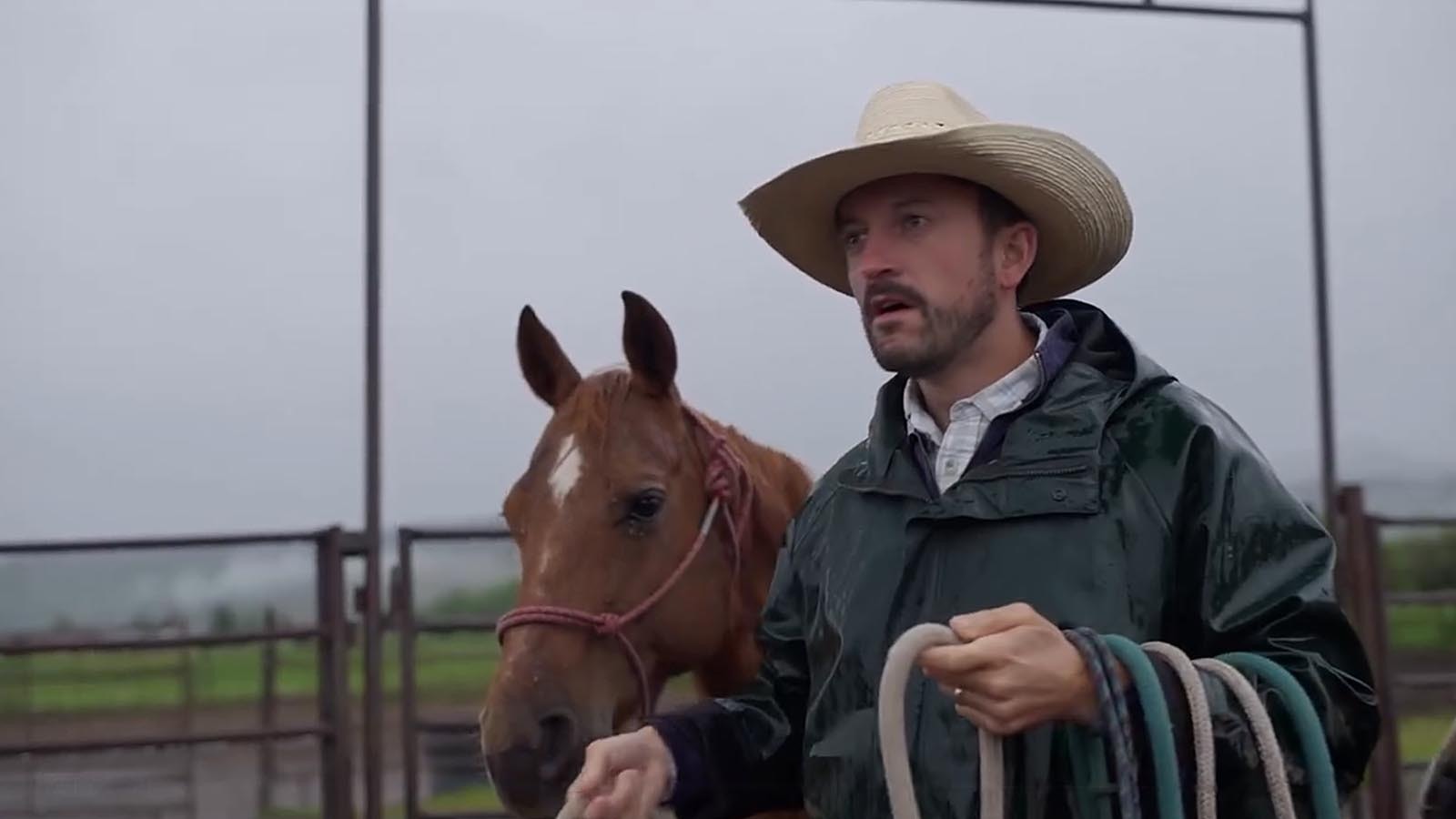
A Wyoming family shares an inside view of their struggles to ranch in pricey Jackson Hole and pass their ranch on to the next generation. It’s part of a new eight-part Cowboy Channel documentary that started Sunday. (Courtesy Cowboy Channel) 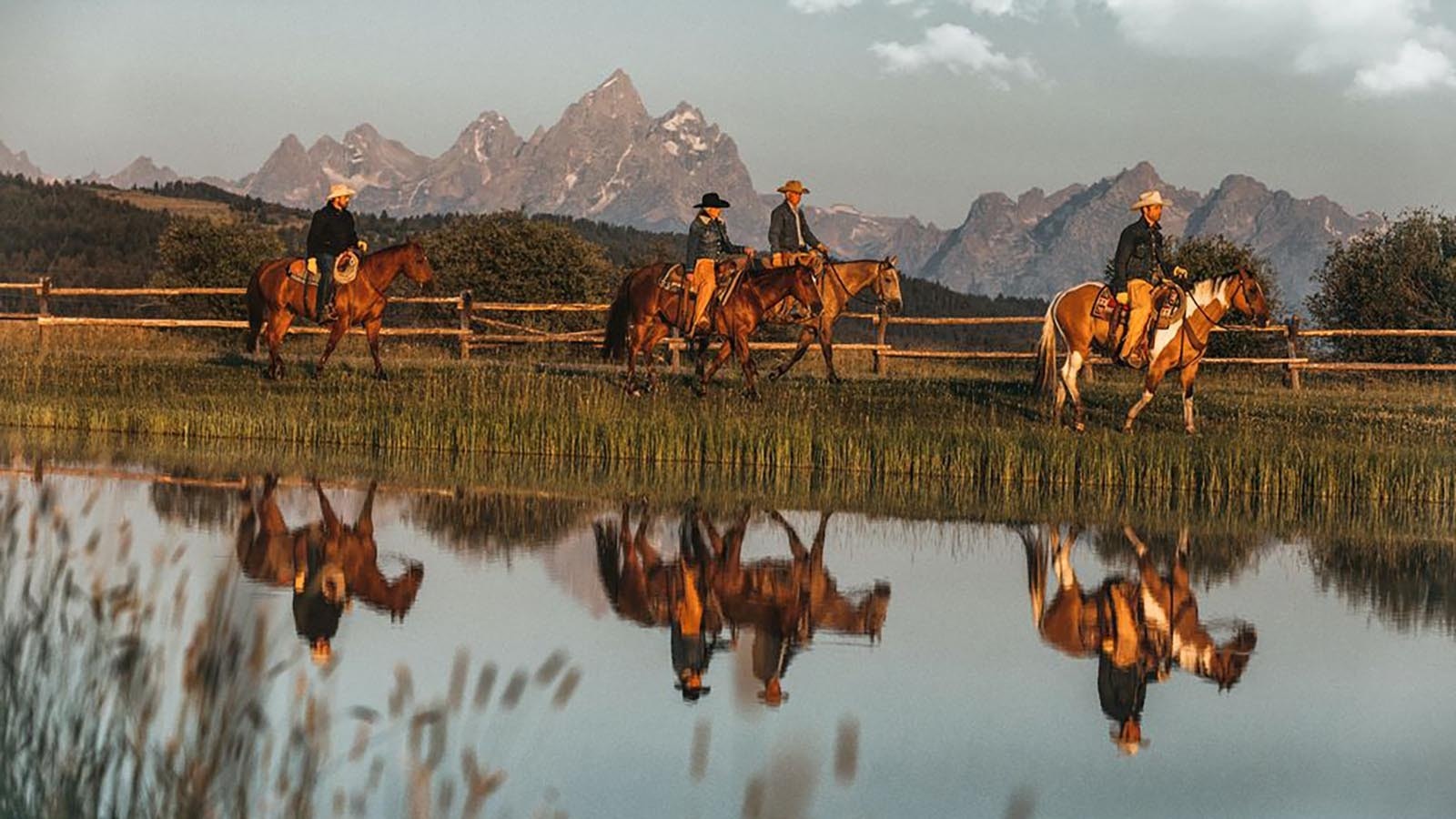
A Wyoming family shares an inside view of their struggles to ranch in pricey Jackson Hole and pass their ranch on to the next generation. It’s part of a new eight-part Cowboy Channel documentary that started Sunday. (Courtesy Tony Fay PR)
How A Real Ranch Fights to Survive Another 100 Years
Yellowstone has been a real “tailwind” for the ranch, Long said, one that’s helped the ranch get its story out to a wider range of people.
It’s also helped boost the ranch’s Western apparel business, as well as other business ventures like the guest ranch and the wedding venue.
Some of the people who come to the ranch are looking for an experience that makes them feel like a Dutton for a day. That would be the “Cowboy for a day” activity, where guests learn to saddle a horse and to rope. Then they get to put those new skills to the test on a cattle drive on the ranch.
Long believes the television series is what’s behind the interest they’ve seen in the ranch from production companies.
“Every year we get one or two inquiries from production companies from New York or L.A. who say, ‘Hey, we’d like to talk to you about doing a reality television show about your family,” Long said. “I think that interest was driven by the success of the television show ‘Yellowstone,’ and the different production companies said, ‘Hey here’s an opportunity to do a real-life version of that.’”
“We didn’t want to do like, Jersey Shore, right?” Long said. “Just looking like a bunch of schmucks on Bravo, fighting about random drama, like who broke up with who on the ranch. We really wanted it to be more elevated.”
Teton Ridge eventually came through with an offer that felt right. It’s owned by someone who lives in the region, just over the mountains in Idaho.
With Teton Ridge, the family felt could tell a genuine story about a real ranch, homesteaded in the early 1900s and trying to figure out how to survive for another 100 years in the modern world.
Being Big Enough For The Next Generation
Long and his brother Peter had both left high-powered, high-paying careers to come back and help Golliher and their stepdad Grant, who is a well-known horse whisperer, keep the family ranch going.
“Then you sort of fast-forward to today,” Long said. “We had reached this moment in time where my parents had been running the ranch their whole life, and it’s their love and passion.”
The Gollihers didn't really want to let the ranch go, Long said. But Long and his brother both reached a point where they realized their own futures are at stake, too.
“We were all butting heads about the future and who would control what,” Long said. “What the ranch business model would look like going forward, and what the ownership would be.”
For himself, Long had realized that for the ranch to pass down someday to his children, it needed to grow. It needed to become a lot bigger and more profitable.
“We had seen my grandfather, who had four daughters, he had a 400-acre ranch when he passed,” Long said.
That meant the ranch was carved up into four 100-acre parcels.
“We plan to have a big family, with many children,” Long said, adding that he had come to realize 100 acres doesn’t go far in the ranching world, much less splitting it down, smaller and smaller.
“My whole view was, if we can’t find a way to grow enough that we can buy more land and become bigger, then this is just getting carved up and carved up and carved up,” Long said. “So, I wanted us to think bigger.”
The farm needed to grow to support the next generation, or it would no longer be feasible as a ranch.
His brother, Pete, however, and his wife Lauren, felt differently.
“My brother and his wife said, ‘Hey, the business we built, the wedding business, and the events we’re doing on the ranch, they provide a nice living for us,” Long said. “We have a nice work-life balance. We have time to enjoy time with family, and the outdoors, and all the things we care about. We don’t necessarily want to scale and grow big.”
A Story Not Told Dies
Getting out all of their competing visions about the future and what success looked like for each family member on camera was hard. Everyone involved had a lot riding on the outcome. It was existential to the family as a whole.
“The family was so at odds at that point, we had to bring in, basically, a third-party consultant to help referee,” Long said. “It was like, at that point, are we going to make this as a family, or do we all just need to stop doing business together and see each other during holidays. That was the kickoff to our summer. And just imagine having those conversations with cameras there.”
It was tough, particularly at first, Long said.
“Pretty quickly you just forget the camera is there,” he said. “You just say, ‘We gotta have these conversations. And we gotta get the work done that gets done on the ranch.”
Friends have asked Long why the family wanted to do the documentary at all. Why air the dirty laundry, so to speak, for everyone to see?
“We’ve always felt like, if you don’t tell your story it dies,” Long said. “I grew up at a point in time in Jackson when a lot of ranchers were leaving, and I remember my mom going to like town hall meetings, the local council meetings, and there were big debates over wolf reintroduction. I remember seeing some of the, I’ll call them conservation special interests, different groups, that were pushing for wolf reintroduction seeming really polished and emotional and fact-based, really making their case.”
That was emotionally trying for his family and other ranchers at the time, Long said. But they knew they had to step up and tell their story anyway.
For Long, the takeaway was that the long-term health of a ranch depends on neighbors, who aren’t necessarily ranchers, understanding their plight. Because sometimes those neighbors are casting votes that can change the future of his family's ranch for the worse.
“If the public doesn’t understand your perspective and your side of the story and why they should care about you, you may sort of lose the vote long-term, for lack of better terms,” Long said. “So, we’ve always felt like, as ranchers, it’s important to tell your story and let the world see all the great things about ranching. Your care for the land, your stewardship, your care for the community, love for one another and for the livestock. So, telling our story has always been important.”
Not Everyone’s A Billionaire In Jackson Hole
But the documentary is also about hope, too, Long said. The Diamond Cross Ranch exists as a sort of oasis in a sea of million-dollar grass that has slowly but surely given way to development.
Adapting to the changes of the modern world to survive as a ranch in this century isn’t something that’s going to be easy, Long said. That’s true whether the ranch is in Jackson Hole or somewhere else in the country.
"With this specific documentary, we hope the audience leaves with a real sense of hope,” he said. “Because if our family can kind of make it through what we’ve made it through and figure this all out without just selling out our land and turning into another billionaire second home or another golf course in Jackson Hole, then I think anyone can.”
The family has needed outside help from time to time, Long said. There have been ups and downs. And the documentary itself will end on something of a cliffhanger.
But, without giving away too much of the ending, Long indicates that the future of the ranch is still something the family is still fighting for.
“To me, that’s a hopeful thing, that, ‘Hey you can get through to the other side,’” he said. “And this could be a really good outcome for both family and for business.”
Long also hopes the series sheds a different light on people who live in Jackson. Not everyone is a millionaire or billionaire. Some are just ordinary people trying to live their lives the best they can.
Long remembers showing up for the state fair in his youth and having to explain that even though he's from Jackson, it doesn’t mean his family are all millionaires.
“We’re like showing up in a broke-down pickup truck and saying, ‘Guys, we’re not millionaires,’” Long said.
That’s still a message he’s carrying into the world today.
“We just want our land to carry on and be a ranch for as long as possible,” he said.
Renée Jean can be reached at renee@cowboystatedaily.com.