Palm trees in a tangerine sky. Towering mirrors of concrete and steel. And bowlegged visitors by the tens of thousands strutting the Las Vegas Strip.
“You wouldn't guess it, but there's more cowboy hats in this one place at this one time than there ever has been anywhere,” said McCoy Morton, a former member of the Professional Bull Riders (PBR), from Salmon, Idaho.
“For a short amount of time, we turn Vegas into the Cowboy Capital of the World.”
It's a big statement, and he’s still selling the moment short.
Guys like Morton have been coming to Las Vegas for the NFR since 1985, but they arrived this year at a time when the country’s cowboy fever has never been higher. From top fashion to pop music and primetime programming, you couldn’t hide from Western culture if you tried.
What you’ll find at NFR, however, is that pop-cultural status doesn’t count for horse piss to most of these people, because for real fans, it's a lifestyle above all else.
Fans Who Know The Pain
Among 17,000 fans at the Thomas & Mack Center, you land randomly in a merch line beside Beau Caplinger, a professional bull rider at the end of his decades-long career.
Caplinger, 38, wears his age like an iron yoke. He stands well over six foot, but loses a few inches in a posture stooped by injury. There’s a melancholy ache behind his blue eyes, and it signals a pain that’s both physical and emotional.
He rode his first bull at the age of 8. Thirty years later, pain has become as certain as sunshine, and he’s hard pressed to recall a time without a limp. He’s the ravaged and woeful example of what this lifestyle can do to a man.
“I’m in pain every day. All the bones I’ve broke. I’ve got metal in both knees and in my legs. I’ve got cracked sternum, still cracked. Back problems,” he says.
Just then, a roughstock rider falls hard in the arena, and the crowd gasps. Caplinger knows that same gasp better than anyone.
At a finals event in Raleigh, North Carolina last month, a rank bull tossed him into retirement.
“I jerked my shoulder out. Broke both my collarbones. I gotta go have surgery on them,” he says, wincing at the memory. “That’s pretty much what told me I was done riding.”
Buckles Aren’t For Holding Up Pants
He takes his leave from the sport with a sense of achievement and shared heritage. And for as long as he lives, he’ll carry those memories in his heart – and on his waist.
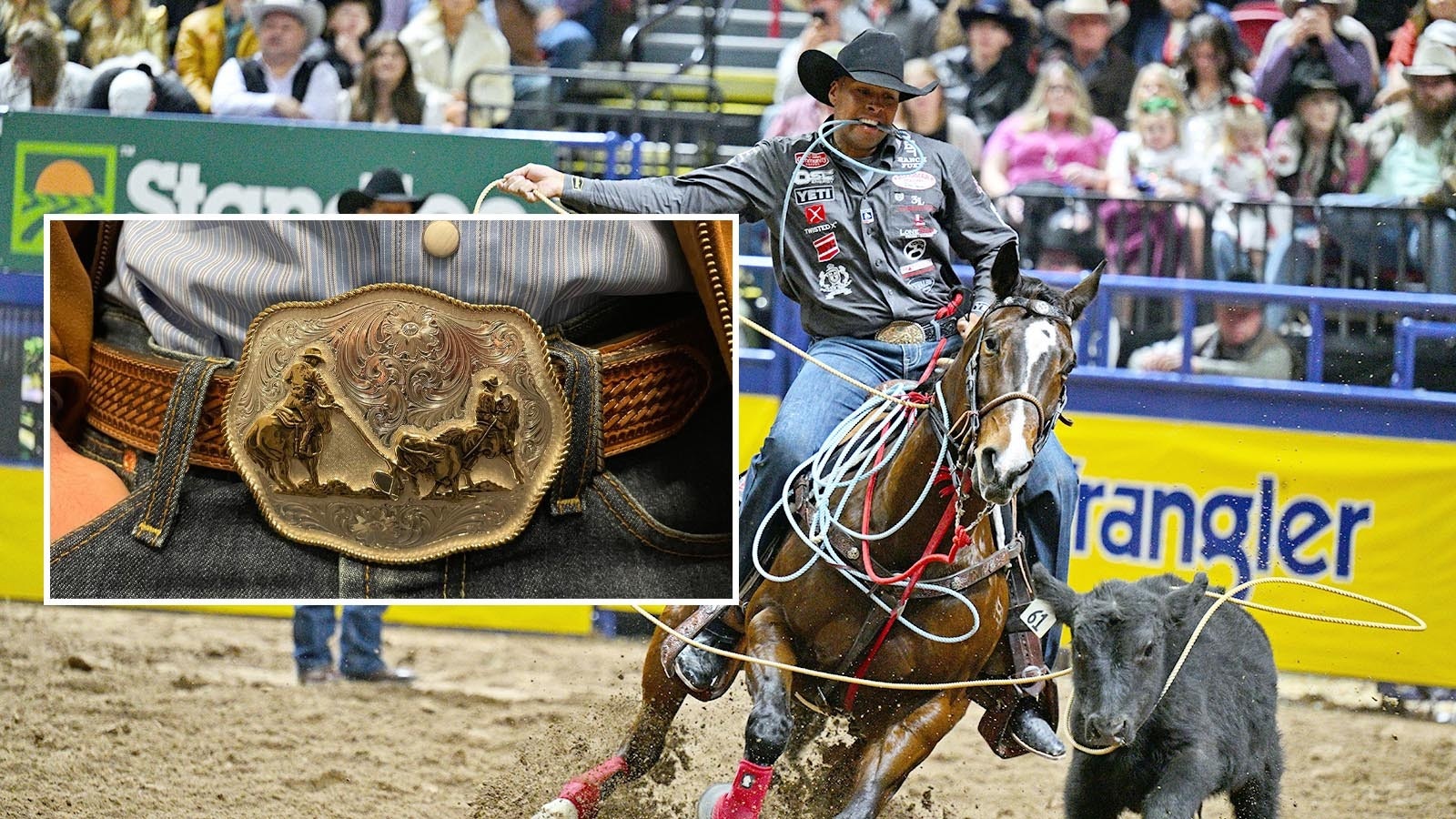
Belt buckles have a unique role in rodeo culture, because even when they’re big as a dinner plate, their symbolic function is far bigger still.
“Buckles are about achievement. They’re a trophy and a memory, and they mean a lot to us,” he says, as a roar from the stadium burst into the concourse with force enough to knock off your hat.
You might think it coincidental to meet a man like Caplinger among so many. But the truth is you could hardly spit without hitting a guy like him at NFR, where an outsized number of the buckles you see are not purchased but earned.
Rodeo diehards flock to Las Vegas for the National Finals Rodeo, where belt buckles symbolize pain, pride and a way of life. Western culture is more than a trend for riders and fans, it’s an identity. And when it comes to buckles, go big or go home. (Zakary Sonntag, Cowboy State Daily) 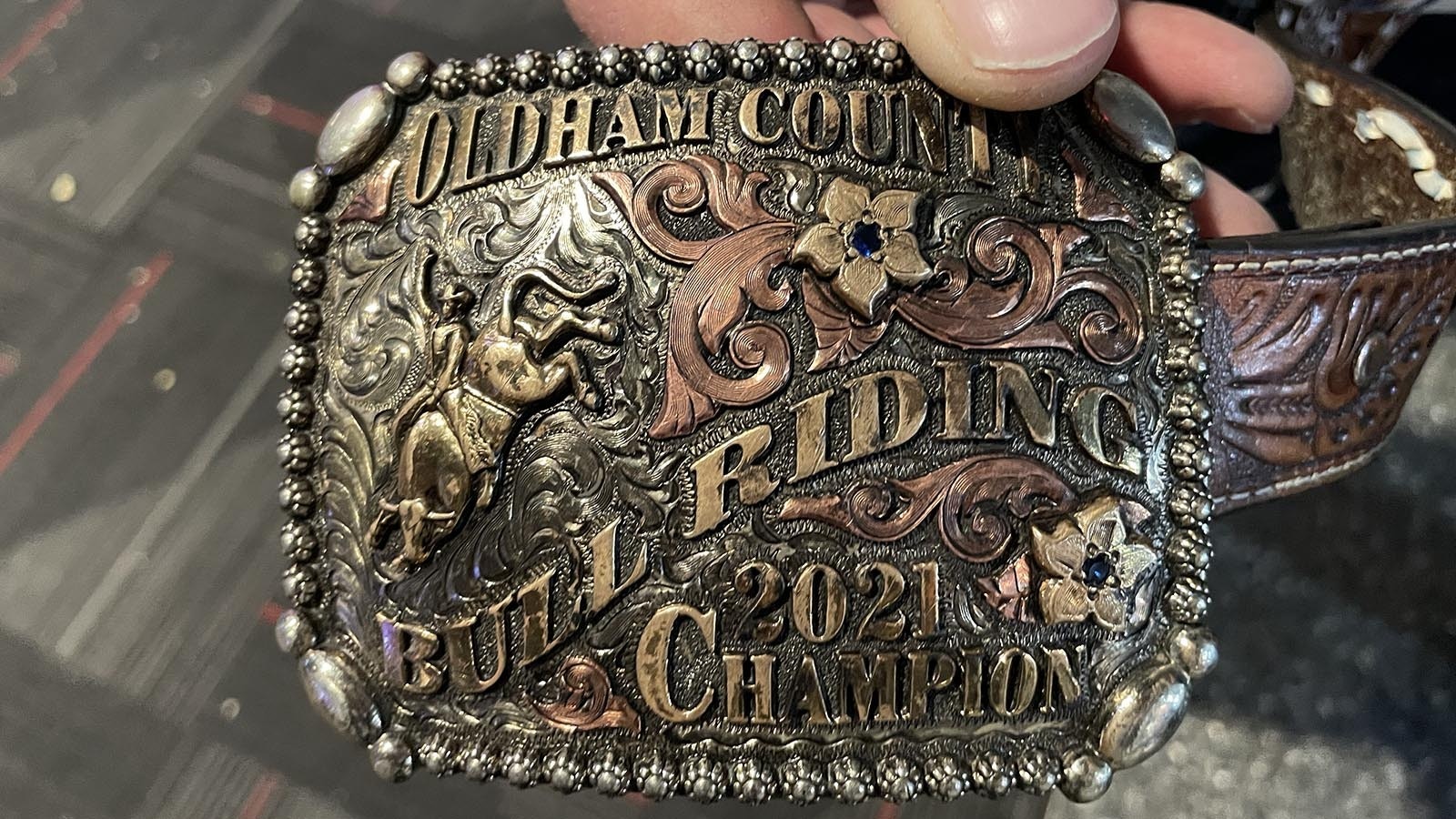
Rodeo diehards flock to Las Vegas for the National Finals Rodeo, where belt buckles symbolize pain, pride and a way of life. Western culture is more than a trend for riders and fans, it’s an identity. And when it comes to buckles, go big or go home. (Zakary Sonntag, Cowboy State Daily) 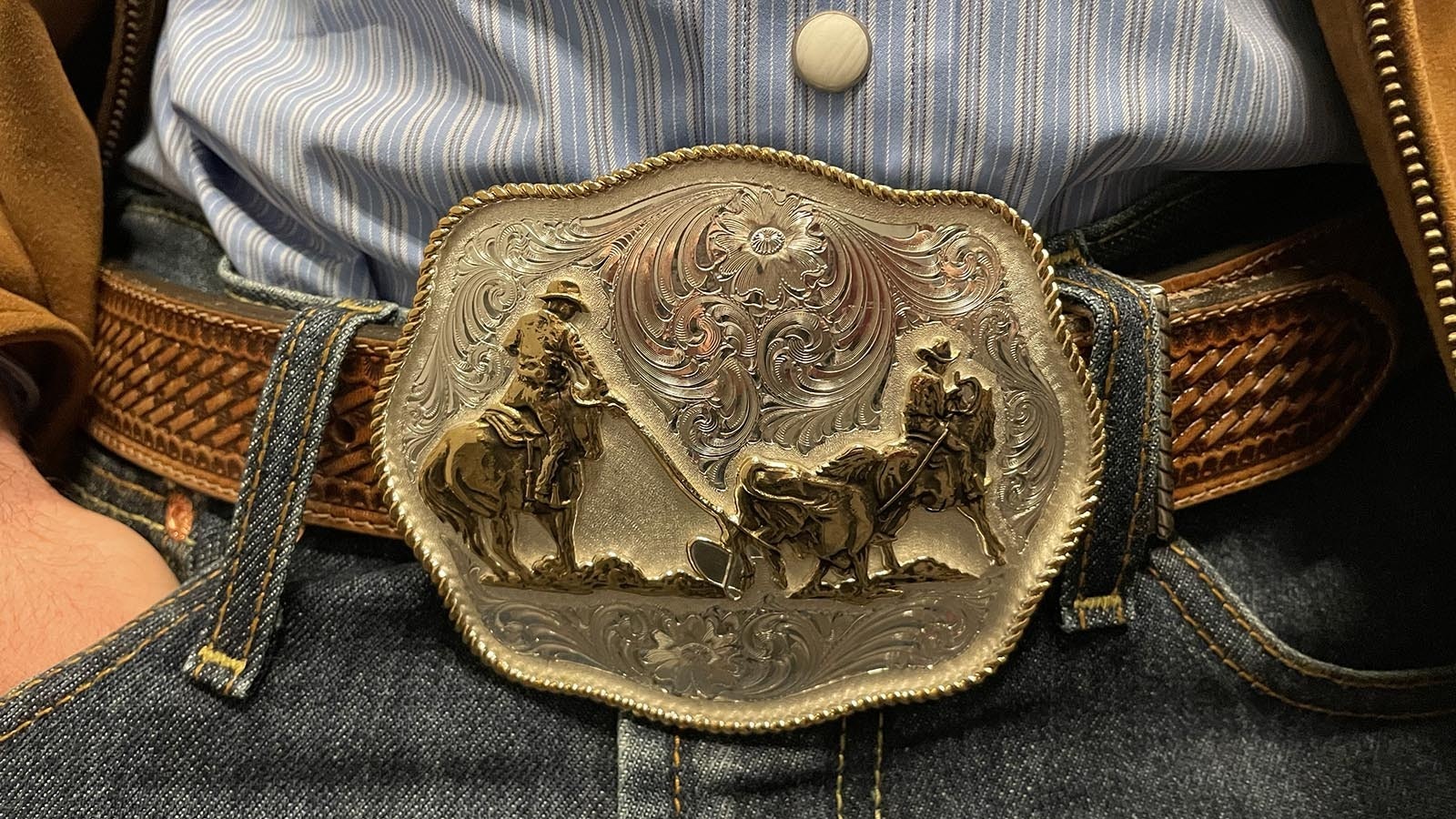
Rodeo diehards flock to Las Vegas for the National Finals Rodeo, where belt buckles symbolize pain, pride and a way of life. Western culture is more than a trend for riders and fans, it’s an identity. And when it comes to buckles, go big or go home. (Zakary Sonntag, Cowboy State Daily)
No Miniskirts Back In The Day
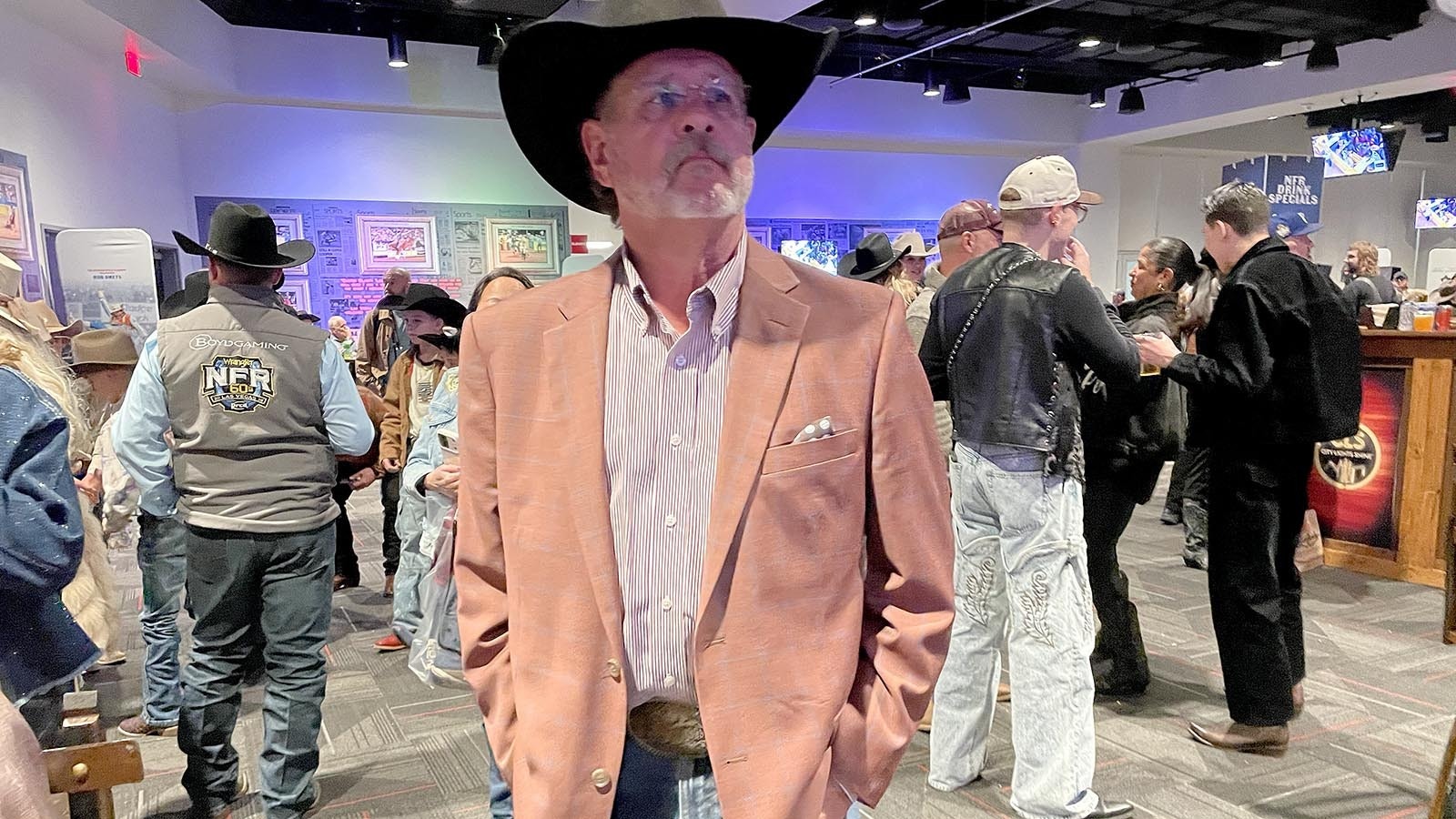
In the Thomas & Mack pop-up saloon, Adam Montgomery stands in a black cattleman’s hat and a pocket square in his salmon pink sport coat. He’s sipping from a tall can of Coors when someone catches his eye.
It's a pretty girl in a miniskirt with knee-high, pump-style cowboy boots. But it’s not lust driving his attention. It’s nostalgia.
“See that right there — leather miniskirt — you would not have seen that even 10 years ago. And you would not have seen the short jean shorts either,” he says, throwing the full weight of his Weatherford, Texas accent behind the point.
He’s been coming to NFR since before the franchise relocated to Vegas, beginning with his maiden year in Oklahoma City in 1983. So he speaks with authority when he says, “Some of them wore long dresses here and there, but the girls basically all wore jeans and boots, that’s it.”
‘Not A Bunch Of Hicks’
Montgomery welcomes the change and believes the excitement around Western culture will only help the rodeo industry’s bottom line, including his own business in stock contracting.
But after decades in the world of rodeo, he’s seen more than the length of the skirts change.
He believes the American mainstream never truly understood rodeo culture. But with a proliferation of new avenues into the culture, via music and fashion and television, mainstream attitudes are shifting.
“I think they're embracing the culture, because they realize that we're not a bunch of hicks. We have real jobs. We have second jobs. We have third jobs. We have people in our industry that make a lot of money, and they’re all giving back in one way or the other.”
It helps, too, that cowboys are polite.
“Vegas, they love us here, because we tip. We say please, thank you, yes sir, yes ma’am. We open doors for people. We get tons of comments on how nice our industry is,” he says. “We might get a little bit loud, but we're nice and we're respectful, because no matter what state you come from, if you're part of the Western lifestyle, you're polite.”
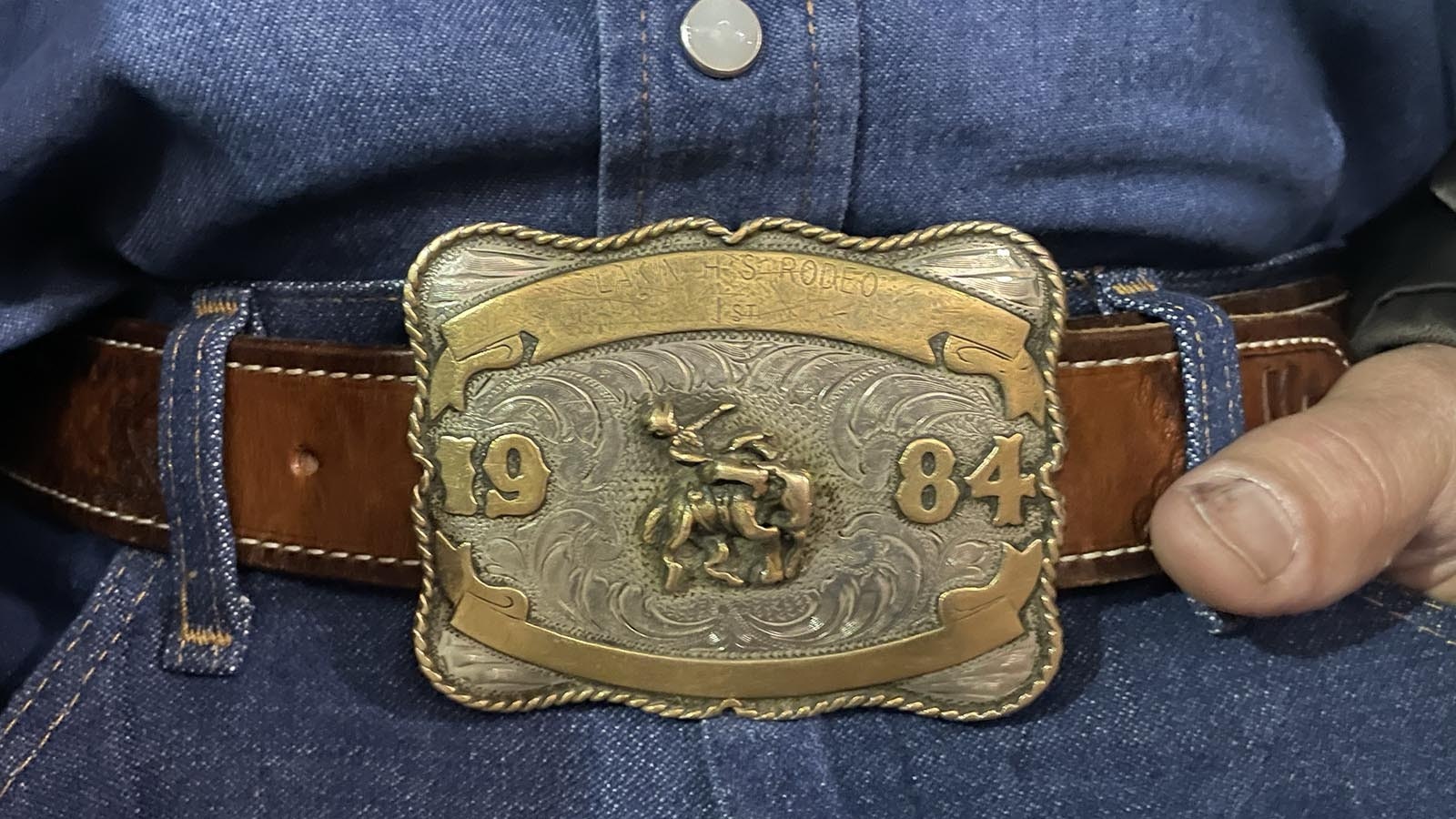
In this way, the culture remains unchanged at the same time that it evolves. What will not evolve, Montgomery believes, is the unique symbolism of the buckle. His personal favorite is a buckle he won bull riding in 1985, shortly before he came to spectate the NFR’s inaugural Vegas run.
At that time, he would have been about the age of the NFR first-timer standing right outside.
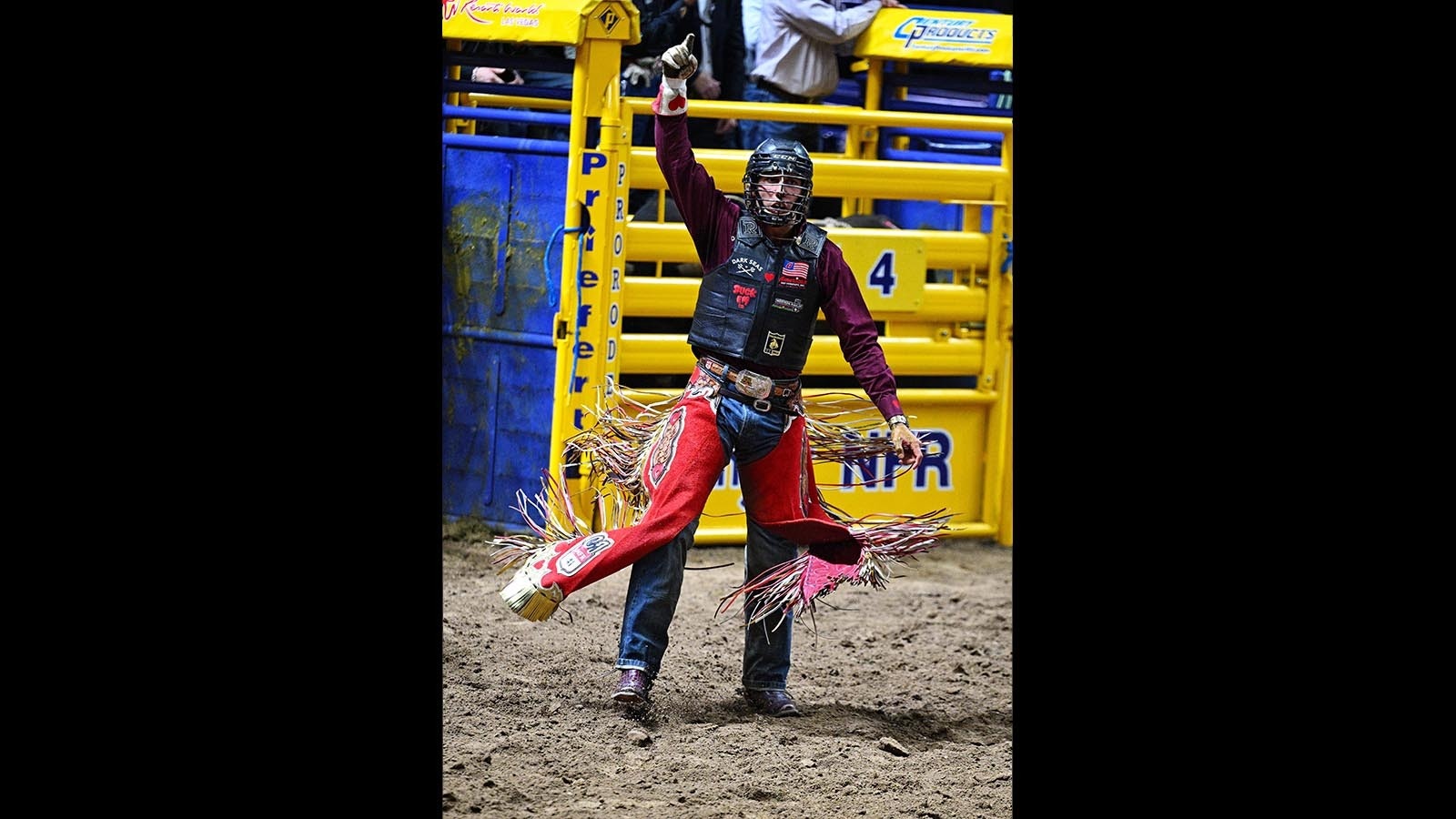
Rodeo diehards flock to Las Vegas for the National Finals Rodeo, where belt buckles symbolize pain, pride and a way of life. Western culture is more than a trend for riders and fans, it’s an identity. And when it comes to buckles, go big or go home. (Getty Images) 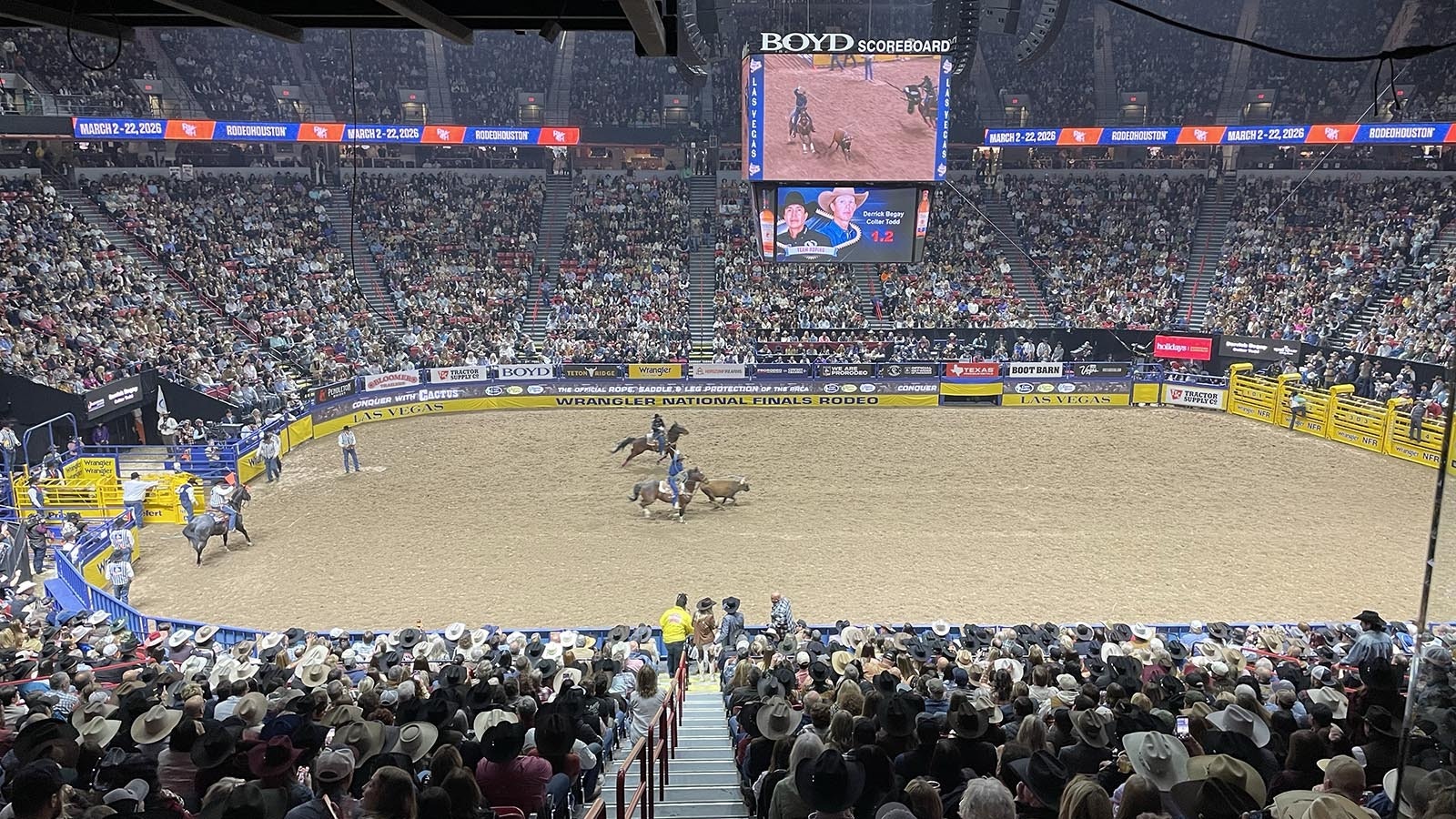
Rodeo diehards flock to Las Vegas for the National Finals Rodeo, where belt buckles symbolize pain, pride and a way of life. Western culture is more than a trend for riders and fans, it’s an identity. And when it comes to buckles, go big or go home. (Zakary Sonntag, Cowboy State Daily) 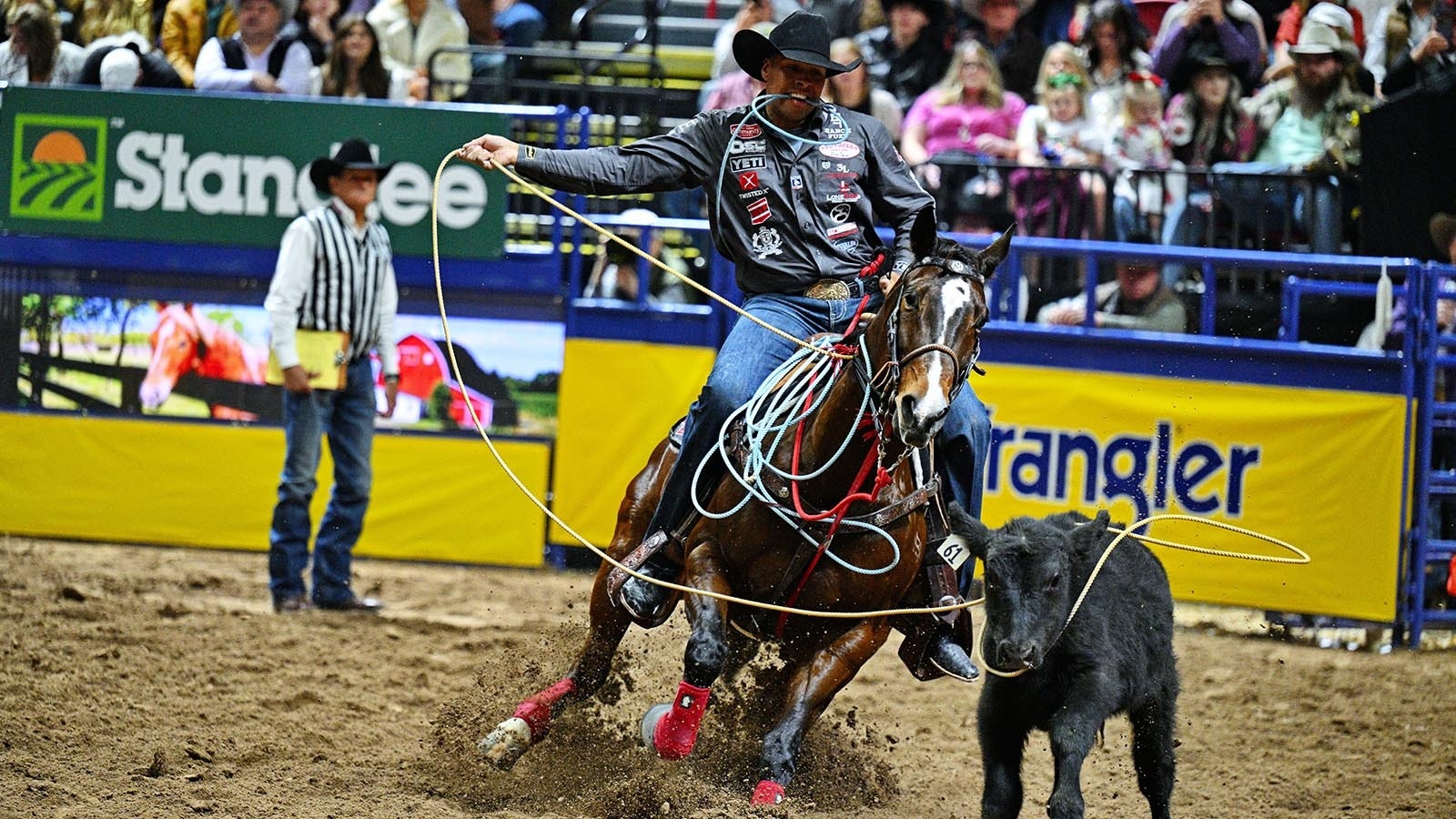
Rodeo diehards flock to Las Vegas for the National Finals Rodeo, where belt buckles symbolize pain, pride and a way of life. Western culture is more than a trend for riders and fans, it’s an identity. And when it comes to buckles, go big or go home. (Getty Images)
Buckled On A Lifestyle
Outside the Thomas & Mack Center, gazing with big eyes upon the glittering Vegas skyline in the distance, a first-year visitor named Justin says NFR has him thinking good and hard about buckles.
“They’re sentimental. You work hard, you win, and the money goes – it's gone – but the buckles you keep,” he says, tucking a thumb behind the hardware on his waist, a piece he won as a roper in the Uinta Basin High School Rodeo Championship.
He’s here rooting for the defending bareback champion, Dean Thompson, because they grew up in the same rural town of Altamont, Utah, where he graduated high school in a class of 32.
Justin wears a wide-brim Resistol atop a head of curly brown hair, and he speaks with boyish excitement about his first NFR.
“We’ve been waiting to come since high school, cause when you turn 21, you can finally have some fun in this town," he said.
For Justin, the buckle doesn’t have to be won to be meaningful. Because it serves as a daily reminder of the lifestyle he intends to keep living.
“Rodeo is a whole lifestyle. It's not just a hobby. You’re responsible for animals as much as yourself. That’s what the buckle's about,” he says.
Heirlooms
For Caplinger, he believes buckles are something to share. Giving someone a buckle helps strengthen the rodeo community, he says, which is why he’s given dozens of his own to the young riders who look up to him.
“Sometimes I wish I still had them, but I feel good knowing them kids are still wearing my buckle, looking up to the sport of bull riding.”
Zakary Sonntag can be reached at zakary@cowboystatedaily.com.