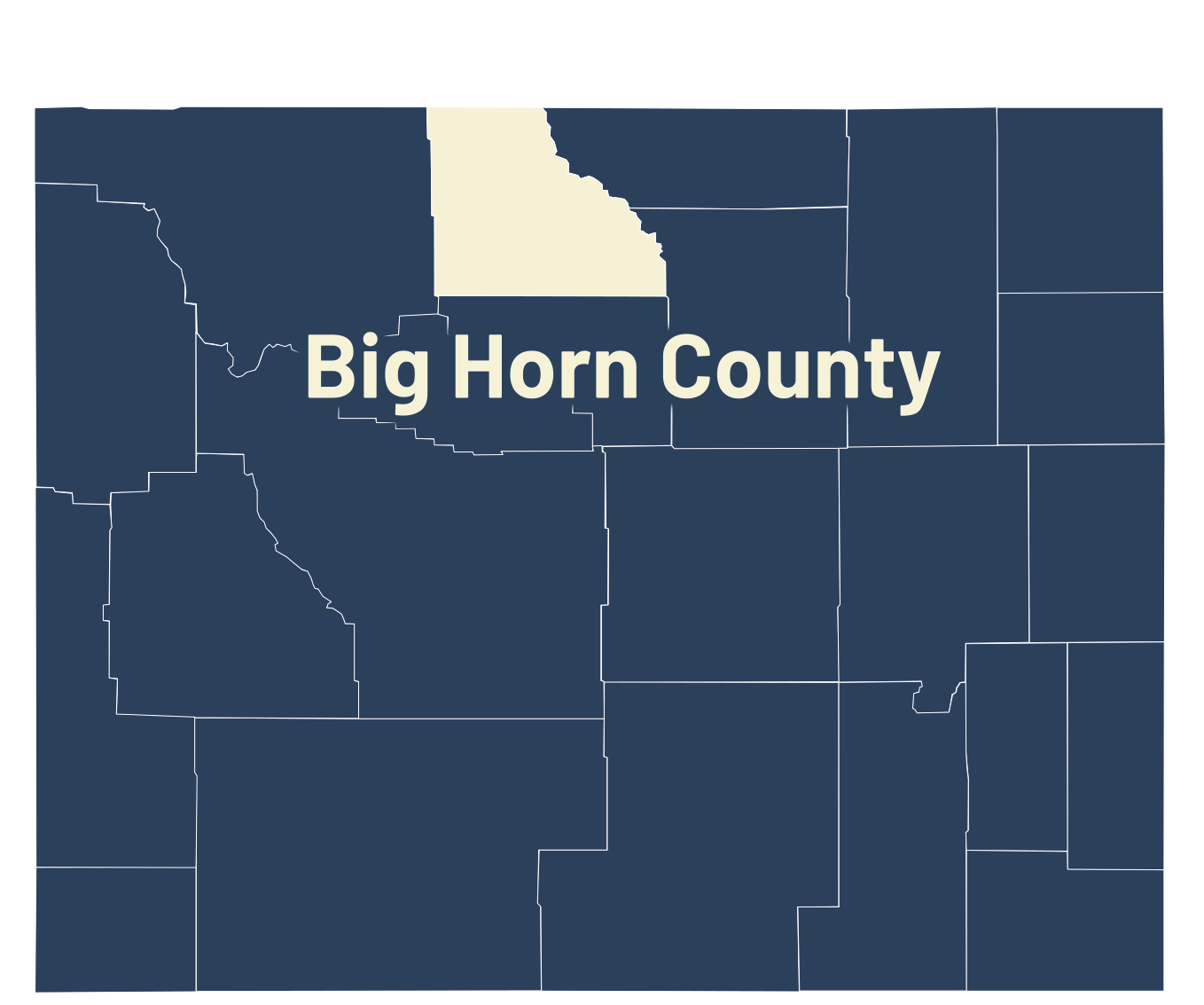
The gentle rise of the Pryor Mountains, which span the border between southern Montana and north-central Wyoming, can give the false impression that this small range is rather unremarkable. In reality, there are crags and canyons and caves within the Pryors, which, according to legend, hide an entire species of tiny spirit beings.
Known as Awakkulé, or “keepers of the earth” in the Crow language, the “little people” are generally described as being small in size, from knee-high to the size of a young boy; extremely strong; and associated with giving spiritual power, visions and protection.
“Little people stories hold forth the promise that the landscape is spirited and cares about our well-being,” said Mary Keller, Senior Lecturer on Philosophy and Religious Studies at the University of Wyoming. “These are stories that were understood to have the power to weave the generations together, to build a good life and to generate a kind of awe regarding the power of a spirited landscape that makes you strong enough to be able to survive challenges.”
The Crow And The Little People
Although no reliable scientific record exists, the legend of the “little people” has persisted for generations.
“When people hunt in the mountains, no matter what mountains, and they get something, they always leave some of it for the little people,” said Dr. Tim McCleary, Dean of Academics at Little Bighorn College in Lodge Grass, Montana. “As a ‘thank you’ for letting them get the animal.”
McCleary relayed one of the most consistently told stories about the Little People: the tale of the Crow child who was raised by the spirit beings.
“There was a group of Crows hunting antelope near Pryor Gap,” he said, adding that this was before the time of horses, when dogs were used as beasts of burden. “One of the dogs was carrying a baby, and they went after the antelope. The dog came back, but it didn’t have the child anymore.”
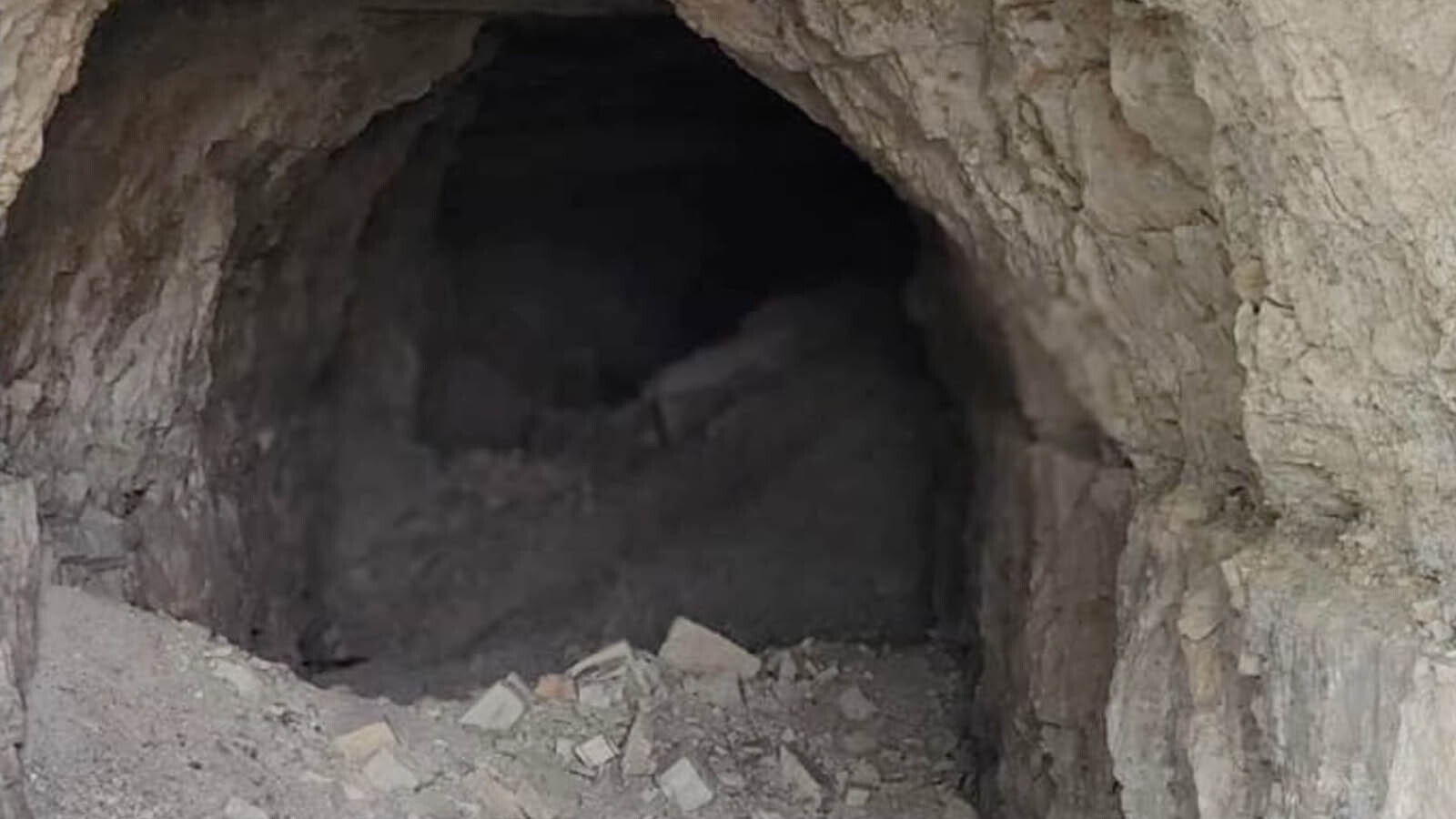
Remainders of a Pryor rail tunnel. (Matthew Stump via Facebook) 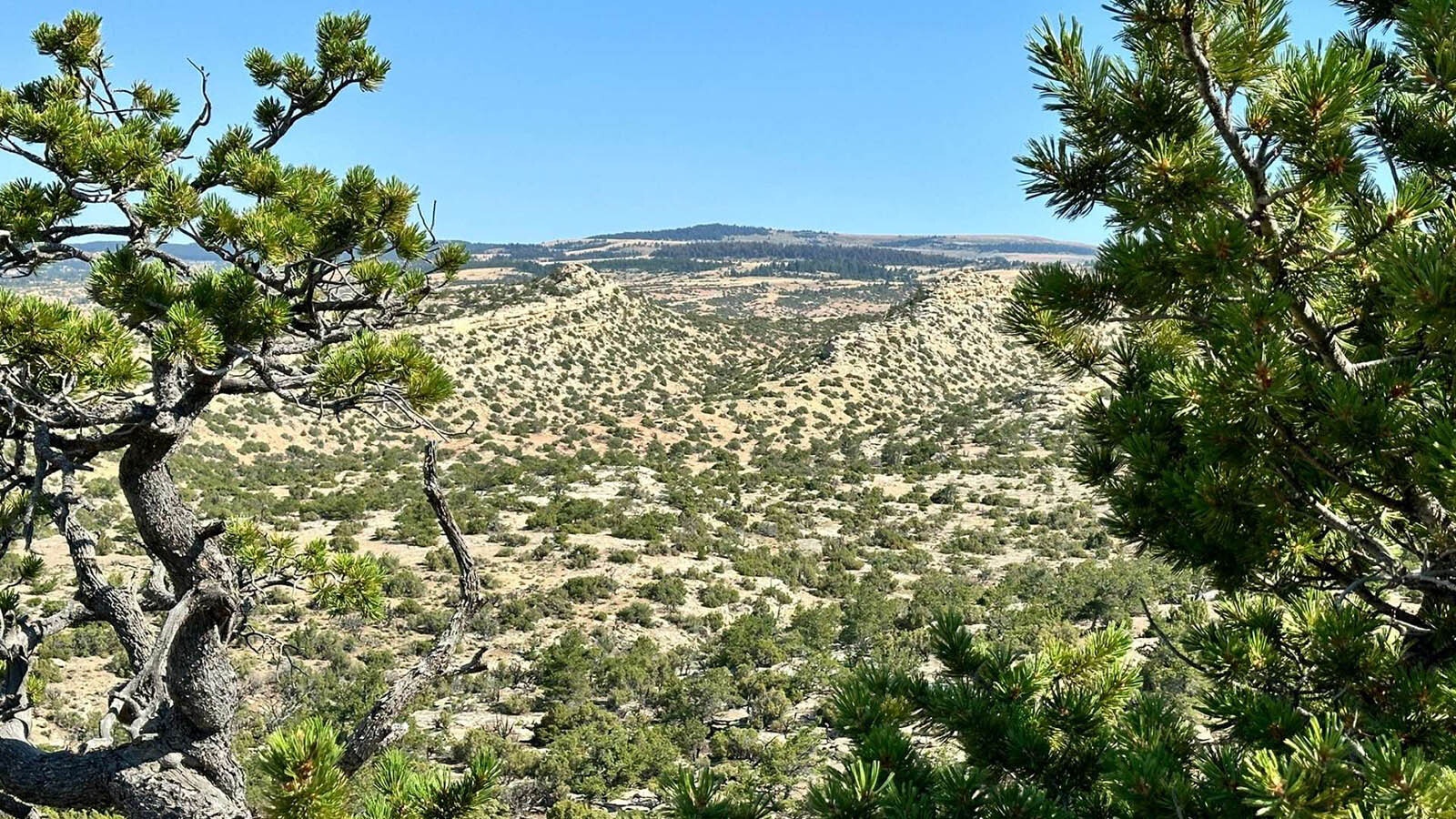
An old Crow Indian legend says the Pryor Mountains in northern Wyoming are the home to a tribe of benevolent pygmy spirit-beings. Some say the “little people” are harmless tricksters, while others say they have much to teach us. (Wendy Corr for Cowboy State Daily) 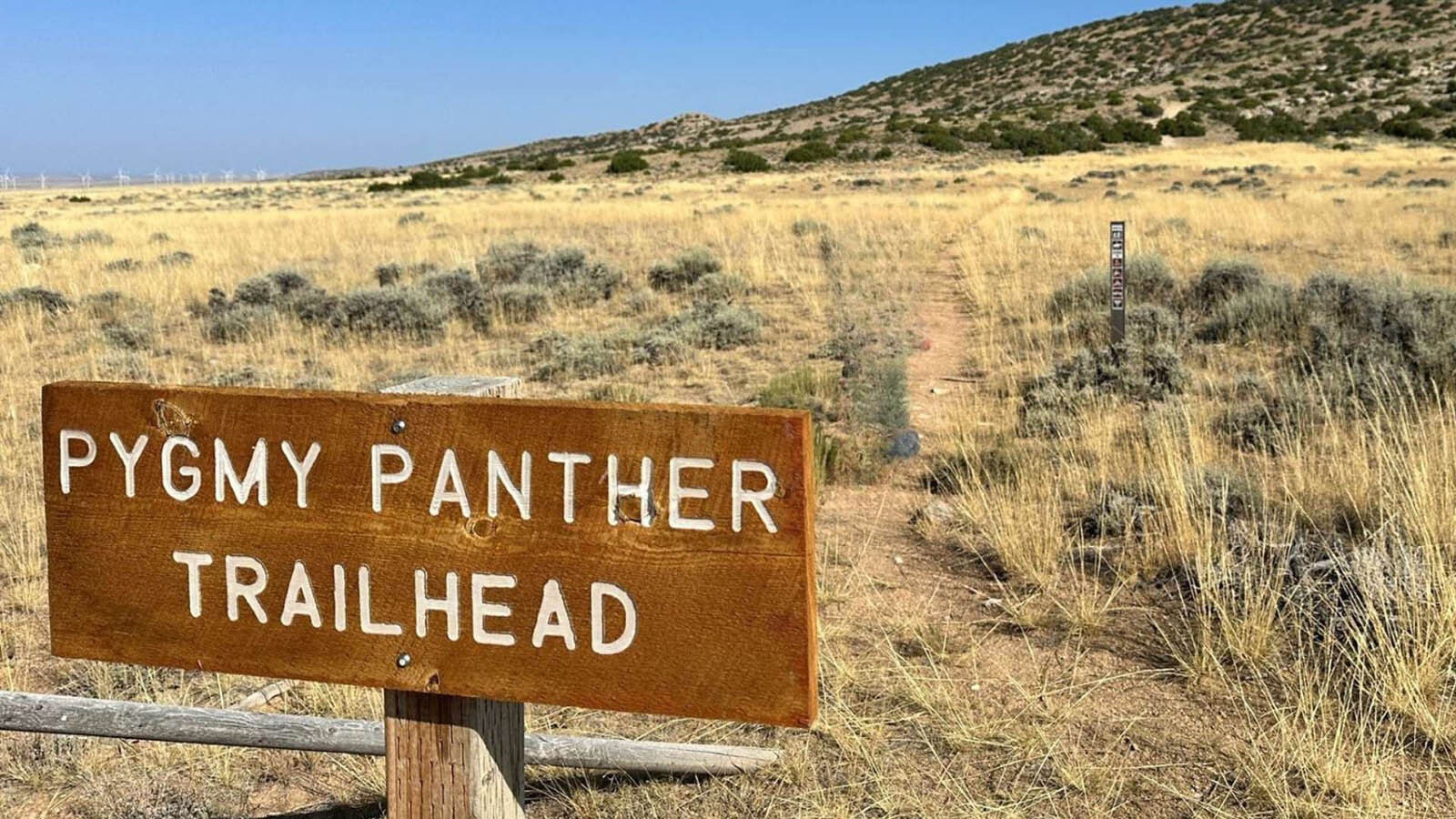
Pygmy Panther Trailhead. (Wendy Corr for Cowboy State Daily)
The places where the Crow lost sight of the child were marked by piles of rocks, according to McCleary.
“Right at the entrance to Pryor Gap, coming from the town of Pryor, there's a line of piles of rocks, and that represents where the dog ran,” he said. “The family set those up so they would remember how the dog traveled when they last saw the baby.”
The stories say the child was found by the Little People and raised by them.
“He had the qualities of a little person,” said McCleary. “He was a good hunter, he was strong. But when he became an adult, one version is that a bird came to him and told him, ‘Those people aren't your parents.’”
The people who raised him admitted that they were not his parents and told him that his original family was living near present-day Shepherd, Montana.
“He went there and he found his mother, and then they asked him what happened,” said McCleary. “He told them, and said, ‘When you go to the gap where the cliff is, that's where they live.’”
The boy also told his human family that when they go into the Pryors, they should leave a rock or something shiny, and to make a prayer for their family.
The Vision Of Chief Plenty Coups
One of the most famous accounts centers on Chief Plenty Coups, the last traditional chief of the Crow Nation, who had a vivid vision of the small beings. In his book, “Plenty-Coups, Chief of the Crows,” author Frank Linderman relayed Chief Plenty Coups’ account of his vision of the Little People. The vision foretold Plenty Coups’ eventual leadership of his people.
"'He will be a Chief,' said the Dwarf-chief. ‘I can give him nothing. He already possesses the power to become great if he will use it… Then he said to me 'Plenty-Coups, we the Dwarfs, the Little People, have adopted you and will be your helpers throughout your life on this world.’
“‘In you, as in all men, are natural powers. You have a will. Learn to use it. Make it work for you. Sharpen your senses as you sharpen your knife… You already possess everything necessary to become great. Use your powers. Make them work for you, and you will become a Chief.'"
“When I wakened, I was perspiring. Looking into the early morning sky that was growing light in the north, I went over it all in my mind. I saw and understood that whatever I accomplished must be by my own efforts, that I must myself do the things I wished to do. And I knew I could accomplish them if I used the powers that Ah-badt-dadt-deah had given me. I had a will, and I would use it, make it work for me, as the Dwarf-chief had advised.
“I became very happy, lying there looking up into the sky. My heart began to sing like a bird, and I went back to the village, needing no man to tell me the meaning of my dream. I took a sweat-bath and rested in my father's lodge. I knew myself now."
The Little People And The Railroad
Keller relayed another popular story about the little people, this one relating to the failure of a railway passage through the Pryor Mountains. The Chicago, Burlington & Quincy Railroad from Toluca, Montana, to Cody, Wyoming, ran from 1901-1911. But the rail line was plagued with problems, which Keller said was because the little people didn’t like all the noise.
“If you think about a spirited landscape where you want to be able to hear birds and you want to hear the crack of a stick, which might mean there's a mountain lion tracking you, the noise and power of the train really bothered them,” she said.
Dr. Laura Scheiber, an archaeologist who specializes in the history of the Great Plains and Rocky Mountains, said that the rail line cut through the heart of sacred territory for the little people.
“It went by some pretty important Pryor Mountain sites, including some that were the heritage homes of some of the little people,” she said, referring to information obtained in interviews conducted by Stuart Conner in the 1970s with Joe Ten Bear, Jr.
“If you read the stories about why the trains were perennially late, they would say it was because the grades were bad, and a lot of engineering reasons,” she said. “But there are still stories on the Crow reservation about how the little people held the trains back, and that's why they were always late.”
“As industry and settlement happened, this story comes to life, and it says there's a moral relationship to the land that's getting out of whack,” said Keller. “The little people are trying to help us get back to a right relationship (with) the land.”
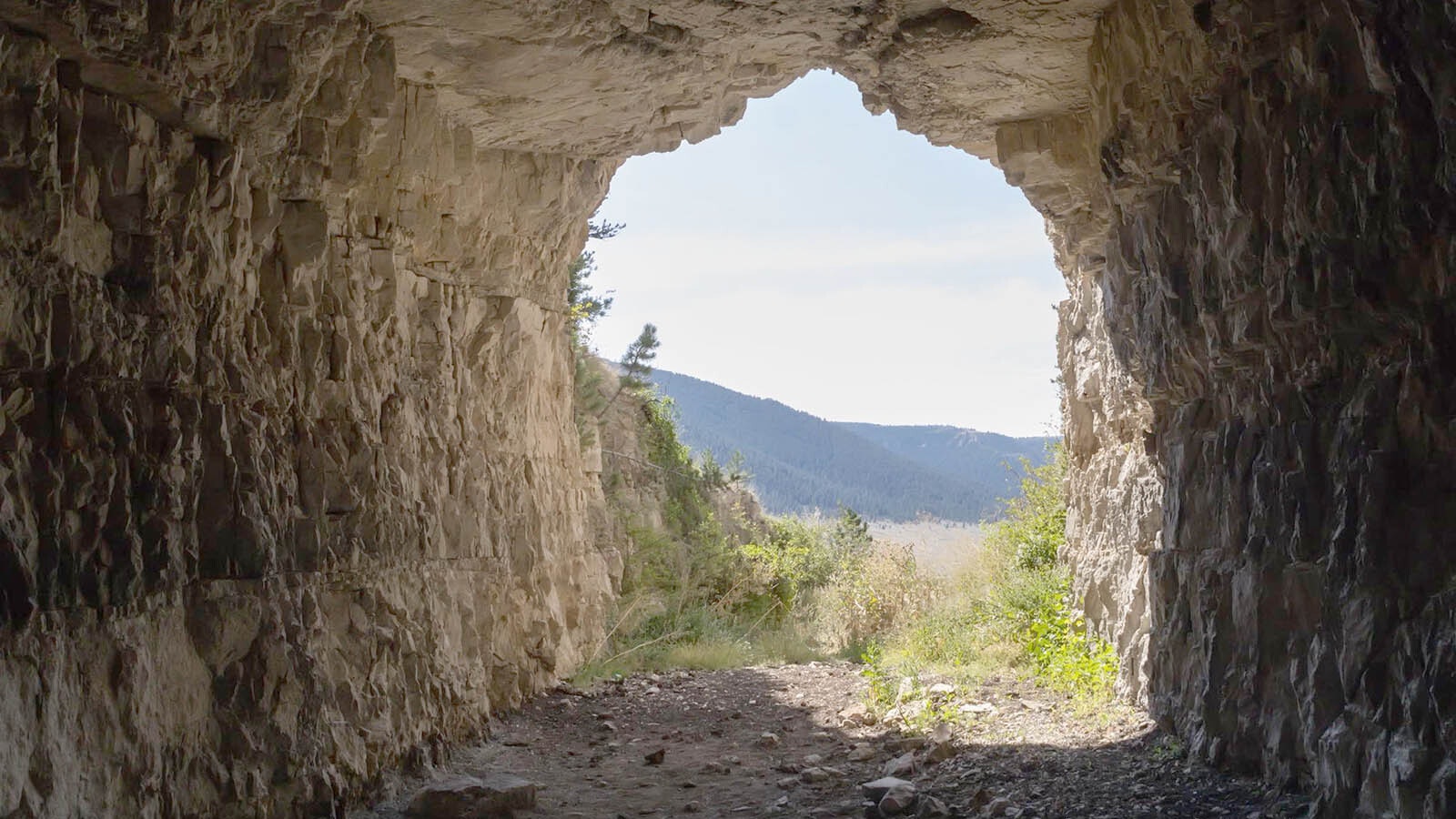
Abandoned railroad tunnel at Pryor Gap. (Jim Mc Collum via Facebook) 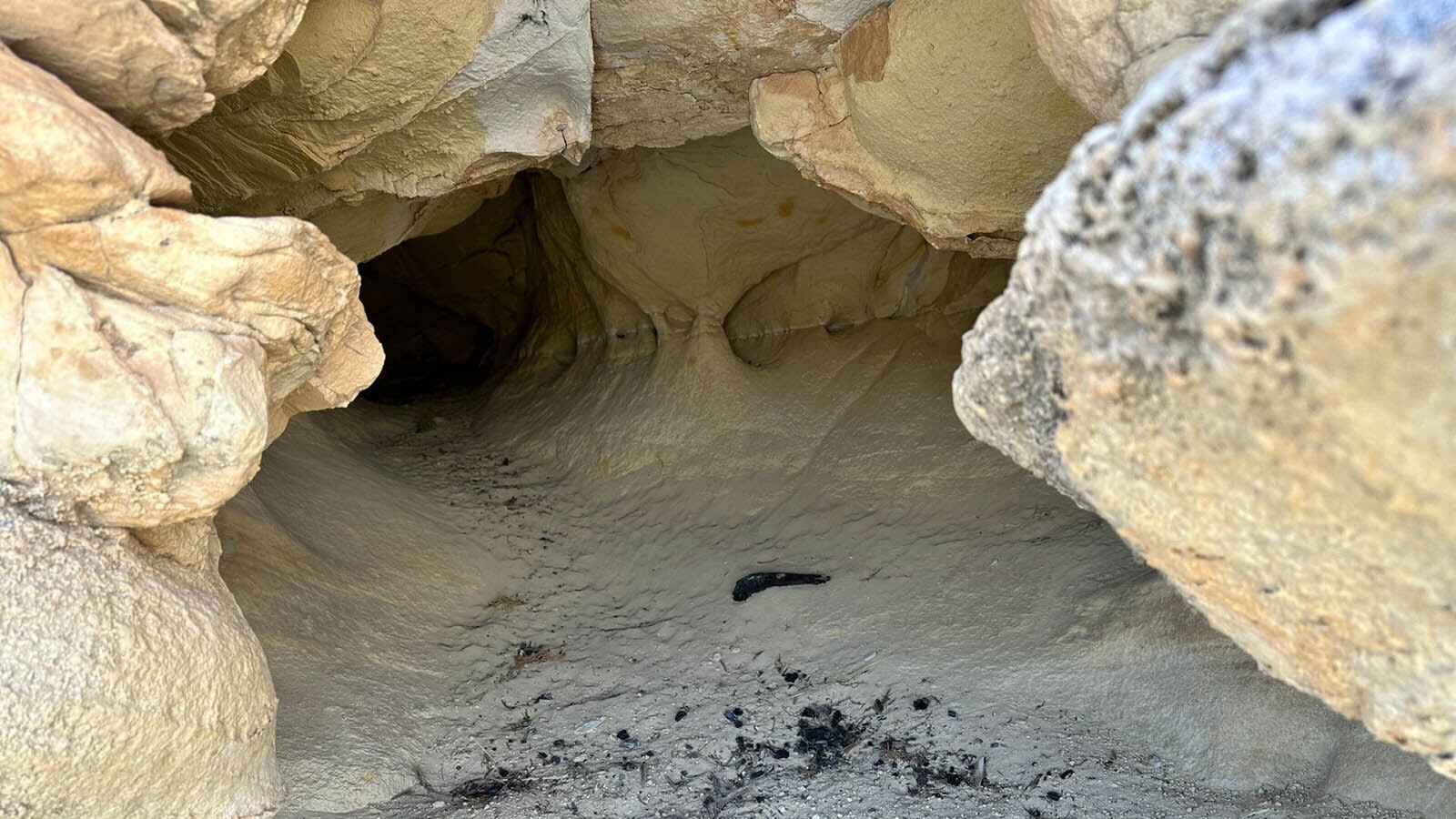
A cave in Wyoming's Pryor Mountains. (Wendy Corr for Cowboy State Daily) 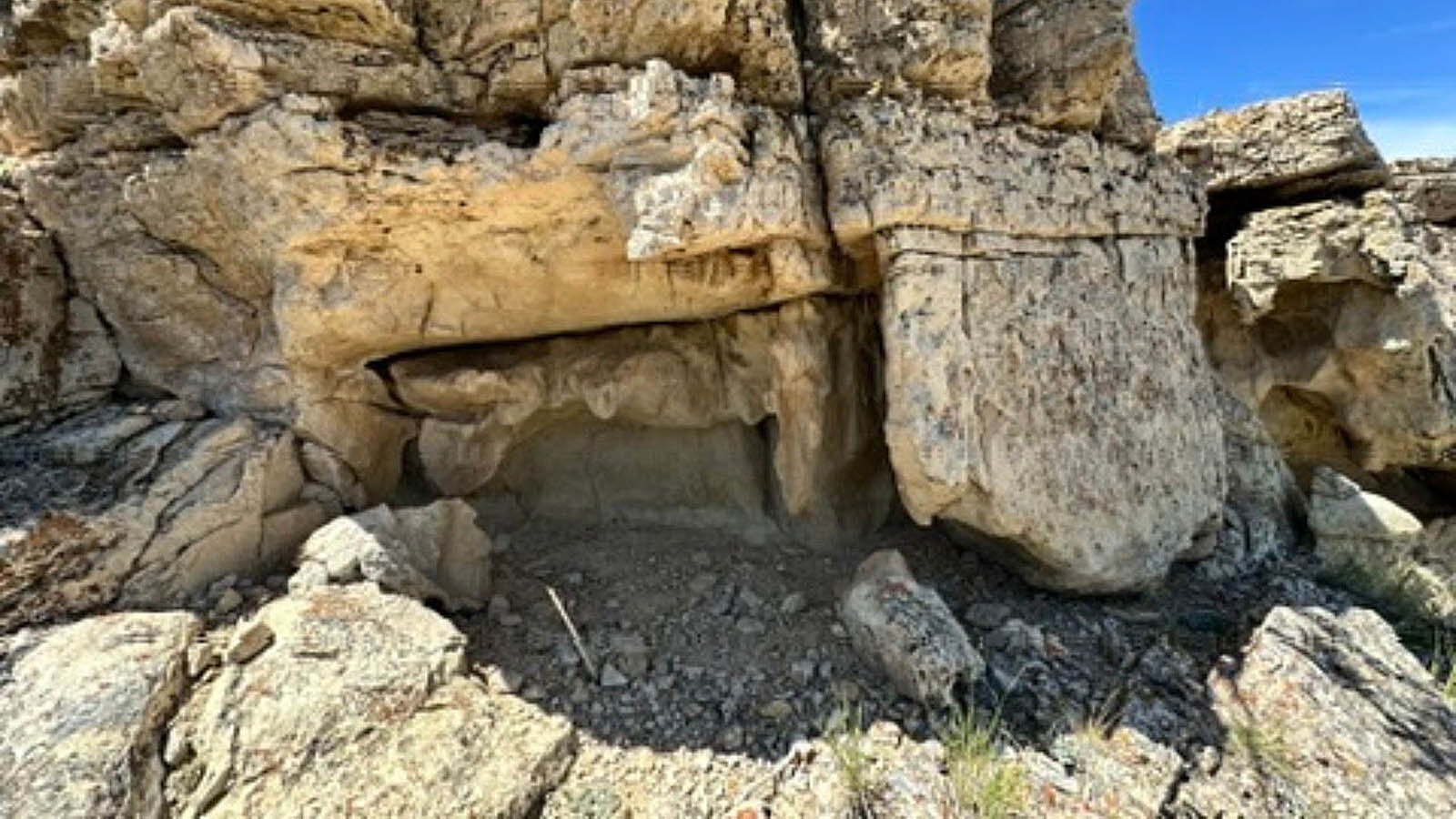
A cave in Wyoming's Pryor Mountains. (Wendy Corr for Cowboy State Daily) 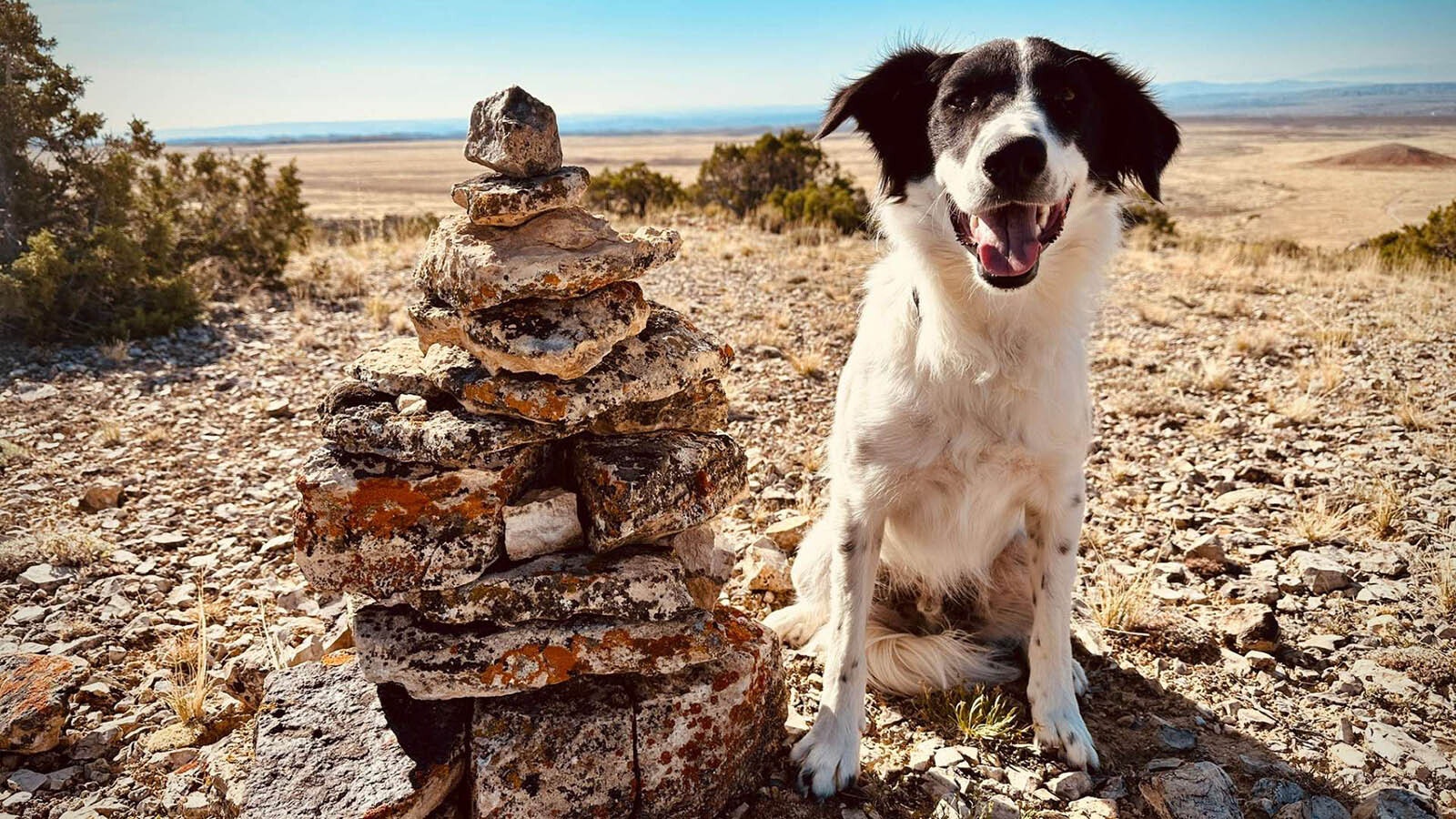
A carin with Patches during a trip to the Pryor Mountains in Wyoming. (Wendy Corr for Cowboy State Daily)
The Little People In Modern Day
But tales of encounters with the “little people” aren’t limited to Native American lore. McCleary said he knows several people in modern times who have seen the legendary creatures with their own eyes.
“There's a friend of mine, one time he was driving on a dirt road in the mountains with his wife,” said McCleary, explaining that this occurred in the 1990s. “And he saw something running along the side of the truck, and he thought it was a dog, but when he looked over, there was a little person. As soon as he looked at him, the little person veered off and ran away.”
McCleary said his friends were unnerved by the encounter. But his wife’s father advised them to go back to where they saw the little person and leave food.
“His wife made a meal, meat and vegetables and bread, and they put them in bowls, and they took them back to where they had seen the little person,” he said. “And when they went back a few days later, his wife was telling me they found the bowls — they were empty and all clean and stacked.”
Residents of the area around the Pryors have heard the tales of the little people for generations.
“I take candy when I go to the Pryors,” said Karen Spragg, curator of the Lovell-Kane Museum. “That way I’m ready if we see the little people, you’re always supposed to bring them a gift.”
McCleary said the little people are fond of shiny trinkets.
“Silver coins, especially,” he said. “And tobacco.”
A Race Of Pranksters
McCleary said that throughout the stories, the Little People are considered to have a healthy sense of humor.
“They're benevolent, they're generally kind to humans, but they are tricksters,” he said. “They like to pull pranks on humans or maybe even each other. But generally, they have a good sense of humor, and they just like to have fun.”
McCleary told the story of a friend of his who was going through difficulties with drugs in the 1980s and had joined a motorcycle gang. In an effort to get his life together, he decided to spend time alone in the Pryor Mountains.
“He went to the Pryors just to be alone and think about his life,” said McCleary. “And the first day he was there, he had a little fire going, and a little person came to him.”
His friend described the person as an adult male, about the size of an eight-year-old child, and he spoke English.
“When it started to get dark, the little person said, ‘Are you going to be here tomorrow?’ And he said, ‘I don't know, but I might be,’” McCleary said. “(The little person) said, ‘Well, if you're here tomorrow, I'll come back and visit you again.’ And then the little person started to walk away. And when he got a few feet away from him, he turned around and said, ‘Hey, I like your jacket.’ He had one of those black motorcycle jackets on.”
McCleary said the next morning, when the little person returned, he was wearing a black leather jacket.
“In that way, they have a sense of humor,” said McCleary.
“For those who are humble about their place in this spirited landscape, if the little people deem you to be respectful and a good person, they can bring you help,” said Keller. “And sometimes a little person can be a bit mischievous, and that might be because you could use some growing up yourself.”
Pygmy Cannibals?
There are other stories told by tribes in Wyoming that paint a different picture of the little people. These tales are of tribes of pygmies with sharp teeth and superhuman strength, who are enemies of humans. However, those stories are set in other parts of the Mountain West — not the Pryors.
“The Shoshone also have stories, but to them, the little people are like a boogeyman,” said McCleary. In the book, “A Clear View of the Pryors,” author Bret Marchant relates that legends of these pygmies are found among many tribes, including the Cheyenne and Arapahoes.
“Armed with tiny bows made from the horns of mountain sheep and clad only in goatskin, the Pygmies carried a quiver of poisoned arrows on their backs. With unerring aim, they shot at their victims rapidly. Never actually referred to as cannibals, they were called Nimerigar, meaning ‘people eater.’”
Marchant wrote that the only thing the pygmies feared were eagles, who would swoop down from the skies and capture the creatures with their claws, dropping them to their deaths.
He also wrote that the Arapahoe feared the tiny, fierce hunters.
“According to the Arapahoe tale, the portion of the world now known as Wyoming was the center of the earth. When He-ja-va-ne-athan, or the Great Spirit, gave the world to the Arapahoe, he cautioned them to beware of the tiny demons who lived far up in the mountains. He also told them that Vedah-than-vetan, a spirit of magic, was their guardian and protector.”
The most famous “evidence” of these pygmies was a mummy found by prospectors in the early 1930s in the Shirley Basin southwest of Casper.
Although later determined to be the mummified remains of a small child, for decades the “Pedro Mountain Mummy” backed up the stories that a race of tiny human-like creatures once called Wyoming home.
Respect The Legends
Although stories of the little people are entertaining, Keller cautioned that like all tales carried down through the ages by Native Americans, they carry serious messages and are meant to educate and inspire.
“If you have somebody who is seeking the gift of tears, or other gifts from the Creator, the little people are part of that network,” said Keller. “It's almost like an eco-spiritual realm, where you can seek help. This is not a landscape that has become desanctified (or) has become dead. These are living stories with the power to connect people to this history that is from time immemorial, and that replenishes itself every year.”
Wendy Corr can be reached at wendy@cowboystatedaily.com.