Folks who venture into Wyoming’s forests might have heard an odd thumping or drumming sound — prominent enough to thrum in the ears — and wondered what it is.
It turns out that big noise is made by a relatively small bird, the ruffed grouse.
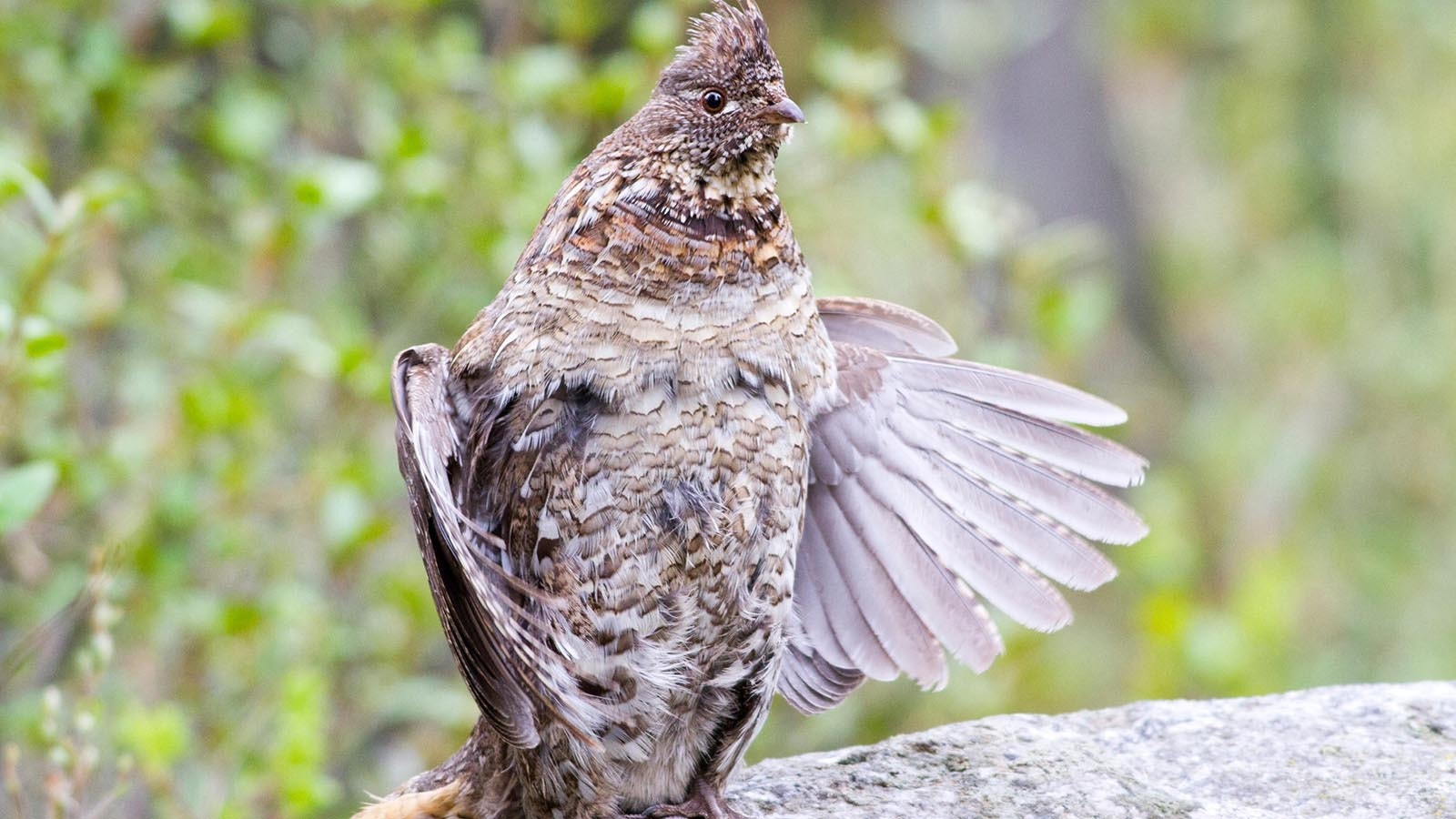
During the springtime mating season, male ruffed grouse try to attract mates with their “drumming” prowess.
To pull off the feat, they don’t need sticks and a drum kit. All they need is air. So it could be said, the earnest little grouse takes air drumming to a new level.
The Cornell Lab All About Birds site breaks down how ruffed grouse pull it off.
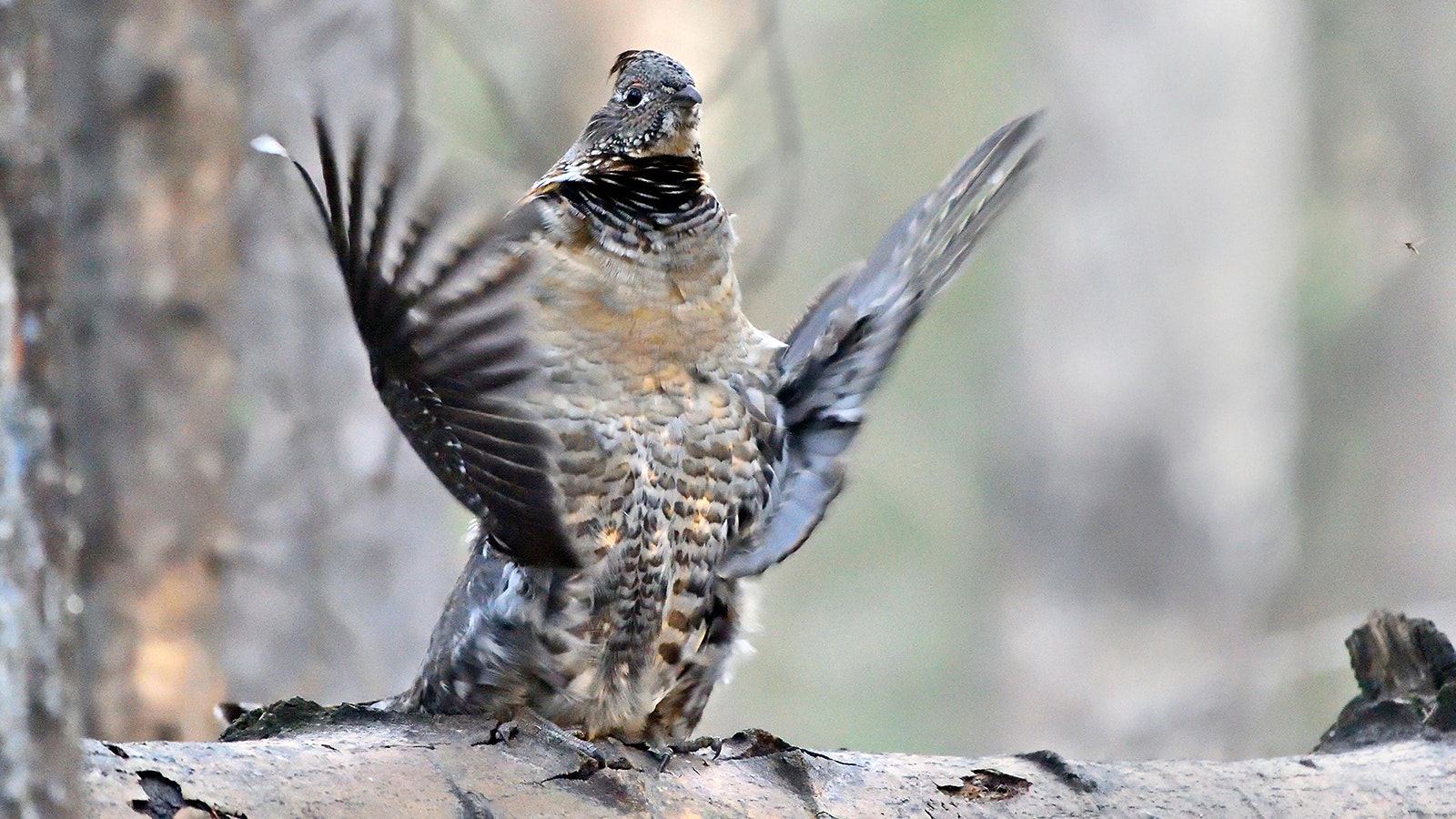
“As the bird quickly rotates its wings forward and backward, air rushes in beneath the wings creating a miniature vacuum that generates a deep, thumping sound wave that carries up to a quarter of a mile,” according to All About Birds.
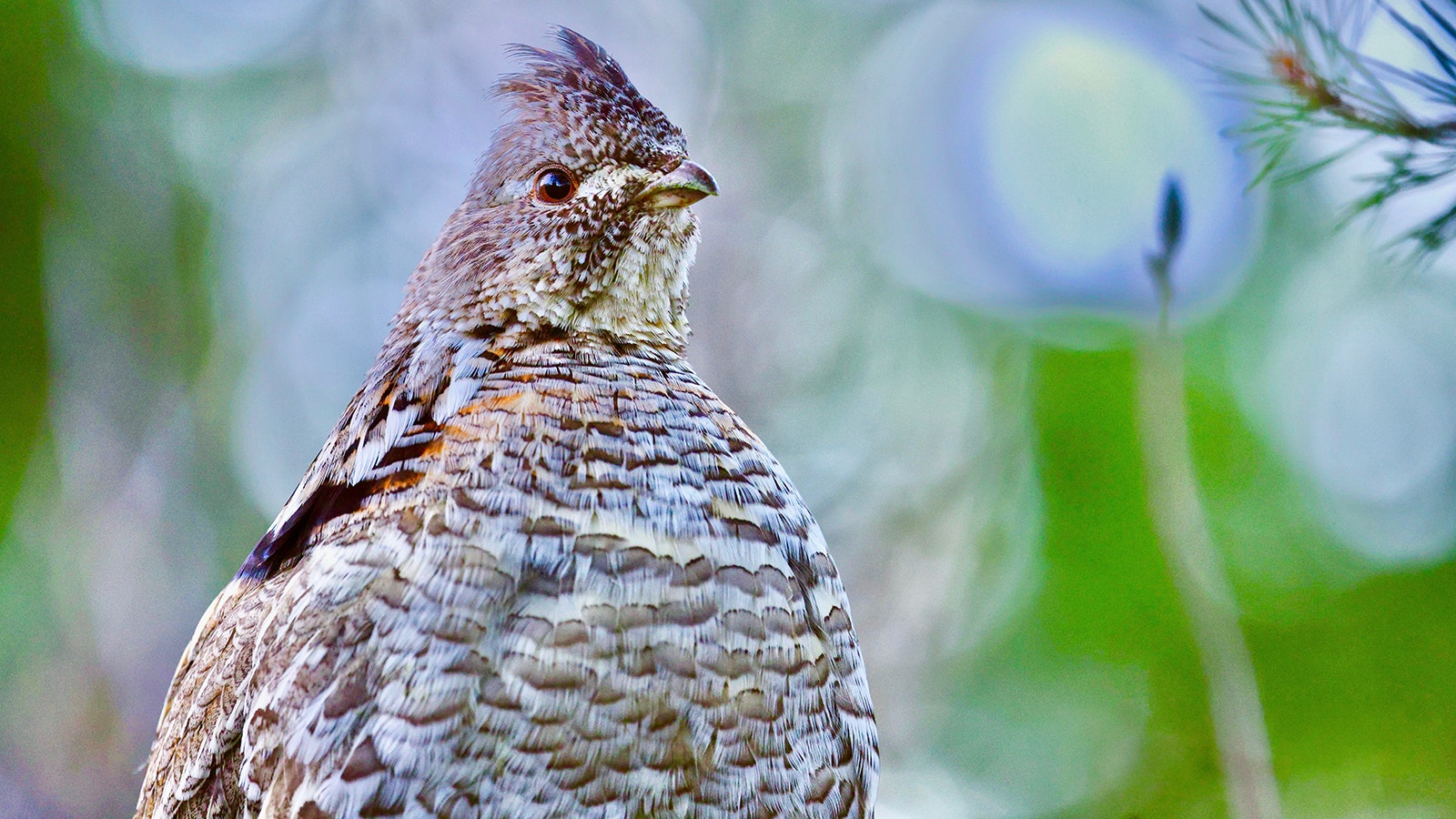
Ruffed grouse thrive in Wyoming’s mountain forests. (Courtesy Marcela Herdova, Ruby Hour Photo Art) 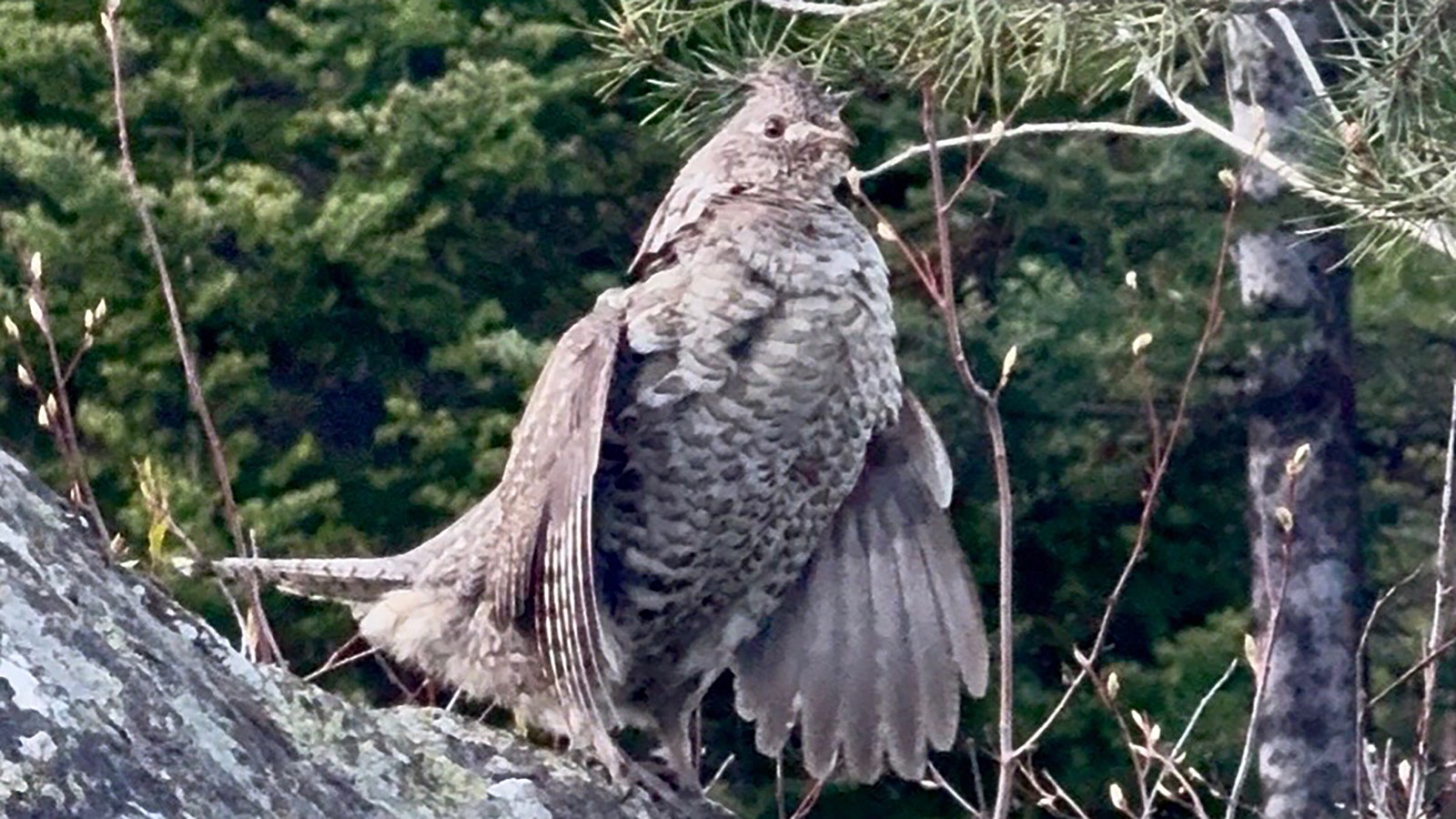
Male ruffed grouse attract mates by cupping their wings and flapping them rapidly, to create a “drumming” sound that can be heard a quarter-mile away. (Courtesy Marcela Herdova, Ruby Hour Photo Art)
Lucky Encounter
Though many have heard ruffed grouse drumming few have caught the birds in the act.
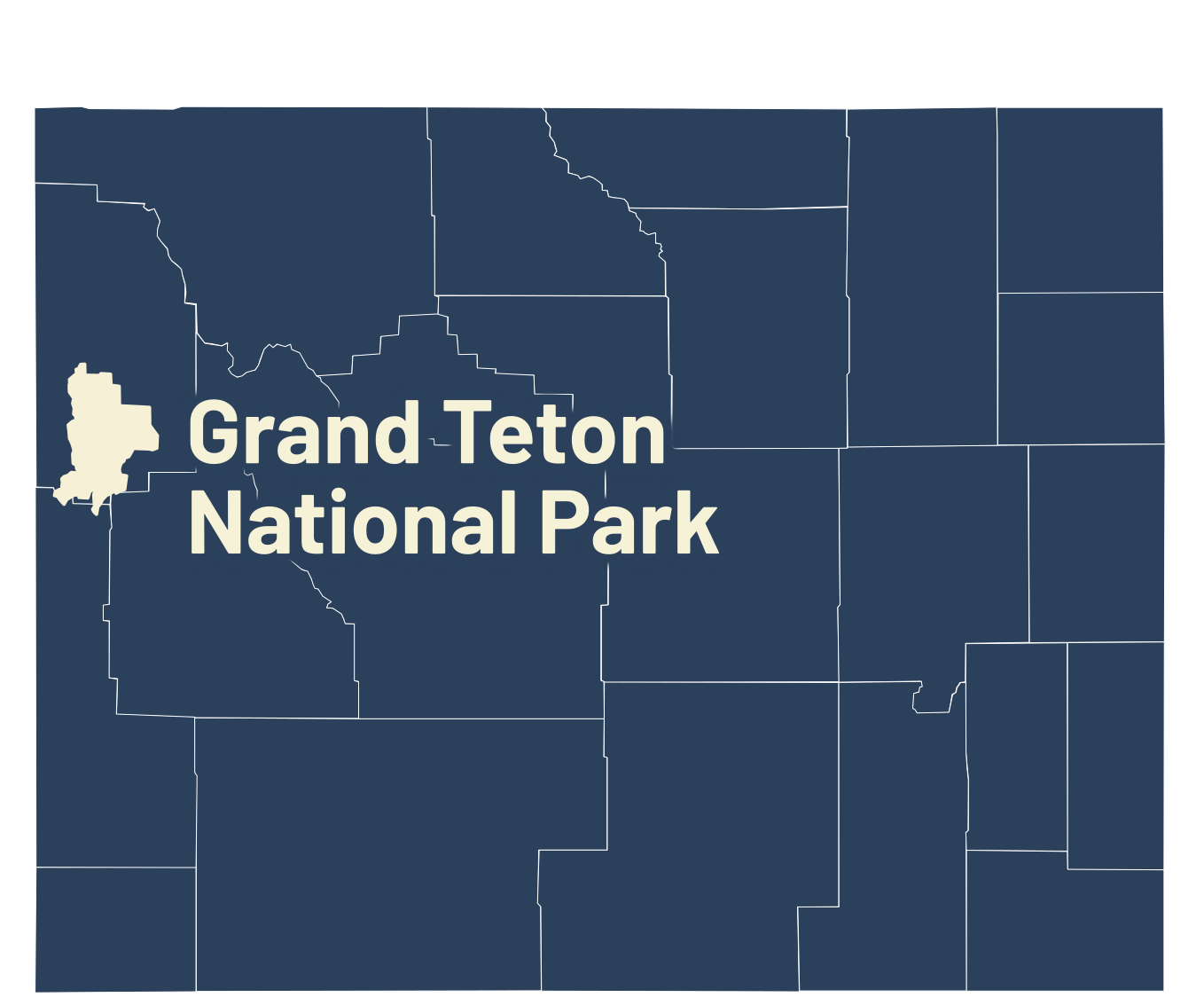
Wildlife photographer Marcela Herdova had that rare chance, when she noticed a male grouse hanging out near one of her favorite hiking trails in Grand Teton National Park.
“You could hear the grouse drumming around there. You could hear them, but you could not see where they were,” she told Cowboy State Daily.
She was in just the right place at the right time one day this spring to catch the grouse drumming and took a video of it.
“He just did his thing, over and over again, every two or three minutes,” Herdova said.
Herdova felt incredibly lucky to have captured the video and said it’s one of her most popular social media postings.
She splits her time between Jackson and Florida, and runs Ruby Hour Photo Art. The business is named after her Labrador retriever, Ruby.
He Must Have Found What He Was Looking For
During her time in Grand Teton, Herdova has observed all sorts of wildlife.
One of her most notable encounters was when she watched two nearly grown black bear cubs get so scared by Canada geese honking, they tried to flee to safety by climbing a tree.
“I was like, ‘What are you guys scared of? You’re bears,’” she said.
The bold little male ruffed grouse is one of her favorite Grand Teton critters.
While most of his species seem shy and reclusive, he frequently shows up near the trail, she said.
“I’ve been seeing him a lot, but this is the first year I caught him drumming,” she said.
Not long after she caught the video, the ruffed grouse fell silent.
“I assumed that he had found a mate, because he stopped drumming,” she said.
“I hope to see him again next year,” she added.
‘Hey, This Is My Territory’
Wyoming’s grouse species have a variety of mating behaviors, retired Wyoming Game and Fish bird biologist Andrea Orabona told Cowboy State Daily.
The greater sage grouse are probably the best-known species. Much has been made about protecting their mating grounds, or leks in Wyoming’s vast sagebrush seas.
“Sage grouse are the ones that gather on the leks and make a ‘booming’ sound” with air sacs in their vocal sacks on their neck and chest area,” she said.
Another flatland species, sharp-tailed grouse, try to impress females by “doing a little dance” that involves going in circles and fancy footwork, Orabona said.
The male ruffed grouse’s drumming serves much the same purpose as songbirds’ calls, she said.
“It’s a mating behavior. It’s to attract females and to indicate, ‘hey, this is my territory,’” she said.
Mark Heinz can be reached at mark@cowboystatedaily.com.