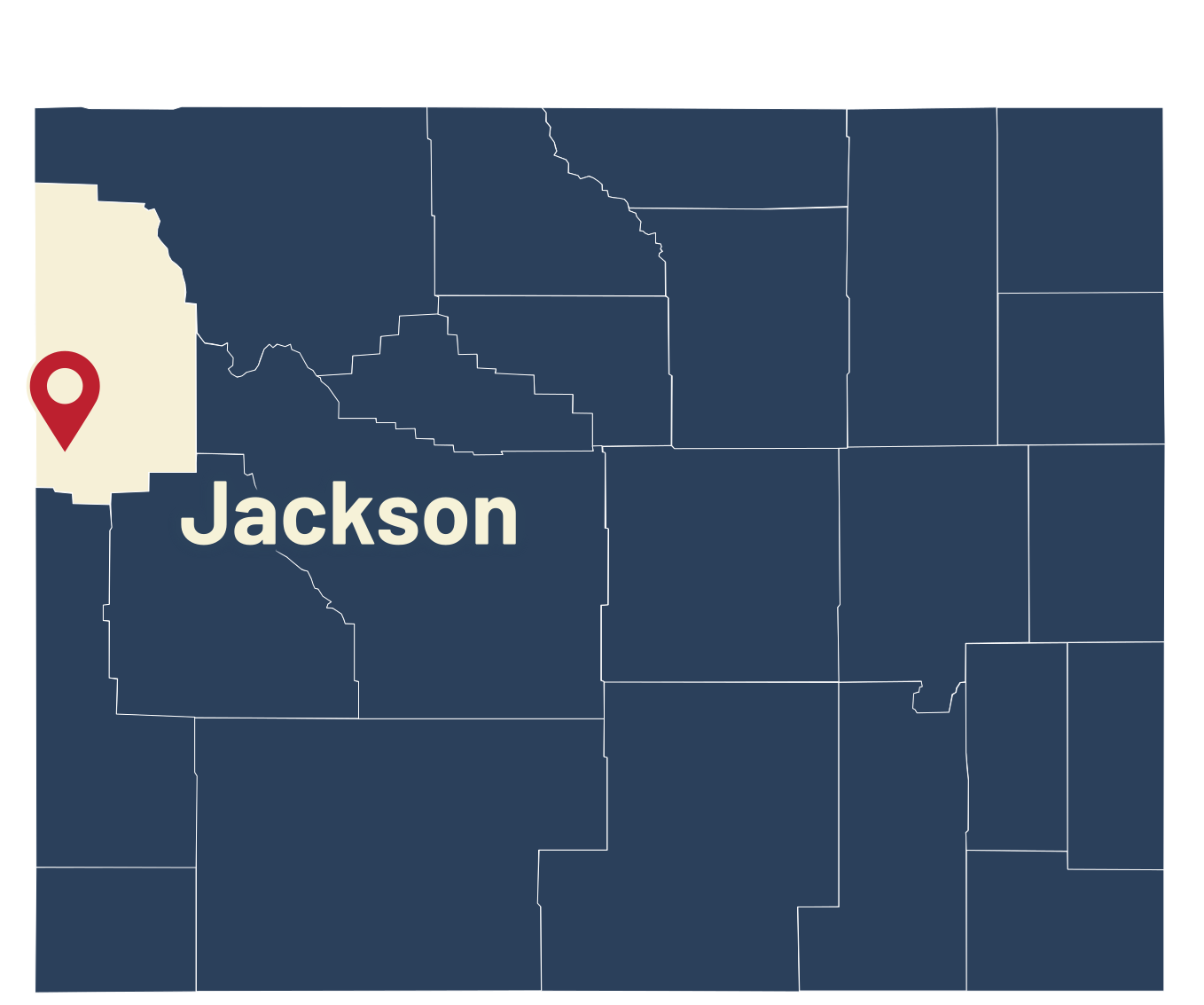
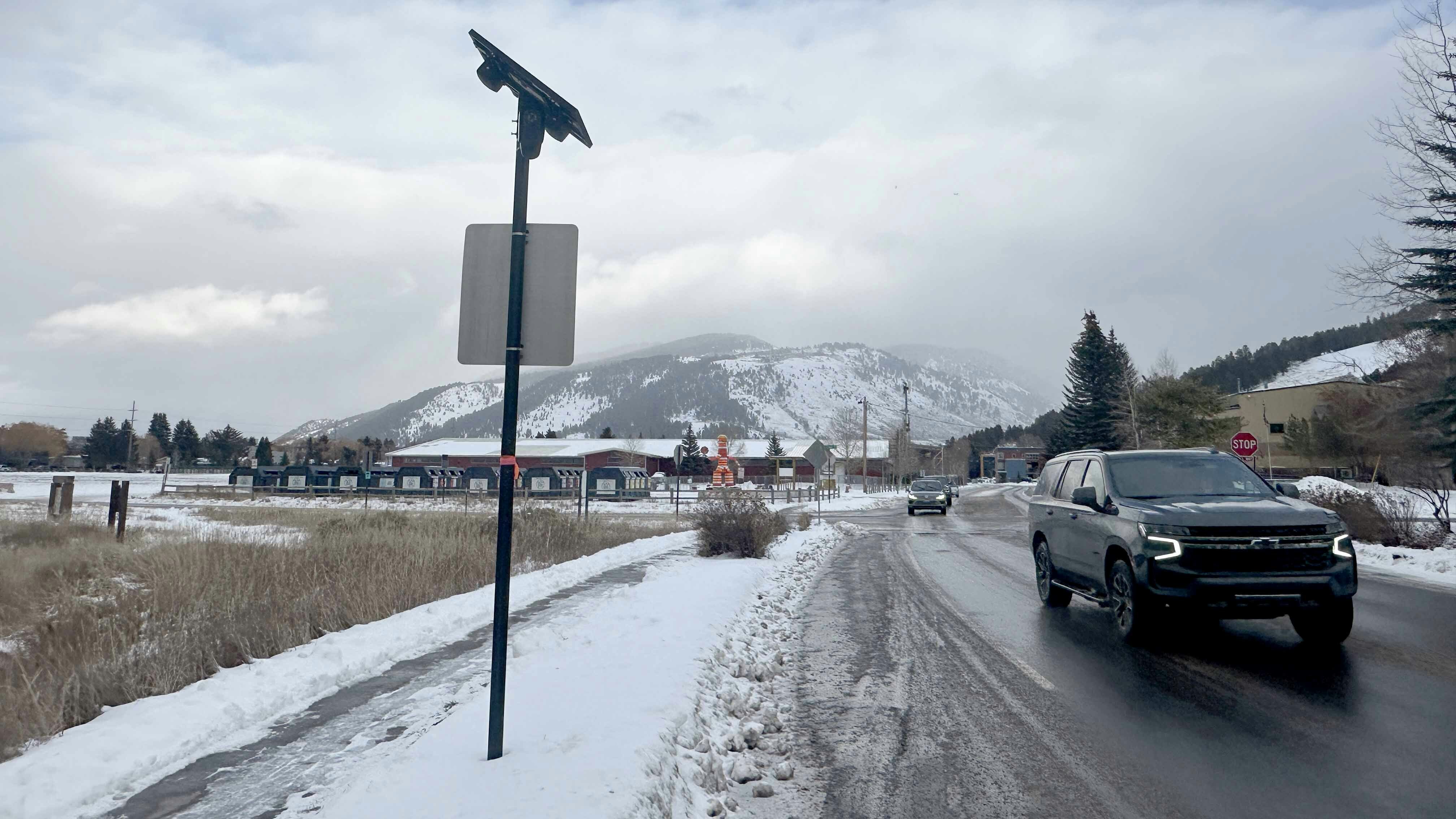
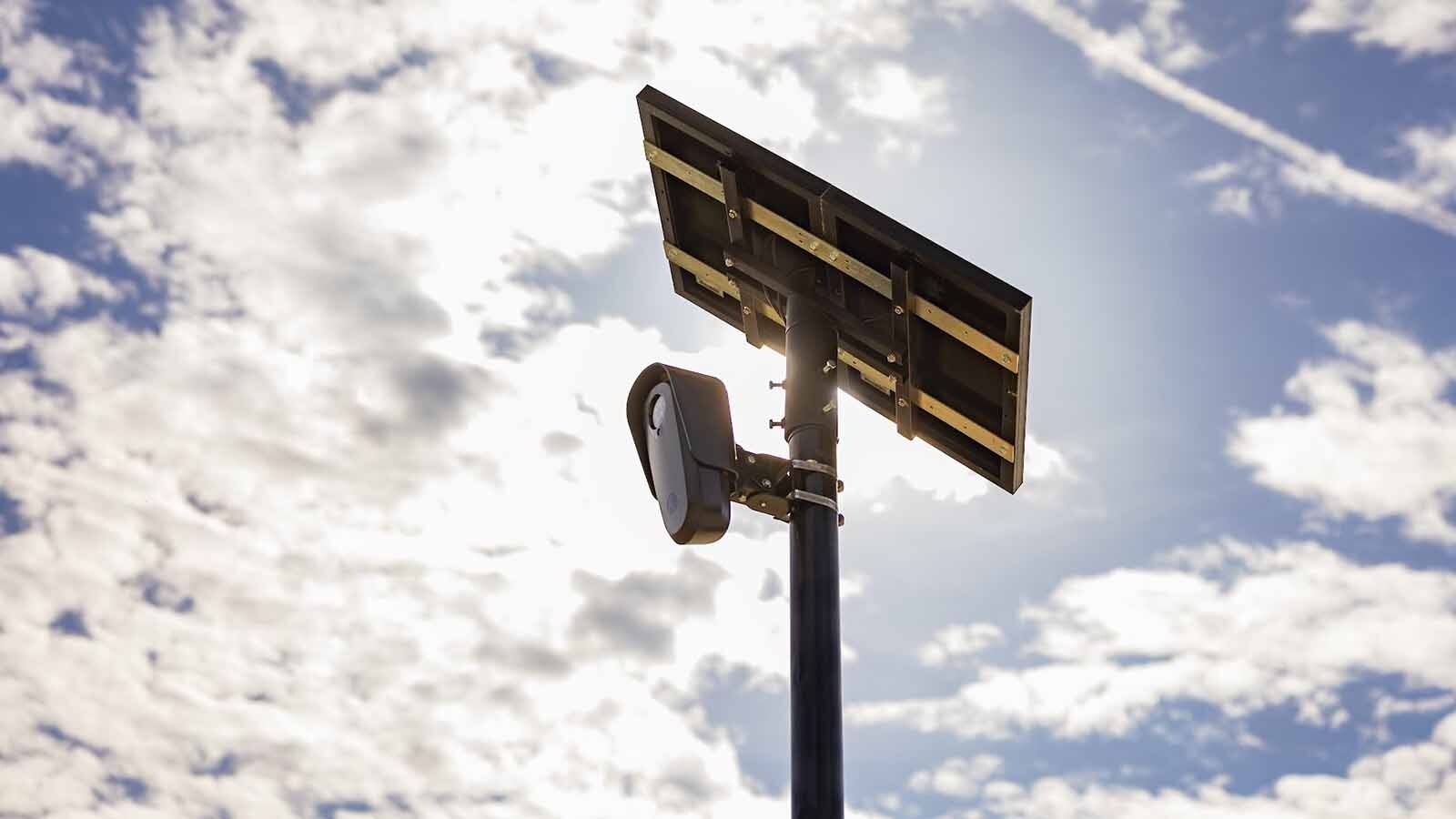
Imagine a robot police officer standing by busy streets at 28 locations around Jackson, Wyoming.
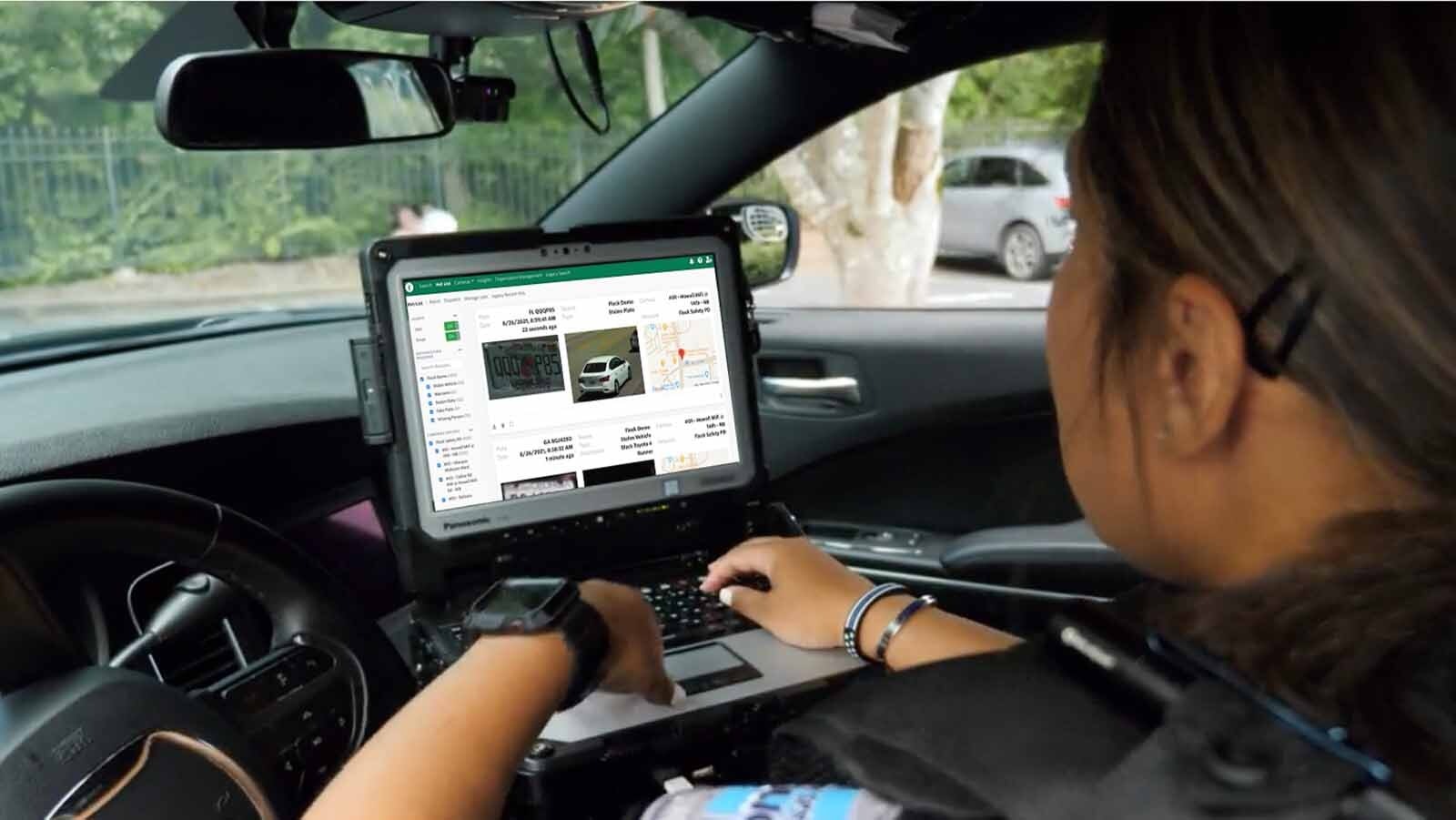
Picture these robo-cops taking photos of your vehicle every time it drives past, then adding the images along with time and location data to a network of robot brains capable of processing the information and creating a surveillance profile of every passing motorist.
That’s what critics of Flock Safety and its license plate reading cameras say is happening in Jackson, Cheyenne and a growing number of communities across Wyoming and the country as they are added to Flock's web of cameras.
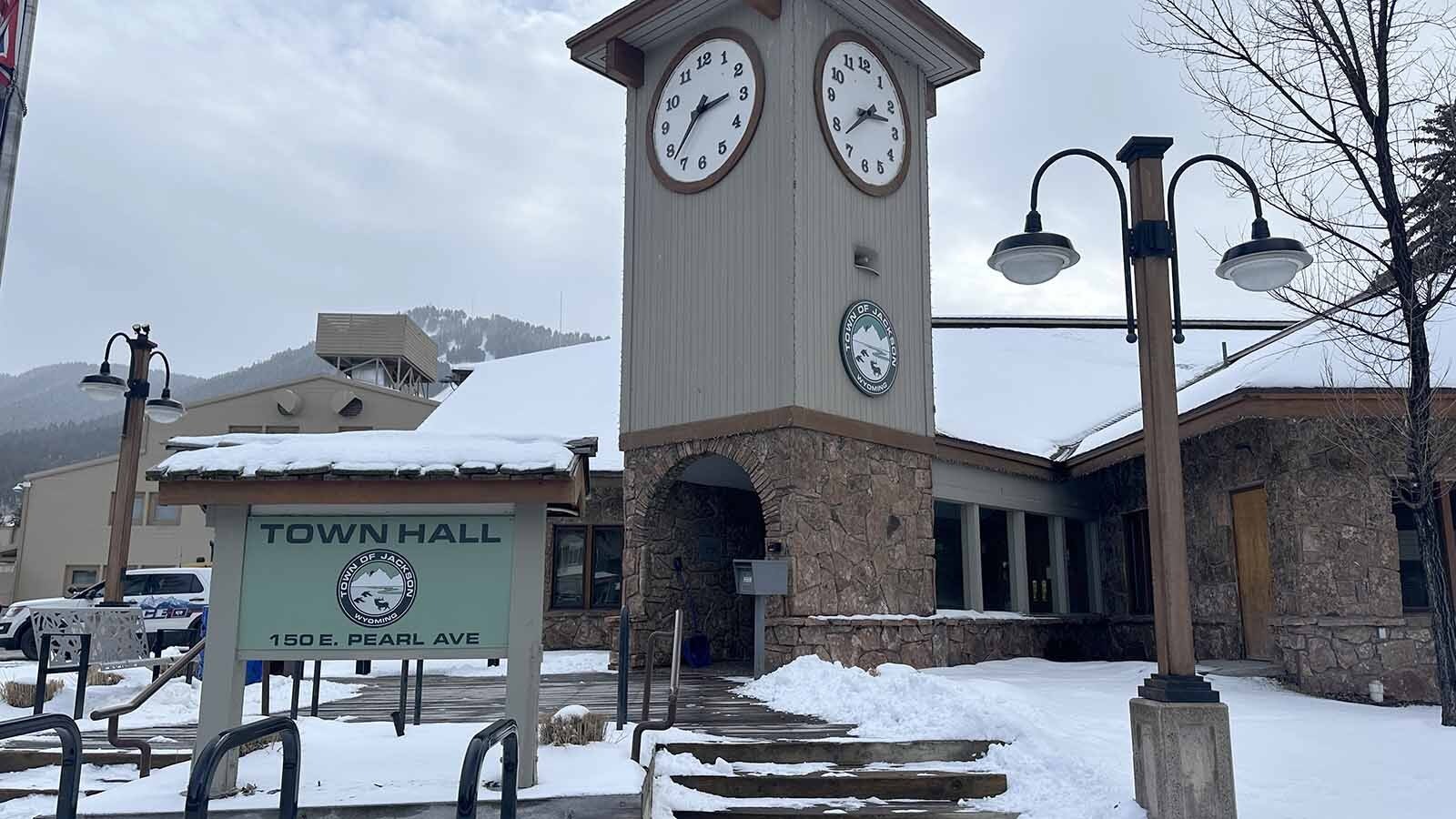
The Jackson Town Council recently directed staff to prepare a report examining data collected by the town's 28 license plate recognition cameras, responding to rising public concern about Flock Safety, its technology and the potential for privacy overreach.
Mayor Arne Jorgensen told Cowboy State Daily there's no evidence of privacy breaches or violations of the town’s 2-year-old policies governing the Flock Safety cameras.
However, Jorgensen acknowledged some residents are concerned about the cameras, which are positioned around town at bustling intersections.
"Are there things that we should try to amend this agreement with to give us more assurance that use of the data is not happening in a way that we haven't signed off on?" Jorgensen said, explaining why the council recently called for the policy review.
Jorgensen, who originally voted against the Flock contract in 2023 over cost and data concerns, said Jackson has been more restrictive than some jurisdictions.
"We have chosen to set up this policy where any queries or access to the data must go through our police department. Not everyone has done that," he said.
Discussions among town leaders in Jackson are part of a national trend, with Flock Safety critics raising red flags about the company’s cameras violating the Fourth Amendment's right to privacy.
There's Always Someone Watching
Video journalist Christophe Haubursin, who has investigated Flock Safety's expansion, noted the company's scale in a video posted on the watchdog website deflock.me.
"Flock says that its cameras are used by more than 5,000 of the 18,000 law enforcement agencies in the U.S.," Haubursin said. "While only 20,000 of its cameras have been reported, watchdogs estimate that the real number is over 90,000, taking billions of photos every month."
It all amounts to a growing surveillance state, according to the American Civil Liberties Union.
"Everybody knows that when you're in public, you don't have any expectation of privacy in the sense that you can see people and people can see you,” Jay Stanley, senior policy analyst for the ACLU, told Cowboy State Daily.
“But the courts are finding that when you're tracked across space and time, across a wide area around a city or county, for days and weeks, the Constitution does have things to say about that. The Fourth Amendment does have things to say about that," he added.
Stanley pointed to a pending case in Norfolk, Virginia, where a dense network of cameras is being challenged.
"To a certain point it becomes tantamount to putting a GPS tracker in everybody's car," he said. "And the Supreme Court has ruled that you can't put a GPS tracker on somebody's car.
"The Supreme Court has ruled that it's a search under the Fourth Amendment to put a GPS tracker on somebody's car. So the jury's still out legally, especially when you talk about places that have a very dense network of cameras."
Stanley said Wyoming residents should consider whether they would tolerate human officers performing the same surveillance these cameras conduct automatically.
"Would Wyoming residents like it if there was a police officer literally one on every block or one every mile on the highway writing down your license plate every time you go by?" he said. "What stickers are on your car and how many people are in your car and when your car has a gun rack on it?
"That's what this system does. It doesn't just take photographs of the license plate. They have this vehicle fingerprinting technology that takes a photograph of the whole car."
Stanley said the technology goes far beyond helping understaffed departments fill gaps. He warns of a future where law-abiding citizens are suspected of crimes based on Flock Safety’s algorithms and AI analysis of data gathered with its cameras.
"It's creating a robot army of watchers who are recording everything that everybody does,” he said.
Hack Or No Hack?
It’s not only the constant surveillance of people moving around town that concerns some in Jackson. A slew of online videos accuse Flock Safety’s cameras of being vulnerable to attack by hackers.
Jackson resident Hunter Singleton wrote a letter to the town council recently citing security research documenting vulnerabilities in Flock's camera systems.
"This isn't just 'ideological' concern anymore — there are now concrete, technical examples of how these systems can be abused in ways that local policy can't fix," Singleton wrote.
In a written statement to Cowboy State Daily, Flock responded directly: "Perhaps most importantly, Flock has not been hacked."
The company said the security research involved "a device using factory settings, before it connected to the cloud to enable Flock's security software. This is akin to stealing an iPhone from the factory floor and saying it doesn't have any updated software."
Flock Safety spokesperson Paris Lewbel told Cowboy State Daily the company is expanding rapidly, and making communities safer with each new camera.
"We are now deployed in over 6,000 communities," Lewbel said. "We're always looking to work with local agencies to help them use these cameras to really get searchable vehicle evidence that can help lead to the recovery of stolen vehicles, helping them solve things like burglaries, assaults."
Lewbel emphasized the technology's role in finding missing persons.
"We are having cases where there's a missing child connected to an Amber Alert or somebody who's older and is connected to a Silver Alert," he said. "We're seeing in different places across the country, these cameras are really having an impact on returning loved ones to their families."
Regarding privacy concerns raised by the ACLU and other critics, Lewbel pointed to court rulings that have, “Upheld that license plate readers do not violate the Fourth Amendment. They are just taking a point in time picture of a license plate on a public road of a government issued license plate. So they're not tracking an individual. Our software, our system does not do consistent tracking of individuals at all or vehicles."
Cheyenne’s Experience
Jackson isn't the only Wyoming community using Flock Safety. Cheyenne operates 23 Flock cameras through its police department.
In late 2024, the Cheyenne City Council approved $146,300 for the purchase and installation of the cameras.
Alexandra Farkas, public information officer for the Cheyenne Police Department, told Cowboy State Daily the system has proven valuable despite being relatively new.
"The cameras send real-time alerts to officers when a vehicle involved in criminal activity is detected,” said Farkas. “They have helped solve a variety of crimes, such as stolen vehicles, robberies and burglaries by allowing officers to locate suspect vehicles more quickly."
Farkas cited a recent example of cross-jurisdictional cooperation.
"In November, information from a Flock camera in Fort Collins helped our officers solve a burglary at a local car dealership," she said. "The suspect was also linked to other felony crimes in Colorado."
Unlike Jackson, Cheyenne has not received public pushback on its surveillance program, Farkas said, emphasizing the safeguards Cheyenne has implemented.
"Flock cameras do not use facial recognition and do not collect information about individuals, including gender, race, or other personal identifiers," she said. "They only capture license plate numbers and vehicle characteristics in public spaces."
She said data is automatically deleted after 30 days unless linked to an active investigation, and access is strictly controlled. The ACLU favors state laws like the one in New Hampshire that require data deletion after three minutes if the initial detection does not immediately link the vehicle to criminal activity.
"Officers must document a legitimate investigative purpose whenever they request data and only sworn police officers can access it for official criminal investigations," Farkas said. "These measures help ensure the technology is used responsibly while supporting officers in solving crimes and keeping the community safe."
Flock Safety offers optional transparency portals to law enforcement customers, Lewbel explained.
"It's a free add-on," he said. "But it's up to the agency themselves if they'd like to utilize the transparency portal or not."
Cheyenne has opted in.
According to the department's transparency portal, which Farkas confirmed is continuously updated, the system detected 143,360 unique vehicles in the last 30 days and generated 731 hotlist hits — alerts related to stolen vehicles, warrants or Amber Alerts.
Officers conducted 253 searches during that period.
Cheyenne's stated policy explicitly prohibits using the system for immigration enforcement, traffic enforcement, harassment or intimidation, targeting based on protected classes such as race, sex, or religion, and personal use.
The department states that data is used for law enforcement purposes only and is never sold to third parties.
Farkas confirmed that all data is owned by the Cheyenne Police Department and that Flock Safety cannot sell or transfer it.
"As with other investigative tools, we share information with partnering law enforcement agencies when necessary for criminal investigations," she said. "Due to Cheyenne's proximity to two major interstates and the Colorado border, it's common for cases to involve vehicles from other jurisdictions. Sharing information helps agencies respond more effectively to keep our communities safe."
Lewbel declined to discuss details about which Wyoming communities are considering future deployment of Flock Safety cameras.
"We don't go into specifics on individual customer contracts or specific camera counts," he said. "We leave that up to the local agencies to determine how they communicated about to the public."
Bipartisan Skepticism
Stanley with the ACLU said opposition of mass surveillance through Flock Safety cameras cuts across party lines.
“I hear all the time from people, ‘I don't usually agree with you, but on this.’ I can't tell you how often I hear that from people,” he said. "We're seeing this across the political spectrum from left to right.”
“On the right, people are concerned about privacy and government power. There's a long tradition of conservatives and liberals agreeing on privacy,” added Stanley. "On the left, there's a lot of concern about the immigration and how this is being used as part of the Trump administration's anti-immigration campaign.”
That’s the position taken by Mayor Jorgensen in Jackson.
"The concern we have is a lot of action of ICE at this point and their related agencies are not limited to violent criminals or even felony convictions or felony investigations," he said. “Our community has been harmed by this uptick on immigration for these nonviolent or non-felony investigations. We don't want to be party to that."
David Madison can be reached at david@cowboystatedaily.com.