Hunters love sharing stories and photos of the huge bull elk they shot, or the ones that got away, but when it comes to filling freezers, late season cow elk tags are the bread and butter of Wyoming’s hunting seasons.
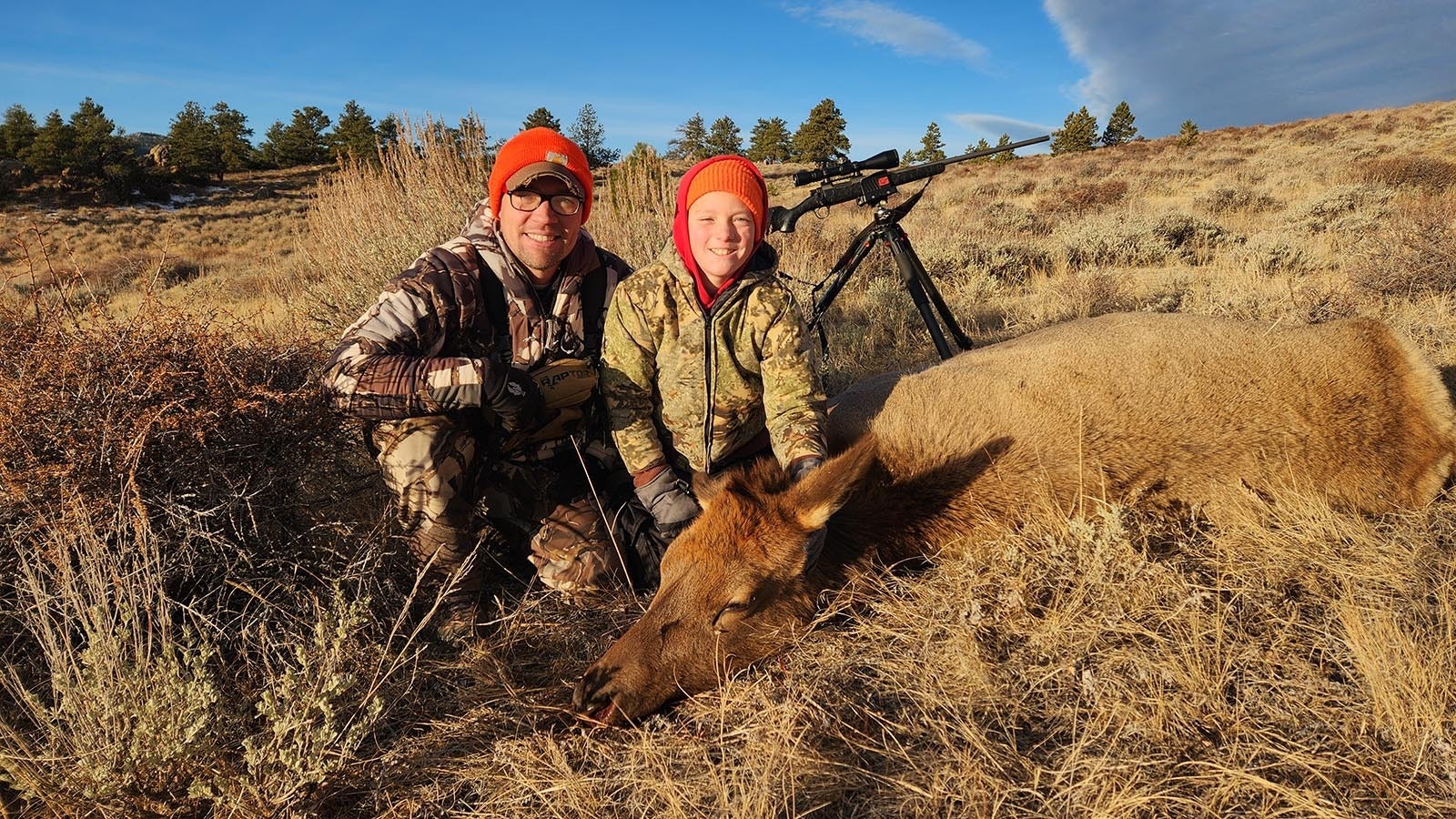
“My kids don’t know what beef tastes like,” elk hunter Ben McArthur of Casper told Cowboy State Daily.
He relies on abundant cow elk tags to keep his family’s freezers full of fresh meat. And his son, Mateo, has also pitched in.
Wyoming hunting seasons for bull elk typically end in October or early November. Many cow elk tags are good through the end of December, or in some cases, the end of January.
Complicated Hunting Tag System
Wife-and-husband Kacie Fischer and Mark McKinney of Casper have lived in a few different states and moved to Wyoming from Virginia four years ago.
In Virginia, it wasn’t unusual for McKinney to shoot several white-tailed deer on easily attainable hunting tags.
He’s been to Wyoming before, and at first, he thought the hunting tag system here was impossibly complicated.
“It’s definitely a big learning curve. When I first came out here 15 years ago, I didn’t hunt here at all, because it seemed so complicated, the process of getting the tags and all,” he said.
In Wyoming, hunting tags fall into two broad categories. There are general season tags, which can be bought over the counter at any time.
In some general season elk hunt areas, a tag is good for “any elk,” including bulls, up to a certain date (for instance, the end of October.) After that, the tag is good only for antlerless elk, cows and calves.
For limited quota tags, hunters must apply for tag drawings months in advance and aren’t guaranteed to draw a tag.
Limited quota hunting areas will include a few different types of tags. For example, a Type 1 tag might be good for bulls, and a Type 6 tags are good for cow and calf elk.
This is the second hunting season that the Wyoming Game and Fish Department has allocated Type 8 elk tags. Hunters may buy those over-the-counter in unlimited numbers. The catch is, they’re almost all good on private land only in certain parts of the state.
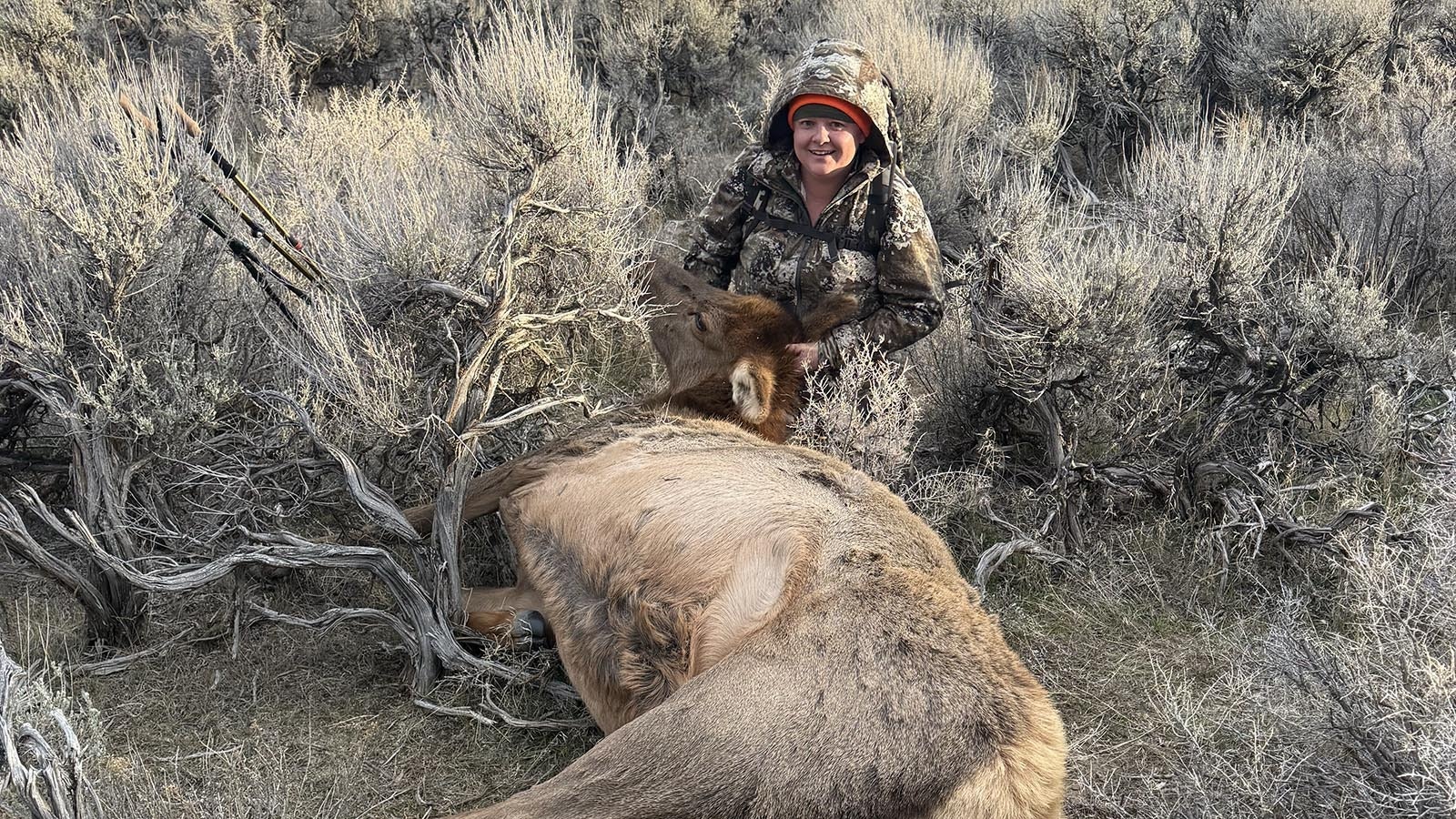
Kacie Fischer of Casper shot this late-season cow elk on Black Friday. It was her first big game animal ever. (Courtesy Mark McKinney) 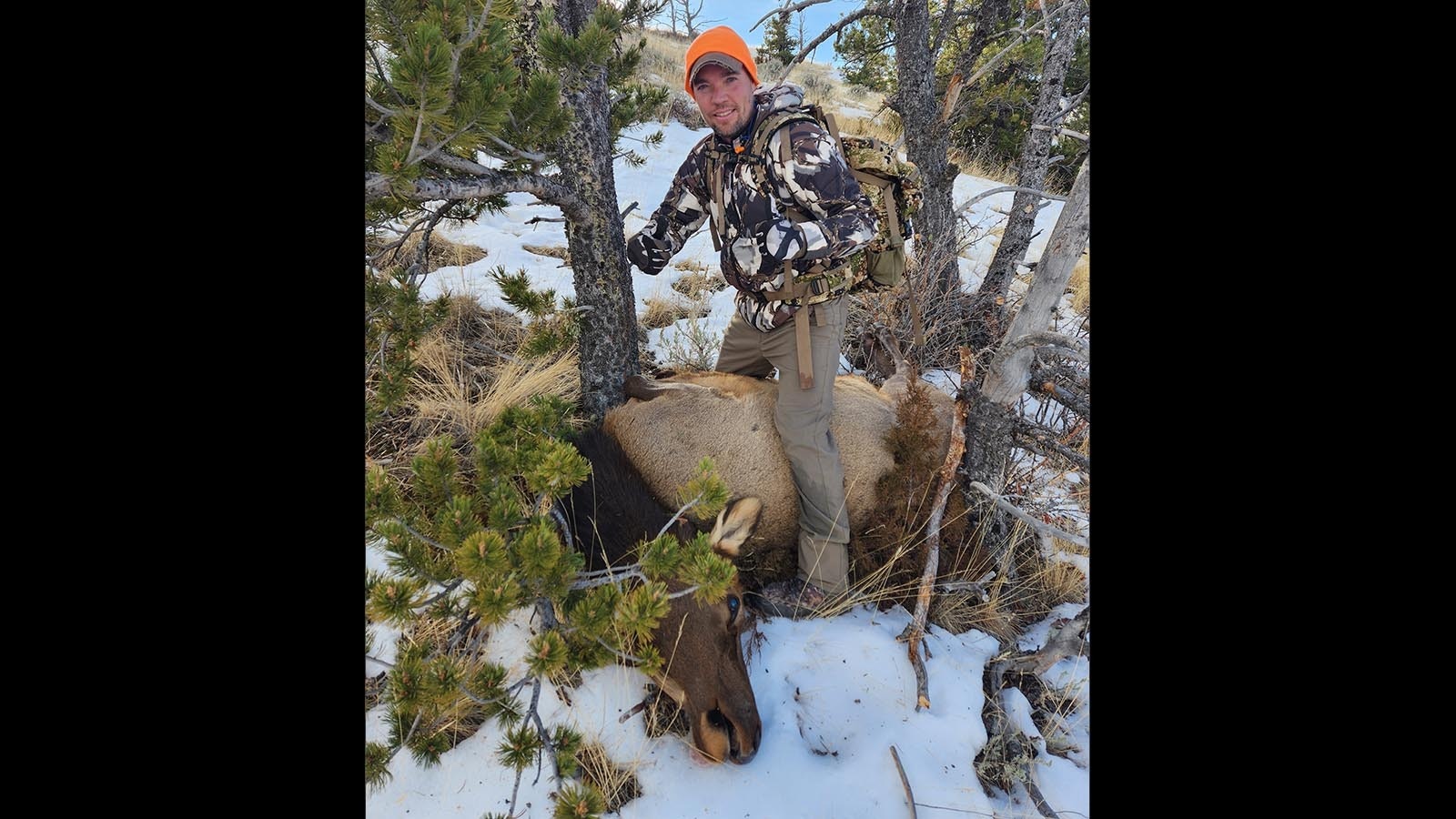
Ben McArthur of Casper likes filling his family’s freezer with elk meat from late-season cow elk tags. (Courtesy Ben McArthur) 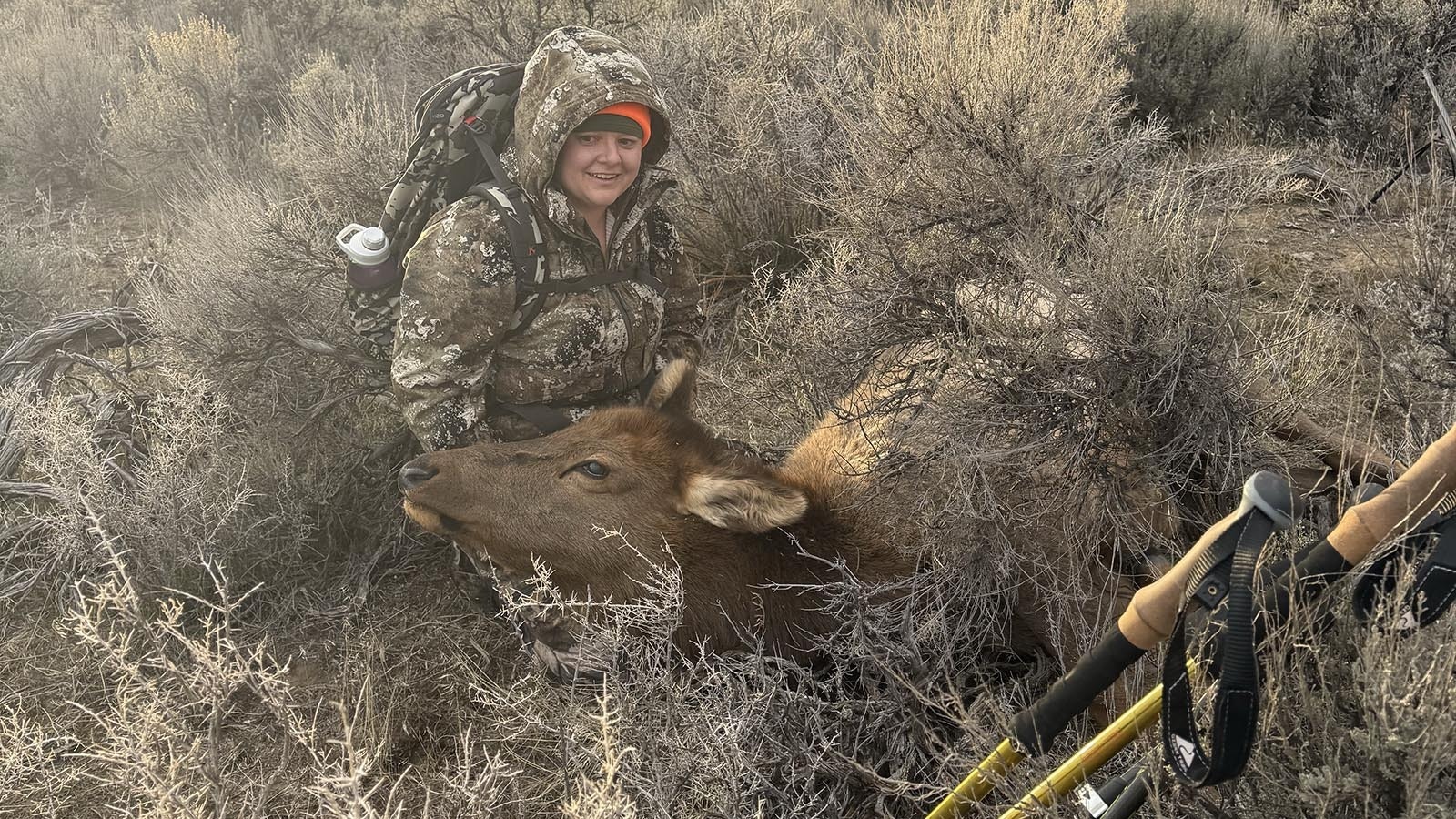
Kacie Fischer of Casper shot this late-season cow elk on Black Friday. It was her first big game animal ever. (Courtesy Mark McKinney) 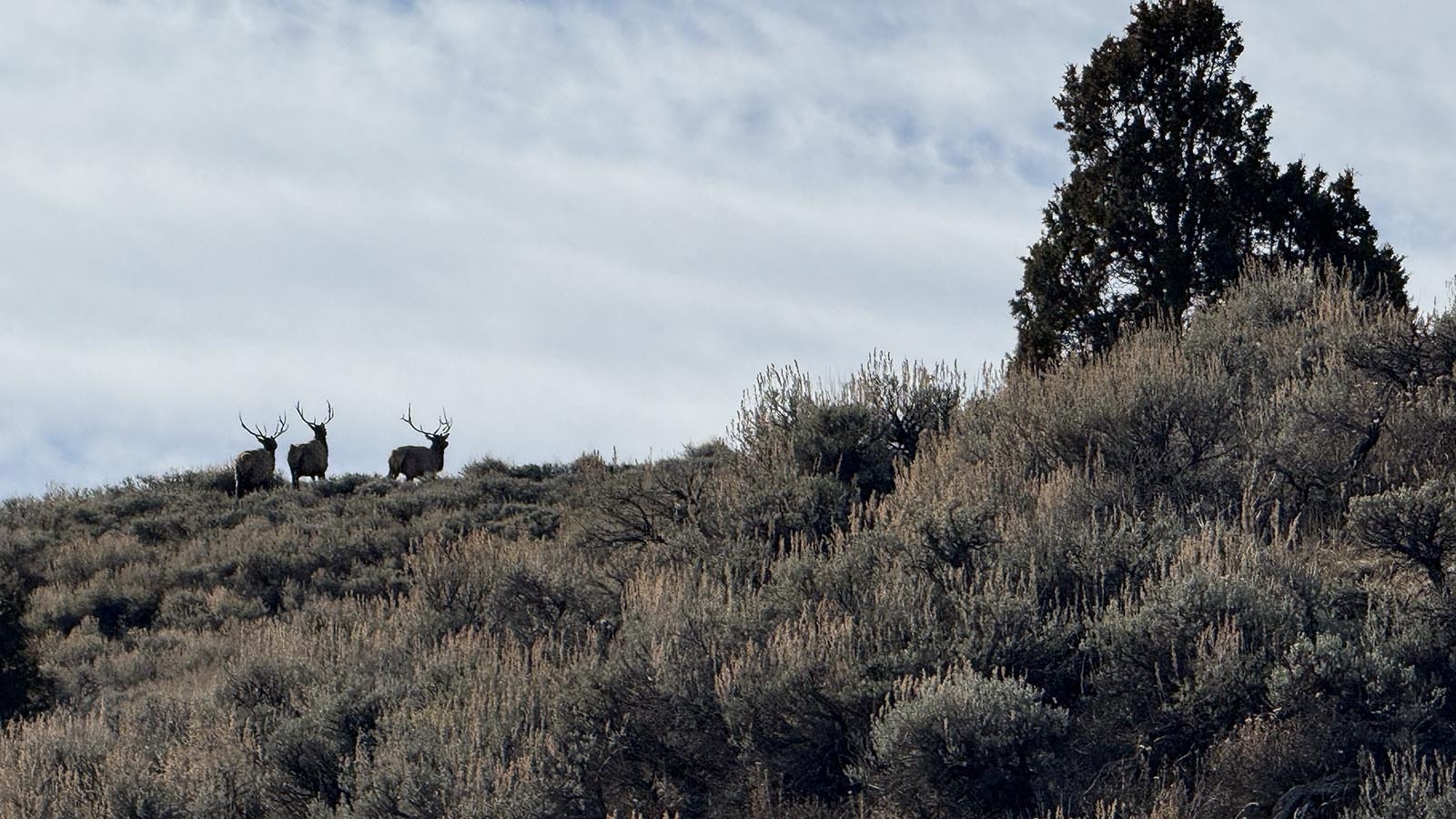
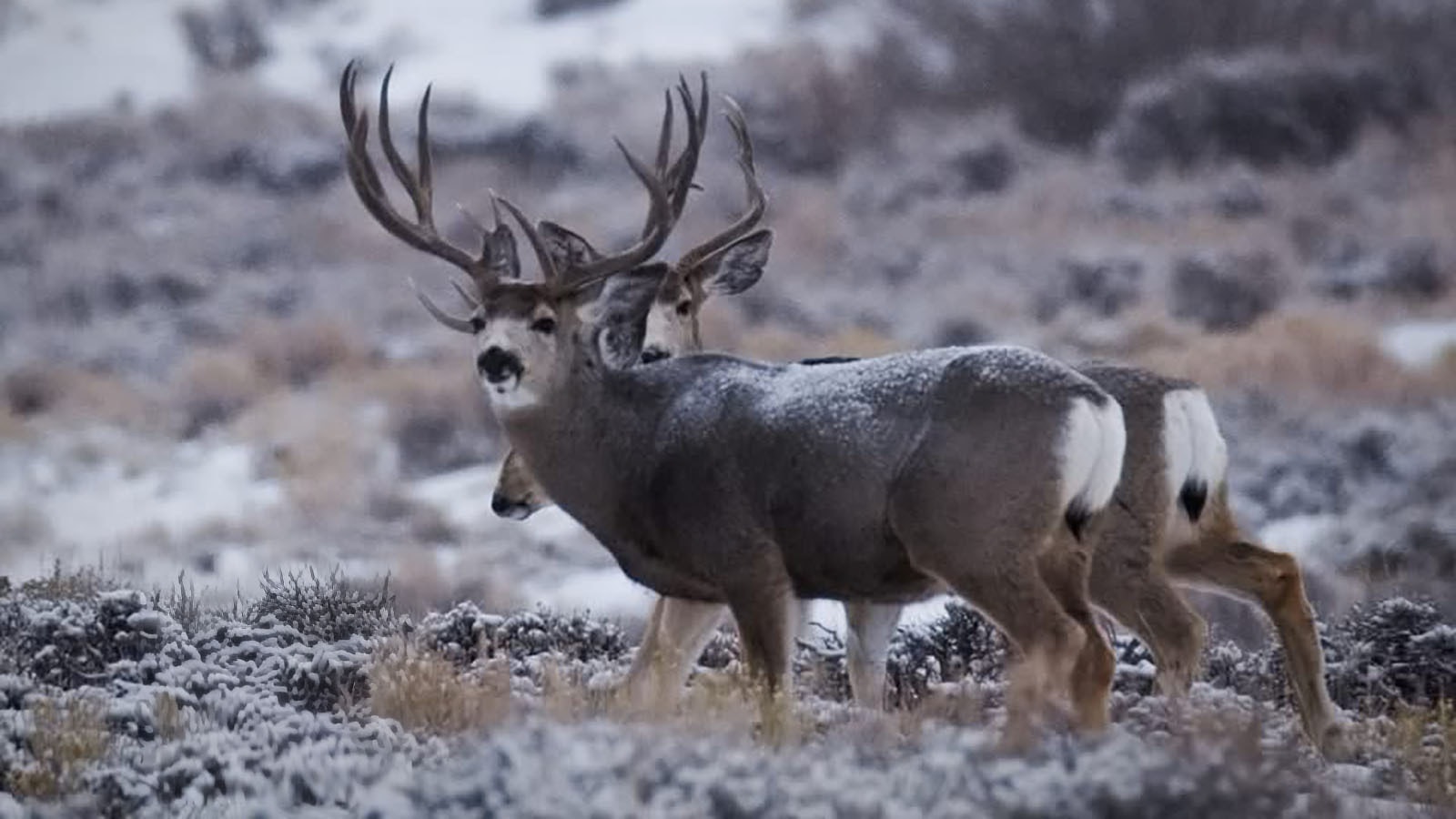
Ironically, hunters with late-season cow elk tags frequently find bull elk. (Courtesy Mark McKinney)
Black Friday Cow Elk
After 13 years together, Fischer was used to helping McKinney butcher and wrap the game meat that he brought home.
But “I didn’t grow up in a hunting family” and had never hunted, she said.
This year, she went through the Game and Fish Becoming an Outdoors-Woman (BOW) program and decided to give hunting a try.
She drew a Type 4 antlerless elk tag for Elk Hunt Area 16. There was also access available to a Game and Fish Hunter Management Area (HMA) on Q Creek Ranch property in the Shirley Basin region.
They scouted the area diligently ahead of time. And when hunting season came, it was like elk hunting frequently is.
Lots of driving, hiking and “glassing,” or looking for elk through binoculars and spotting scopes.
“It was lots of glassing and moving. Glassing and moving. Glassing and moving,” McKinney said.
As empty-handed hunters often say when hunting on a cow tag, they saw lots of bull elk.
At one point, they thought they could get close enough for a shot at a group of elk that included cows, but then some others tried driving in from another direction and spooked the elk away.
Things finally came together over Thanksgiving weekend. Instead of going shopping on Black Friday, the couple went elk hunting.
That day, everything finally came together, and they were able to get within shooting range of a herd of about 100 elk.
“We ended up coming over a ridge, and they were all herded up on the other side,” Fischer said.
“We had all the time in the world for me to set up for a shot,” she added.
She dropped a cow elk instantly with one shot from her 7mm PRC rifle at 414 yards.
It was the payoff for lots of target practice beforehand, McKinney said.
“She’s a better shot than I am. She dropped the elk right there where it was standing,” he said.
Ample Opportunity, Lots Of Work
McArthur said he appreciates the availability of late-season cow elk tags in Wyoming, but the hunting can sometimes be frustrating.
“Sometimes, those herds can pile into private land down in the low elevations. And you can sit there and look at them all day long, but not shoot them,” he said.
“I do think that Game and Fish is trying their best to help with hunter access. They’re trying to generate access by getting ranchers to participate in the HMA and walk-in hunting area programs,” he added.
There can be lots of pressure on elk late in the season, but sometimes that’s a good thing, he said.
“Pressure gets the elk moving. Pressure can come from ranchers moving their cattle. It can come from ranchers running their tractors, it can come from coyote hunters,” McArthur said.
Filling late-season cow elk tags can boil down to being persistent, until hunters find themselves in the right place at the right time.
And for people who are busy with jobs and families, the late-season hunts offer opportunities to get out during the Thanksgiving and Christmas holidays, McArthur said.
“Those late-season cow hunts are fun, because they match up with the holiday weekends. The weather conditions can be miserable, but if you get out there and get after it, you can be successful,” he said.
Mark Heinz can be reached at mark@cowboystatedaily.com.