Surviving winter in Yellowstone country is no joke, but Wyoming’s bison are built for it, with thick hair, layers of fat and their own internal heating system.
Of course, there’s still no guarantee that every one of the burly bovines will make it. Counting winter-killed bison and elk carcasses used to be a full-time job in Yellowstone National Park.
And winterkilled bison carcasses are a vital food source for grizzlies when they emerge from their hibernation dens in the spring.
Even so, bison are better than most other critters at surviving whatever Wyoming winters can throw at them.
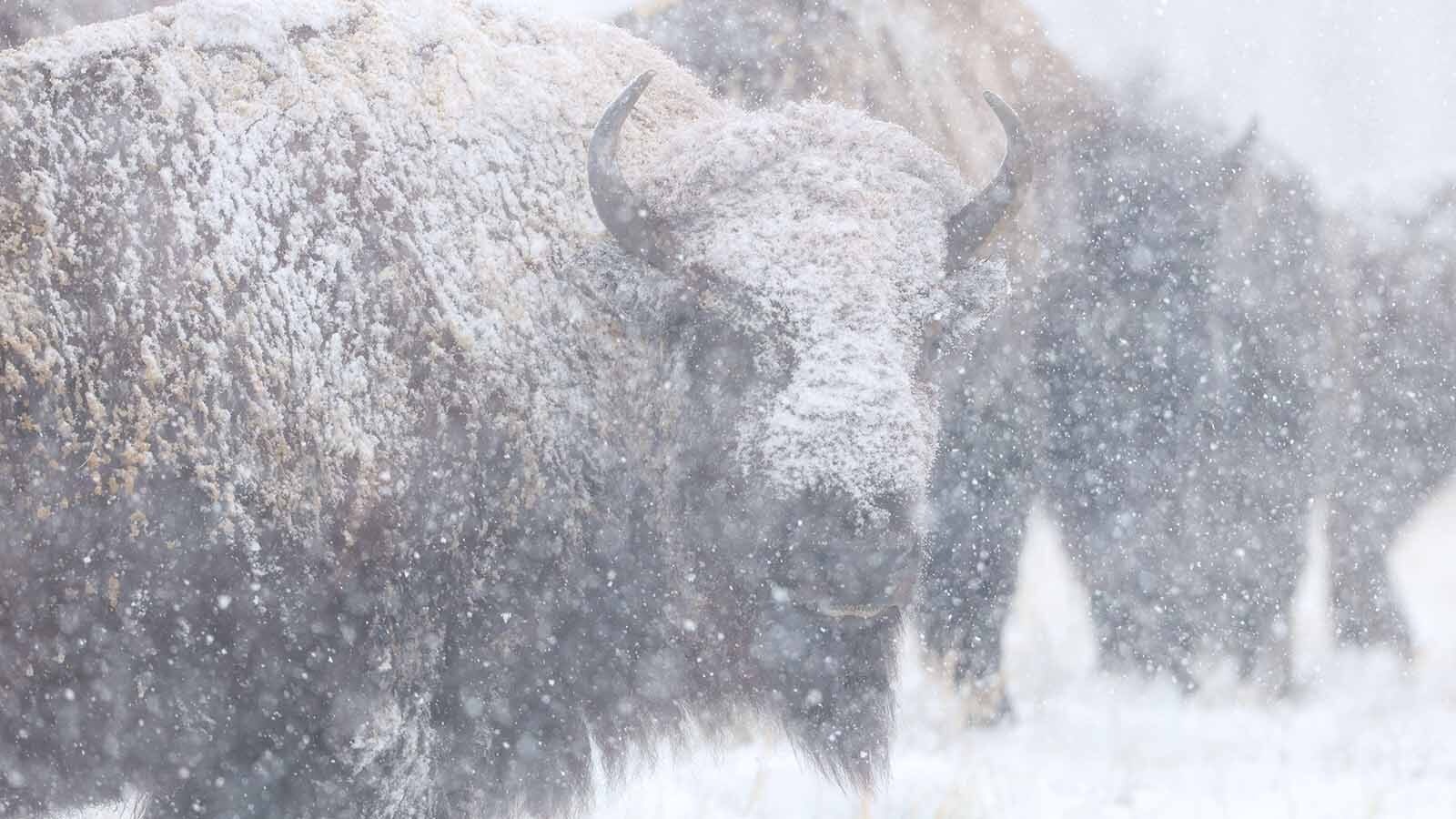
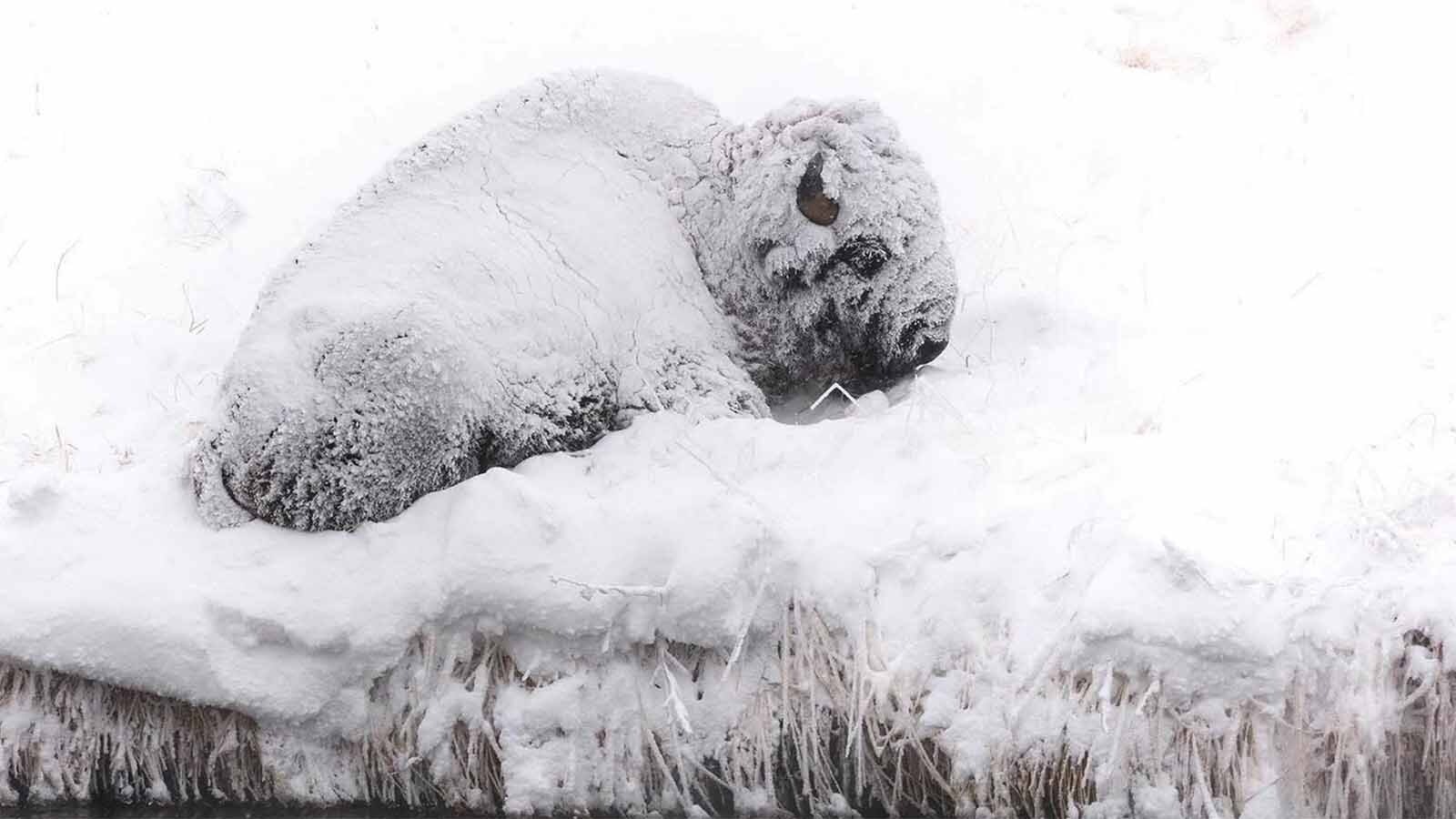
A photo that the National Park Service recently posted on social media of a snow-and-frost-caked bison in Yellowstone garnered some sympathy from some viewers for the supposedly miserable creature.
But make no mistake, the bison was completely in its element.
Snow Is Insulation
Being covered in snow might sound miserable from a human perspective. From a bison’s perspective, it’s just the ticket.
“All that snow on the back means that the heat is staying inside the bison,” National Bison Association president Ken Klemm told Cowboy State Daily.
Bison's internal fat layers, hide and hair all help trap their body heat, he said.
The hide is “spongy, which helps retain heat,” he said.
And the snow itself can act as an extra insulating layer for bison and other animals, biologist George Wuerthner told Cowboy State Daily.
“That’s what weasels do. They go under the snow” because it can help retain their body heat, said Wuerthner, who has worked in the Greater Yellowstone Ecosystem for decades and is president of the Montana Wild Bison Coalition.
While snow might stick to bison, they don’t need to burrow under it to stay warm, because their bodies’ “volume to surface area” ratio helps them retain heat, he said.
Whereas weasels are “long and thin,” so they lose heat quickly, Wuerthner said.
Perfect Hair And An Internal Heater
The winter fur that bison grow can keep them comfortable in nasty conditions.
Studies from Canada indicate that it must plunge to about 40 degrees below zero “before their metabolism even starts to adjust,” Klemm said.
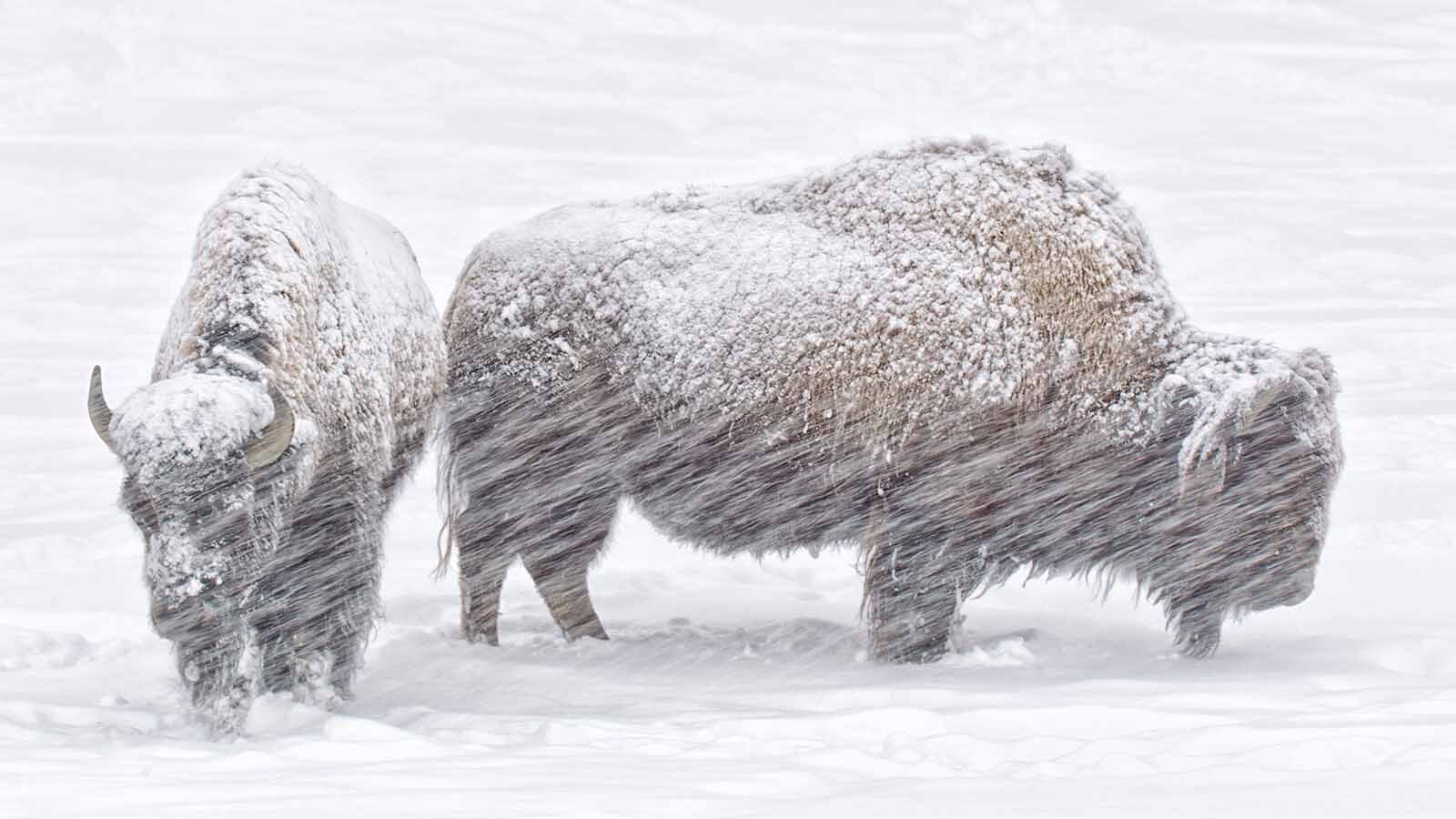
A bison’s winter hair acts “almost like a down coat,” insofar as it can trap pockets of warm air, and keep the animal toasty, Wuerthner said.
Their winter coats are layered, with “guard hairs” that are long, and then a “downy layer underneath it,” Klemm said.
Bison generate their own internal heat, Wuerthner said.
They have a four-part stomach system, and can get by on sparse, dry winter grass much better than domestic cattle could, he said.
“That complex digestive system produces internal heat through the fermentation process,” he said.
Thermal Features Are Like ‘An Electric Blanket’
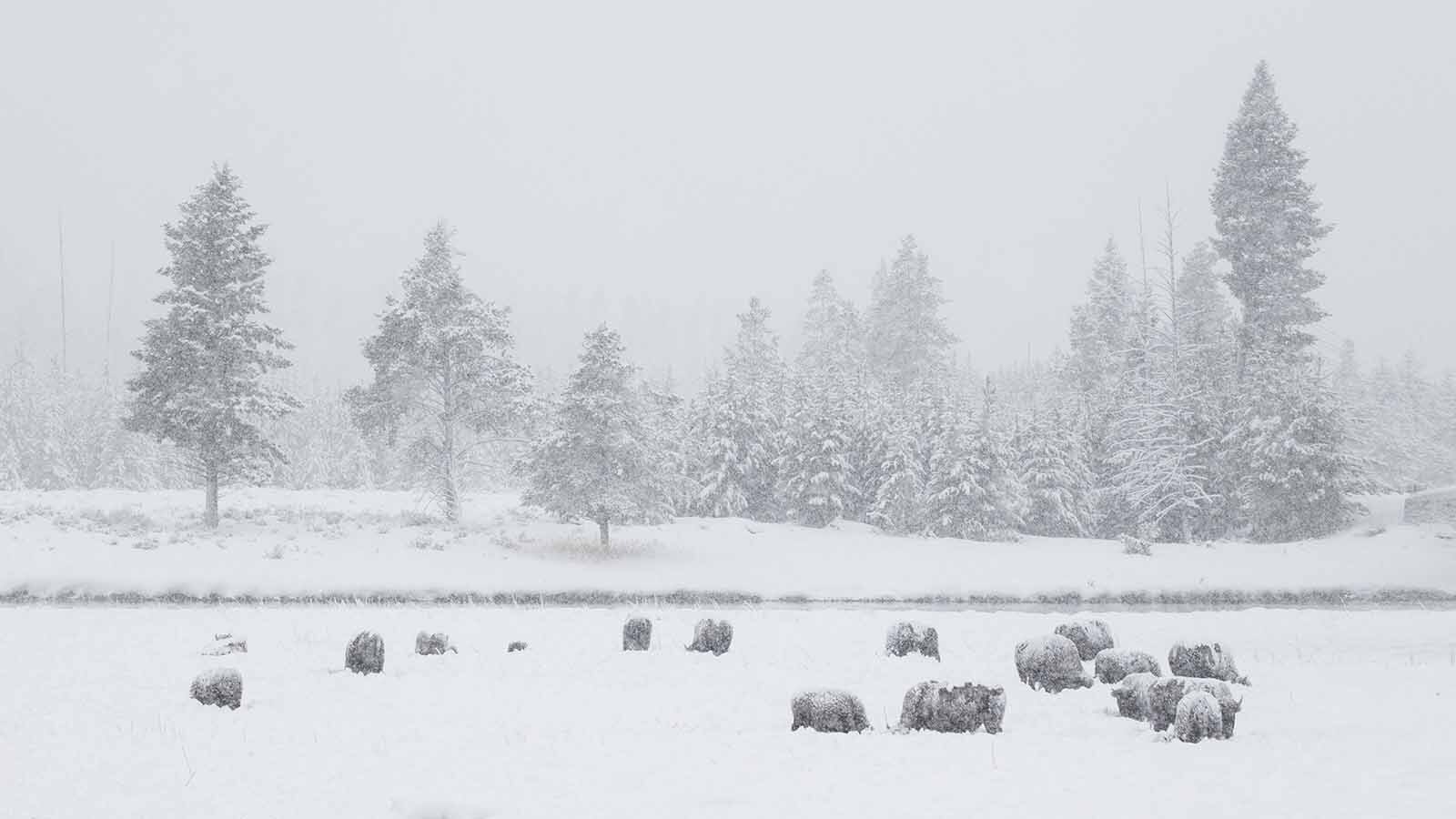
Along with their built-in winter survival gear, bison will take advantage of environmental perks in Yellowstone, Wuerthner said.
The ground near the park’s numerous thermal features stays warm all winter, and bison love to bed down in those spots, he said.
“It’s like having an electric blanket underneath you,” he said.
Bison, like any other wild creatures, must conserve energy all winter long.
“They’re taking in a certain amount of calories every day, but not enough to replace the loss of calories through their body functions,” Wuerthner said.
So, winter isn’t any time to go rushing about, burning off calories that bison can’t afford to lose.
“Bison go into a semi-dormant state in winter. They don’t move around much,” Klemm said.
When they do move through snow, they go single file, to conserve collective energy, Wuerthner said.
The first bison has to use a lot of energy to break trail, but the next guy behind him has to use less energy, and so on down the line,” he said.
As with other wildlife, the most perilous time for bison isn’t the depths of winter, but rather, during March and April, he said.
By then, the animals have burnt through most of their fat reserves, but the nutrient-rich spring forage hasn’t yet sprung forth for them to fatten back up on.
Even a temporarily elevated heart rate, triggered by people getting too close, can tip the life-and-death balance toward death at that point, Wuerthner said.
That’s why park officials and biologists urge people to just leave animals in peace during late winter and early spring, he said.
Other Causes Of Death
Bison are “supremely adapted” to life in North America, and don’t have any highly effective natural predators, Klemm said.
“Grizzly bears and wolves don’t kill many bison. They just snipe at the edges” of the herds, he said.
“Historically, winter didn’t kill many bison. What killed bison in large numbers was trying to cross frozen rivers in the spring,” he said.
If the thinning ice collapsed under a herd’s weight, huge numbers of bison would drown all at once, he said.
Klemm said that in his opinion, the grass in Yellowstone is over-grazed by the dense bison population, and that might contribute to some winter kill.
Human-caused death is also a big factor.
In December of 2022, bison wandered on to the highway near West Yellowstone, Montana, and 13 were killed by a semitruck.
During the nasty winter of 2022-2023, the snow piled up so high in Yellowstone, even the bison decided they’d had enough, and started to leave the park.
Outside the park, that winter roughly 1,000 bison were killed by hunters, mostly from Native American tribes.
Mark Heinz can be reached at mark@cowboystatedaily.com.