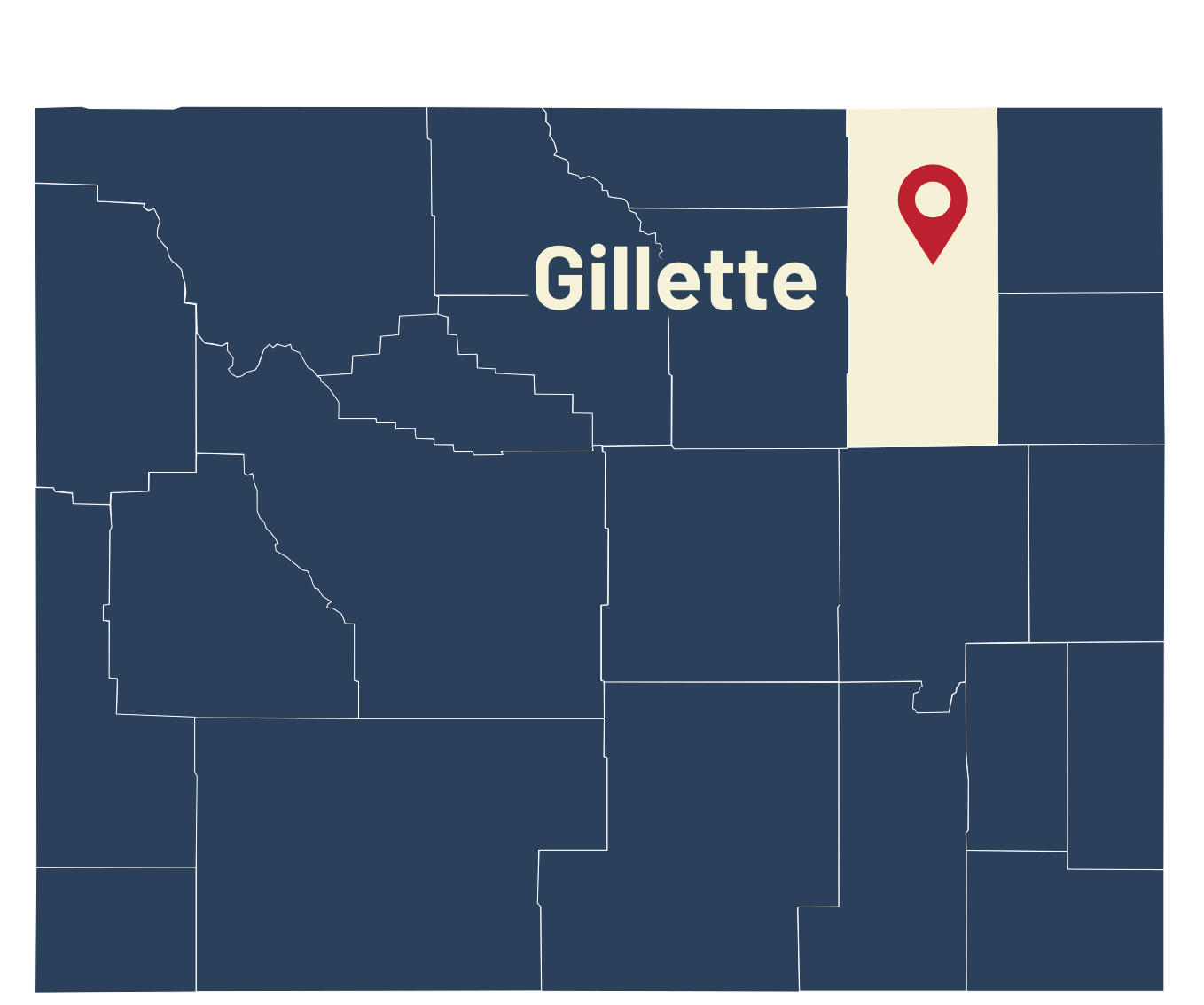
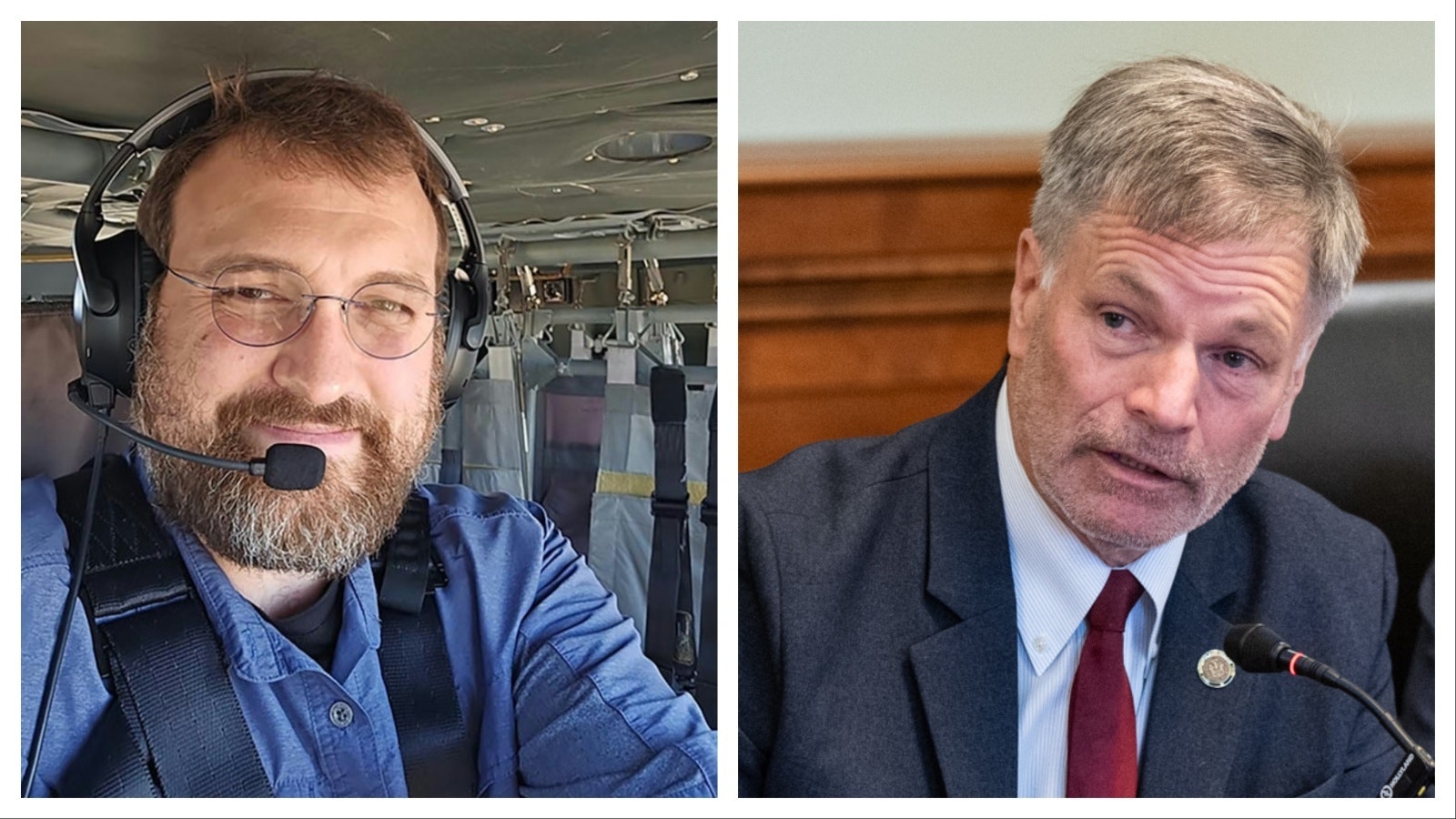
The Hoskinson Clinic’s benefactor Charles Hoskinson says the construction company formed to build a new health center in Gillette did not lay off all of its employees, nor should the timing of the 136-person layoff have been a big surprise to anyone.
The layoffs, highlighted by Gov. Mark Gordon’s office on Friday, were the expected result of completing phase two of the 75,000-square-foot clinic in Gillette in November, Hoskinson told Cowboy State Daily in an exclusive interview responding to the statement Gov. Mark Gordon’s office released.
Hoskinson has been focused on a trip to Abu Dhabi, where he said he would be unveiling his new project, Midnight, which is a fourth-generation blockchain that aims to provide privacy levels to cryptocurrency users that are more similar to what bank customers get for their accounts.
Right now, blockchains make all transactions very public, Hoskinson explained, while bank accounts only show that material to the bank and the individual account holder.
Hoskinson expressed bewilderment with the governor’s press release, saying it was incorrect on several key points.
Chief among them, Hoskinson said, was any implication that the 136-person reduction was somehow a surprise to anyone.
Hoskinson said the construction company did communicate that layoffs were coming to Wyoming Workforce Services ahead of time. It also gave the affected employees two months' notice, as well as severance pay carrying them through January 31.
“As we were building, we realized that we needed to create some bespoke construction capacity, but that was never permanent capacity,” Hoskinson said. “You hire a lot of people to build a clinic and just like in the oil and gas business or in the mining industry or any large-scale construction project, once a project is done, you let some people go.”
Many of the employees at the construction company were already moonlighting on other jobs, Hoskinson added, and knew a layoff was imminent, given that there was no longer any work for them to do.
“Everybody knew this was coming,” he said. “We gave them two months' severance, so they had Christmas covered and January covered. And then a lot of people were from different states, and I’m not going to cry too much if people from California go back to California.”
Construction Layoffs Common Once Project Is Built
Gordon’s office issued a statement late Friday afternoon last week, describing the layoffs at Hoskinson Concrete and Hoskinson Contracting in Gillette as “one of the most significant layoffs Wyoming has ever seen.”
“My highest priority is to ensure these skilled Wyoming workers can quickly find new employment in the state as soon as possible,” Gordon said then. “Wyoming values our workers, and we do not want to lose any. The Wyoming Department of Workforce Services has moved expeditiously to attempt to make contact with the company and will be working to help each and every worker. I encourage impacted employees to take advantage of the resources available to them.”
Describing the layoffs as among the largest in the history of the state was particularly irksome to Hoskinson.
“(Gordon) has all these green energy policies and he somehow forgot to mention Blackjewel laid off 700 people, the mining industry under his watch,” Hoskinson said. “And then Peabody Energy and Arch Coal cut about 500 jobs in 2016, so there’s been significantly higher layoffs.”
Will the Governor’s office make similar releases, Hoskinson wondered, when data centers finish building out their projects in Cheyenne or when the nuclear plant in Kemmerer is finished?
“This is the nature of construction,” Hoskinson said. “It’s a boom-bust industry, and it’s always been that way. Our primary vocation has always been medicine.
“We are still one of the largest employers in Gillette,” Hoskinson added. “(The Clinic) has 42 job openings. It employs more than 200 people and the payroll there is about $22 million. We take care of 18,187 patients. We’re almost at 20,000.”
Gordon’s office, in response to Hoskinson’s concerns, told Cowboy State Daily Wednesday morning that Gordon remains focused on ensuring the workers who lost jobs find new ones as quickly as possible.
“Skilled workers remain a vital part of Wyoming’s future and the Governor wants them to remain here in the Cowboy State to contribute to our growth,” a statement emailed to Cowboy State Daily said.
More Construction Is Still Ahead, But Not Soon
Hoskinson is not finished building out his medical vision in Gillette but won’t be proceeding with phase 3 of his project for at least 12 to 24 months.
Nonetheless, the construction company is planning to retain a core of 43 employees, Hoskinson said. They will transition to an “owner-operator” model for phase three.
“That’s going to be another big expansion to cover cancer and surgery and all the things that we’re currently missing right now,” Hoskinson said. “And what we’re going to do is a hybrid model where we’re going to do an owner-op firm with these 40 people and an external construction firm — hopefully local — and we kind of augment both sides, so we can get the time quality and costs that we’re looking for.”
The retained employees will have a two-fold mission. One is ongoing maintenance for the newly built health clinic. The remainder will focus on quality control for new projects.
“The owner-op (company) has project management, electricians, plumbing, HVAC, architecture, and a few other domains,” Hoskinson said. “And what you do is attach them to an external firm, and they act as the quality control gates, so you don’t release the funds until they’ve signed off. They inspect all the work as you’re building. They ensure you stay on schedule and stay on cost estimate.”
All 40 of those who were retained live in Gillette, Hoskinson added.
“We figured that would be a little less disruptive,” Hoskinson said. “It’s just a healthier model overall. It’s a smaller thing to maintain.”
A Grand Vision
Building a giant new medical facility in Gillette modeled after the Mayo Clinic has not been without its challenges, Hoskinson said. Medical facilities have more often been announcing closures, rather than new facilities.
But a brand-new facility that will be able to do some things differently was crucial to the vision Hoskinson has for health care in America.
“Our family has been in medicine for 70 years,” he said. “My grandfather was an OB-GYN. He started practicing in the 50s. My father’s an internist, my brother’s an internist, my uncle is an infectious disease doctor.”
That’s given Hoskinson a lot of exposure to the “good old days” of medicine, when doctors had direct relationship with their patients.
“Modern medicine has turned it into this bureaucratic hellscape where they don’t take care of you,” he said. “They don’t really care if you’re cured or not. They manage your conditions. Nobody listens. Nobody gives you the time of day. The doctor has very little time to actually spend with the patient.”
These days, doctor encounters are less than 15 minutes in many East Coast hospitals, Hoskinson added. Yet Americans are paying more than ever for health care that doesn’t cure them. Health care that just “manages” their conditions.
“We keep spending more and more money, we get a worse and worse product, and nobody’s happy,” Hoskinson said. “So that’s telling you it’s a structural problem. It’s a process problem.
“So, we built the clinic, first, because we wanted to understand why that’s breaking down,” he continued. “What’s breaking down in the insurance part, the doctor-patient relationship, what’s breaking down the care delivery. And then we want to innovate and ask, every step of the process, how can we put things together in a way that you overall get better outcomes?”
Artificial Intelligence And Lifestyle Medicine
Hoskinson plans to use Artificial Intelligence to track how things are going at the clinic, as well as to develop new technology tools that he hopes other clinics can use to improve the quality of their care.
But he also believes that it’s important to unite modern medical care with what he calls “lifestyle” medicine.
“If you look at your diet, your exercise, your sleep, your mental health, those four things, if you don’t do them right, you’re going to be in an early grave no matter what medicine you take. No matter how good your doctor is, you’re cutting 10 to 15 years off your life. Yet modern medicine almost never emphasizes that.”
Hoskinson hopes to see that integrated with the clinic, creating a more holistic approach, one that he believes can ultimately help drive lower costs for better care, instead of increasingly expensive cost for worse care.
For the types of analyses, he hopes to run, Hoskinson said the clinic in Gillette needs to reach 25,000 to 50,000 patients. That will make it more of a regional health center with statistically significant data.
“That gives us enough of a sampling that we can say, OK, this is a national model we can franchise and send out to other places,” he said. “That’s (one reason) why we built the clinic.”
Make Health Care Great Again
Another reason, Hoskinson said, was just to get back to medicine that actually cures people of their condition, rather than managing symptoms, as well as care that actually makes doctors excited about being doctors again.
Amazing advances are being made in other countries using stem cells to cure previously incurable conditions. A recent case in point was a trip Mel Gibson made to Panama, for a treatment to reverse emphysema, caused by years of smoking.
Stem cells don’t have to come from embryos, Hoskinson added. They can also be harvested from fat cells.
But America has been lagging on that kind of research, Hoskinson said. It’s a frontier he plans to push ahead on at the Hoskinson clinic, and that’s part of the reason he’s formed a policy institute, to help push for changes needed to improve health care, agriculture, and other fields where he believes America has been lagging. Fields where Wyoming, his adopted home, has distinct advantages.
By doing so, he hopes to see Wyoming become a leader in other areas besides digital assets, starting with better health care models.
“There’s been some really remarkable outcomes with (stem cell) technology, but nobody’s really built a center of excellence for it,” Hoskinson said. “But it’s relevant to every single person in the world for anti-aging regenerative medicine. And it’s going to be based right here in Gillette. So, as the clinic expands, we can also build the biotechnology side, and we can make it a center of excellence for that research and manufacturing.”
Medical Tourism To Wyoming
Maybe then Gibson will be coming to Gillette for his future care instead of Mexico, Hoskinson added.
“We’re telling the people in the United States they have to go to Mexico to get this,” Hoskinson said. “That makes no sense. But this could be Wyoming’s opportunity, because all those celebrities, those UFC fighters, those rodeo stars, all those special forces operators can become medical tourists here in Wyoming. That’s going to bring a lot of money into the state, and also a lot of research into the state.”
It’s an example of how he hopes his policy institute can help set a better national framework, in a similar fashion as Wyoming did when it created the innovative digital asset rules that drew Hoskinson to the state.
“Then it kind of forces the FDA to wake up a little bit,” he said. “Just like the crypto policy forced the banking regulators to wake up a little bit and realize they have to do things a little differently.”
Renée Jean can be reached at renee@cowboystatedaily.com.