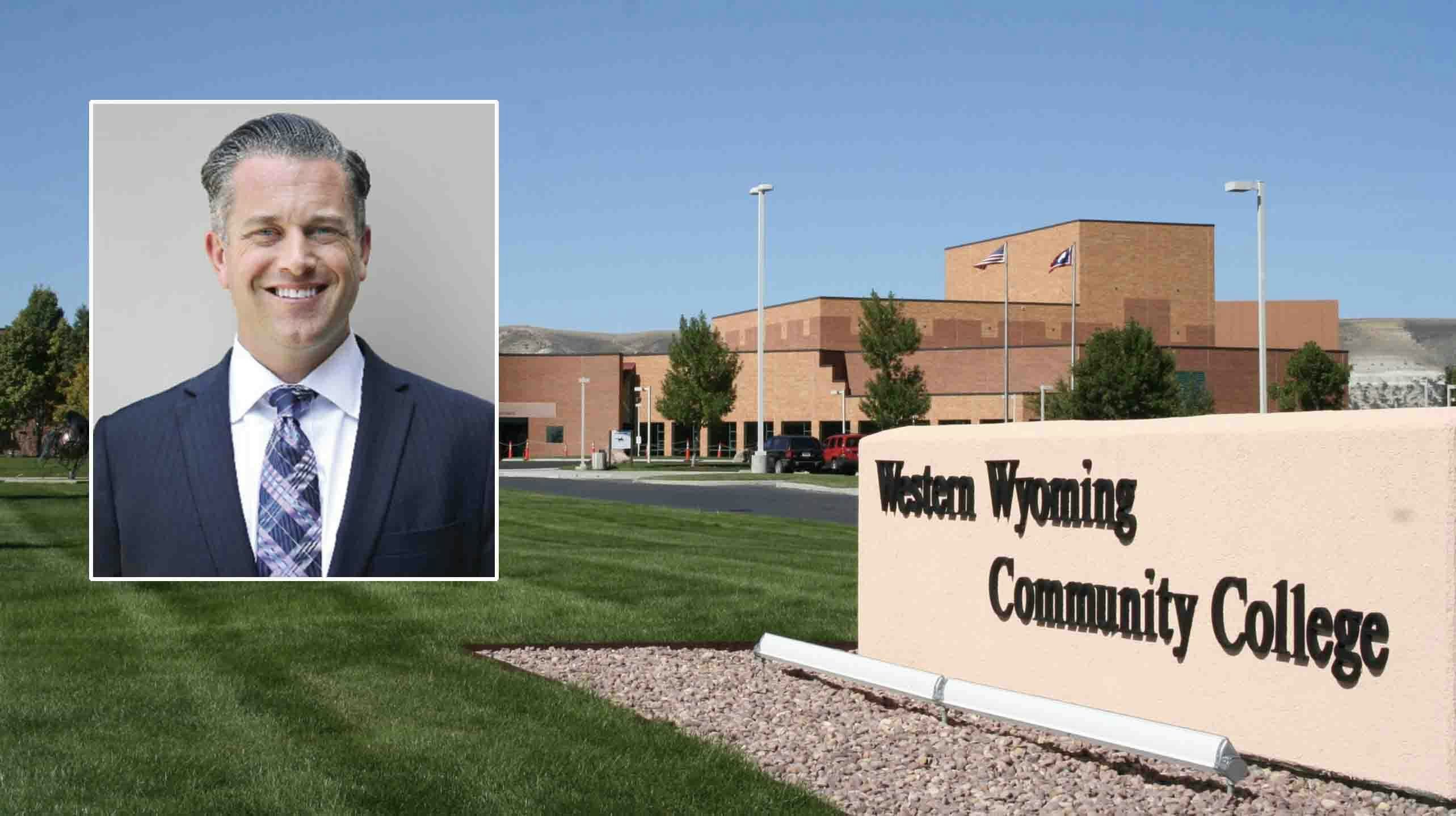
Dozens of Western Wyoming Community College employees will be out of work next year under a sweeping budget overhaul officials say will impact at least 20% of the workforce.
Western will eliminate 33 positions and redesign another 30 next year. The changes are part of a $4 million budget restructuring tied to Western’s 2026-27 spending plan. Employees began receiving notice that they could be laid off on Monday. Under the college’s rules, workers laid off must be given at least 90 days warning.
“There will be 33 fewer employees,” Western President Kirk Young told Cowboy State Daily. “We’re going from 319 to 286.”
Young said employees whose jobs are being eliminated or reorganized may apply for new or redesigned positions. He emphasized that none of the separations take effect right away.
“All that is happening today is we are notifying people of our intent,” he said.
That notice triggers Western’s reduction-in-force rules, which require the college to provide 90 days’ notice along with full pay and benefits during that time. Employees will also keep their health insurance for at least six months after the separation date, extending coverage into September.
Driven By Finances, Not Performance
Young said the decisions are being driven only by financial concerns, not performance. To avoid tying the reductions to individual evaluations, the college relied on a financial analysis that reviewed positions, not specific employees. The method was shared with employees during town halls, Young said.
He pointed to several long-term budget pressures now converging at the same time.
Western has been dealing with a drop in local property tax revenue and years of leaning on reserves to cover operating costs. At the same time, the college has been working to raise compensation after a recent study showed wages lagging the market by more than $2.3 million.
“One of our guiding principles is that our employees are our most important resource,” he said. “We have to show our employees how much they’re valued.”
Enrollment Vs. Staffing
Beyond revenue and reserves, enrollment has also played a role.
For more than a decade, the college has seen their student numbers slip while staffing remained largely unchanged, a gap leaders now acknowledge should have been corrected sooner.
“We have to build a budget that reflects the number of students that we have,” Young said.
Instead, the school relied on reserves, what he compared to a “savings account,” to cover ongoing operations. That approach helped avoid earlier cuts but was never meant to be a long-term solution.
“You just can’t do that forever,” Young said.
Now enrollment has begun to rebound. After years of decline, Western has posted two straight years of growth, including nearly a 10% increase this fall.
“To stay flat was a victory,” Young said. “To increase by almost 10% is huge.”
If enrollment and revenues continue to improve in future years, Western will look at adding positions again.
“If our budget picture looks different down the road, we’ll grow with it,” he said.
Classes Impacted Not Known
Young declined to identify departments or programs affected, saying employees are still being notified individually this week.
“There is no one single area that will be impacted disproportionately,” he said.
Western will outline eliminated and redesigned positions at an employee town hall Thursday. A public town hall is scheduled for Saturday at noon in Room 1302.
Students worry about losing mentors and coaches
Some students said they only learned about the cuts as information spread informally around campus this past week. Several expressed concern about losing faculty members and program advisers who have shaped their first years in college.
Gabriela “Gabbi” Bracho, a second-year student, said students are nervous about losing people tied to clubs and campus activities they rely on.
“All of us are really, really nervous about it,” Bracho said. “When someone who leads a program leaves, it changes everything. Some of us may not continue if there’s a big change in advisors and coaches in certain programs.”
Those ties matter, she said, because students connect with individual instructors on both academic and personal levels.
“The teachers, advisors and coaches build communities and they’re part of students wanting to learn,” she said. “It doesn’t matter what the curriculum is, it matters what the professor builds with you.”
Bracho also wondered why students learned of the cuts at the same time as the broader public.
“I feel like it might have been better if they told us first,” she said.
Business student Joshua Sullivan said he learned about the layoffs late last week. He said students worry about seeing the roles of people they’ve formed close academic relationships with being eliminated or reassigned.
“It was pretty upsetting,” Sullivan said. “Some of the people I’ve gotten close to could be among those affected, and that’s hard.”
While Sullivan said he expects to remain enrolled in the school regardless of the changes he echoed the same concerns as Bracho.
From the conversations he’s heard from faculty and students, Sullivan said the sense is that the administration is trying to handle the process carefully.
“From what I’m hearing, they’re doing everything they can to avoid this and make it fair,” he said. “They’re really trying. I don’t think this is easy on anyone.”
Young Takes Responsibility
Young said he understands the concern and the impact on individual families, especially in a small community.
“I take responsibility for these decisions,” he said. “There are wonderful people here who make a tremendous impact on the lives of our students.”
Still, he said Western cannot keep using reserves to balance recurring costs.
“This is a step we have to take,” he said. “Our goal is that Western remains a significant part of this community moving forward. But it has to be financially healthy.”
Young said he does not expect reductions of this scale again.
“I do not anticipate us needing to do something like this again,” he said.