
The first Christmas tree in Wyoming was a simple spruce decorated with candles by German missionaries. It was 1858 at Deer Creek, near present-day Glenrock, just seven years after the signing of the Treaty of Fort Laramie.
Missionaries Jakob Schmidt and Moritz Braeuninger had arrived to work among the nomadic Crow tribe near the Yellowstone River and had soon expanded their evangelism to include the Cheyenne and Arapaho near Deer Creek Station.
According to the Rev. Albert Keiser, the Lutheran missionaries celebrated according to German fashion.
They had been given housing by Indian Agent Twiss, buildings abandoned by Mormons during the Utah War just a year before.
“There were presents, and for the festival they sung Luther’s hymn,” Keiser wrote in his 1922 book “Lutheran Mission Work Among the American Indians.”
The men had chopped down a spruce tree in the nearby hills and decorated it with candles.
That evening by the glow of candlelight they entertained members of Capt. W.F. Raynolds’ topographic expedition and local Indians with violin music, Bible readings and German Christmas carols.
“The brilliant Christmas tree shed radiance and happiness everywhere,” Keiser said.
Raynolds read Scripture in English and Braeuninger preached the gospel in German. They presented small gifts to the Indians in attendance.
Raynolds said that the missionaries were God-fearing and devoted men, but ignorant of the world as well as of the native language, and therefore poorly fitted for the labors they had undertaken.
He and his men made sure that (the missionaries) made it through the long winter unscathed.
Before leaving the following spring, Raynolds was among the men who donated $60 to support the missionaries.
A Special Christmas Tree
Despite the obstacles they faced, the missionaries were determined to stay at Deer Creek and convert the local tribes.
Other missionaries arrived and one, Karl Krebs, learned the Cheyenne language and was able to give sermons in their language.
According to his diary, now at the Nebraska Historic Society, Krebs and the other missionaries took in three Cheyenne boys — Brown Moccasin, Little Bone and Owl Head.
They grew close to the boys and Krebs said that they were intelligent lads.
On Christmas Eve 1863, a Christmas tree was once again placed in a place of prominence according to the German tradition.
Krebs said that the boys were enthralled by a tree decorated with candles and pleased with their presents. These included harmonicas, which they played late into the night.
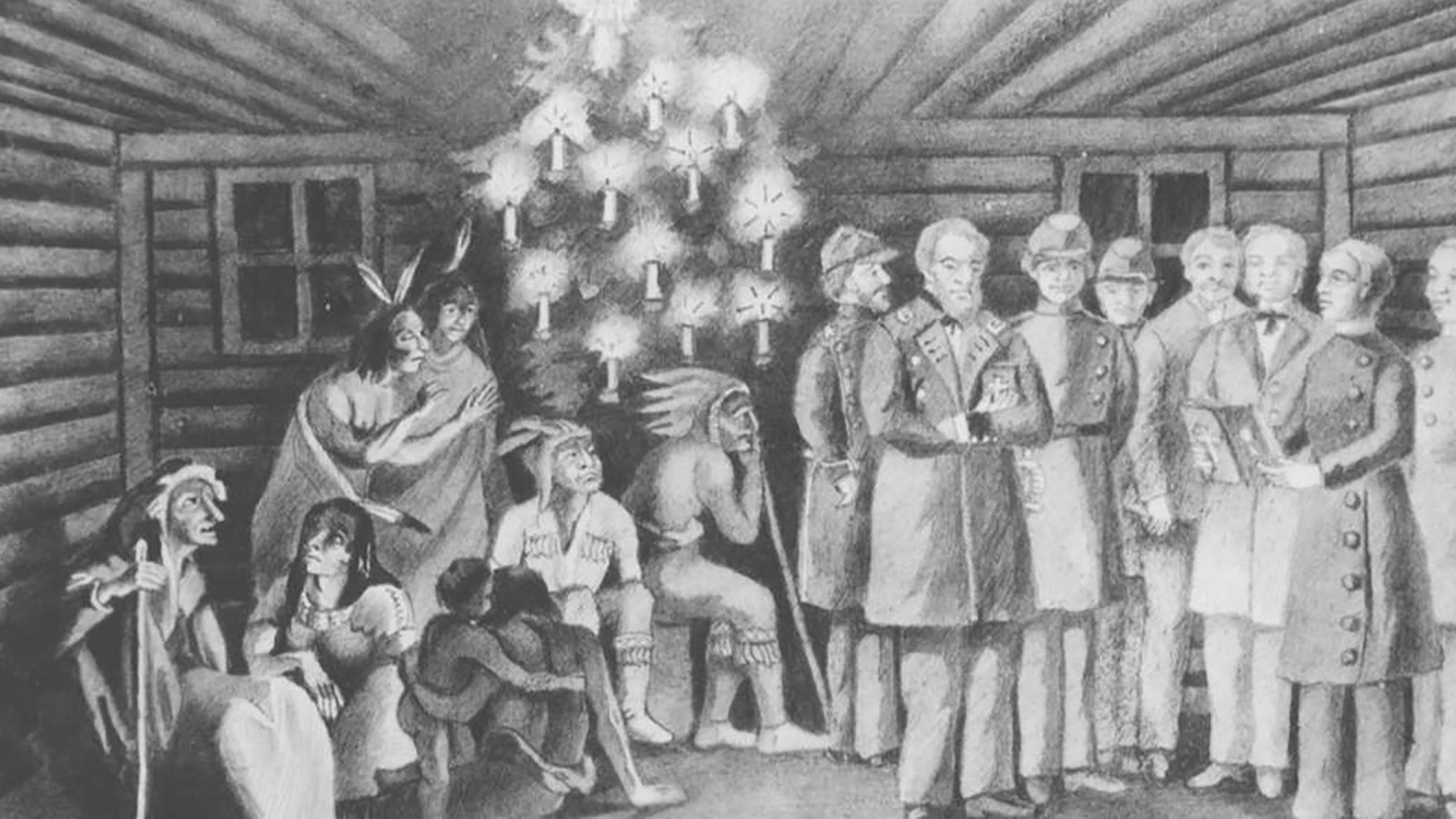
The first Christmas tree in Wyoming was put up in Deer Creek, near present-day Glenrock in 1859. Captain Raynolds read scriptures in English and Braeuninger preached the gospel in German. They sang hymns, enjoyed the Christmas tree and presented small gifts to Indians in attendance (Courtesy Wartburg Theological Seminary Archives) 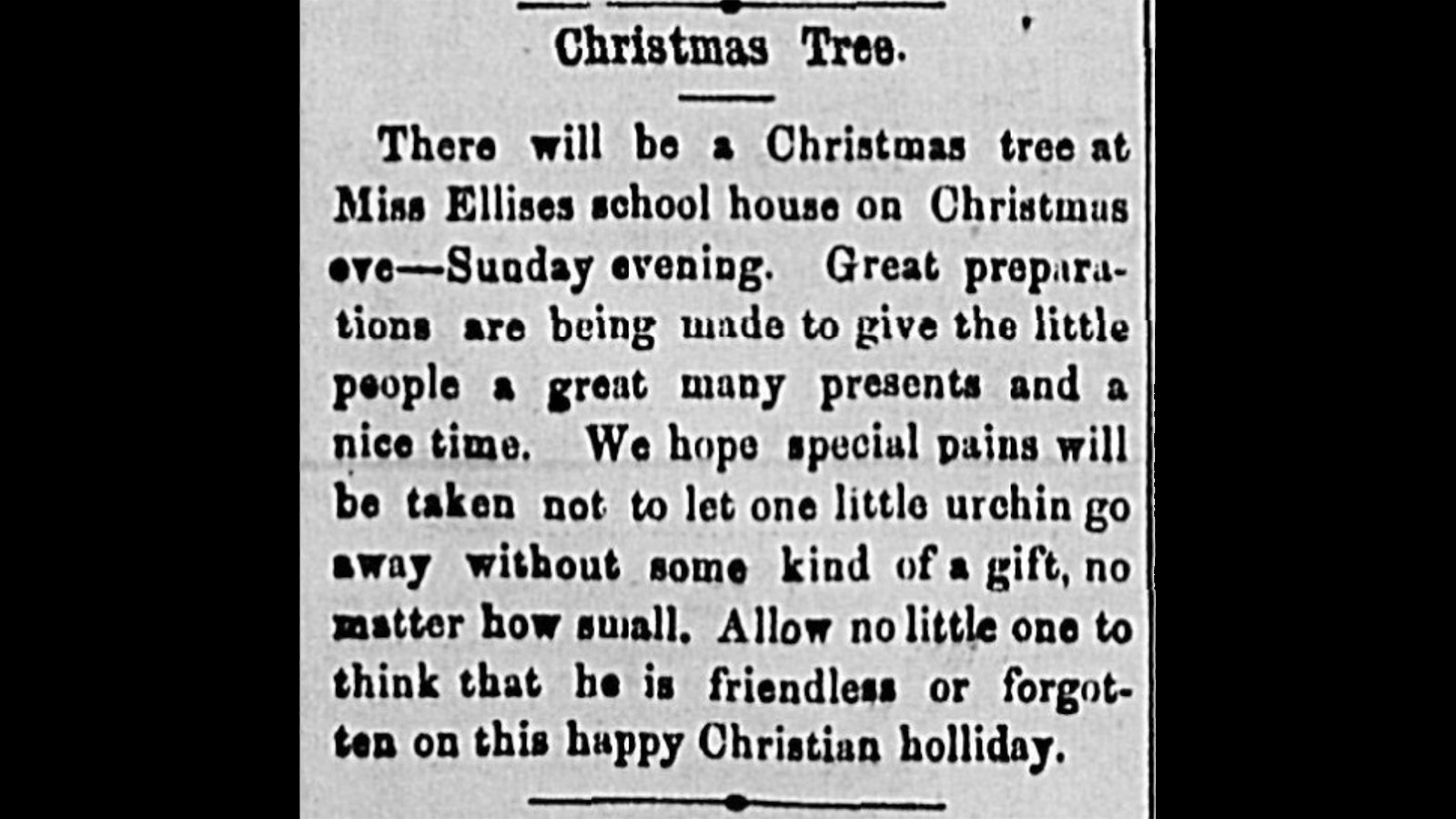
By the 1870s, Christmas trees were more commonplace in schools and churches and people in Wyoming had eagerly embraced the Christmas tree tradition. 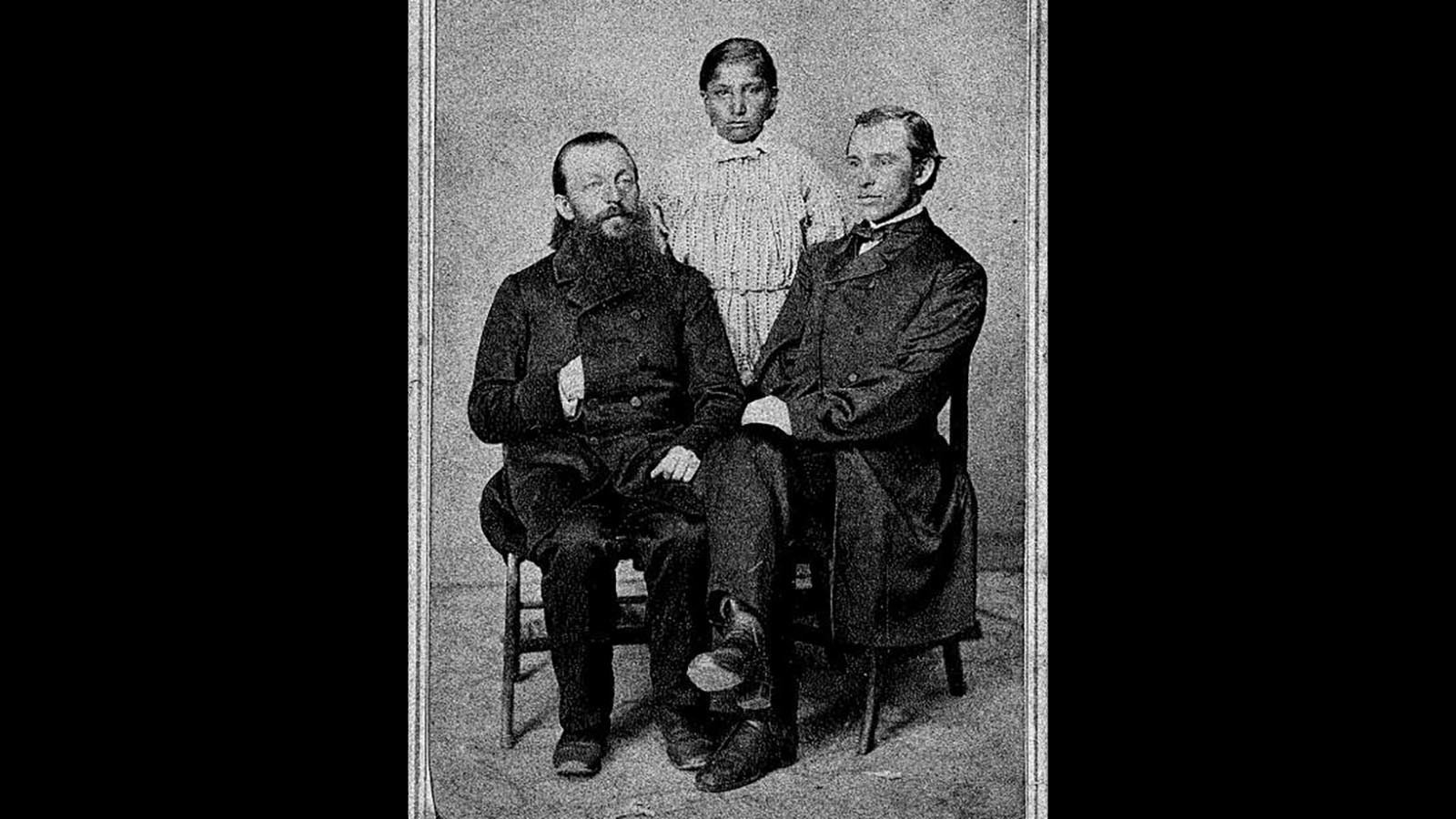
Missionary Karl Krebs, left, Brown Moccasin and missionary Christian Flachenecker in Iowa, 1864. Brown Moccasin was delighted when Krebs put up a Christmas tree the previous year. (Courtesy Wartburg Theological Seminary Archives)
Cherished Tradition
A decade after the Christmas tree in Deer Creek enthralled the Cheyenne boys, trees had gained in popularity at schools and churches throughout Wyoming.
The Wyoming Tribune boasted that a Christmas tree would be set up on Christmas Eve at Miss Ellis' schoolhouse in Cheyenne.
Preparations were being made to ensure that each child would also receive a gift.
“Allow no little one to think that he is friendless or forgotten on this happy Christian holiday,” the reporter for the Wyoming Tribune wrote.
In Laramie, the Christmas tree for the city was erected at the Methodist Episcopal Church and donors were dropping off presents for those in need, according to the Laramie Daily Sentinel on Dec. 23, 1871.
By 1876, Christmas trees were found in abundance in not just churches and schools, but in Wyoming homes as stores vied for customers.
Then Santa Came
Santa Claus was also making appearances, including in the store of Corwin & Co. in Cheyenne, according to a Christmas Eve ad placed that year in the Cheyenne Daily Leader.
The store invited people to visit and to be sure to buy their Christmas tree goods.
The Cheyenne Daily Leader teased that “in another week, tidy housewives will be engaged in registering vows never to allow another Christmas tree in their parlors.”
Christmas trees continued to grow in popularity in Wyoming, especially among Irish and German immigrants. The trees were decorated with oranges, apples, bonbons and gilded crackers.
“The Christmas tree is cherished with the same loving affection as ever,” the 1892 Laramie Weekly Sentinel observed. “It may not be fashionable in the parlors of the aristocratic, but among the majority of the people the joys of Christmas day will not be complete without the Christmas tree.”
By the early 1900s, Christmas trees were seen not just in churches but in homes throughout Wyoming, from crude cabins to fancy mansions, where they remain to this day a cherished holiday tradition.
Jackie Dorothy can be reached at jackie@cowboystatedaily.com.


