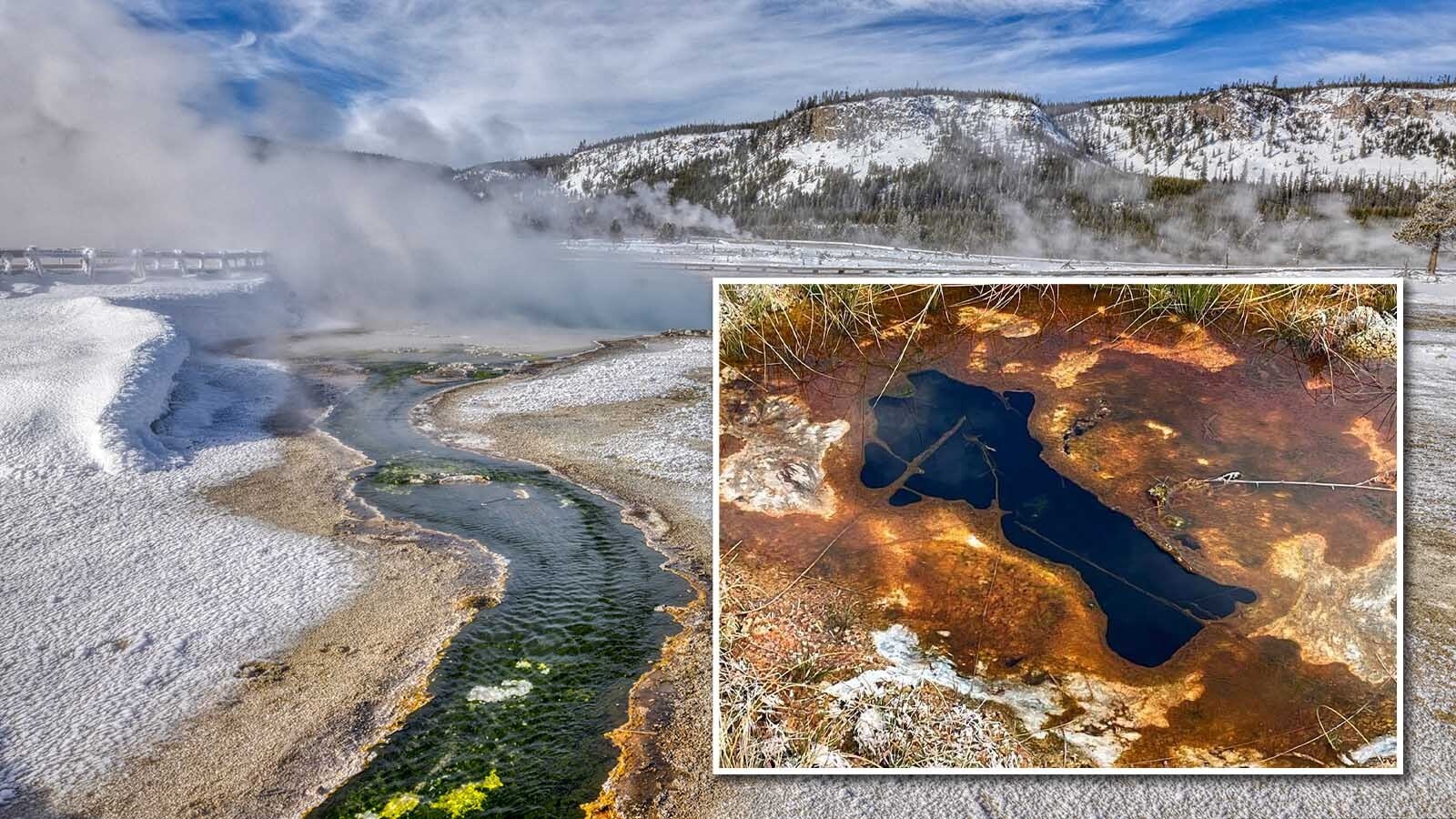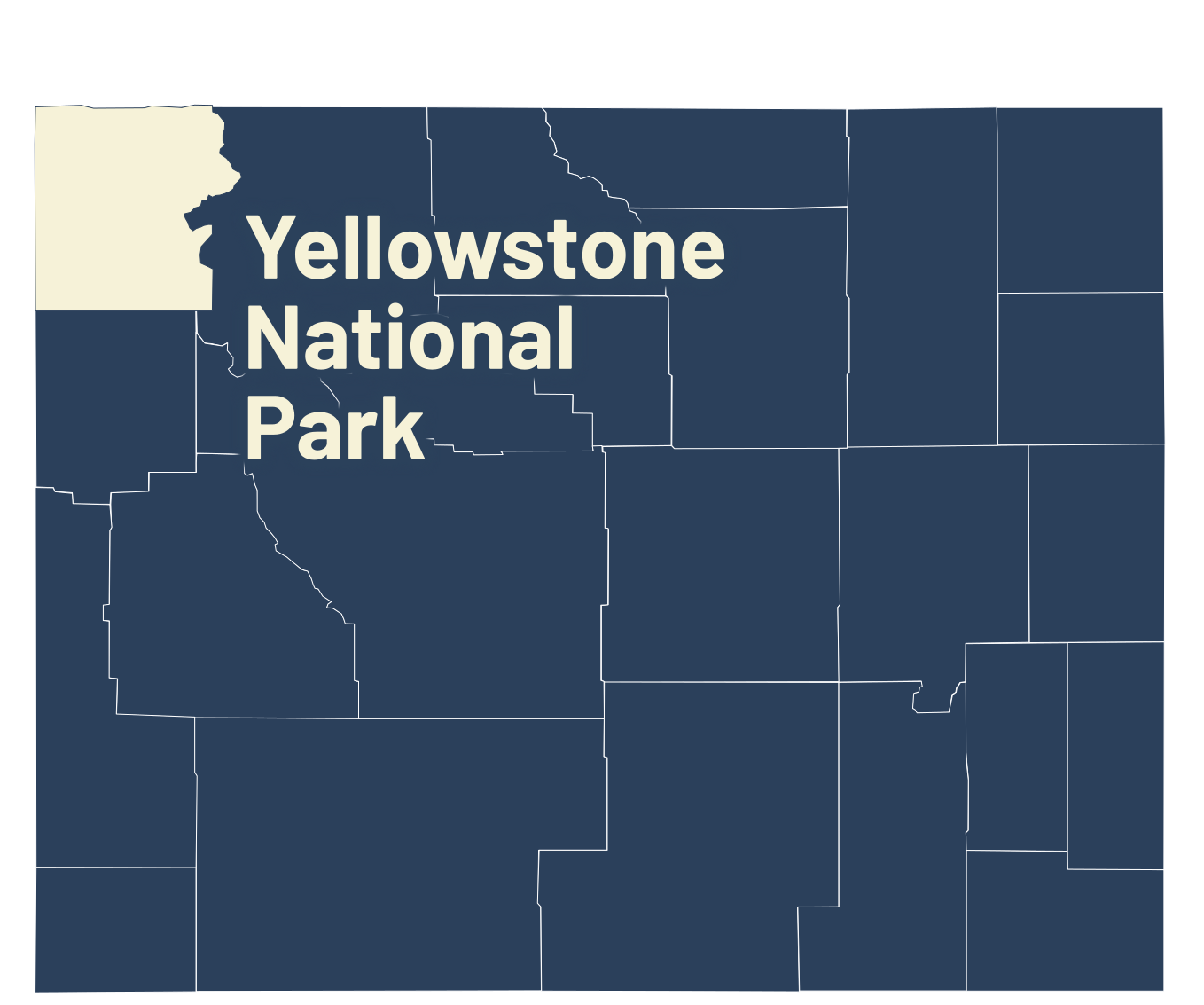
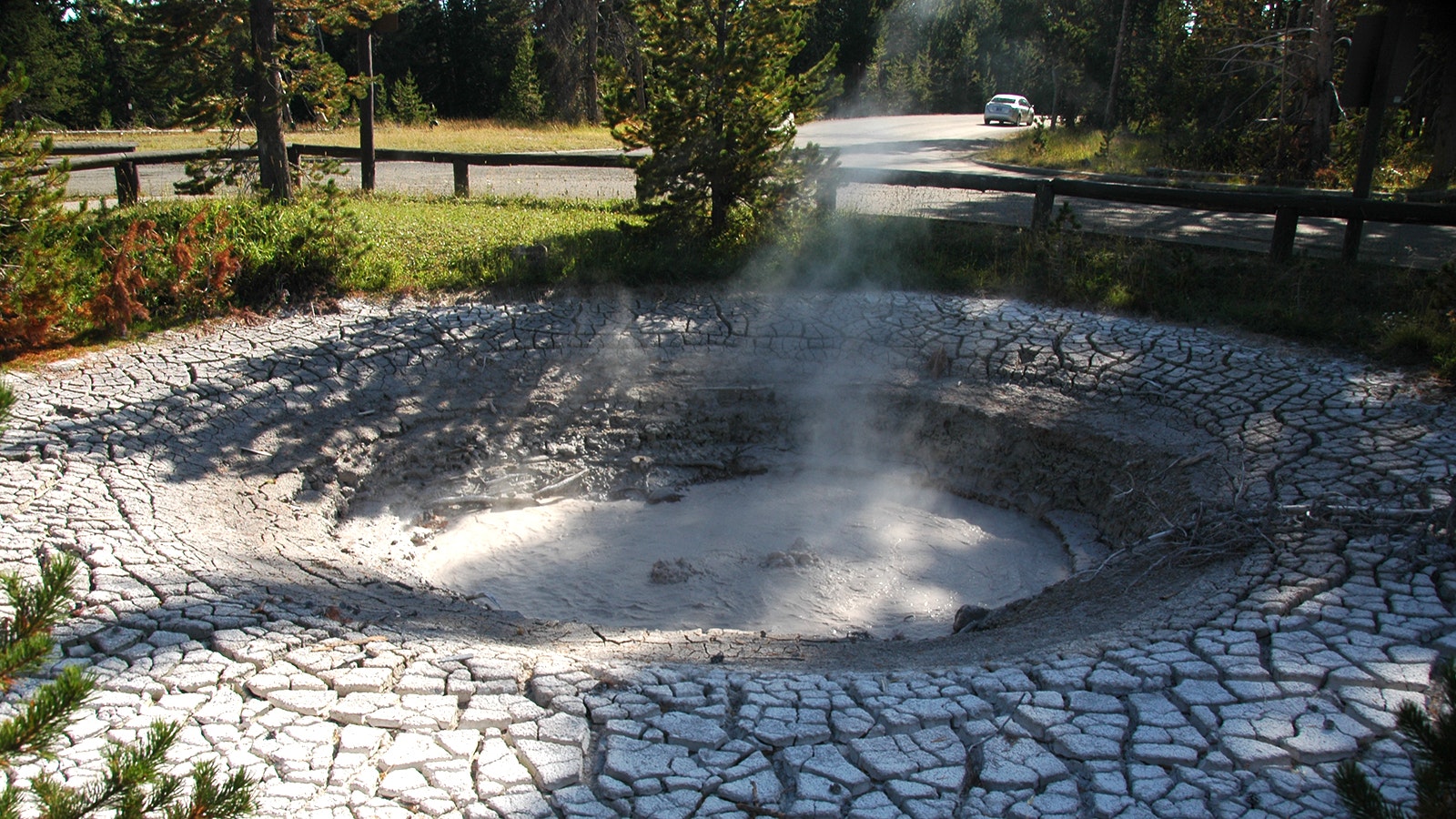
In the West Thumb Geyser Basin in Yellowstone National Park, there's a mudpot between the Grand Loop Road and the parking lot. Among the thousands of thermal features in the park, it doesn't stand out.
That's "Infrastructure Spring." At least, that's what Susan Jennys and her fellow "geyser geeks" call the unassuming but fascinating mudpot.
"Most people drive right on by, and they don't even realize there's a feature there," Jennys said. "It's hiding in plain sight, but it's one of the most fascinating features in Yellowstone."
Every thermal feature in Yellowstone has a natural system of subterranean "plumbing" that feeds water and steam to the surface. "Infrastructure Spring" is unique in that it has claimed human plumbing into its own system.
"The below-ground infrastructure couldn't be removed safely, so it was left on the landscape, and the mudpot developed in and around it," Jennys said. "It looks like a fallen log, but it's a pipe. It's where hydrothermal activity meets old infrastructure."
Something Old
"Infrastructure Spring" is one of the many unnamed thermal features in Yellowstone. Its official designation is "mudpot WTLGNN031" (very catchy) with "WT" standing for "West Thumb," where it's located.
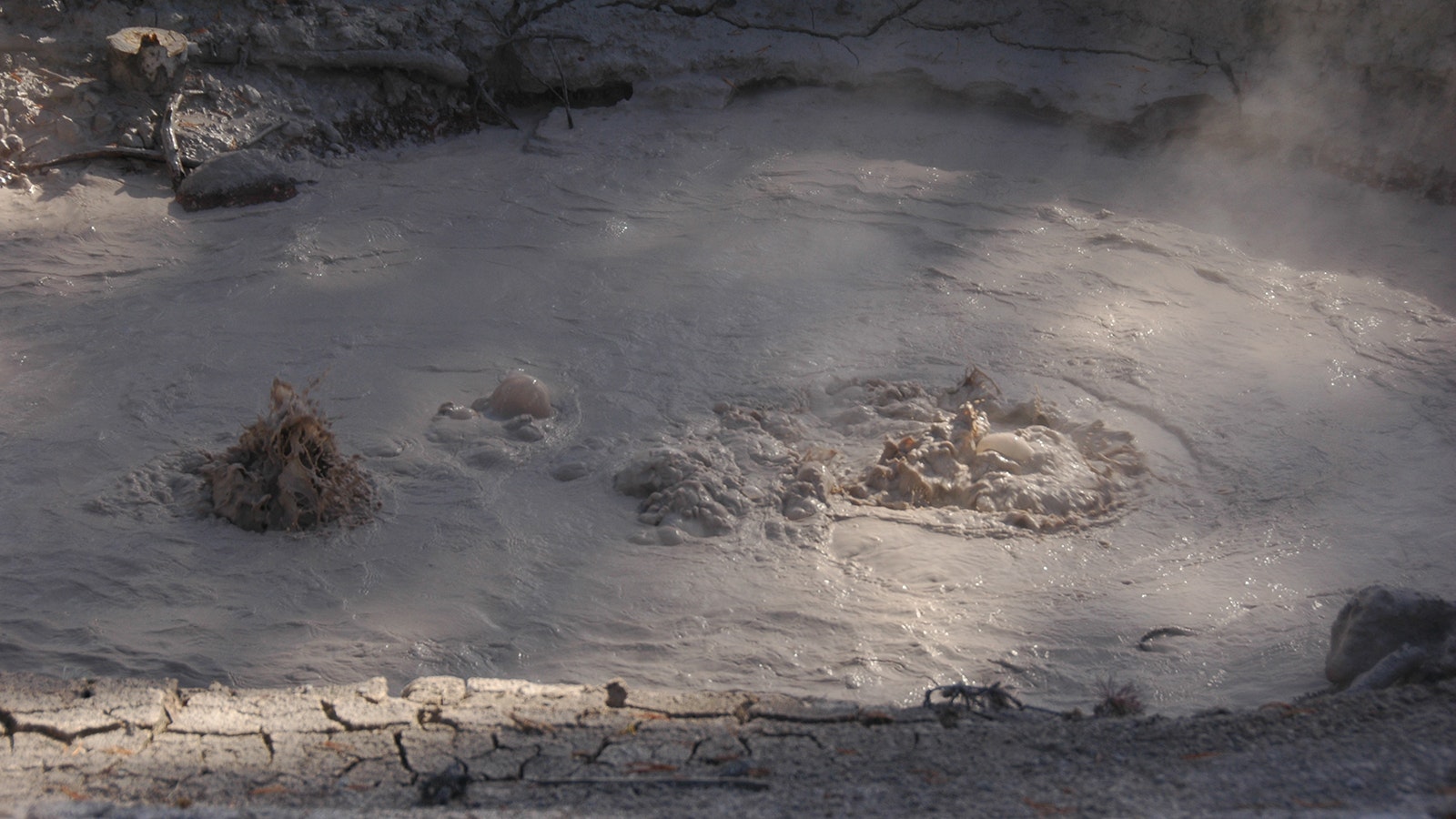
Jennys and others call it "Infrastructure Spring" because the mudpot emerged from old piping and conduits we installed in the park's past. When the water level is low enough, the piping can be made out.
"The little cone that stands out is actually an old conduit," Jennys said. "It looks artificial, because it is."
West Thumb was nothing more than a stagecoach stop for Yellowstone visitors until 1922.
Concessionaires started moving small cabins from other locations in the park to West Thumb to develop a new campground, like those at Fishing Bridge, Old Faithful, and Canyon Village, while the National Park Service (NPS) selected the site adjacent to the thermal basin for the park's first "Auto Camp" to accommodate the newly incoming automobiles.
At its peak, the West Thumb area had a large campground, cabins, a cafeteria, and a gas station. There was also a boat dock where visitors could board "The Zillah," which carried people to the long-lost private zoo on Yellowstone Lake's Dot Island.
The amenities at West Thumb were already in decline by the time Grant Village opened in 1963. The NPS closed the campground that year, and the remaining structures were either removed or abandoned.
All development at West Thumb, other than the extant restrooms and parking lot, was gone by 1990 "to further protect the scenic quality and the very resource that visitors were coming to see." By then, most of what had stood there had been bulldozed and forgotten.
The West Thumb restoration effort didn't remove everything, and when there's an active thermal basin nearby, it was only a matter of time before it encroached into the area.
Something New
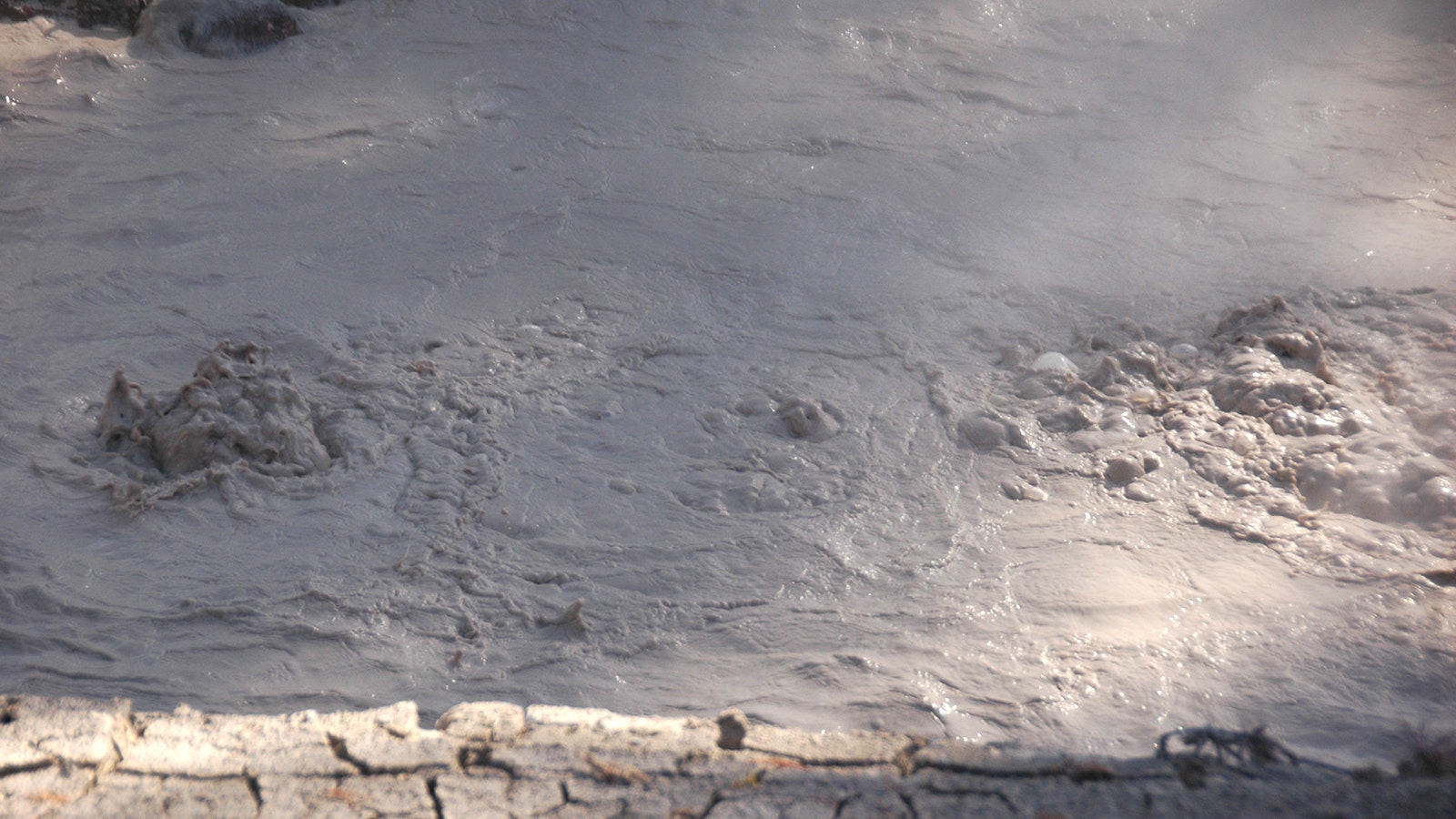
There are no records of when "Infrastructure Spring" first appeared or how long it's been there, but it's still an active thermal feature. It alternates between a muddy hot spring and a sloppy mudpot, depending on the season and moisture levels.
Based on photographs and observations, there are two surface boils in the sizable hole. That indicates at least two active vents, including the old piping conduit.
If someone wanted to see the old infrastructure, Jennys said they'd need to go when it's more mudpot than hot spring. That's usually late in the summer, when the ground is drier, and the pool's water isn't being replenished, much like the Red Spouter at the Artist's Paint Pots.
"West Thumb goes through cyclical changes," Jennys said. "The water content is often much less late in the summer because of the evaporation. When the water level is lower, you can see the history."
Mike Poland, scientist-in-charge of the Yellowstone Volcano Observatory, said there's nothing terribly unique about a thermal feature incorporating old piping into its system. With an abundance of water and steam in Yellowstone's thermal basins, any opening will be quickly exploited.
"When you punch a hole in the ground in the thermal area, that's essentially creating an artificial pathway for fluids to get to the surface," he said. "That's why we stay away from these sensitive areas."
The bigger mystery is what building the piping led to.
"I did a little digging, and we couldn't find any records of what was there," he said. "I heard one ranger tell a story that there was a store there, but that's long since been removed."
Scientists like Poland must be cautious when installing the equipment needed to monitor Yellowstone's volcanic and hydrothermal activity in the thermal basins. Everything they use has to be "very superficial" to protect the landscape and avoid inadvertently creating new thermal features.
"In the past, there were several projects that drilled into some thermal basins to better understand subsurface conditions, and those holes became geysers and steam vents," he said. "We work very closely with the park to ensure that we're not putting things in a place that would cause problems or change the system in some significant way."
Piping The Pot
In a world of wonderful wildlife, Jennys believes Yellowstone's thermal features get the short end of the stick. She and her husband, David, started the Facebook group "Yellowstone Thermal Features" specifically to share the stories of spots like Infrastructure Spring.
"If you don't have the correct name or number for a wolf or a bear, you're laughed off the face of the planet, but when people look at thermal features, they think it's just another hot pool. That bothers me, because that's what put Yellowstone on the map," she said.
There's no interpretive panel or spot on the map leading people to Infrastructure Spring, but Jennys hopes more people seek it out. It's unique among Yellowstone's thermal features, as it preserves a vestige of the park's past in the way only an active thermal basin could.
"We're on a personal campaign to make sure people pay attention to these wonderful features," she said. "It makes sense that people really don't pay too much attention to Infrastructure Spring, but it's fascinating. It's a reminder of what used to be there."
One doesn't have to go to West Thumb to see examples of thermal features forcing their way through human infrastructure. There's a famous fenced-off fumarole that forced its way through the asphalt pavement near Sulfur Cauldron.
There's no such thing as a completely "safe spot" for buildings, vehicles, animals, and people adjacent to a thermal basin. The ground where Infrastructure Spring exists might have seemed solid when buildings were placed there, but they were always too close for comfort.
"Thermal activity moves around a lot in Yellowstone," Poland said. "What may look like a good place one year might suddenly heat up a few years later. That's the nature of the activity. It doesn't stay the same forever."
Andrew Rossi can be reached at arossi@cowboystatedaily.com.