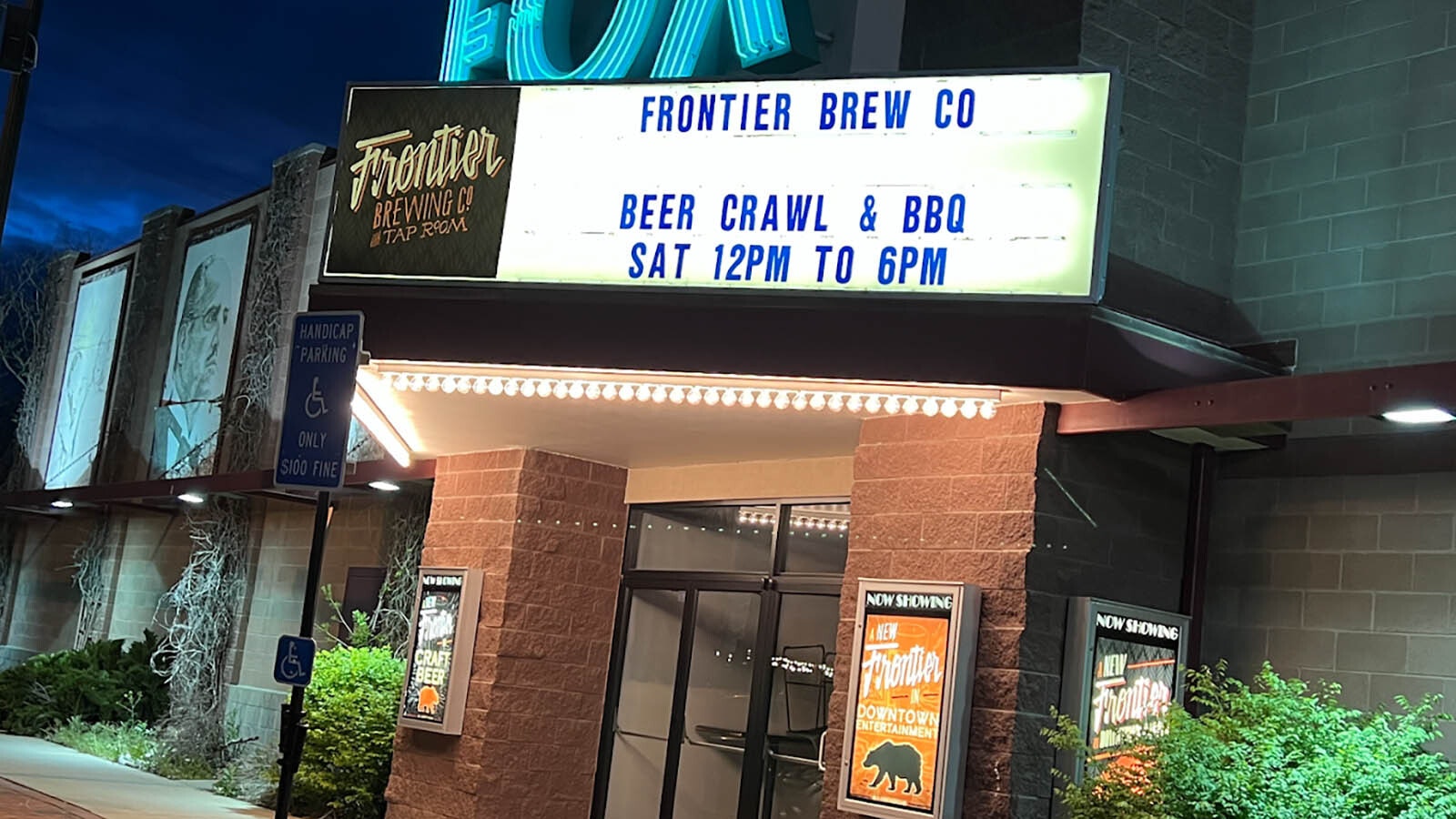
Saturday was the last day of operation for Frontier Brewing Company and Taproom in downtown Casper, one of the city’s first craft breweries.
Co-owner Shawn Houck says national trends like people drinking less alcohol, along with a huge spike in local competition, are contributing factors in the closure.
While Frontier was the only operational craft brewery in Casper in 2017 when it opened its doors, there are now 10 breweries in Casper, five of them — soon to be six — located downtown.
“It just wasn’t a sustainable financial situation for us to continue,” Houck told Oil City News. “We own the building, so paying the mortgage and insurance and all of those things, it was just a little more than we could all stomach as partners, and we made the decision to just go ahead and cease operations.”
When the federal shutdown came along, that pushed deals with potential buyers into the months past the holidays, when little business gets done. Houck and his fellow investors made the decision then to cut their losses and close.
Casper’s brewery boom, like a lot of similar craft brewery booms in towns across Wyoming and America, came just as a worldwide downturn in alcohol consumption emerged that’s now challenging the craft beer scene in the Cowboy State and beyond.
Rouge Brewing in Oregon, for one, a craft brewery with almost 40 years in the business, shut down without warning in November.
Denver has also lost several of its brewers this year, while the state of Colorado has reported losing 140 breweries since 2020, 41 of them in 2024 and 35 of them in 2023.
Even the Czech Republic, a country famous both for being the birthplace of the pilsner and the place where people drink more beer per capita than any other, has seen its record beer consumption slip.
All of that speaks to a challenging time ahead for the industry, including Wyoming’s craft brewing industry.
In fact, brewers have seen this coming, telling Cowboy State Daily last year they felt the state’s industry is too saturated in some areas and was about to reach an inflection point that would weed out weaker breweries.
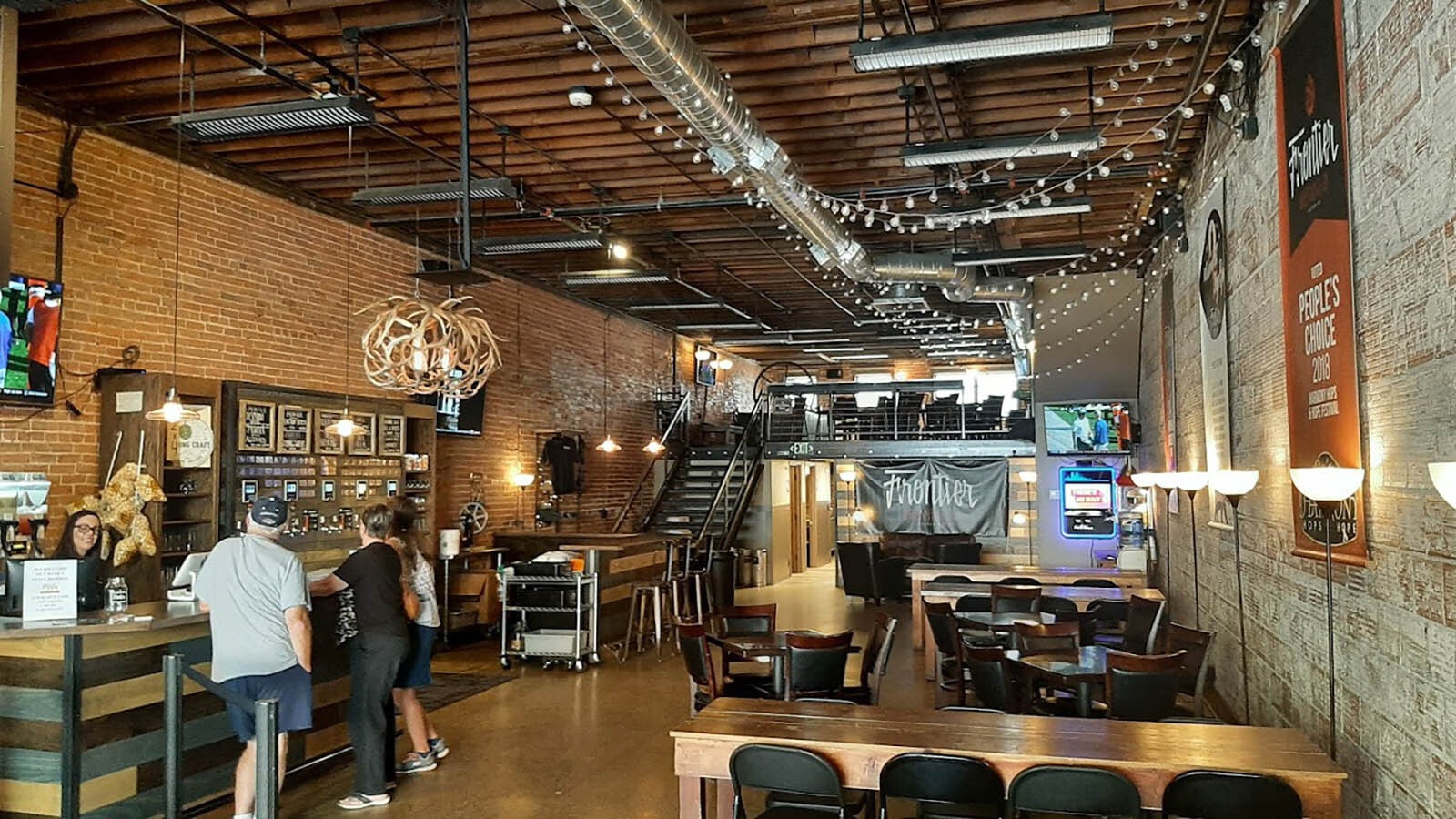
Frontier Brewing Company and Taproom’s closure in Casper comes amid a national downturn in alcohol consumption, with Gen Z getting “sober curious.” The health movement could be a challenge for Wyoming breweries. (Frontier Brewing Co. and Taproom via Facebook) 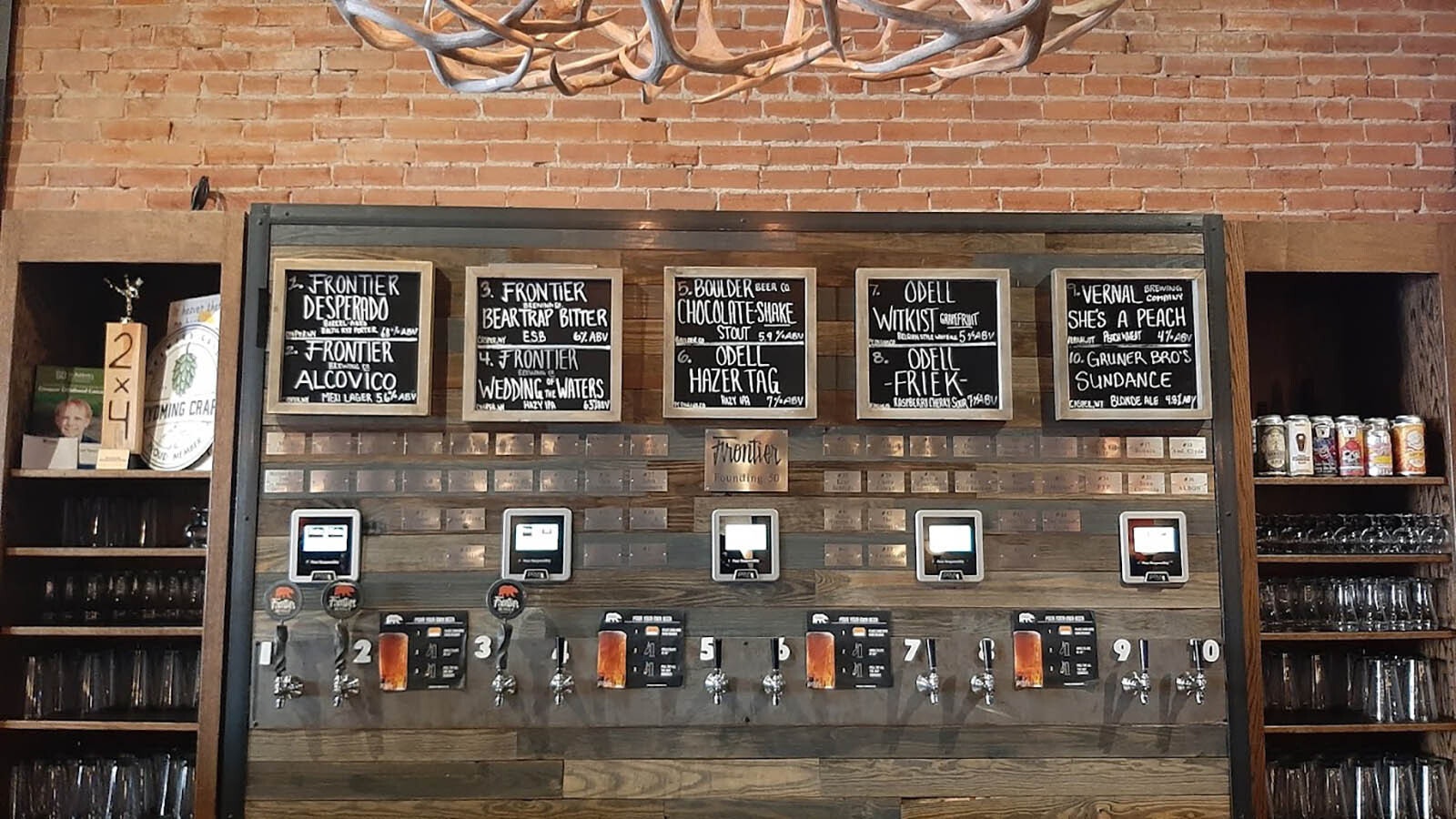
Frontier Brewing Company and Taproom’s closure in Casper comes amid a national downturn in alcohol consumption, with Gen Z getting “sober curious.” The health movement could be a challenge for Wyoming breweries. (Frontier Brewing Co. and Taproom via Facebook) 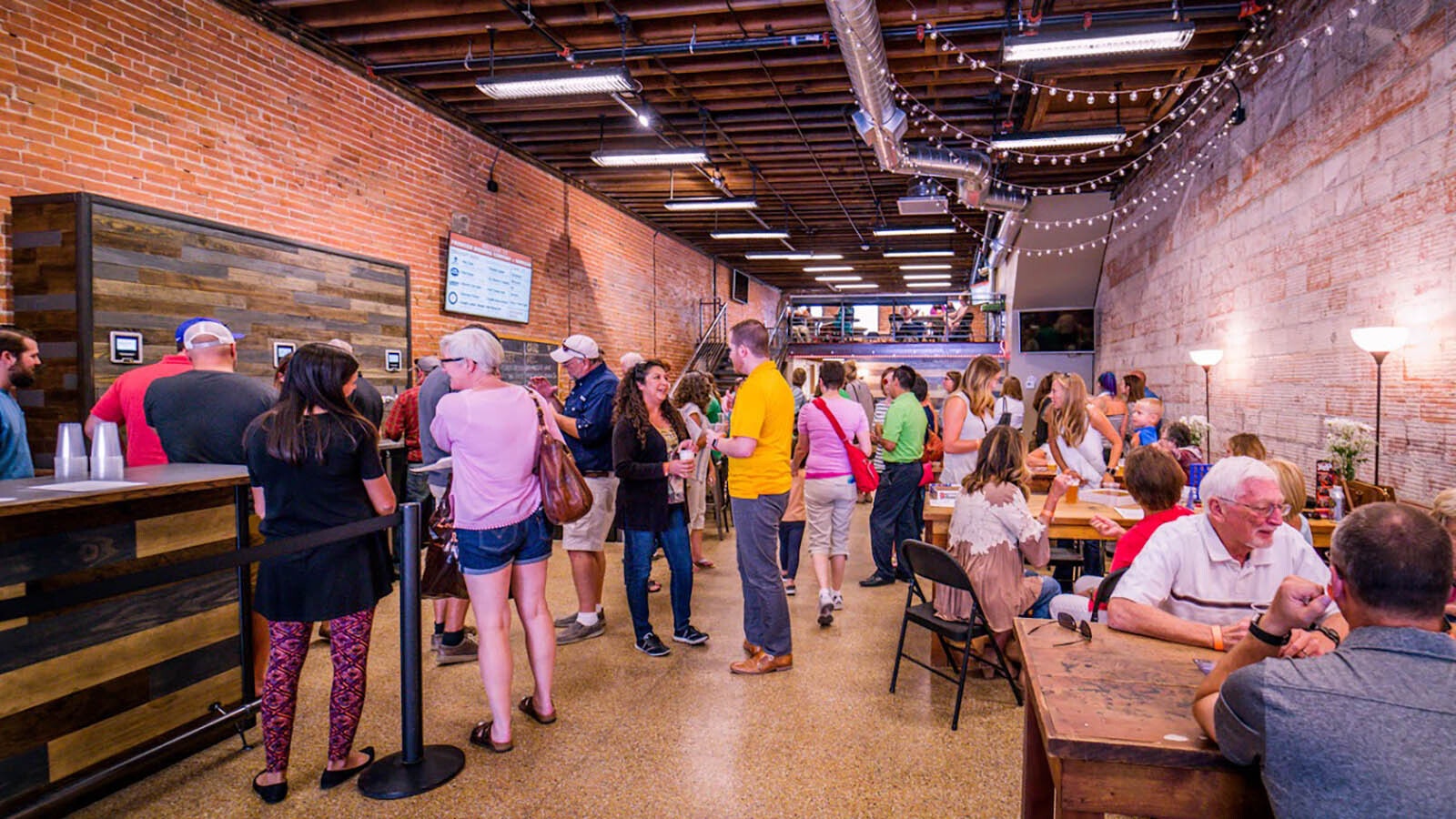
Frontier Brewing Company and Taproom’s closure in Casper comes amid a national downturn in alcohol consumption, with Gen Z getting “sober curious.” The health movement could be a challenge for Wyoming breweries. (Frontier Brewing Co. and Taproom via Facebook)
The Sober Curious Generation
Craft beer was the popular kid of the 2000s and 2010s, spurring a boom that brought hundreds of creative craft beers bubbling up from hobby basements out into small-batch breweries galore.
They popped up like mushrooms after a rain on main streets everywhere with creative and sometimes outlandish beer names and beer recipes. Think peanut butter and chocolate beer, Fruity Pebbles beer, or how about grapefruit saison?
Then along came the “sober curious” generation, otherwise known as Generation Z, along with the COVID-19 pandemic. That includes young potential drinkers ages 21-28.
Generation Z has embraced the sober curious movement, which encourages people to think more consciously about drinking alcohol. That doesn't necessarily mean zero alcohol ever.
It’s more about encouraging people to really think about whether drinking lines up with one’s personal goals for well-being.
The sober curious movement has spawned a plethora of new beverages with benefits.
Drinks devoted to increased alertness, for example, thanks to adaptogenic herbs like ashwagandha root and so-called smart drugs like L-theanine.
These are drinks that tout better sleep thanks to minerals like magnesium and soothing herbs like chamomile and lavender.
Some states even have mood drinks, which include low-dosage cannabis-infused sodas and seltzers said to promote euphoria and relaxation, without intoxication.
Wyoming is among states that have cracked down on this type of drink when they include hemp-derived Delta-9 THC.
The sober curious movement started in 2010 but has more recently converged with messaging from health organizations that suggest there is no safe level of alcohol consumption, that previous studies touting a health benefit for red wine were fatally flawed.
Those messages are coming in from a variety of sources, among them the World Health Organization, the U.S. surgeon general, and various scientific studies.
Their conclusion is that even moderate alcohol consumption can be hazardous to your health, something they define as no more than one alcoholic beverage per day for women and no more than two per day for men.
What Alcohol Does In The Body
The damage excessive alcohol consumption causes has been well-documented and is not disputed by any reputable health professionals.
That damage is caused by what ethanol becomes once it’s circulating in our bloodstream. Ground zero is the liver, which breaks alcohol down into acetaldehyde, a toxic chemical that damages cells and tissues.
Over time, acetaldehyde is further broken down into non-toxic components that are excreted.
The amount of damage done by this process depends on how much alcohol is consumed, as well as how long an individual’s system takes to clear it away, which varies from person to person.
But alcohol has other deleterious effects too.
It causes inflammation or oxidative stress, leading to tissue changes over time that increase the risk of cancer and other health problems.
It disrupts colonies of microbes that live in the mouth, intestines and gut as well, which can shift the microbiome to “bad” bacteria that have been associated with negative health outcomes.
Alcohol also damages intestinal cells. If enough damage is done, that can cause pathogens to leak from the GI tract into the bloodstream, causing yet more inflammation and other problems.
The heaviest drinkers, meanwhile, can experience shrinkage of the brain and even alcohol-induced dementia, among other problems up to and including death.
For many years, red wine, at least, had a bit of a health halo, with some studies suggesting a heart benefit from resveratrol, a chemical present in trace amounts in a glass of wine.
That health benefit disappeared in subsequent studies that corrected for design flaws.
“Contrary to popular opinion, alcohol is not good for the heart,” the World Heart Foundation wrote in a 2022 policy brief, summarizing all the most current research.
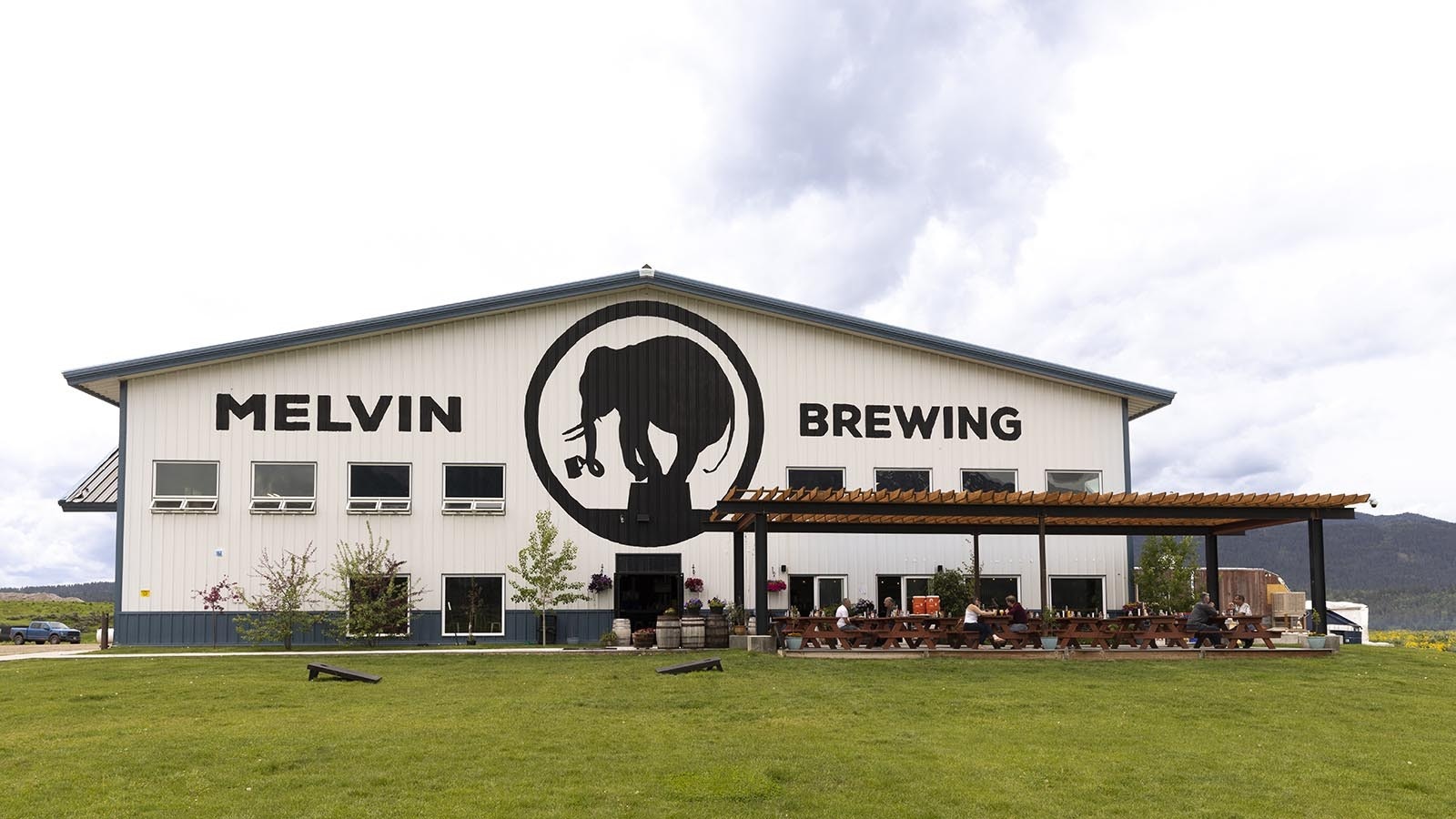
Melvin Brewing in Alpine, Wyoming. (Courtesy Photo) 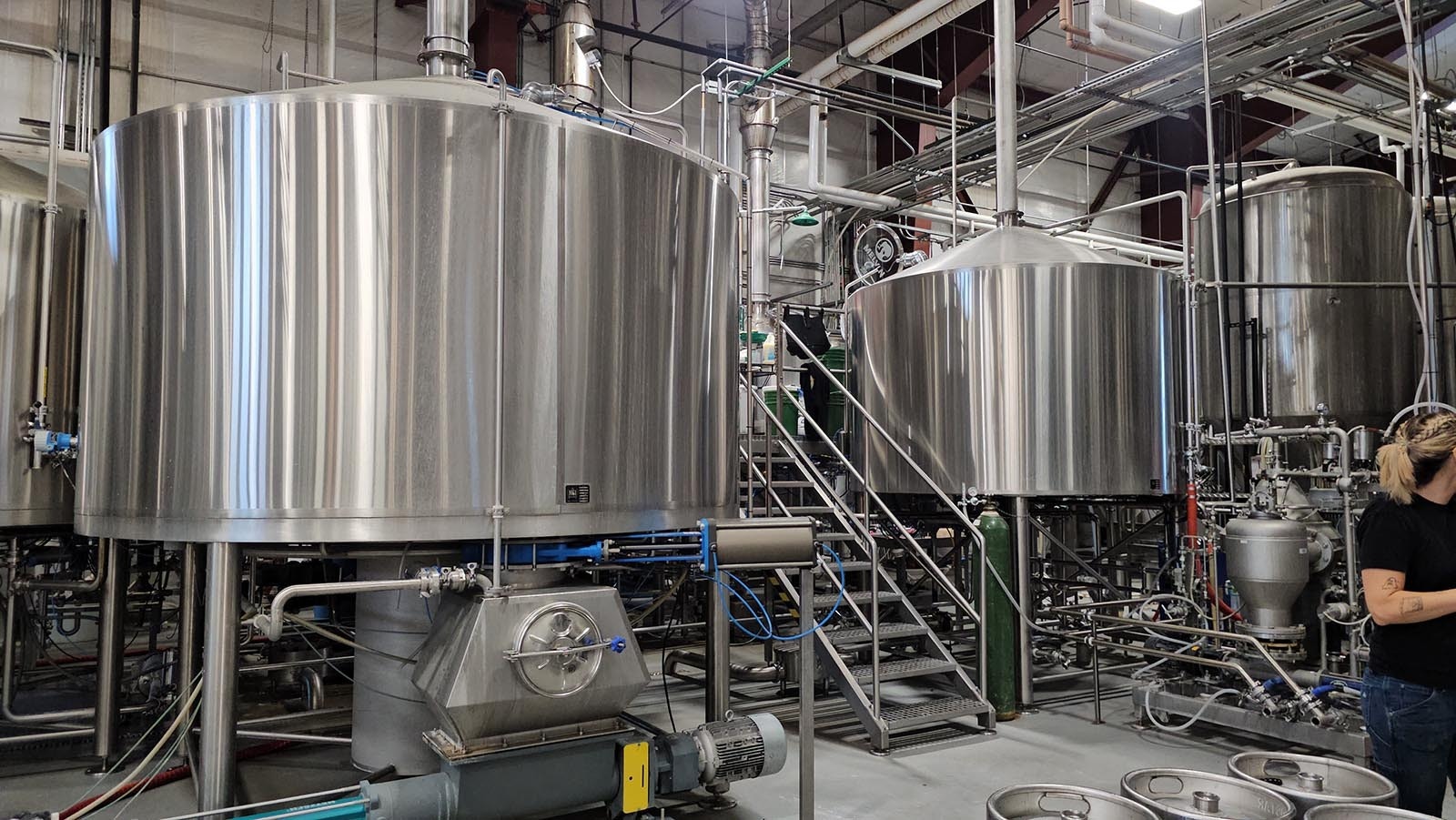
This is the brew deck, which is where the beer manufacturing process starts. Grain is dropped from above into vats to be washed and mashed and cooked. (Renee Jean, Cowboy State Daily) 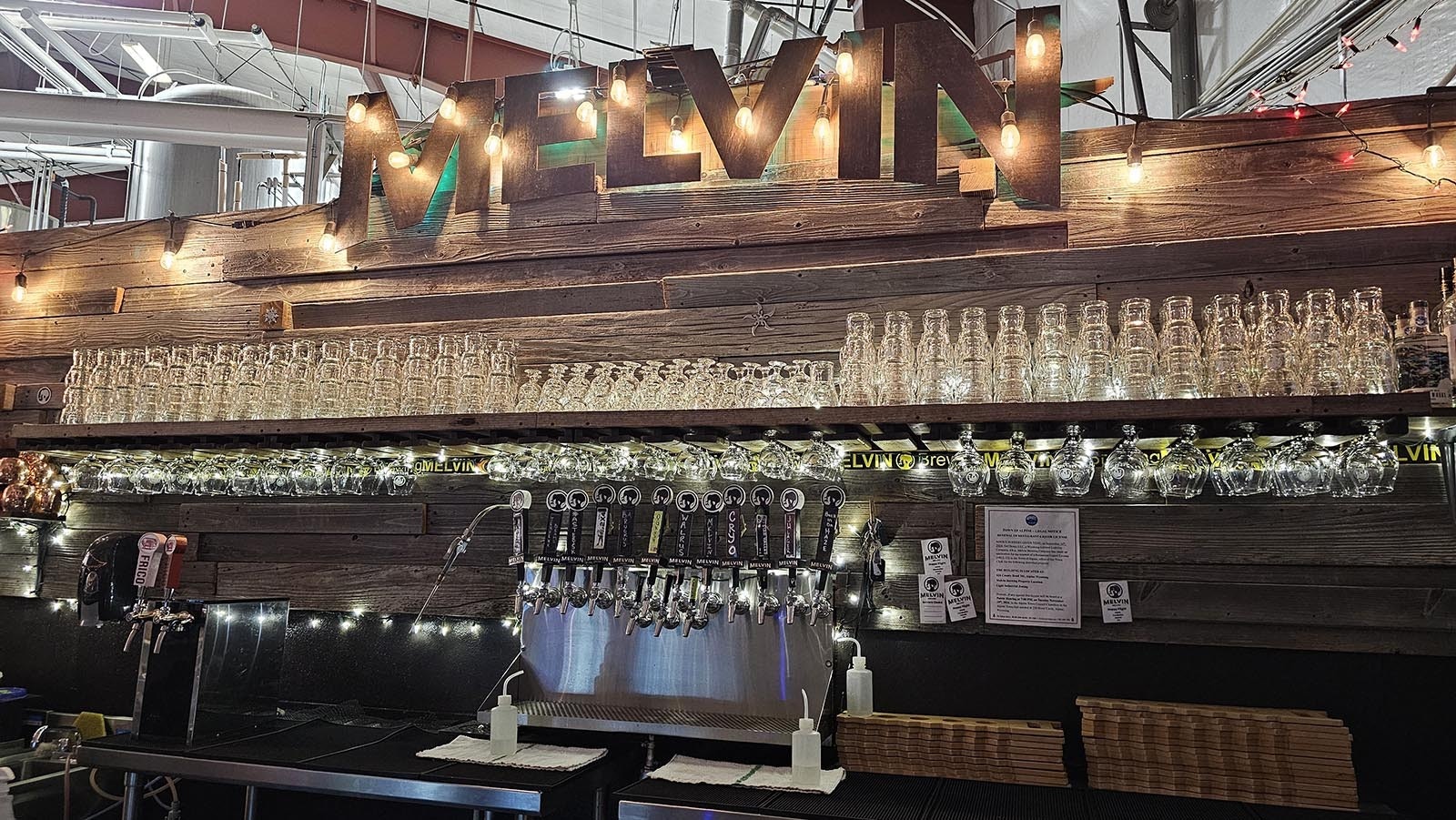
The backbar where there are a dozen beers on tap at any given time. (Renee Jean, Cowboy State Daily)
But What About Isolation And Loneliness?
Colby Cox with Pure Madness Liquids, which includes Melvin Brewing in Alpine, sells beer not just in Wyoming, but in 17 states.
He has no doubt that things are about to get much tougher for the craft brewing industry. He’s already seeing it in all the states his business serves.
“My message to people is that if this is something where you were in it because you have a passion for what you do, you’re probably going to figure out a way to stick it out,” he said. “But if you got into this business because you thought it was sexy and fun and you were going to make a bunch of money, this probably wasn’t the right place to invest.”
The craft beer industry, Cox added, is getting ready to fight back with some messaging of its own.
While he agrees that drinking to excess is a problem, he doesn’t believe that a beer or two — a social lubricant for 10,000 years — is really cutting everyone’s life short.
“I’m not denying that some of the studies are accurate,” he said. “But if you look at the holistic picture of what leads to health and happiness, social interaction is a huge part of that.
"And alcohol is a huge part of social interaction. It’s been around for literally 10,000 years that we know of. So, I think people are going to be just fine if they have a few beers every once in a while, with their friends. And they’re probably going to be a lot happier.”
Cox blames the COVID-19 Pandemic for some of the present challenging trends. Particularly for Generation Z, who were told if they were around other people they might kill someone.
“People are further isolating in their basements,” he said. “They’re not getting together at bars and restaurants and hanging out with their friends. In my opinion, that’s likely to cause more damage than a couple of beers.”
What Cox wants to see is a more well-rounded picture of the health effects. One that takes into account the social aspect of having a beer or two with friends.
The CDC, for one, has highlighted the negative health effects of loneliness, which it said is linked to risks for heart disease, stroke, diabetes, suicide and dementia.
“I think what this generation needs to hear is 'Go out with some friends, have a couple of beers. Let your guard down a little bit. Maybe do some things you otherwise wouldn’t,’” Cox said. "Don’t get behind the wheel of a car, but let your hair down. … It’s not going to kill you.
“Actually, what will kill you faster (than alcohol) is isolation and depression,” he added. “So, I think what we’re doing here is throwing the baby out with the bathwater."

A National Campaign Is Underway
These talking points are getting ready to bubble their way up to the national level.
“I’m actually on the board of the National Brewers Association, and we’ve got a board meeting in Austin next week,” Cox said. “This is the very topic we’re discussing.”
Human behavior, he added, has a tendency to swing back and forth between extremes. He feels that the recent push against drinking beer and alcohol is one of them.
“What we’re trying to do with beer is educate people that not all alcohol is the same and beer is different,” he said. “Beer is designed to be consumed with food, and it actually pairs better with food than wine. There’s so much more variability in beer than wine.”
That and its properties as a “social lubricant” to combat loneliness will be a powerful marketing message, Cox believes.
“There’s so many benefits of what beer has given the world,” he said. “So, let’s not over-correct here. Yes, maybe you shouldn’t drink a fifth of whiskey three days a week. That might kill you over time.
"But I believe we also don’t need, with all the fear, anxiety, and isolation that’s been pushed on younger generations, maybe we don’t need to tell them that if they go out with their friends and have a beer they’re going to die. Maybe that’s not a good message to send.”
Getting With The Sober Curious Program
Cox isn’t just relying on new marketing messages to keep his businesses going, though. He’s also diving into new drinks as well — beverages with benefits or, as he calls it, “sinless soda.”
“It’s sugar-free soda, but it’s also got a lot of nootropics (smart drugs) and adaptogens like L-theanine and ashwagandha and stuff like that at moderate doses,” he said. “It will create a little brain clarity. It will help your gut biome a little bit. It’s generally just healthy, all-natural-ingredient soda.”
Cox plans functional beverages in four categories: energy drinks, recovery drinks, relaxation drinks, and one that’s in beta testing right now that focuses on attention deficit.
That doesn’t mean his business focus on beer is shifting, though. He’s just adding to the menu, to cater to a bigger group of social people.
“We are still very dedicated toward beer,” he said. “We have a social mission behind beer. It’s not just about the beverage itself. We truly believe that beer breaks down barriers.”
Beer is also the beverage of moderation, Cox said, and he personally believes it’s the healthiest of the alcoholic beverages.
“You can sit down and socialize for half an hour, 45 minutes over one beer,” he said. “You can have a great conversation with someone and put your guard down and talk about things you maybe wouldn’t have otherwise talked about.”
Other options like whiskey or tequila are higher in alcohol content, with smaller serving sizes, which he believes tends to invite drinking several shots in one sitting.
“Beer is better,” Cox said. “The reason beer has been around for 10,000 years is because it’s the beverage of moderation. And there’s all kinds of benefits that come from everything in beer that’s not alcohol.
"The yeast is good for our stomach, especially when you’re using high-quality ingredients … And literally all we’re doing is what people have been doing for millennia.”
Wyoming’s Tourism Helps
Wyoming, Cox believes, is probably better situated than many states when it comes to preserving its craft beer industry.
“We make very high-quality beer in the state,” he said. “There’s lots of really good producers in the state. And the citizens of Wyoming are very loyal to their local breweries. So, we’re in a lot better shape than places like Colorado, California, Oregon and Washington. It’s pretty rough out there.”
Wyoming’s craft breweries in small towns like Ten Sleep, meanwhile, are catering to crowds of tourists in the summer who are on vacation and looking to celebrate with something special.
“In Wyoming there tends to be more of a focus on supporting local,” Cox said. “And I think if you have a 20-year outlook on your business in Wyoming, this is just a blip. Trends will return to normal. … We will meet the averages over 20 years, I’m sure of that.
"I find it hard to believe that all of a sudden, some level of consciousness has reached society here in 2025 that alcohol is going to kill you and for 10,000 years people have been wrong. I just don’t think that’s the right idea.”
Renée Jean can be reached at renee@cowboystatedaily.com.