What the hay?
Yes, that cow food is part of the answer to the question people ask when they see one of these 30-foot rectangular contraptions with an inclined plane that looks part catapult and part something else sitting in a western ranch field as a remnant of the past.
A Montana ranch operated by the U.S. National Park Service still uses one in the present.
Retired businessman, entrepreneur and photographer Frank Bliss, owner of Bliss Dinosaur Ranch in Weston, thought a photo of one would be a good way to interact with his many social media followers.
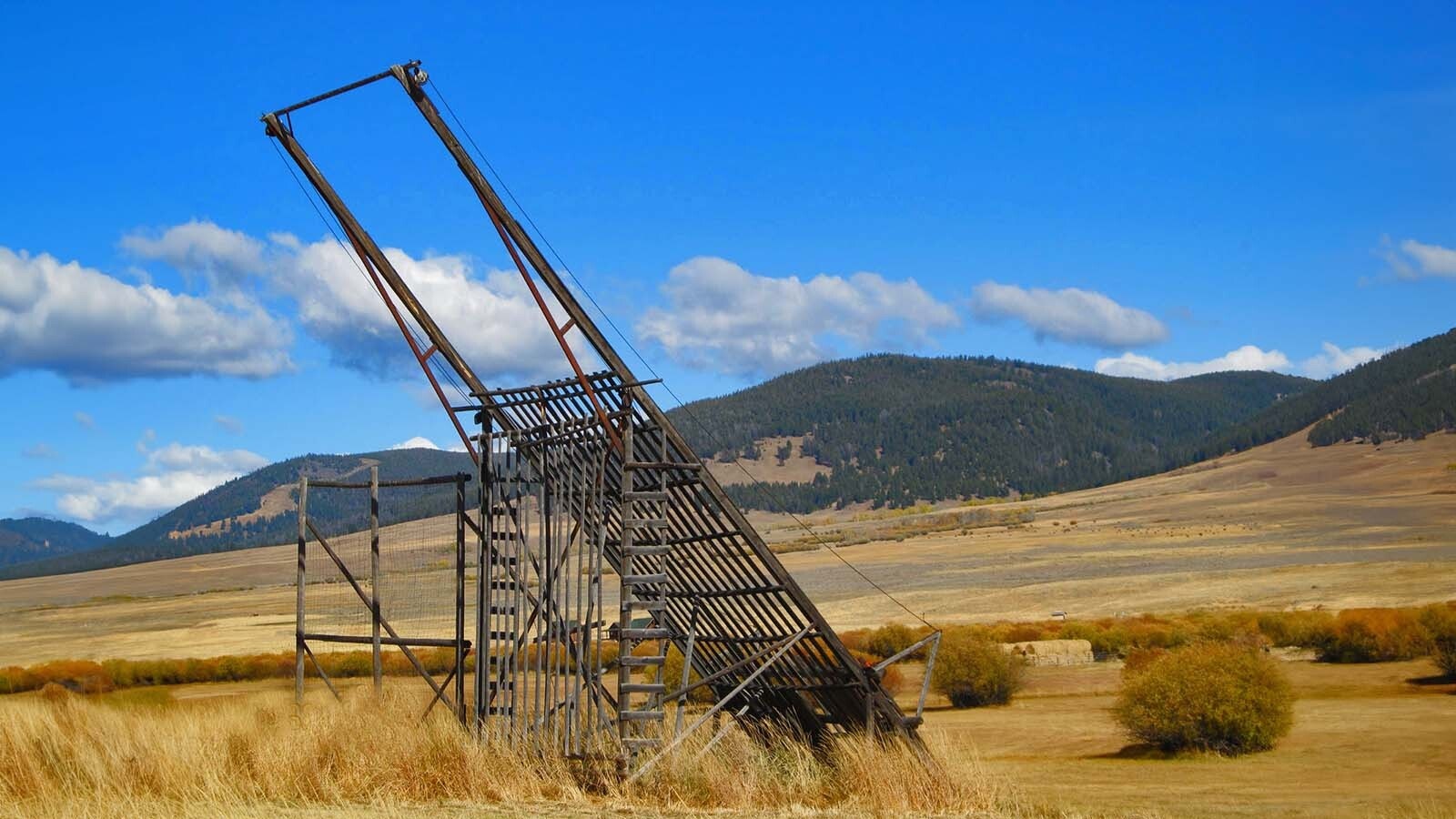
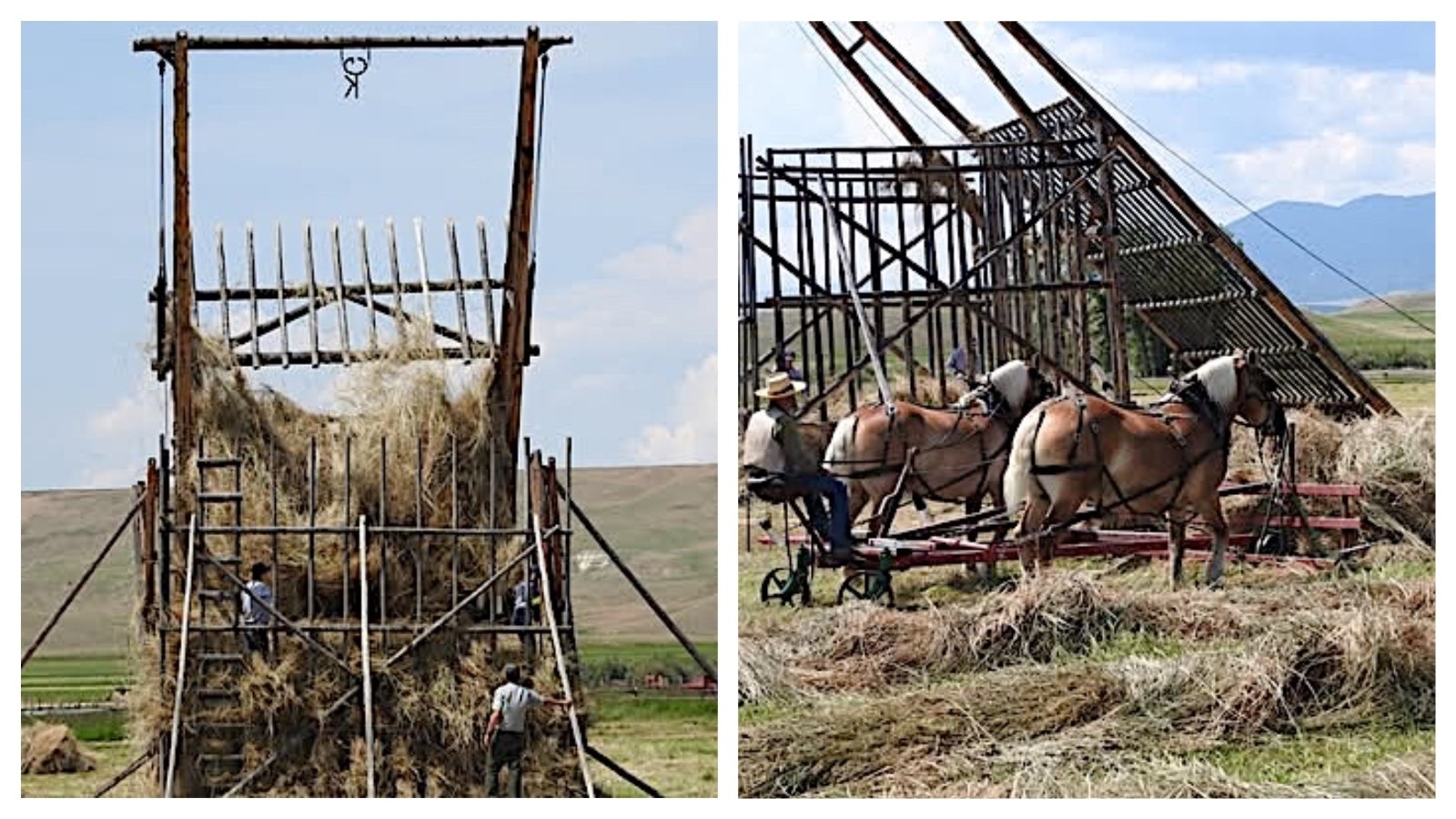
He scored a hit last month when he shared a photo of an obviously homemade wooden contraption framed by boards that had one open end sticking nearly 30 feet in the air while the other end was covered with wooden slats inches apart.
“They are a classic Wyoming-Montana accouterment,” Bliss said. “And they served a very specific function and only were used during hay season.”
The photo shows the contraption engineered with an inclined plane along with pulleys and ropes and ladders going from the ground to what appears to be nowhere. It sat in a field somewhere in the West. Mountains are in the background.
“It was a random picture that came up for some reason,” Bliss said, adding he usually posts only what he captures through his camera’s lens.
But when he saw the photo, it took him back to times driving around the state and seeing a similar device sitting in a field.
‘Antelope Launcher’
Bliss queried people to share their ideas of what it was if they didn’t know. Answers came back like “antelope launcher,” “Wyoming space shuttle launcher,” “Wyoming militia catapult,” and dozens more.
Michelle Plowman Jenkins, who lives in Star Valley, and responded on Bliss’ social media page knew what it was — a beaver slide hay stacker.
“I personally have never experienced the use of it,” she told Cowboy State Daily. “I have seen it from a distance driving by while it was being used.”
Jenkins said the beaver slide hay stacker she’s witnessed were pulled by a team of horses.
The raked hay would be brought over to the little fence area where it would be loaded by hand onto the flat slatted part of the device.
Horses with ropes attached to the pulleys would pull to tip the slide containing the hay up to be unloaded on top of the fenced haystack by someone with big five-tine pitchforks.
“Then the team of horses would pull the lift over to the next spot and continue until the field was put up,” she said. Jenkins said the stacks had to be fenced to keep the elk and deer out of them.
At the Grant-Kohrs Ranch National Historic Site operated by the U.S. National Park Service in Deer Lodge, Montana, spokesperson Julie Croglio said a beaver slide hay stacker continues to be used during hay season in one of its pastures to teach people about the device and how it was used.
The ranch has about 65 head of cattle and while baled hay constitutes much of their feed in the winter, the stacked hay also offers winter food.
“We have three events during the summer where we operate with the old horse-drawn equipment and utilize the beaver slide to put up the hay,” she said.
Big Hole Valley Inventors
Croglio said beaver slide hay stackers continue to be used in that region of Montana but ranchers use tractors and trucks instead of horses as part of the haystack-making process.
The beaver slide was invented in the Big Hole Valley of Montana, just northwest of Yellowstone National Park.
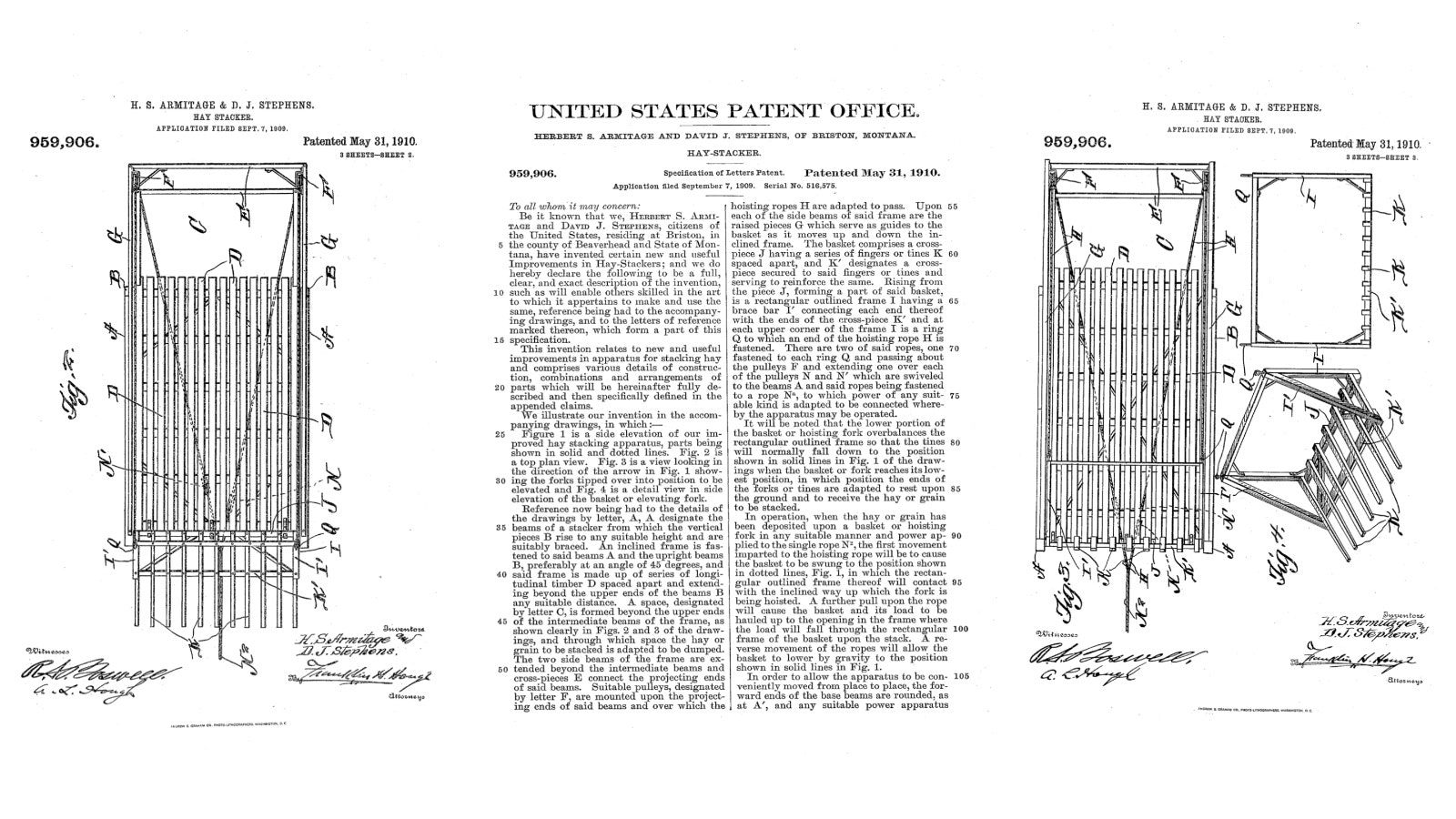
A document found on the U.S. Patent Office website shows that ranchers Herman S. Armitage and David J. Stephens of Briston, Montana, in Beaverhead County received a patent on the device on May 31, 1910.
The duo’s patent filing outlines the “new” concept of their stacker.
“(It is) a hay stacker comprising an inclined way with an opening near its upper end through which the hay is dumped, guide strips upon said inclined way, a basket comprising an open rectangular frame and tines spaced apart,” they wrote.
The pair detailed how the tines were positioned and the frame was “adapted to tilt and ride upon the inclined way as the load is being hoisted.”
Their patent language included drawings for what became the beaver slide hay stacker, named after the county they lived in.
Croglio said the beaver slide at the Grant-Kohrs Ranch National Historic Site is not historic to the ranch but was built to demonstrate and use the device at the park.
The ranch uses horses attached to ropes and pulleys to pull up the hay using the slide and create the mound.
Operating the beaver slide draws people in.
“I think that most people are just fascinated by it because a lot of people have not seen it before,” she said. “Whenever you have the draft horses out there, too, the whole experience and sounds are just kind of a soothing thing.”
In addition to the beaver slide hay stacker, there were other varieties of hay stackers, and the original owners of the ranch chose a different style, Croglio said.
Hay Stacks Effective
Because of the low humidity in the West, haystacks remain a viable way to store hay for cattle during the winter months, she said.
One of the questions she gets surrounds whether the haystacks would be covered or not.
In Deer Lodge, Coglio said they get about 10 inches of precipitation a year. The dry climate means hay can stay out in the fields and be fine for cattle.
“Some of the benefits of a loose haystack are that the outer layer of the stack creates a crust to protect the hay inside,” she said. “You have a lot more of the hay that stays good.”
Several people who responded to Bliss’ social media post shared fond memories of how the devices worked, including Wyoming resident Robert Winn.
“Used one as a kid between Steamboat and Walden,” he said.
In Nebraska, Shelly Christiansen responded she still sees them.
“This is how my granddad put up hay back in the day,” she wrote. “ My mom and aunt and uncles were the hired help. There are ranchers around here that still put up hay this way. I love that they keep this piece of history alive!”
Dale Killingbeck can be reached at dale@cowboystatedaily.com.