
Brush Creek Ranch’s new executive chef comes to Wyoming from Colorado, where he was the chef in charge of that state’s only property with two Michelin Keys.
Chef Nicholas Pissare will try to replicate that achievement in Carbon County, though he is very “que sera sera” about it all.
“Every chef I’ve worked for has been James Beard nominated,” he said. “But (Michelin Keys) are not something that keeps me up at night. It’s not something I think about. If it comes, that’s a natural experience and organic, and that’s great.
"If it doesn’t, I don’t think that diminishes anything that Brush Creek does or that we do here.”
Michelin Keys are given out to hotels and resorts that include exclusive food service intended just for guests.
It’s a way of recognizing world-class food establishments where the public cannot make dinner or lunch reservations. It is distinct and independent of the Michelin star rating system for restaurants.
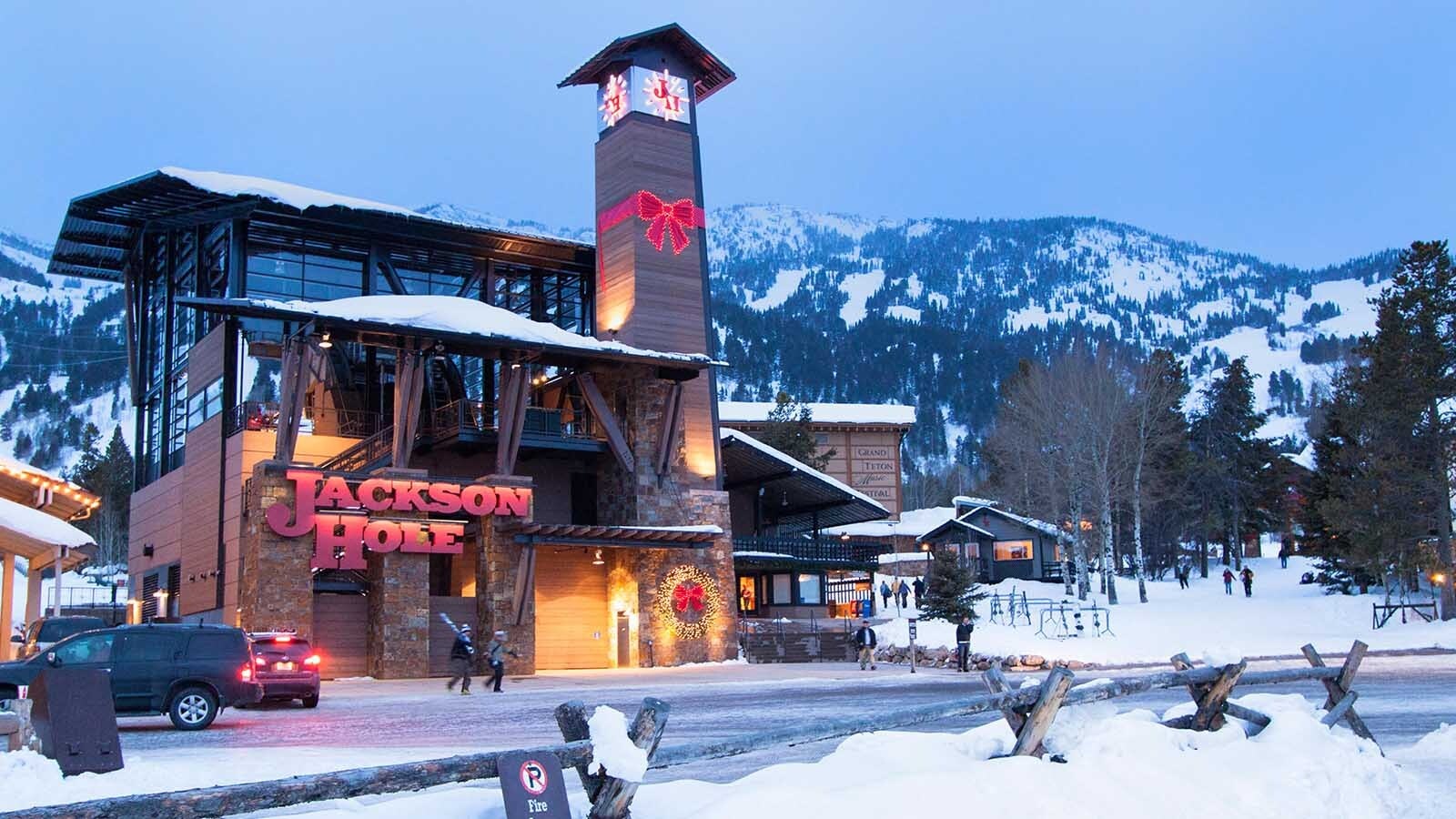
Wyoming has no three-key properties and has but one two-key — Teton Village’s Caldera House. One-key properties in Wyoming include Hotel Jackson and The Cloudveil, both in Jackson Hole.
But with Pissare at the helm of Brush Creek Ranch’s culinary operations at The Farm, that weight could find some balance in a completely different part of Wyoming.
“I think we’re certainly running at that level,” Pissare said. “So, it would be great if that happened. My main focus is continuing to grow the team and run a kitchen in a hospitable way.”
Pissare said Brush Creek’s leadership has been curious about Michelin Keys, and what the process is, but are not fixated on that as a goal either.
“Two and three Michelin star level resorts and restaurants are very small most of the time,” Pissare said. “Lots of times, they’re 16-seat tasting menu restaurants, and the chef is always there, always doing something. That’s great for intimacy.
"But I think the ranch certainly wants to connect with more people and has more goals than just (that).”
Pissare intends to maintain the bar very high, however. So, he won’t be surprised if Michelin Keys eventually happen.
“It’s just high-level dedication and commitment,” he said. “And I’m coming from a 12-course tasting menu, so I’m confident in the food and the background that I cook with, and I’m confident in the team that I have brought here.
"And then it’s just execution and consistency on a day-to-day basis and treating everyone how you would want to be treated. When you care about food and you’re really passionate, the rest is just execution and consistency.”

Chef Nicholas Pissare brought two Michelin Keys to a resort in Colorado, that state’s only such facility. If he can do the same at Brush Creek Ranch, that would expand Wyoming’s Michelin footprint somewhere else besides Jackson Hole. (Courtesy Brush Creek Ranch) 
Chef Nicholas Pissare brought two Michelin Keys to a resort in Colorado, that state’s only such facility. If he can do the same at Brush Creek Ranch, that would expand Wyoming’s Michelin footprint somewhere else besides Jackson Hole. (Courtesy Brush Creek Ranch)
In The Kitchen At 6
Pissare can’t remember a time he wasn’t somehow intertwined with food.
“I grew up in a Greek household,” he said. “And so, the most important memories of my life revolve around food.”
His parents had a specialty meat store, which was a passion project for them, and some of his earliest memories are intertwined with that store.
The first dish Pissare remembers cooking in the kitchen was mashed potatoes with his dad, when he was about 6.
“He was a really good home cook, and he cooked every day,” Pissare said.
By the time he was 8, Pissare was reading blog posts by the likes of L2O’s Laurent Gras, who ran three-Michelin-star restaurants, explaining how to cook a steak properly, using a cast iron skillet and basting with butter and thyme.
“It was like, pay $10 and here are my three recipes,” Pissare recalled. “That’s the first memory I have of wanting to learn something from a chef.“
By the time Pissare was 12, he had added risotto to his repertoire alongside Gras’ French-style steak. The risotto is one dish from Pissare’s childhood that Brush Creek Ranch guests can find on the menu at the Cheyenne Club.
Pissare doesn’t admit to disliking any particular kitchen chore. It doesn’t matter if it’s picking flowers for garnish every day for a year or peeling potatoes.
“I’m pretty obsessive about craft,” he said. “And I really like doing small tasks over and over and over again. I come from restaurants where that’s a big thing.
"So, I peeled potatoes every day for a year. I picked flowers every day for two years. That allows me to have those fundamentals where I can teach and I can pass things along now, because I have done it.”
Prime Rib Christmases
Although Pissare grew up cooking in a big Greek family, guests at Brush Creek Ranch aren’t likely to notice many signs of that on the menu — aside from the risotto.
“I cook contemporary European food at the fine dining level,” he said. “And it’s just really hard for that Greek style to translate to fine dining, where the dishes have to look a certain way.”
Most of the food Pissare does is heavily influenced by French cooking, as a result.
“But I grew up with my grandmother, and she used to make spanakopita, which is a phyllo-spinach dish,” he said. “And that’s one we did every Sunday for a long time and it’s probably my favorite thing.”
Pissare’s dad still makes the dish for him, whenever Pissare’s visiting home, and Pissare didn’t rule out doing it for a special occasion sometime at the ranch.
Christmas might be such an occasion, Pissare said. Another possibility would be a prime rib dinner, which also goes back to his childhood.
“My parents always hosted special occasions,” he said. “So, every Thanksgiving, every Christmas, every New Year’s, we hosted at our house and, obviously, having a meat store, we did prime rib for New Year’s and for Christmas.
“I always thought that, although simple, that was such a special occasion,” Pissare continued. “It just felt so special. We ate a lot of meat, and like the time that went into it and the preparation. That was always my favorite.”
And having a wagyu cattle ranch at his beck and call doesn’t hurt the chances of that idea at all, either.

Chef Nicholas Pissare brought two Michelin Keys to a resort in Colorado, that state’s only such facility. If he can do the same at Brush Creek Ranch, that would expand Wyoming’s Michelin footprint somewhere else besides Jackson Hole. (Courtesy Brush Creek Ranch) 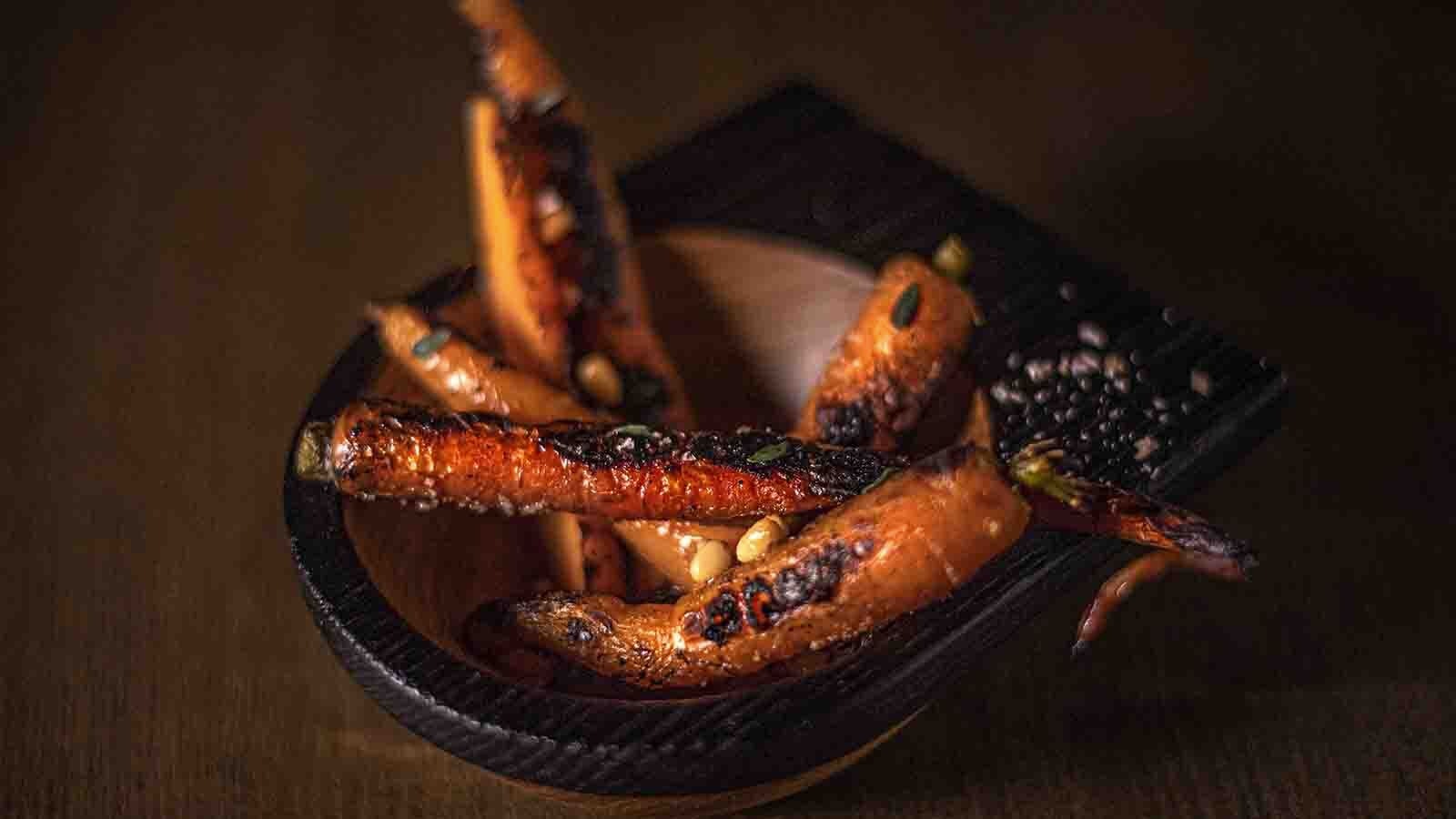
Chef Nicholas Pissare brought two Michelin Keys to a resort in Colorado, that state’s only such facility. If he can do the same at Brush Creek Ranch, that would expand Wyoming’s Michelin footprint somewhere else besides Jackson Hole. (Courtesy Brush Creek Ranch) 
Chef Nicholas Pissare brought two Michelin Keys to a resort in Colorado, that state’s only such facility. If he can do the same at Brush Creek Ranch, that would expand Wyoming’s Michelin footprint somewhere else besides Jackson Hole. (Courtesy Brush Creek Ranch) 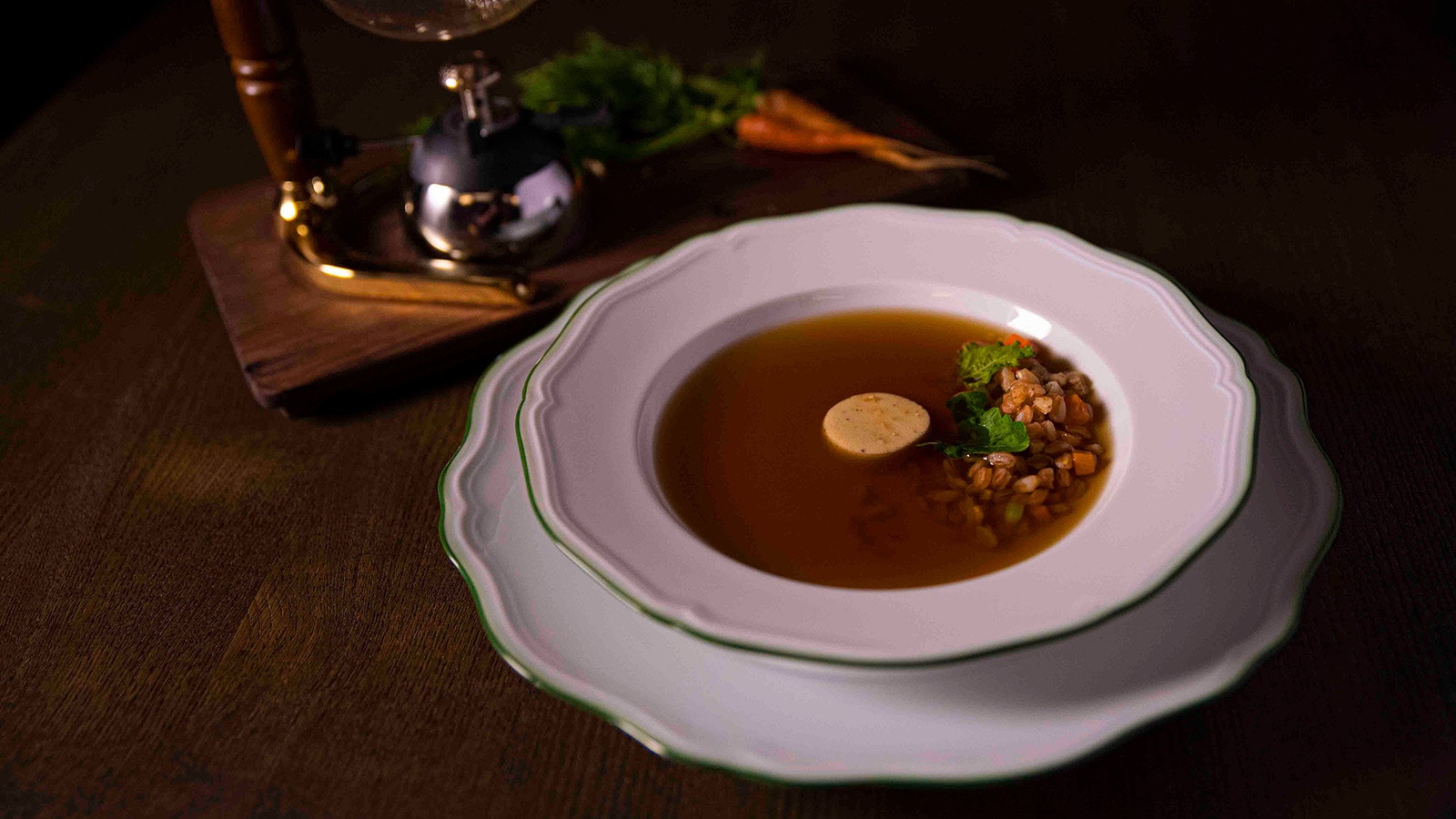
Chef Nicholas Pissare brought two Michelin Keys to a resort in Colorado, that state’s only such facility. If he can do the same at Brush Creek Ranch, that would expand Wyoming’s Michelin footprint somewhere else besides Jackson Hole. (Courtesy Brush Creek Ranch) 
Chef Nicholas Pissare brought two Michelin Keys to a resort in Colorado, that state’s only such facility. If he can do the same at Brush Creek Ranch, that would expand Wyoming’s Michelin footprint somewhere else besides Jackson Hole. (Courtesy Brush Creek Ranch) 
Chef Nicholas Pissare brought two Michelin Keys to a resort in Colorado, that state’s only such facility. If he can do the same at Brush Creek Ranch, that would expand Wyoming’s Michelin footprint somewhere else besides Jackson Hole. (Courtesy Brush Creek Ranch)
Not Noma
Wagyu cattle aren’t the only things Brush Creek Ranch can source locally. The Farm where the Cheyenne Club is located is 30 yards or so away from a set of greenhouses that grows the bulk of the ranch’s produce.
“It is closed right now,” Pissare acknowledged. “But this is the first time they’ve closed it, actually, and it’s so they can have some soil regeneration and things like that. But 80% of the year it’s open, and we get about 70% of our produce from the greenhouse.”
The greenhouse includes both hydroponic and soil-grown vegetables. Pissare and his team work closely with the greenhouse team on what to grow the next season.
“That’s just another very unique opportunity,” Pissare said. “And then, of course, having a wagyu cattle ranch is pretty impressive as well.”
Brush Creek isn’t trying to source 100% of everything from the ranch though.
“We use olive oil from Italy,” Pissare said. “And we use truffles from France and caviar from China, those kinds of things. Our goal is not to be Noma.”
Noma is a Scandinavian restaurant that won’t use anything that isn’t produced within 30 miles of its restaurant.
“They are kind of a pioneer in sourcing, and they’ve taken Scandinavian cuisine to a new level,” Pissare said. “They were the world’s best restaurant, voted six years in a row, and they do a lot of fermentation and things like that.”
Pissare has a different philosophy on it though.
“We’re trying to use the best ingredients and just treat them responsibly and carefully,” he said. “It’s more of that Italian style of, ‘Hey, we have the best thing. Let’s not mess it up. We don’t need 15 components on each dish.’”
Pissare actually prefers dishes that may have only a few ingredients, because it allows the main one to shine.
“I have a more round way of cooking,” he said. “I don’t like flavors that are too intense in any one direction, even if it’s a good flavor. You know, tons of garlic. I just don’t do that. I’m looking for cleaner, more refined flavors.”

Confessions Of A Cookbook Junkie
Pissare may not like a lot of ingredients in a dish, but he doesn’t feel the same way about cookbooks. The chef has 2,000 cookbooks in all, and said he’s read each and every one, cover to cover.
He never goes anywhere without at least some of those cookbooks traveling with him. At Brush Creek Ranch, he’s brought a library of 300 of his favorites.
It’s not just that he’s addicted to cookbooks, though he admits that is part of it.
“It’s how you keep learning,” he said. “It’s how you get better. It’s how you see a technique or a dish or something you’re interested in, and then you can go from there.”
That’s the kind of process he tries to share with all of his staff.
“That’s really important,” he said. “This is not on TikTok, it’s not Instagram. I look at a cookbook every day, and it’s just for inspiration. To think about the spring menu, to think about what’s next. To inspire the team. Like, ‘Oh look, look at this plating. Have you seen this before?’ That’s how we kind of learn and grow as a team.”
If Pissare was allowed just one cookbook on a desert island, he has no hesitation in the answer. It would be “Modernist Cuisine.”
But then he would try to sneak a few others in as well. Cookbooks in the “Eleven Madison Park” series, for example, and Julia Child’s cookbook.
“I use the Flavor Bible a lot,” he said. “And that’s not a cookbook, but it’s important. Daniel Boulud has a lot of great cookbooks, I like his stuff a lot.
"Oh, and the new one on vegetables by Jeremy Fox, that’s a really good one. Manresa by David Kinch and the last one I’d say would be New Napa Cuisine. That’s from a chef in California who ran the restaurant the Meadowood.”
But fortunately for Pissare, he’s not confined to a desert island.
He can have all 300 of his favorite cookbooks with him as he dreams up new culinary delights for the guests of Wyoming’s five-star Brush Creek Ranch, in hopes of bringing a new Michelin key to a different part of the Cowboy State.
Renée Jean can be reached at renee@cowboystatedaily.com.