The Wyoming Department of Transportation has an important message for Wyoming's winter drivers: don't race the gates.
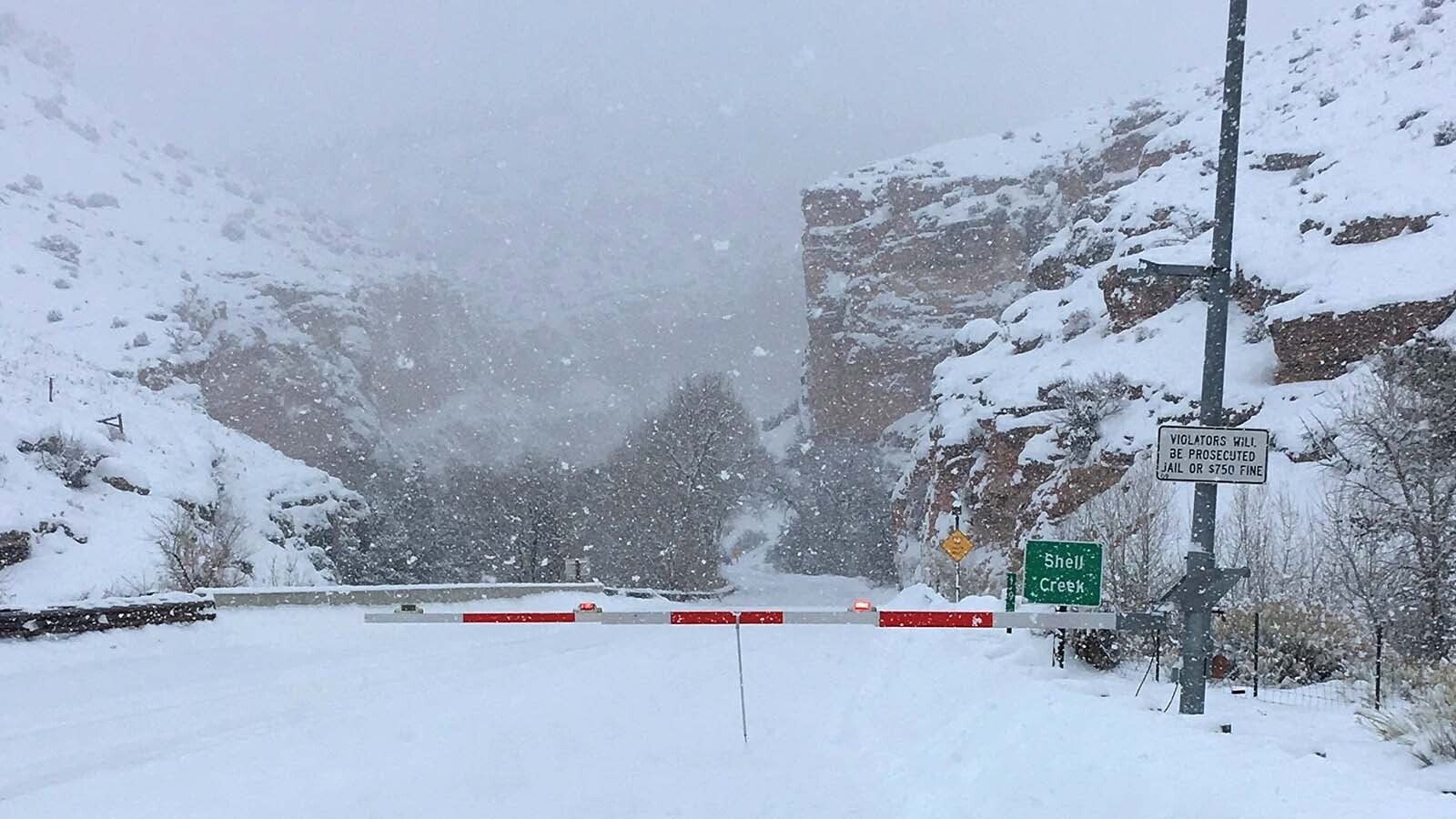
As winter weather continues to impact Wyoming's highways, more drivers will encounter road closure gates blocking their routes. Those are the red-and-white lighted barriers that indicate a road is closed because of hazardous conditions.
The problem is, people keep trying to sneak in past them as they’re being lowered, WYDOT reports. When drivers come upon a descending road closure gate, they see it as a challenge to speed up and get past it before it lowers.
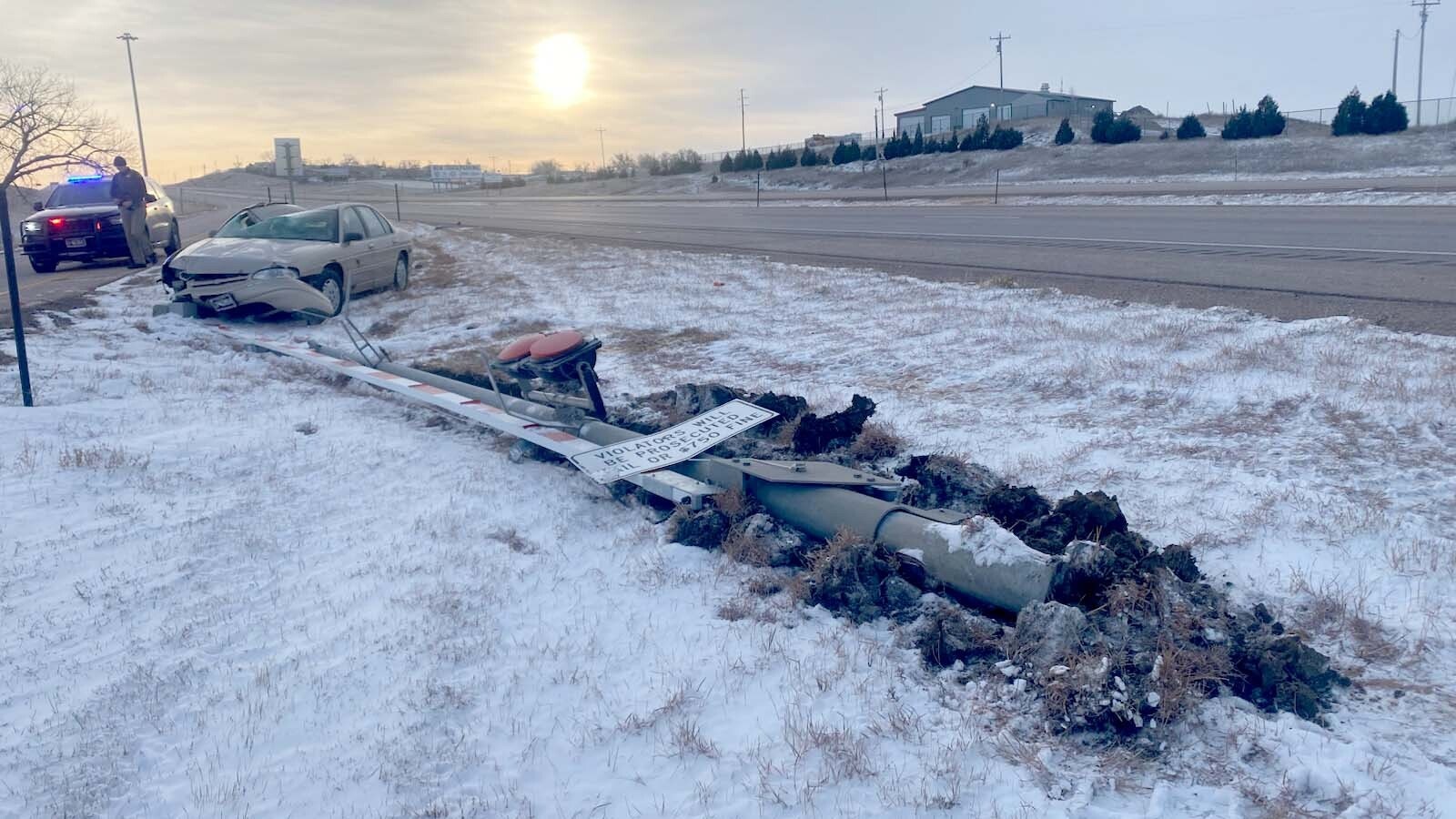
At least 23 recorded road closure gate crashes have taken place since 2020, which doesn't include the frequent "near misses" reported by WYDOT personnel.
That's cost WYDOT more than $180,000 in five years.
Drivers might think they're getting ahead of danger or just getting in under the gun to keep driving. Instead, it's like sprinting to catch a grenade.
"People don't understand that they're not really racing to be the last one on an open road," said WYDOT spokesperson Jordan Young. "They're racing to be the first one on a closed road."
Bottom Up
WYDOT doesn't treat winter road closures lightly.
When the gates come down, it's because the road is too hazardous for travel, either because of ongoing weather conditions or vehicle incidents, the agency says.
What many Wyomingites don't realize is that road closures aren't top-down decisions for WYDOT. Young said most roads are closed at the discretion of the personnel responsible for maintaining them.
"Those are boots-on-the-ground decisions," she said. "The plow drivers themselves, who are out there fighting Mother Nature, are the ones saying the road is not safe to be open to the public."
Plow drivers usually make the recommendation to their regional foreman, who relays the decision to WYDOT's Transportation Management Center in Cheyenne.
That information is input to update the WYDOT 511 app, messages on digital overhead signs, and variable speed limit signs.
The Transportation Management Center gets regular updates on the road's status. Once they get the go-ahead from regional personnel, the road reopens.
"It's a very base-level decision and not something we try to control from Cheyenne," Young said. "We trust our folks out there to make the right decision.
"They live and work in these communities. It's their families and friends and loved ones that are trying to get to where they need to go, and they don't take the decision to close a road lightly."
That's one reason, among many, why the road closure gates aren't automated. They have to be hand-cranked to close, which makes a driver's decision to "race the gate" even more dangerous.
Race The Gate
When WYDOT personnel decide to close a road, a plow driver has to reach the road closure gate and crank it down. That's a risk, especially if there's incoming traffic on hazardous roads.
"The gates have to be hand cranked, which often means someone has to leave their plowing route to travel to the gate and lower it," said WYDOT Assistant Chief Engineer Mark Ayen. "Sometimes that can take as long as 45 minutes, especially for remote locations.
"We don't want folks driving on what they think is an open road while we're making our way to the gates. Drivers should heed all signage and check WYDOT's 511 tools before traveling."
Road closure gates usually aren't the first indication of a closed road ahead. If there isn't a digital sign in the vicinity, the 511 app has the latest road conditions updated in real-time.
"Most drivers will pass signage indicating that the road ahead is closed," Young said.
Young added that road closure gates are strategically placed to ensure driver safety. Passing a lowered gate doesn't just mean increased danger on the road ahead, but also farther from assistance and safety.
"One of the challenges of these situations is that we want people to have access to gas, lodging, and food to wait out the storm safely," she said. "That's why we strategically placed the gates near communities and services.
"We don't want anyone out in the middle of nowhere where the only resource is sagebrush."
Speeding to get past a closed road gate is asking for trouble. To get past a gate, drivers might have to stop on the shoulder, or even on the road itself, which is against the law.
"We do see drifting caused by vehicles parked on a road while it's closed," Young said. "That is one reason why we ask folks to stay in designated parking areas and not park on the shoulders. There is a reason that law is in place."
No Need For Speed
Suppose someone reaches a road closed gate, but they live in a housing development just beyond it. If they want to drive onto the closed road to go home, do they have to turn around and wait for the road to reopen?
No. They can get authorization, which WYDOT already offers.
"We have the Wyoming Travel Authorization Program, which can help facilitate localized and regionalized travel to access things like livestock, school, and work in remote locations,” Young said. "We try to implement those authorizations whenever feasible, to keep those folks moving."
When people are authorized through the program, they can still use their discretion about whether the road ahead is safe to drive, but they have full authorization to go past the gate.
And, if you have that authorization, there's no reason to try to race through the closing gate.
Just Don't
Why do people rush to drive on a road deemed too dangerous? It's beyond the comprehension of WYDOT and the Wyoming Highway Patrol, another agency with the authority to close roads when it deems necessary.
"The Wyoming Highway Patrol is committed to enforcing road closure violations this winter, regardless of whether the gate is down," said WHP commander Col. Tim Cameron. "It's no different than what takes place on the highways in the state that do not have closure gates. Drivers must plan ahead for weather conditions."
Young said that it can be beneficial to keep snow-covered roads open when it's safe to do so. Steady, slow traffic can help clear the pavement faster.
"Traffic on the highway can help keep the pavement warm enough to prevent ice from building up," she said. "That's often why we keep the right lane clear, because steady traffic helps push the sand and salt into the ice to help break it up, and the heat of the vehicles prevents more accumulation."
There's no logical reason why someone would try to race through a lowering gate, especially when there's a WYDOT plow driver right there, cranking it down. There are no prizes for being the only vehicle on a dangerous road.
"We're definitely seeing an increased trend that's not just dangerous for our employees,” Young said. "These drivers are racing towards something that was worthy of closing, and they might have no idea what lies ahead. We just want to keep everyone safe."
Andrew Rossi can be reached at arossi@cowboystatedaily.com.