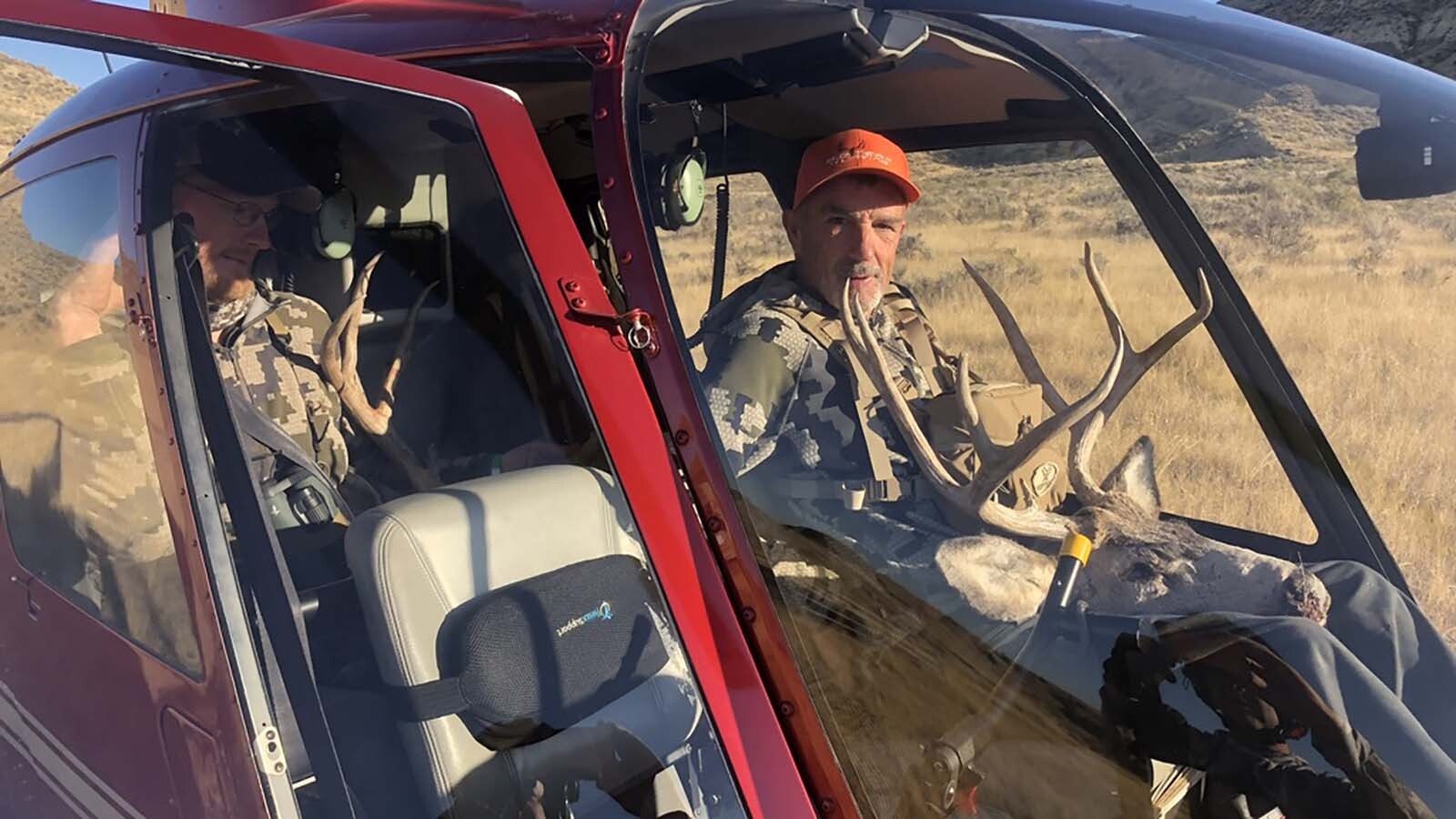
With millions of acres of public land in Wyoming surrounded by private property, or landlocked, some hunters have decided the only way to get there is by hiring pilots to fly them in.
It could become the next flashpoint in tensions over hunter access. Hunters say it isn’t right for landowners to treat landlocked public parcels as extensions of their property.
And so, as they see it, there’s nothing wrong with taking to the air to access land, and game animals that belong to them, as public trusts.
That could put them at odds with ranchers who claim that noisy chopper flights disrupt their daily operations. Or, with outfitters who have for years had trespass fee arrangements with landowners.
‘Light Bulb Moment’
When David Faubion moved from Idaho to Sheridan in 2020, he was stoked about the sheer amount of public land in Wyoming.
“I have always lived and breathed hunting,” Faubion, an editor for Guns & Ammo, told Cowboy State Daily.
However, he noticed how much public land in Wyoming is landlocked by surrounding ranches and other private property.
He figures there are about 4 million acres of landlocked public land in Wyoming. West-wide, the total could be roughly 15 million acres.
“I was looking at all of these places on the maps. There’s huge chunks of land, and I realized, you can’t access them without going across private land,” he said.
“Somebody told me, the only way you could get in there would be by flying,” he added.
That was “a lightbulb moment,” he said.
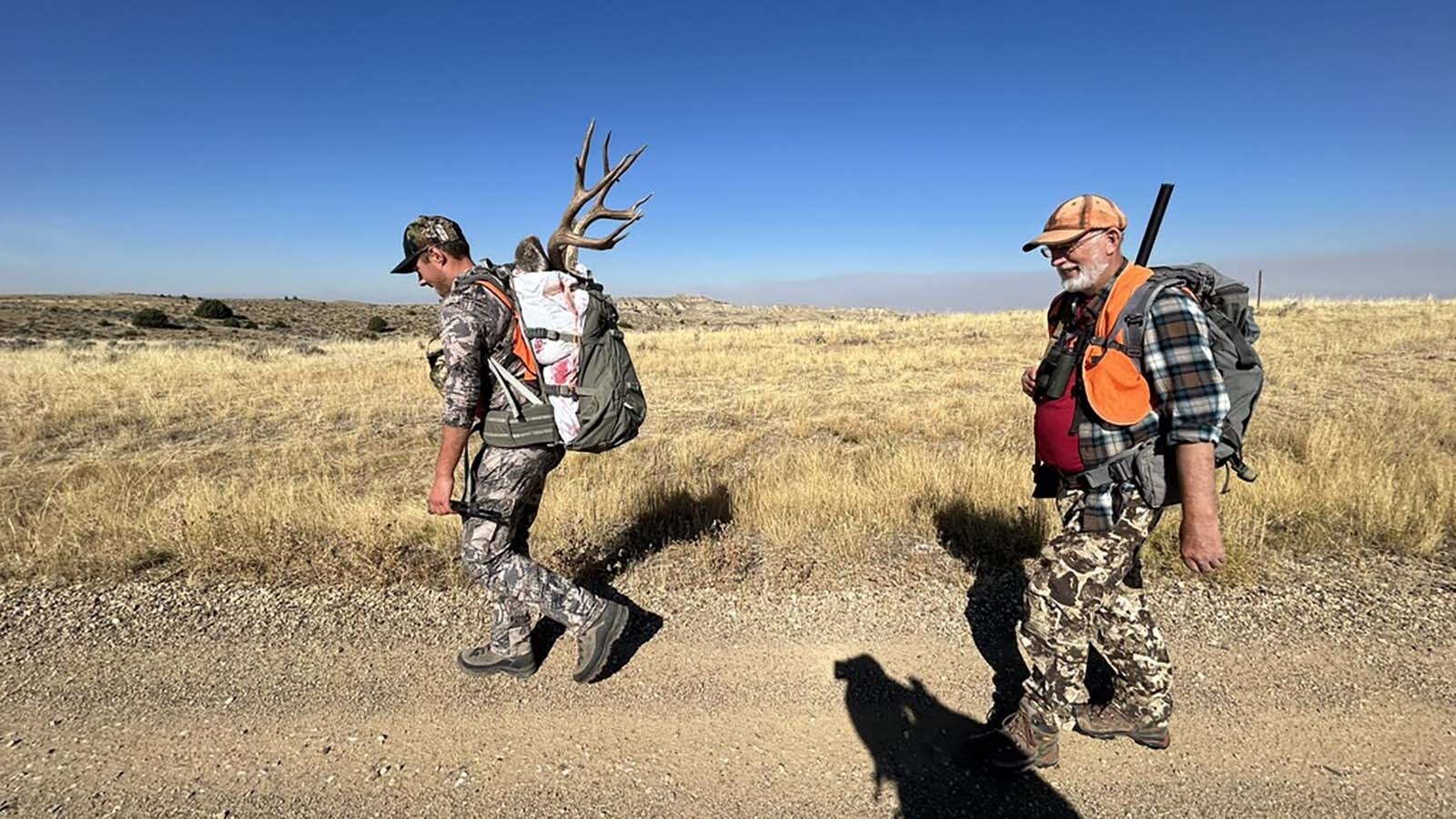
Landlocked public lands often contain extensive road systems used by ranchers, oil and gas workers, and, occasionally, do-it-yourself hunters. (Courtesy David Faubion) 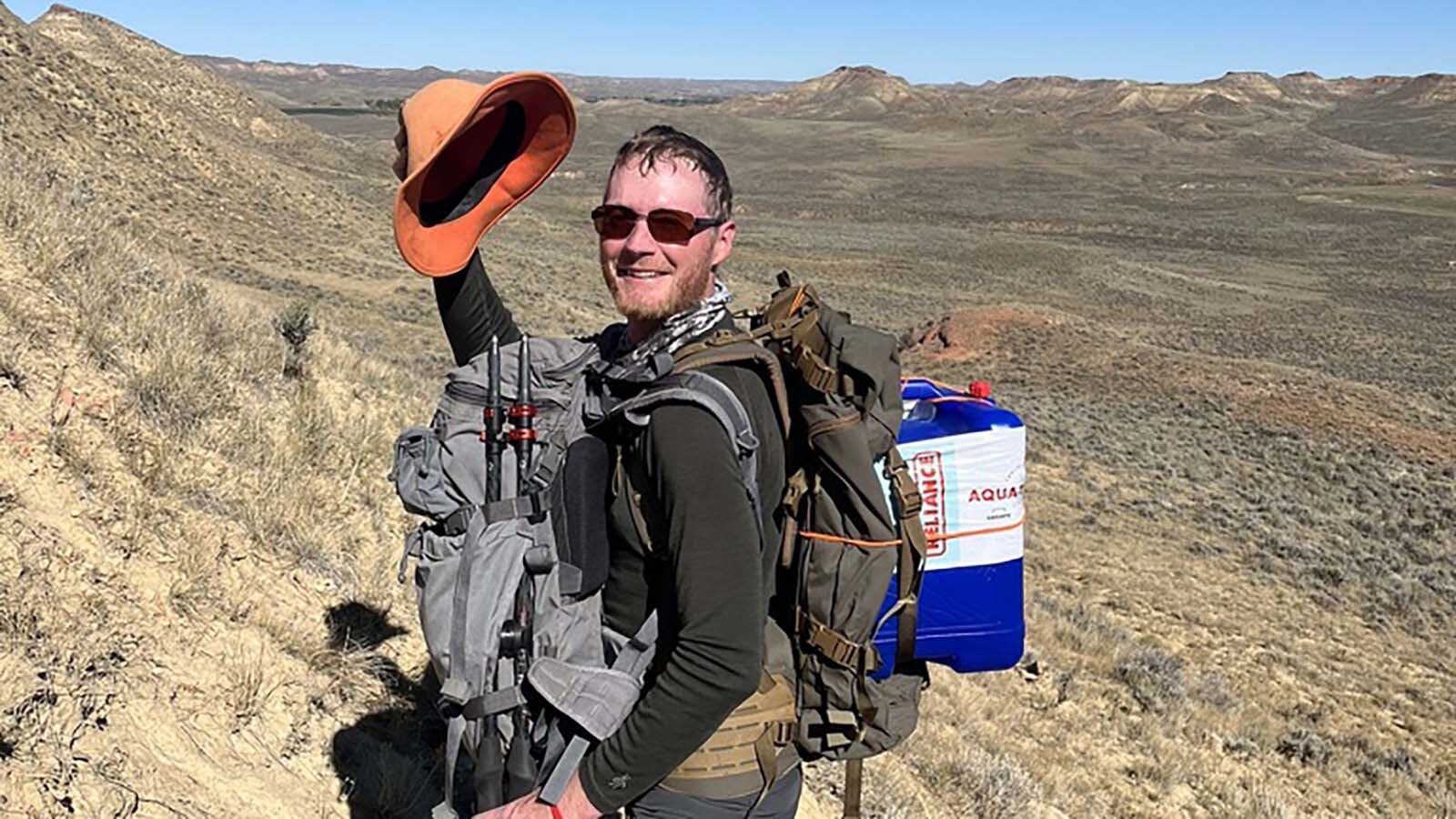
Hunters flown into landlocked sections of public land must pack their supplies, such as water, to campsites. (Courtesy David Faubion) 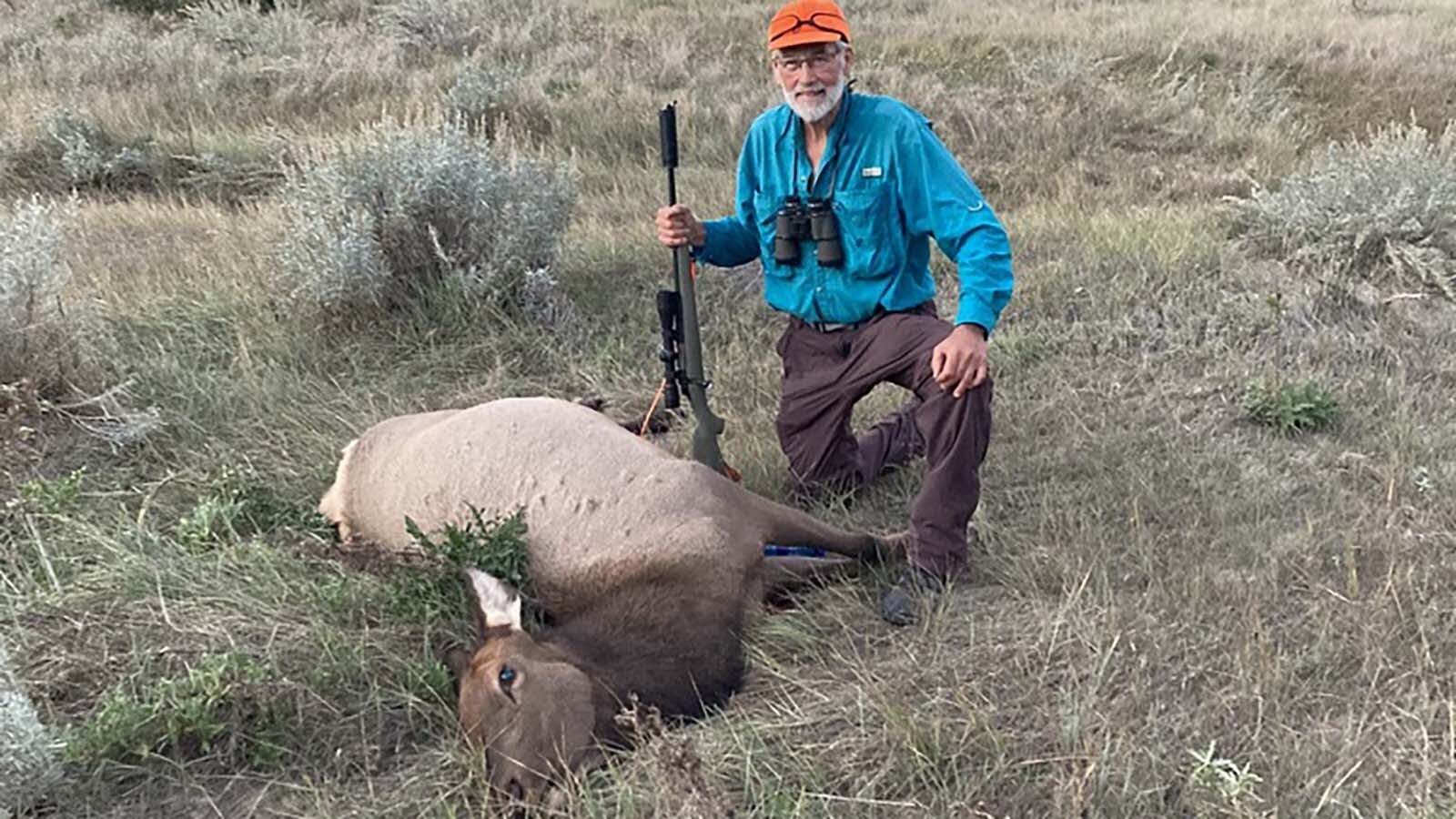
Fred DeKay wasn’t after antlers; he was excited about filling his freezer with delicious cow elk. (Courtesy David Faubion)
‘Not Wired For Confrontation’
In 2021, he set about trying to find a pilot willing to fly him and his hunting buddies into landlocked sections.
It turned out to be much tougher than he thought it would be.
Some pilots didn’t have the proper certification for such flights.
And, Faubion said, many others apparently didn’t want to upset the status quo.
“A lot of them were scared of incurring the wrath of ranchers,” by taking hunters into areas that previously only landowners or their selected outfitters could reach, he said.
He said at one point, he even talked to a hot air balloon pilot, but that idea didn’t pan out.
“It’s probably, to this day, the strangest conversation I have ever had,” he said.
In early 2024, he found helicopter pilot Tony Chambers of Wind River Air.
Since then, he’s organized three fly-in hunts in Wyoming. During one of them, a rancher allegedly tried stealing the head of a bull elk one of the hunters shot.
There was friction with landowners on every one of the hunts, Faubion said.
That included ranchers showing up in the flight staging area to question and confront them, he said.
“It can be spooky enough, that a good number of people wouldn’t want to do this (fly-in hunting). They’re not wired for confrontation,” he said.
Chambers and another one of the hunters, New Mexico resident Dave Romero, told Cowboy State Daily that they had lengthy conversations with one of the ranchers.
When contacted by Cowboy State Daily, the rancher declined to be quoted on the record, but stated that the fly-in hunt was disruptive and “there’s most likely a whole lot more to the story than what is being printed.”
Has Seen All Sides
Chambers said his business has consisted of sight-seeing flights, taking hikers into remote areas and the like.
He’s happy to add fly-in hunting to landlocked public land to his business roster.
“I’m a big believer that public lands belong to the public. They belong to the taxpayer and everybody should have access to them,” he said.
Romero has a cattle ranch in New Mexico and has also worked as a hunting guide. So, he said he can see the topic from all sides.
He said he can understand the appeal of having seemingly exclusive access to public land adjacent to a ranch.
“If you’re a rancher, that’s a really cool deal. But if you’re not a rancher, that kind of sucks too, because they can lock it up and you can’t access it. It belongs to you, but you can’t get to it,” he said.
He said in New Mexico he got tired of fighting people trying to get through his property to get to adjacent public land, so he finally decided to provide public access.
“It’s not like what they (the Wyoming Ranchers) had. There was ways to get around us, so it was a pain in the ass. It was easier to just let them through than it was always trying to fix the areas they tore up,” he said.
Romeo said he also understands why landlocked public land appeals to outfitters and guides.
“It’s a neat thing when you’re on the inside and you can keep other people locked out,” he said.
Even so, the public’s right to access public land will prevail, Romeo said.
“There’s no battle to be had” in that regard, he said.
He added that the landlocked public land he hunted on was “well-taken care of” by the adjoining ranchers.
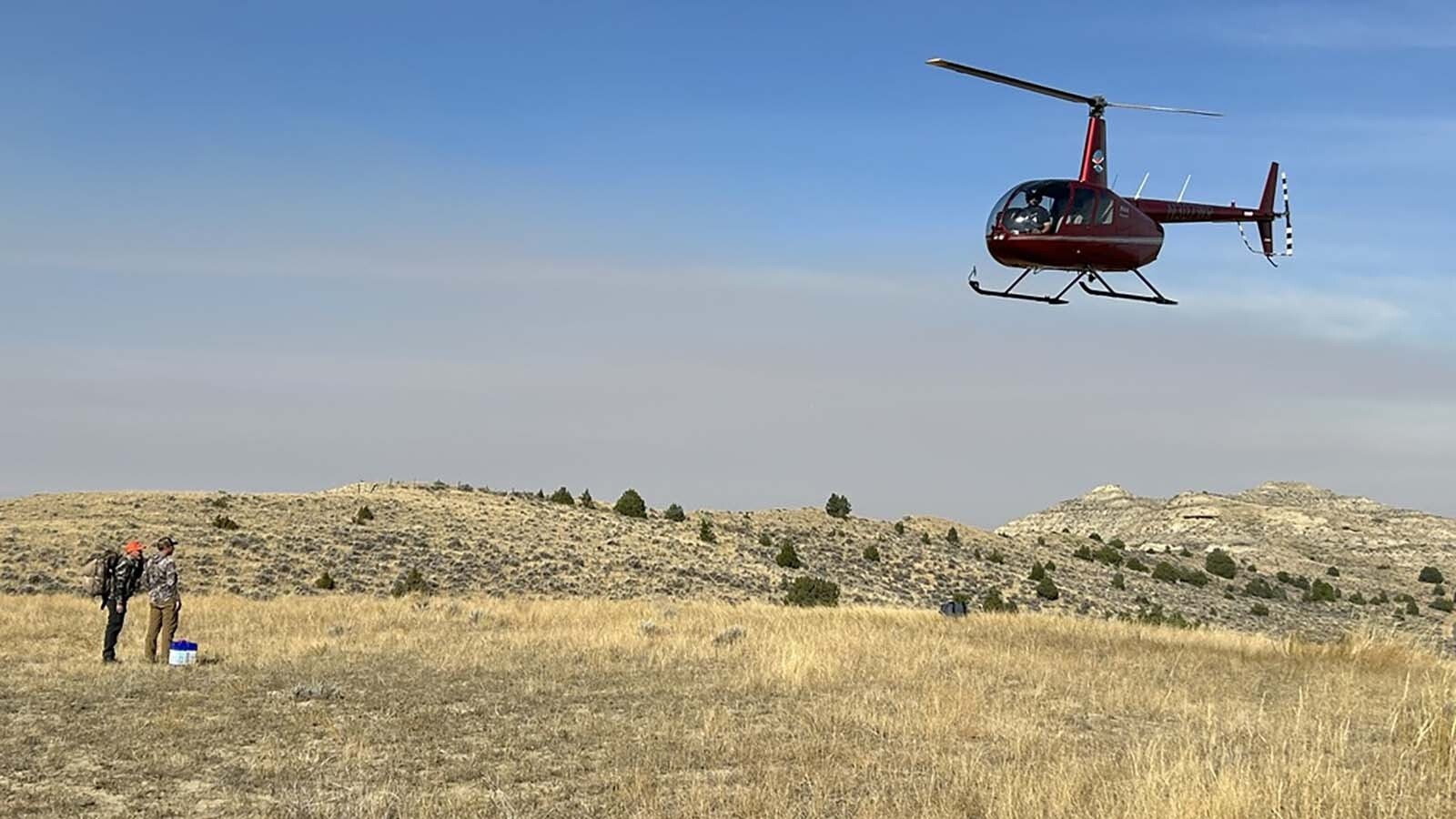
Some hunters say the only way to access isolated parcels of public land is by air. (Courtesy David Faubion) 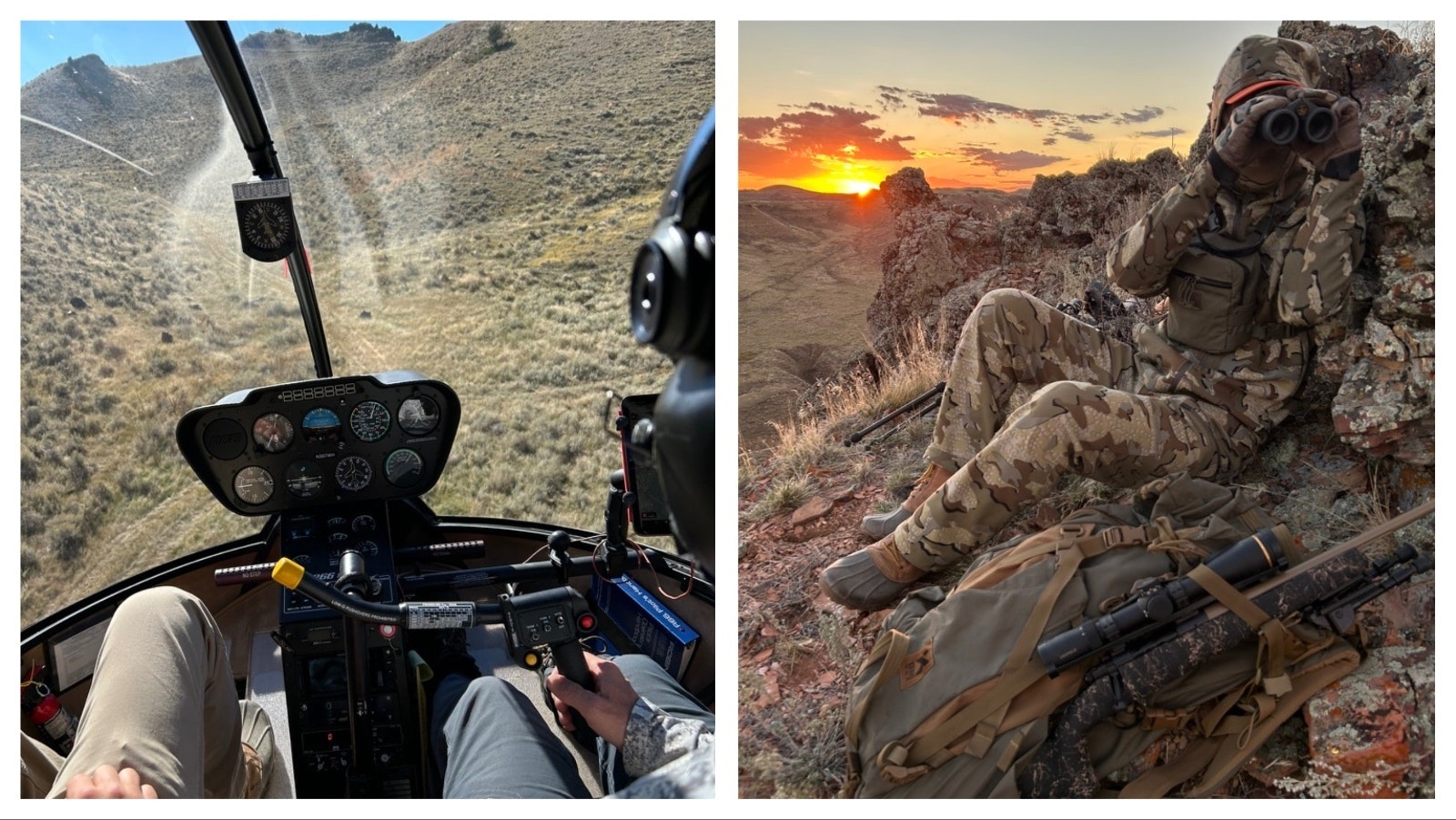
Fly-in hunters say that aircraft must adhere to the same rules vehicles do on BLM and state trust land and may land and take off only from established roads. On landlocked sections of public land, hunters say the best tactic is what works anyplace else: Find a high point and glass, or search for game with binoculars or spotting scopes. (Courtesy David Faubion) 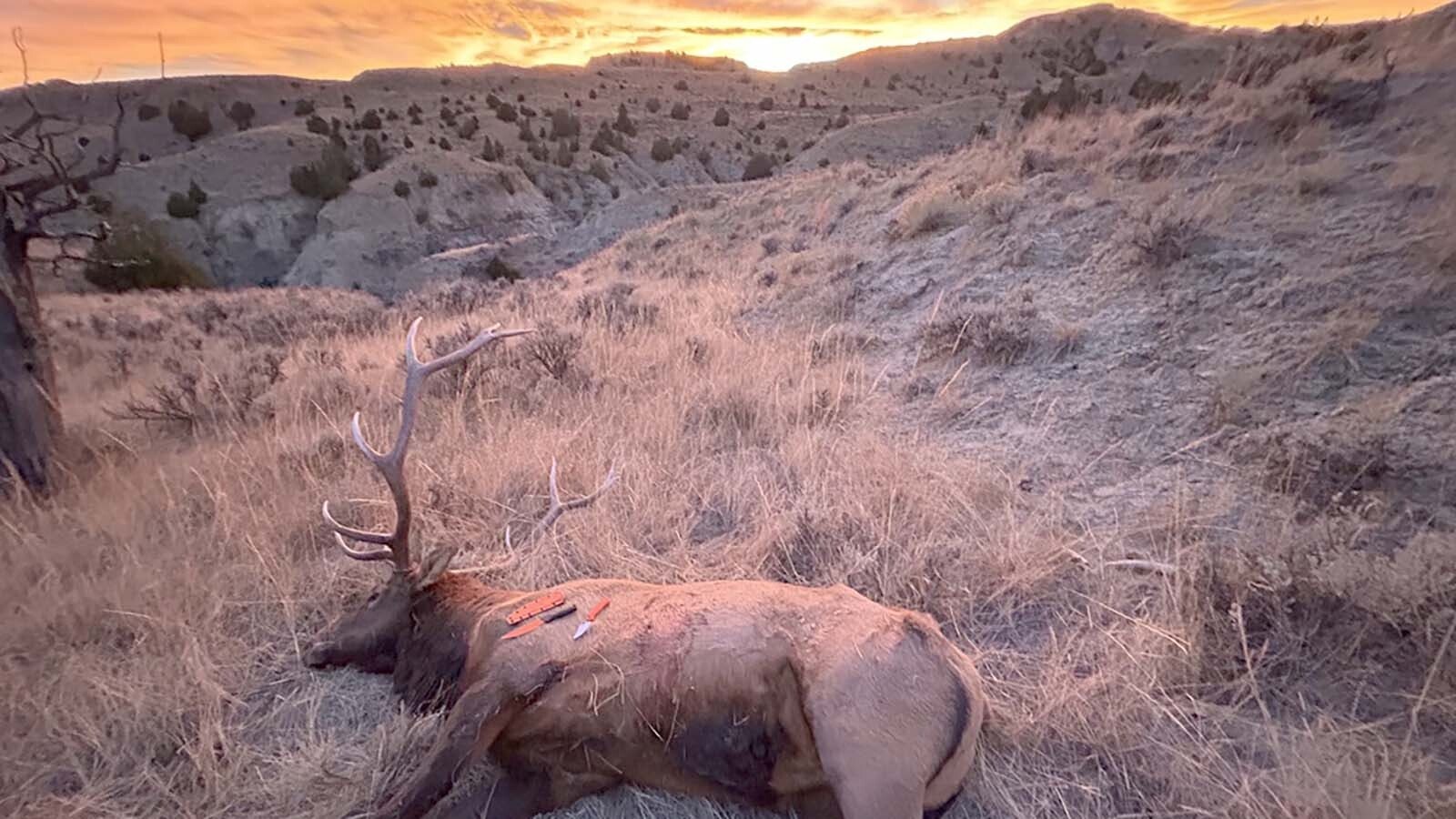
After years of planning, David Faubion’s first fly-in hunt to landlocked public land resulted in this bull elk. (Courtesy David Faubion)
Might Not Be the Next Big Thing
While fly-in hunting is becoming more common, it might not become wildly popular, Fonzy Haskell of Moorcroft told Cowboy State Daily.
“We did see an increase in flying in this year for Elk Hunt Area 123 (in northeast Wyoming), said Haskell.
“We did see a couple of different helicopters. A blue one, and a sort of silver one” that might have come from Newcastle and Rapid City, he said.
There have also been small airplanes apparently flying hunters in, he added.
Haskell is a member of the Wyoming Game and Fish Commission, representing Crook, Niobrara and Weston counties, and owner of Four Horse Outfitters.
Fly-in hunting might rub some outfitters the wrong way, he said.
“Some personally take opposition to that. They might say, ‘I was hoping to hunt that animal free of competition, but now, other guys are going into that area,’” he said.
He said he doesn’t see fly-in hunting on landlocked public land blowing up into huge issue, so long as private property rights are respected.
“I don’t think that it will become really trendy a lot of people won’t be willing to pay that kind of money” to charter flights in, Haskell said.
Faubion said the best way to arrange fly-in hunts is to split the costs among several people.
Typically, the charter costs “less that $2,000” per hunter, he said.
By way of comparison, trespass fees or outfitter’s fees across private land to get to landlocked public areas can cost several thousand dollars per hunter, he added.
‘There’s No Gray Area Here’
Faubion said that if outfitters wanted to push the matter and try to keep DIY (do-it-yourself) hunters from flying in, they might try declaring that the flight amounts to transporting or aiding hunters in the field.
That typically can’t be done without an outfitter’s license, he said.
Still, he thinks the term “in the field” wouldn’t apply to what he’s been doing.
On Wyoming State land, or federal Bureau of Land Management land, aircraft can land only on established roads, he said.
“We’re being flown from a road to a road,” so there’s no “in the field” assistance involved, he said.
He said he expects continued pushback against fly-in hunting, but plans to keep doing it.
“There’s no gray area here, it’s black and white. There’s nothing people can do to keep us off that public land, but they sure as Hell will try,” he said.
Mark Heinz can be reached at mark@cowboystatedaily.com.