
Apparently, questioning the statistics used to promote Proposition One has stirred up quite a fuss. Especially my objection to calling seven years of accumulated revenue differences a “surplus.”
Fine. We can settle that argument. But first, can we talk about something more important?
Proposition One would exempt half the assessed value of a qualifying Wyoming home from property tax. Supporters insist local governments can absorb the loss. Their proof? Add up all 23 counties and declare everyone can afford it.
Wyoming’s counties don’t share one budget or one bank account.
Adding them together makes about as much sense as adding up every family’s savings in town and announcing nobody has trouble paying the electric bill.
Here’s the part that really gets me. “B Alfred Marshall’s” widely circulated Wyoming by the Numbers presentation includes a hypothetical table.
It shows four counties with negative seven-year results after the proposed reduction: Carbon, Crook, Park, and Sublette. Yet the combined total stays positive, so we’re told the counties can afford it.
Does a healthy balance in Natrona County pay Crook County’s bills?
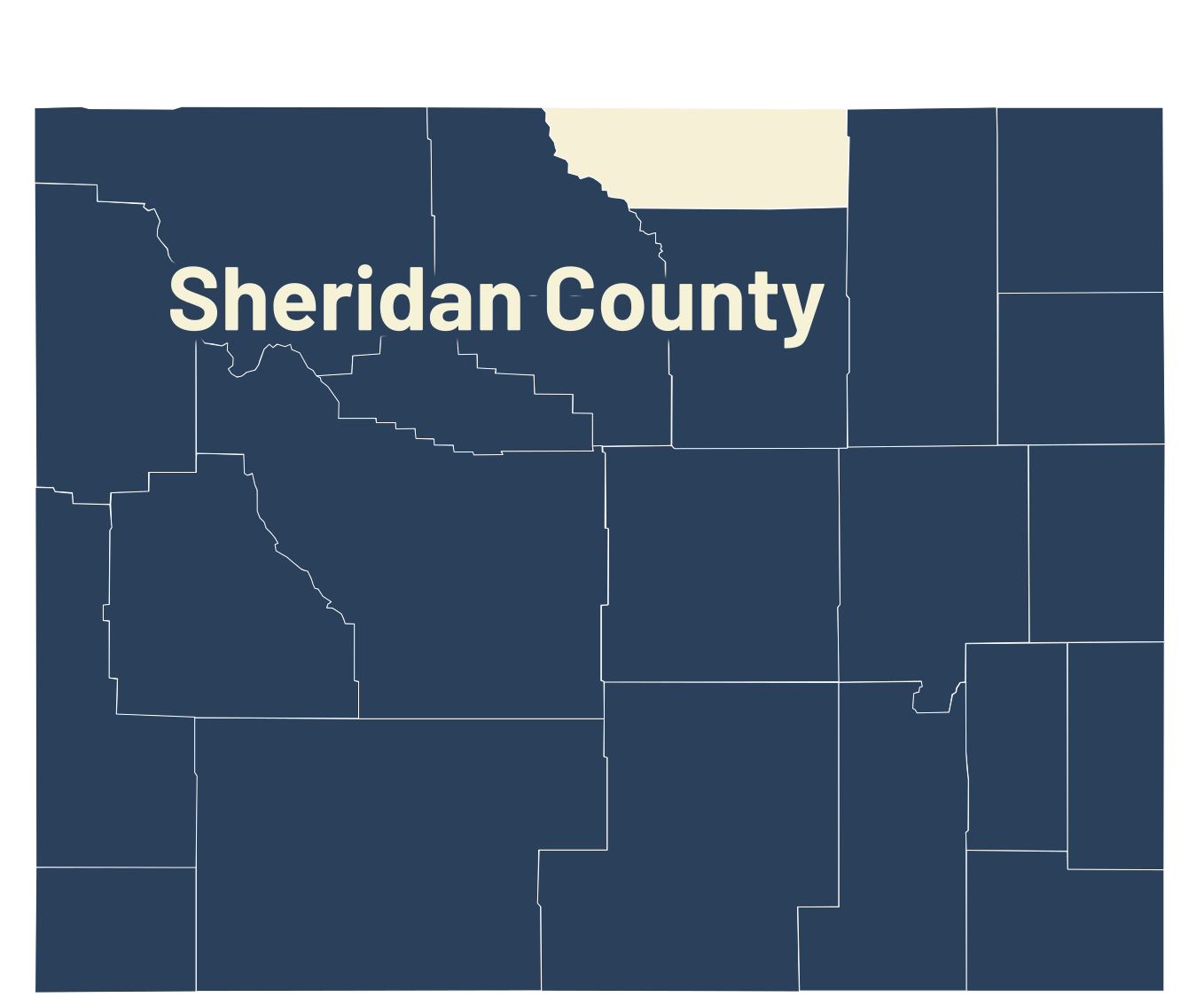
Of course not. And counties don’t face the same exposure to begin with. Residential property accounts for about 84% of all property taxes levied in Teton County and 69% in Sheridan. In Campbell, it’s about 6%. In Converse, less than 3%.
Those numbers include school and other local levies, and Proposition One applies only to qualifying homes. But they should end any pretense that one statewide average describes all 23 counties.
And we haven’t even reached Wyoming’s 99 municipalities, nine community colleges, or hundreds of special districts. Their dependence on residential property taxes can vary even more.
Now consider another favorite claim. Marshall says residential property taxes provide only about 8% of county revenues. Cut that in half, he argues, and counties lose only 4%.
Four percent of what?
His calculation includes revenue counties can’t freely use to replace lost property taxes. Fuel tax money is meant for roads. Voters approve capital-facility sales taxes for specific projects. Grants come with strings attached, and this year’s grant won’t necessarily exist next year, let alone pay salaries.
You can’t take money designated for road work or a voter-approved construction project and use it to cover the sheriff’s payroll.
Property taxes and general sales taxes pay the everyday bills of county government. Measure their loss against every restricted dollar passing through the courthouse, and the impact looks deceptively small.
So where would commissioners find the money? Short of cutting positions or abandoning approved projects, what’s left is mostly operations: fuel, insurance, utilities, repairs. That means delayed maintenance and thinner service. It’s fair to challenge predictions that fire stations will close. It isn’t fair to pretend there’s no cost when nobody has named replacement revenue.
Now, about that surplus.
Yes, when annual revenues exceed expenditures, the difference can be called a surplus. I’m happy to concede the word.
But in this campaign, “surplus” is being sold as money government never needed. That conveniently turns responsible planning into supposed waste.
Counties don’t build reserves because they’ve run out of ways to spend money. They save to replace road graders and to finance projects that take several years to build. Reserves also carry essential services through a revenue drop or an emergency. In a state where mineral revenue can swing hard from one year to the next, that isn’t waste. It’s the job.
Marshall’s seven-year arithmetic can’t tell us what sits in a bank account today or to what that money is already committed.
The 2025 county census reports can. They show about $1.85 billion in combined fund balances. Only about $631 million is unassigned money in county general funds, the most flexible dollars commissioners have. Even that isn’t spare change. Counties need cash to operate between tax collections and to handle emergencies.
And that’s before we get to towns, community colleges, and special districts.
Property tax relief is a legitimate goal. So is scrutinizing government spending. But neither makes restricted revenue available, and neither lets one county’s reserves cover another’s obligations.
Enough with the statewide totals. Supporters should show each county’s loss and the money it could actually use to cover it.
You don’t have to wait for them. Before you vote on Nov. 3, call your county commissioner or county clerk. Ask what your county stands to lose and how they’d make it up.
Wyoming voters deserve real answers. An impressive yet misleading statewide average isn’t one.
Gail Symons can be reached at GailSymons@mac.com