

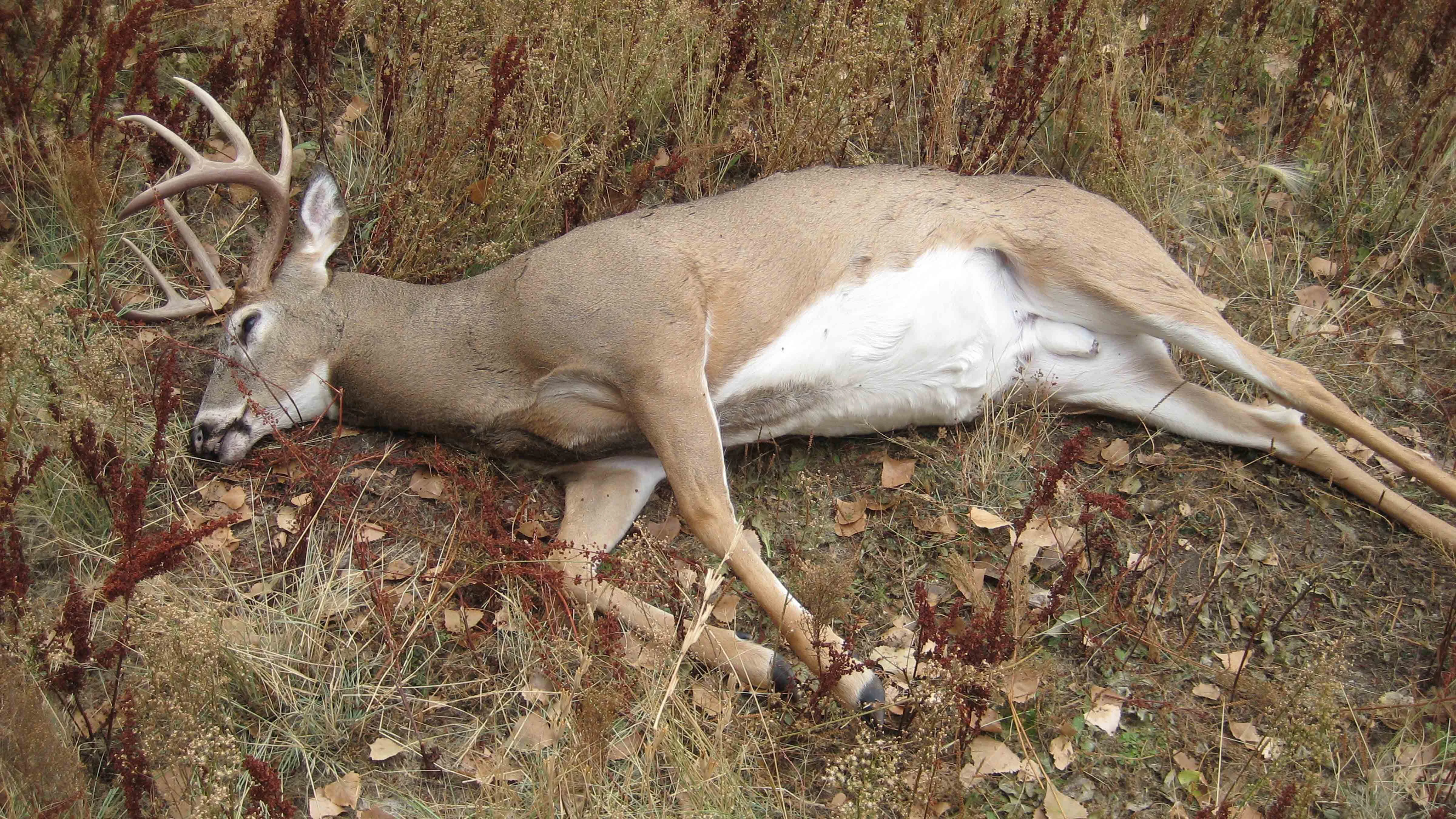
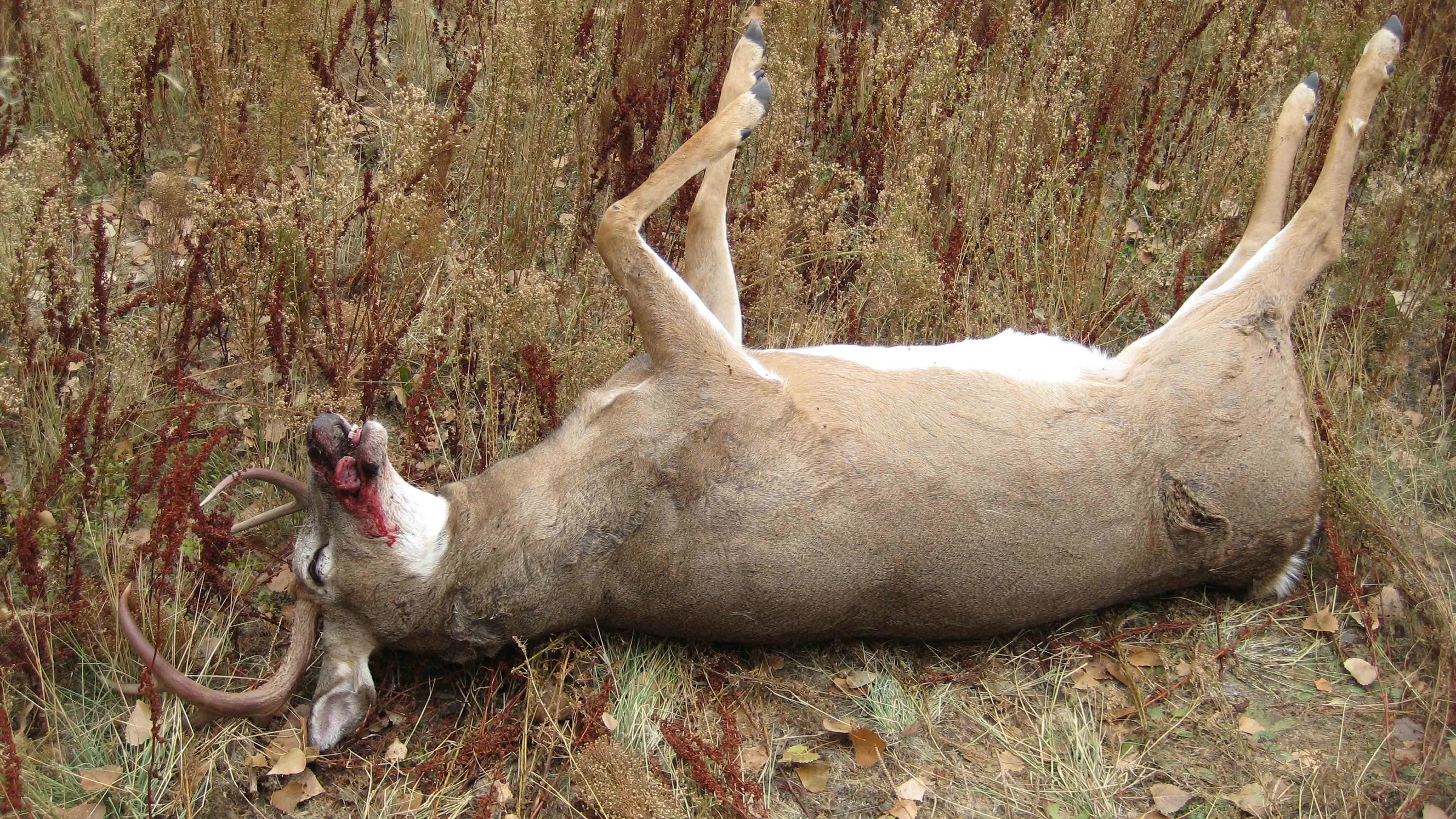
Two terms white-tailed deer hunters don’t want to hear are epizootic hemorrhagic disease (EHD) and bluetongue, closely related viral diseases that can leave carcasses littered across the landscape, sometimes with bloody foam in their noses and mouths.
North Dakota has been hit so hard this year some hunting seasons have been shut down.
There’s also been an outbreak affecting deer and some pronghorn around Casper, Glenrock and the eastern side of the Bighorn Basin in Wyoming. Officials say frost came early enough this year to kill off the midges that spread the disease and limit further transmission, helping spare much of the state..
Wyoming has had devastating outbreaks in years past, though.
The last severe outbreak before this year was in 2021 in the southeast part of the state and Bighorn Basin. Northeastern Wyoming was hit hard in 2006.
Retired game warden and biologist Joe Sandrini told Cowboy State Daily that one of the worst outbreaks he ever saw hit the Black Hills region a few years ago.
“They were picking up dead deer every day in the town of Hulett,” said Sandrini, who retired from the Wyoming Game and Fish Department in 2024.
Sandrini was a game warden for 10 years and a wildlife biologist for 23 in the Black Hills region, which has some of Wyoming’s largest white-tailed deer herds.
Sandrini said that, to his knowledge, the first recorded case of EHD and/or bluetongue in Wyoming was in 1957 near Newcastle. The diseases have since become endemic in the Black Hills and other regions.
There was a time when nobody thought the diseases would ever spread west of the Continental Divide, he said, but that was proven wrong.
North Dakota Nixes Seasons
About 350 hunters in North Dakota lost their opportunity to hunt antlerless white-tailed deer in the southern part of the state because of a severe and ongoing EHD outbreak, the North Dakota Game and Fish Department reported.
Hunting seasons were shut down in four units, and the North Dakota department is offering license refunds in several others.
The situation in the Casper region doesn’t warrant such severe measures, Game and Fish regional spokeswoman Janet Milek told Cowboy State Daily.
“Every year once Game and Fish detect either EHD or BTV (bluetongue), we closely watch for population-level impacts. If it elevates to that level, we would absolutely adjust hunting seasons,” she stated in an email, with input from Casper wildlife management coordinator Brandon Werner and Wildlife Wealth Lab supervisor Jessica Jennings.
The EHD and bluetongue viruses are “close cousins", Milek wrote.
Their effects are so similar that it’s nearly impossible to determine which virus killed an animal just by examining its carcass in the field. It takes a lab test to determine that.
“That's why we usually talk about them together,” she said.
Why White-Tails?
The viruses are spread through insects sometimes called "no-see-ums", because they’re so tiny.
They can infect any of Wyoming’s large ungulates, such as mule deer, elk, moose and bighorn sheep.
However, white-tailed deer are the most susceptible to devastating outbreaks because of their tendency to congregate in suitable midges’ breeding habitat, which can increase their exposure.
The midges prefer wet habitat and seem to thrive in moist, exposed mud, Sandrini said.
And white-tailed deer typically inhabit wet, muddy places such as river bottoms.
“They (white-tails) concentrate near water and muddy shorelines where midges breed, especially in dry years when water sources shrink. Pronghorn are also susceptible, though we've seen fewer, isolated cases in them this year,” Milek stated.
Symptoms are wide-ranging and include fever, lethargy, swelling, lameness and bloody discharge from the mouth and nose.
In severe outbreaks, illness and mortality among white-tailed deer can reach 90%, although rates vary widely by location and conditions.
Outbreaks usually occur in late summer or early fall, and they’re worse in dry years, when animals congregate around a few remaining water sources where the midges are, according to Game and Fish.
Sandrini said he recalled three major outbreaks in the Black Hills during his tenure with Game and Fish. Those had “herd-level” effects on white-tailed deer populations there, though the herds eventually bounced back.
He also noted that the diseases tend to hit bucks and fawns the hardest.
Some bucks survive but end up with softer antlers and/or antlers that stay in the “velvet” stage, Sandrini said.
It’s thought that the diseases can damage bucks’ testicles, which in turn affects their testosterone levels and antler growth.
Localized Devastation
Avid hunter Andy Hoffman of Greybull told Cowboy State Daily that he recalls bluetongue/EHD having devastating effects on white-tailed deer herds in the Midwest, where he grew up.
Outbreaks would all but wipe the deer out in certain areas, but then deer from surrounding areas would “move in there” and replenish the hunting opportunities, he said.
Nowadays, his daughter hunts white-tailed deer on private land near Manderson, where they have access permission.
So far, that region seems to have been spared severe outbreaks, and his daughter fills her deer tags, he said.
“I have heard some of the landowners say that over the years they’ve found a few dead deer showing signs of having died from EHD/bluetongue," Hoffman said.
Mark Heinz can be reached at mark@cowboystatedaily.com.


