
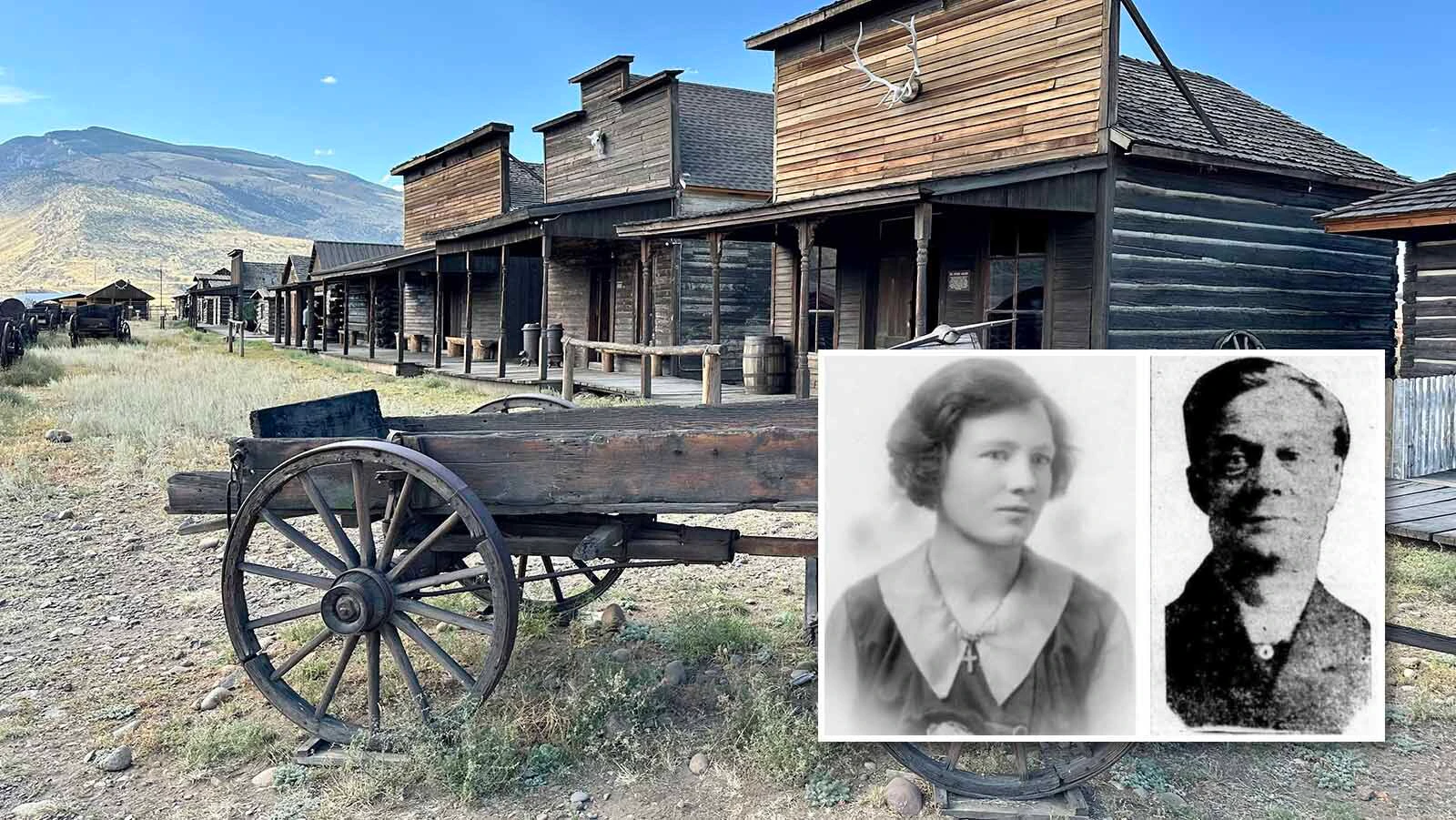
Wyoming sheepherder and oil field worker Albert “Bert” Lampitt never got the girl.
But he was said to be the role model for a villain in a famous Wyoming novel that was made into a movie.
And those who knew him believed he was either innocent or the greatest actor in a legal drama for his ability on two occasions to stay cool under the pressure of a potential hangman’s noose.
Why?
Because a decade apart, men were murdered after they had won the heart of the women Lampitt loved.
The methods used in the crimes also were inventive — a rigged shotgun in 1909 and sticks of dynamite in 1921.
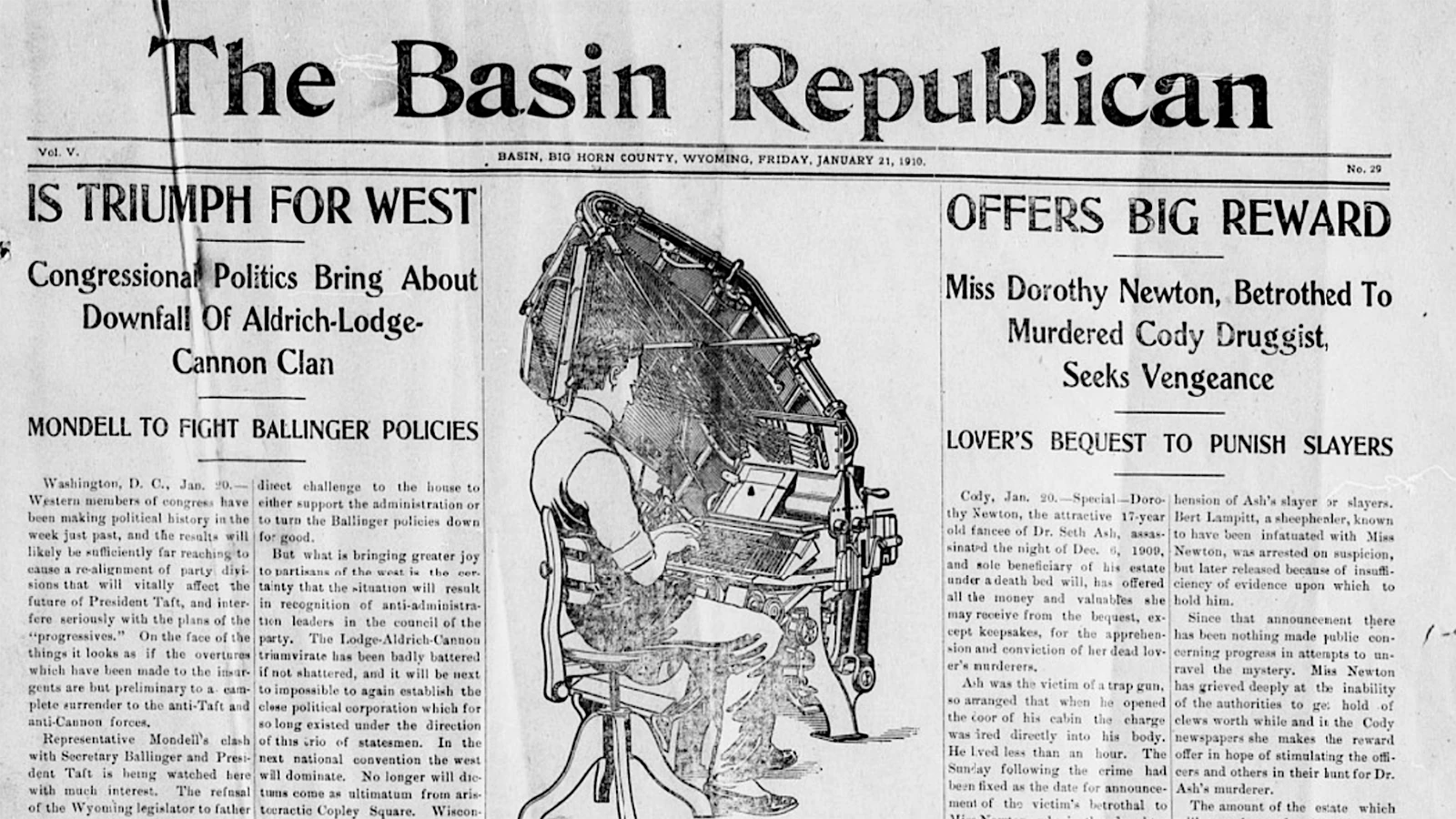
“Killed In Own Door,” The Basin Republican headline read on Dec. 10, 1909. “Dr. S. A. Ash meets fearful death.”
“Two Men Killed And Three Seriously Injured,” The Park County Enterprise reported on May 11, 1921. “Bert Lampitt, Jealous of Another Man’s Attention to a Woman, Places Explosives Under Bunk House Claim Officers.”
Lampitt, raised in Ainsworth, Nebraska, arrived in Wyoming in 1901 and worked for several sheep ranchers in northwest Wyoming.
He was known for his good conduct. He didn’t drink, smoke, chew or use profanity.
During his work for Cody rancher and businessman A. C. Newton he became acquainted with his daughter, Dorothy Newton.
The Big Horn County Rustler reported on Dec. 19, 1909, that Lampitt, then 26, was known as a “thrifty man and his only known extravagances were the gifts and attention he gave to the girl, 17, who also had the attention of Seth Ash, 40, known as “Doc”, who ran the town pharmacy.
“(Lampitt) had been with Miss Dorothy on the afternoon preceding the murder,” the newspaper reported. “She had just had or was about to have a birthday, and Lampitt had given her a beautiful present in the shape of a chain and locket.”
Newspapers reported Lampitt had several thousand dollars in the bank. However, an engagement announcement was expected between Ash and the girl at an upcoming family dinner when she turned 18 on Dec. 12.
An Execution
On the evening of Dec. 6, Ash, manager of Western Drug Co. in Cody, was returning from the business to his residence located behind a bakery. He opened the door of his room and buckshot from a single-barrel shotgun exploded into his midsection.
A string had been attached to the trigger and then via a couple of pulleys to the door handle. When the doctor opened the door, the blast went off. The weapon was set in place on his stove. A window and torn screen showed the assassin’s exit point.
Ash stumbled out for help with his intestines protruding. He was bleeding extensively. While a doctor attended to him, Ash dictated his last will.
He wanted to leave his entire estate to “Dot Newton.” It included one-third interest in the drug store and other property valued at $12,000. Shortly after the will was dictated, he died.
After an initial investigation, Lampitt was arrested for the murder because of his known affection for Newton and his ability to set traps.
“It is understood that the prisoner is adept at setting traps for animals and that a device he once fixed, (in which) he snared a bear was similar to the arrangement whereby Dr. Ash lost his life,” the Basin Republican reported on Dec. 17, 1909. “Lampitt’s friends are sticking staunchly to him and express their confidence in his ultimate exoneration.”
Authorities kept Lampitt in jail for several days and then released him because of insufficient evidence. All the while he maintained his innocence and appeared willing to let the authorities do their jobs.
Meanwhile, Newton offered all the money and valuables she would receive from Ash, except for a few keepsakes, as a reward for his killer.
The reward was never claimed.
Over the next several years, Lampitt’s name continued to appear in newspaper community sections stating that he was in town for supplies or visiting friends. He was a witness in a trial, worked as an assistant surveyor and, in 1919, Lampitt was reportedly in Cody for a visit from his new home, Midwest, where he was working in the oil patch.
An Explosion
Then on May 7, 1921, while working for Midwest Oil Company near an Ohio Oil Company camp in Grass Creek, northwest of Thermopolis, Lampitt returned to the front page when dynamite and nitroglycerine were placed under a corner of a bunkhouse where Harry Foight slept.
Foight had become engaged to Grace Lee, who was in charge of the bunkhouse and who also had known Lampitt and spent time with him.
“The explosion occurred at 1 o’clock in the morning, seemingly set for a time when the men got off the 12 o’clock shift and camp would be quiet again,” the Cody Northern Wyoming Herald reported on May 11, 1921. “Foight was hurled a hundred feet from the bunk house and his body disemboweled.”
A driller named W. C. Seaton was also killed. Workers Charley Wilcox, Ed Schroeder, and Jack Crandall were injured.
Authorities found footprints leading away in the mud from the destroyed bunkhouse.
Lampitt was immediately sought as a suspect after police learned Foight had confronted Lampitt about listening to a conversation he had with Lee. Foight reportedly openly accused Lampitt of killing the druggist years earlier.
The Northern Wyoming Herald reported that Lampitt replied “they didn’t get me for it.” He then allegedly threatened Foight.
Lampitt was arrested at his shack and brought to the site of the explosion and shown the bodies by the coroner, who accused him of killing them. Lampitt denied knowing anything about the blast and stayed silent.
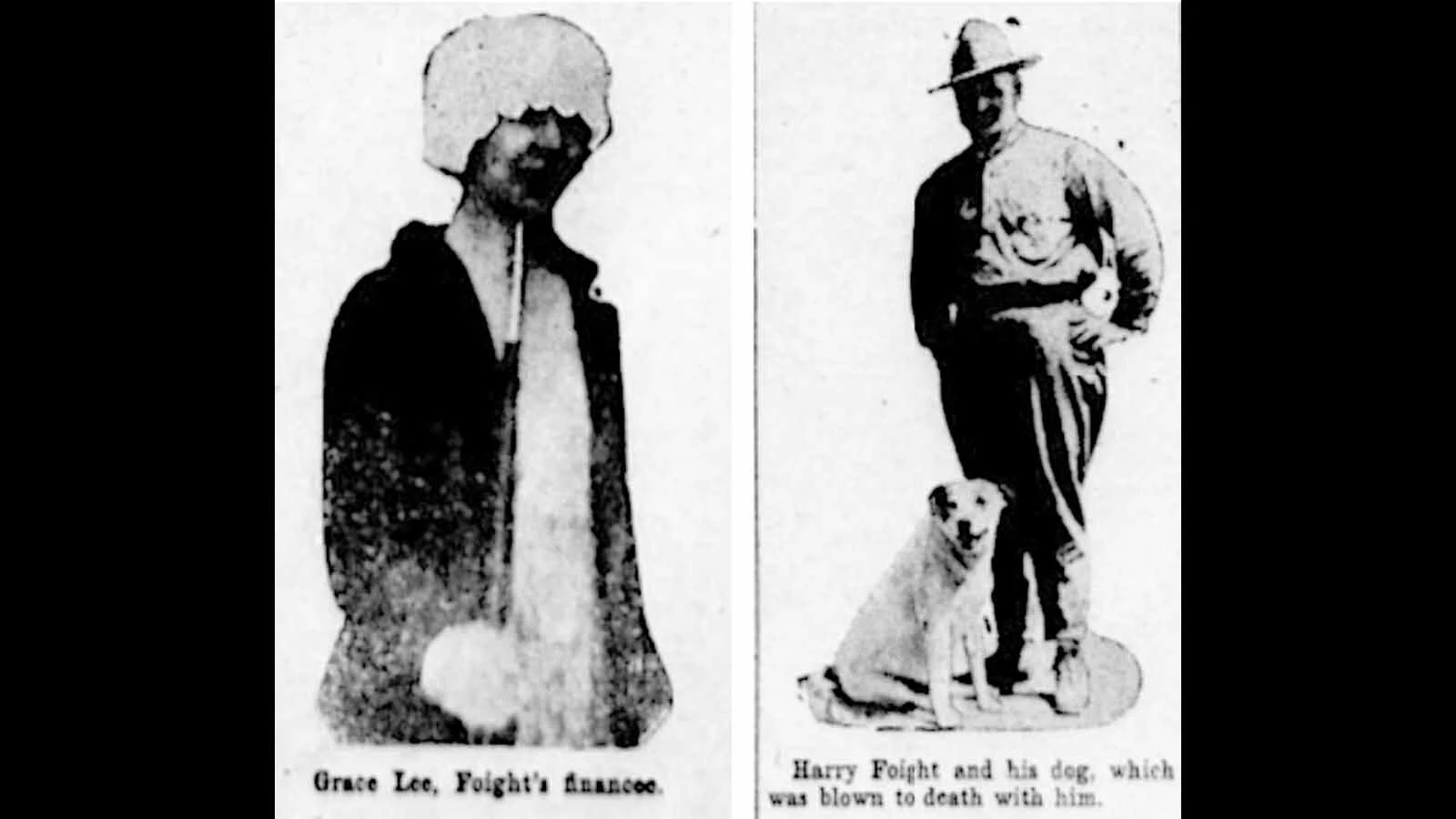
Grace Lee became the second woman who lost her love after choosing another over Bert Lampitt. Harry Foight lost his life after becoming engaged to a woman who worked in his oil camp. 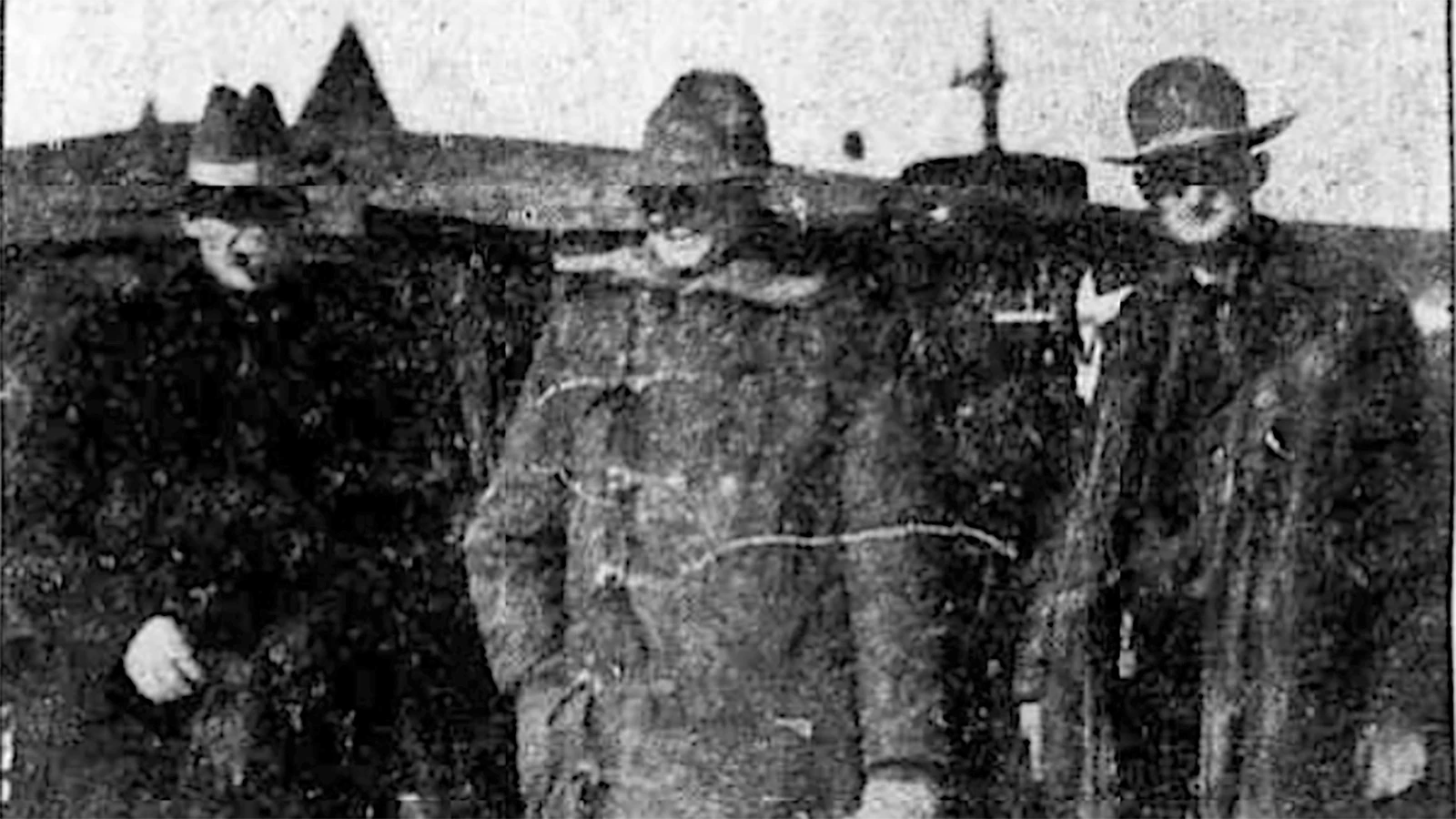
Bert Lampitt, center, flanked by the Hot Springs County sheriff, left, and a deputy. (Wyoming newspapers.com) 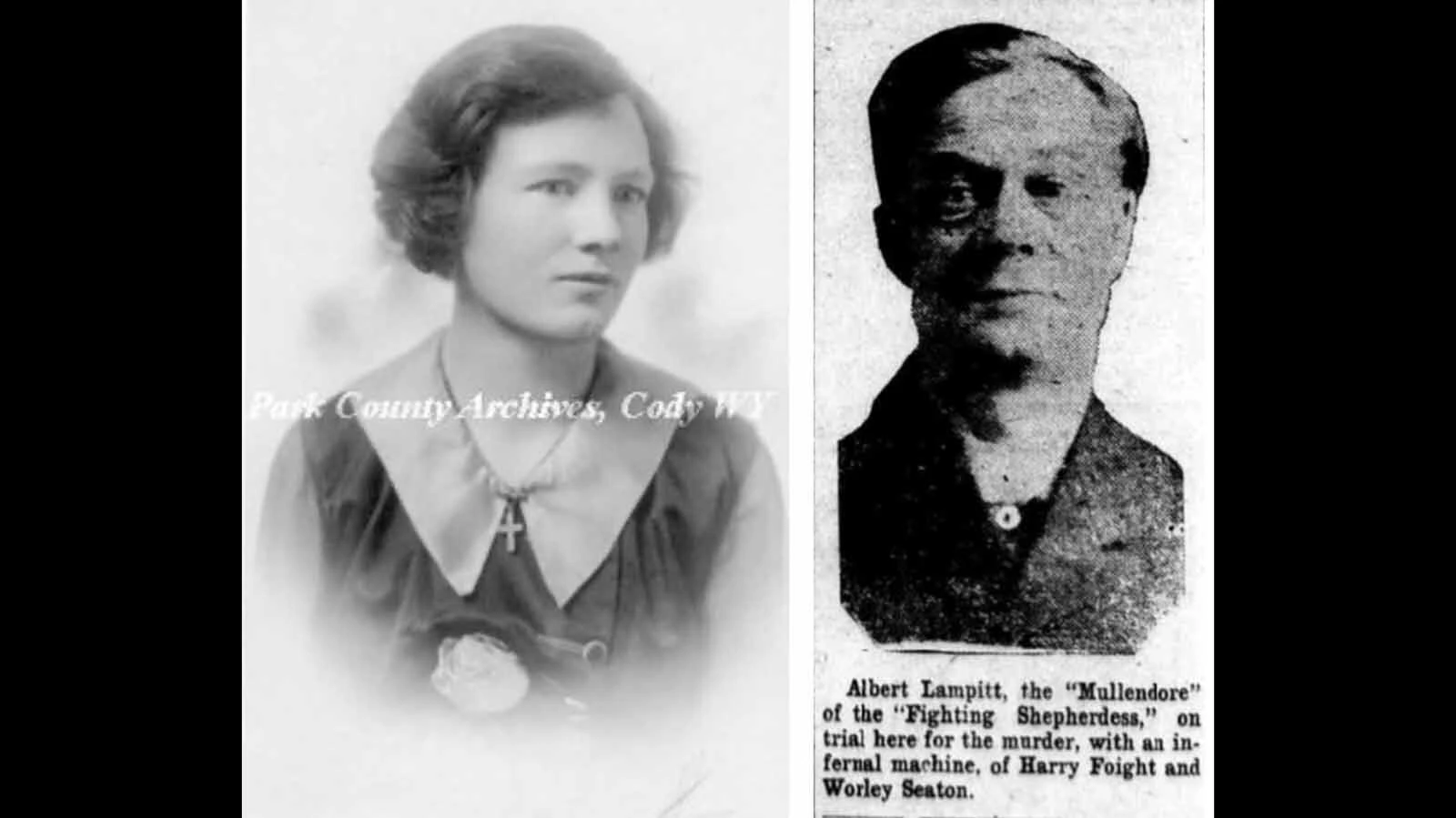
Dorothy Newton was about to get engaged in December 1909 when her boyfriend was shot. Bert Lampitt shown in his late 30s was compared to a character in a Cody author’s novel.
Preliminary Hearing
At a preliminary hearing on murder charges in Thermopolis, Lampitt hired Cody attorney William Simpson, father of a future Wyoming governor and grandfather of a future senator, to defend him.
Newspapers reported Lampitt appeared unruffled by the charges.
Witnesses included a Cody clerk who said Lampitt purchased a fuse for dynamite on April 21. An employee at the Cody Cafe testified he had rented his barn to Lampitt. For a long time Lampitt had four sticks of dynamite in the barn.
When he visited the barn with the sheriff from Thermopolis, the sticks were missing.
A powder shed at the Ohio Oil Company had been broken into and nitroglycerine and dynamite taken.
Testimony from law enforcement spoke of Lampitt’s auto sitting outside his cabin with food and a bed roll.
The prosecution alleged the murder weapon involved dynamite that set off nitroglycerin to demolish the bunkhouse.
Prosecutors said a piece of string found at the destroyed bunkhouse was unlike anything in the Ohio Oil Camp but did match a string Lampitt had wrapped around bacon in his shack.
Lee testified that her relationship with Lampitt was platonic.
“Although absolute evidence was lacking in practically every particular, the officers have woven a net of circumstantial evidence which may prove strong enough to convict,” the Northern Wyoming Herald reported on May 25, 1921.
Simpson asked for and was granted a change of venue from Hot Springs County to Big Horn County due to concerns about a fair jury pool in the Thermopolis region.
When the trial began on Jan. 30, 1922, Judge Percy W. Metz denied Simpson’s motion to dismiss the jury pool because it lacked women. Jury selection and challenges took two days.
When testimony began the prosecution brought in witnesses to describe the death scene and the destruction of the living quarters.
A doctor testified to the damage done to the bodies and a series of witnesses provided the chain of alleged evidence against the defendant, including the purchase of fuse, his plan to dynamite a cave, and his appearance during the evening at various locations, first in his best clothes and then in working clothes.
Evidence was introduced that dynamite and nitroglycerine were taken from an Ohio Oil powder magazine after a door was pried open with a crowbar. A crowbar found in Lampitt’s car fit the marks made by a tool trying to force the door and window of the powder magazine.
Explosives In Court
As part of the prosecution’s case, the explosive material similar to what Lampitt used was introduced.
“Spectators in the crowded courtroom were treated to a mild form of excitement on Saturday when a large portion of explosive matter consisting mostly of nitroglycerine was brought before Judge Metz who realizing the danger of the powder, ordered it removed immediately from the courthouse and city,” The Cody Enterprise reported on Feb. 8, 1922.
An A.J. Bankson, who maintained a Grass Creek explosives magazine, testified he and Lampitt had a conversation at a barber shop about the relative strength of dynamite and nitroglycerine and how to use them together.
Lee did not appear. Her testimony at the preliminary hearing was read.
Evidence was introduced that Lee had written Lampitt a letter that brought him to the Ohio Oil camp and that she had known him and had visited various places with him in northwest Wyoming, including Yellowstone National Park.
During the trial, Hot Springs County Sheriff Harry Holdredge found that his prisoner was in possession of a sack of material that came from an unknown source. He secured the sack and told Lampitt he was going to search him.
Lampitt responded he had no right to do that except in the presence of his attorneys.
Holdredge told Lampitt he was wrong and that he was going to handcuff him because he was being unruly.
Lampitt moved his hand to the inside of his coat when the sheriff moved to cuff him. The sheriff hit him on the head with the handcuffs and Lampitt started bleeding, delaying the court proceedings for a short time, the Big Horn County Rustler reported on Feb. 10, 1922.
Simpson called several defense witnesses to try to refute testimony and then put Lampitt on the stand.
Under questioning from Simpson he recounted his whereabouts on the evening of the blast. He said he had worked on a car, ate supper, got a ride to the store, visited a drilling rig for water, and went to bed at 9:15 p.m.
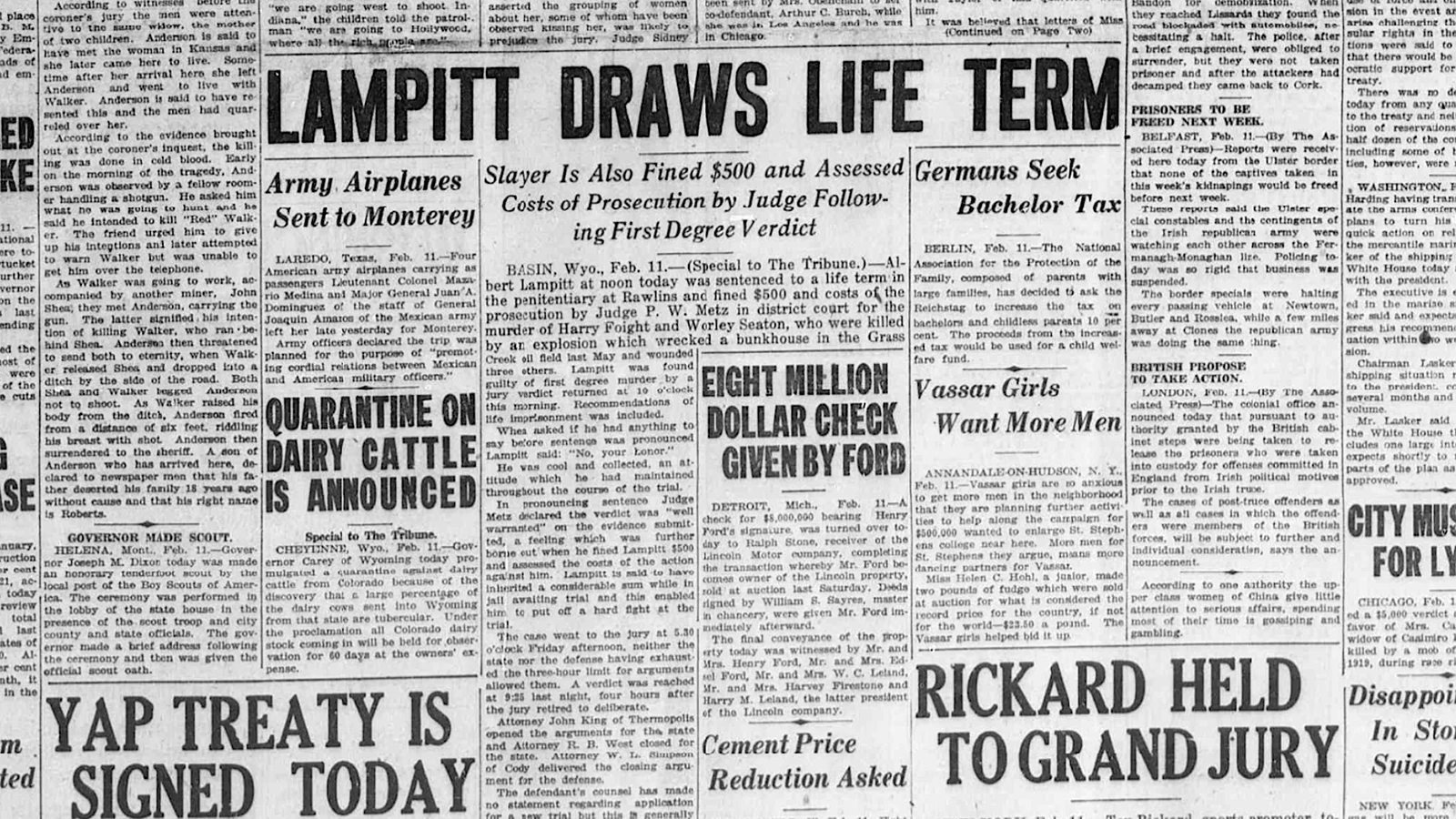
The Casper Daily Tribune reports Bert Lampitt’s outcome on Feb. 11, 1922. (Newspapers.com) 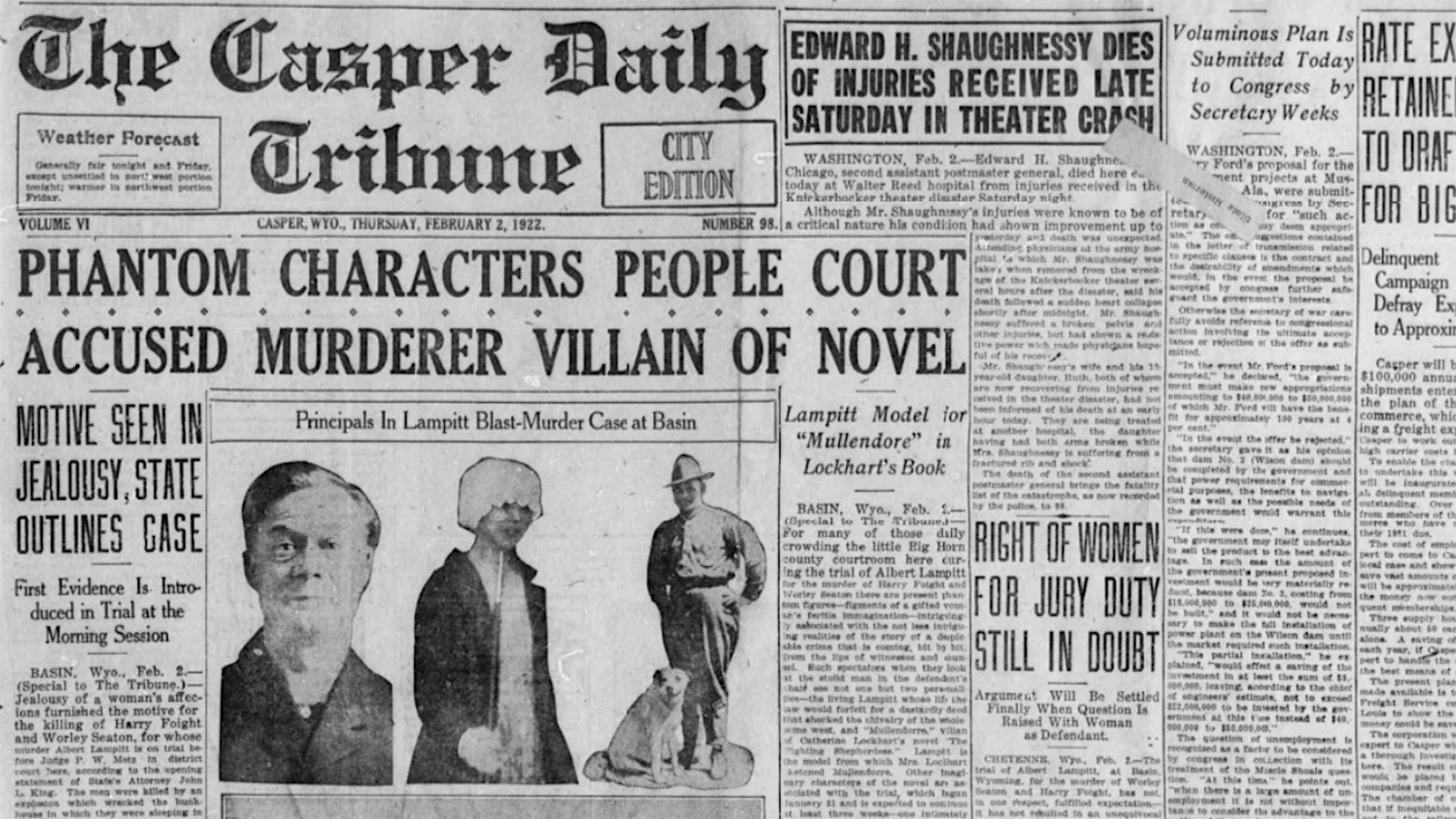
Casper Daily Tribune reports on Bert Lampitt’s comparison to a Cody novelist’s character in her book. (Wyoming newspapers.com) 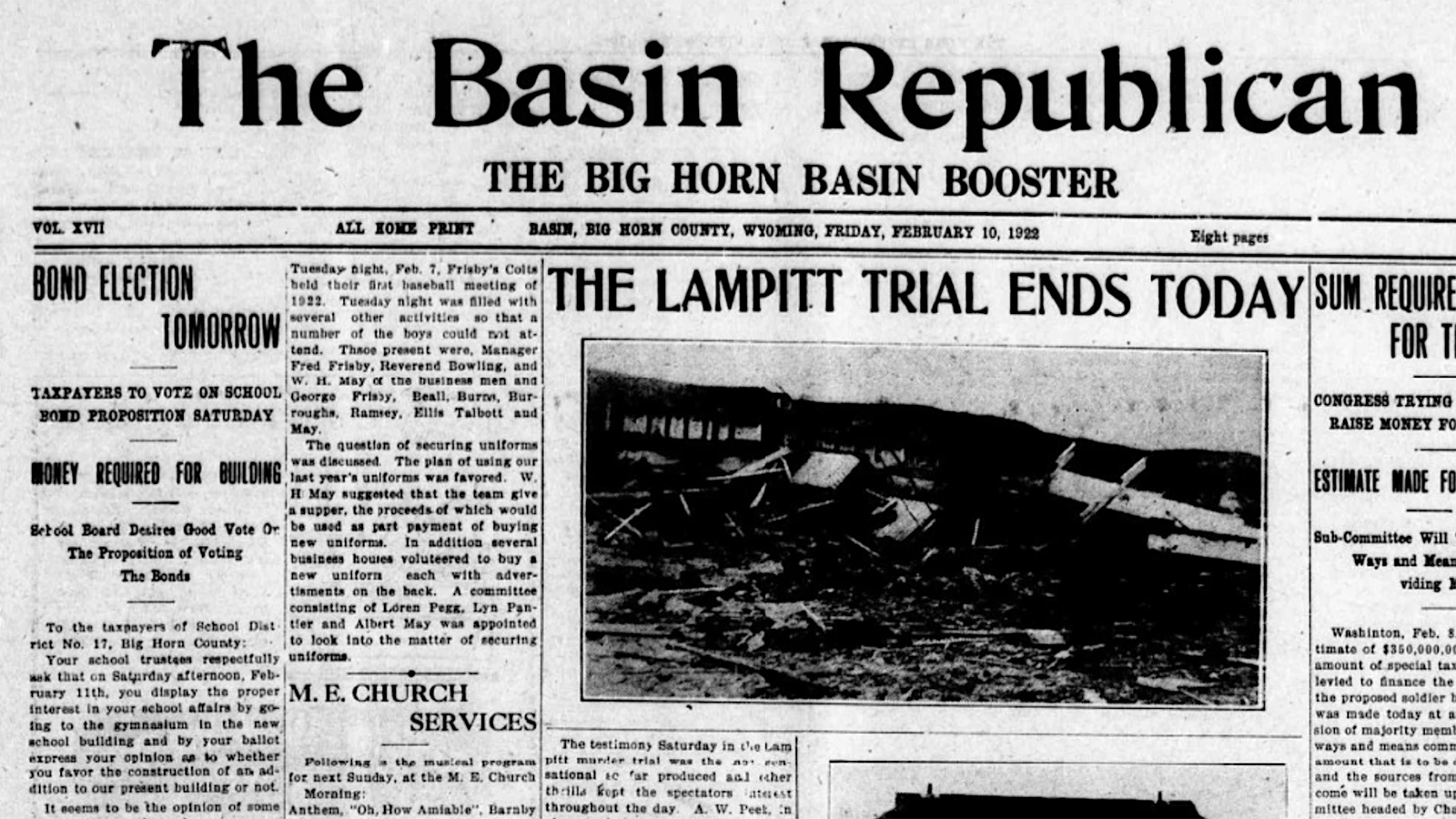
The Basin Republican published before and after photos of the dormitory where two were killed and three injured in an explosion. (Wyoming newspapers.com)
A Friendship
Lampitt characterized his relationship with Lee as just a friendship, denied making any threats toward Foight, and said he had purchased fuse for blasting because he wanted to close the mouth of a cave where sheep had fallen.
He had not yet gone back to the cave to do the job.
He testified he had straightened out the misunderstanding with Foight, and that Foight had asked him to take a trunk to Cody for him. Lampitt also said one of the men seriously injured in the blast had been a friend of his.
Lampitt’s testimony appeared to help his case.
“Those who listened to the defendant’s examination yesterday were amazed at the nerve of the defendant,” The Basin Republican reported on Feb. 10, 1922. “He seemed cool and collected and answered all questions without hesitation. His denial of all incriminating conversations was in the opinion of many as the only weakness in his testimony.”
Prosecutor Major King’s closing argument was characterized as “masterful” by the Riverton Review on Feb. 8, 1922. King pointed his finger at the defendant and told him, “Thou art the man.”
Lampitt proceeded to “choke” and “cotton came to his mouth,” the reporter wrote.
King’s argument and the circumstantial evidence against Lampitt brought the jury to convict him after only four hours of deliberations.
Metz commented that the verdict was “well warranted” based on the evidence and sentenced Lampitt to 99 years in prison.
“Outside of his attorneys who sincerely believe in his innocence, it is doubtful there are a dozen people who do not consider it a just verdict,” The Cody Enterprise reported on Feb. 15, 1922. “While the evidence was entirely circumstantial, it was overwhelmingly against him, and this, taken with the prejudice arising from his connection with the cowardly Ash murder, made his conviction almost a foregone conclusion.”
Novel Character
Throughout the trial, state newspapers carried articles mentioning Lampitt as the role model for the villain “Mullendore” in Cody author Caroline Lockhart’s book “The Fighting Shepherdess.” Mullendore’s actions included blowing up a sheep wagon.
An appeal of Lampitt’s conviction went to the Wyoming Supreme Court. The high court upheld the district court’s sentence in January 1926. Lampitt’s appeal for clemency before the state board of pardons failed in January 1930.
Lampitt was granted a commutation of his life sentence to 20 to 65 years on Oct. 15, 1941, making him eligible to leave prison in February 1942, the Casper Tribune-Herald reported that same day.
Lampitt’s life after the commutation announcement is unclear. Attempts to unravel the final years of his life were unsuccessful.
His first love, Dorothy Newton, married George Efner in 1915. Efner died April 2, 1919, and she died on July 23, 1919. They left a surviving child.
Grace Lee moved to Kansas before Lampitt’s trial. Her following years are unknown.
Dale Killingbeck can be reached at dale@cowboystatedaily.com.


