
CHEYENNE — Wyoming was a seismic culture shock for Airman Savannah Levett when she landed in Cheyenne one cold November day.
Raised in the South, Levett was used to “yes, ma’am” and “no, ma’am,” and the easy rituals of Southern hospitality.
Cheyenne was also full of wide-open spaces, dark skies and a loneliness she had not expected.
“There’s like no trees out here,” she said. “That’s one of the first things I noticed. I was like, where are the trees?”
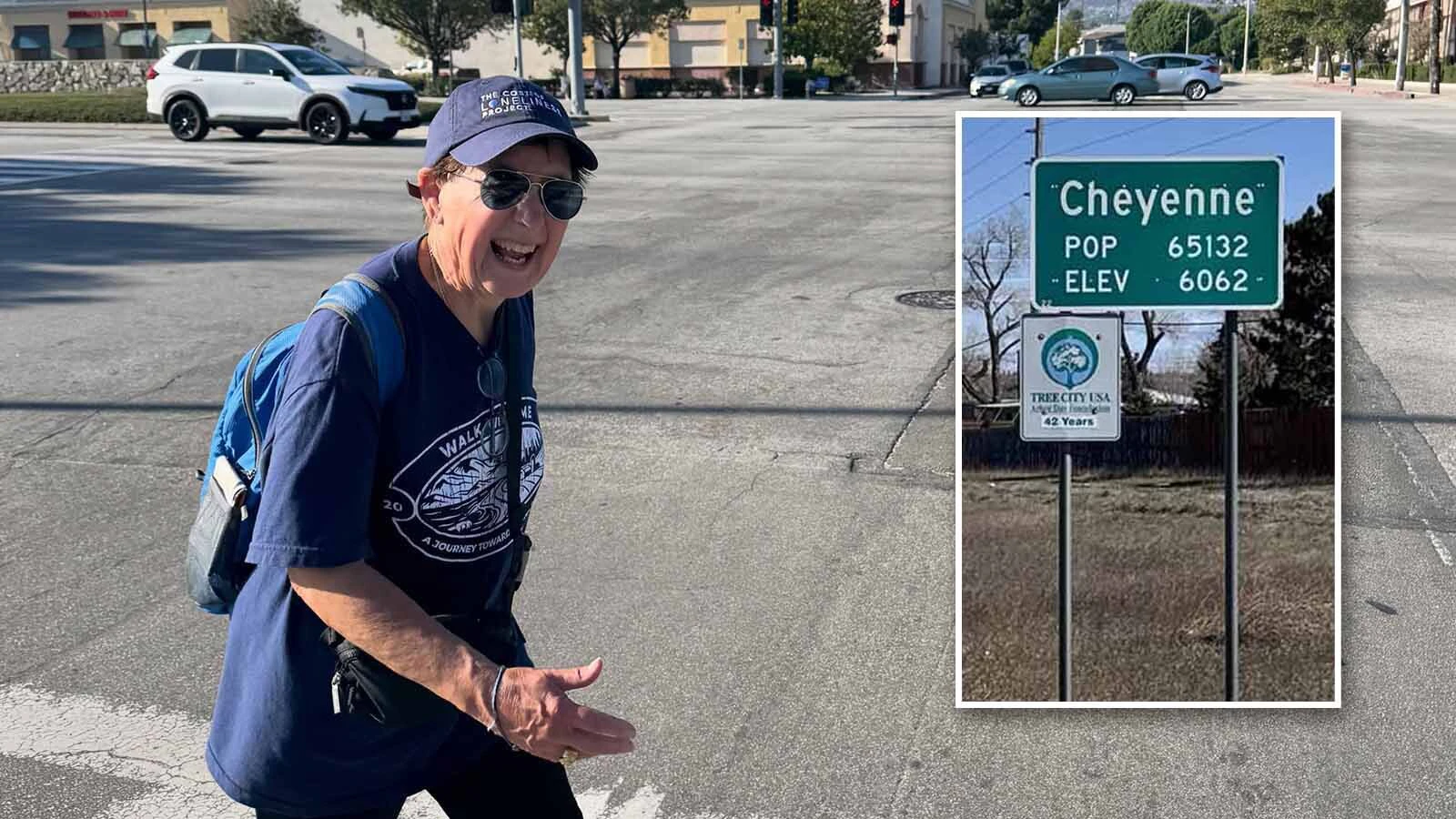
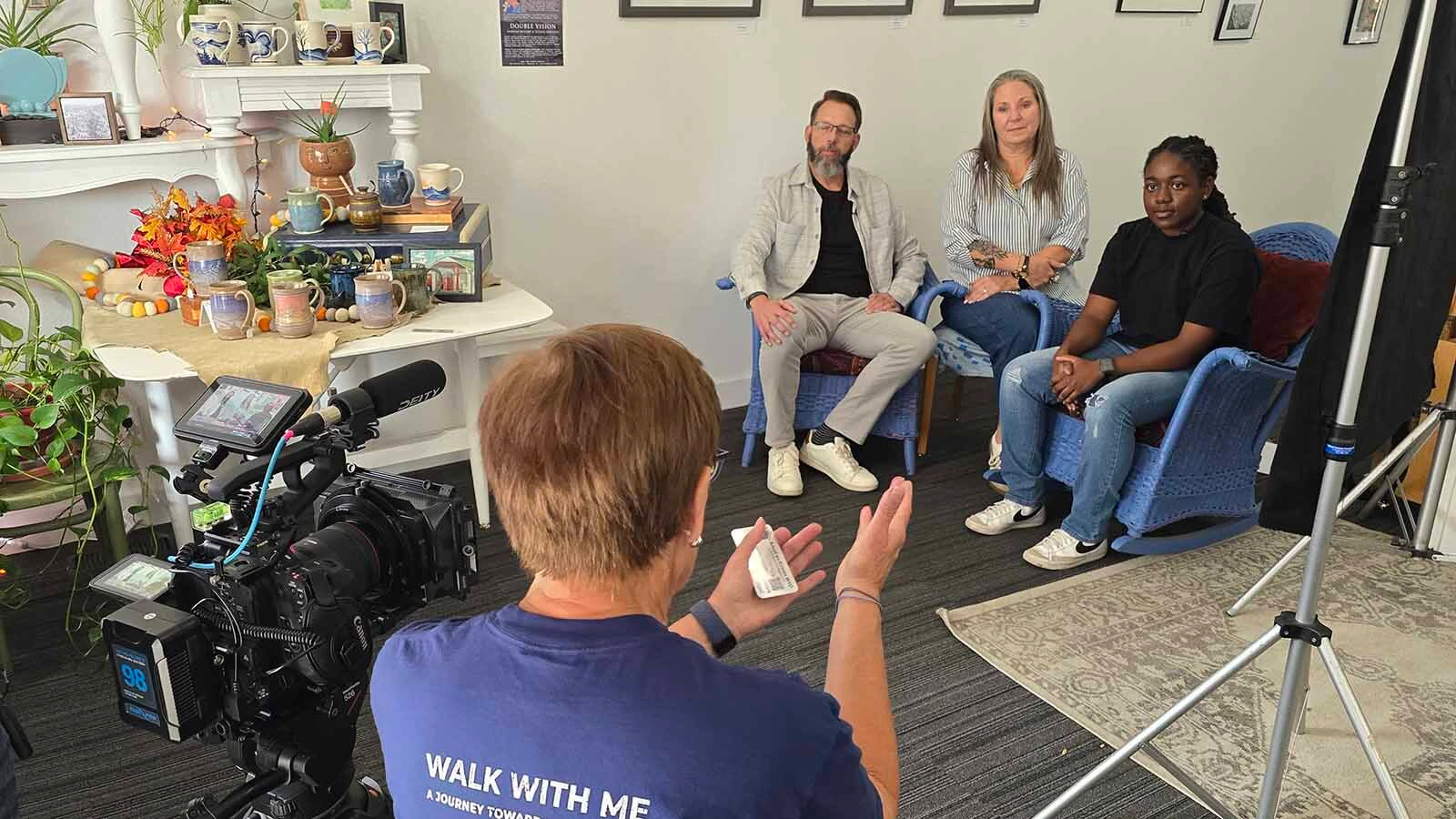
Levett was among several people stationed at F.E. Warren Air Force Base who gathered at a local art gallery to share their experiences with Lucy Rose, who stopped in Cheyenne on Thursday during a 17-state road trip focused on loneliness and connection.
Her next stop was Wellington, Colorado, on her way to New York.
Rose doesn’t walk every mile, and she’s quick to say so. She and her team walk populated stretches, starting with their launch near the Santa Monica Pier, where about 100 people joined them.
They drive the empty stretches, like the seven hours from Salt Lake City to Cheyenne.
Walking, she said, is just about slowing down, “stopping in country stores and listening to what people are saying.”
So, it doesn’t make sense to walk in areas like the desert, where there aren’t really any people to talk to.
Her stop in Cheyenne to talk to F.E. Warren airmen, meanwhile, was personal. She grew up in Goldsboro, North Carolina, which is home to a large Air Force Base that “has a place in my heart.”
Losing Six Good Years Of Life
Loneliness is caustic to our health, said Rose, founder of The Cost of Loneliness Project.
“We lose years of our life when we don’t connect,” she said. “It’s every bit as important to our health as our physical fitness, lifting weights, running, walking, whatever we do with that. I call it a vital sign. It’s as important as our blood pressure and our pulse.”
People can lose up to six years of disease-free life, according to a study released this past week by Tulane University.
Researchers tracked 277,000 middle-aged adults ages 40 to 69 for 14 years, all of whom were initially free from major chronic physical or mental illnesses such as Type 2 diabetes, cardiovascular disease, and dementia.
Based on the study, otherwise healthy men lost nearly six years of disease-free life, while healthy women lost close to four if they felt lonely or were socially isolated.
That makes the cost of loneliness too high, Rose said.
Another study that came out Thursday from the RAND Corporation says people are just not taking the time to connect anymore, while a Social Connection in America survey showed loneliness is continuing to rise.
“Real connection takes time,” Rose said. “Because we’re talking about building authentic relationships, where someone feels comfortable sharing what means the most to them.”
Attendance, Attentiveness Aren’t Same
Levett found a new community connection through the Adopt An Airman program at F.E. Warren, which pairs young, active-duty airmen with Cheyenne families.
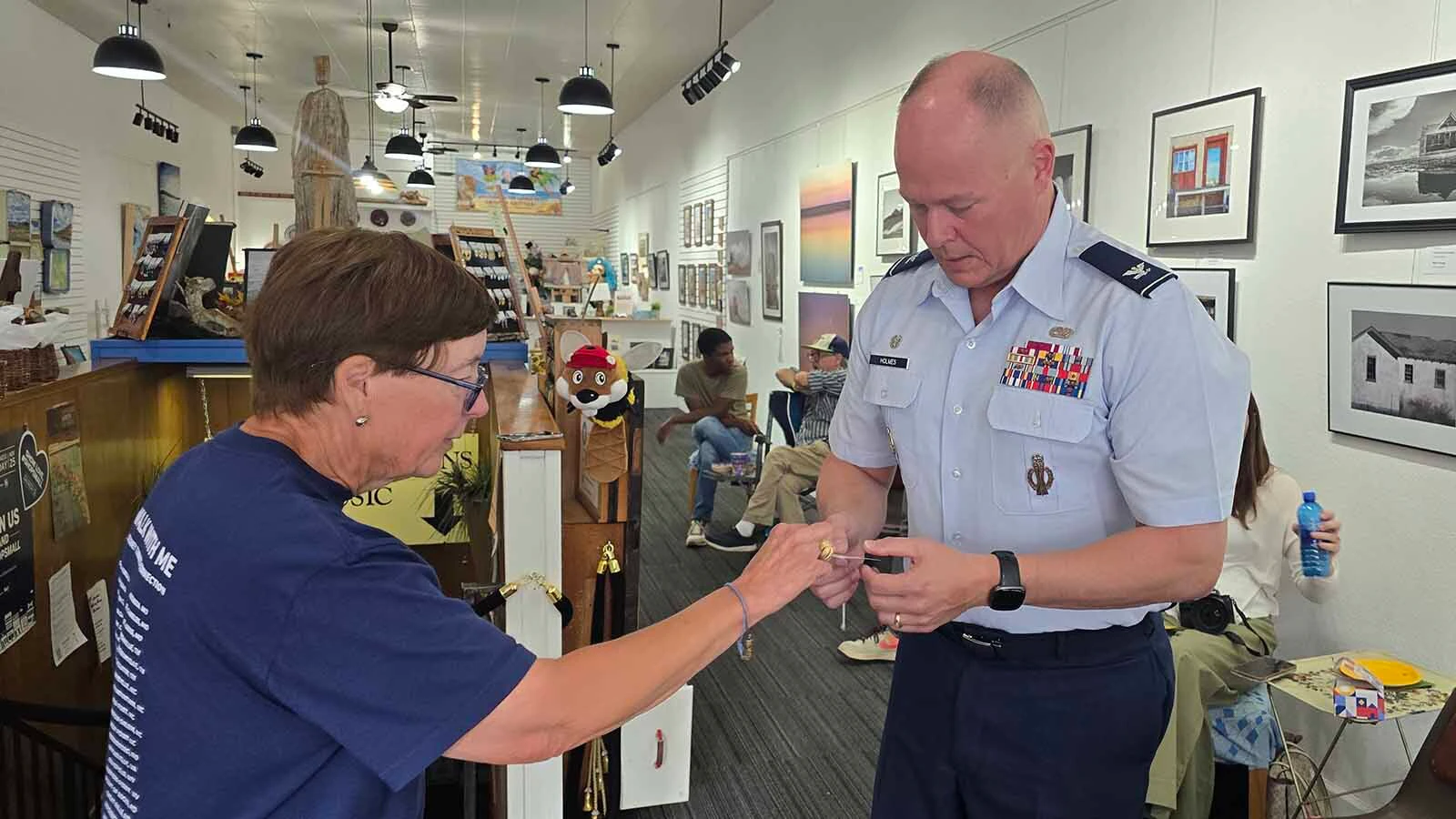
Col. Terrance “Terry” Holmes, wing commander of the 90th Missile Wing at F.E. Warren, sees the program as vital.
“The job that we do requires connectivity,” Holmes told Cowboy State Daily, adding that connectivity helps build a “stronger, more resilient, more ready airman for this nation.”
But there’s a difference, Holmes added, between attendance and attentiveness. It’s something he’s had to learn the hard way.
“I haven’t missed a lot of birthdays,” he said. “I haven’t missed a lot of anniversaries or dinners. But because of who I am as a person, I tend to pour myself into my profession and my passion — some would say I bleed blue — so my passion for service.”
That kind of commitment has left his spouse feeling lonely sometimes.
“While I’m off doing my job and interacting with people and executing a mission and having that purpose, she’s been raising children, taking care of the household and a lot of times she’s felt like a single mom or single parent,” he said. “That’s the kind of loneliness I don’t want for the person I love the most.”
Recruiting Citizens, Retaining Families
The point came home one afternoon when the Holmeses were stationed in Newport, Rhode Island, where he was attending Naval Command and Staff College. He had class 8 a.m. to noon every day and was then home, preparing for tomorrow’s lesson.
One day, during his preparation, he remarked how he’d never spent so much time at home.
“This is great,” he said. “This is a great life. I get to be home with you and the kids.”
His wife shot him a withering look and said, “You might be here physically, but you’re not here mentally and emotionally.”
After that, Holmes came to realize he needed to be more intentional with his time. He closed up the laptop so he could help his wife with the kids and dinner.
“The issue is not the service,” he said. “The issue is me.”
Since then, he’s made it a point to be mentally as well as physically present. He’s also stressed the same idea with his airmen.
“We recruit citizens, but we retain families,” he said. “And time is like anything else, it’s a limited resource. Being deliberate with your time is important.”
Belonging Is Like A Warm Coat
Unlike formal military sponsorships, Adopt An Airman is purely social. Host families open their homes for home-cooked meals, holiday celebrations or just a quiet place to unwind off-base.
For Levett, it has filled a niche family and friends once filled.
“They took me out for my birthday, and I had on like a thin hoodie,” she recalled. “And I was walking around — my birthday’s in December — so I was walking around (shivering).”
“Where are your clothes?” Levett recalled Maggie Hartzheim asking.
“I’m like, ‘This is kind of the best I have right now,’” Levett told them, embarrassed.
For Christmas, the Hartzheims gave Levett gift cards to buy a proper Wyoming coat.
Putting on that coat hasn’t just been warmth against a Wyoming winter. It’s been like a warm hug, telling her she belongs.
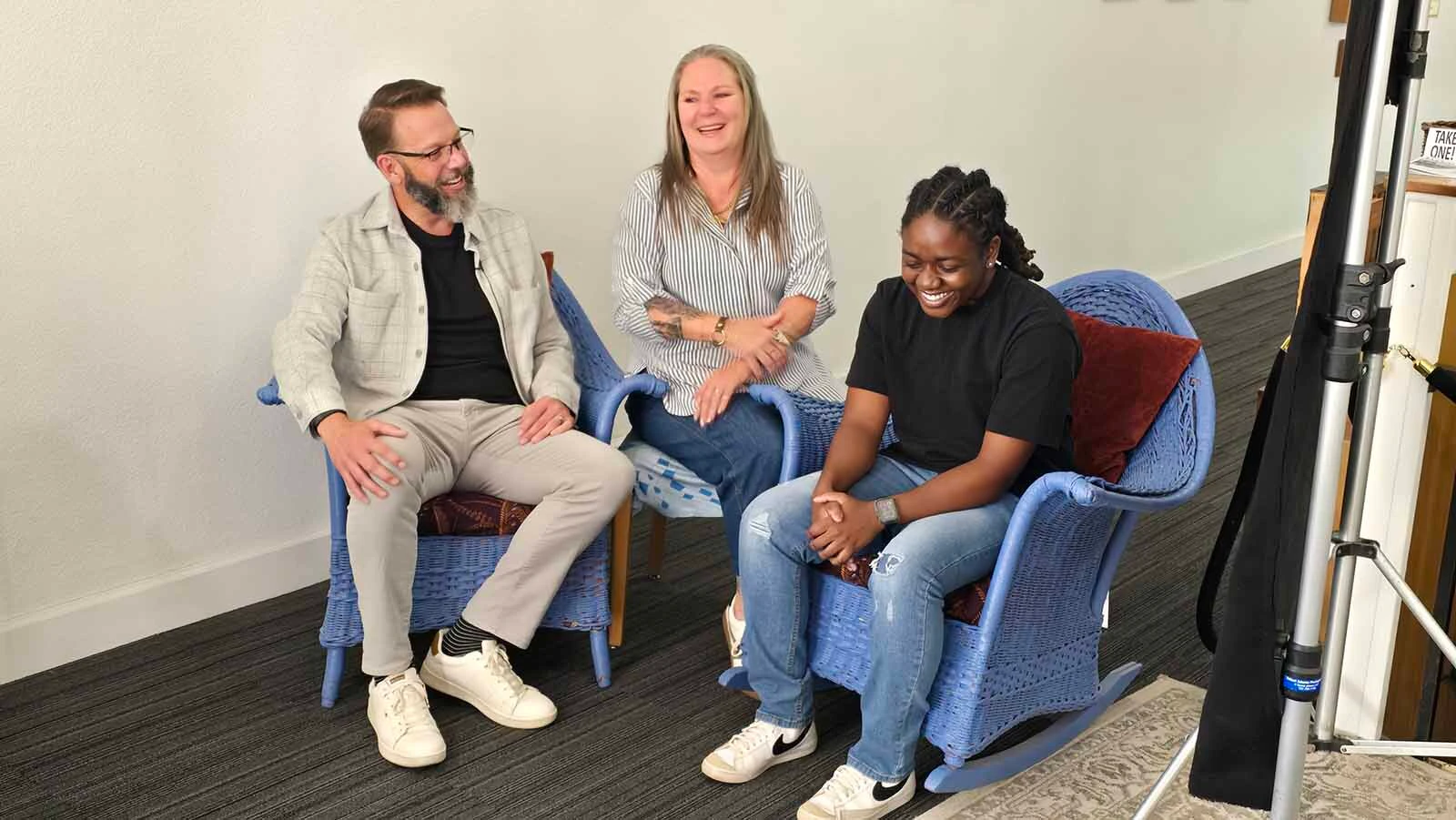
Pre-Thanksgiving Interview
Still, Levett was hesitant about joining a family of strangers just a few days before Thanksgiving.
“I think I better meet y’all first,” Stan Hartzheim recalled her saying.
That led to a little sit-down at a restaurant for a pre-Thanksgiving interview.
“We were like, ‘We better not mess this thing up, man,’” Stan said with a chuckle.
The sit-down was a great idea, Maggie Hartzheim added, because it let her tell Levett about the family and what to expect.
For Levett, it established trust ahead of diving into a holiday with strangers.
Later, Levett’s parents visited and met the Hartzheims.
“My parents were like, ‘These are good people,’ and I was like, ‘Yeah, they are good people,’” she said. “That also helped make me trust them and feel safer.”
Not to mention, it eased her own family’s worries.
Social Media Like Cotton Candy
Creating safety around the topic of loneliness is a key to addressing society’s modern-day crisis, Rose said.
“That sense of belonging that we all crave is so important,” Rose said. “All of us just want to know that we matter. We want to know we belong somewhere and somebody cares about us.”
Society has so many seeming ways to connect, but they are part of the problem, Levett said. Social media, for example, creates only the appearance of connection.
“Fire emojis, heart eyes — like that’s not connection,” she said. “That’s real surface level … There’s no substance. You don’t feel it.”
It’s like cotton candy — gone the instant it’s consumed.
“You don’t even get to feel full,” she said. “You just get the calories.”
Rose said part of the problem is the COVID-19 pandemic, which gave people permission to skip in-person interactions.
“COVID caused so many people to go to Zoom and to all the other ways we can talk, like FaceTime and Facebook,” she said. “It gave us permission to stay home, to not go out.”
Lonely Doesn’t Mean Loser
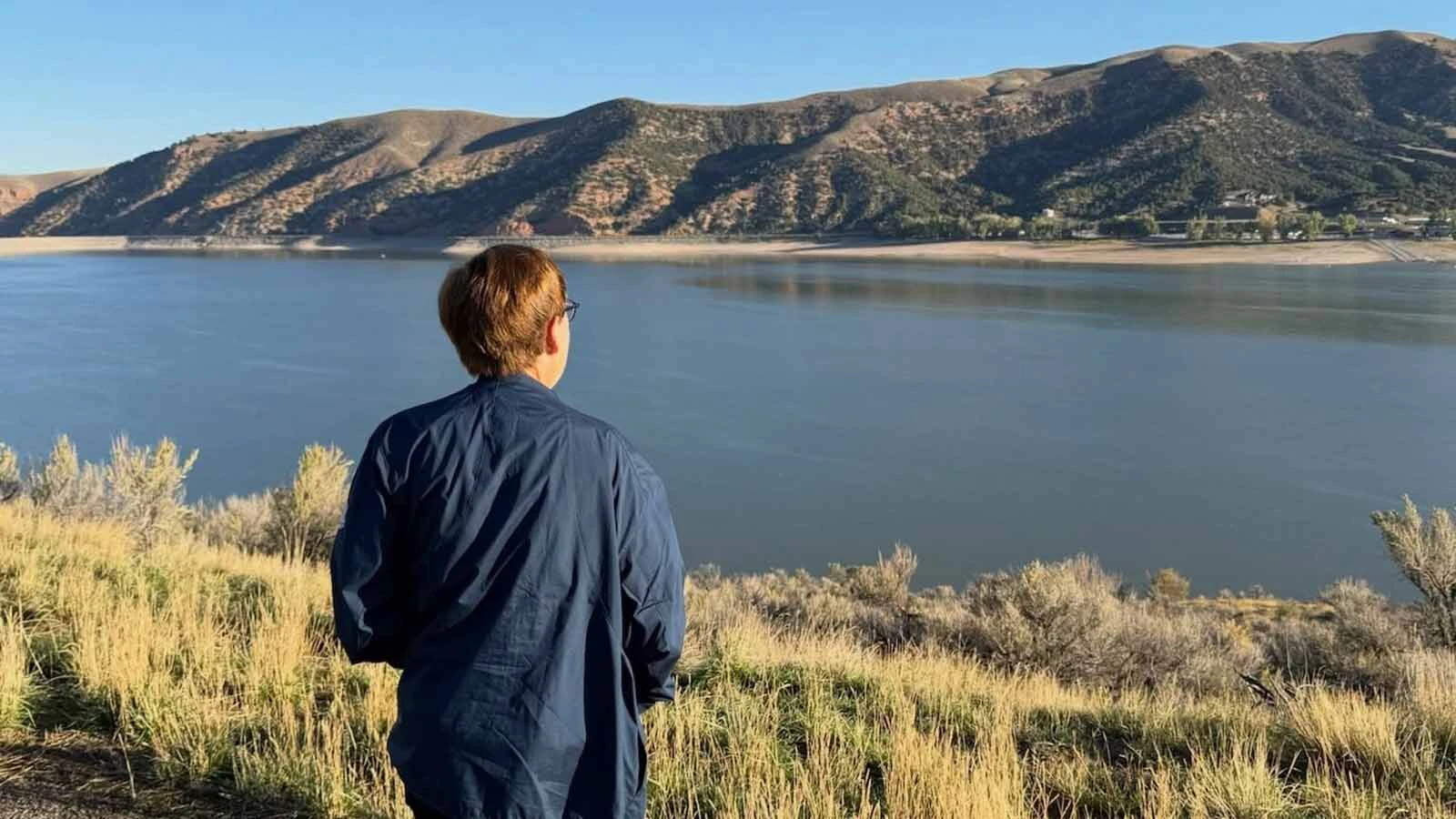
Loneliness comes with a stigma, Rose said.
“People feel like, ‘Well, I’m a loser if I have to say I’m lonely,’” she said. “Let me be clear, you’re not a loser.”
The RAND Corporation study Rose cited says 40% of people in the nation are moderately to severely chronically lonely.
“You’re not alone if you’re lonely,” she said. “But we don’t talk about it because it makes us feel unworthy.”
That stigma is the reason Rose is doing her walk. She wants to tell her own story of loneliness and reach out into the emptiness that surrounds so many others to say, “Hey, let’s talk about it.”
It’s been healing for her and for the people she’s talked to. But she also hopes these conversations will serve as a catalyst to start more such conversations.
Rose has only recently come to understand the toll loneliness takes on health — including her own.
“People’s journeys to being lonely are as varied as 365 days in a year,” Rose said. “The commonality, though, is how they are feeling. It’s ‘Man, I feel bad. I feel lonely and it hurts.’”
Her own “loneliness journey” involved traveling six days a week for two decades as a pharmaceutical industry consultant, landing in a different hotel room every night. She withdrew, soothed herself with comfort food and gained 40 pounds.
She didn’t realize what she was doing, though, until a walk through Central Park with her older daughter forced the realization into the open.
“Mom, I think you’re lonely,” she recalled her daughter saying.
“I stopped dead in my tracks,” Rose said. “I know right where I was in Central Park when that happened, and I said, ‘Oh my God, you’re right.’”
Taking On Loneliness
The realization she was not only lonely but it was affecting her health is what put her on the road. It’s also inspired her to create what she calls the National Day of Connection on Nov. 12. She’s asking Americans to pause for 12 minutes and connect with someone they haven’t talked to in a while on that day.
“When you do that, schedule the next 12 minutes,” she said. “Because one 12-minute period isn’t going to be enough for either of you to feel like you are safe and that you belong.”
Her trip across the country, which started in Santa Monica, California, has already been eye-opening, Rose added. Everyone she’s met has a story about loneliness, from the tough restaurant owner with tattoos all over his body to the sweet 8-year-old struggling with cancer, ashamed because she’s lost her hair.
“People will unload the most vulnerable stories,” Rose said. “Which has been amazing to see and hear, to help destigmatize this and to help folks feel comfortable. That’s one of the main things I want to do.”
Renée Jean can be reached at renee@cowboystatedaily.com.


