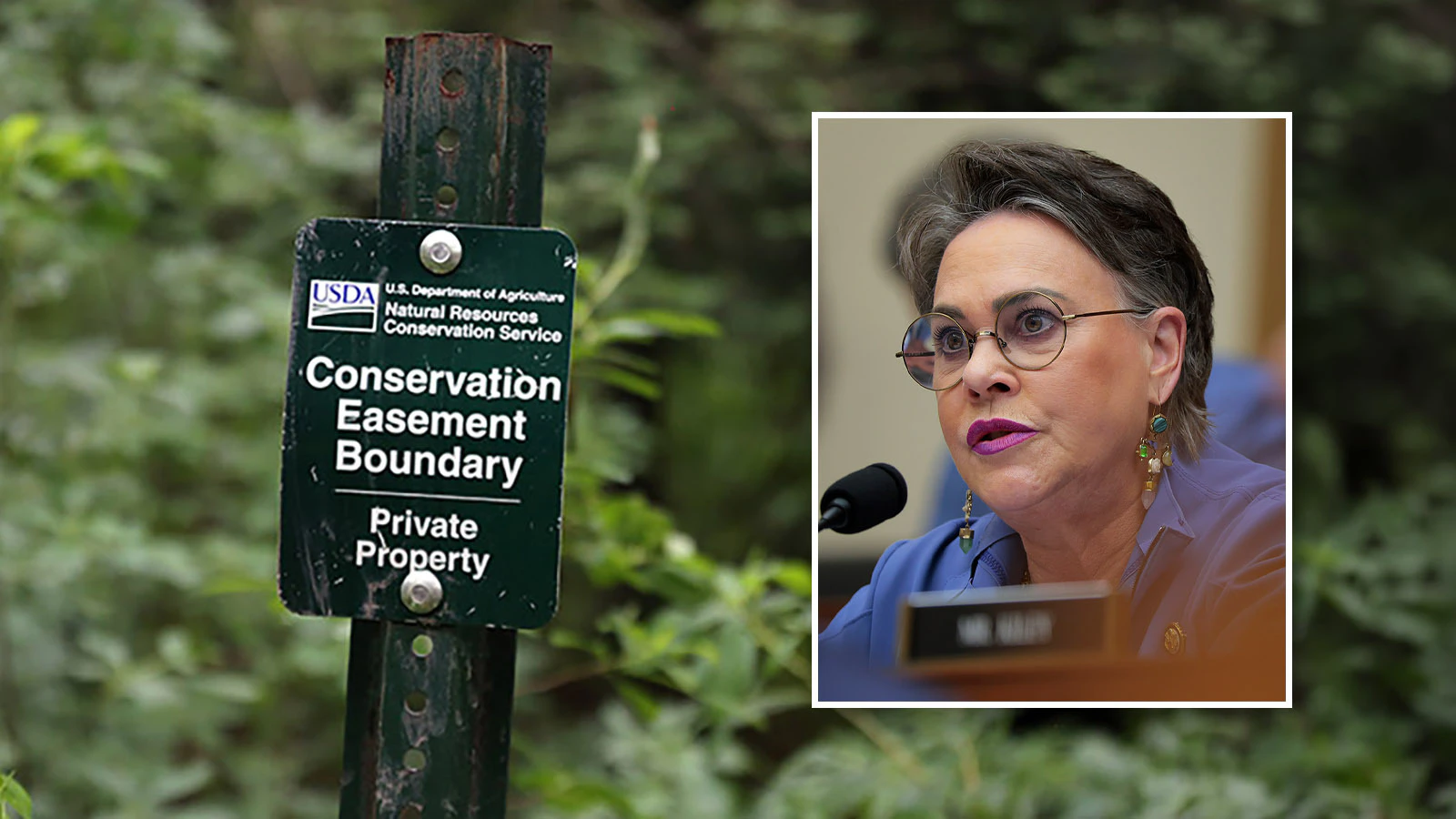
Wyoming’s lone U.S. House Rep. Harriet Hageman is leading an effort to bar the U.S. Department of the Interior from holding conservation easements for longer than 30 years.
She says it’s an effort to balance landowners’ rights against old agreements that now reign “from the grave.”
Longtime public-lands advocate Earl DeGroot says this could harm conservation efforts.
First, The Bill
House Resolution 2773 would bar the secretary of the interior from entering into a conservation easement of more than 30 years.
For any Interior-held conservation easement that’s already been in place more than three decades, the bill would compel the secretary to renegotiate its terms and cap its lifespan at those 30 years if a landowner requests it.
The bill would let the landowner buy back a conservation easement that’s been in place more than 30 years, or a portion of the easement, at fair market value.
Second, The Hunter
Hageman unveiled this bill in April and it’s been stagnant since then.
But DeGroot, who administers the Facebook page of the decade-old group Wyoming Sportsmen for Federal Lands, said the group is speaking out against the bill now, as Hageman is vying for a U.S. Senate seat in the Nov. 3 general election.
The group called the bill "completely unacceptable" in a Sunday statement.
“She is running for the Senate and this bill makes a big statement about her opinion about easements, which are important to conservation,” said DeGroot in a Monday phone and text message interview.
DeGroot, who also has a master’s degree in natural resource management and another in public administration, said the pothole region of North Dakota, South Dakota, Minnesota and elsewhere exemplifies the need for conservation easements.
They help protect the wetlands, water retention and waterfowl habitat, he said.
The hunting nonprofit organization Ducks Unlimited, long an advocate for conservation in the region, went on high alert in July when the U.S. Fish and Wildlife Service opened a public comment period on regulations protecting easements. The company urged against any policy that would allow draining, filling, or burning the wetlands of the region.
DeGroot said the U.S. Fish and Wildlife Service – which is under the Department of the Interior – has been trying to buy conservation easements to keep those wetlands intact for years.
Those are often permanent, meaning they stay in place even when the land changes hands.
“This bill, if it was to pass, apparently the legality of those protections would be up in the air,” he said.
‘From The Grave’
In response, Hageman called the current system lopsided, pointed to the Wyoming Constitution, and called for a balancing of interests.
“From a public-policy standpoint, we would find it absurd to be required to manage our farms and ranches pursuant to a dictate issued in the year 1730,” she said in a Monday email to Cowboy State Daily. “Yet, because of the law allowing for perpetual conservation easements, we are dictating how land can be managed for the next thousand years."
The Wyoming Constitution bans “monopolies and perpetuities” as “contrary to the genius of a free state.”
“Perpetual conservation easements violate Article I, Section 30 of the Wyoming Constitution,” said Hageman.
“The rule against perpetuities was adopted at common law to prevent ‘the dead hand from the grave’ from controlling real property,” she added.
Hageman said each generation of landowners should enjoy equal property rights.
“But our system of perpetual conservation easements infringes on this principle,” she said. “As an attorney, I represented clients who pursued easements as a new means of conservation and financial return, only to discover after having ceded some of the most important property rights to a third party that the devil really is in the details.”
As new generations are constrained by a legal agreement they never entered, she said, “their rights are further deteriorated, often being prohibited from building so much as a new fence or barn to house livestock.”
Hageman said the nation should strike an appropriate balance between those who want easements and those who want to control their lands.
“The Landowner Easements Rights Act strikes this balance – it does not prohibit conservation easements or force anyone to renegotiate easements they wish to continue,” she said. “It instead would provide landowners with existing conservation easements a route to renegotiate, renew, or buyback conservations easements, if they choose.”
Though the bill caps new easements at 30 years, landowners can still renew them, she noted.
“This approach merely ensures that each generation of landowners is paid for the ‘conservation values’ that they are protecting by selling their right to develop to the easement holder,” she said.
Clair McFarland can be reached at clair@cowboystatedaily.com.