
A ring of marble-like children appear to play a silent game on the chalky white floor just outside their home, while their mother sits in the back corner near a crumbling wall, head bowed.
One eye rests on her children as she silently, eternally weeps in the rubble.
Sage scents the air of this imaginative tableau, just one of hundreds that await in a layered labyrinth of mudstones carved by water and wind in Natrona County’s Hell’s Half Acre.
The sight was part of a rare media tour offered to select media outlets, including Cowboy State Daily. The tour comes as Natrona County and Visit Casper consider how best to share a fragile and unique landscape with the public.
Around the next bend, twisted “souls” appear to be trapped in pale stone, heads frozen in silent agony beneath a blue sky.
They are unmoving in their eternal screams, but not unchanging.
Light hits them differently at various times of the day, shifting their expression from sorrow to menace to something approaching serenity. Eventually, when the next gully-washer of a thunderstorm hits, they’ll likely gain new shapes, twisting in new directions thanks to the relentless work of water and wind under a baking sun.
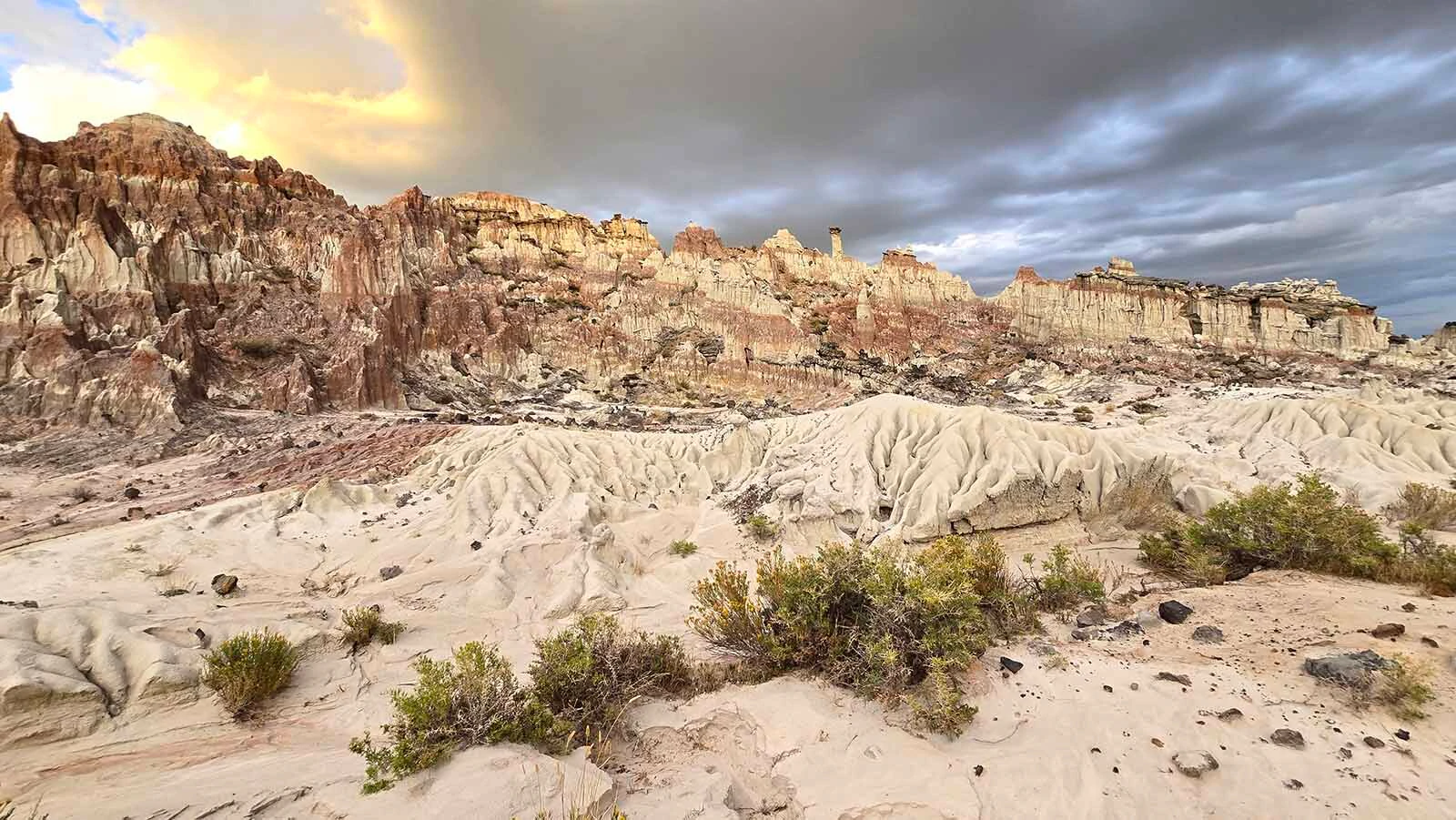
The alkali mudstone that forms these imaginative shapes was everywhere on the floor of Hell’s Half Acre.
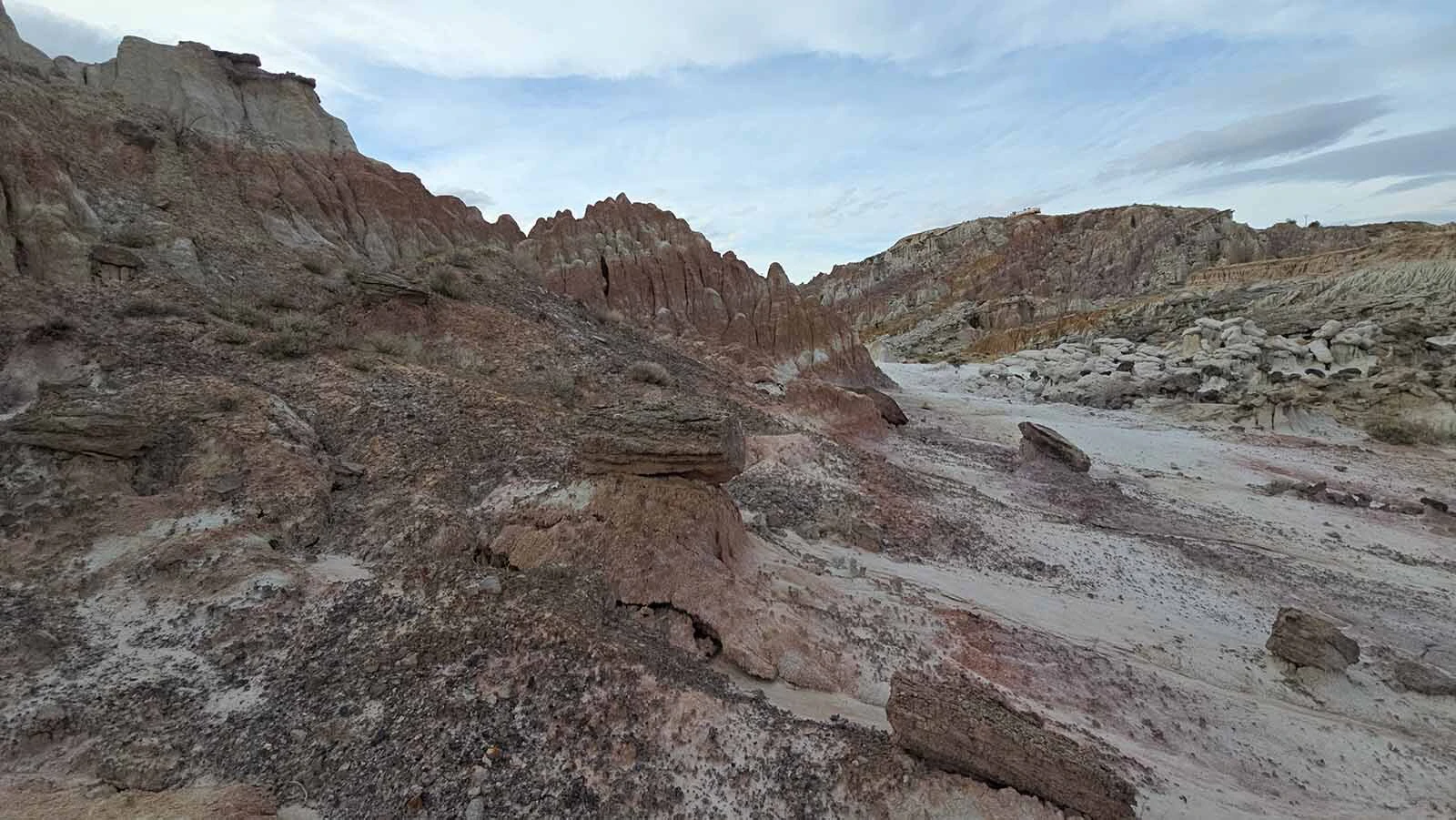
Dry streambeds looked almost like silk in the soft light of evening sun. Those winding paths weaved between red-striped pinnacles and mushroom-shaped hoodoos, all leading to new scenes and each more fantastical than the last.
At first, I’m hesitant to step onto this dry ribbon of mudstone. It looks like some sort of pristine sand, with no human tracks. There are tales of quicksand here, mud that can suck a hapless traveler to their knees.
I put a tentative foot forward, half expecting to immediately sink. But it is surprisingly hard and firm, like rock.
I soon learn, however, that it’s also soft enough to give way unexpectedly in places.
This ground cannot be trusted — like so many other first impressions of a place that once starred in the cult classic “Starship Troopers” as Planet Klendathu.
Wind, water and time have carved odd shapes into Hell's Half Acre, 40 miles West of Casper. (Renee Jean, Cowboy State Daily) 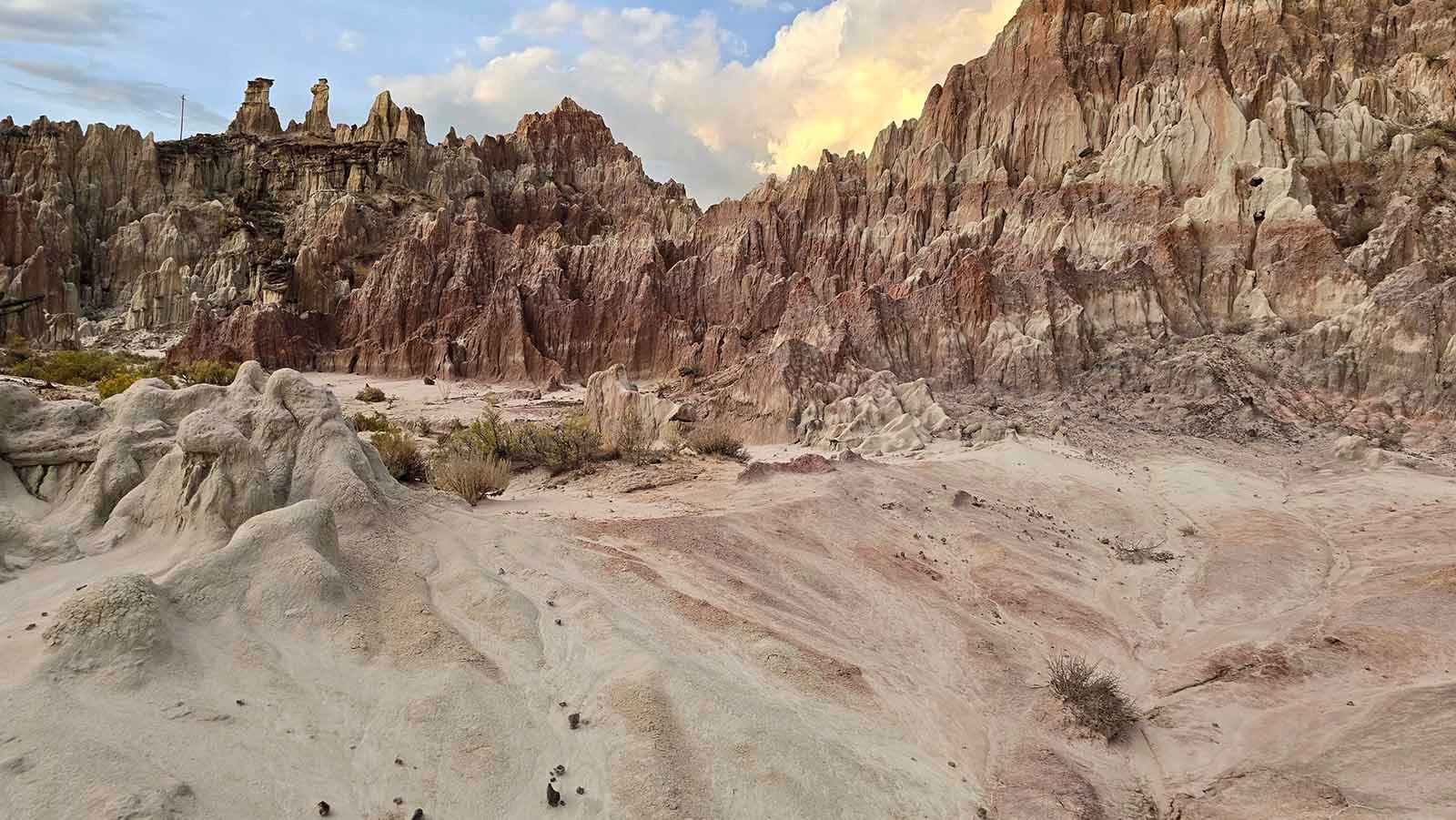
Wind, water and time have carved odd shapes into Hell's Half Acre, 40 miles West of Casper. (Renee Jean, Cowboy State Daily) 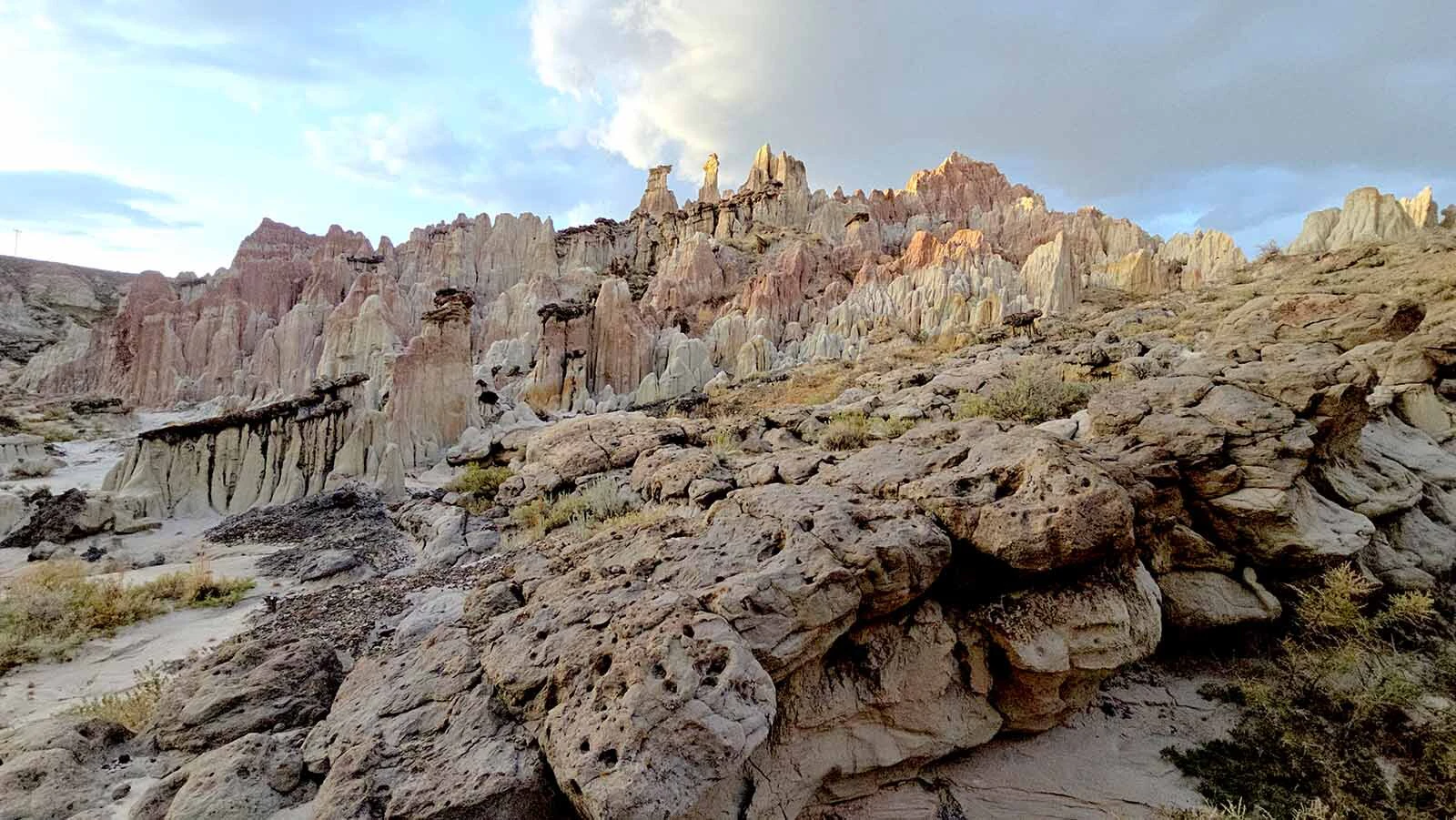
Wind, water and time have carved odd shapes into Hell's Half Acre, 40 miles West of Casper. (Renee Jean, Cowboy State Daily) 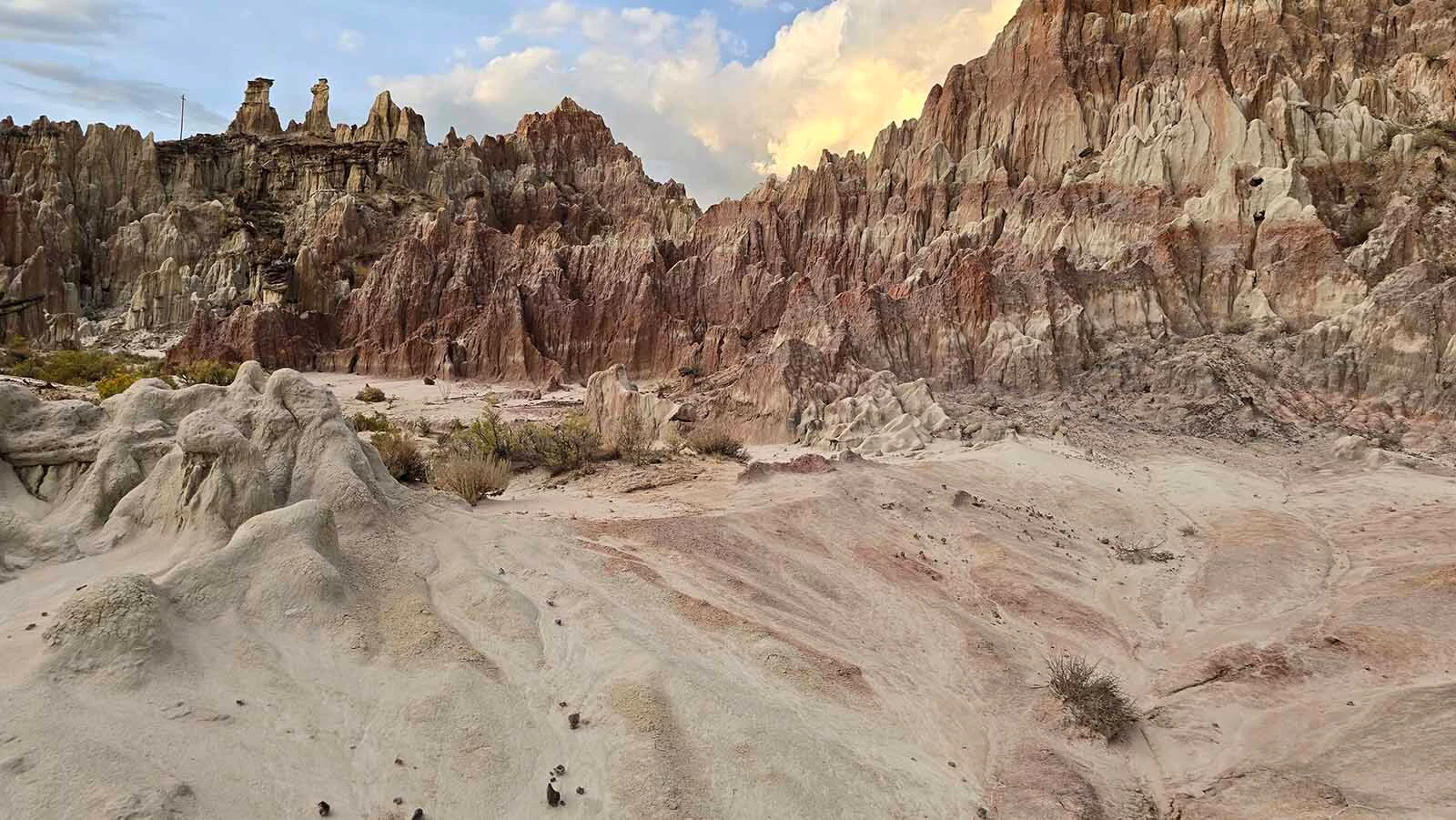
Wind, water and time have carved odd shapes into Hell's Half Acre, 40 miles West of Casper. (Renee Jean, Cowboy State Daily) 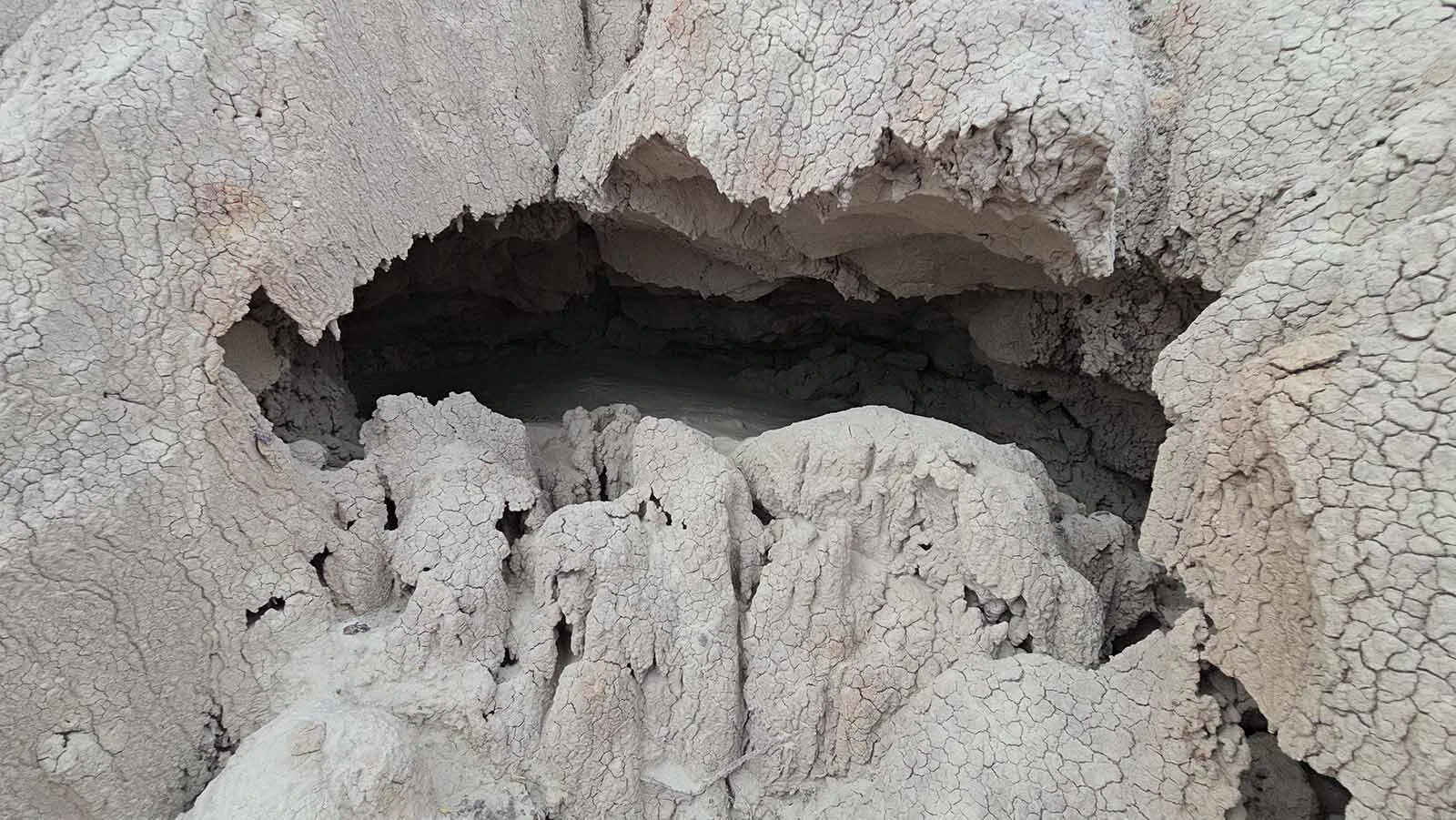
Wind, water and time have carved odd shapes into Hell's Half Acre, 40 miles West of Casper. (Renee Jean, Cowboy State Daily) 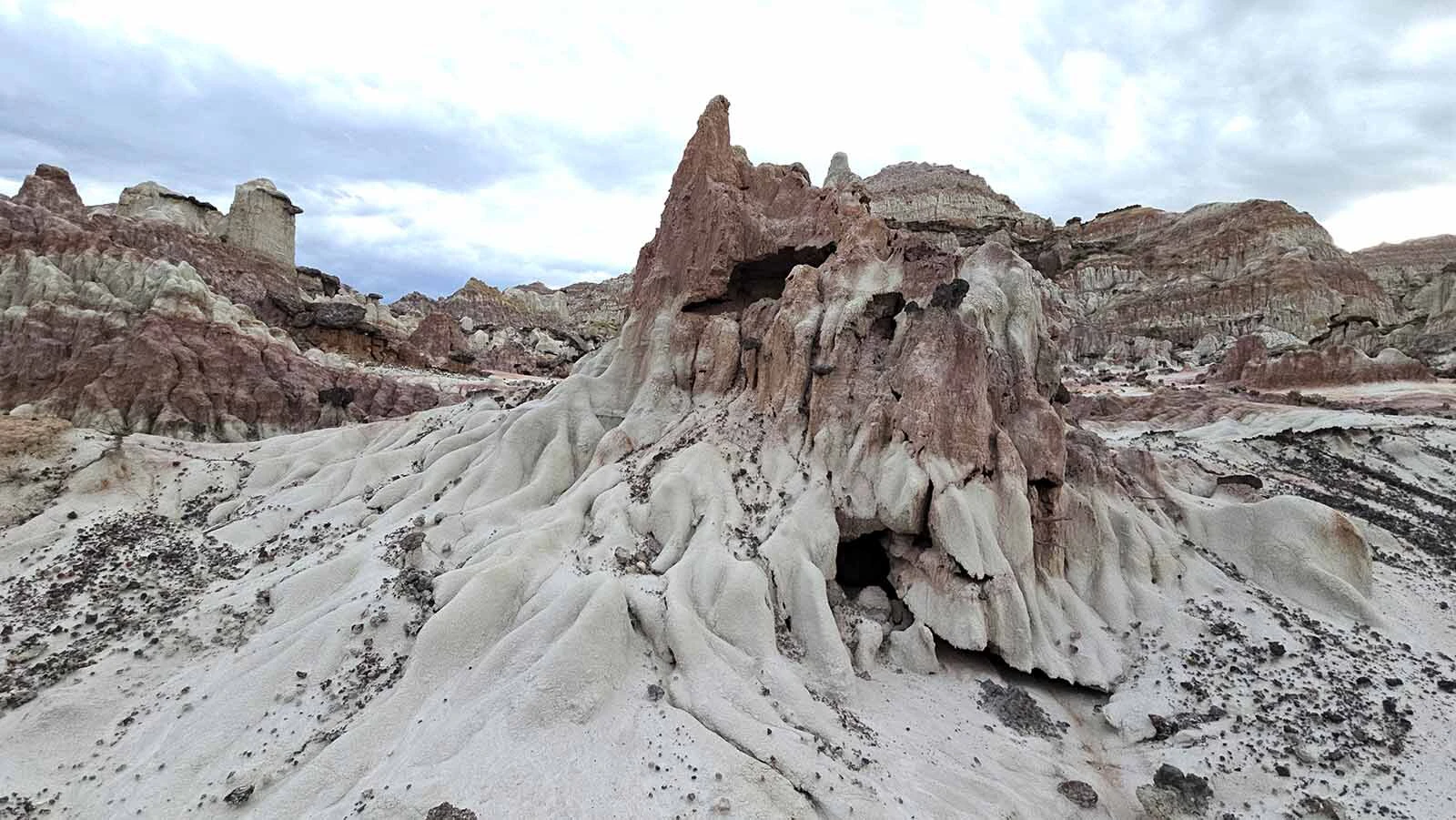
Wind, water and time have carved odd shapes into Hell's Half Acre, 40 miles West of Casper. (Renee Jean, Cowboy State Daily) 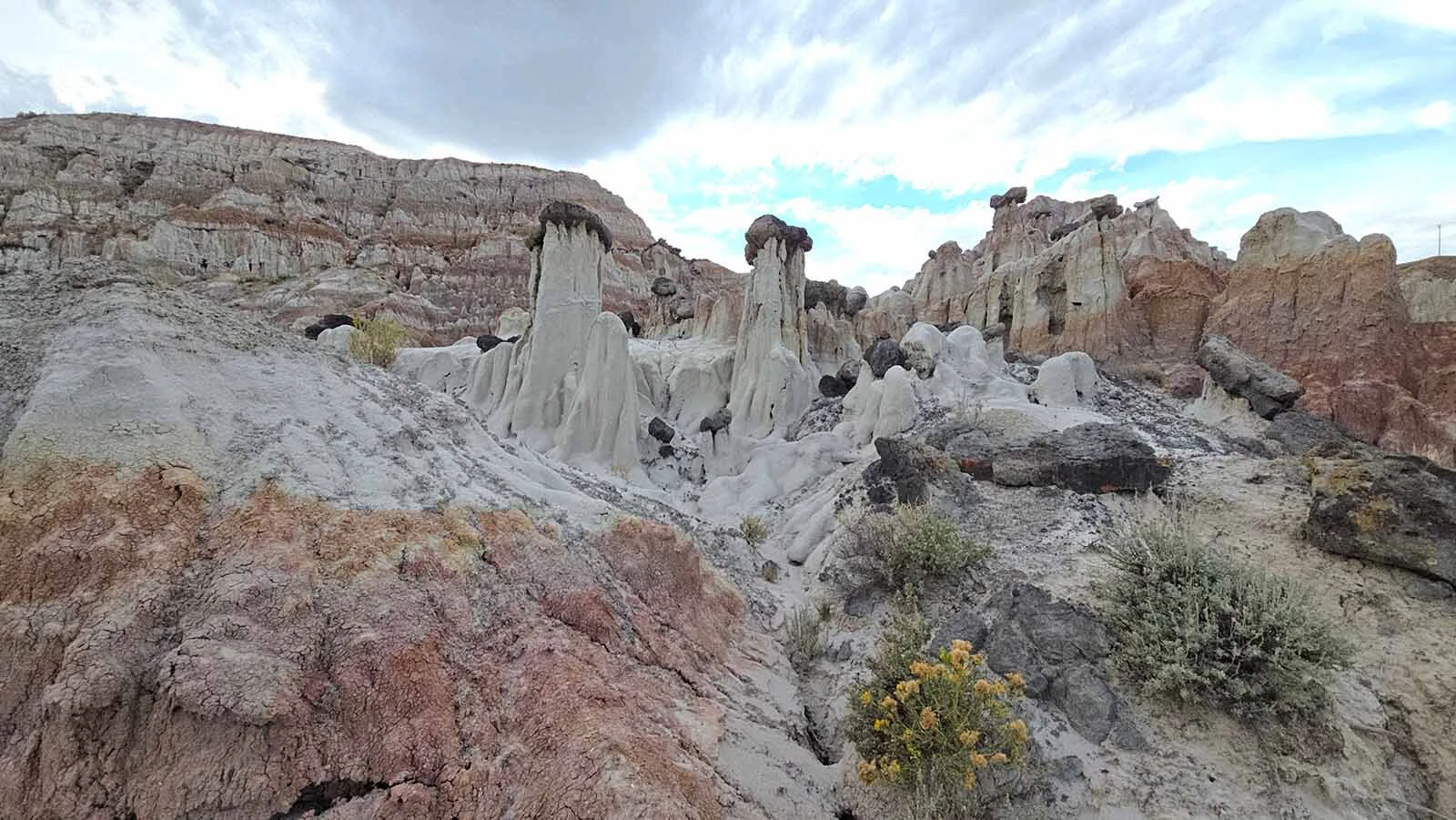
Wind, water and time have carved odd shapes into Hell's Half Acre, 40 miles West of Casper. (Renee Jean, Cowboy State Daily) 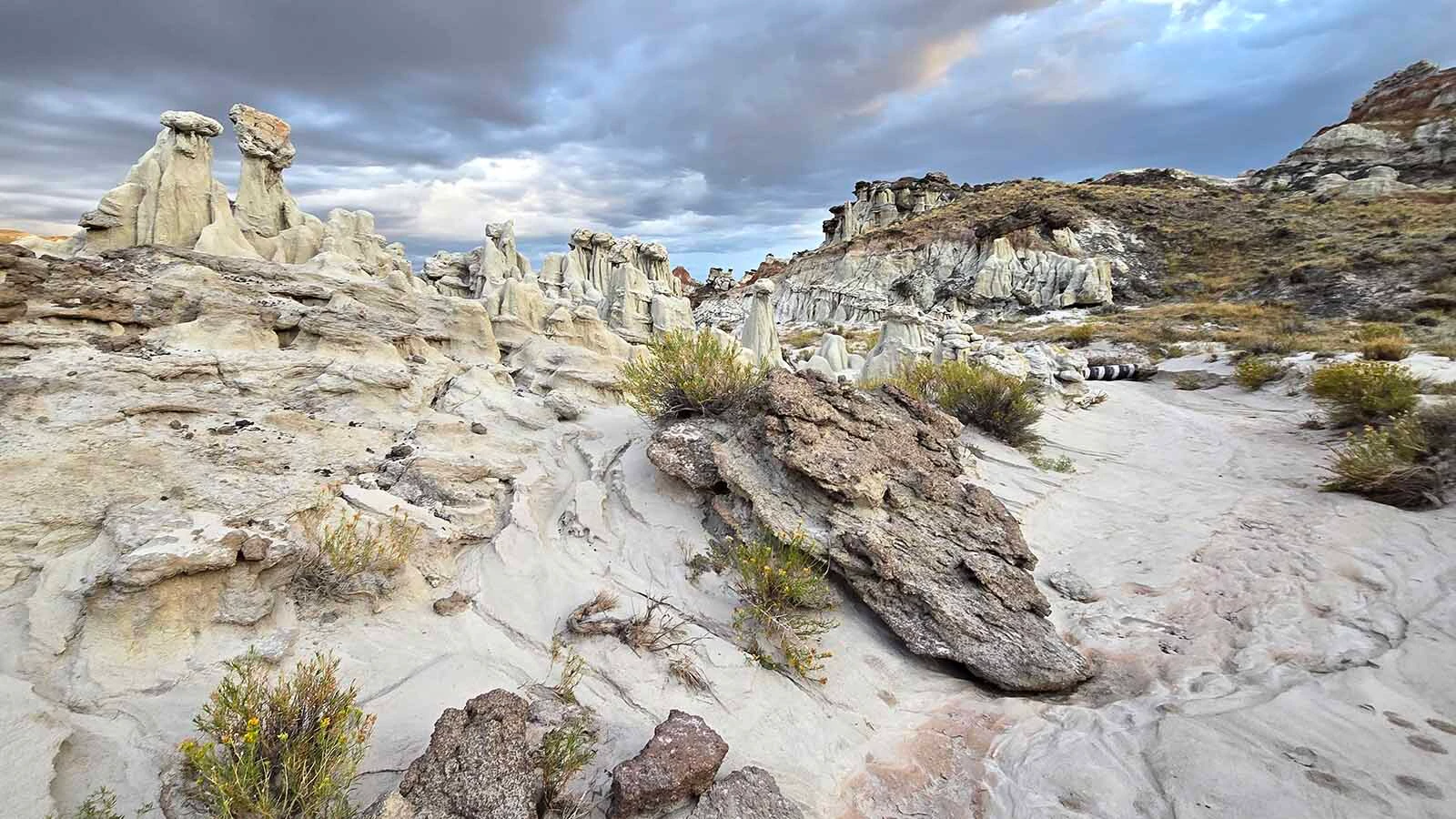
Wind, water and time have carved odd shapes into Hell's Half Acre, 40 miles West of Casper. (Renee Jean, Cowboy State Daily) 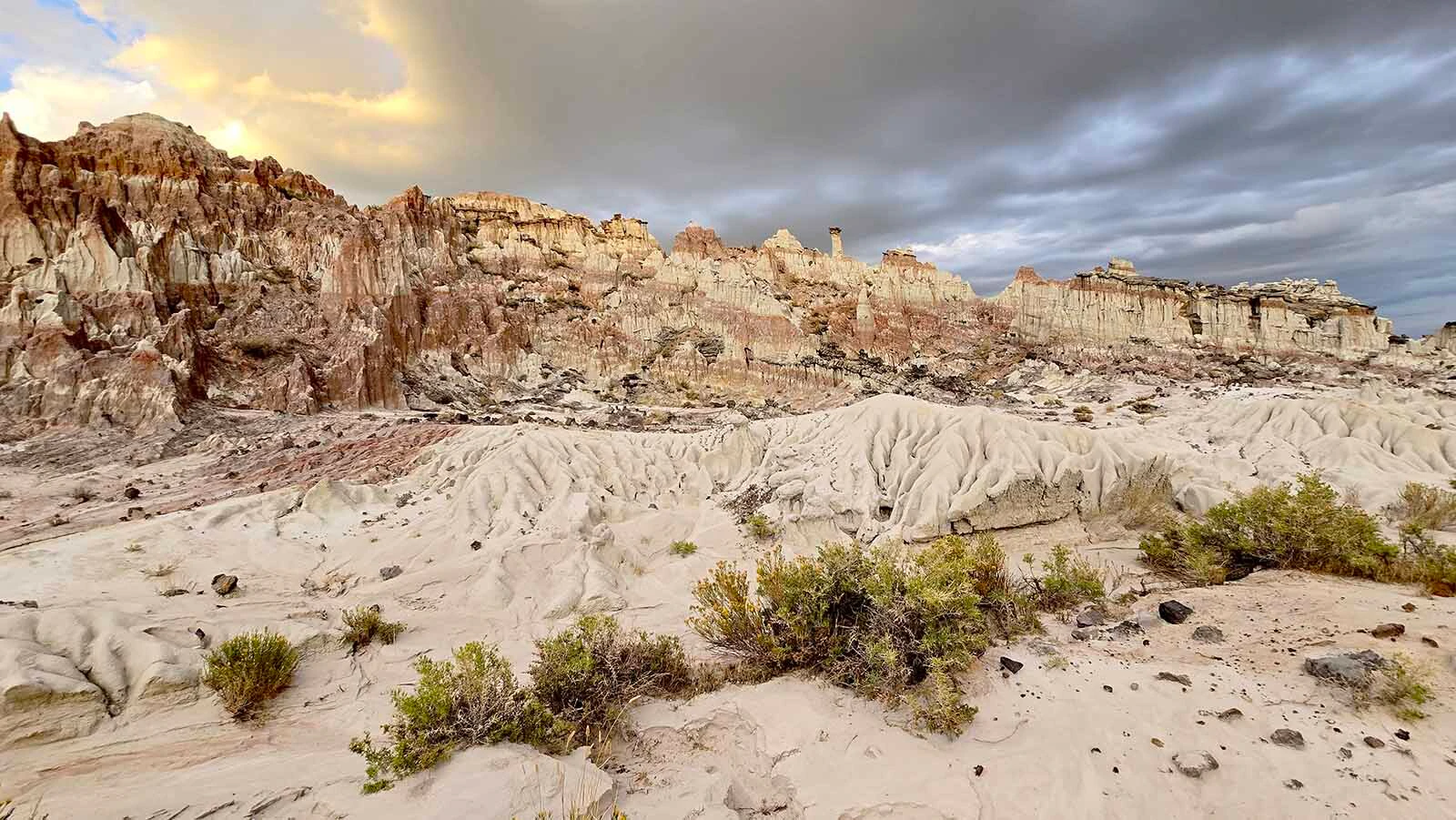
Wind, water and time have carved odd shapes into Hell's Half Acre, 40 miles West of Casper. (Renee Jean, Cowboy State Daily) 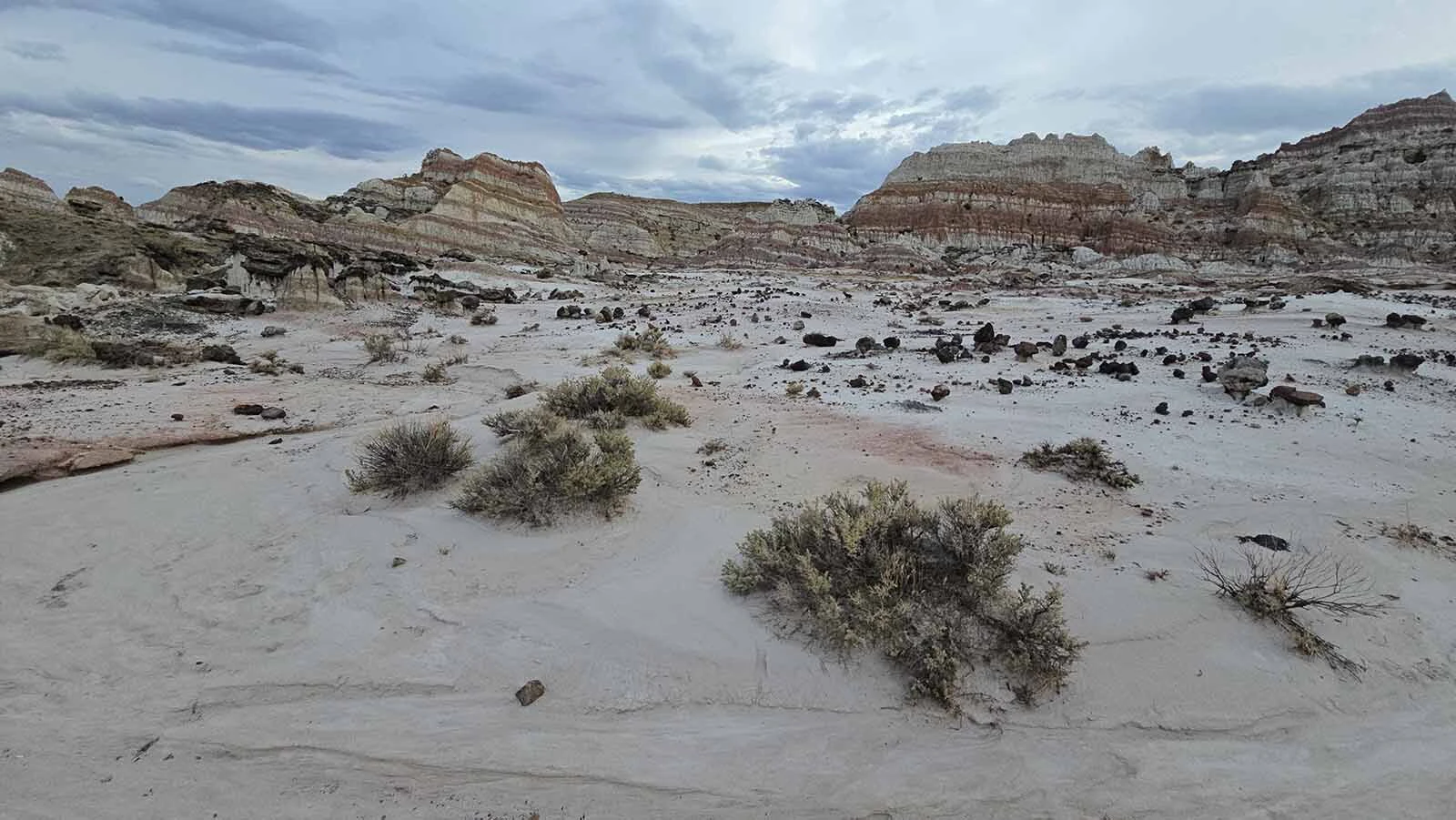
Wind, water and time have carved odd shapes into Hell's Half Acre, 40 miles West of Casper. (Renee Jean, Cowboy State Daily)
A Layered Experience
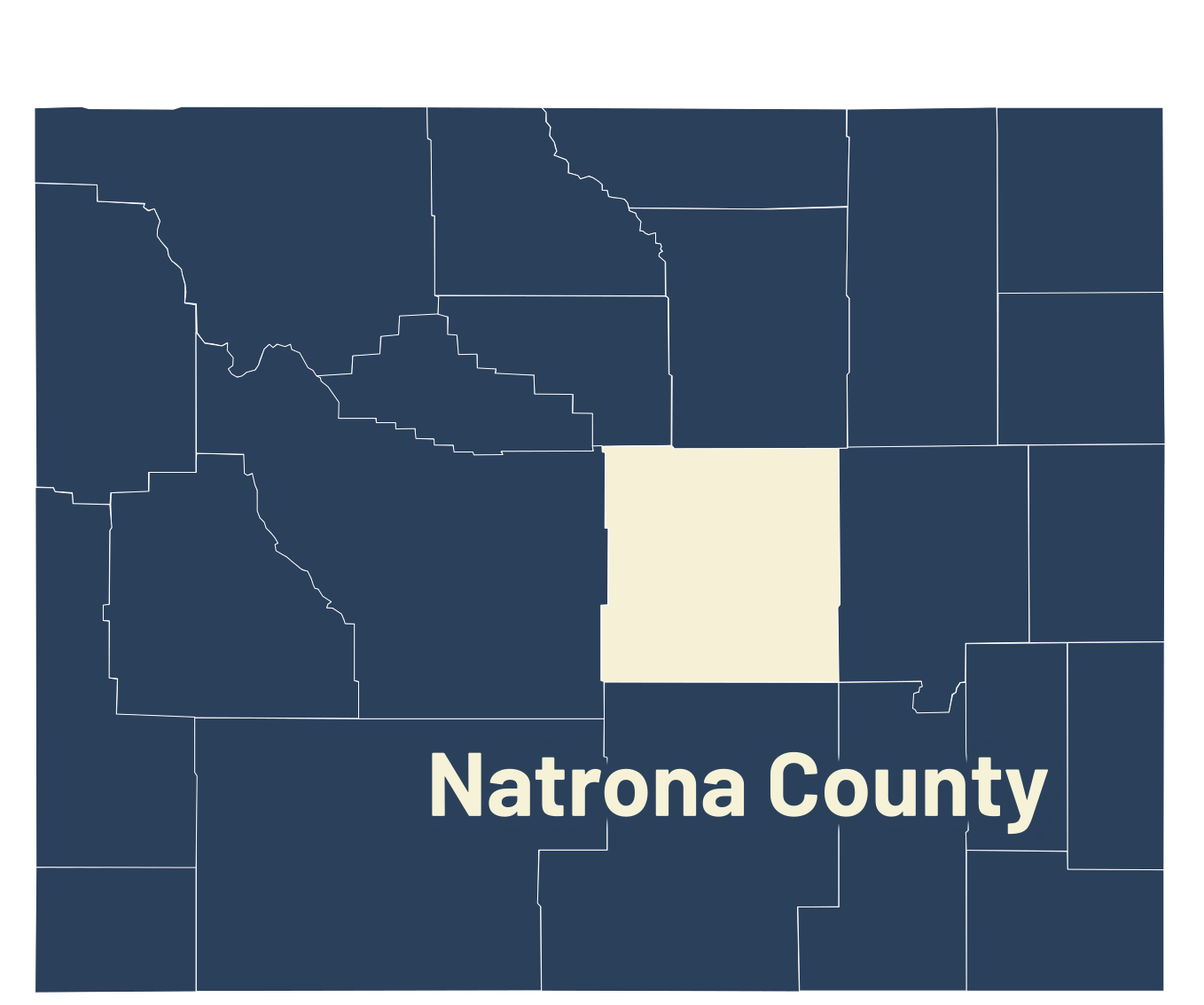
From the highway, Hell’s Half Acre doesn’t look like much. There’s a pullout, a fence line, and some low hills. It doesn’t feel like hell, or even a half-acre.
The canyon feels small and almost quaint, though in an alien-planet sort of mind-blowing way.
Looks are deceiving on multiple levels.
The badlands area is much larger than it feels. It’s 320 acres, part of a 960-acre federal land grant given to Natrona County in 1924.
It’s also a multi-layered maze, where people readily vanish from sight and become difficult to find again. The many layers of rock seem to swallow sound, muffling voices until even someone just a few feet away might as well be in some other faraway canyon.
Our tour guides lost sight of us, we lost sight of them, and none of us found each other again until we gave up and climbed back to the rim.
Only then did we spot our guides, already topside — though we never saw them slip past us to leave, and they never heard us yelling out their names.
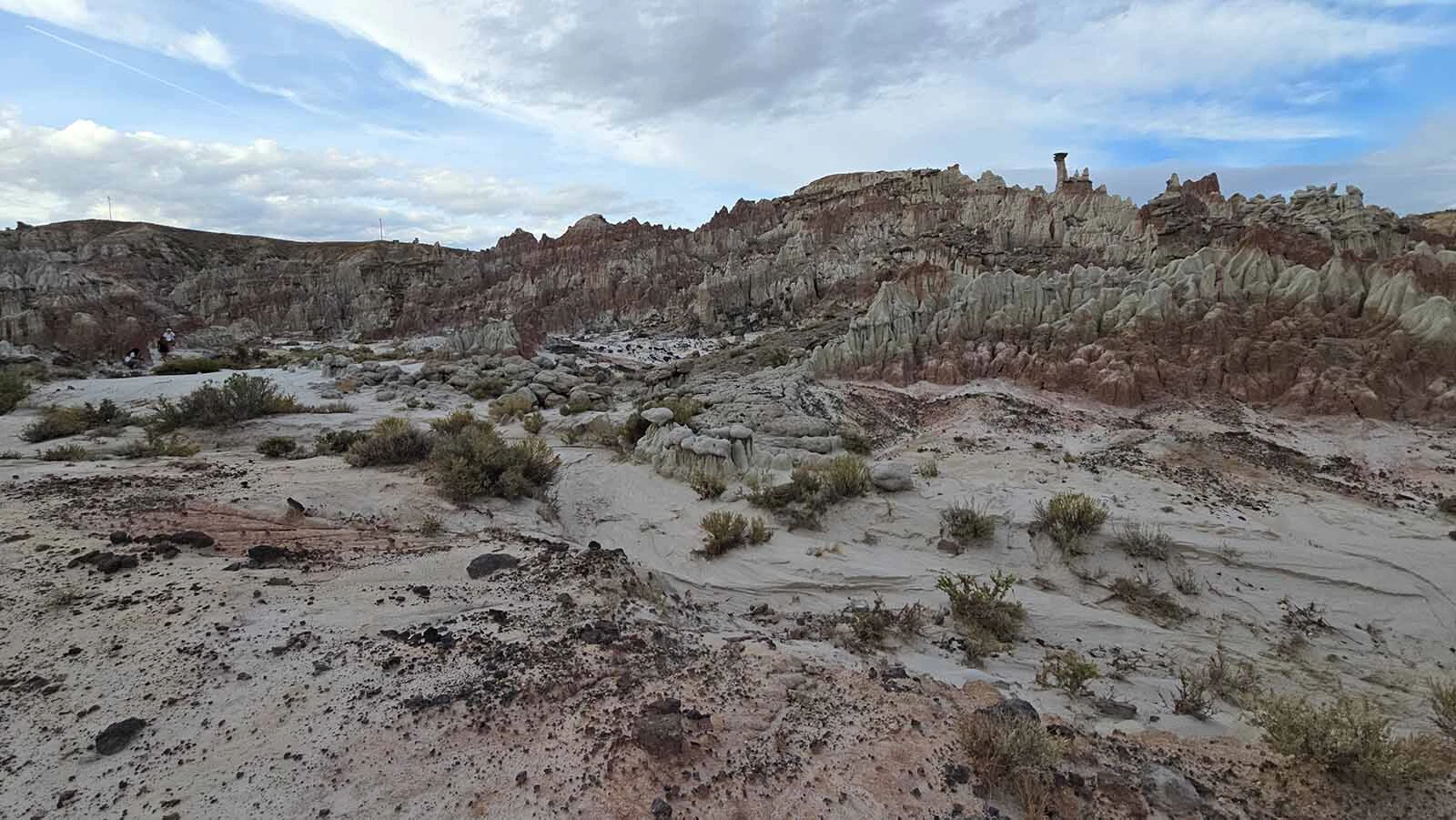
Wind, water and time have carved odd shapes into Hell's Half Acre, 40 miles West of Casper. (Renee Jean, Cowboy State Daily) 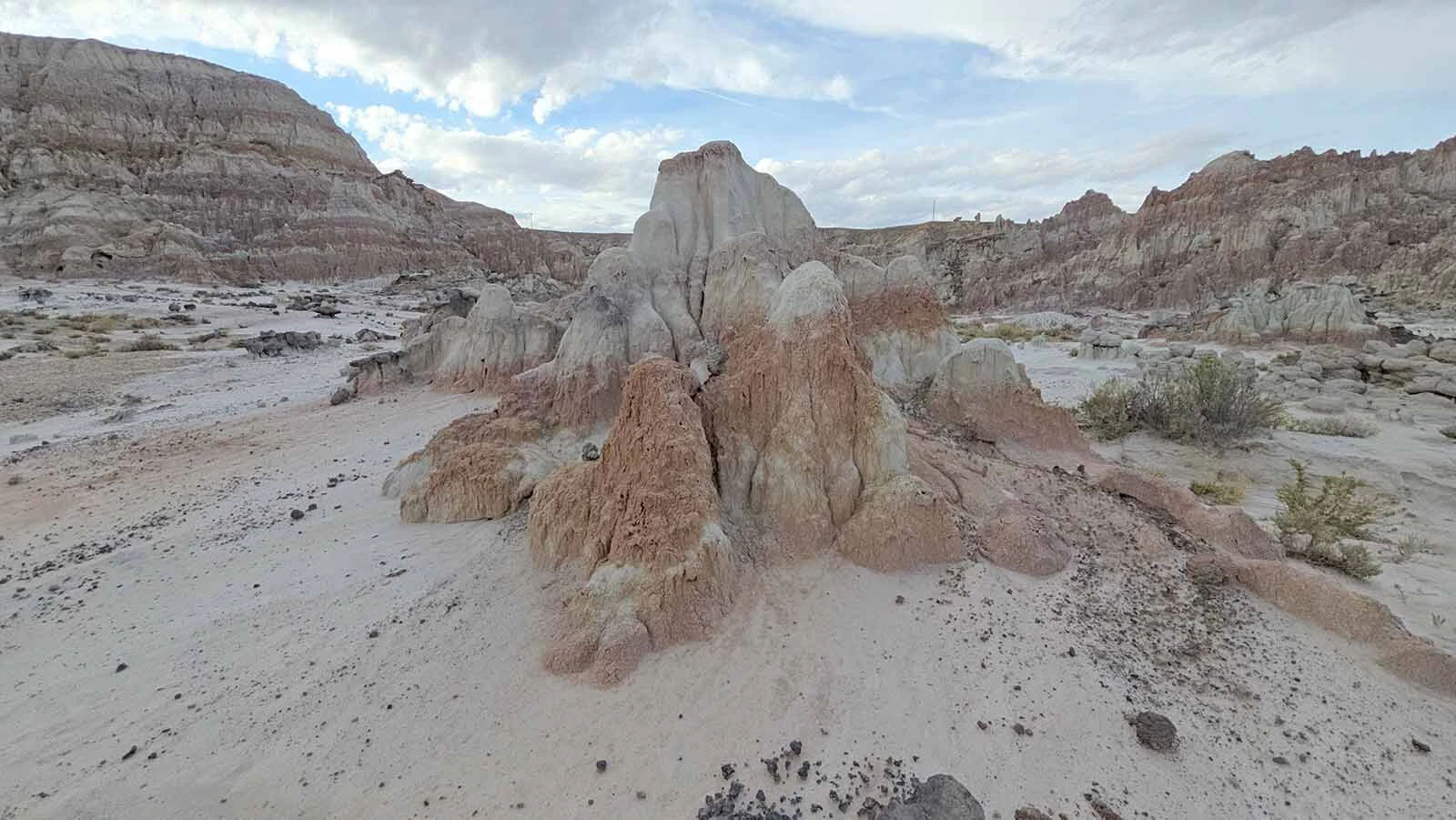
Wind, water and time have carved odd shapes into Hell's Half Acre, 40 miles West of Casper. (Renee Jean, Cowboy State Daily) 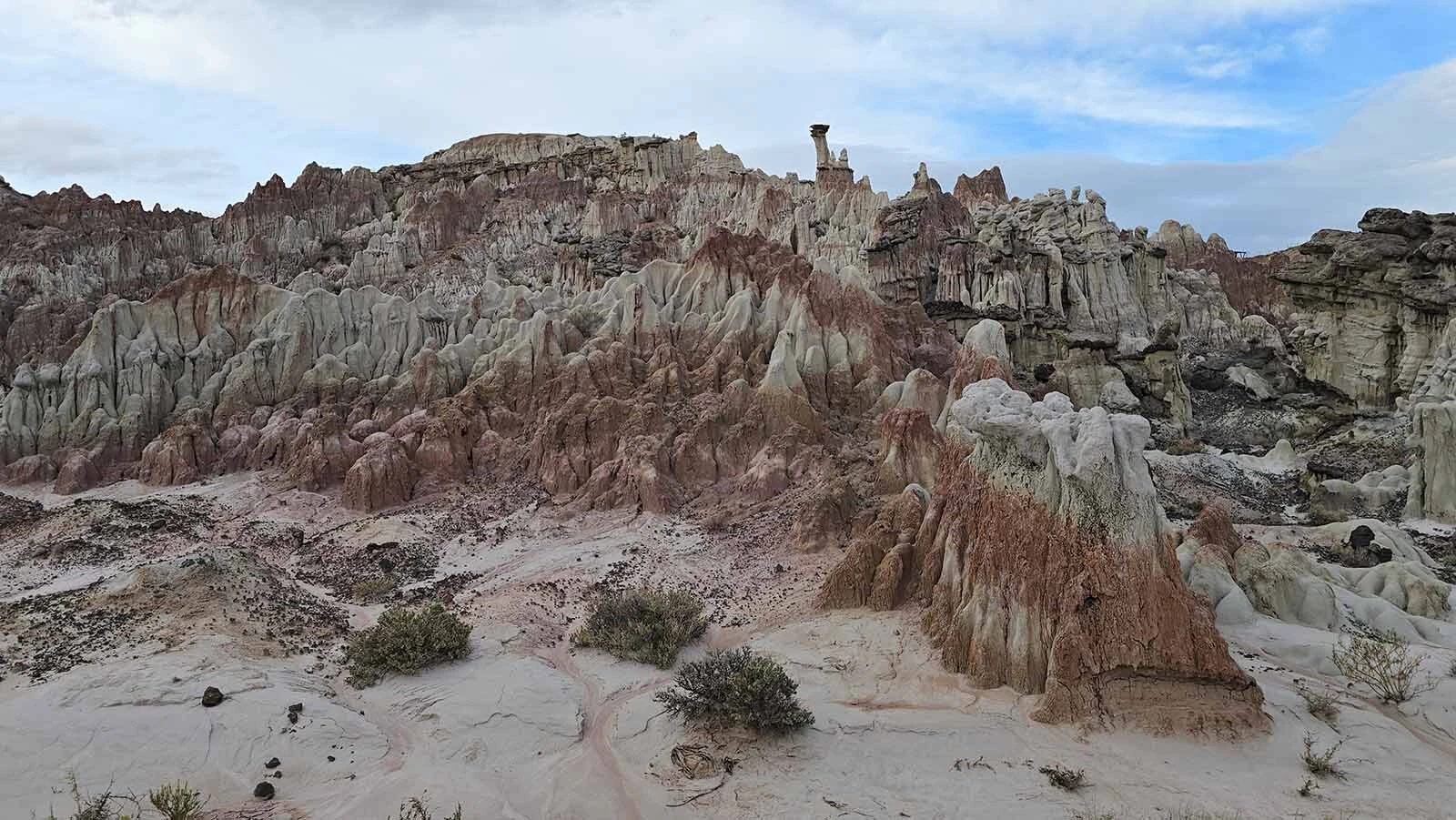
Wind, water and time have carved odd shapes into Hell's Half Acre, 40 miles West of Casper. (Renee Jean, Cowboy State Daily) 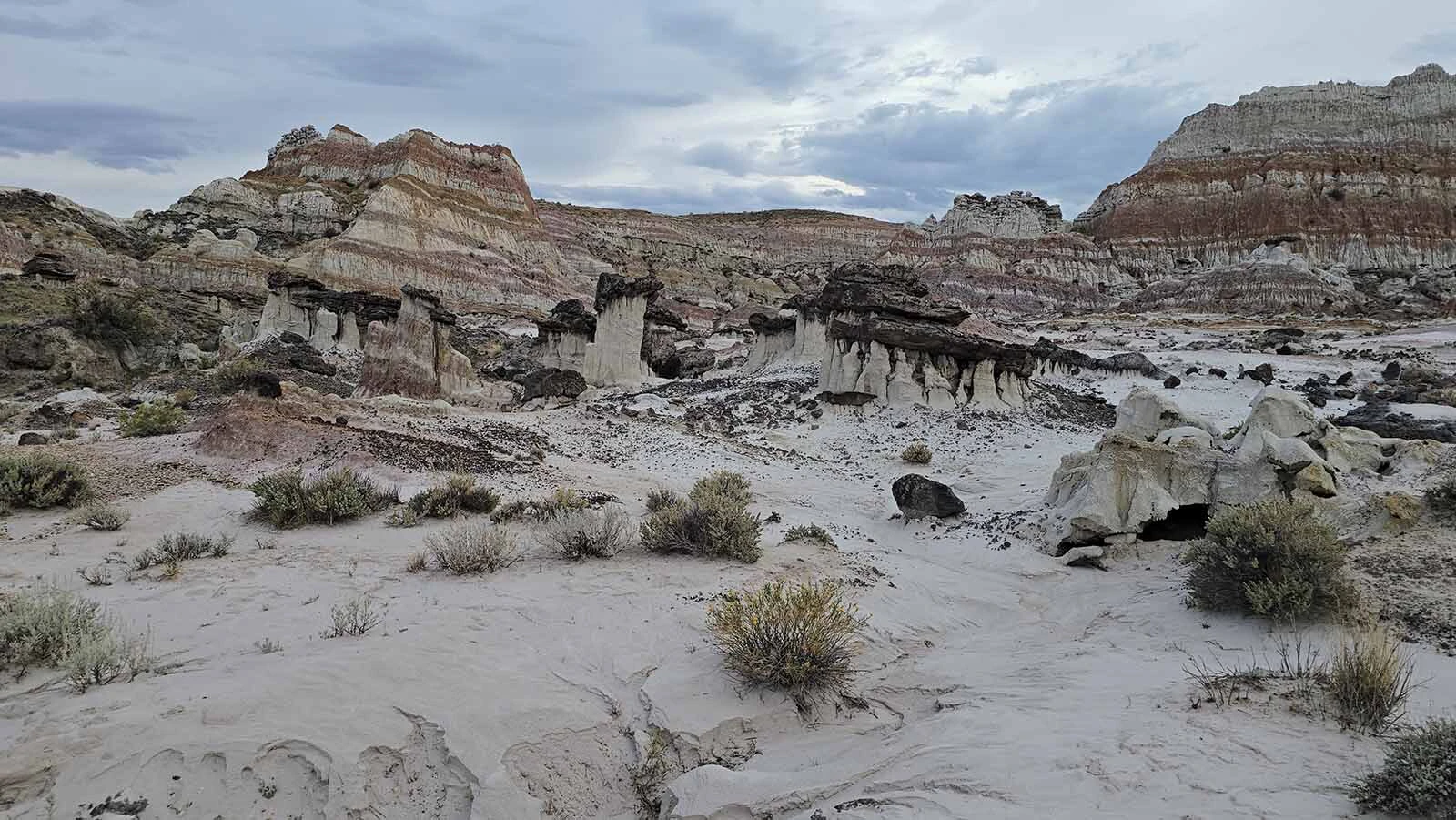
Wind, water and time have carved odd shapes into Hell's Half Acre, 40 miles West of Casper. (Renee Jean, Cowboy State Daily) 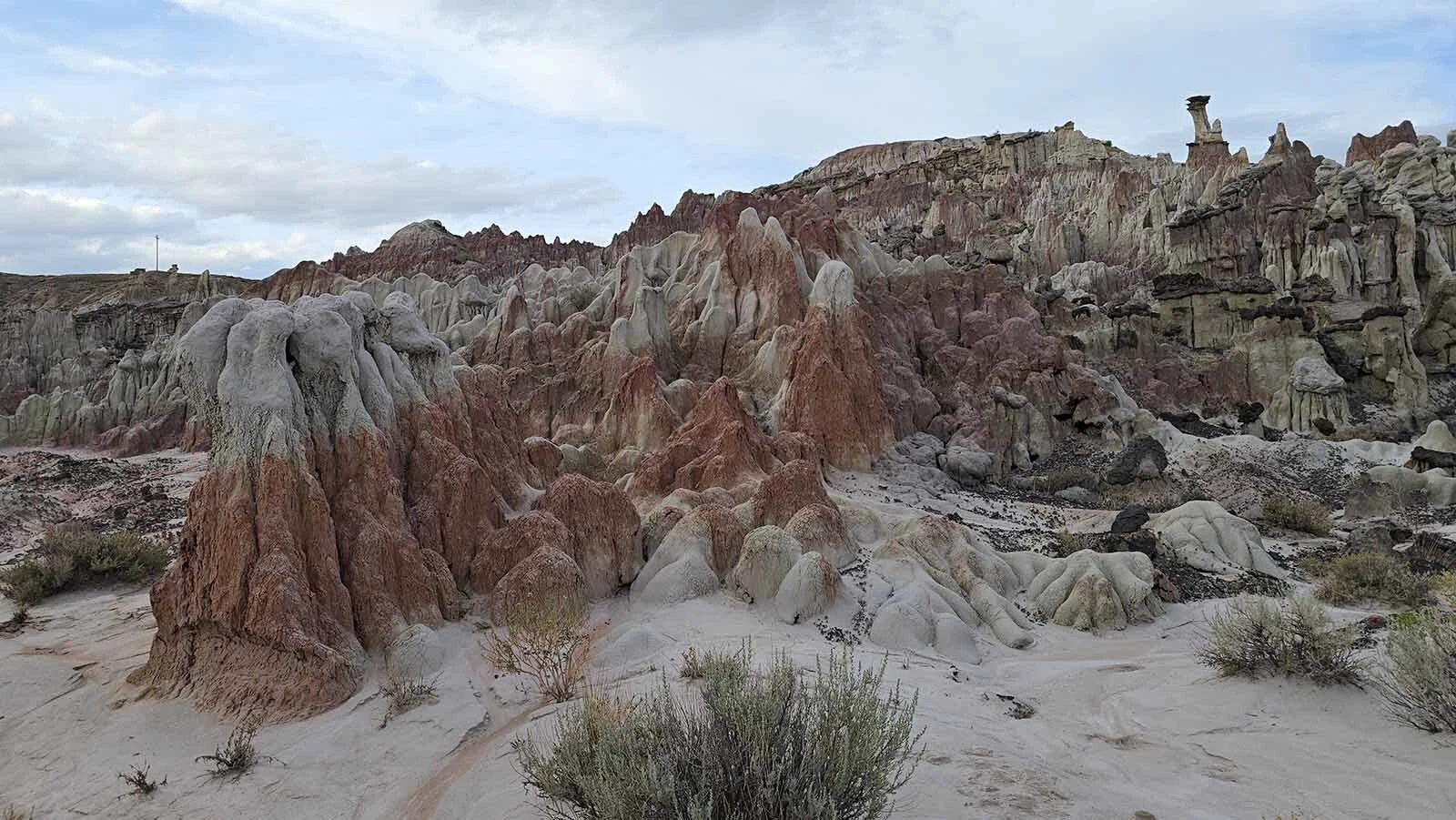
Wind, water and time have carved odd shapes into Hell's Half Acre, 40 miles West of Casper. (Renee Jean, Cowboy State Daily)
Two Million Years Of Carving
The sculpting of this deeply eroded escarpment began roughly 2 million years ago, as rainfall, snowmelt, and thunderstorms went to work on madly tilted rock formations.
That might sound like a long time, but in the grander scales of geologic time it’s really just the blink of an eye.
Before the carving came the Laramide Uplift, between 70 and 55 million years ago. Forces inside the earth shoved older rocks up past younger, horizontal layers, lifting what’s now known as the Casper Arch.
That uplift is why the bands of red and white stone here are so tilted, angling down into the earth, jamming into flatter strata in abrupt, jagged lines.
This collision of angles is what geologists call an angular unconformity, and it suggests a huge chunk of missing time wiped from the visible record.
On top of this crumpled foundation sits the Wind River Formation — layers of siltstone and mudstone deposited in rivers and lakes around 53 million years ago, during the Eocene Epoch.
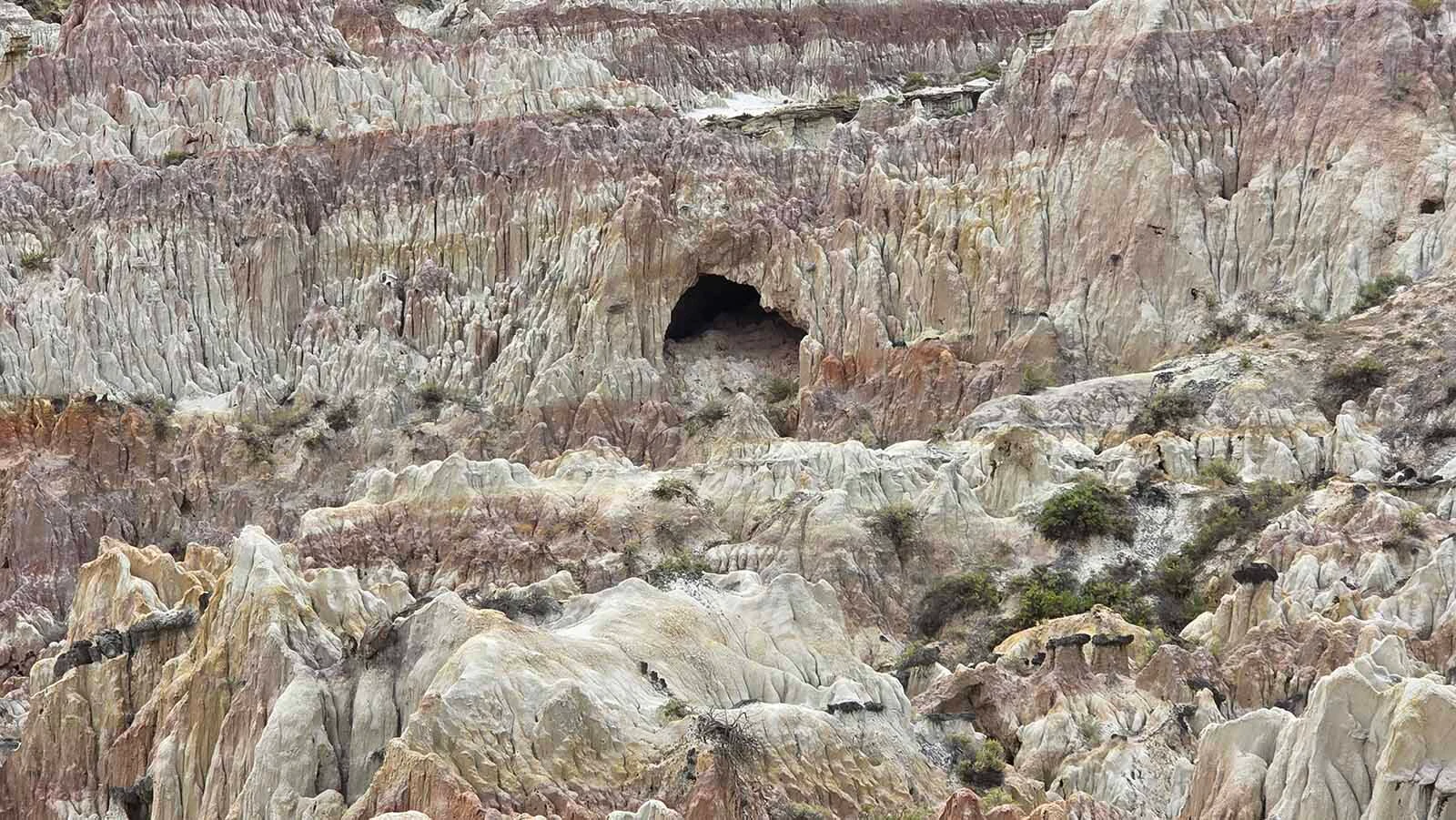
These soft rocks erode quickly, sometimes as much as an inch in a single storm. Every downpour chisels away a bit more, revealing new shapes while erasing old ones. Steep ravines, towers, spires, and caves have thus been carved here.
It’s a twisting braid of time but looks more like an abstract sculpture garden that puts Salvador Dali to shame.
Mushroom-shaped hoodoos — capped by less erodible, lens-shaped sandstone — seem to sprout across the basin floor in every direction. We all called them “mushrooms,” and they fit this alien landscapes perfectly.
In a few places, scattered fragments of purple stone randomly lay along the river bed pathways, like some child had been playing some otherworldly game amid the mushrooms.
Elsewhere, folded red-and-white formations covered in tiny, hardened pebbles of mudstone that resembled reptilian scales lay in wait, catching shadows as the sun sank.
If those ridges suddenly undulated like a snake and glided across the vista in search of prey, we’d have all been shocked — but not entirely surprised.
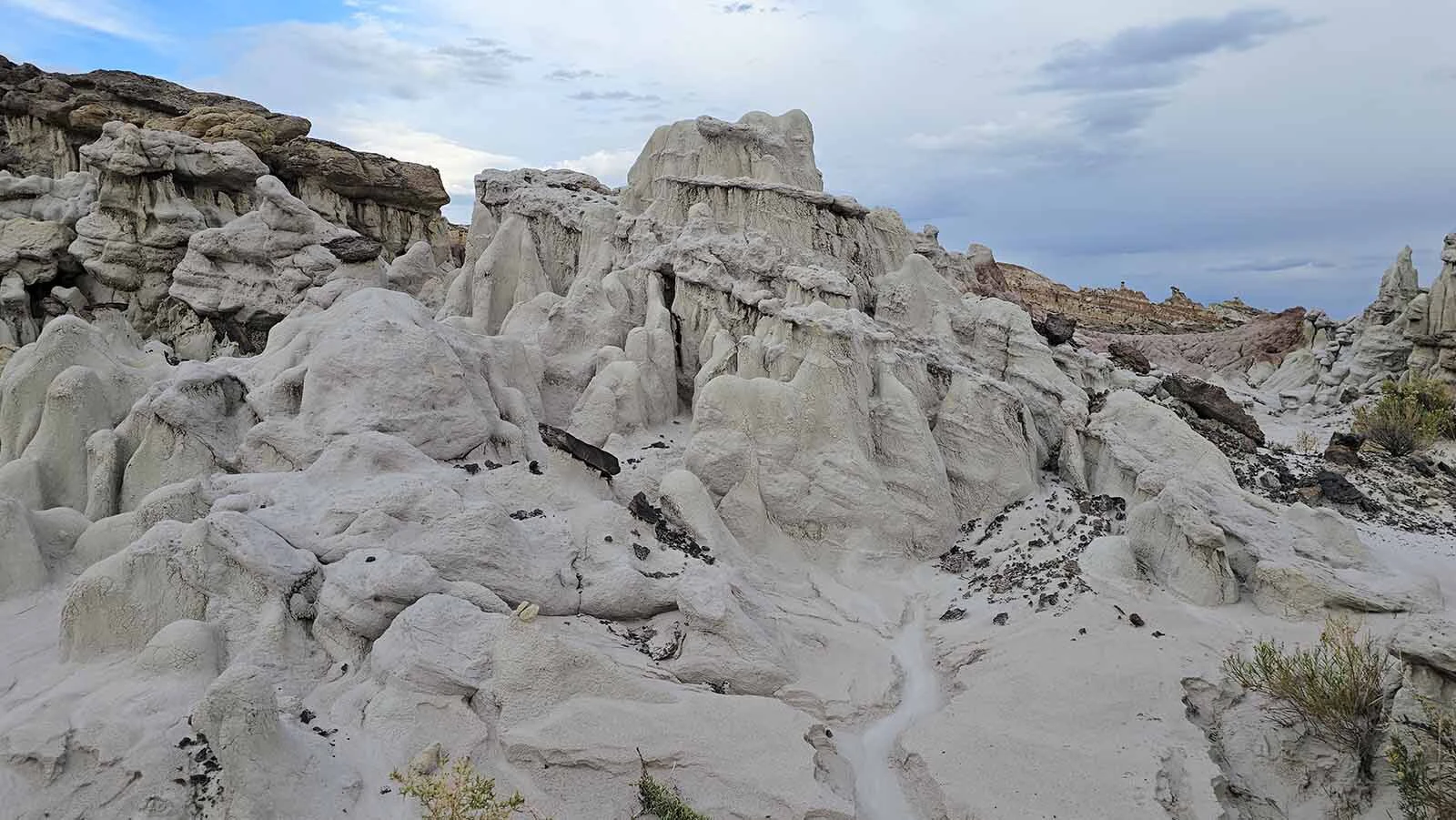
Wind, water and time have carved odd shapes into Hell's Half Acre, 40 miles West of Casper. (Renee Jean, Cowboy State Daily) 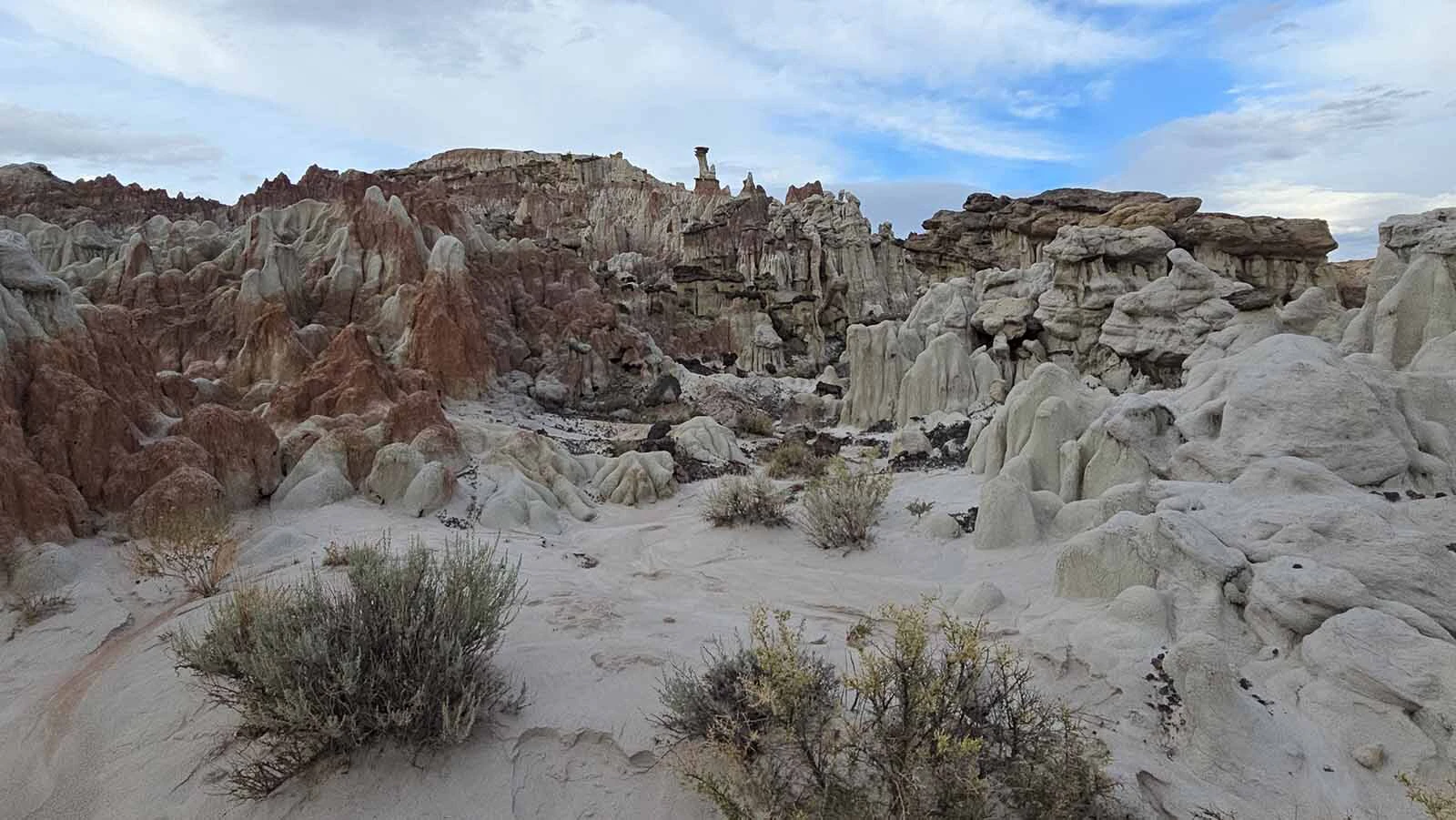
Wind, water and time have carved odd shapes into Hell's Half Acre, 40 miles West of Casper. (Renee Jean, Cowboy State Daily) 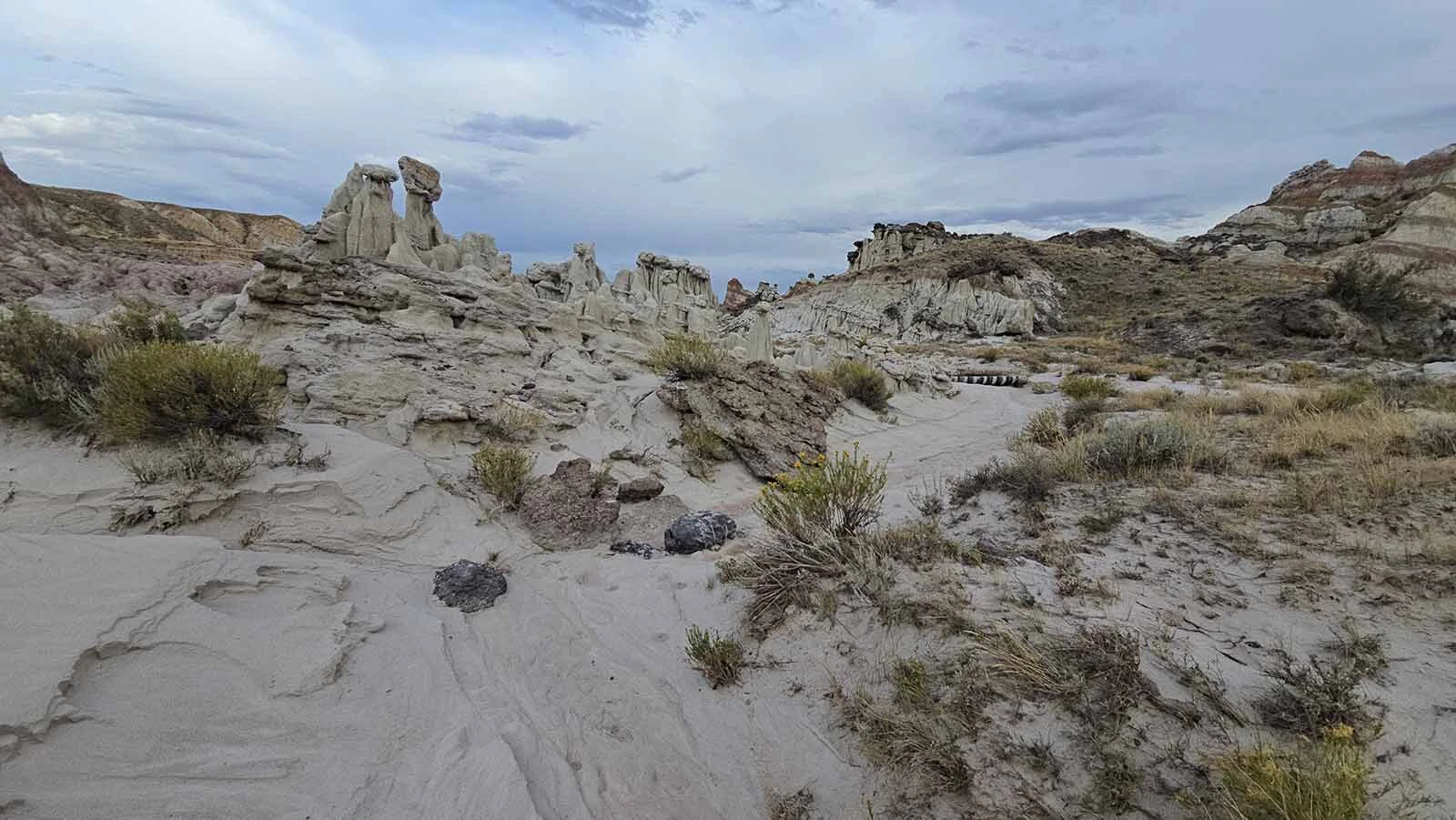
Wind, water and time have carved odd shapes into Hell's Half Acre, 40 miles West of Casper. (Renee Jean, Cowboy State Daily) 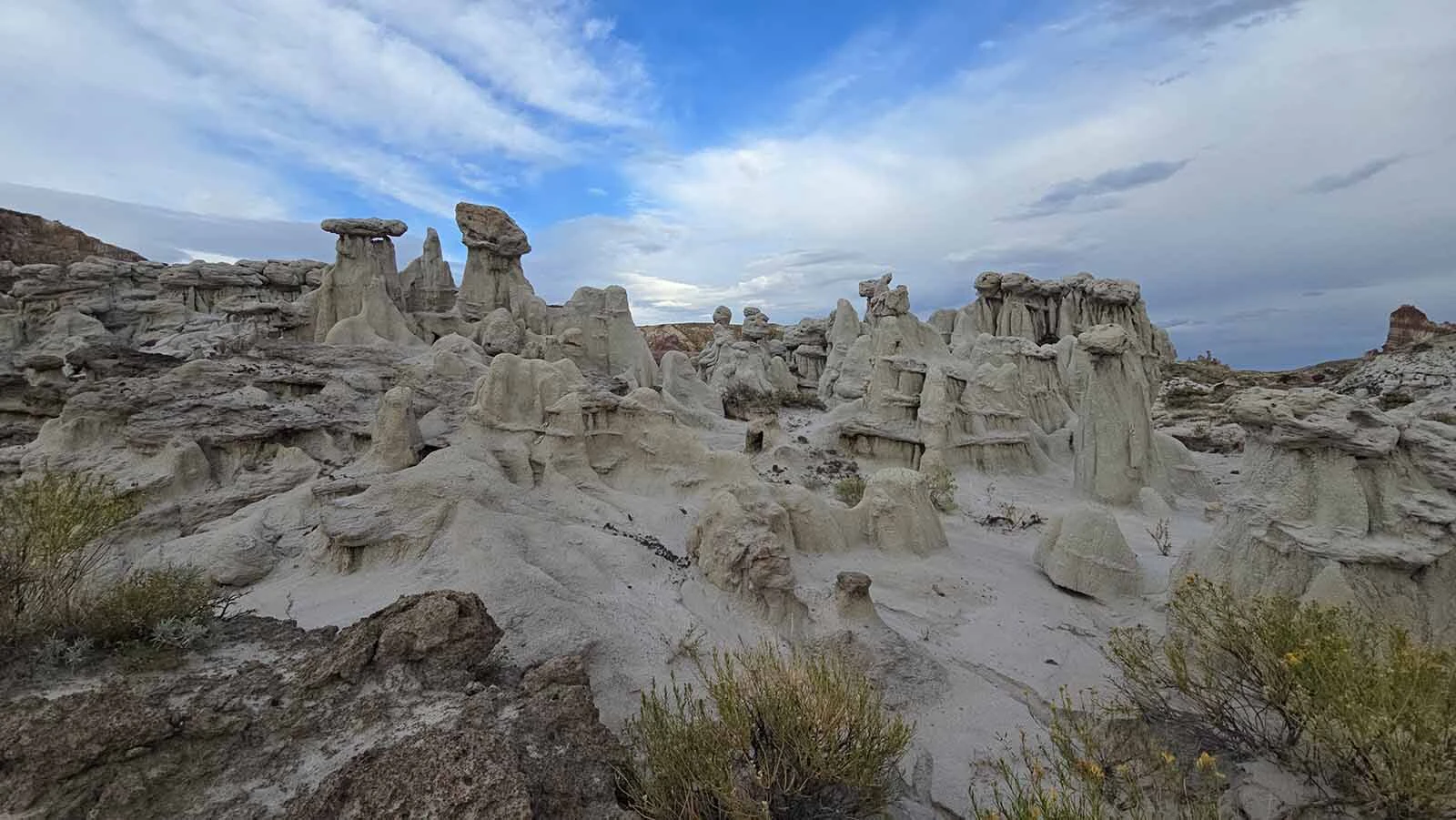
Wind, water and time have carved odd shapes into Hell's Half Acre, 40 miles West of Casper. (Renee Jean, Cowboy State Daily) 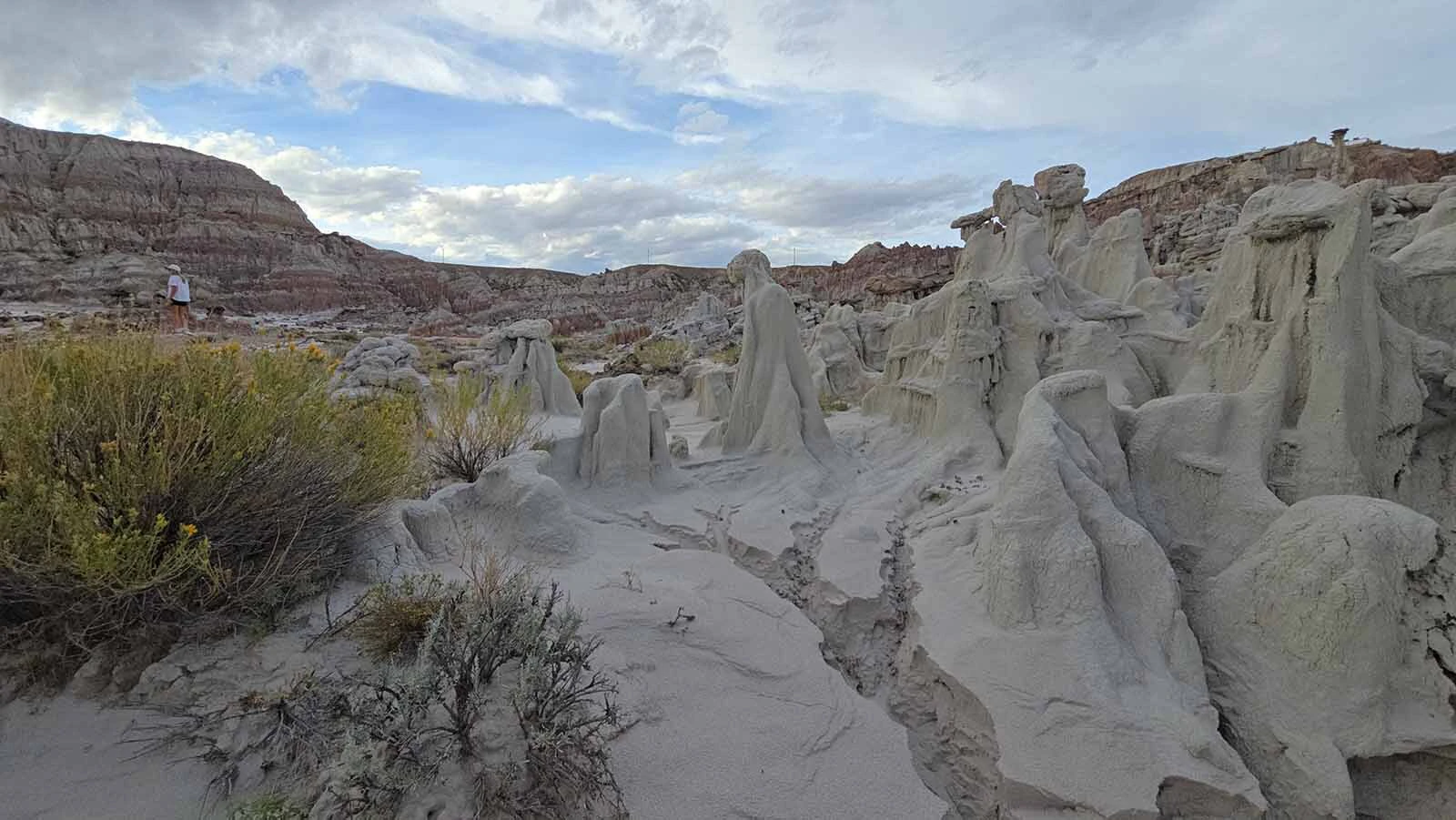
A rock formation at Hell's Half Acre that look like a group of twisted souls made from some sort of marble, writhing under a blue sky. (Renee Jean, Cowboy State Daily) 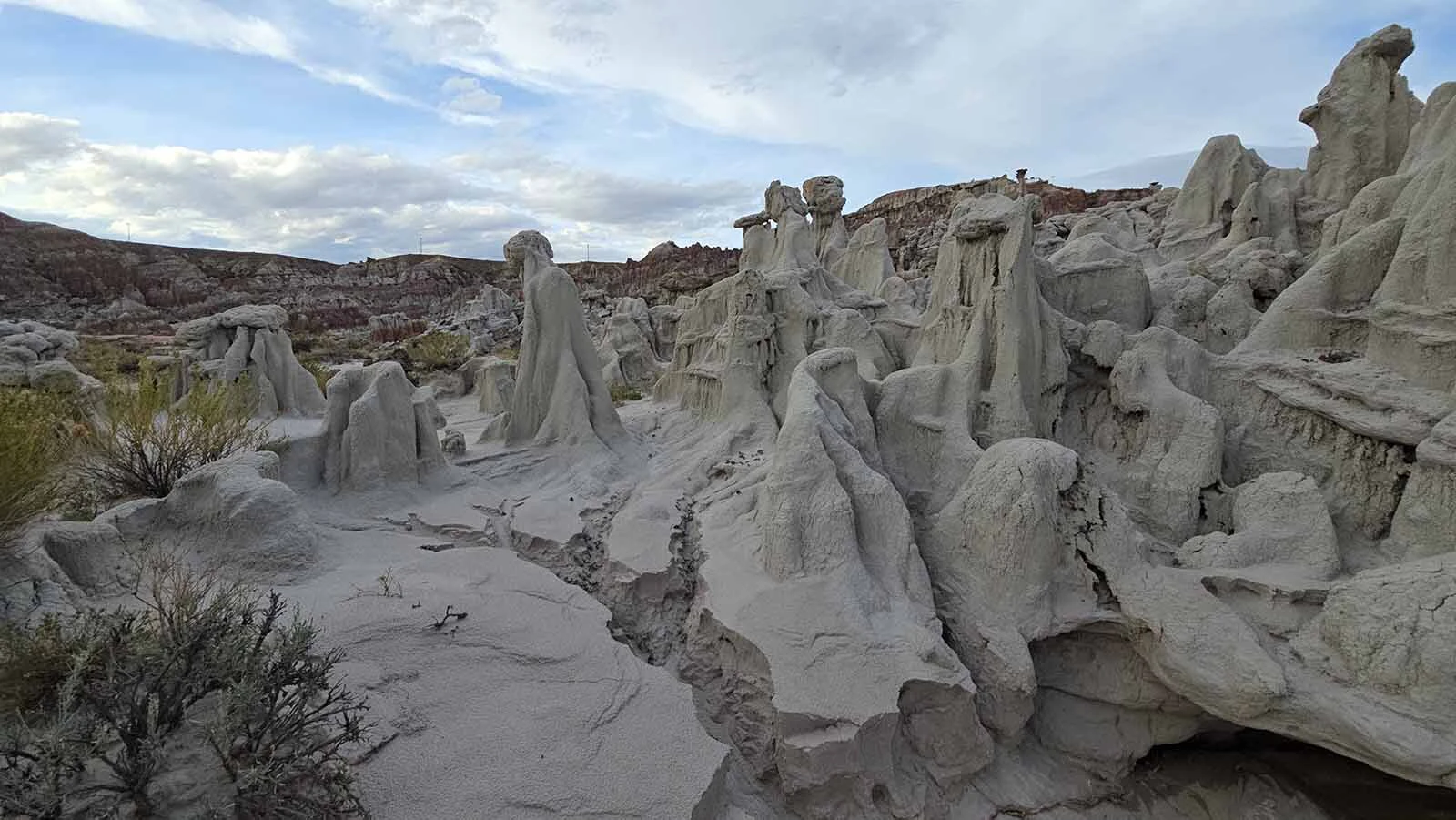
A rock formation at Hell's Half Acre that look like a group of twisted souls made from some sort of marble, writhing under a blue sky. (Renee Jean, Cowboy State Daily) 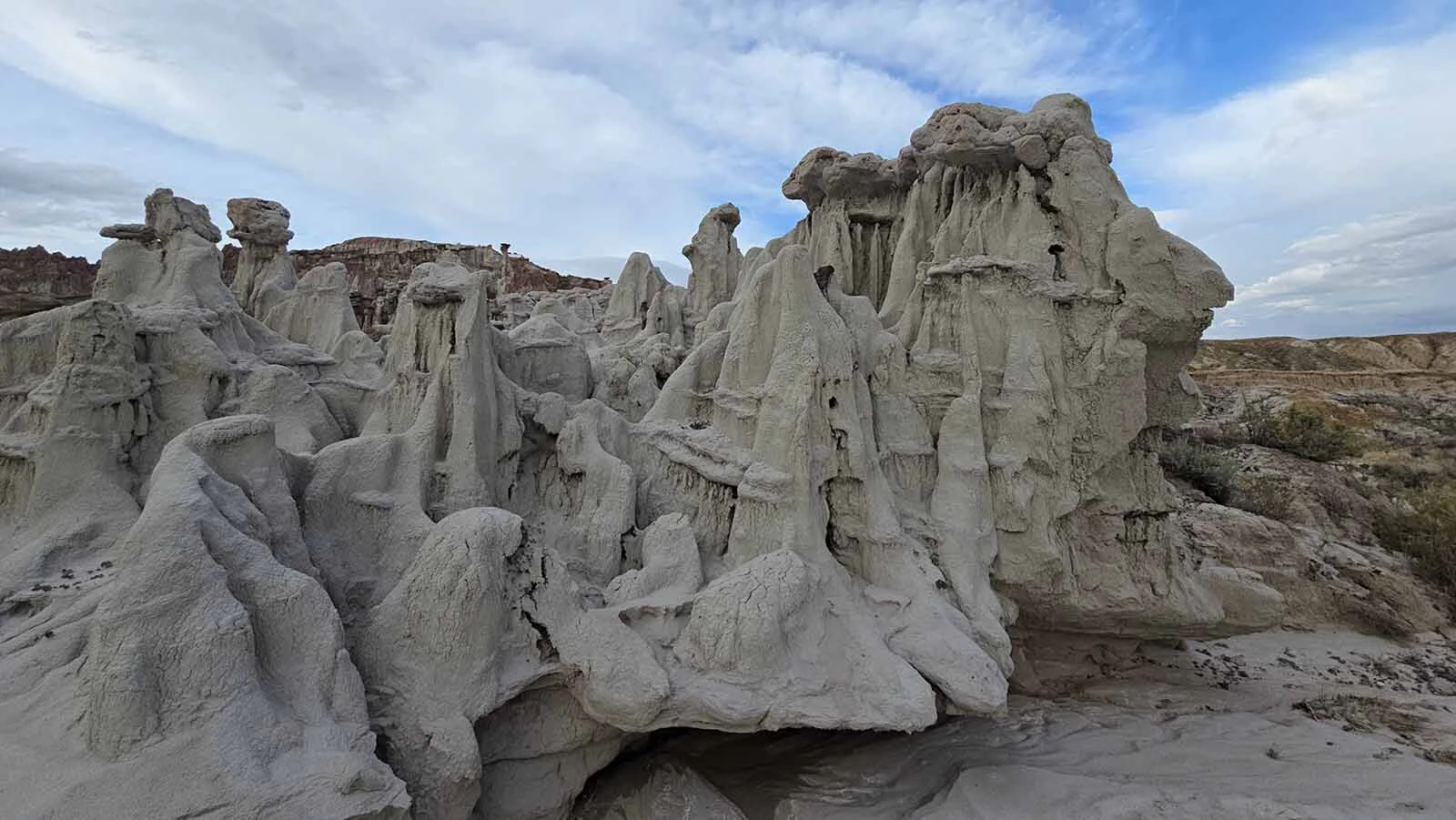
Wind, water and time have carved odd shapes into Hell's Half Acre, 40 miles West of Casper. (Renee Jean, Cowboy State Daily) 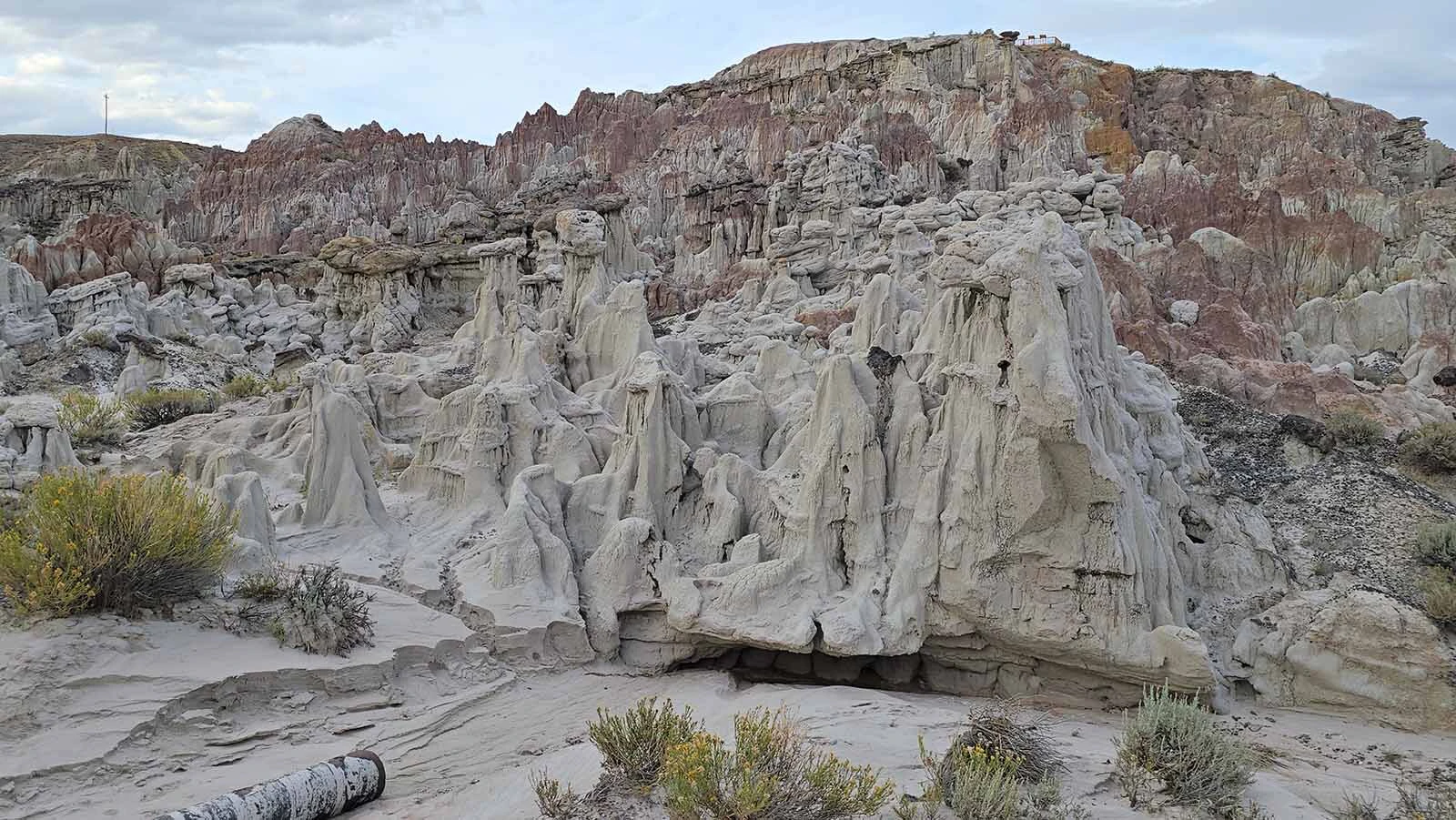
This particular mudstone formation reminded many in a recent tour of Hell's Half Acre of ghostly souls twisting in agony, immortalized in stone. (Renee Jean, Cowboy State Daily) 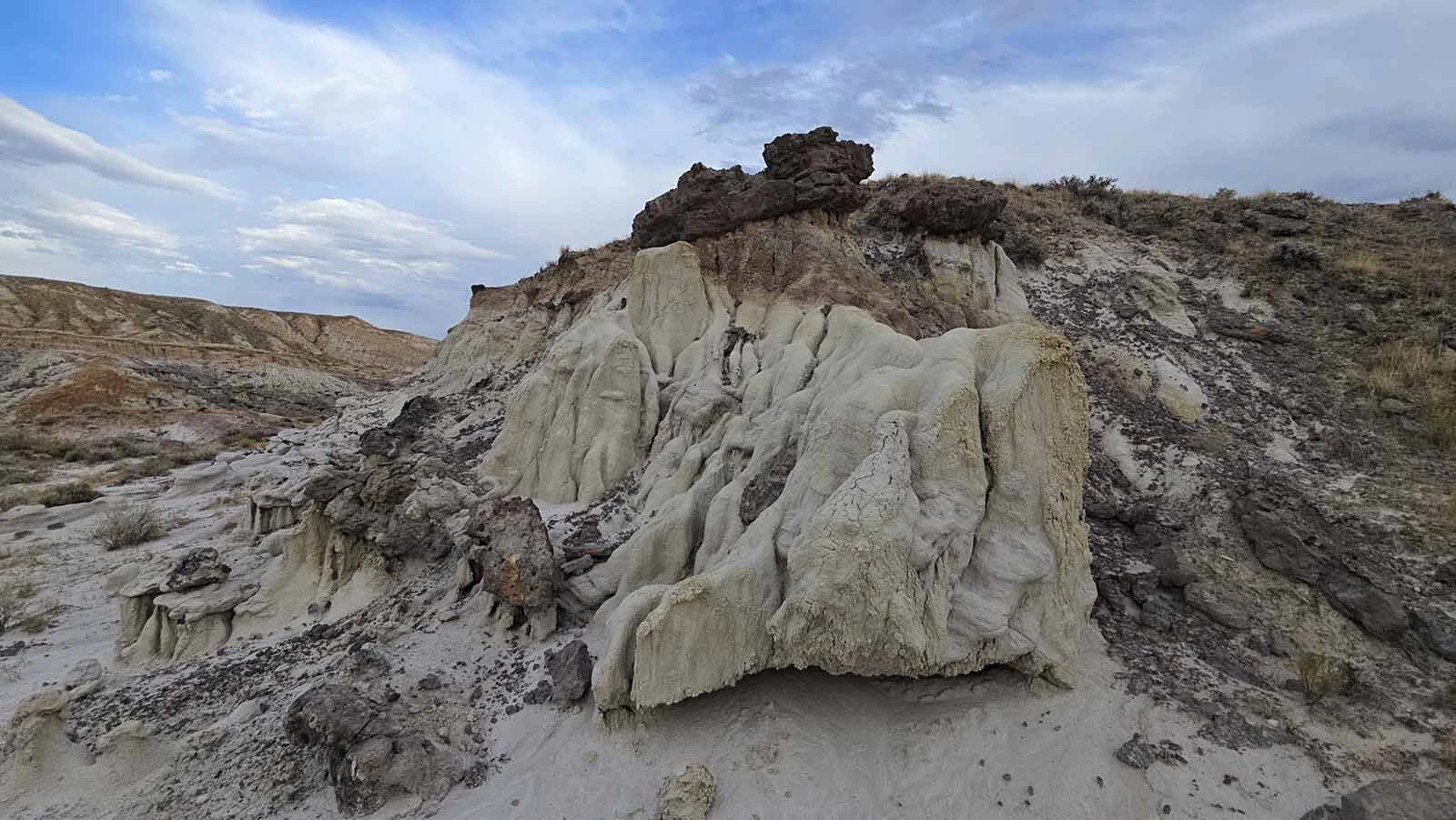
Wind, water and time have carved odd shapes into Hell's Half Acre, 40 miles West of Casper. (Renee Jean, Cowboy State Daily) 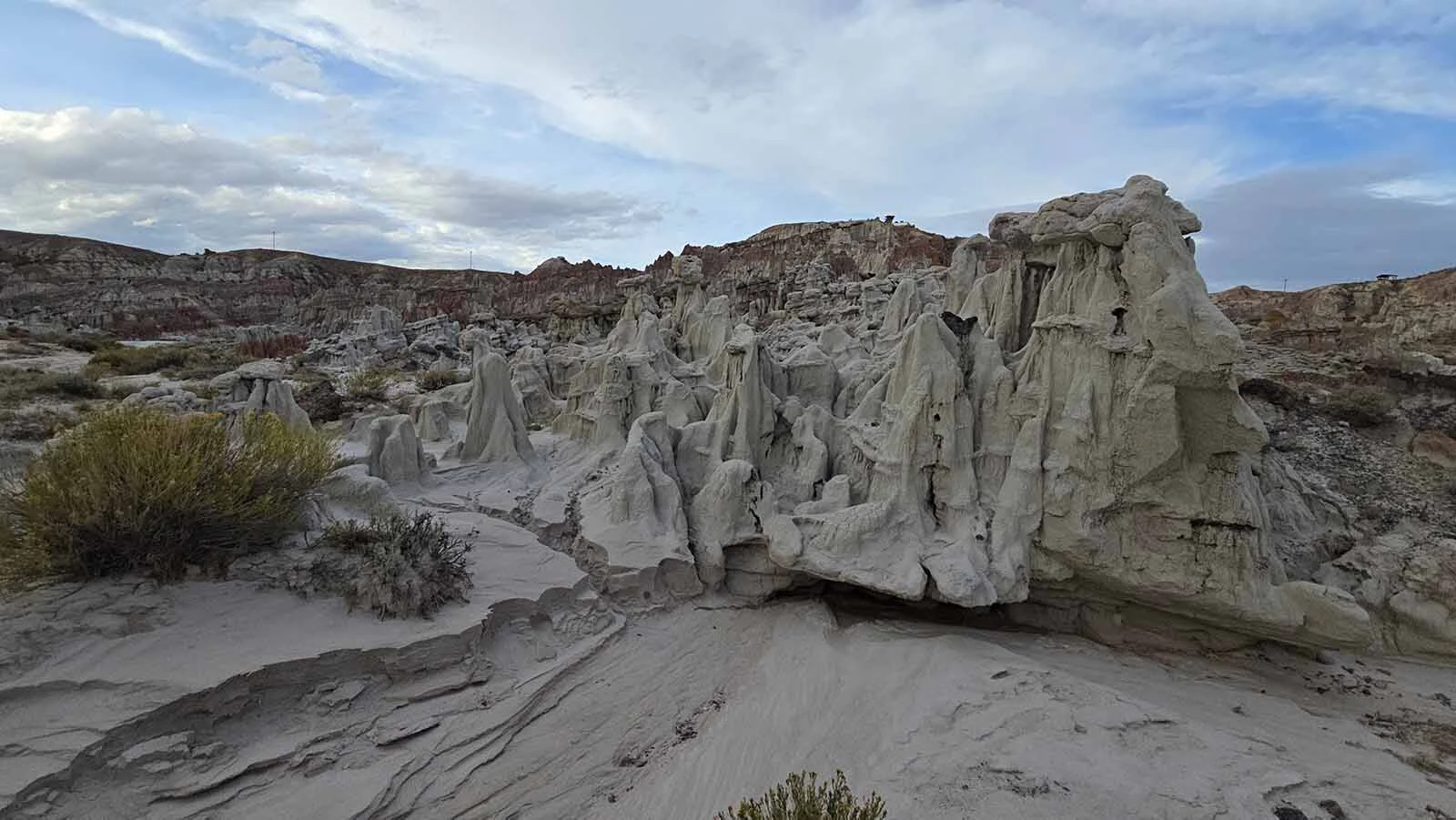
Changing light highlight different aspects of this mudstone sculpture at Hell's Half Acre, 40 miles West of Casper. (Renee Jean, Cowboy State Daily)
When Terror Birds Reigned
There was a time when Hell’s Half Acre was more tropical floodplain than badlands. Fossils found in the region point to a swampy world of crocodiles, turtles, palm-like plants, and other creatures that prefer it warm and wet.
Towering over this Eocene menagerie was a giant, flightless “terror bird” — scientifically known as Gastornis. His role is debated, but some paleontologists believe he was the king of the predators in this land, striking fear into the tiny lemur-like primates that scurried through the underbrush.
Paleontologists have given those primates cute Wyoming names, like Tetonius and Shoshonius.
The Dawn Horse, Hyracotherium, an 18-inch-tall horse-like creature, grazed here as well, along with the larger plant-eater Coryphodon.
Humans eventually joined this story. Archaeological work done in 2006 by John Albanese has revealed a bison kill site, with bones and spear points dated roughly between 3,000 and 1,200 years ago.
Hunters didn’t only drive bison over the cliffs, Albanese found. Bones from deer, elk, and antelope show this was a place where people used the broken topography to their advantage over generations.
Much later, emigrants on the Oregon Trail paused to stare into this chasm on their way west, as did stagecoaches traveling between Casper and Thermopolis.
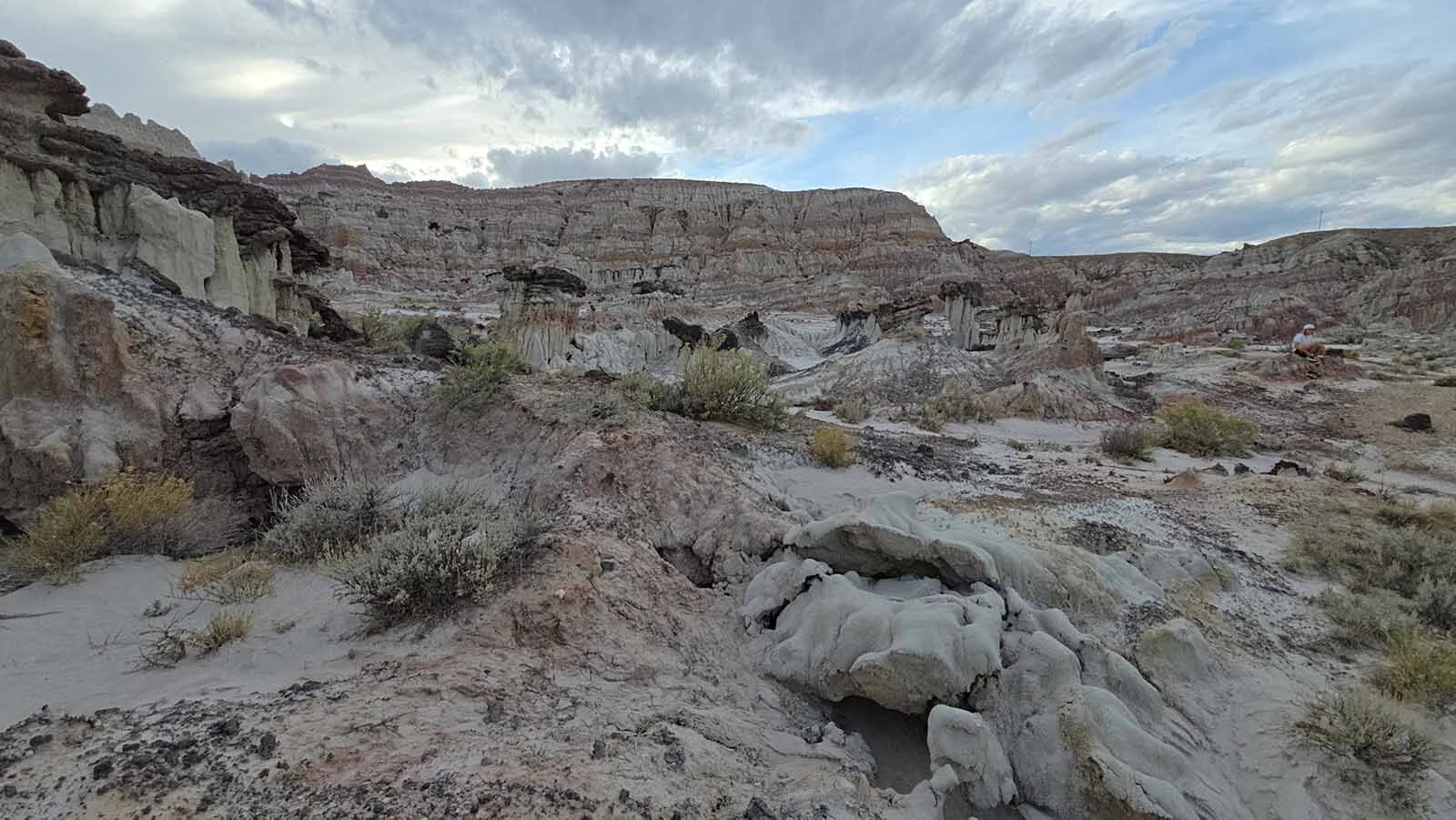
Wind, water and time have carved odd shapes into Hell's Half Acre, 40 miles West of Casper. (Renee Jean, Cowboy State Daily) 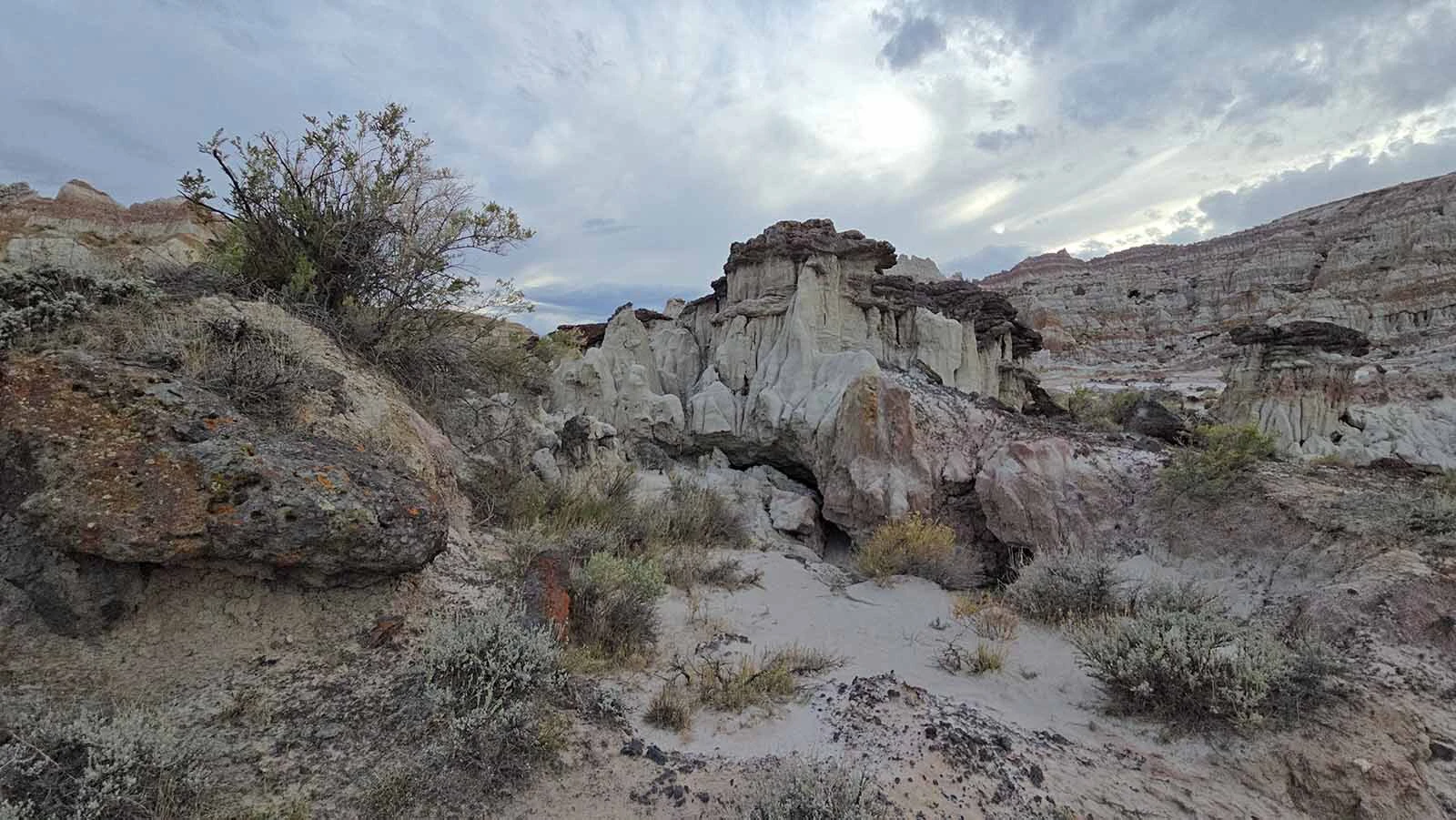
Wind, water and time have carved odd shapes into Hell's Half Acre, 40 miles West of Casper. (Renee Jean, Cowboy State Daily) 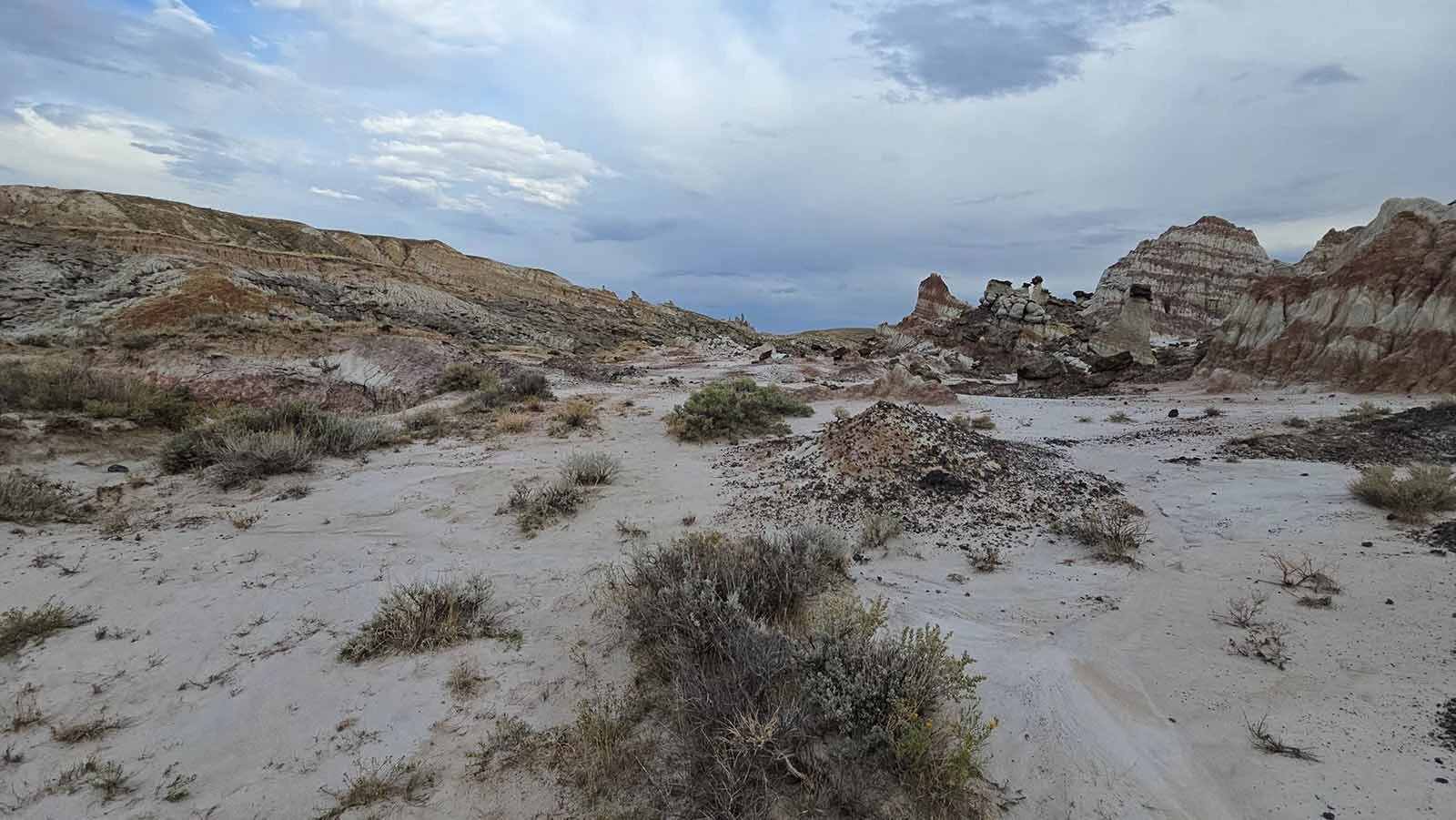
Wind, water and time have carved odd shapes into Hell's Half Acre, 40 miles West of Casper. (Renee Jean, Cowboy State Daily) 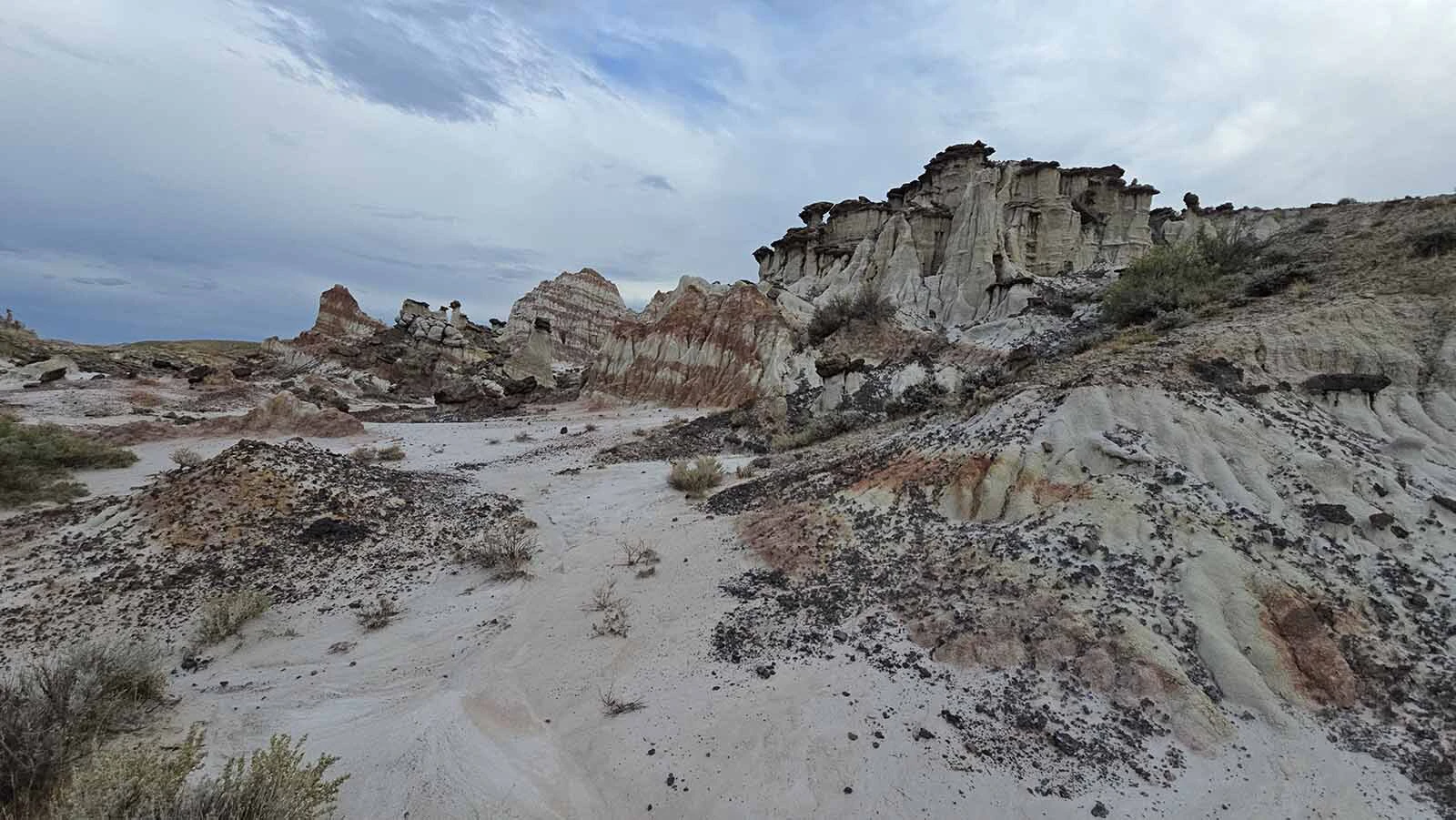
Wind, water and time have carved odd shapes into Hell's Half Acre, 40 miles West of Casper. (Renee Jean, Cowboy State Daily) 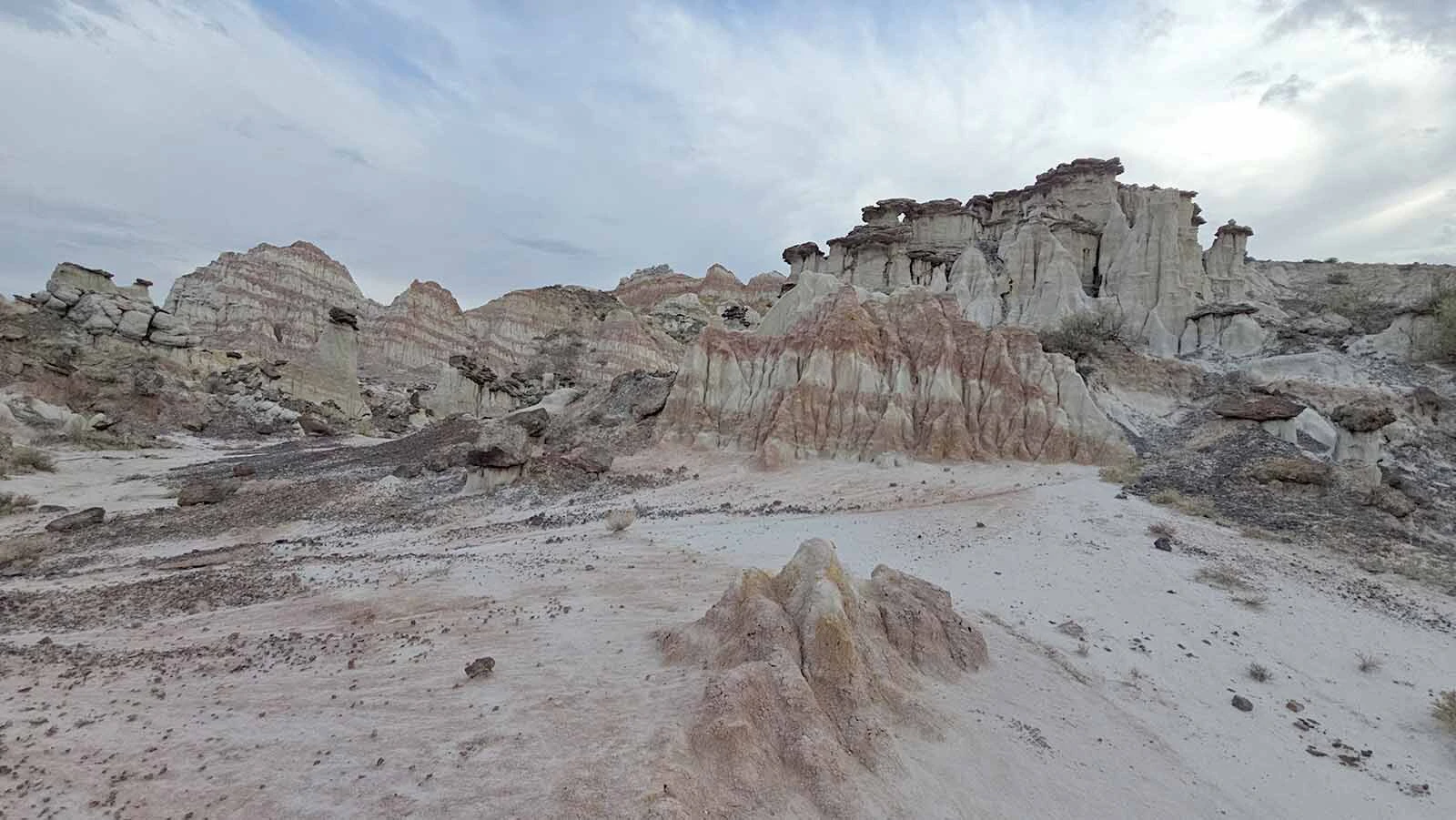
Wind, water and time have carved odd shapes into Hell's Half Acre, 40 miles West of Casper. (Renee Jean, Cowboy State Daily)
Naming The Canyon
When the federal government granted Natrona County the 960-acre parcel that included Hell’s Half Acre in the 1920s, county officials immediately saw the tourism potential.
According to one popular local legend, the county ordered thousands of postcards emblazoned with the name “Devils Kitchen.” What arrived instead were cards labeled “Hell’s Half Acre.”
Rather than toss the cards and buy new ones, they changed the attraction’s name.
Another story has it that a cowhand stumbled into the broken terrain, with its alkali flats and boggy pockets, and declared he’d finally found the “real” Hell’s Half Acre.
Over the years, the badlands have tried on other names too — Pit of Hades and Baby Grand Canyon, for example.
But it was Hell’s Half Acre that stuck.
For a time, the feature boasted a restaurant, motel with a gift shop, and even a post office. Locals still tell of the restaurant owner placing a glowing devil figure in one of the caves, lighting it up at night so a red demon would peer out of the darkness when visitors looked into the place.
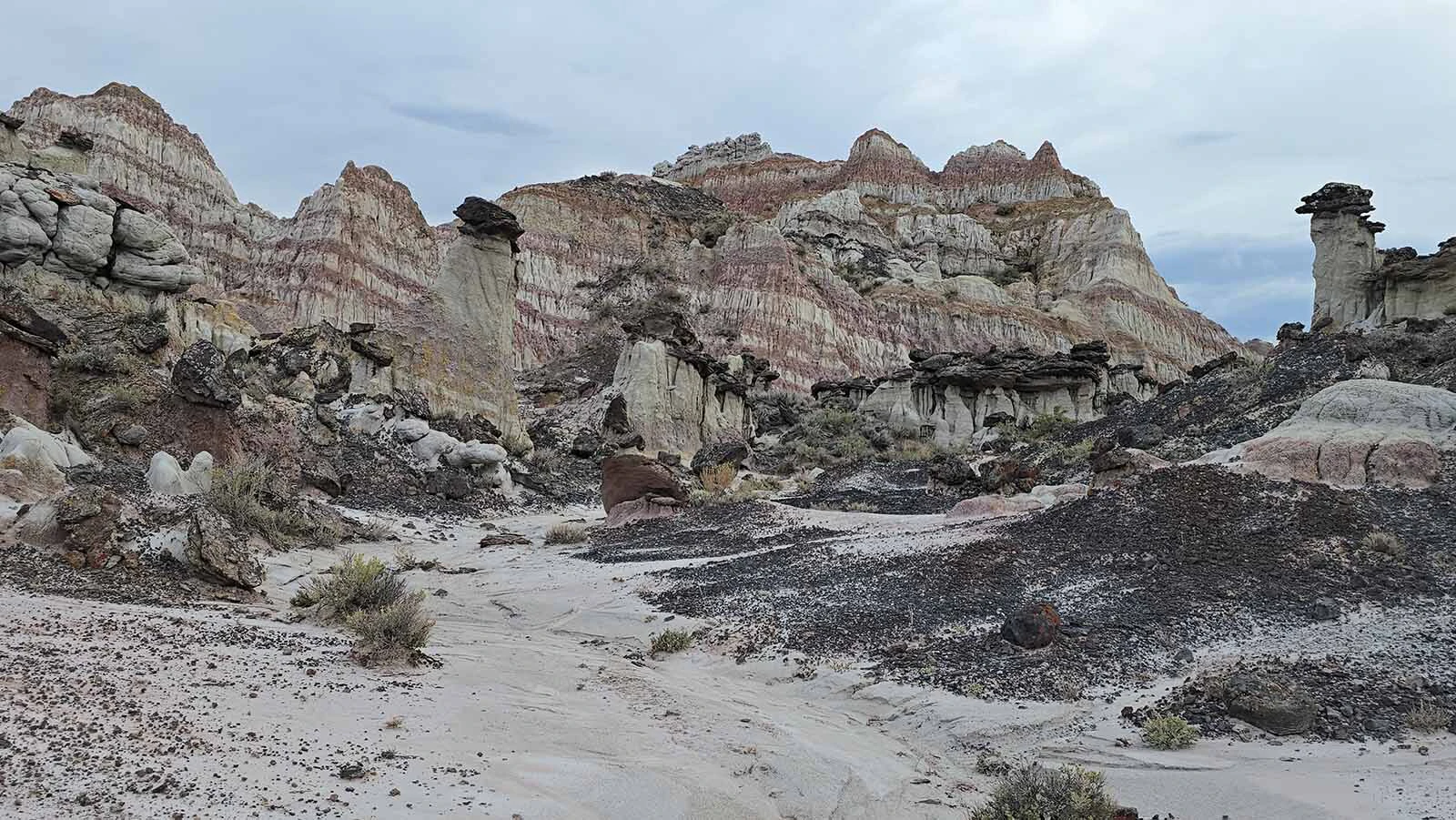
Wind, water and time have carved odd shapes into Hell's Half Acre, 40 miles West of Casper. (Renee Jean, Cowboy State Daily) 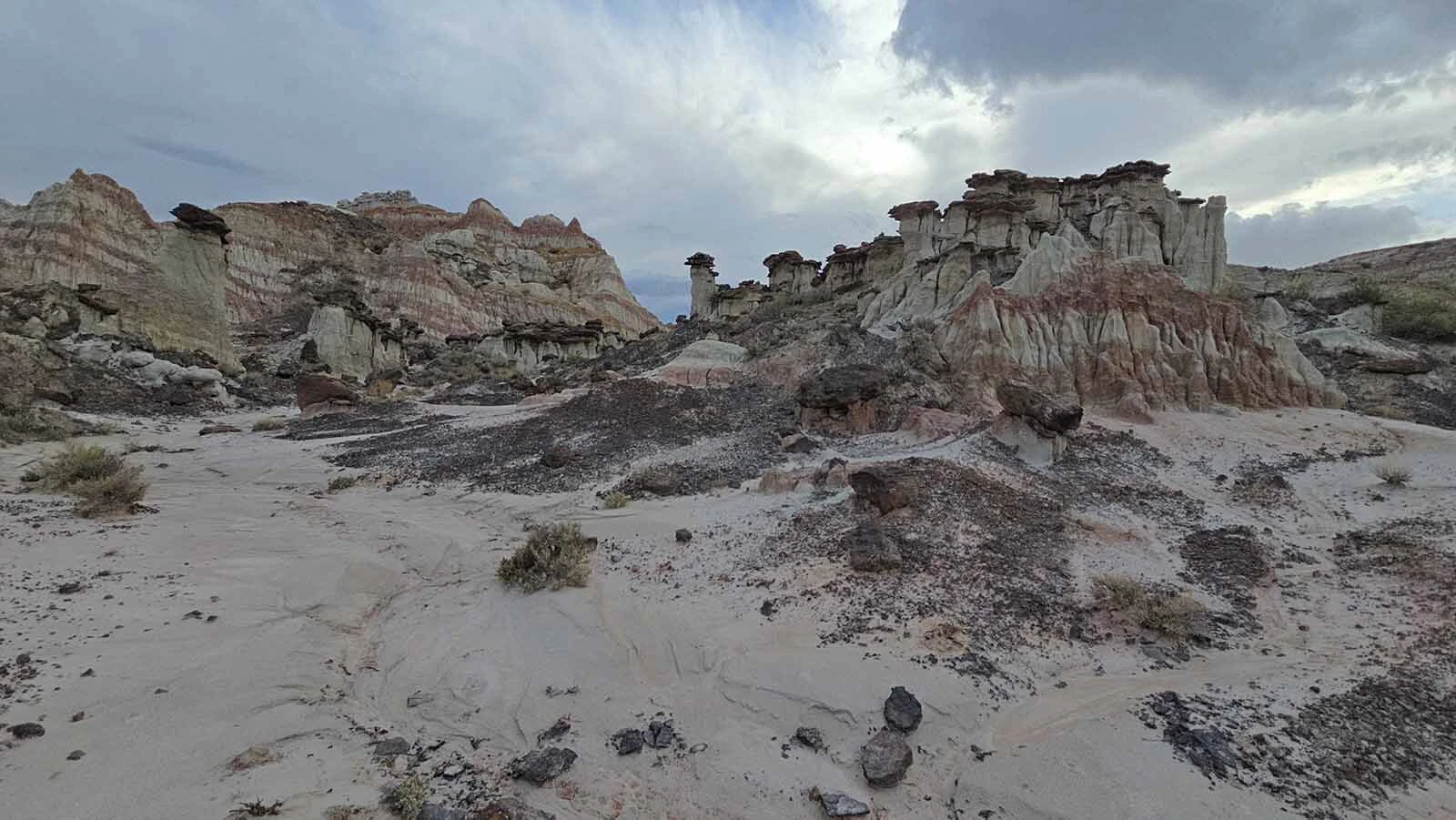
Wind, water and time have carved odd shapes into Hell's Half Acre, 40 miles West of Casper. (Renee Jean, Cowboy State Daily) 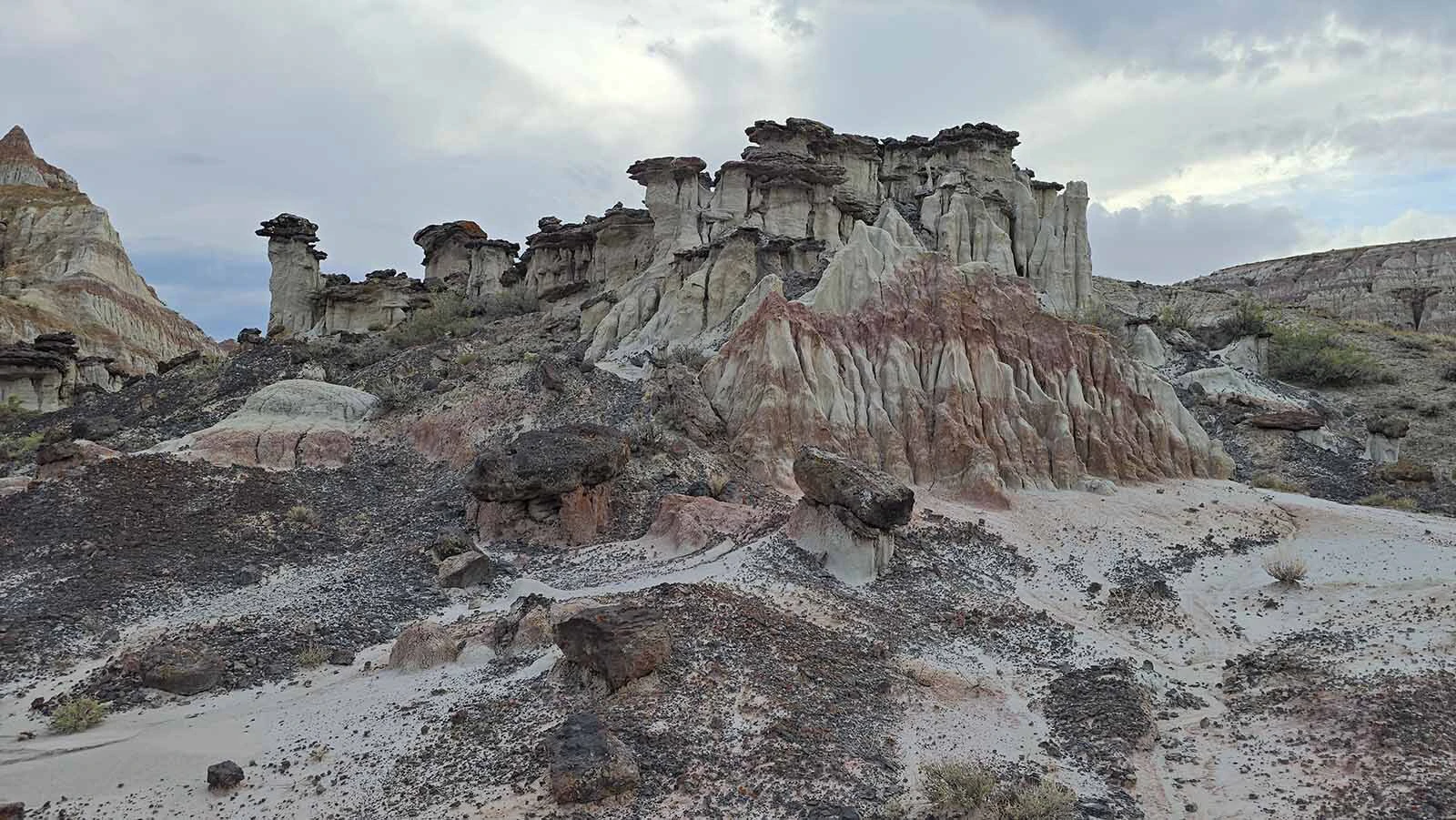
Wind, water and time have carved odd shapes into Hell's Half Acre, 40 miles West of Casper. (Renee Jean, Cowboy State Daily) 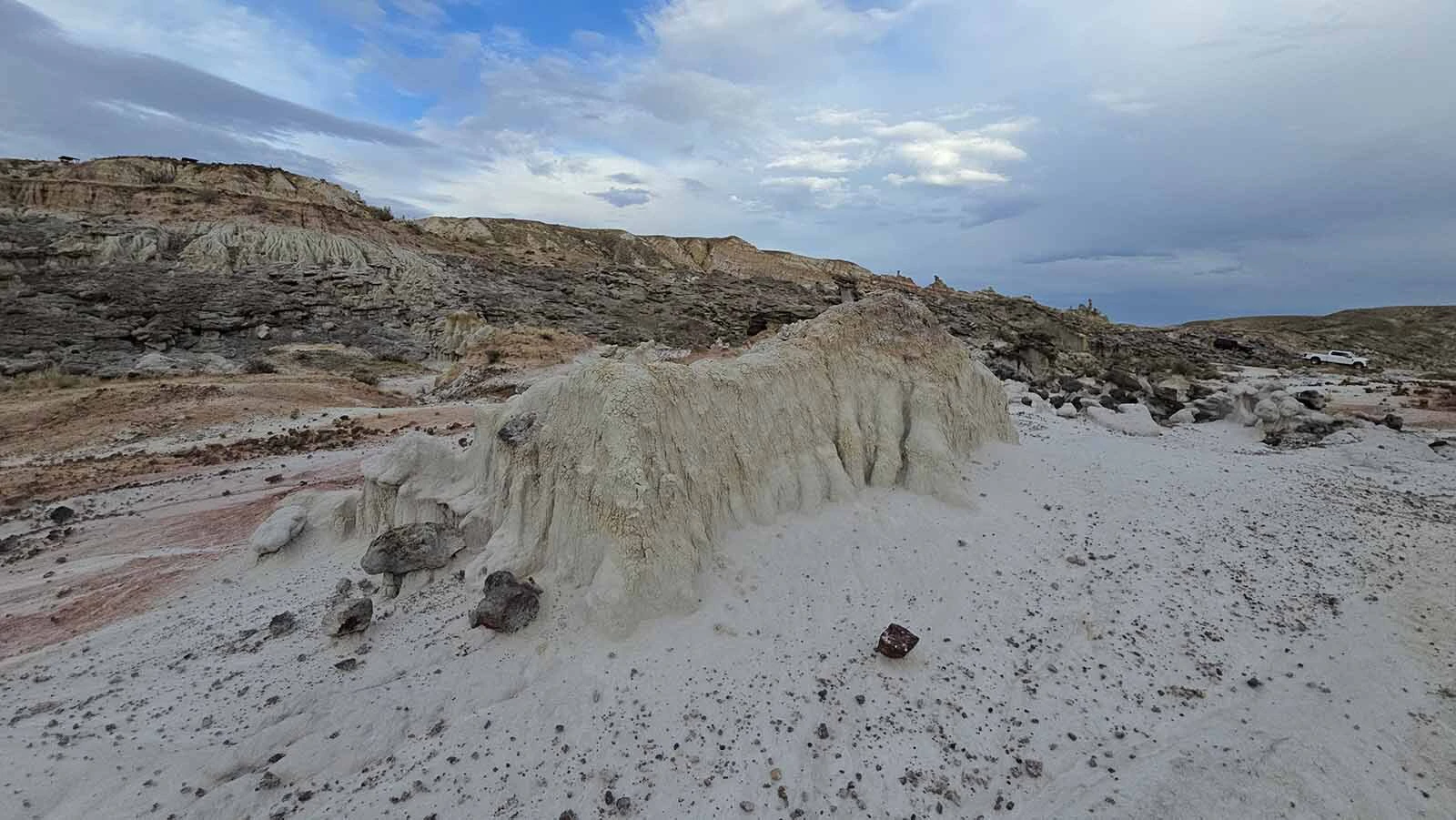
Wind, water and time have carved odd shapes into Hell's Half Acre, 40 miles West of Casper. (Renee Jean, Cowboy State Daily) 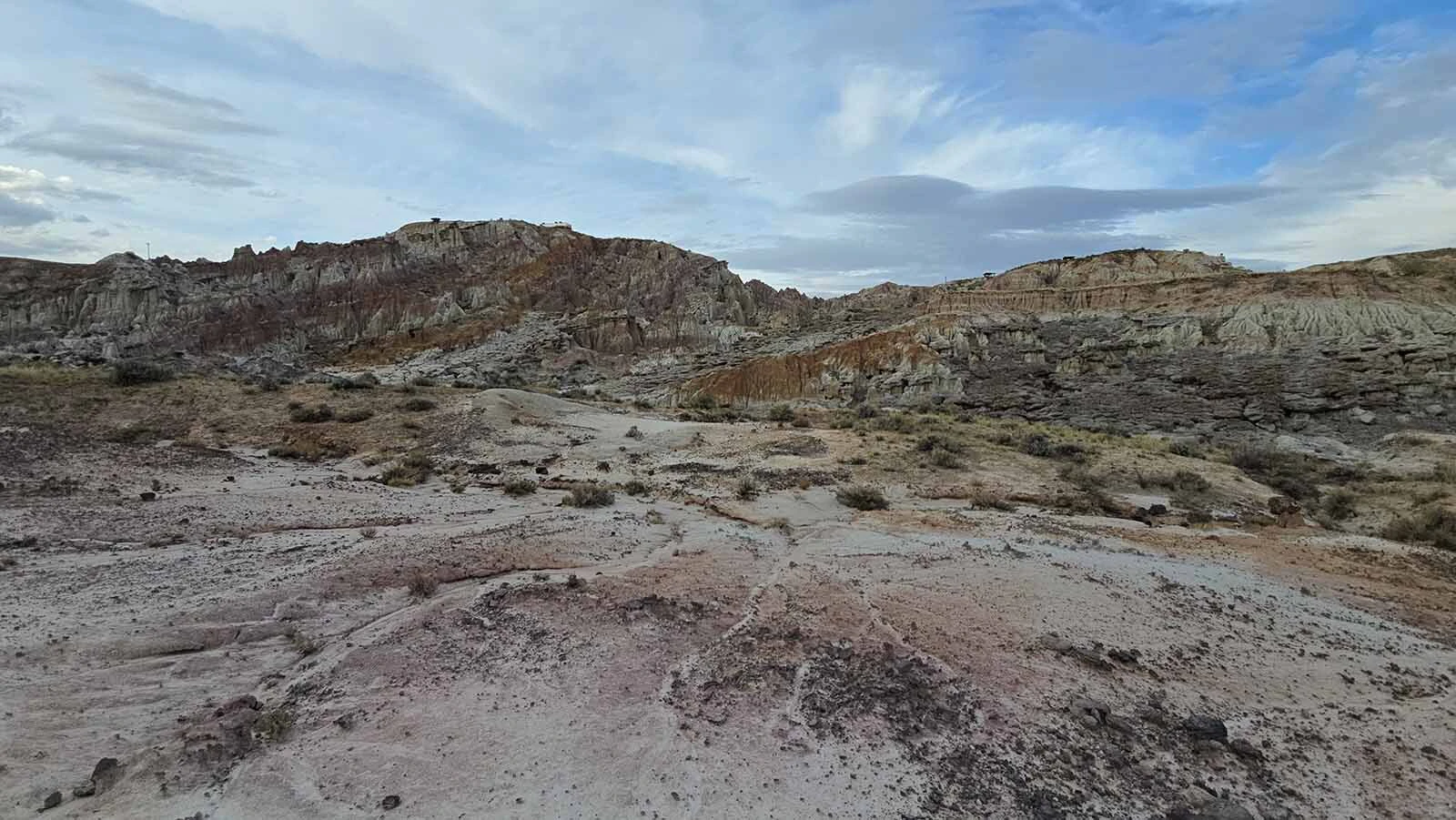
Wind, water and time have carved odd shapes into Hell's Half Acre, 40 miles West of Casper. (Renee Jean, Cowboy State Daily) 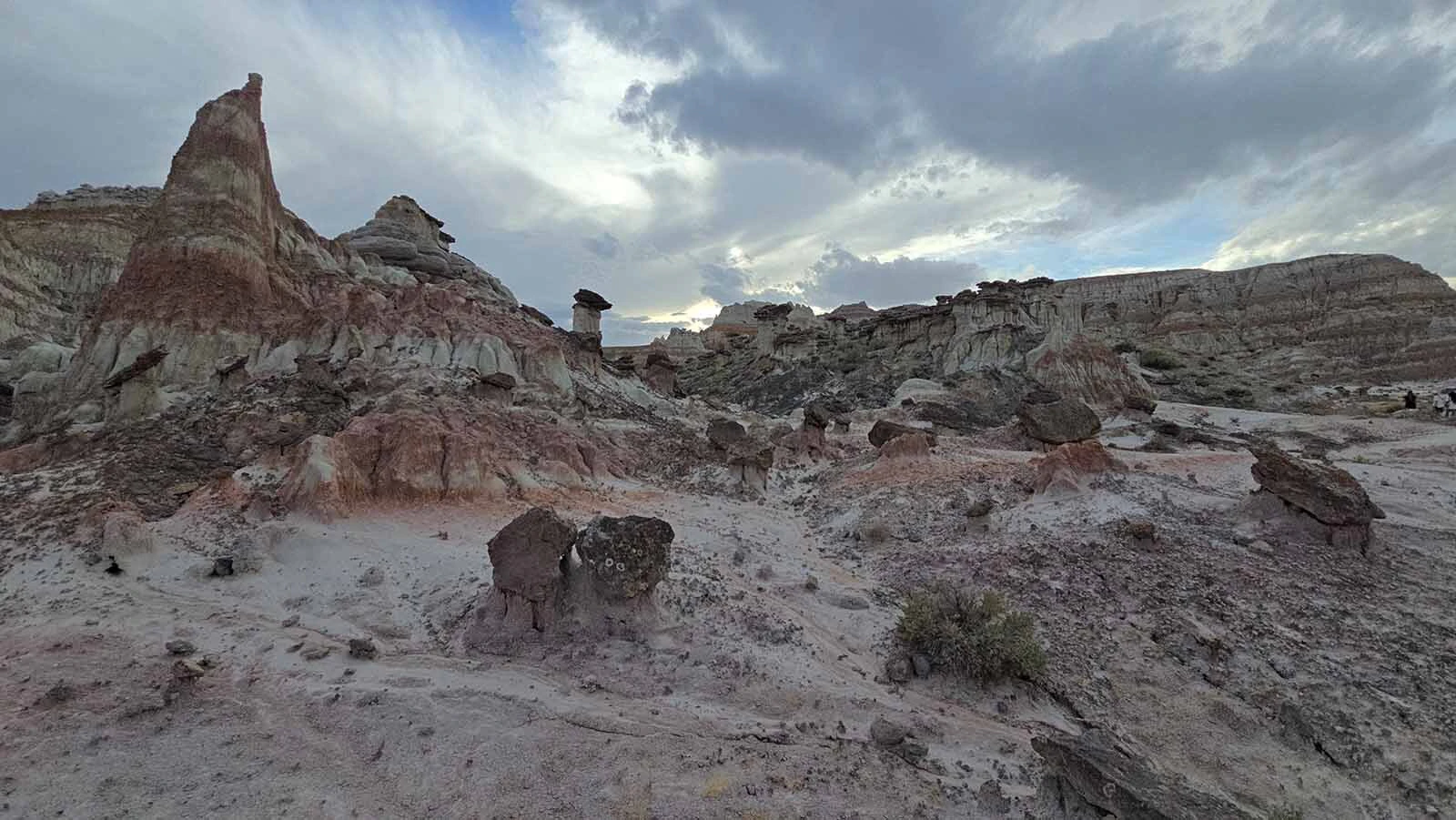
Wind, water and time have carved odd shapes into Hell's Half Acre, 40 miles West of Casper. (Renee Jean, Cowboy State Daily) 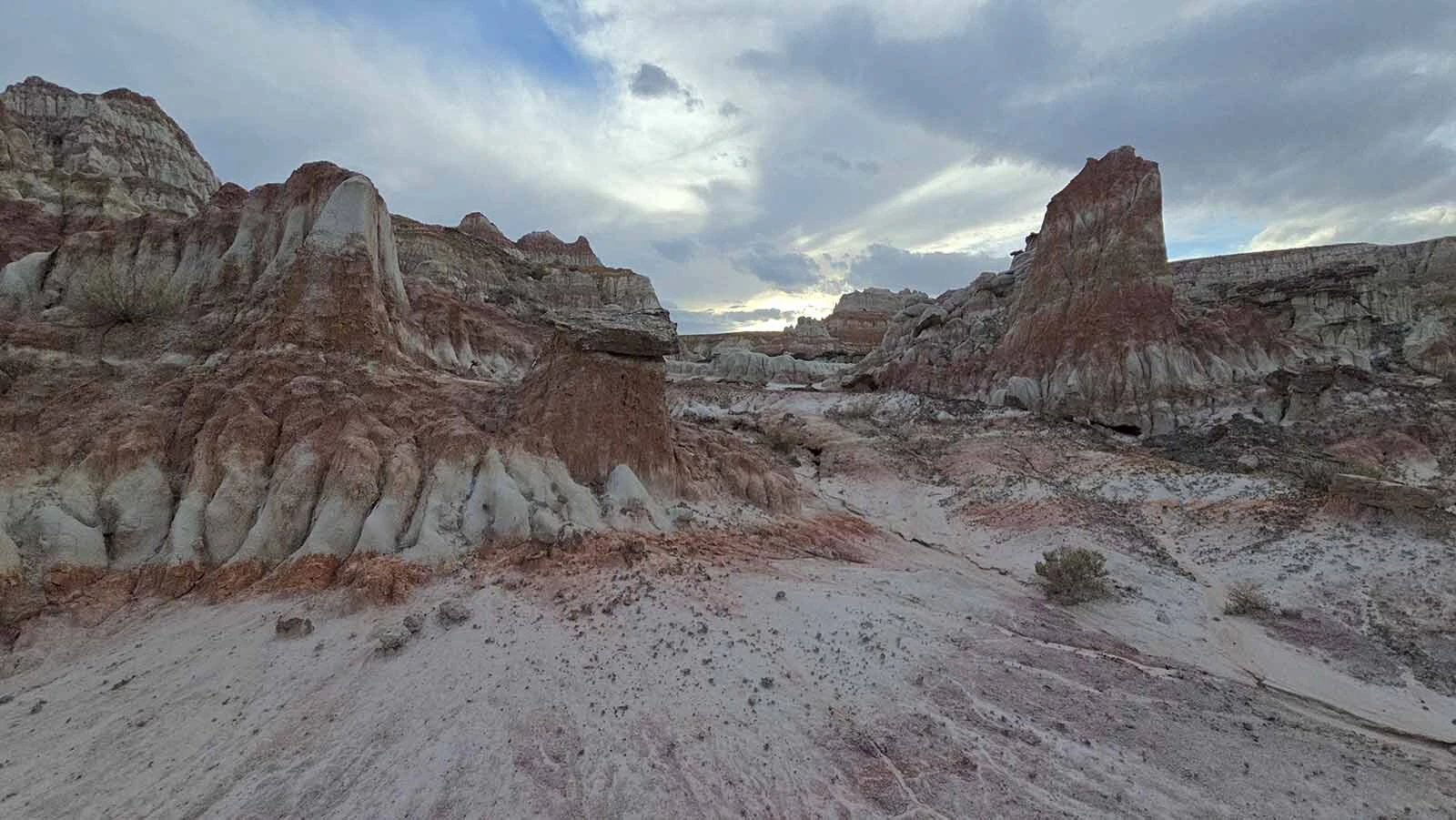
Hell's Half Acre presents many layers. Even though there are people just beyond those pillars, they can't be seen. And even when they yell, they are barely heard. (Renee Jean, Cowboy State Daily) 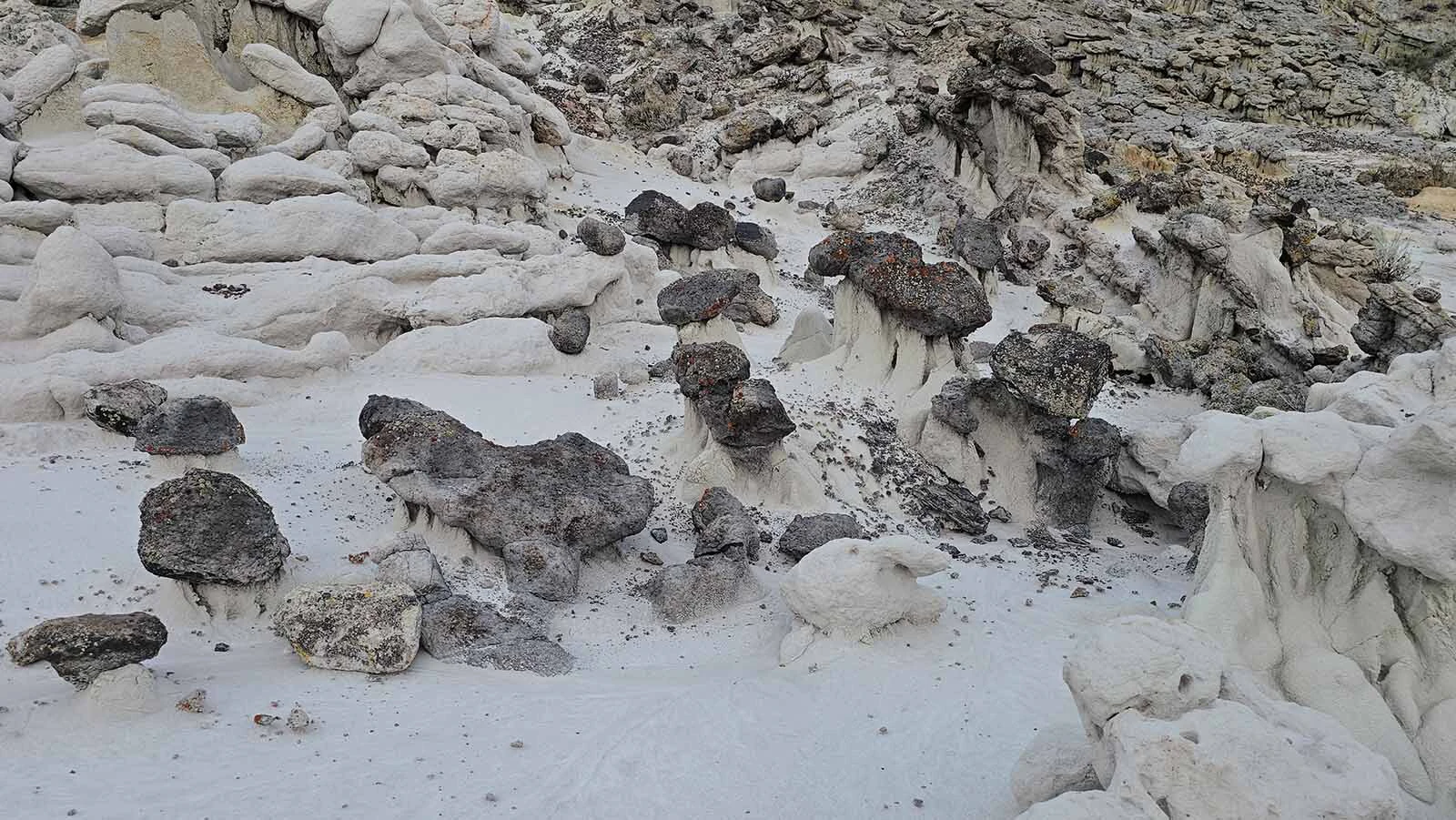
These "mushrooms" are miniature hoodoos. The tops are sandstone, which don't erode as quickly as the stalks, which are made of mudstones. (Renee Jean, Cowboy State Daily) 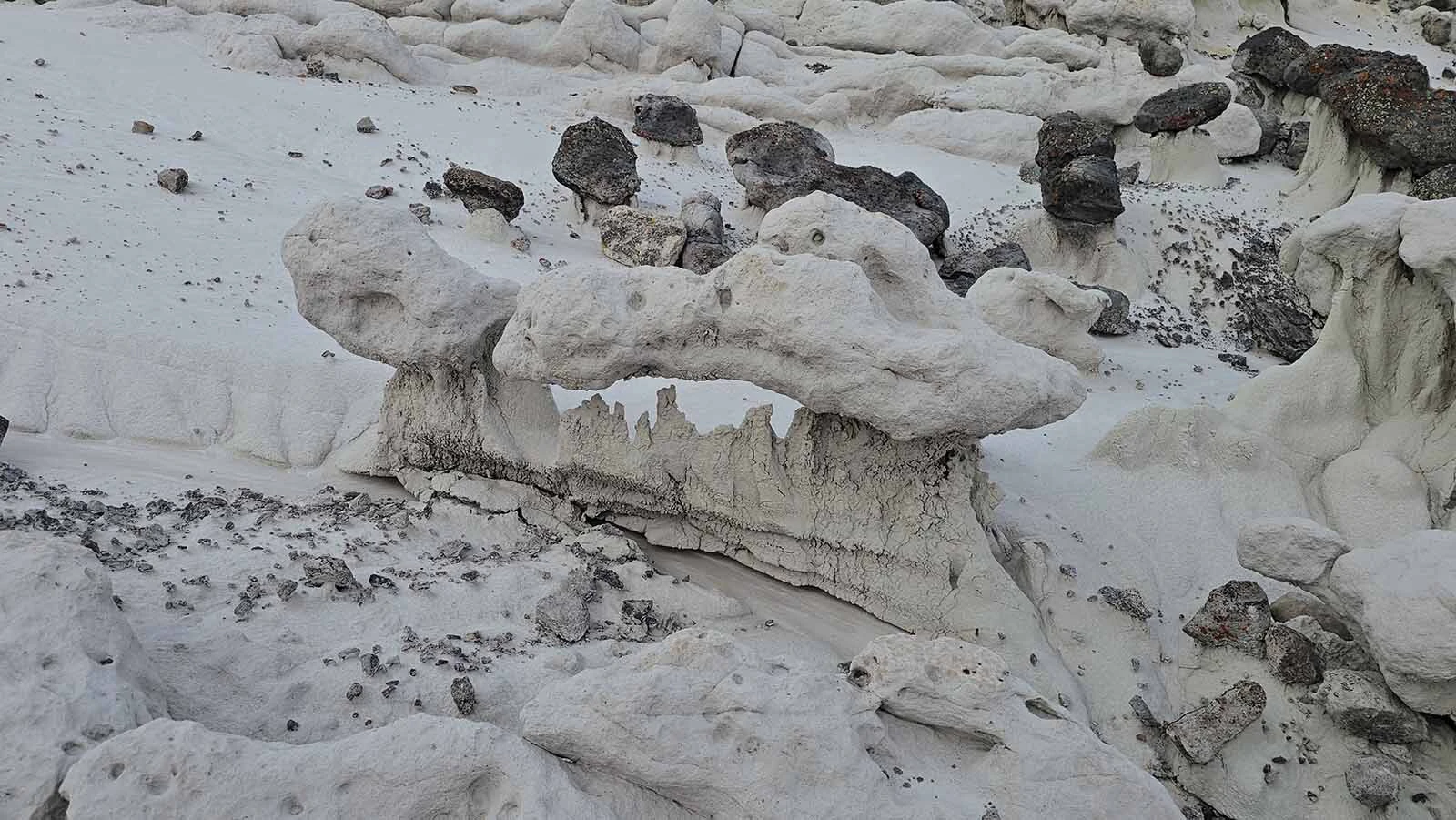
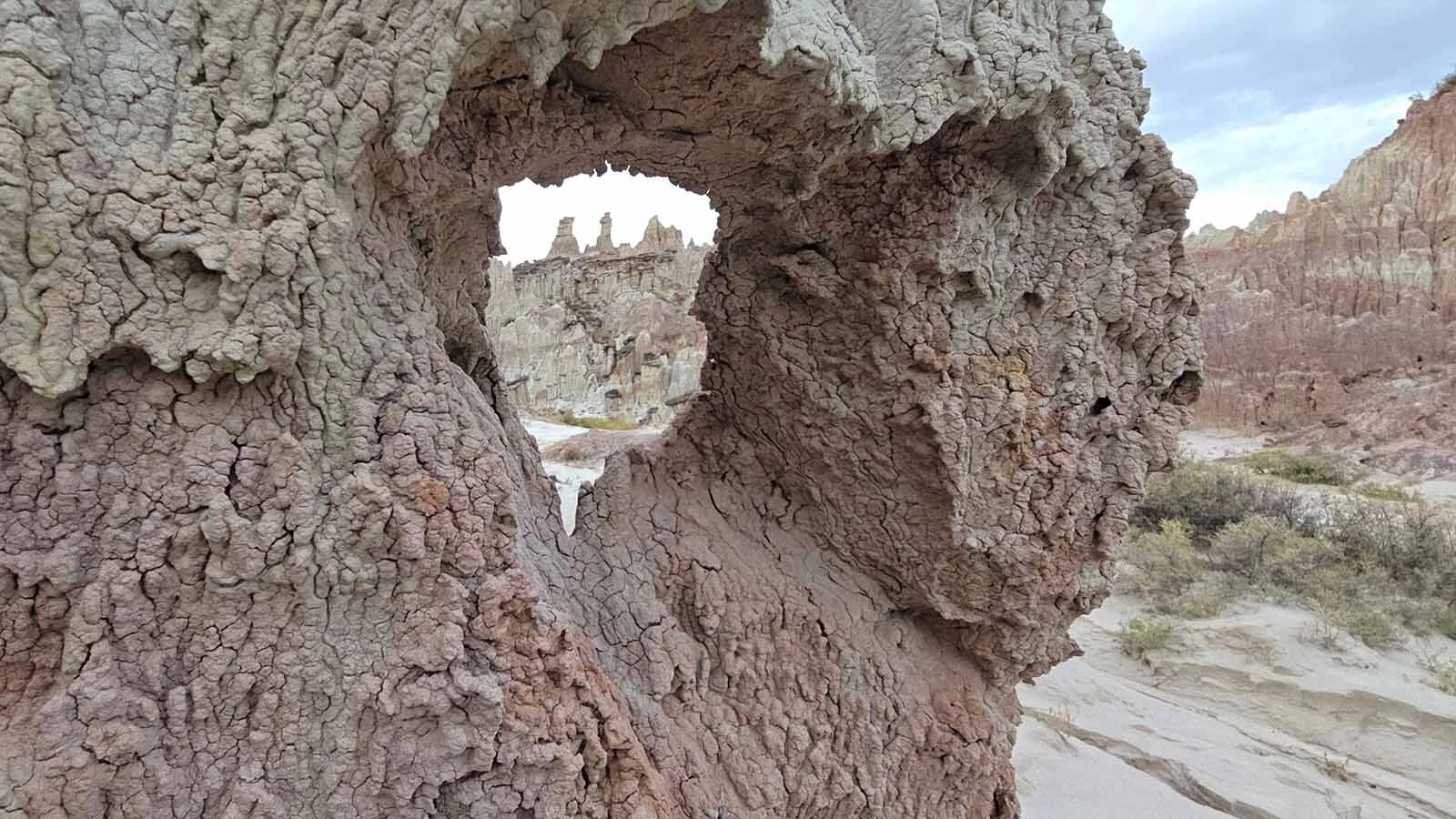
Many of the shapes carved into the mudstones at Hell's Half Acre look like other objects, like this one, which vaguely resembles a prehistoric skull. (Renee Jean, Cowboy State Daily) 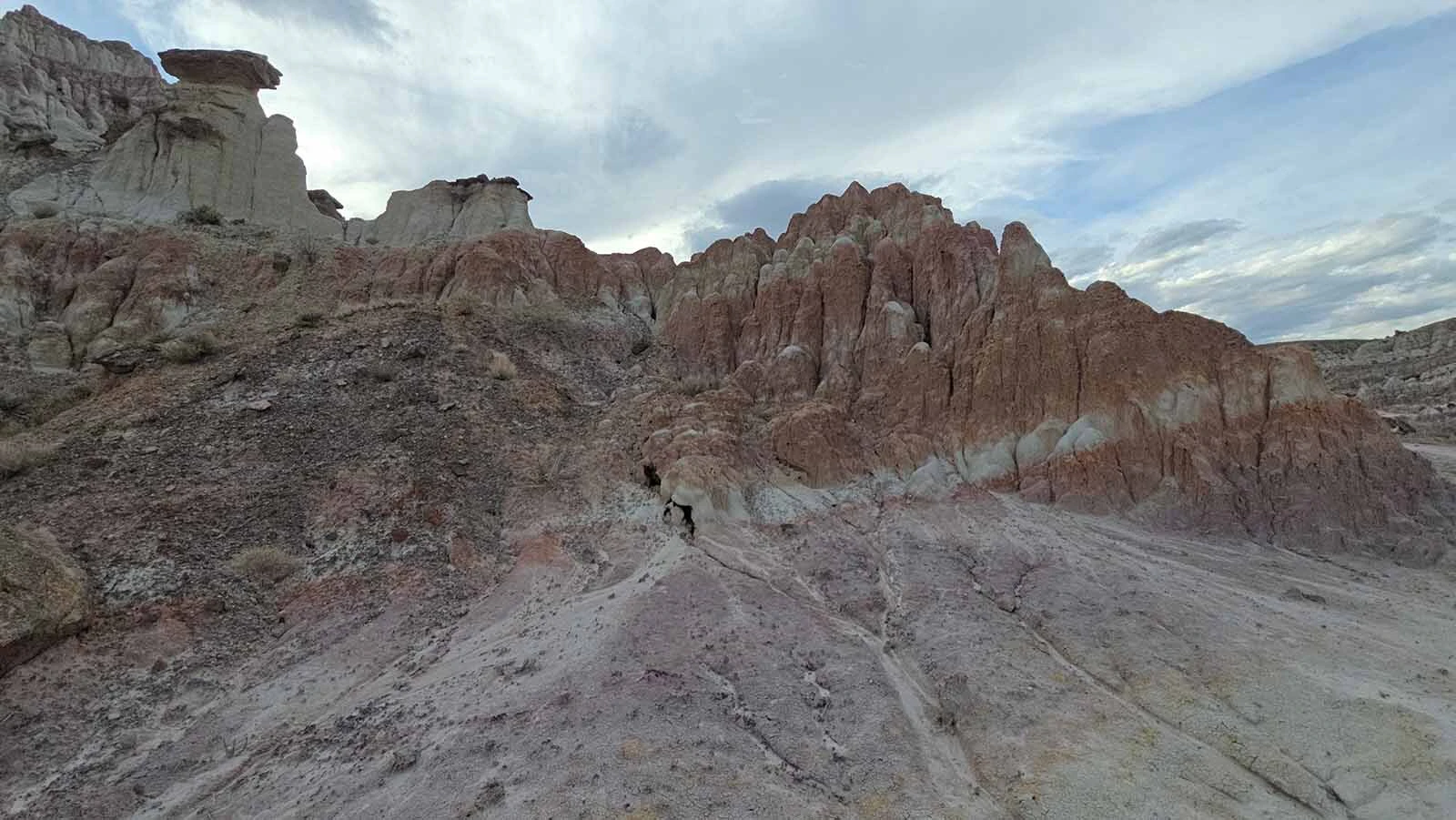
Wind, water and time have carved odd shapes into Hell's Half Acre, 40 miles West of Casper. (Renee Jean, Cowboy State Daily)
Klendathu And Planet P
The air on what once starred in a Hollywood movie as Planet Klendathu is still breathable, but it’s now heavily scented with sage. The hostile arachnids are all gone.
“There’s a lot more sage here now than there was then,” Visit Casper film liaison Kelly Estes told Cowboy State Daily, gesturing down into the wild landscape that splits the earth wide open about 40 miles west of Casper on Highway 20/26.
Hell’s Half Acre was actually not just one alien planet for that movie, though, it was two. By day, it was Planet Klendathu, home to a hostile species of arachnids bent on wiping out humanity. By night, it became Planet P, whose skies were ruled by bats.
“They looked completely different, just based on light,” Eastes said. “It was really kind of amazing.”
The crew of roughly 300 people split into day and night shifts to film “Starship Troopers.” Collectively, they pumped roughly $4 million into Casper’s economy. Locals were hired as extras and helped build a nest of foxholes, fortresses and alien battlefields on the screen.
“The bug cave was right over there, beyond that ridge,” Eastes said with a smile.
Wind, water and time have carved odd shapes into Hell's Half Acre, 40 miles West of Casper. (Renee Jean, Cowboy State Daily) 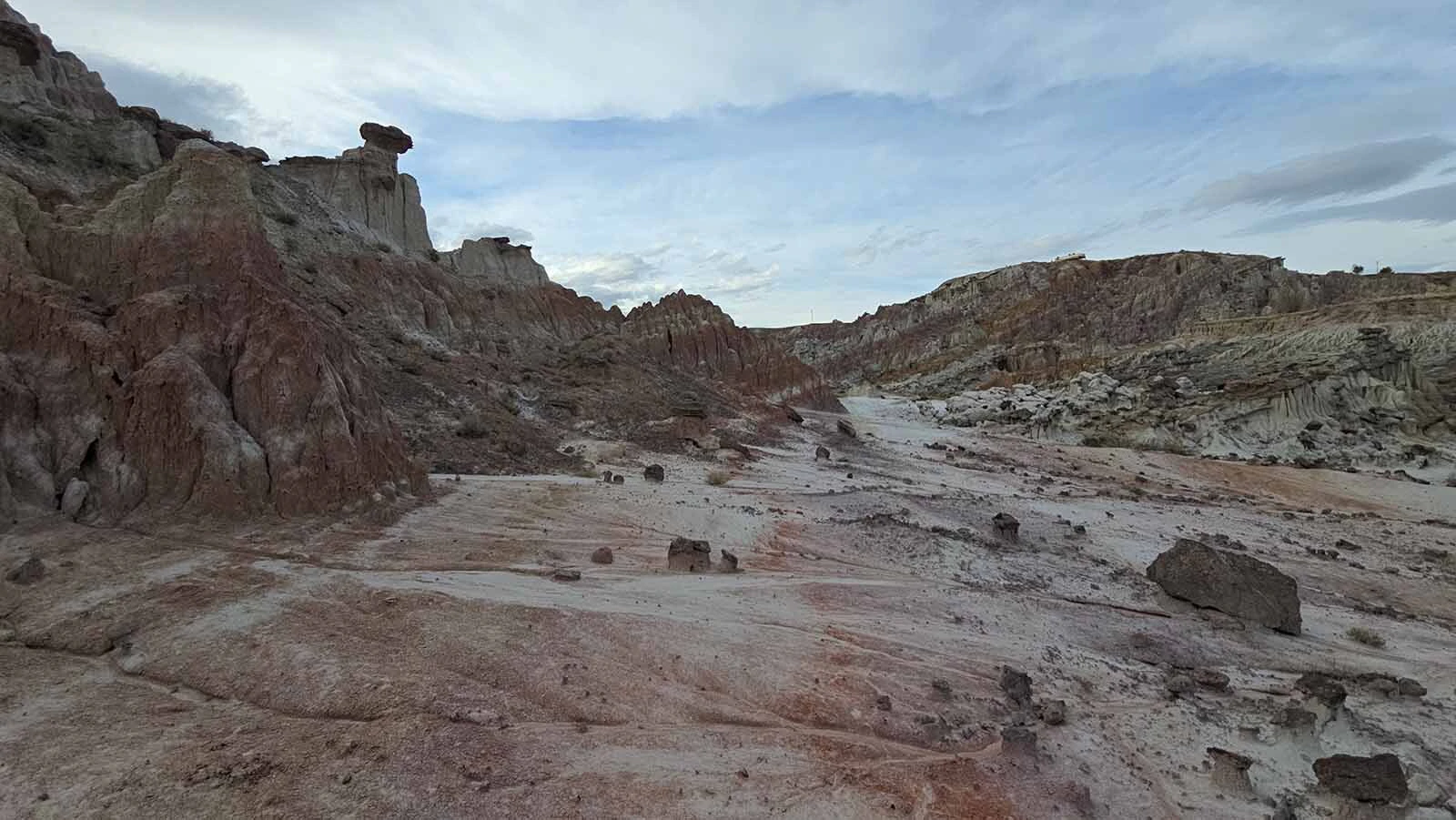
Wind, water and time have carved odd shapes into Hell's Half Acre, 40 miles West of Casper. (Renee Jean, Cowboy State Daily) 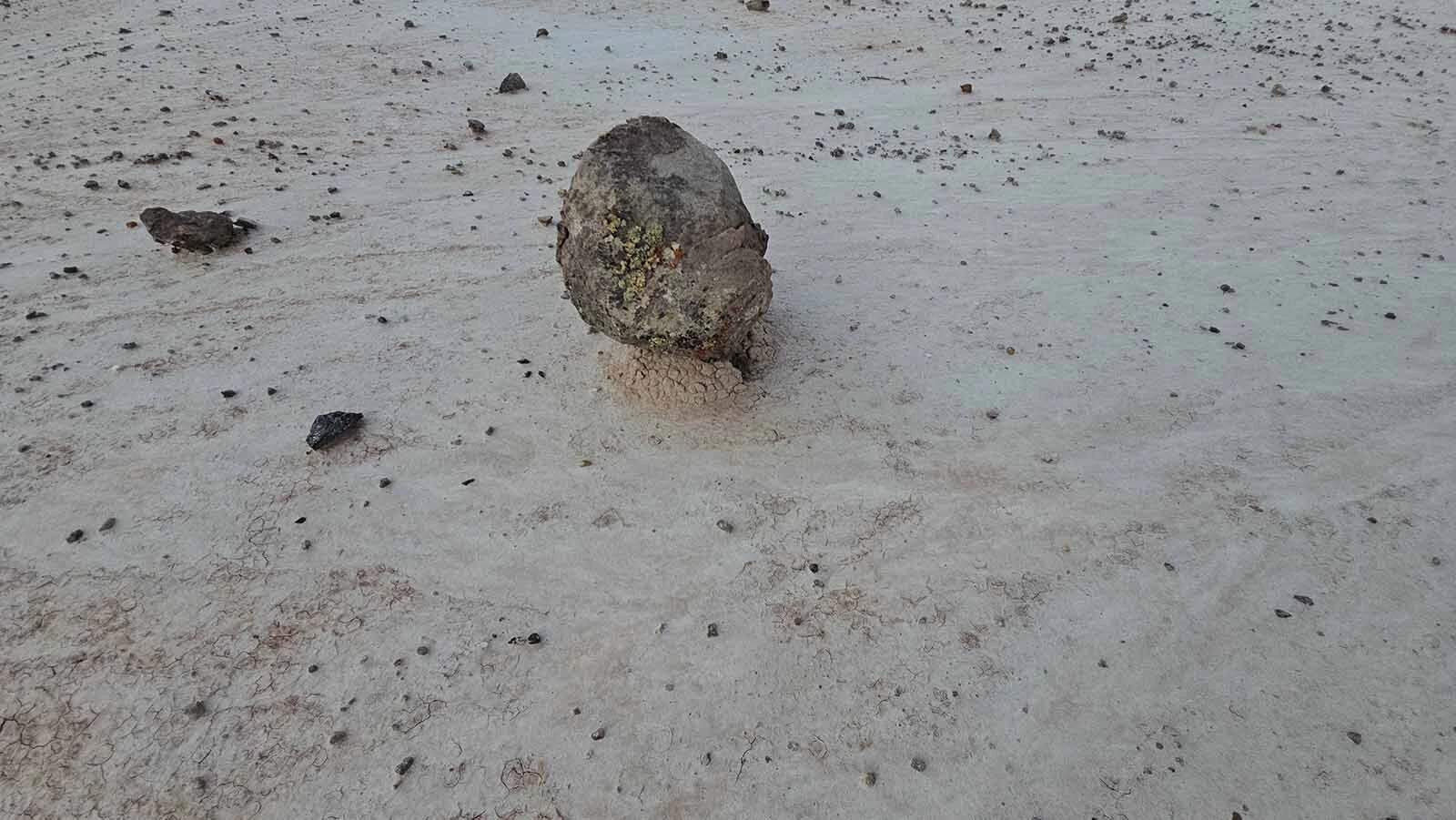
These miniature hoodoos, which look like mushrooms, litter the floor at Hell's Half Acre. The tops are sandstone, which don't erode as quickly as the mudstone "stalk" beneath the sandstone. (Renee Jean, Cowboy State Daily) 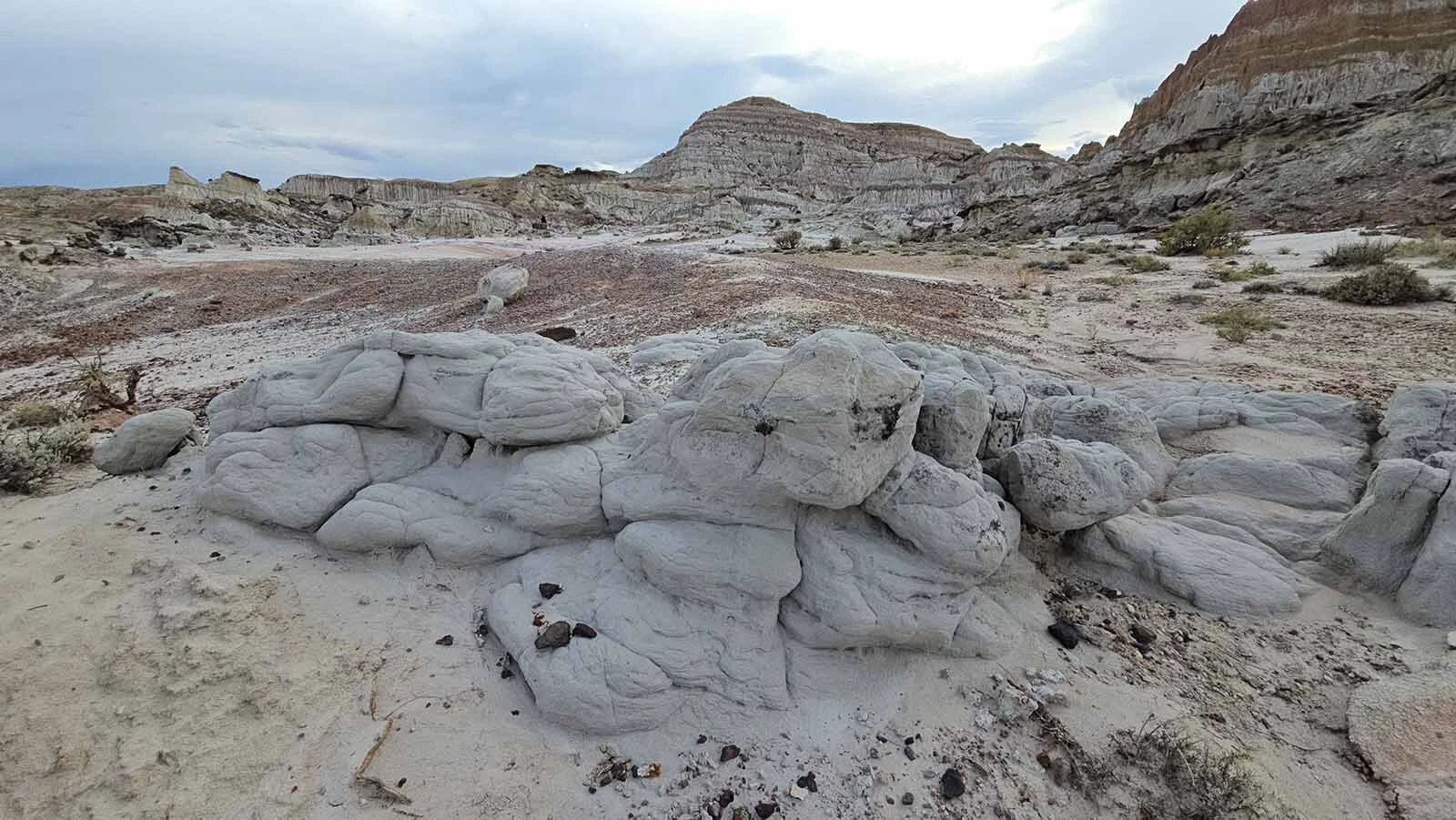
Wind, water and time have carved odd shapes into Hell's Half Acre, 40 miles West of Casper. (Renee Jean, Cowboy State Daily) 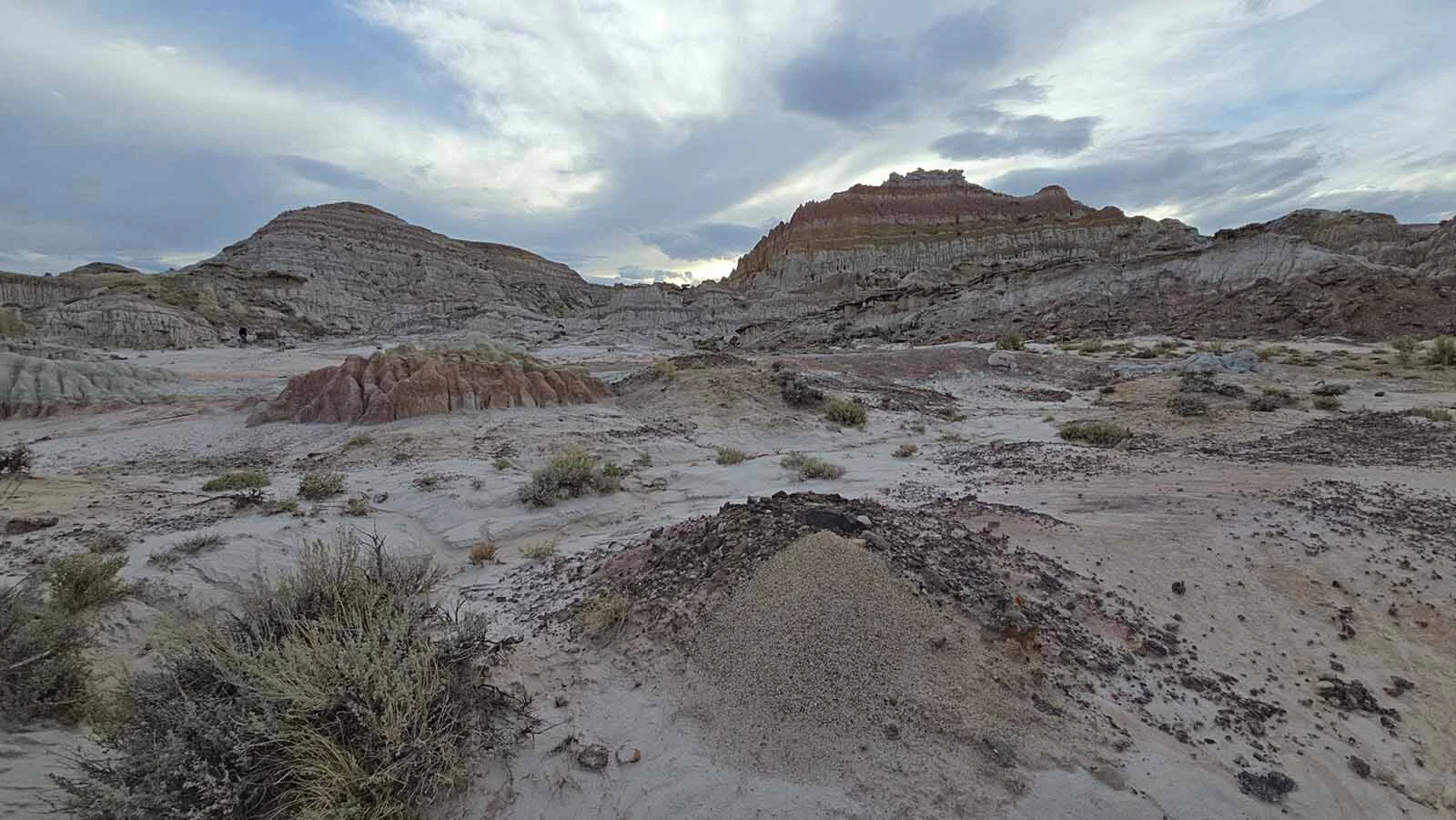
Wind, water and time have carved odd shapes into Hell's Half Acre, 40 miles West of Casper. (Renee Jean, Cowboy State Daily)
Life On The Edge
For all its cinematic drama, Hell’s Half Acre is surprisingly barren. There’s not enough vegetation or water to support many deer or pronghorn for long. They pass through, but don’t linger.
This is the domain of smaller creatures. Rabbits and rodents find plenty of natural burrows and quick hiding places, along with just enough forage to survive. Those burrows are literal lifesavers, given that the hoodoos are perfect perches for hawks and other avian predators.
Buffalo grasses cling to pockets of mudstones at the spots where moisture lingers, bent low and sideways in the direction of the rushing current when there’s a river.
The sagebrush endures the silt and mud beds too, but becomes twisted and broken due to the shifting ground.
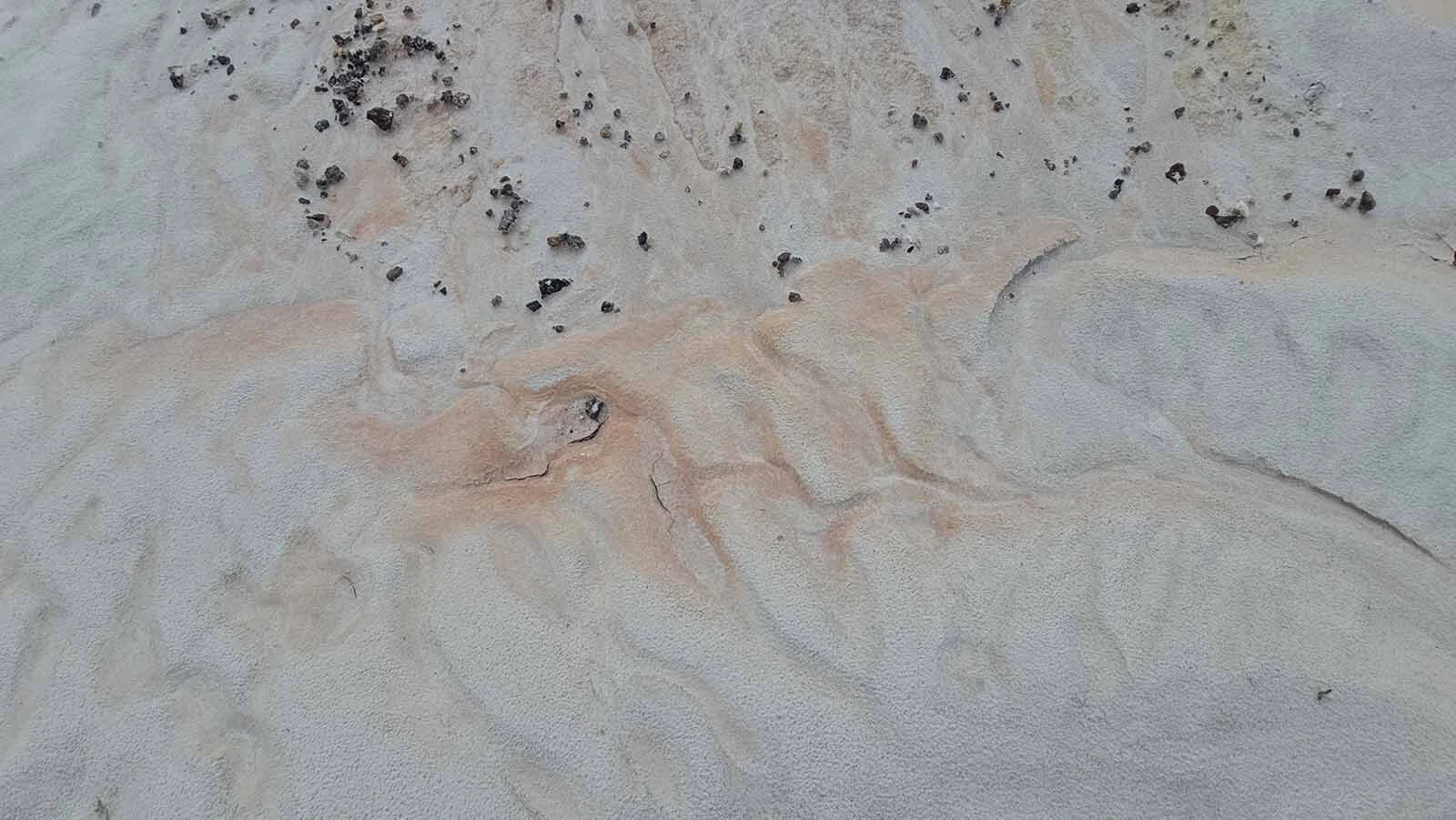
Water and gravity have played on the floor of Hell's Half Acre for more than 2 million years. Their tracks are everywhere. (Renee Jean, Cowboy State Daily) 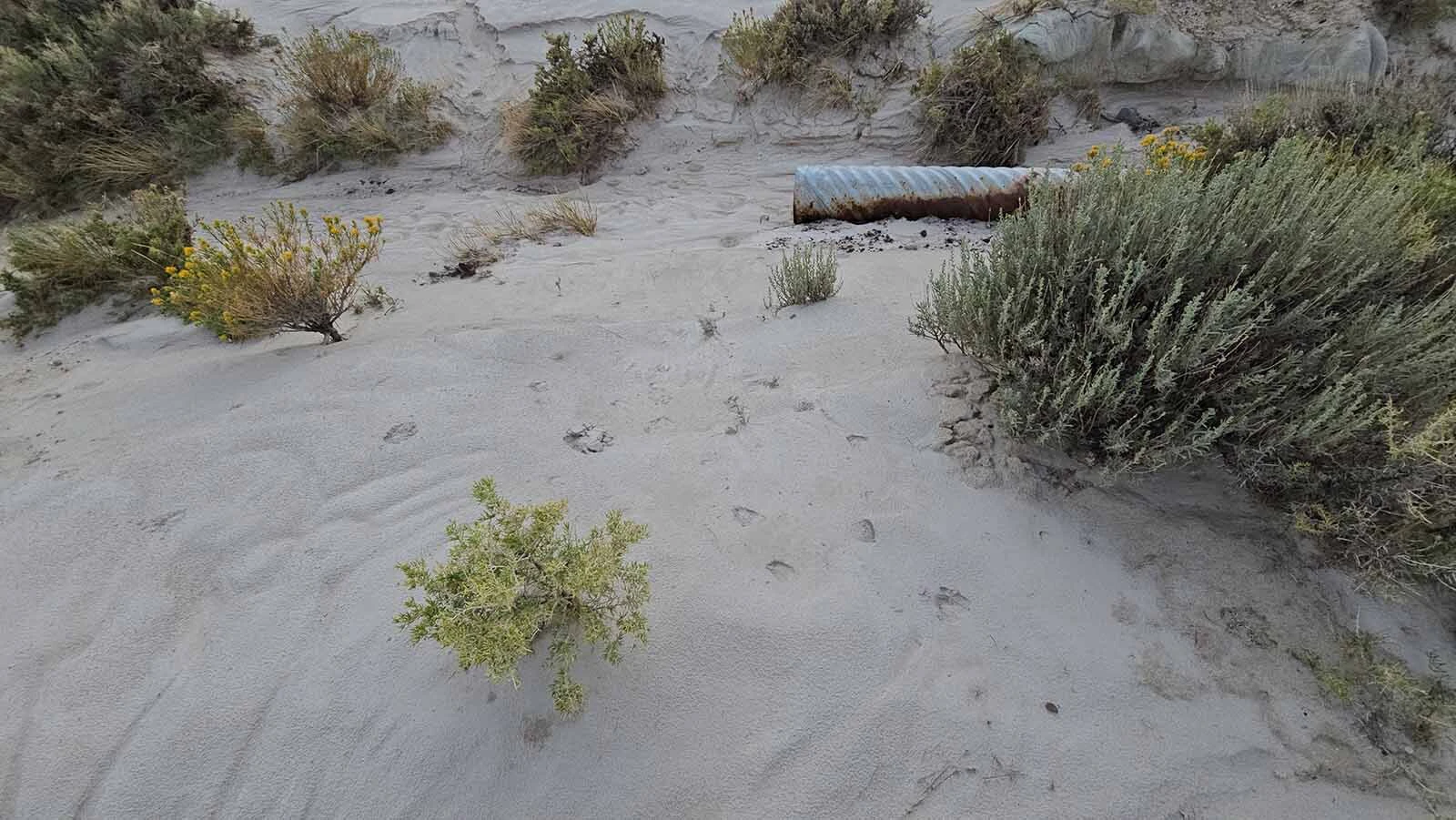
There's more sage and other plants at Hell's Half Acre than there was three decades ago when the movie "Starship Troopers" was filmed. (Renee Jean, Cowboy State Daily) 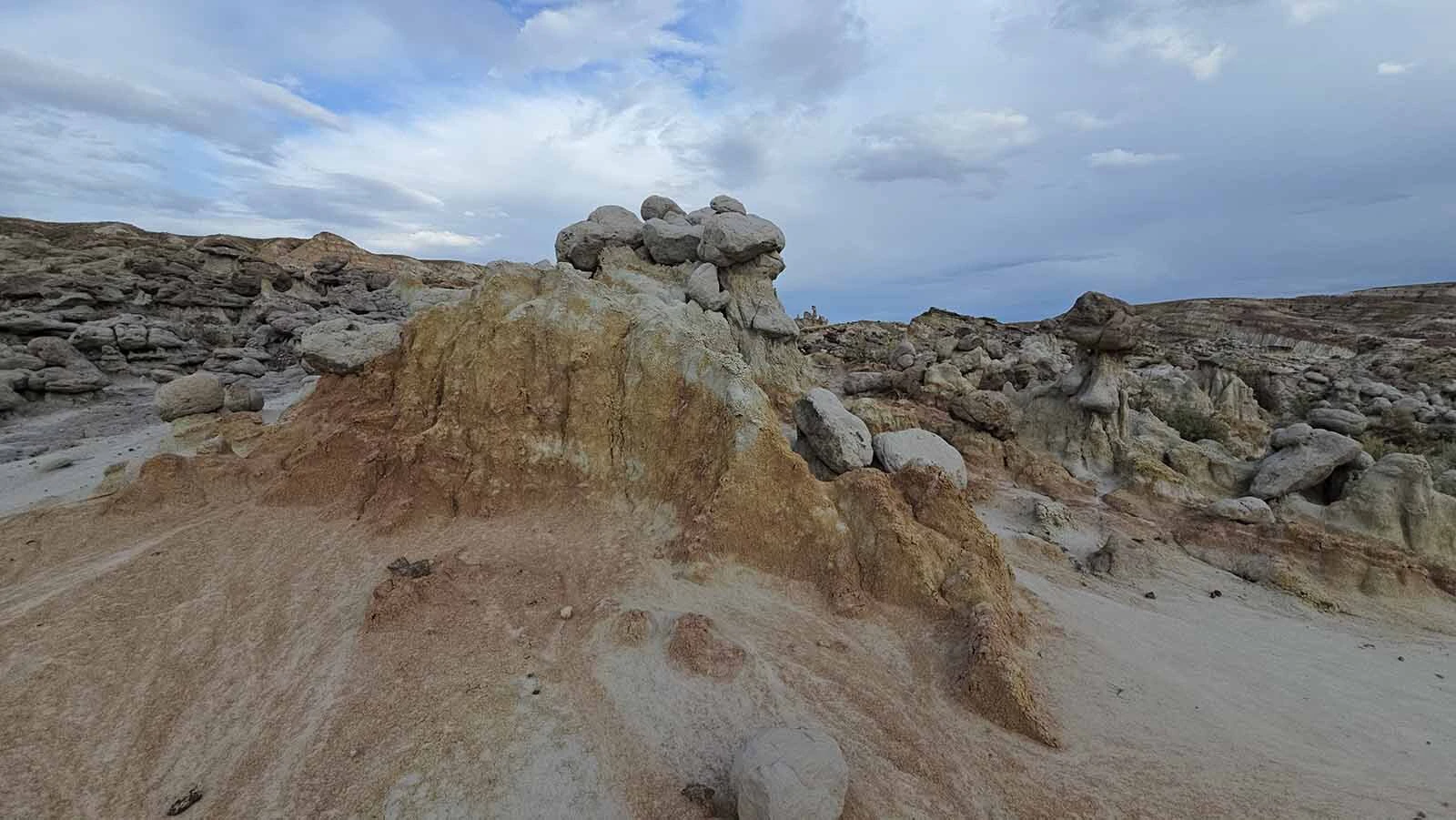
Wind, water and time have carved odd shapes into Hell's Half Acre, 40 miles West of Casper. (Renee Jean, Cowboy State Daily) 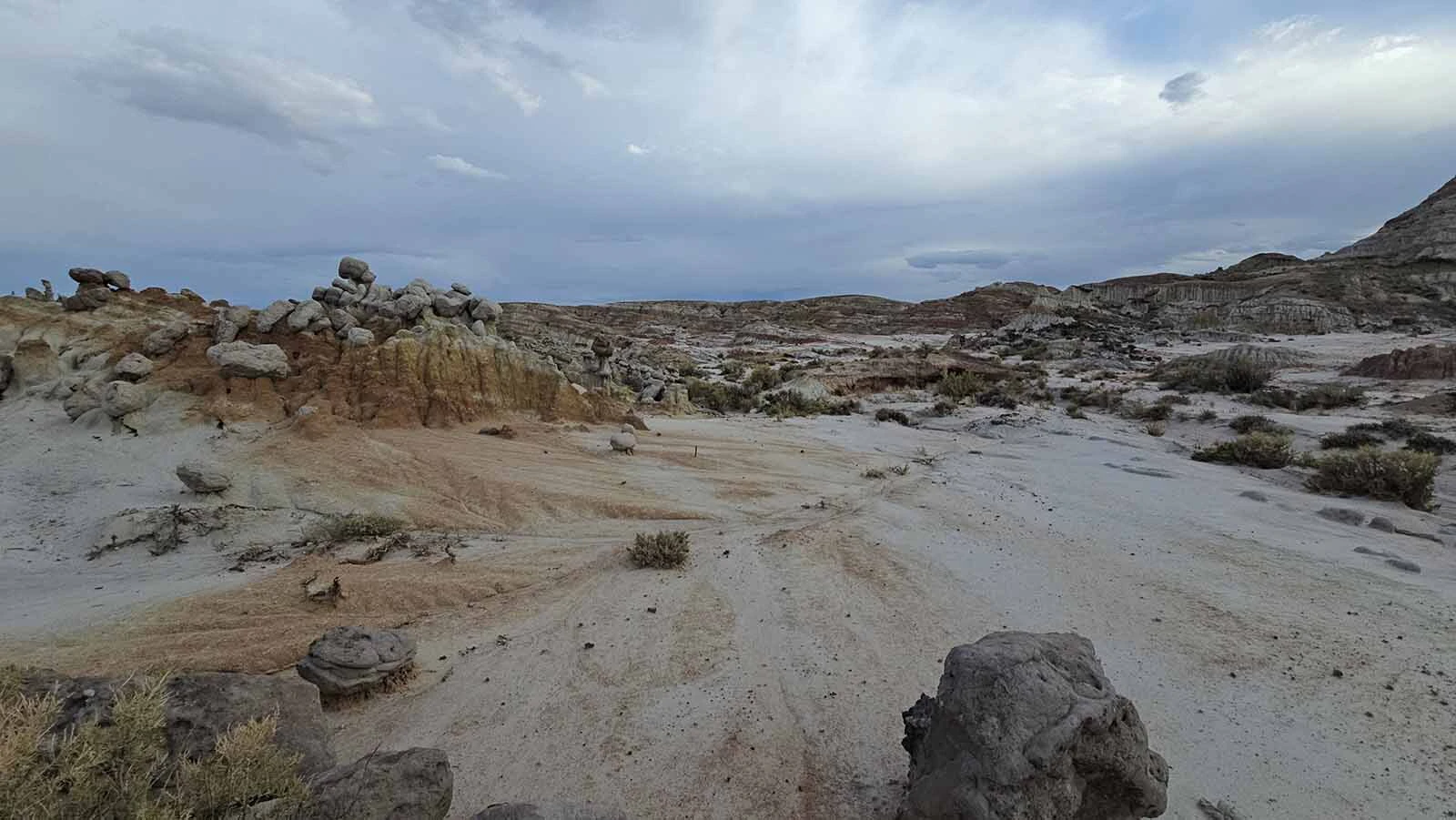
The landscape at Hell's Half Acre looks so alien, it once played not one but two alien planets in the cult classic film, "Starship Troopers." The planets were Klendathu and Planet P. (Renee Jean, Cowboy State Daily) 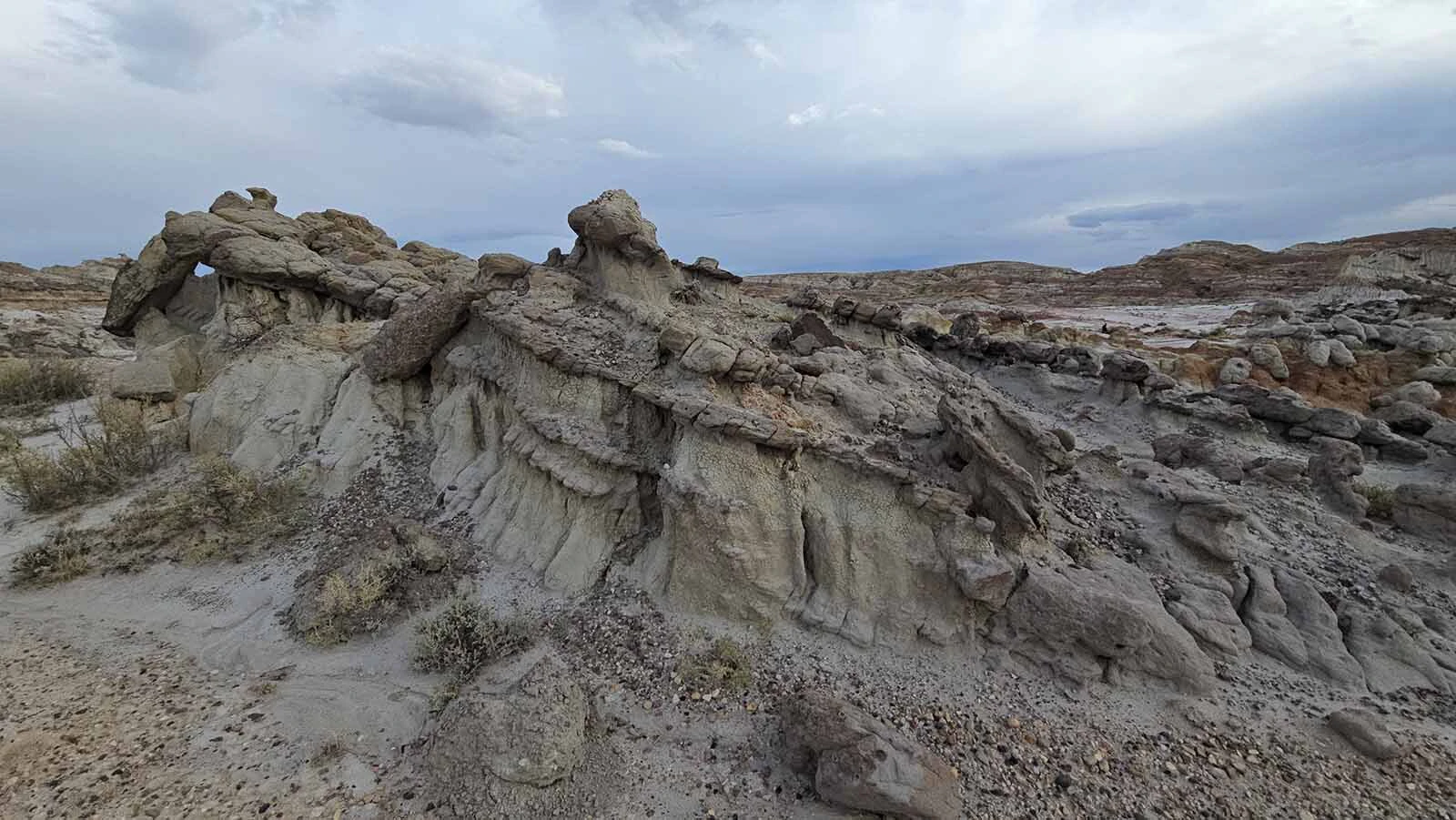
Wind, water and time have carved odd shapes into Hell's Half Acre, 40 miles West of Casper. (Renee Jean, Cowboy State Daily) 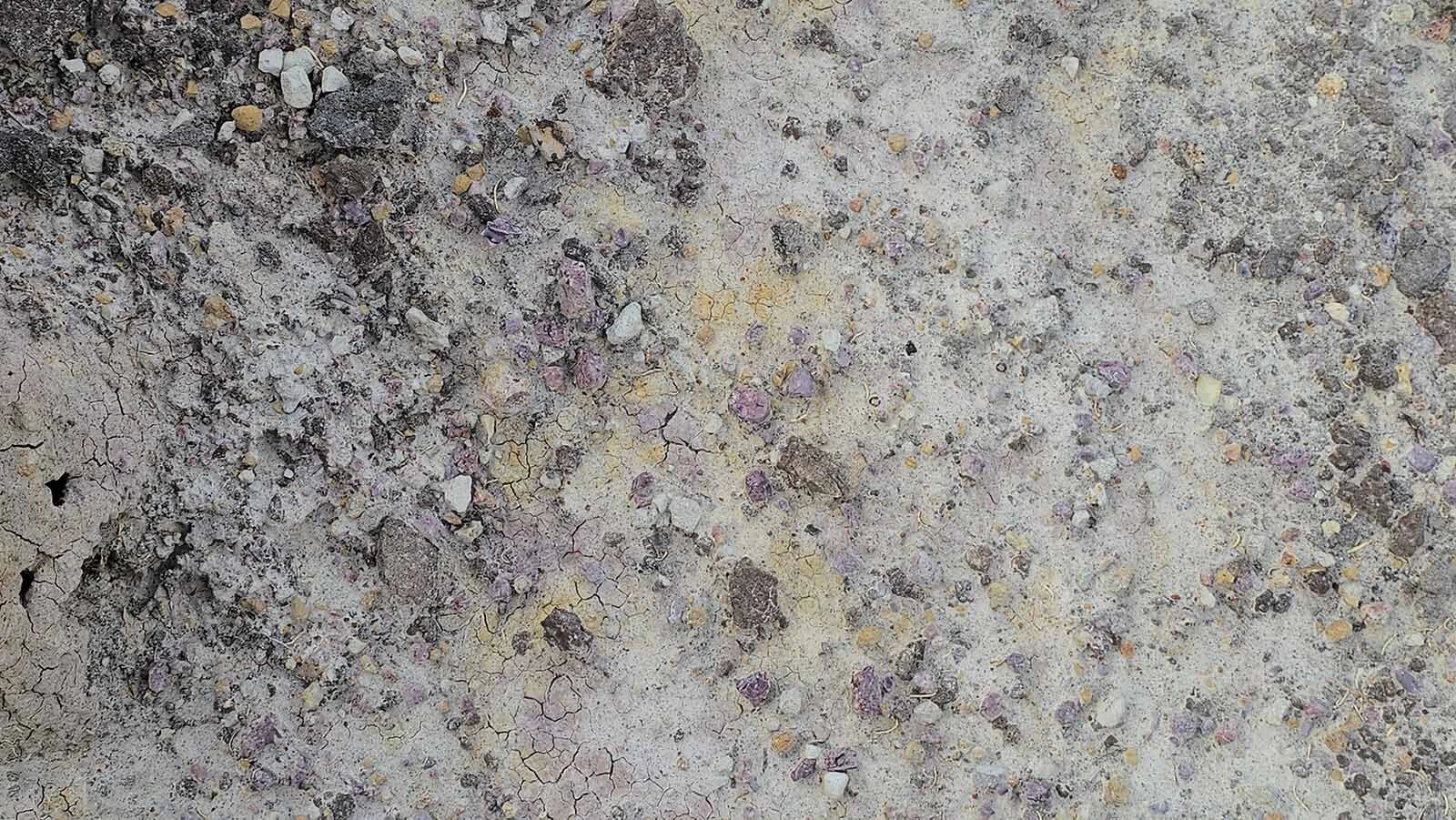
A scattering of shattered purple stones on the ground in Hell's Half Acre. (Renee Jean, Cowboy State Daily) 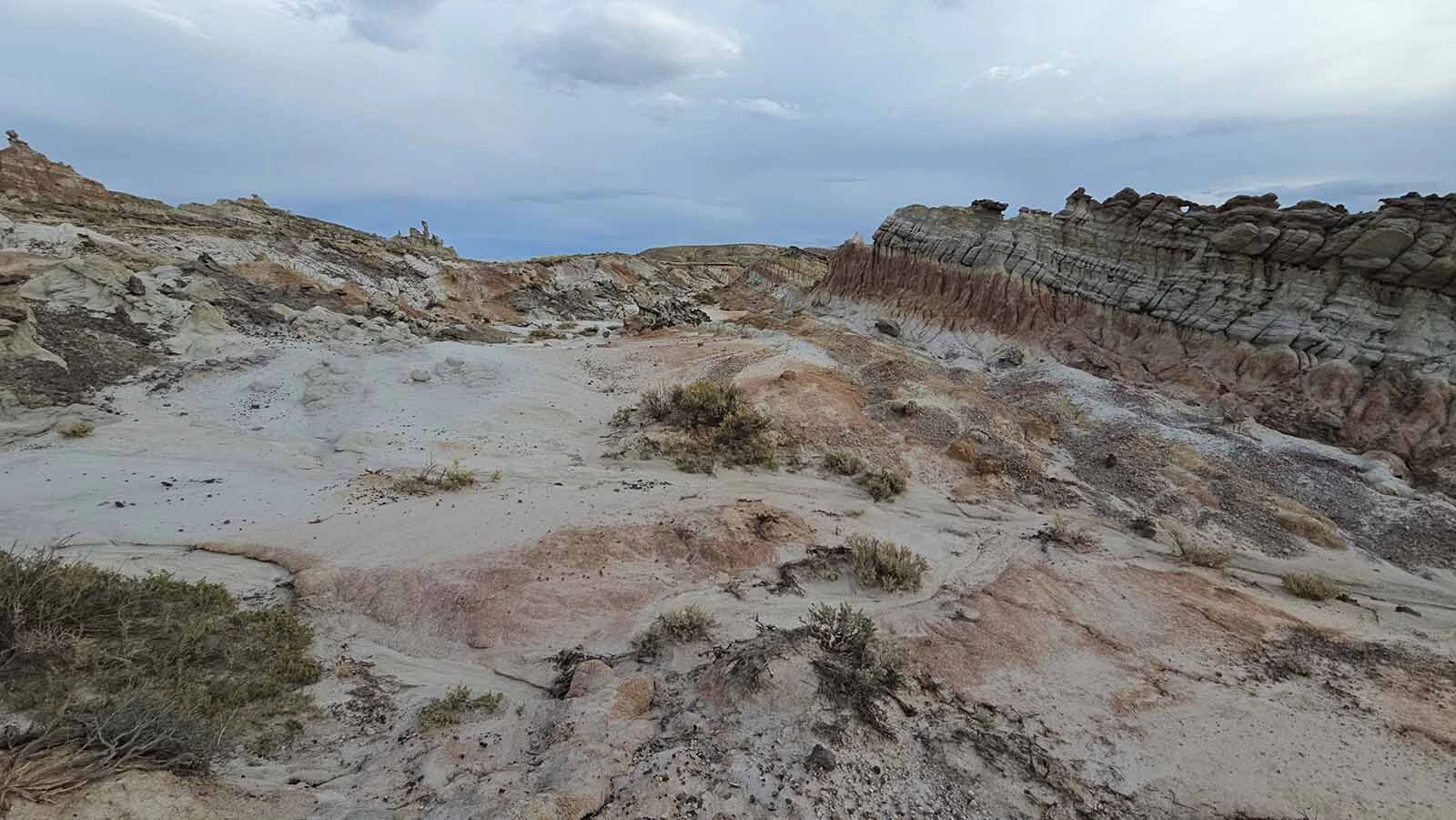
(Renee Jean, Cowboy State Daily) 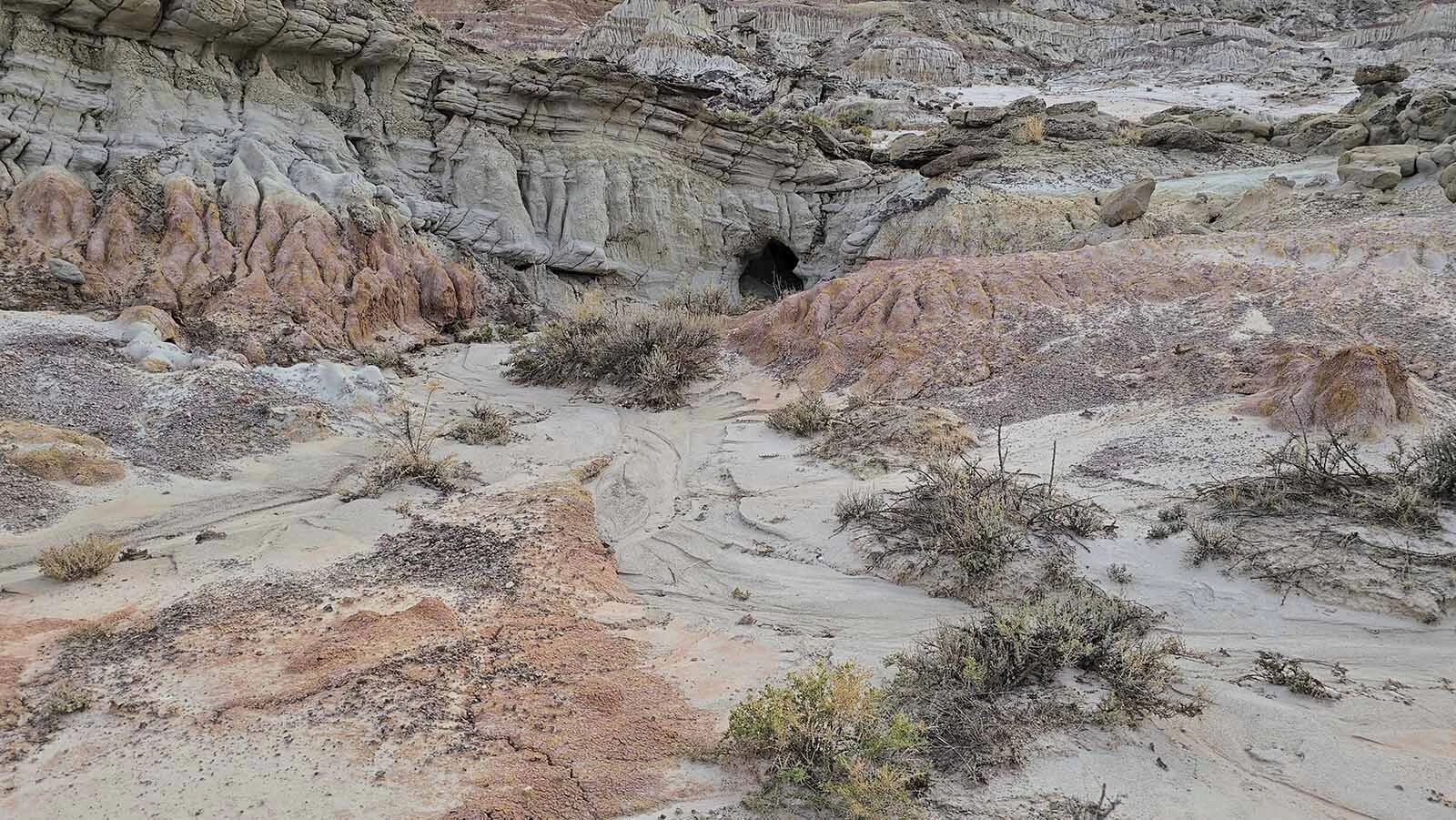
Hell's Half Acre has many small caves and burrows where rabitts and other small mammals can hide. Little forage grows there, however, and it's very dry. Larger animals like deer don't stay there long. (Renee Jean, Cowboy State Daily) 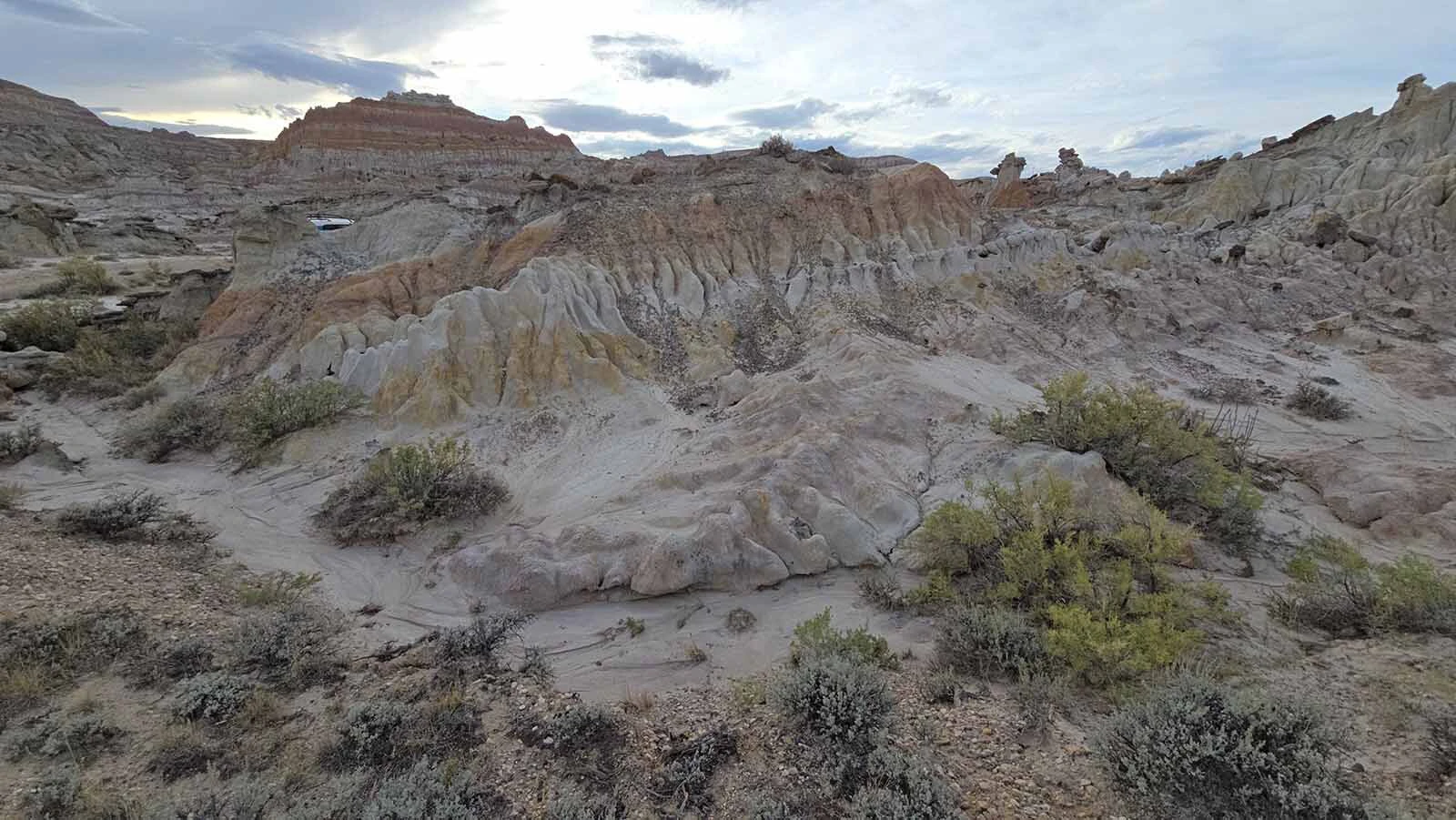
Wind, water and time have carved odd shapes into Hell's Half Acre, 40 miles West of Casper. (Renee Jean, Cowboy State Daily) 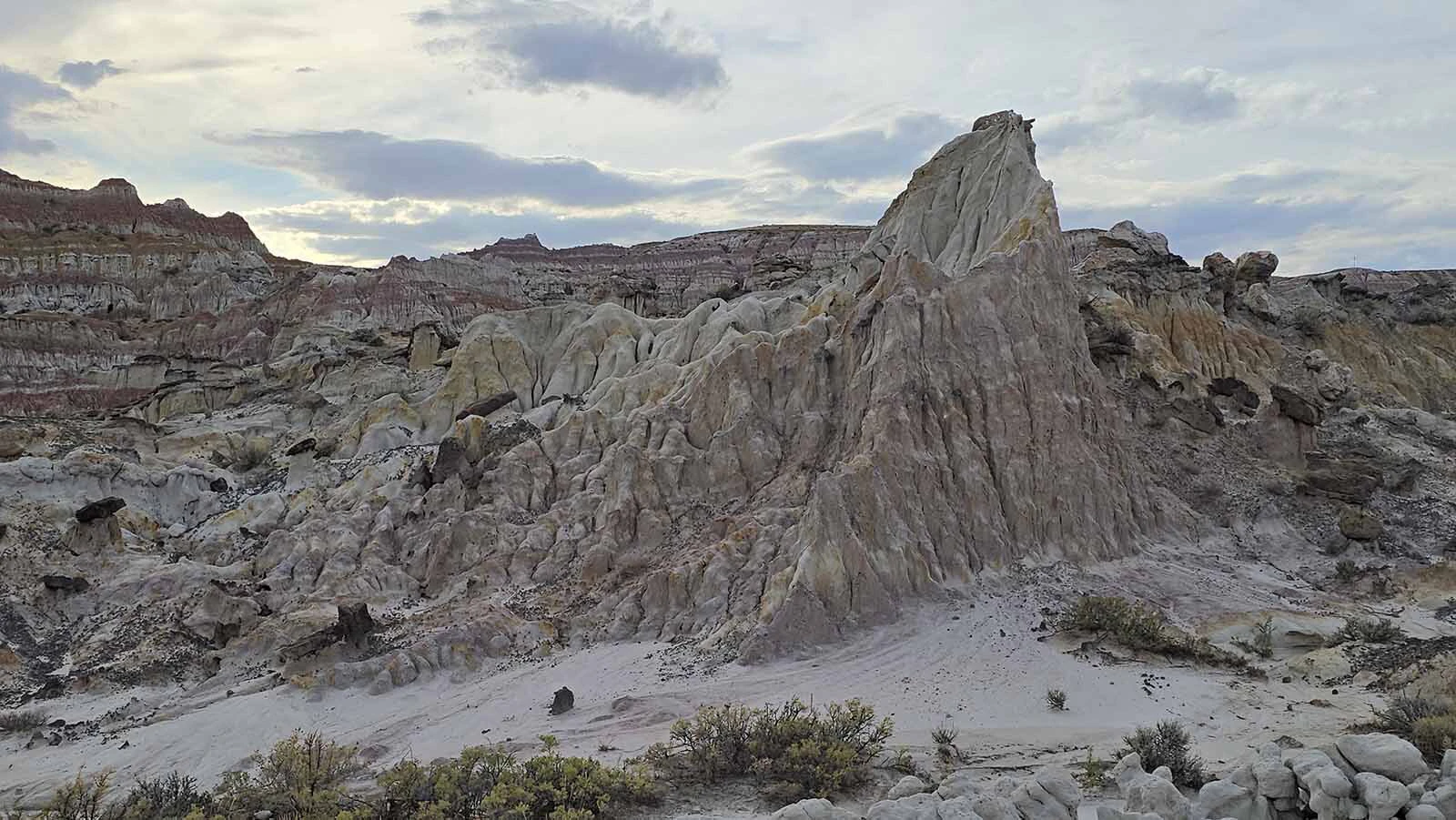
Wind, water and time have carved odd shapes into Hell's Half Acre, 40 miles West of Casper. (Renee Jean, Cowboy State Daily)
Curated Tours Are Coming
Down on the floor of Hell’s Half Acre, the sound of cars rushing past on Highway 20/26 fades away, absorbed by all those folds of rock. Power lines are harder to see as well, and there’s a sense that the modern world might no longer exist beyond the canyon wall.
For decades, those who wanted to experience the bottom of Hell’s Half Acre had to sneak in. It was closed to the public to protect it from vandalism when a new operator for the hotel and restaurant couldn’t be found. People still slipped through fences and around signage to illegally roam the floor of the badlands, following mudstone paths wherever their hearts might lead.
That era is ending.
A coalition that includes the Natrona County Parks Department, the Natrona County Outdoor Recreation Collaborative, and Visit Casper has joined to reopen the site in a controlled way. Their vision includes guided, curated tours to the bottom, where groups go down together and stay together for the duration.
No more lone wanderers vanishing into the maze.
That’s the only way to share this unique landscape without loving it to death, Visit Casper CEO Annette Pitts told Cowboy State Daily.
Friday’s trip into Hell’s Half Acre was different, she stressed. A one-off for a select group of media and influencers, including Cowboy State Daily, who were allowed to roam freely and engage with the wind- and water-carved sculptures on their own terms.
The eerie landscape turned on a flood of imagination for everyone.
“Wyoming is known for hidden gems, and I feel like that just encourages people to get off the beaten path to really see the beauty of this place,” Chelsea Williams told Cowboy State Daily.
Williams was one of three social media influencers invited on the trip.
“Seeing all the stripes of the colors, that kind of drew me in as far as things that I kind of kept finding myself photographing,” Cari Antonovich said. “I loved the mushroom tops and the different shapes. And there was this one spot that looked like ghost people. It looked way sick.”
For Cici Oliver, it was the sense of complete escape from the modern world that struck her the most.
“The whole time we were down there, I kept forgetting we were in Wyoming, and we were just 40 minutes away from where we live,” she said. “It felt like we traveled galaxies, dare I say, to come visit a place like this. But I think it’s the epitome of what needs to be protected and cherished in Wyoming and celebrated. I really felt like we got to do that tonight, so that was really exciting.”
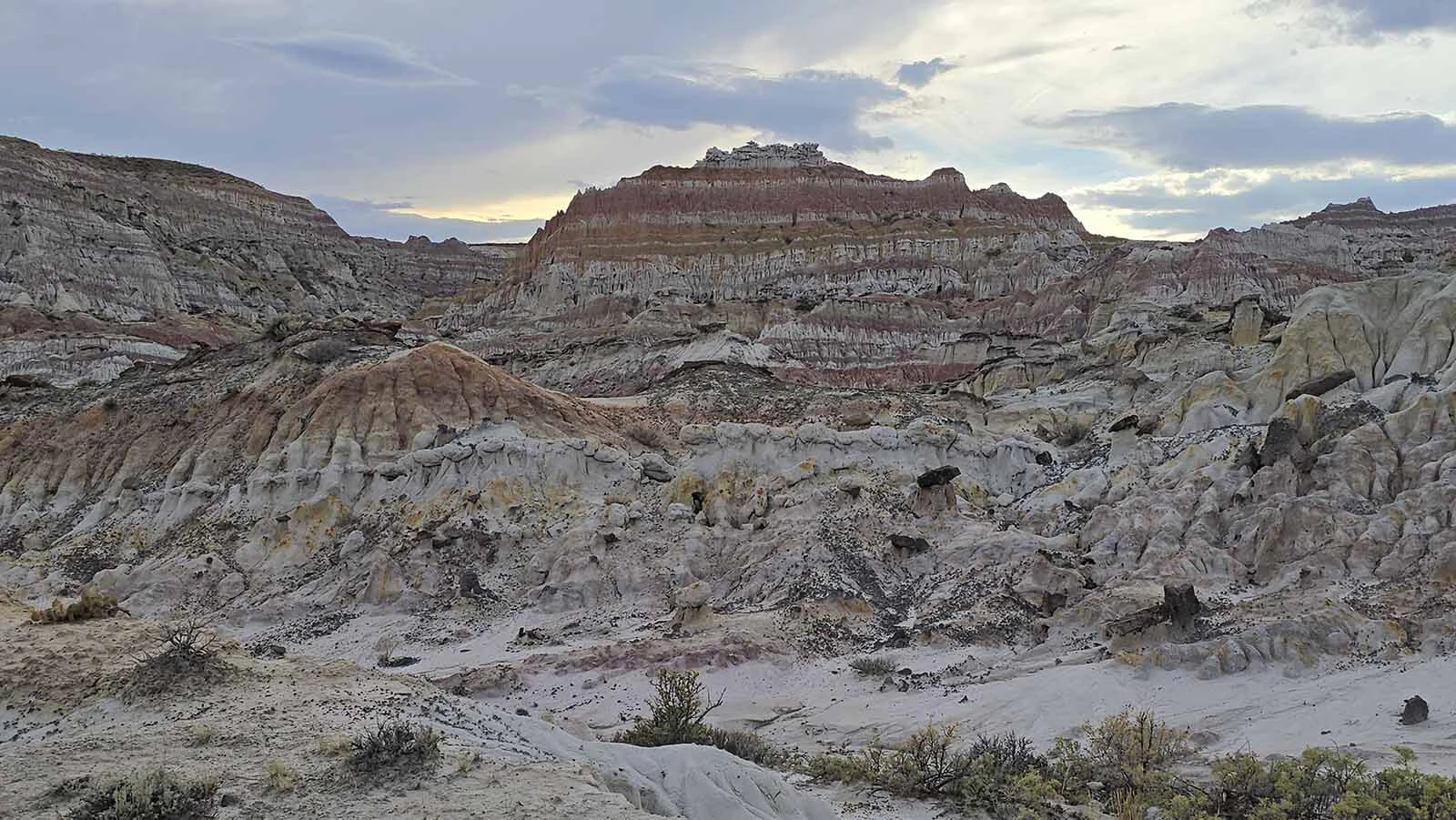
The striataions in the rocks at Hell's Half Acre represent layers of time and changing environmental conditions. (Renee Jean, Cowboy State Daily) 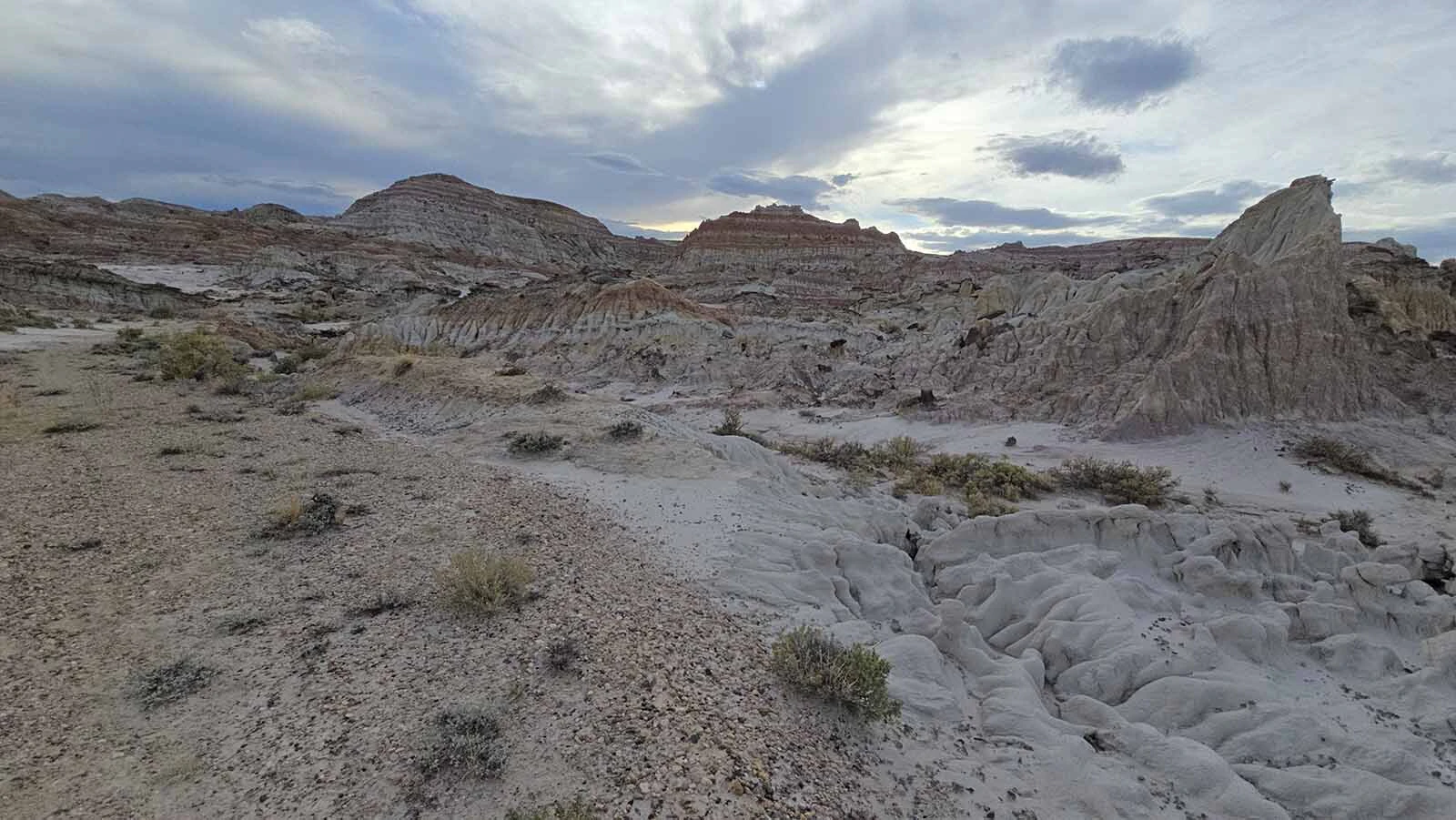
Wind, water and time have carved odd shapes into Hell's Half Acre, 40 miles West of Casper. (Renee Jean, Cowboy State Daily) 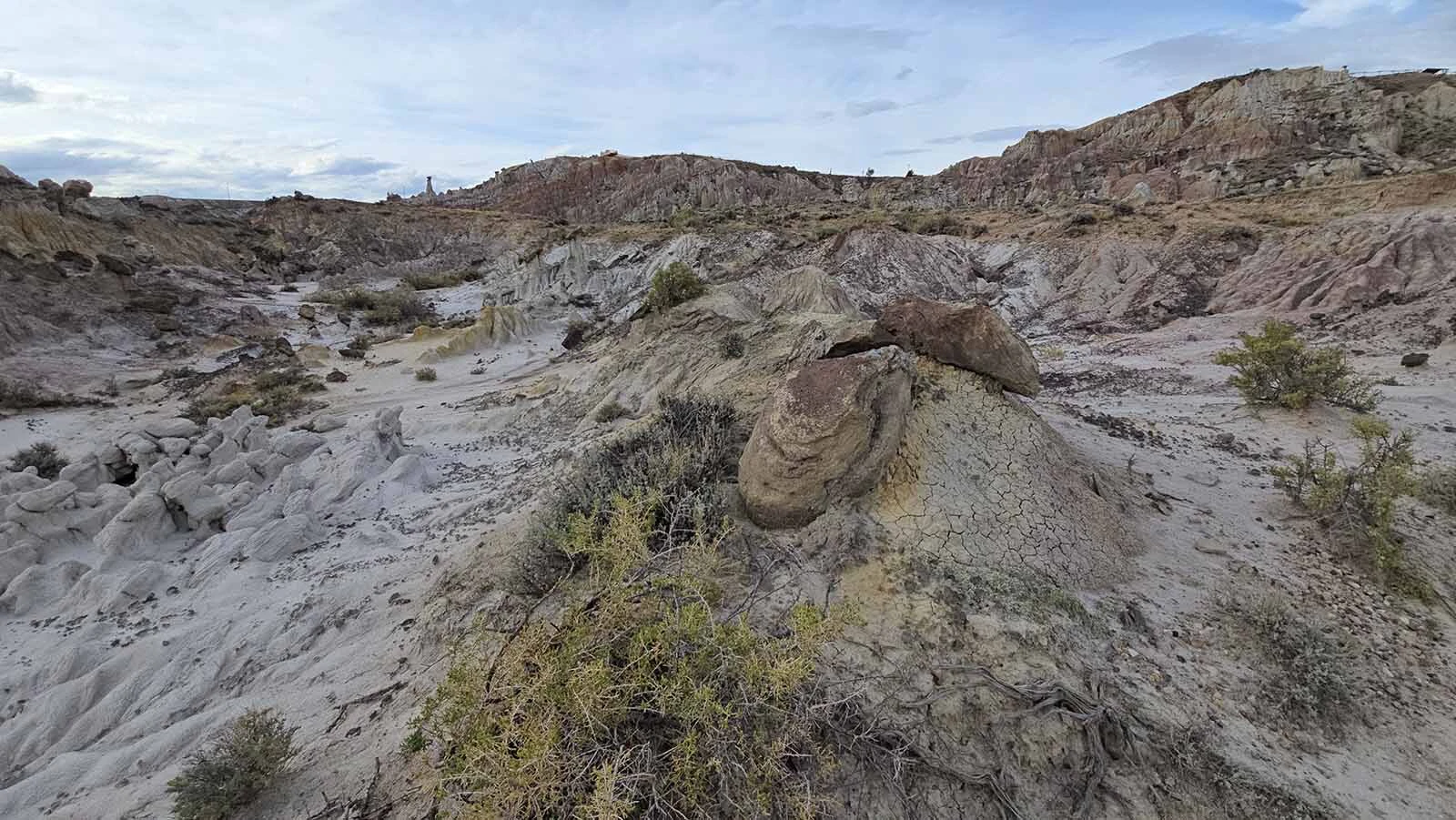
Wind, water and time have carved odd shapes into Hell's Half Acre, 40 miles West of Casper. (Renee Jean, Cowboy State Daily) 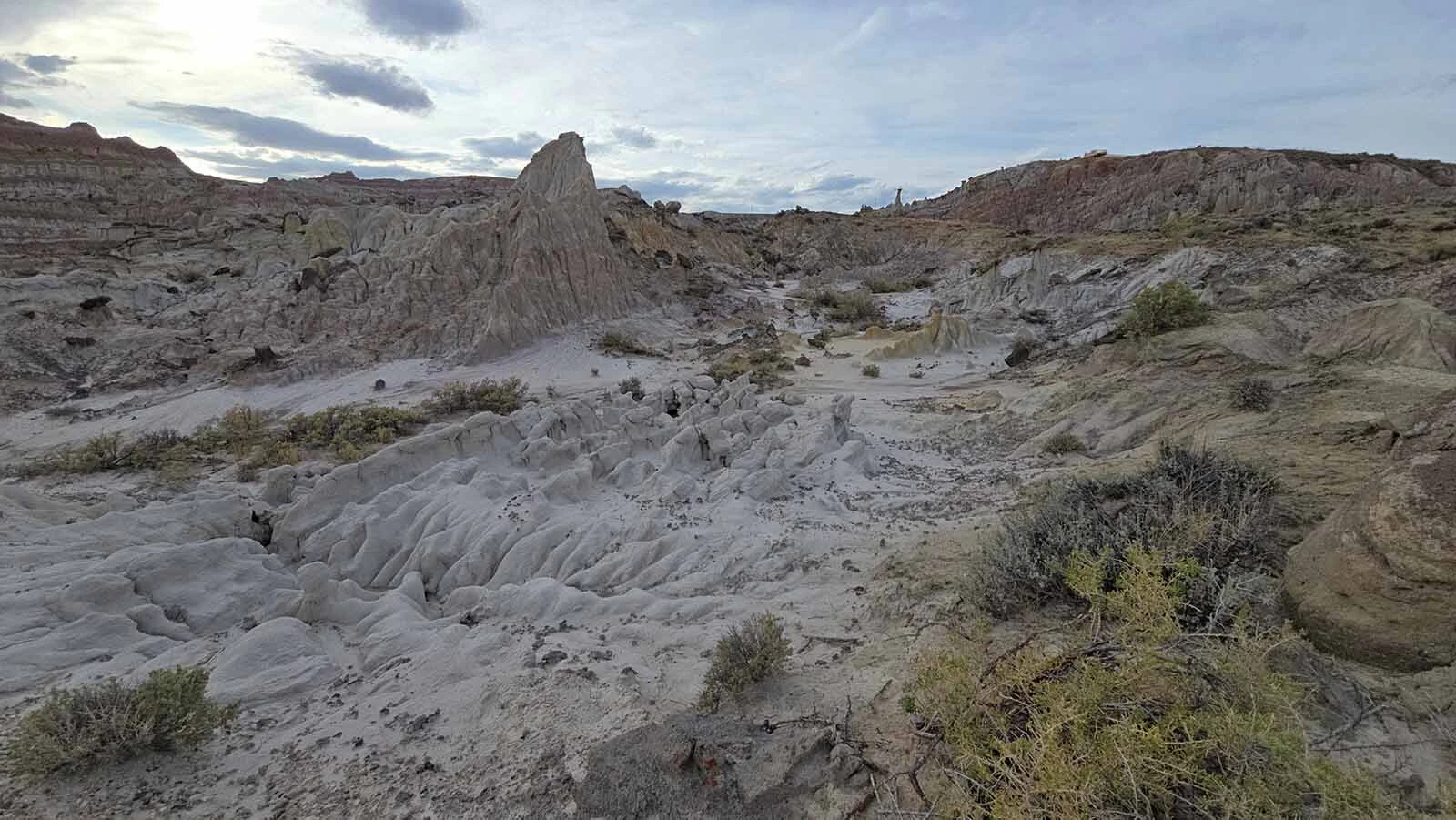
Wind, water and time have carved odd shapes into Hell's Half Acre, 40 miles West of Casper. (Renee Jean, Cowboy State Daily) 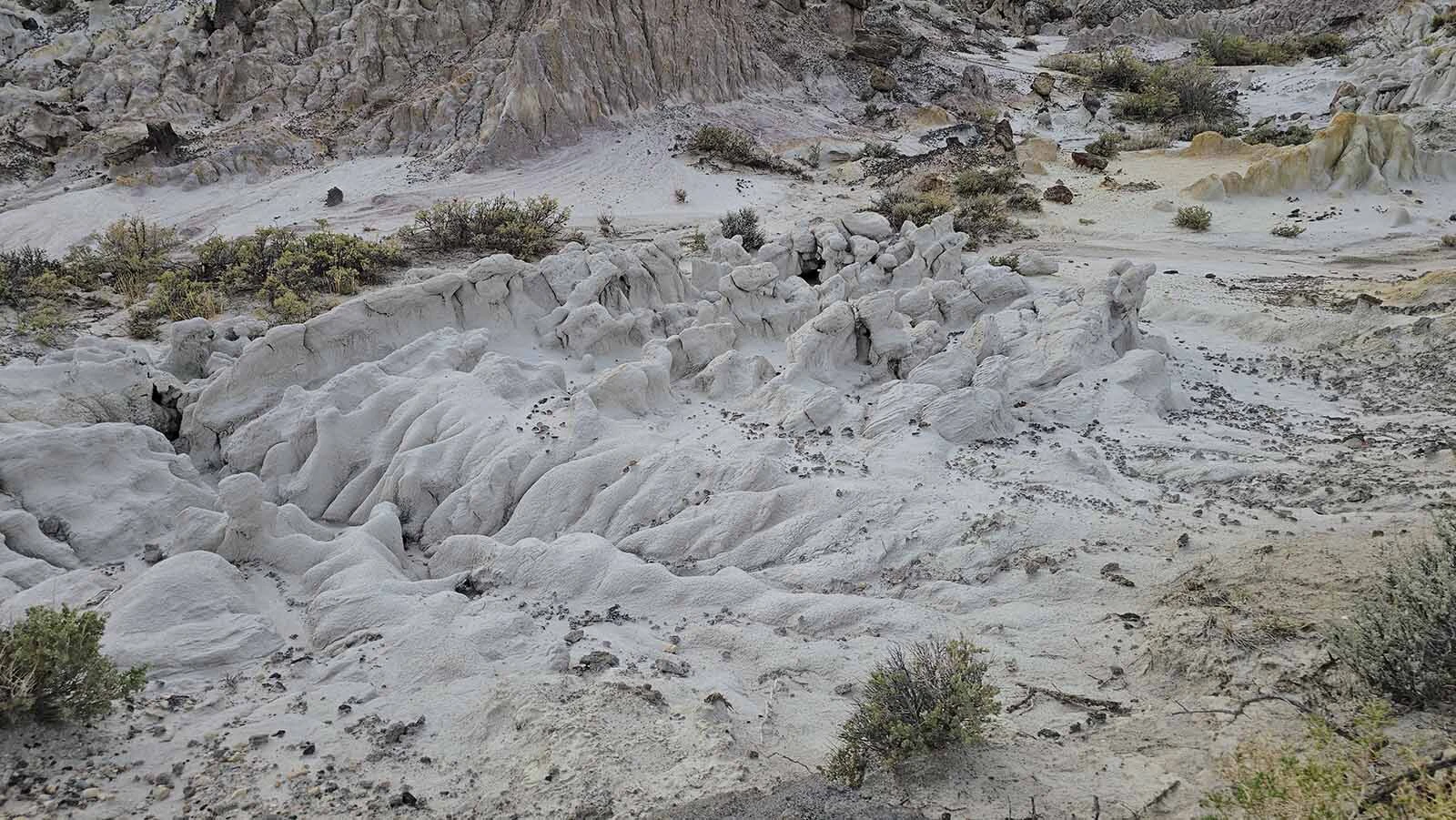
Wind, water and time have carved odd shapes into Hell's Half Acre, 40 miles West of Casper. (Renee Jean, Cowboy State Daily) 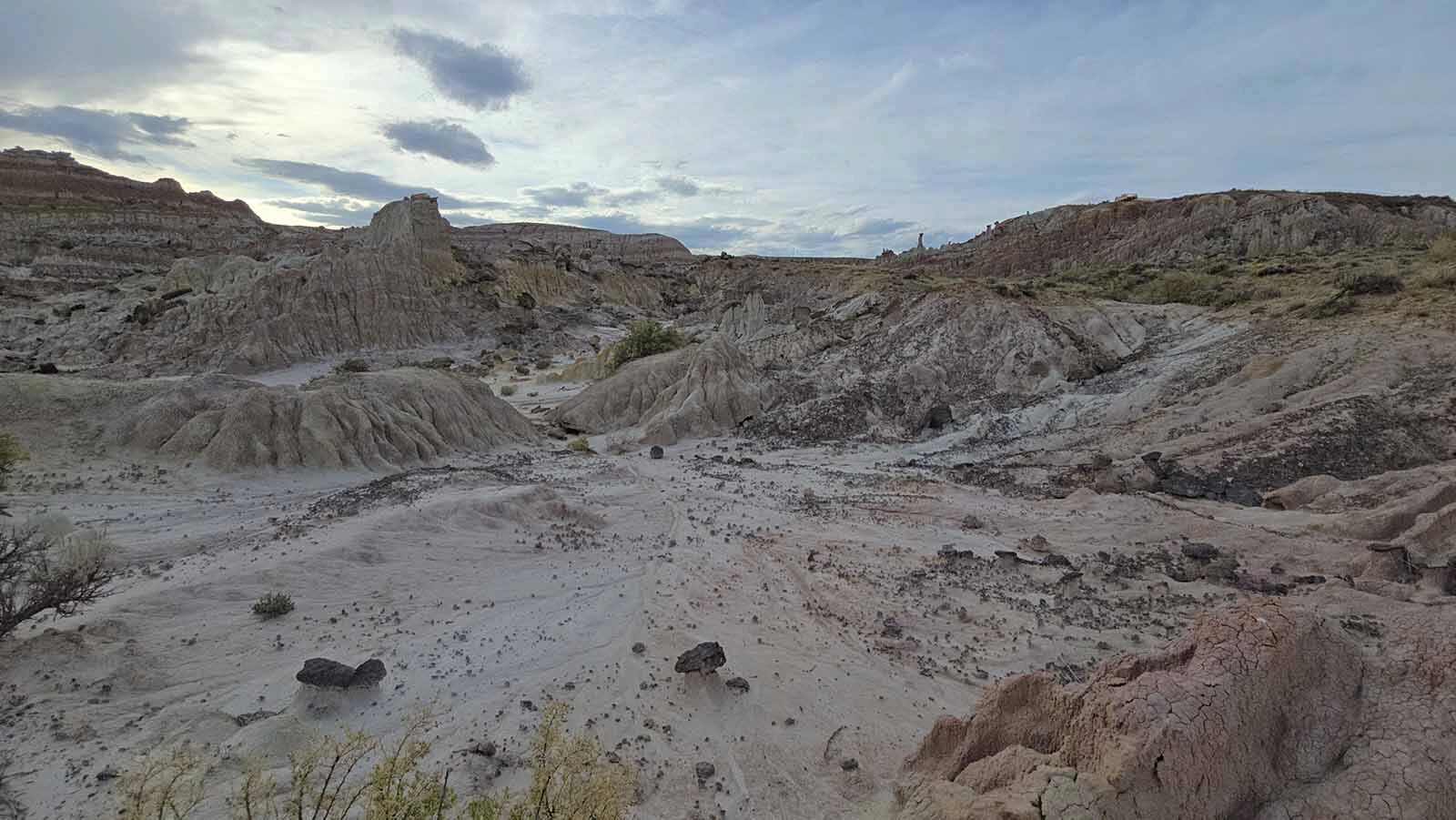
Wind, water and time have carved odd shapes into Hell's Half Acre, 40 miles West of Casper. (Renee Jean, Cowboy State Daily) 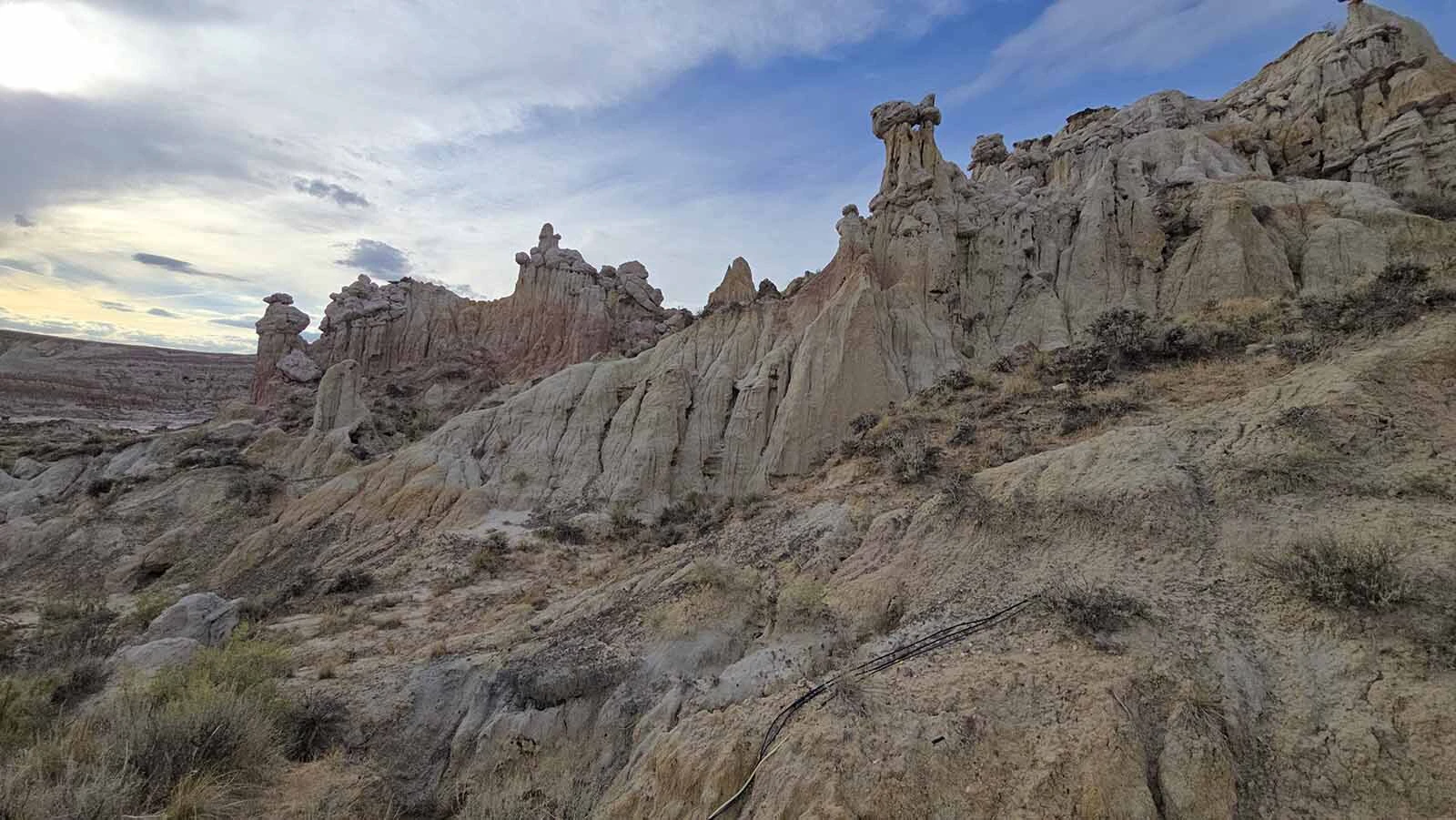
Wind, water and time have carved odd shapes into Hell's Half Acre, 40 miles West of Casper. (Renee Jean, Cowboy State Daily) 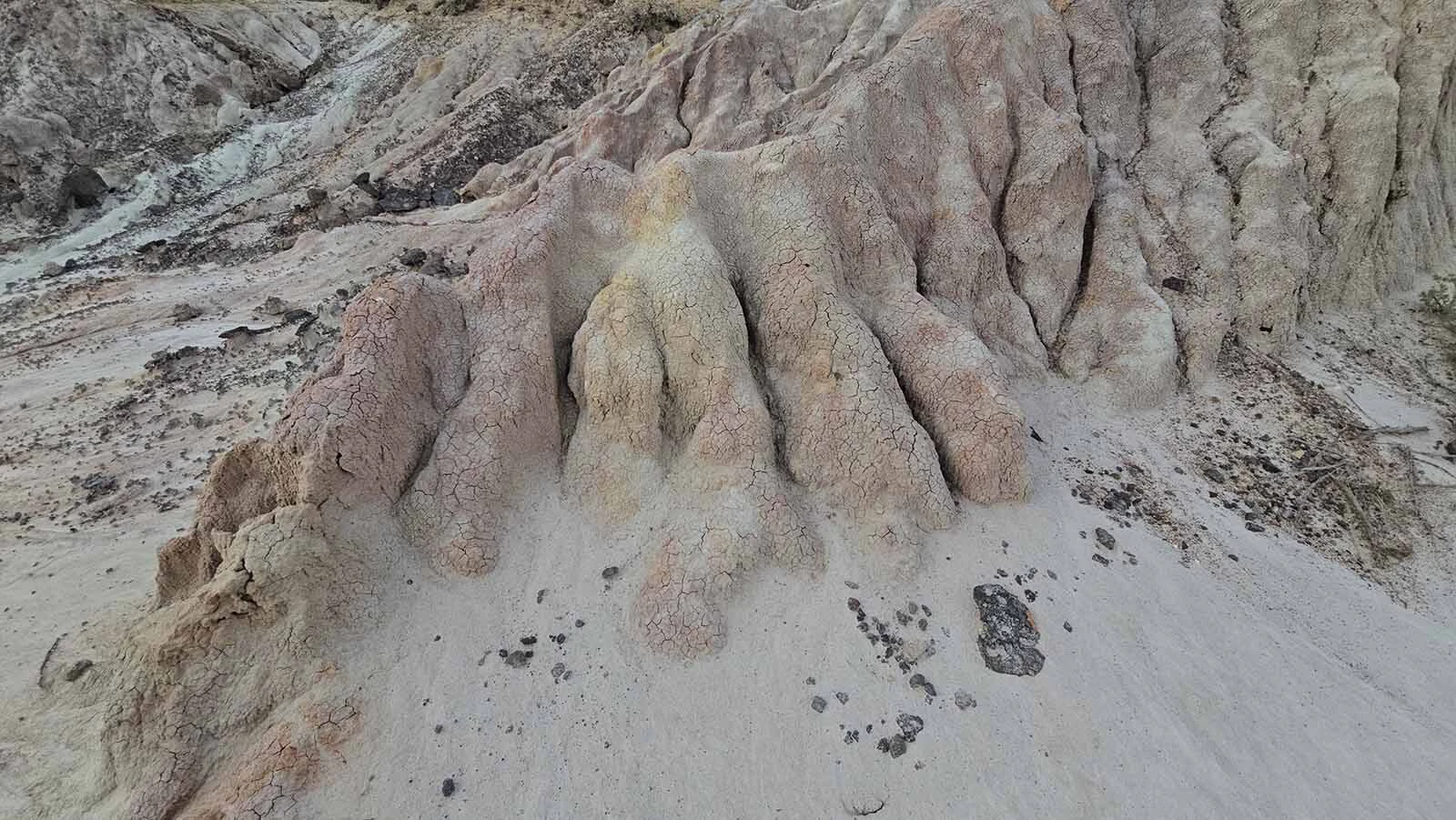
Wind, water and time have carved odd shapes into Hell's Half Acre, 40 miles West of Casper. (Renee Jean, Cowboy State Daily) 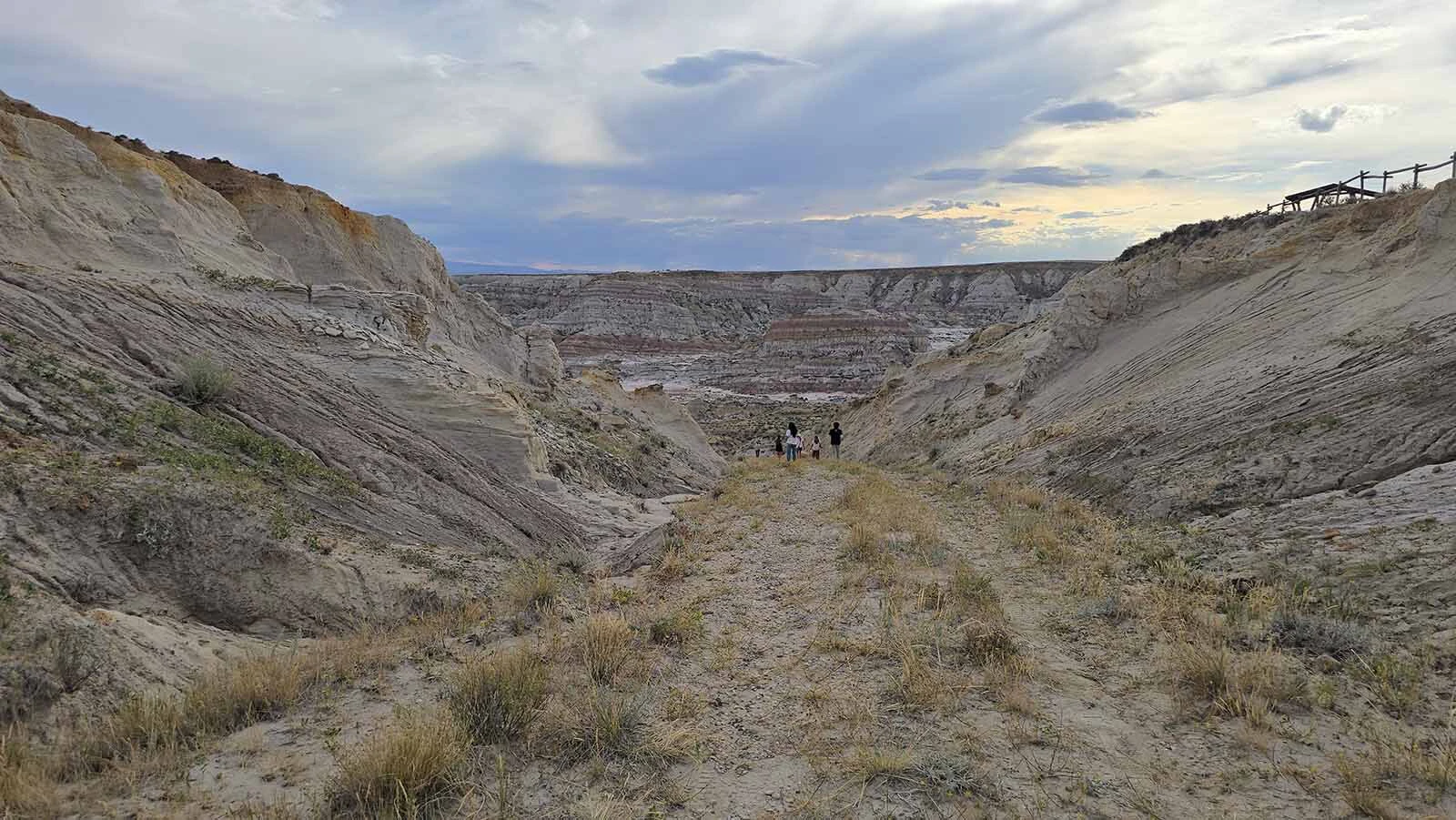
A gravel road descends into Hell's Half Acre 40 miles west of Casper. (Renee Jean, Cowboy State Daily) 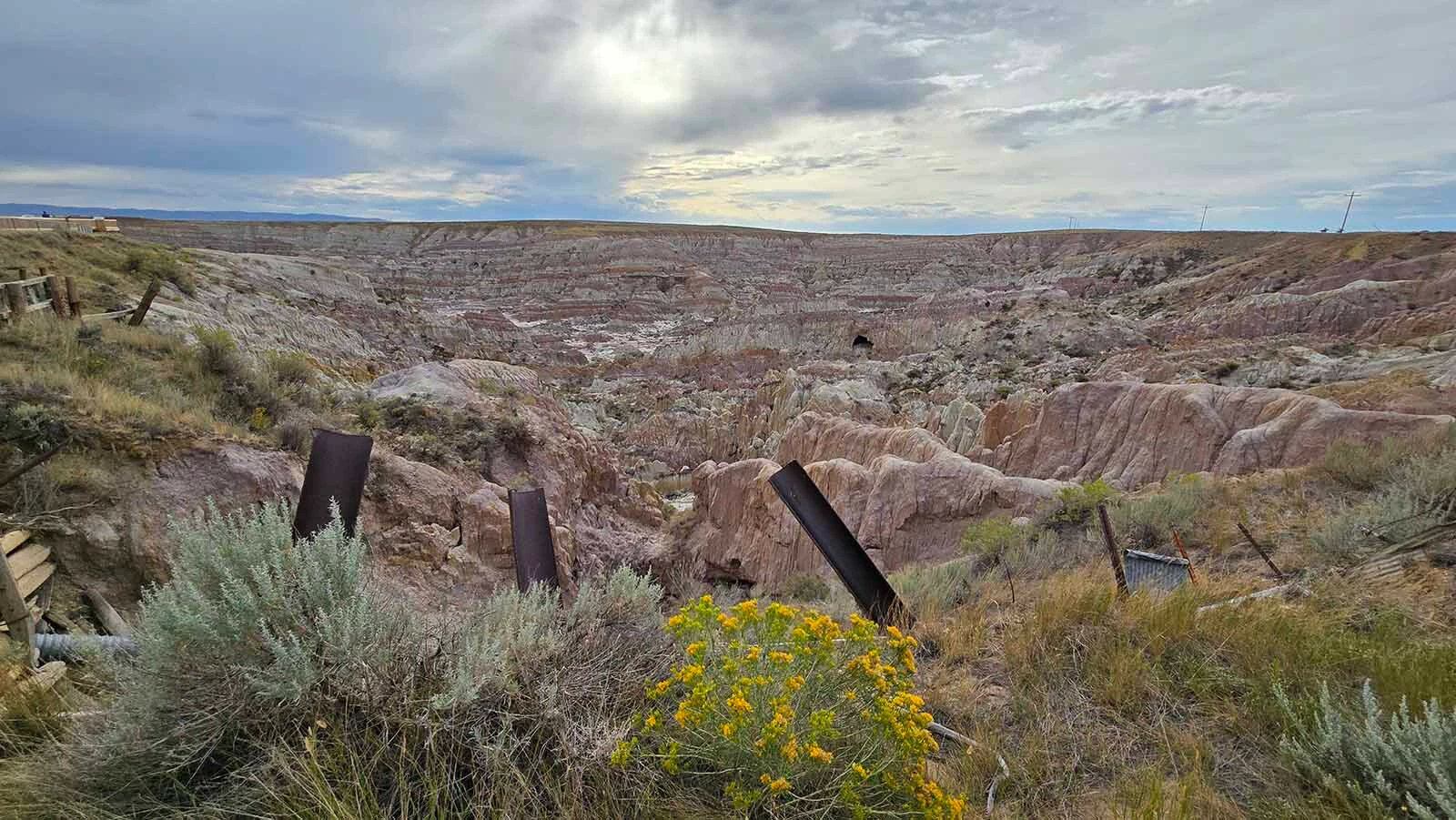
The sun shines over Hell's Half Acre, 40 miles West of Casper, in Natrona County. (Renee Jean, Cowboy State Daily)
Change Is Its Only Constant
Today’s Hell’s Half Acre is just a moment in geologic time, as fleeting as the next rain or snowstorm. Wind and weather will keep playing across its surface, etching its finger- and footprints across the surface, carving entirely new structures of wonder and delight.
These, too, will only exist for a geologic blink, before giving way to something else.
The marble children and their grieving mother will soften and fall. The twisted souls will blur and vanish.
The mushroom hoodoos will lose their stalks and tumble to the earth, and new faces and forms will emerge from the mudstones.
The only real constant here is change — and the stubborn human urge we all have to climb to the edge of the chasm and peer down into an alien world of shape and color that’s been called hell — but is really a slice of heaven on earth.
Contact Renee Jean at renee@cowboystatedaily.com
Renée Jean can be reached at renee@cowboystatedaily.com.


