
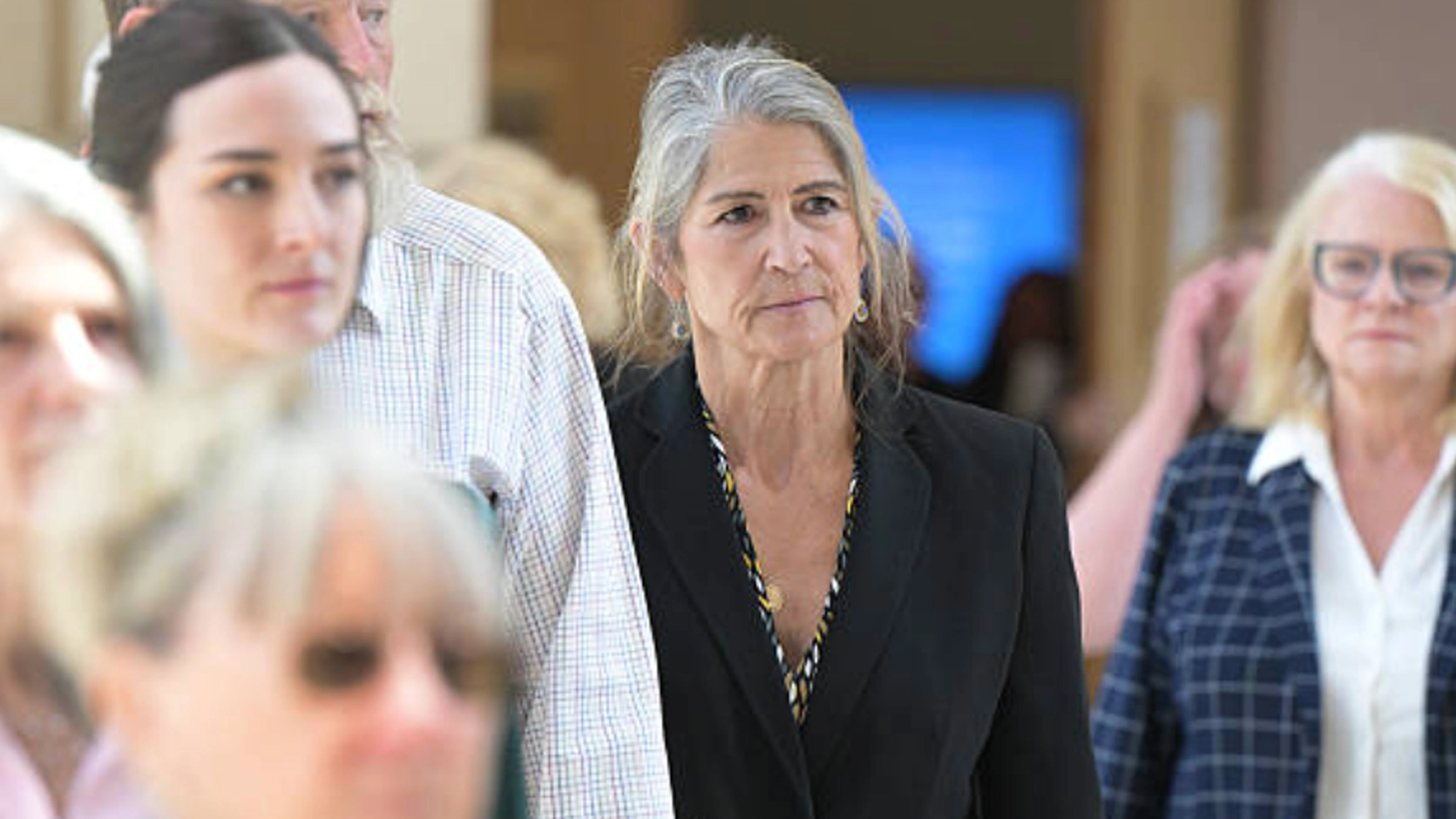
A disgraced Colorado forensic scientist who deleted and manipulated DNA data in criminal cases — including sexual assault investigations — was sentenced Tuesday to 10 years in prison, decades after beginning her career at the Wyoming State Crime Laboratory.
Yvonne “Missy” Woods, 66, went on to spend 29 years with the Colorado Bureau of Investigation, becoming a trusted DNA analyst before an intern spotted missing data in 2023 and triggered an investigation that dismantled her career.
Woods spent about five years in Wyoming before ever joining CBI, handling 462 cases at the state crime lab between roughly 1988 and 1993.
As the magnitude of the Colorado scandal became apparent, Wyoming officials turned their attention to that earlier body of work.
“We tried to be responsible as soon as we heard from our neighbors,” Wyoming State Crime Lab Director Scott McWilliams told Cowboy State Daily on Thursday.
The lab investigated Woods’ Wyoming casework in 2024, McWilliams said. Nothing incriminating was found, and the investigation has since been closed.
In Colorado
Woods joined CBI in January 1994 and remained there until November 2023, working as a forensic laboratory scientist at two Jefferson County facilities.
The first crack in her career appeared in September 2023.
An intern reviewing historical sexual assault evidence discovered missing information from a sample Woods processed in 2018, the Colorado First Judicial District Attorney’s Office reported.
Testing showed male DNA was detected, but the corresponding value showing how much was present was missing.
After ruling out problems with the equipment or testing kit, CBI began examining Woods’ work more closely and uncovered additional discrepancies.
Investigators determined she altered or deleted data tied to critical parts of the laboratory’s quality-control process. CBI ultimately asked the South Dakota Division of Criminal Investigation to conduct an independent criminal investigation.
That investigation found Woods altered and deleted DNA quantification values, reran entire batches of testing without documenting why, and concealed possible contamination.
The misconduct also made its way into the reports relied upon by detectives, prosecutors and courts.
‘No Male DNA Found’
Investigators identified 52 laboratory reports containing statements by Woods that were untrue. A 53rd contained statements prosecutors said were technically accurate but appeared intended to discourage a detective from pursuing the results.
Thirty-two involved women and children who reported being sexually assaulted.
In those cases, prosecutors said Woods deleted values showing male DNA was present, then reported that no male DNA was found.
Prosecutors said her conduct eliminated opportunities for additional testing, comparison and investigation.
Investigators did not find evidence that Woods fabricated DNA identifications or comparisons or generated false-positive DNA results, an important distinction prosecutors made in describing the scope of her misconduct.
Still, some of her false reports had already entered the criminal justice system.
Twelve were connected to cases in which someone was charged. Three reached trial, resulting in one conviction and two acquittals.
Woods later admitted committing first-degree perjury through false testimony she gave during a trial that resulted in a first-degree murder conviction.
More Than 100 Charges
Colorado prosecutors charged Woods in January 2025 with 102 criminal counts stemming from 58 instances of misconduct between 2008 and 2023.
They included one count each of cybercrime and first-degree perjury, 48 counts of attempting to influence a public servant, and 52 counts of forgery.
Woods pleaded guilty June 23 to four felony charges: Cybercrime, first-degree perjury, attempting to influence a public servant and forgery. The latter two were newly added counts consolidating portions of the original allegations.
Under the plea agreement, Counts 3 through 102 were dismissed and Woods faced a mandatory prison term of eight to 16 years.
District Judge Andrew Poland sentenced her Tuesday to 10 years for cybercrime. Six-year sentences for perjury and attempting to influence a public servant and a three-year forgery sentence will run concurrently.
Poland called Woods’ actions “intentional misconduct by a highly trained professional occupying a position of extraordinary trust.”
“Her responsibility was straightforward: Perform the scientific work accurately and honestly, follow the procedures governing that work, report the results, and allow others in the criminal justice system to determine their significance,” Poland said. “She failed to do that.”
Woods acknowledged that failure before learning her sentence.
“My actions affected not only the integrity of the criminal justice system, but also the people whose lives were touched by the cases in which I worked,” she said.
“For many years, I was entrusted with evidence that could have profound consequences for defendants, victims, families and the courts. I failed that responsibility.”
Woods In Wyoming
None of the criminal conduct prosecuted in Colorado dates to Woods’ years in Wyoming.
The science she practiced here was different, too.
Woods arrived at the Wyoming State Crime Laboratory before DNA analysis was being performed there, McWilliams said. Her work instead centered largely on biological fluids and trace evidence.
She could examine biological material to determine whether it was human or nonhuman, for example, looking at a blood stain. She also performed fluid typing and examined hairs and fibers.
It was the generation of forensic science immediately preceding widespread DNA profiling.
A 1988 Sheridan sexual assault case offers a glimpse of that transition. Clothing and bodily-fluid samples were initially sent to the Wyoming State Crime Laboratory, but when investigators later sought DNA analysis, the evidence went to the FBI laboratory.
There is no evidence Woods handled that case.
The Wyoming Supreme Court’s 1993 opinion does not identify the analyst who initially handled the evidence, and records from that era cannot be searched online by analyst or witness name. Cowboy State Daily has asked the Wyoming Supreme Court Clerk’s Office for help locating older records that could identify cases Woods worked but had not received a response as of publication.
What Wyoming officials do know is the size of her caseload: 462 during her roughly five years at the state lab.
Those cases became the subject of Wyoming’s own investigation in 2024 as officials watched what was unfolding in Colorado.
McWilliams said investigators found nothing incriminating and closed the investigation.
“We’re lucky it was pre-DNA,” he said. “She was just in a different time and place when she worked for us.”
Kolby Fedore can be reached at kolby@cowboystatedaily.com.


