

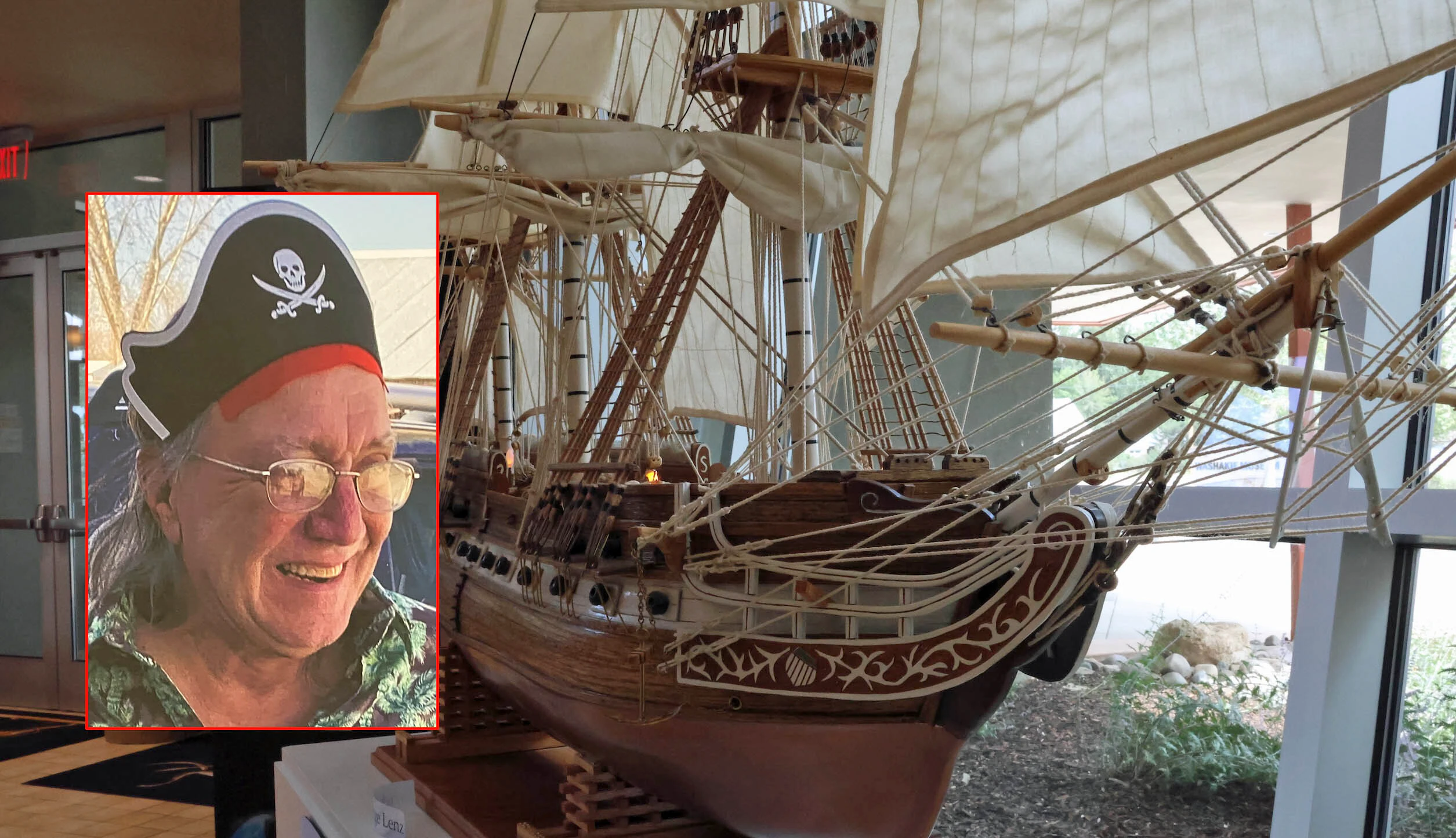
WORLAND — A dying Worland man’s “out-of-it” desire to have his ashes placed on his 5-foot exact model of the U.S. Navy’s three-masted frigate the USS Constitution and sent with ship aflame out onto Boysen Reservoir didn't happen.
Instead, the late Carl Lenz’s meticulously detailed depiction of the ship nicknamed “Old Ironsides” has been on display at the Washakie Museum and Cultural Center for much of the past year and may possibly sail to other museums in the next few months.
The ship was loaned to the museum by Lenz’s close friend and Worland artist Calvin Fulfer, who still recalls the day when Lenz — while in hospice care for terminal cancer — turned to him and asked what he thought of the ship.
“I said, ‘I think it’s the coolest piece of art that I’ve ever seen, and I want it to be in a museum someday,'” Fulfer said. “And he said, ‘OK, it’s yours.’ And so now here it is. I wish he could have seen it.”
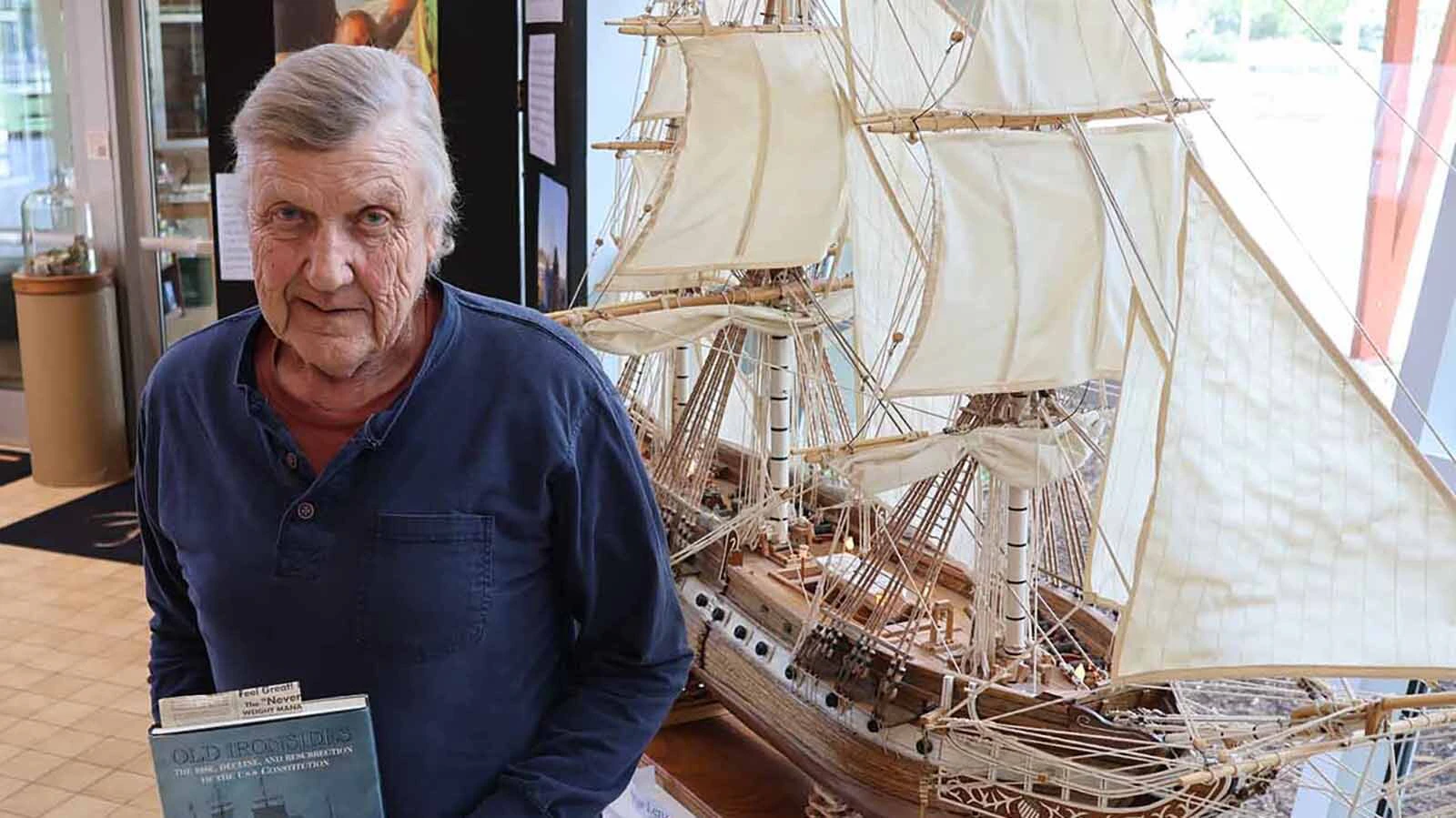
The intricately detailed 1/4-inch-to-1-foot-scaled ship includes cannon balls on the brass monkey, nautical knots in ropes laid on the deck, and furniture in the captain’s cabin.
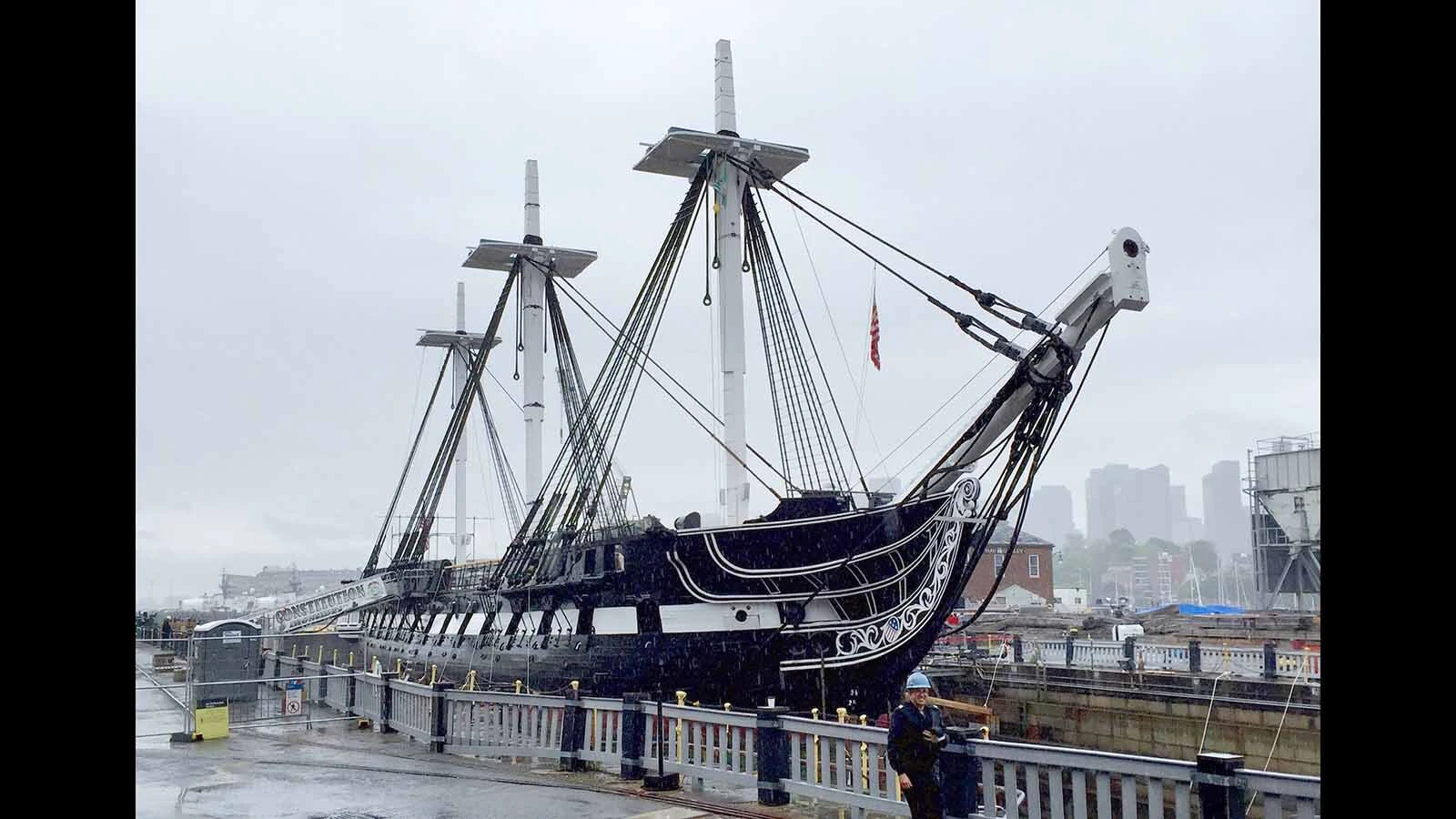
It is made of oak, just like the real ship that was constructed in 1797 and remains the oldest U.S. Navy vessel still afloat, docked in the Charlestown Navy Yard in Massachusetts.
Fulfer said Lenz had the ability to look at a photograph of something and then scale it down and create his own model version of it.
But Lenz was more than a model maker, he was taxidermist, truck driver, plumber, electrician, carpenter, cabinet maker, luthier, and annual cook at Fulfer’s cabin for their blue grouse seasonal hunt. He made “grouse noodle soup.”
“He was definitely a Renaissance man,” Fulfer said. “I’ve never met anybody who could do well as many things as Carl could. When he decided to do something, it was just all passion to that project … All his attention was dedicated to it and when it was done he moved on. He was an amazing guy.”
Fulfer said Lenz graduated from Thermopolis High School and never attended college as far as he knew. As a kid, Lenz asked his mom to order a taxidermy course for him that he saw advertised in a comic book.
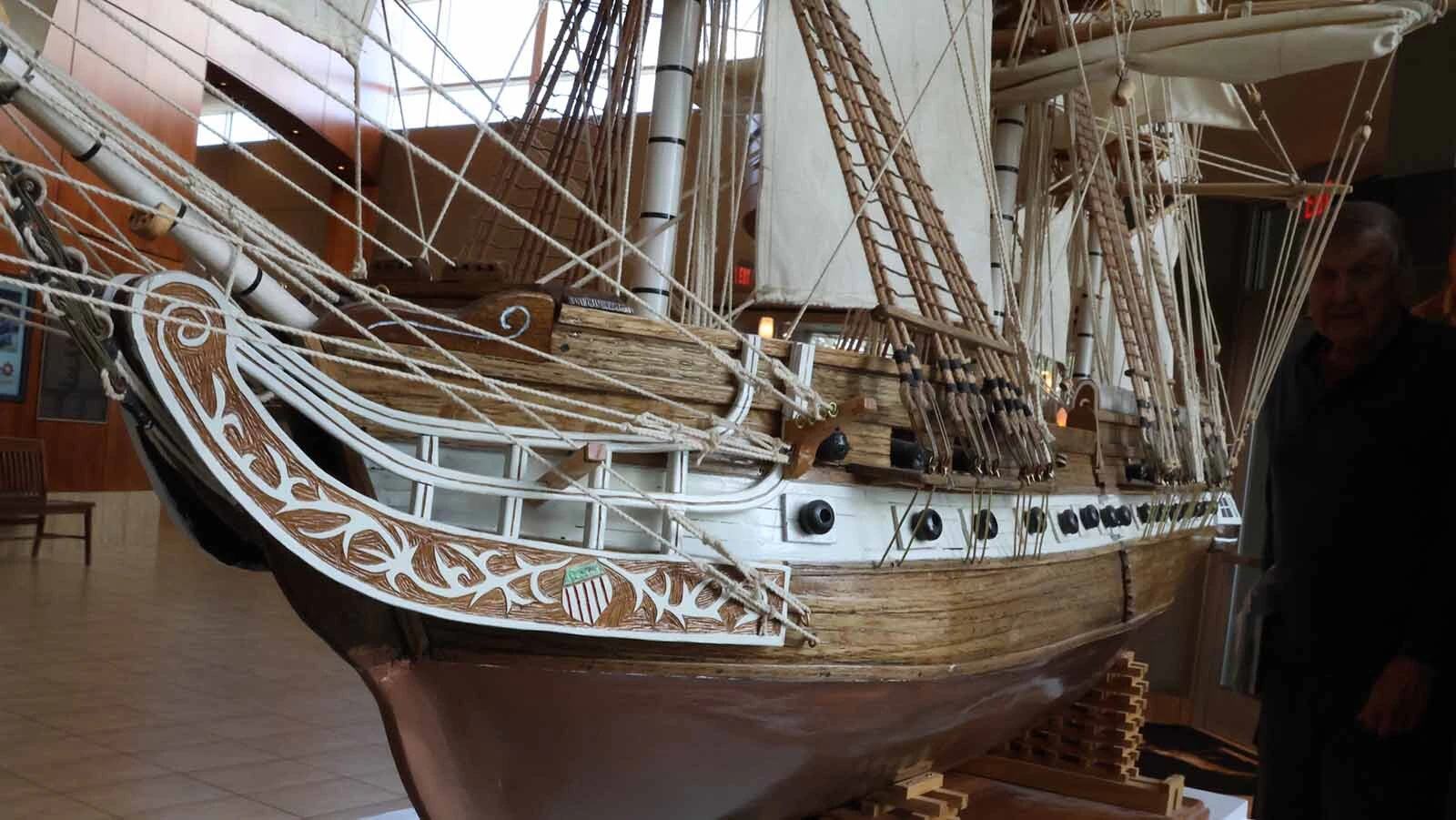
The port side of the ship and the many gun ports on the frigate. (Dale Killingbeck, Cowboy State Daily) 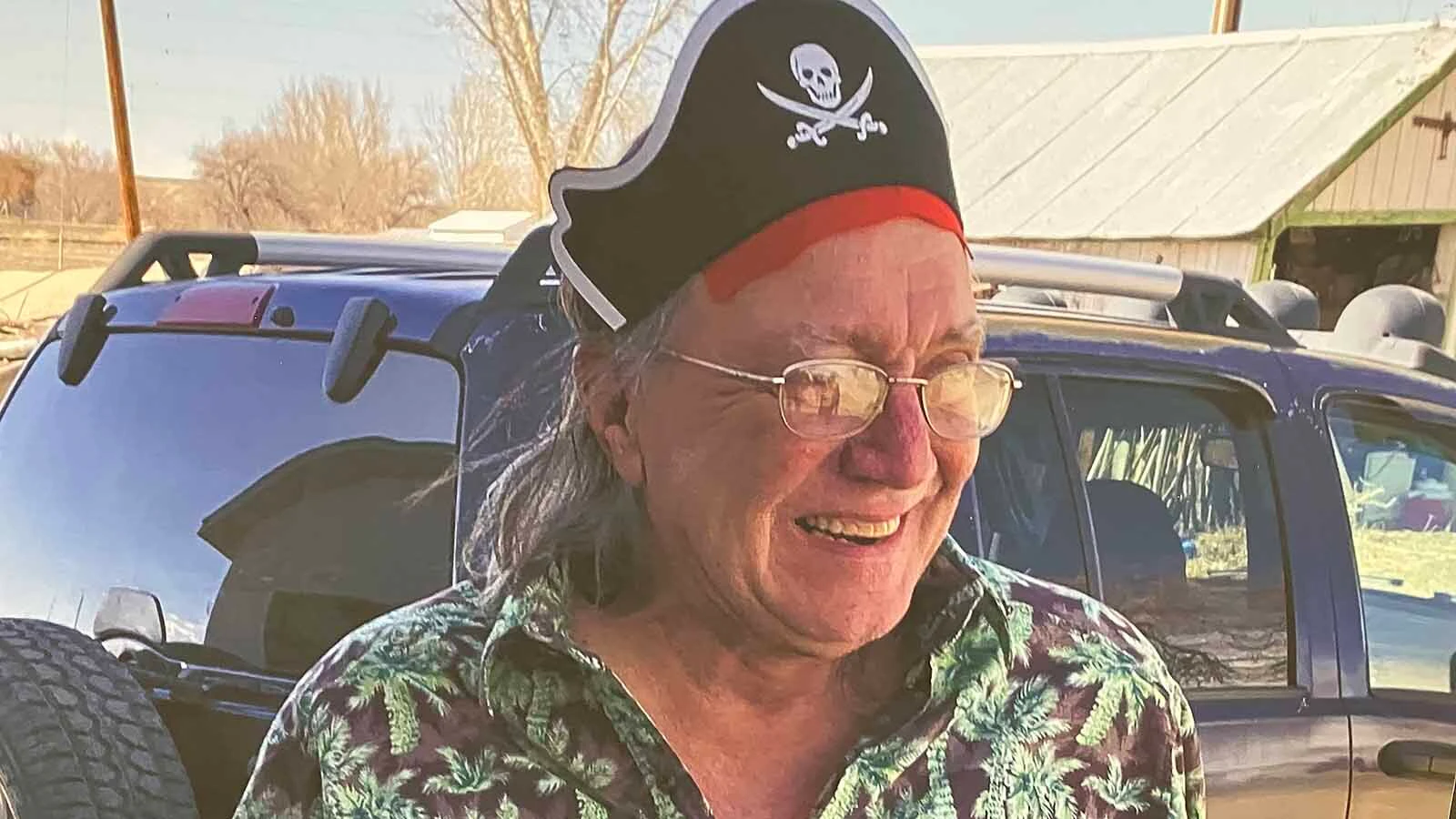
Worland’s Carl Lenz (pictured) was like a renaissance man, says his friend Cal Fulfer (Cal Fulfer) 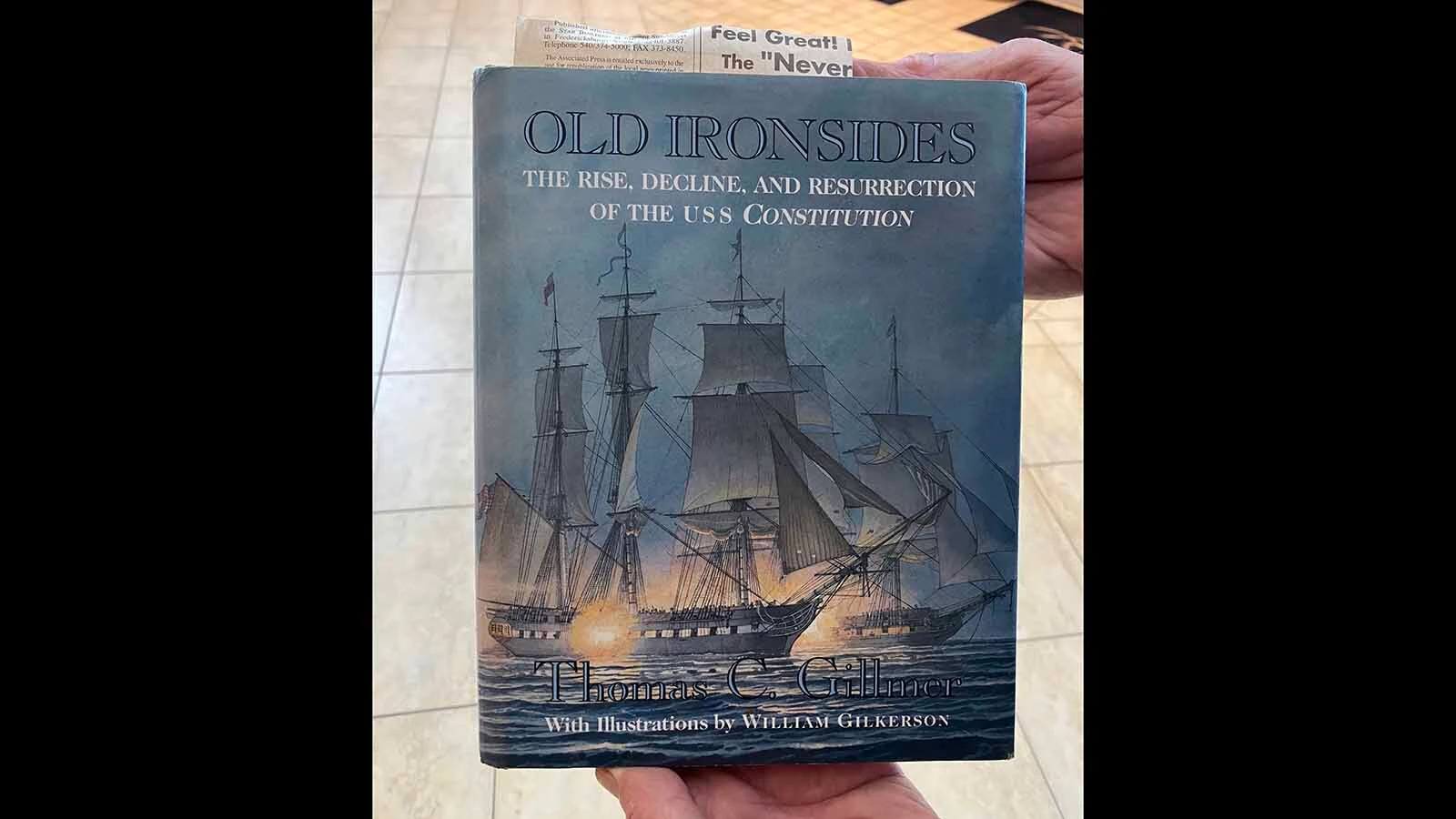
The book Cal Fulfer ordered to help his friend Carl Lenz construct the model. (Dale Killingbeck, Cowboy State Daily)
Taxidermy Skill
He completed the entire course that began with stuffing a mouse to more complicated animals, obtained a certificate, and landed a role at the Museum of Natural History in Denver where he apprenticed with “one of the finest taxidermists” in the world and worked there for several years.
Lenz also had a taxidermy shop in Thermopolis for many years and several of his mounts still remain on display at the Safari Club restaurant, Fulfer said.
Fulfer said as a luthier, Lenz read a book about making guitars and decided to make one. His first was “a quality instrument.”
“I’m not a musician, but several of my friends are and they were all saying, “this is the finest playing guitar I’ve received, can you make another one?’” Fulfer said. Lenz ended up creating his own “Russki” brand name based on his Russian heritage.
Lenz made replica Civil War cannons from shotgun barrels and created wooden wagon wheels to mount them.
Fulfer said his wife also once commissioned Lenz who had purchased a sewing machine to make him a western-style shirt for Christmas.
“He made the finest-fitting shirt I own,” Fulfer said.
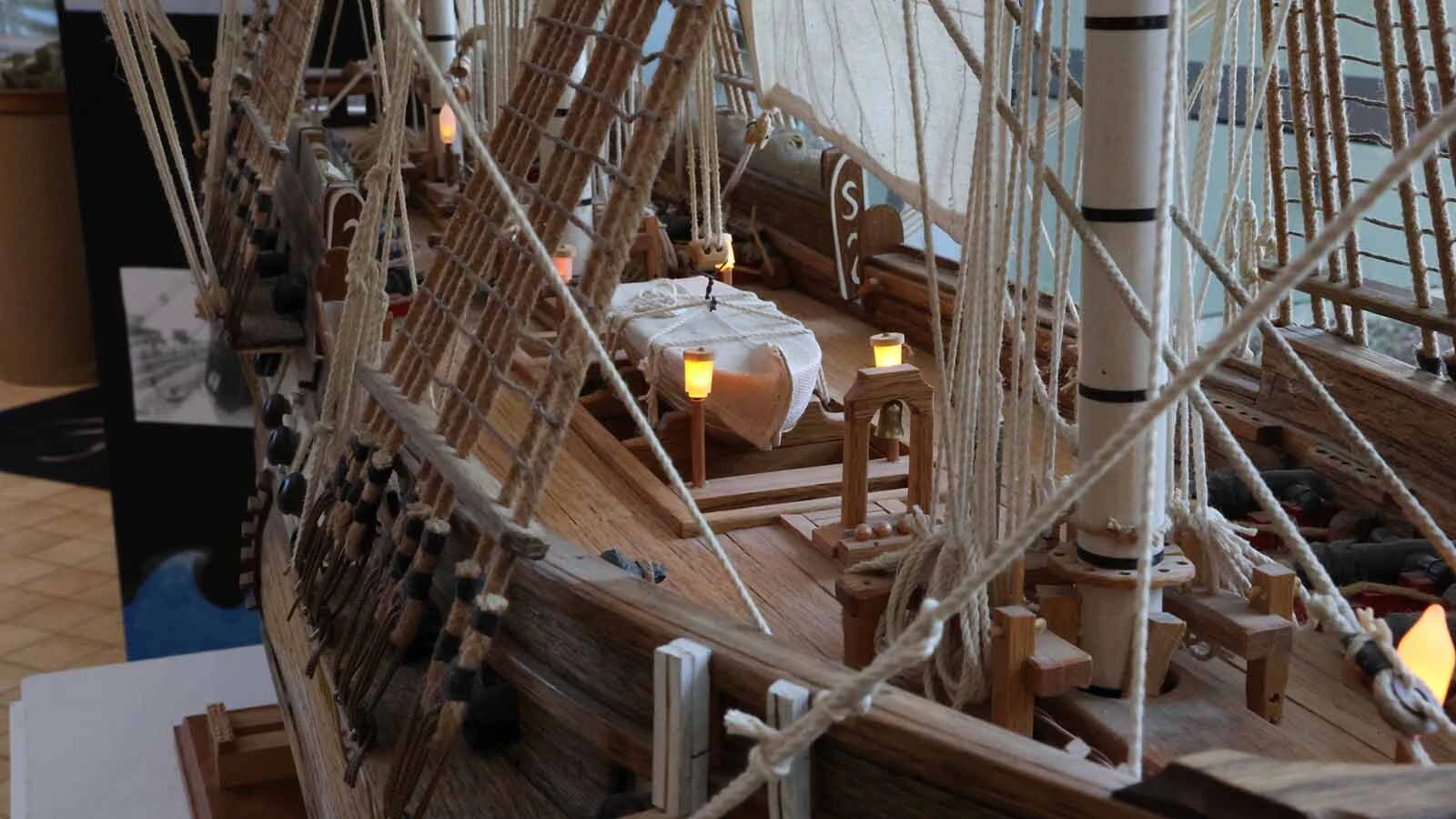
Carl Lenz’s model shows the top deck of the ship with a lifeboat at ready. (Dale Killingbeck, Cowboy State Daily) 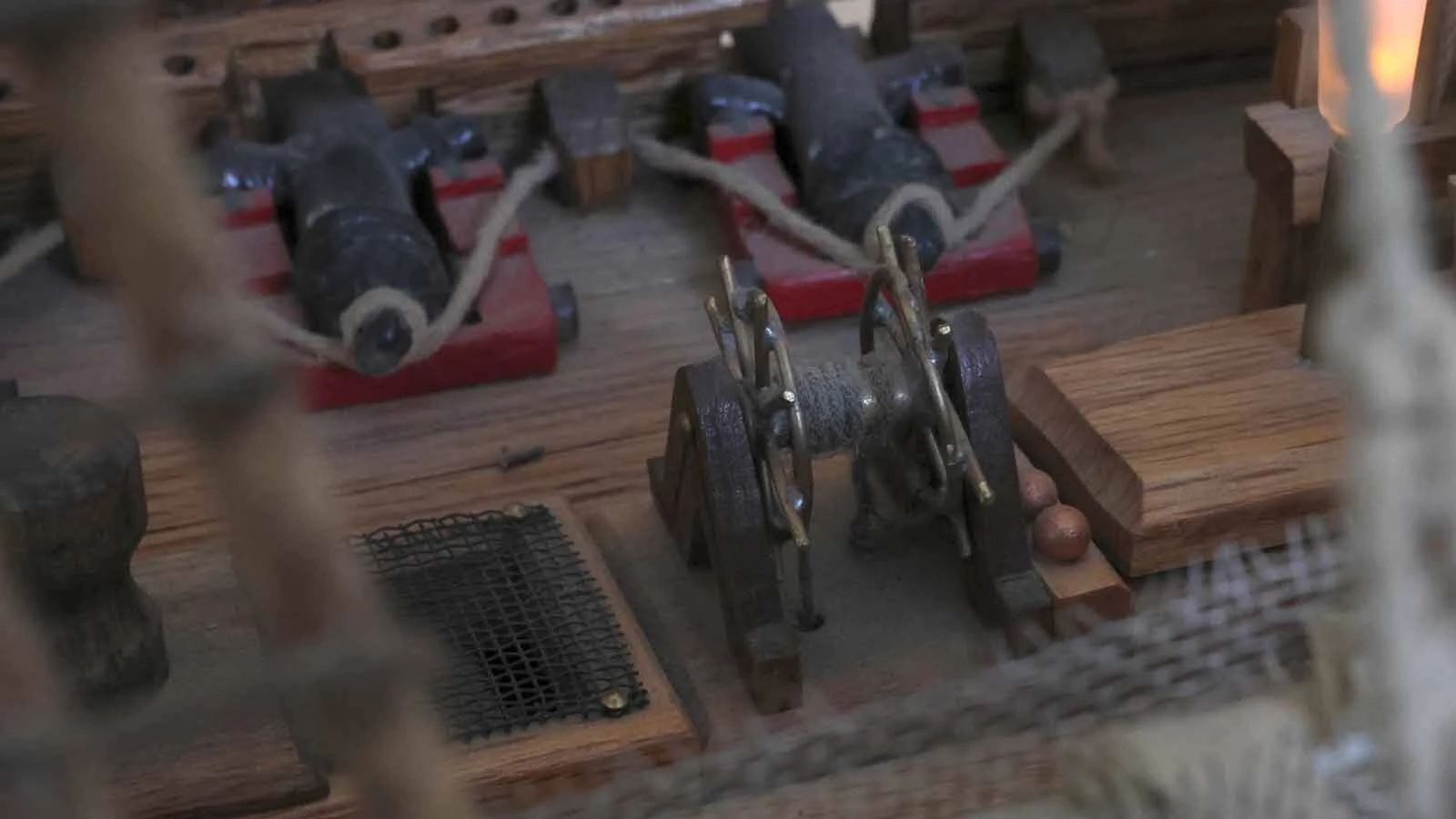
Old Ironsides had a double wheel as depicted in the model. (Dale Killingbeck, Cowboy State Daily) 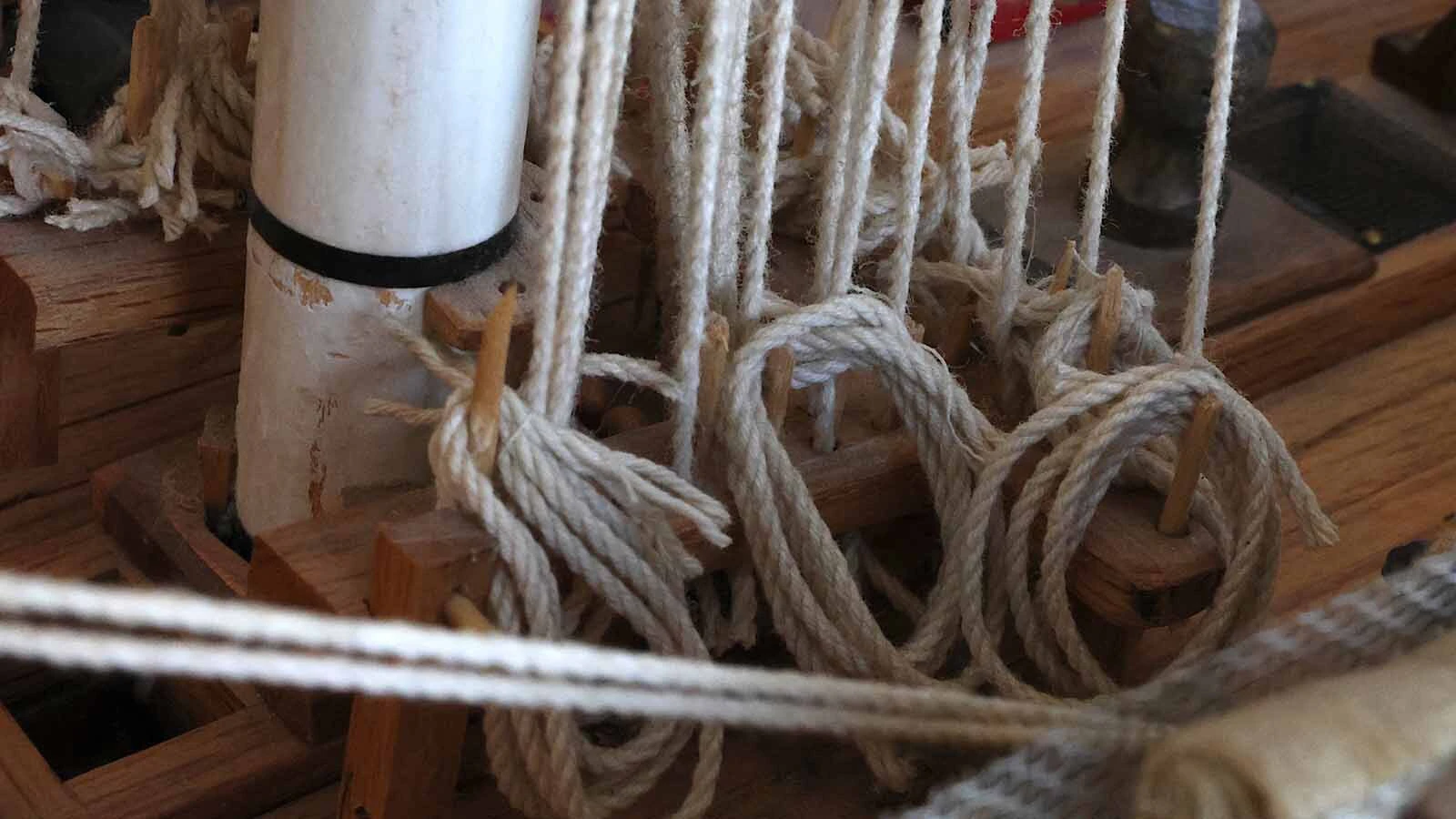
Carl Lenz accurately depicted ropes tied to the sails on the top deck. (Dale Killingbeck, Cowboy State Daily) 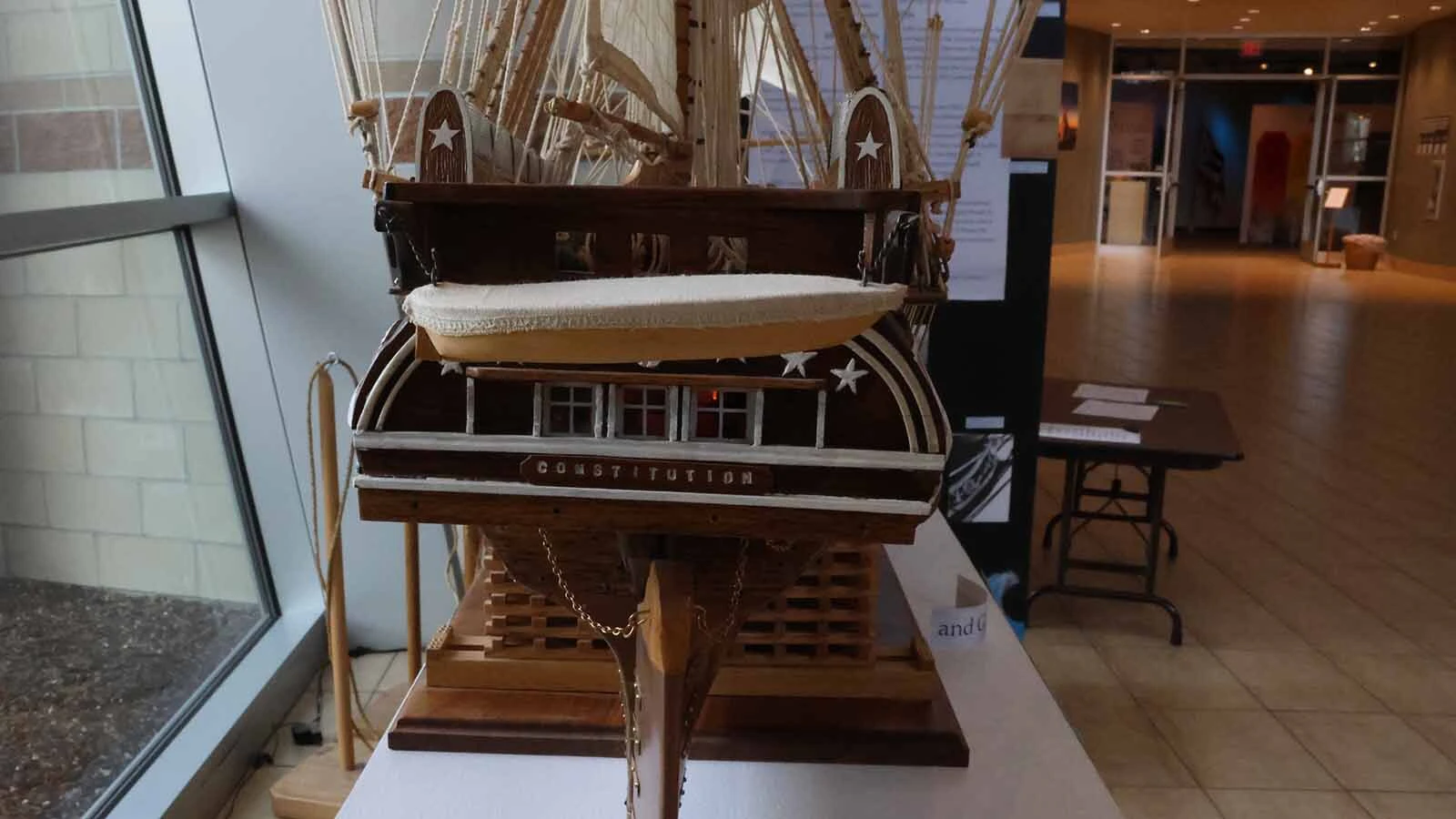
The USS Constitution used chains to move its rudder. (Dale Killingbeck, Cowboy State Daily) 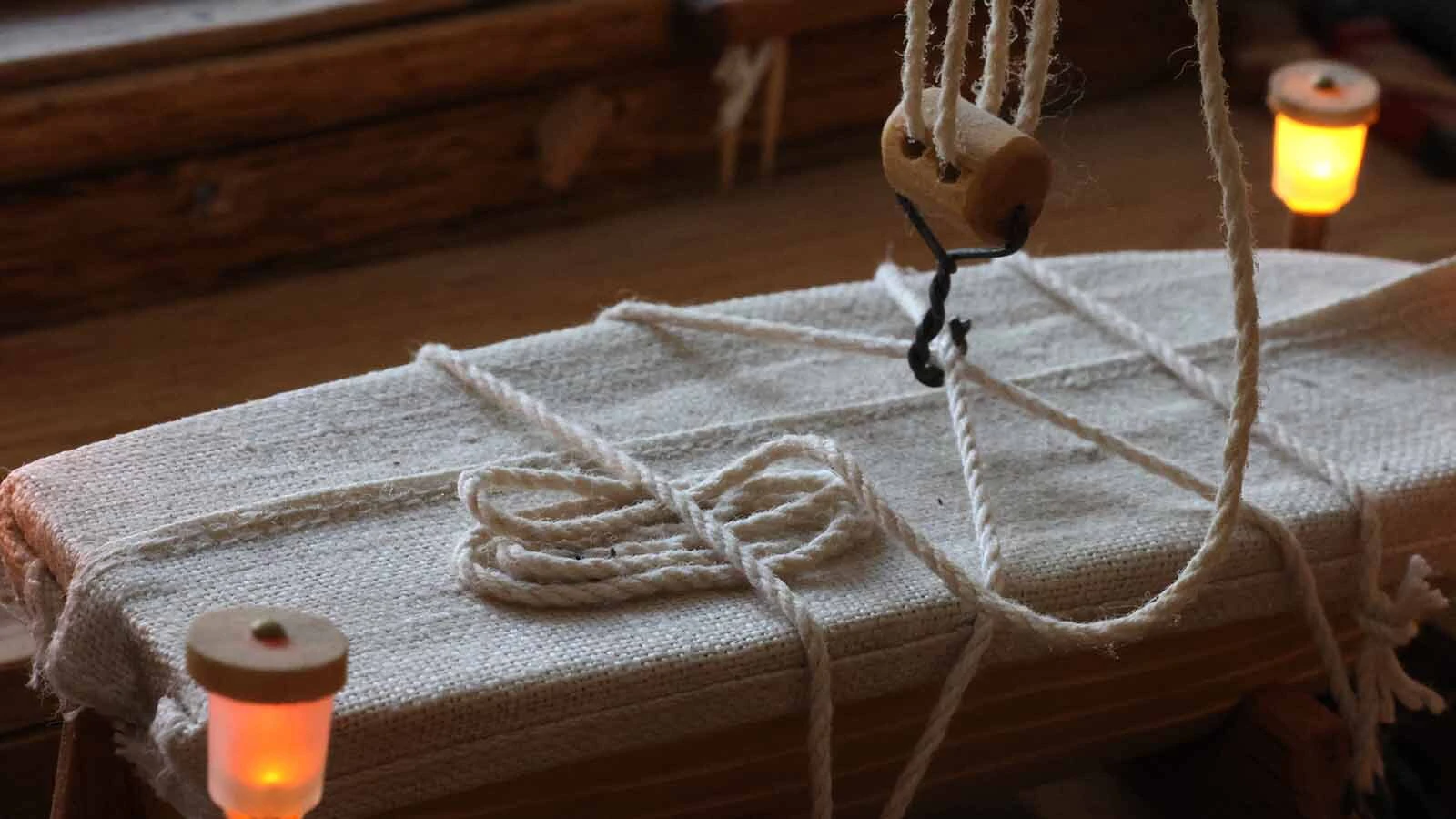
A line portrayed correctly resting on the lifeboat. (Dale Killingbeck, Cowboy State Daily) 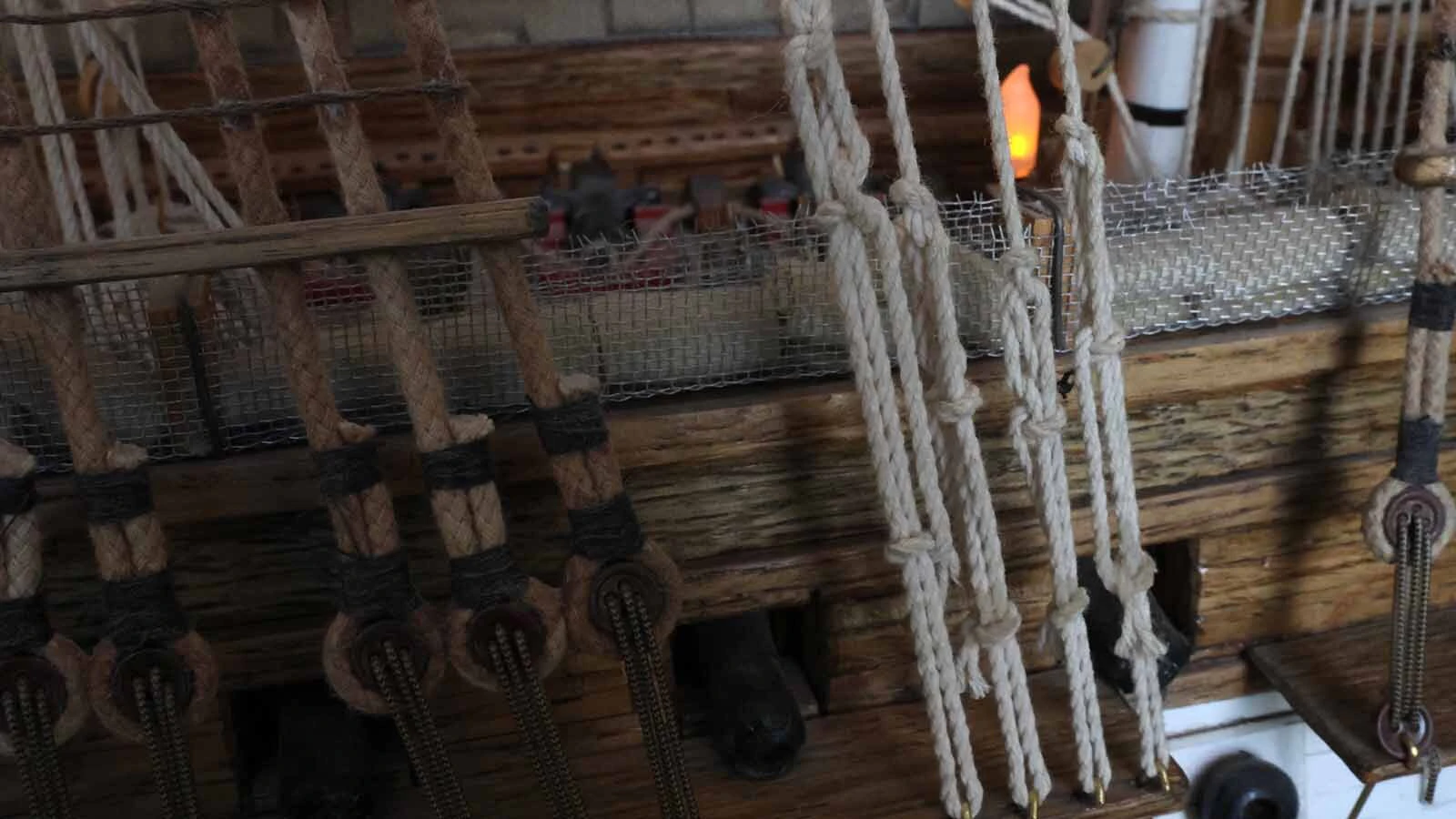
Lines and their nautical knots portrayed accurately on the port side of the ship. (Dale Killingbeck, Cowboy State Daily) 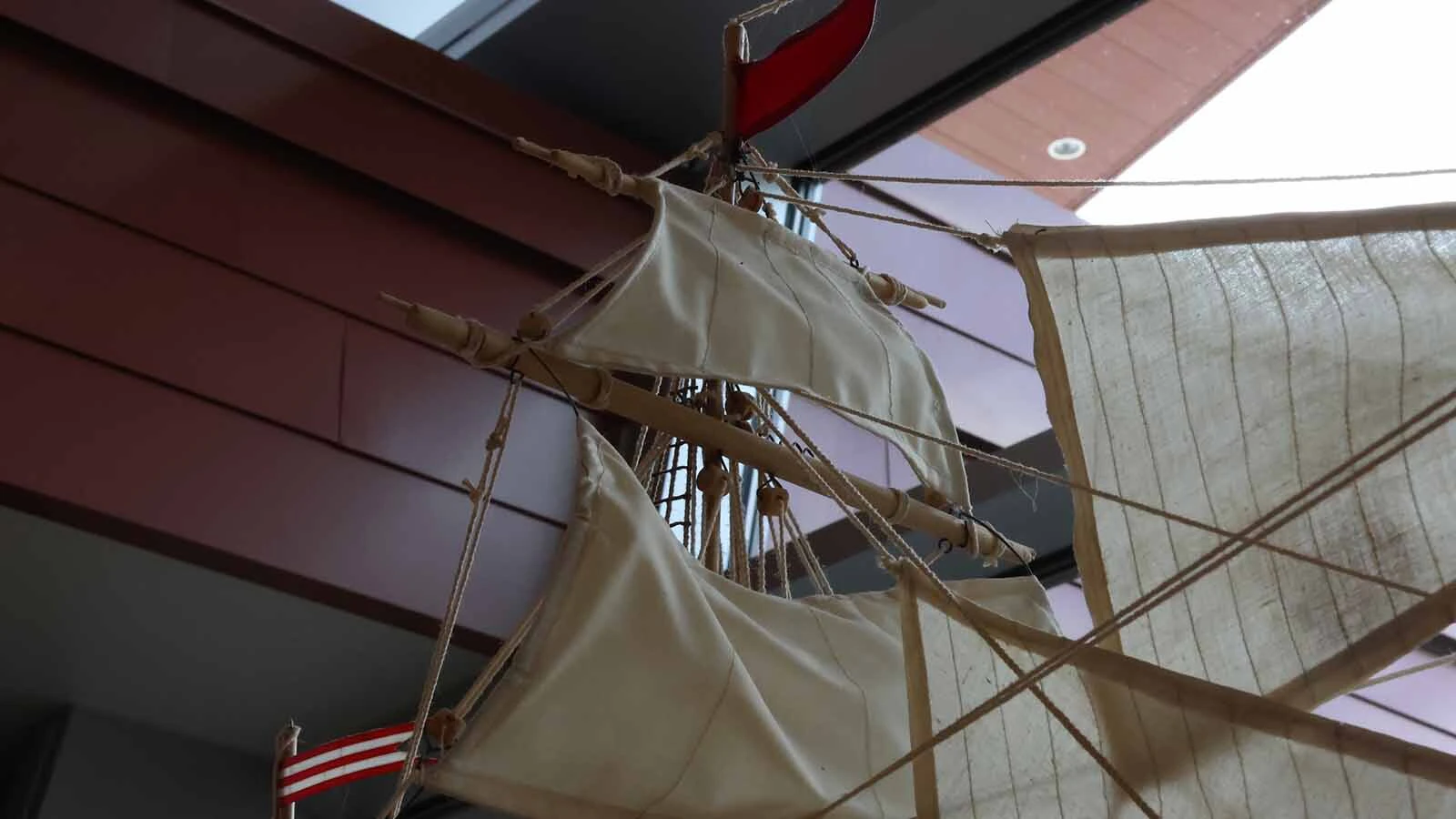
Carl Lenz made the sails and depicted them with wind blowing from behind. (Dale Killingbeck, Cowboy State Daily) 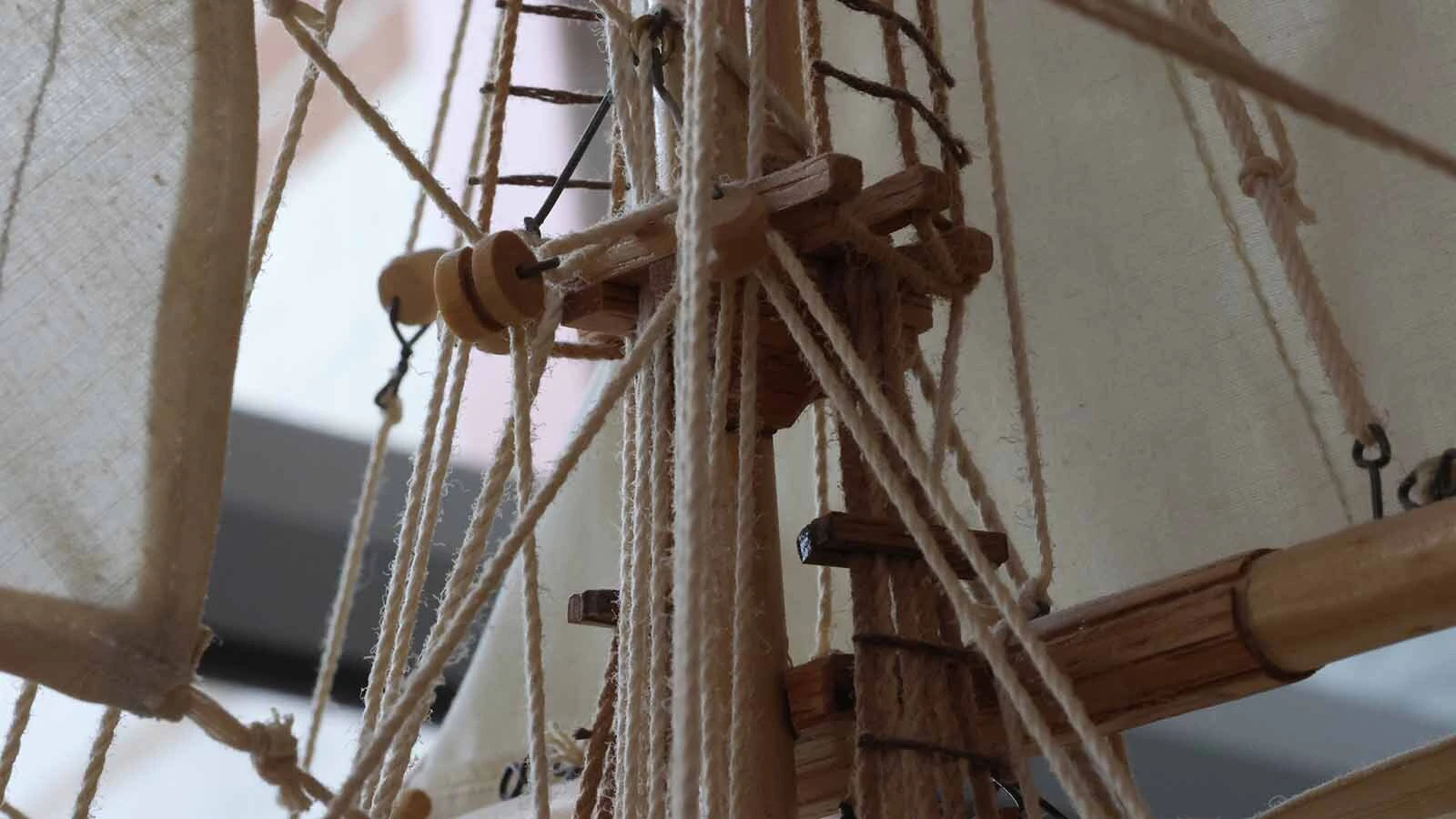
Carl Lenz accurately depicted the mast, lines, and ladders. (Dale Killingbeck, Cowboy State Daily) 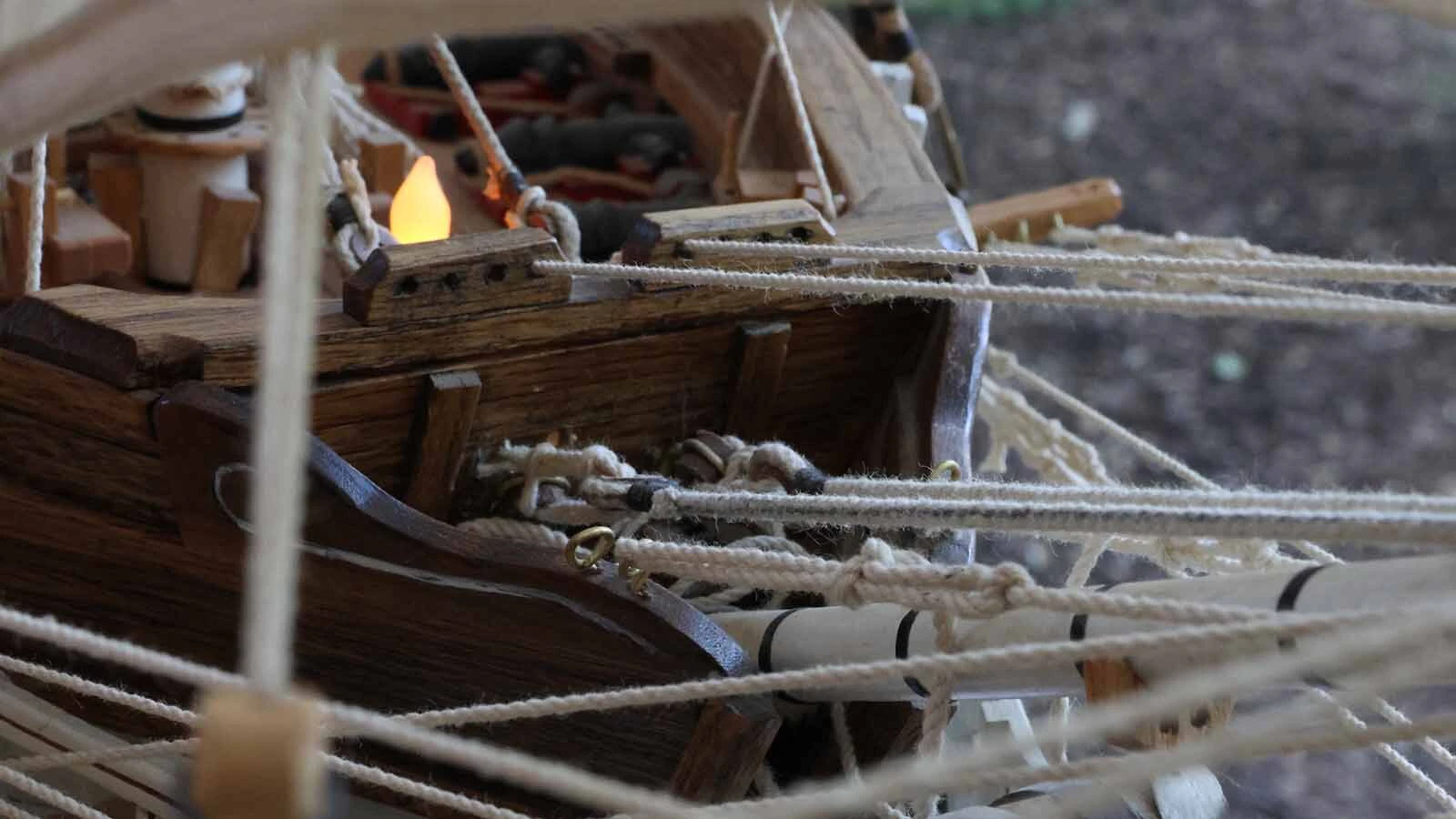
The lines come down into the front of the top deck. (Dale Killingbeck, Cowboy State Daily) 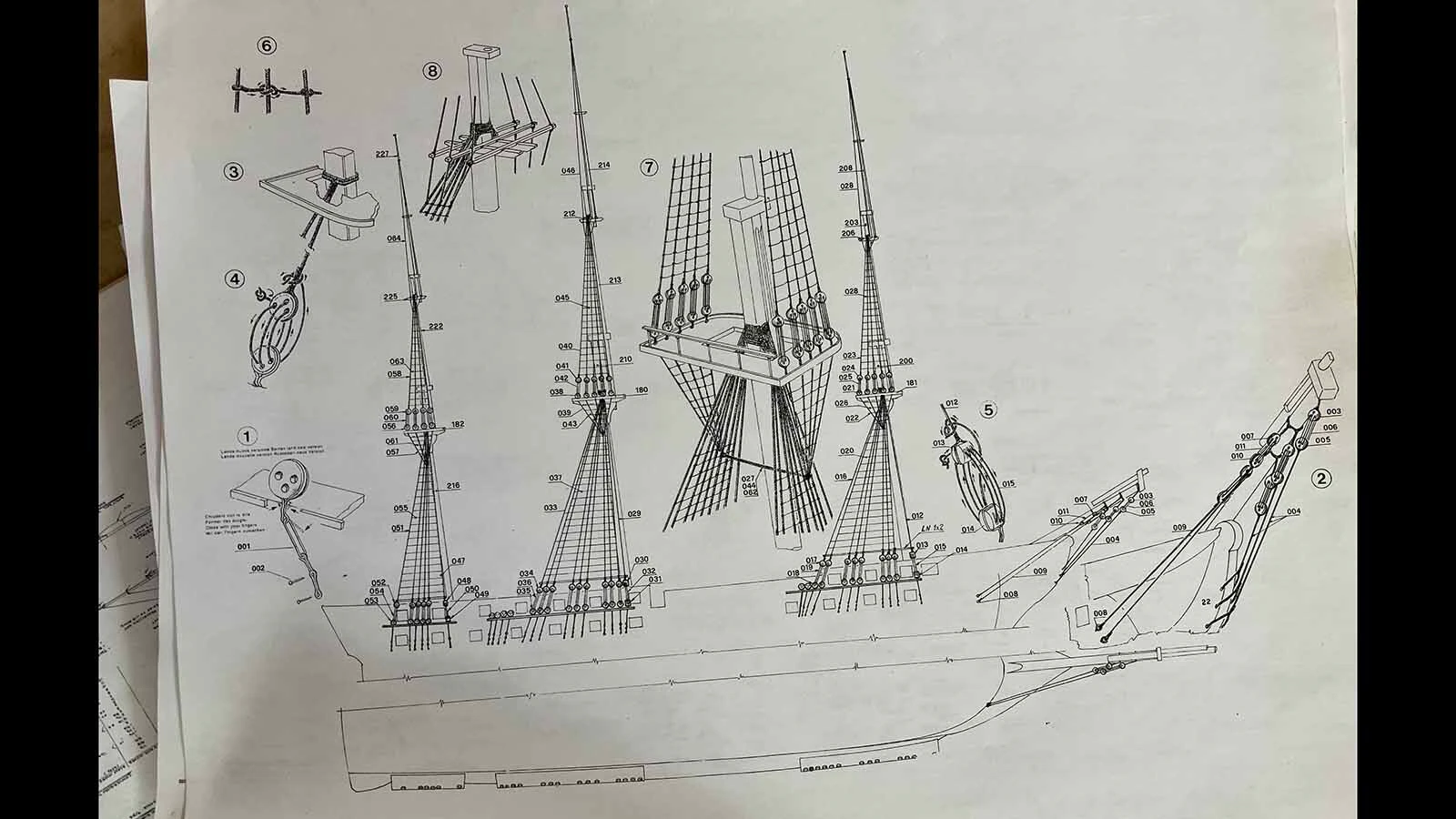
A drawing the Cal Fulfer downloaded from the internet to try and help his friend. Carl Lenz scaled the model himself. (Dale Killingbeck, Cowboy State Daily) 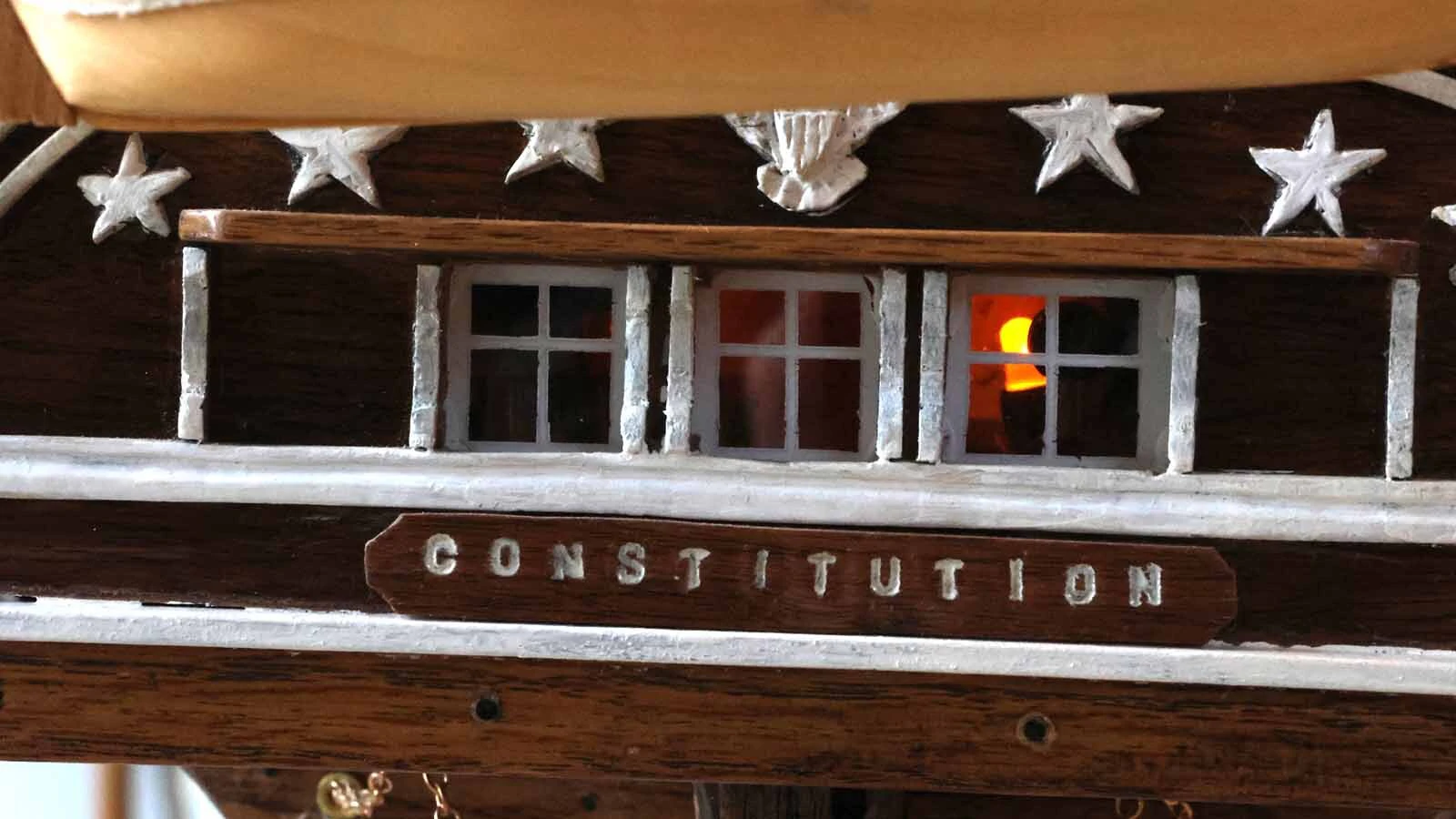
Carl Lenz put furniture inside the captain's cabin. (Dale Killingbeck, Cowboy State Daily) 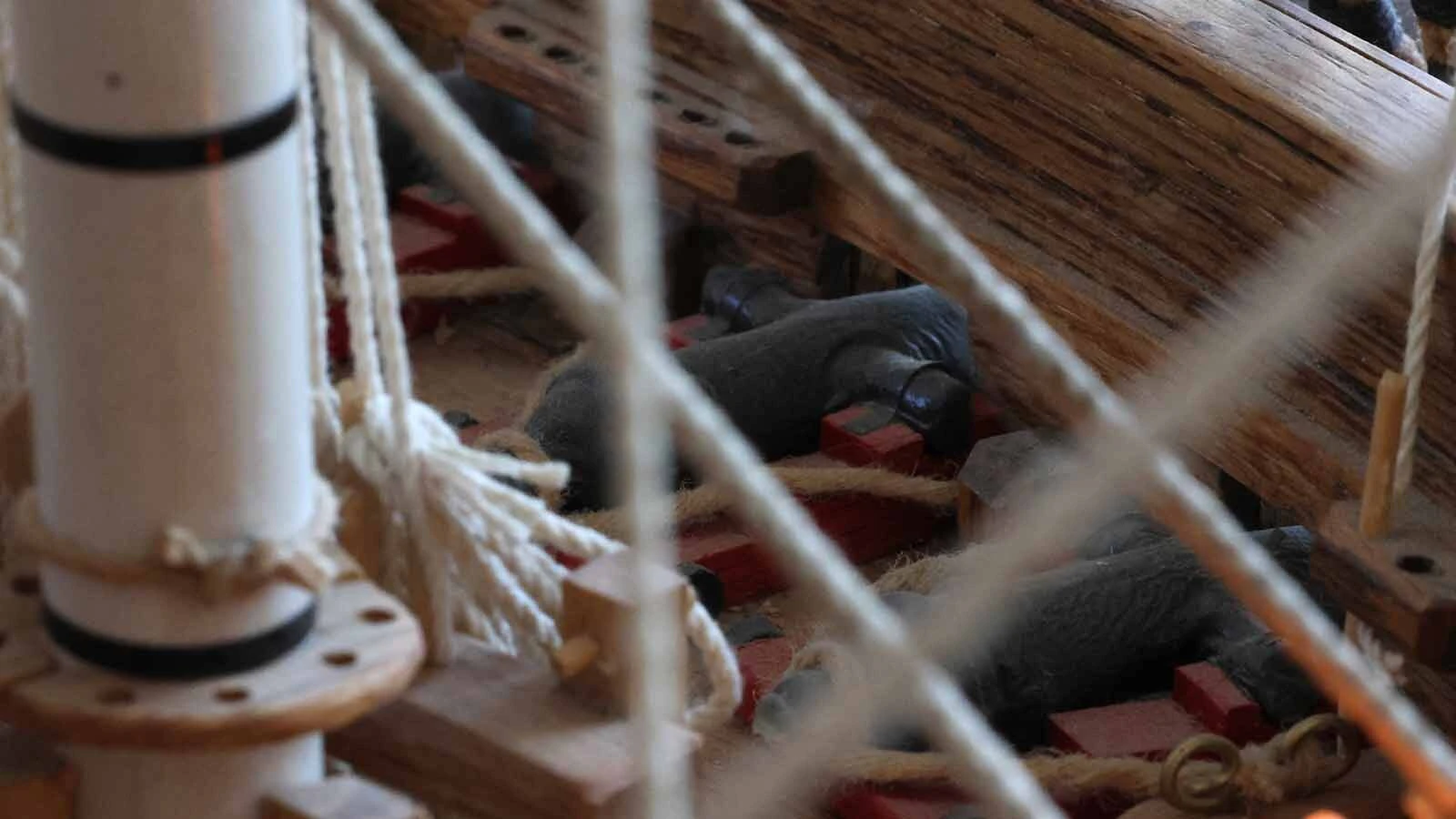
Cannons set in place in the bow, just as in the real ship. (Dale Killingbeck, Cowboy State Daily)
One Model Ship
As far as Fulfer knows the USS Constitution is the only model of a ship that Lenz, who was 71 when he died last October, ever completed, he said. When Lenz was around 65, he just mentioned to Fulfer one day that he was going to “build a replica of Old Ironsides.”
Fulfer said he may have gotten the idea from a YouTube video. He asked Lenz if he had blueprints. His friend told him he did not, but did have a photograph.
Lenz went on Amazon and found a book about the ship that had pictures and some blueprints. He also found a PDF of the ship that had blueprints - but the book and PDF versions were at different scales.
“He transferred it all to his own scale, which is 1/4 inch equals 1 foot,” Fulfer said. “Then he started taking old oak boards and sawing them up.”
Everything on the ship model is exact to the real version. Fulfer said his friend plowed into the project learning nautical jargon, knots, names of the sails and rigging and then when he was about halfway done with the project seemed to lose some interest.
Fulfer said after a few months of inactivity, he told Lenz that the project was “too cool” and that he had to finish it.
“When he got his second wind he really got into the little details,” he said. “He put in the little lights, and if you look inside the captain’s cabin, he’s even go furniture in the room in there.”
All the cannons on the ship were replicated and the rigging was made authentic to the ship. Lenz sewed the sails and at first starched them to try to make them appear full of wind, but later created little bands he placed in them to make them appear full.
Fulfer said the three masts were made in four segments that can be taken apart and bought down, just like the real ship.
The hull of the vessel was made putting every oak rib of ship in place, just like the original that resulted in the nickname Old Ironsides because of its ability to withstand cannon ball blasts.
The anchor hangs off the side of the ship and goes into the interior through a hawse hole. In the back chains are attached to the rudder and on deck there is the double steering wheel with rope in the middle going down through holes in the deck to a mechanism connected to the rudder.
Two-Year Project
Fulfer said Lenz thought about doing a cutaway of the ship to allow people to see the inside and then changed his mind. He also once thought about installing some servos on it with a motor and taking it down to the Boysen Reservoir, which Fulfer recommended against.
The entire project took about two years.
While the ship display will be replaced at the Worland museum in the near future, communication has gone out to other museums in the state to seek out interest for a temporary display at their facilities.
Fulfer said the ship’s size requires a little trailer for him to haul it around.
He misses his friend, especially on days when he could use mechanical help his rotor tiller’s carburetor or advice on how to accomplish an art idea. Fulfer remembers about 10 years ago he was trying to create art pieces using parts from old typewriters and adding machines and arranging them into fossil-like art creatures.
But he couldn’t figure out how to do it.
Lenz showed up at this house and watched his friend’s effort. The next day he reappeared with a frame he built out of walnut wood. He gave Lenz orders on how to create the art by filling the frame with sand, arranging his “fossil” shape and then pouring the back with cement. When the cement hardened, he just picked it up and poured the sand out.d
“He invented the process for me right there,” Fulfer said. “I’ve made dozens of them and I’ve got them in shops in Aspen and sold dozens and dozens. … He just looked at the problem and figured it out just like that.”
Contact Dale Killingbeck at dale@cowboystatedaily.com
Dale Killingbeck can be reached at dale@cowboystatedaily.com.


