
One is tempted to compare the mercurial life of David Daniel Dare, a 19th-century Cheyenne businessman who lived in mansions and opulent hotels throughout his career, with disgraced New York financier Bernie Madoff.
Like Madoff, Dare was a con man who was never what he appeared to be. Both men built their fortunes on other people’s money, and while Dare’s crimes may have swindled his victims of hundreds of thousands of dollars, Madoff’s payoff was worth billions before everything went to hell.
But in addition to the size of their financial hauls, and the fact that their damaging misadventures drove others to suicide, there is another substantial difference in their lives.
Madoff eventually paid for his crimes: He was sentenced to 150 years in federal prison.
Dare never did. He was always one step ahead of the law and managed to escape detection of schemes similar to those that ruined Madoff’s life.
While Madoff’s legacy is definitely a “rise and fall” tale, Dare never actually fell.
Unless you count the fact that he ended up on the other side of the world from Wyoming, holding jobs he must have felt beneath him under an assumed name, as a failure.
Dare never spent a day behind bars.
Always On The Move
Dare was born in Pennsylvania in 1847. He made his way to Cheyenne in 1874 and took a job as a city postman.
The 27-year-old didn't stay at the job long. He became a sign painter, opened a photography studio, bought a pharmacy and then a hardware store, and eventually started Cheyenne National Bank.
Dare had no previous experience at any of these trades. Yet all were successful, and paved the way for his financial success.
At least it appeared that way.
Dare married Florence Adele Cronkleton on Dec. 10, 1879. She hated her given name and the Ohio native instead went by Della.
Three years later, Dare formed a partnership with J.W. Collins, a cashier at the city’s only bank, and together they created Cheyenne National.
In September 1883 the partners sold one of their Cheyenne stores and Dare moved to San Antonio, Texas, to purchase an art store that sold oil paintings, steel engravings and photogravures. While in the city he stayed at the Menger Hotel, one of the most elegant and luxurious lodgings in the south Texas city.
In April 1884, Dare returned to Cheyenne. The Dares lived for a while in a Victorian cottage on West 18th Street that had served as the Territorial Governor’s Mansion during the term of Gov. William Hale.
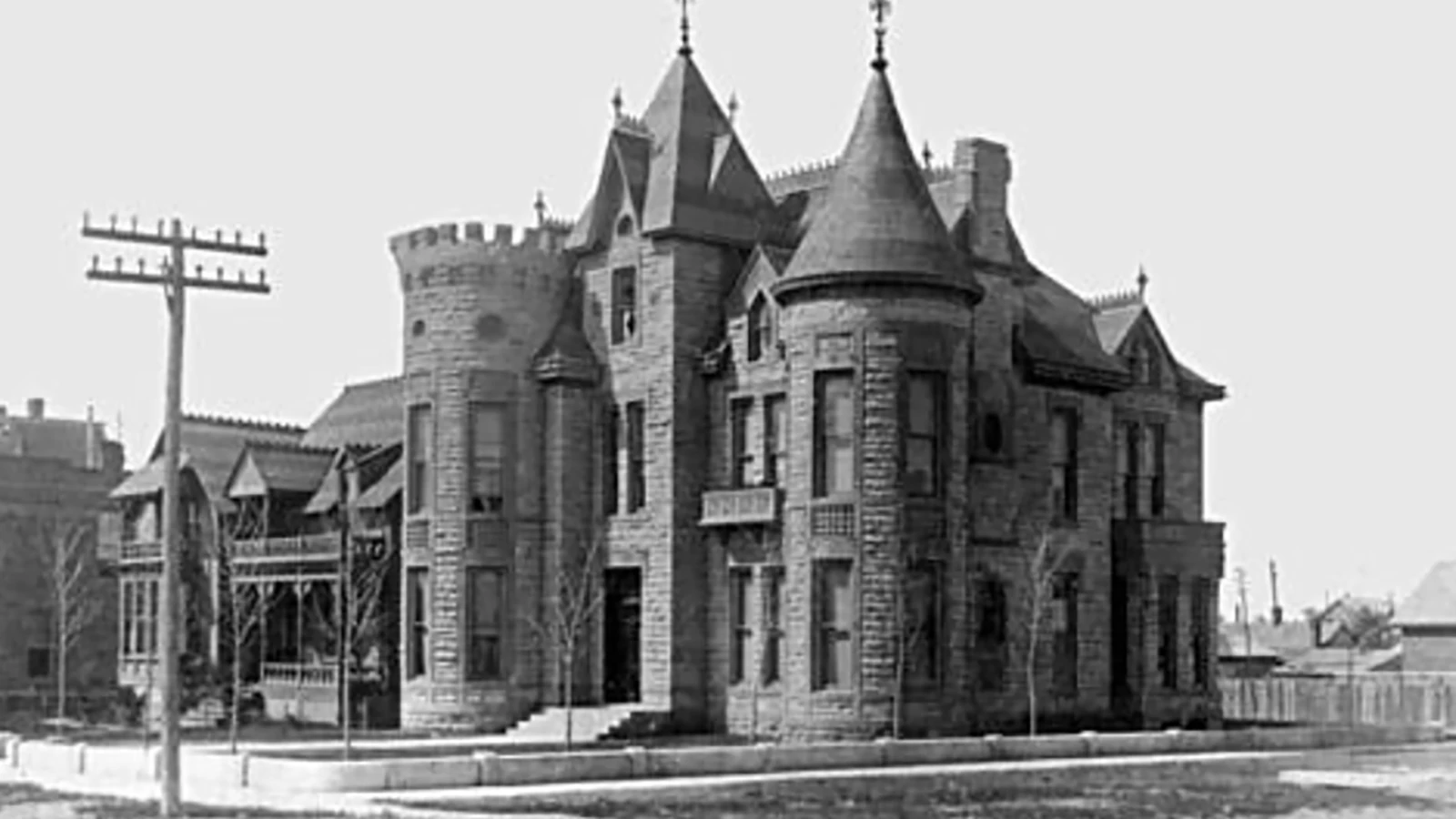
The home had a marble fireplace and a fountain on the lawn, but Dare had visions of a much finer house. He obtained one that was being built by millionaire cattle baron Alexander Swan as a wedding gift for his daughter.
Swan owned a huge cattle ranch near Chugwater, but his business was wiped out during the blizzard of 1886-1887 and he had to sell his daughter’s mansion before it was completed.
Building Castle Dare
Dare bought the place that would become known as “Castle Dare” for $29,000. Today's equivalent would be more than $1 million. Collins arranged for the bank to loan Dare the money.
The castle was worth every penny by the time it was finished, although it was never known if contractor R.W. Bradley was actually paid for his work. It changed hands several times over the next few years.
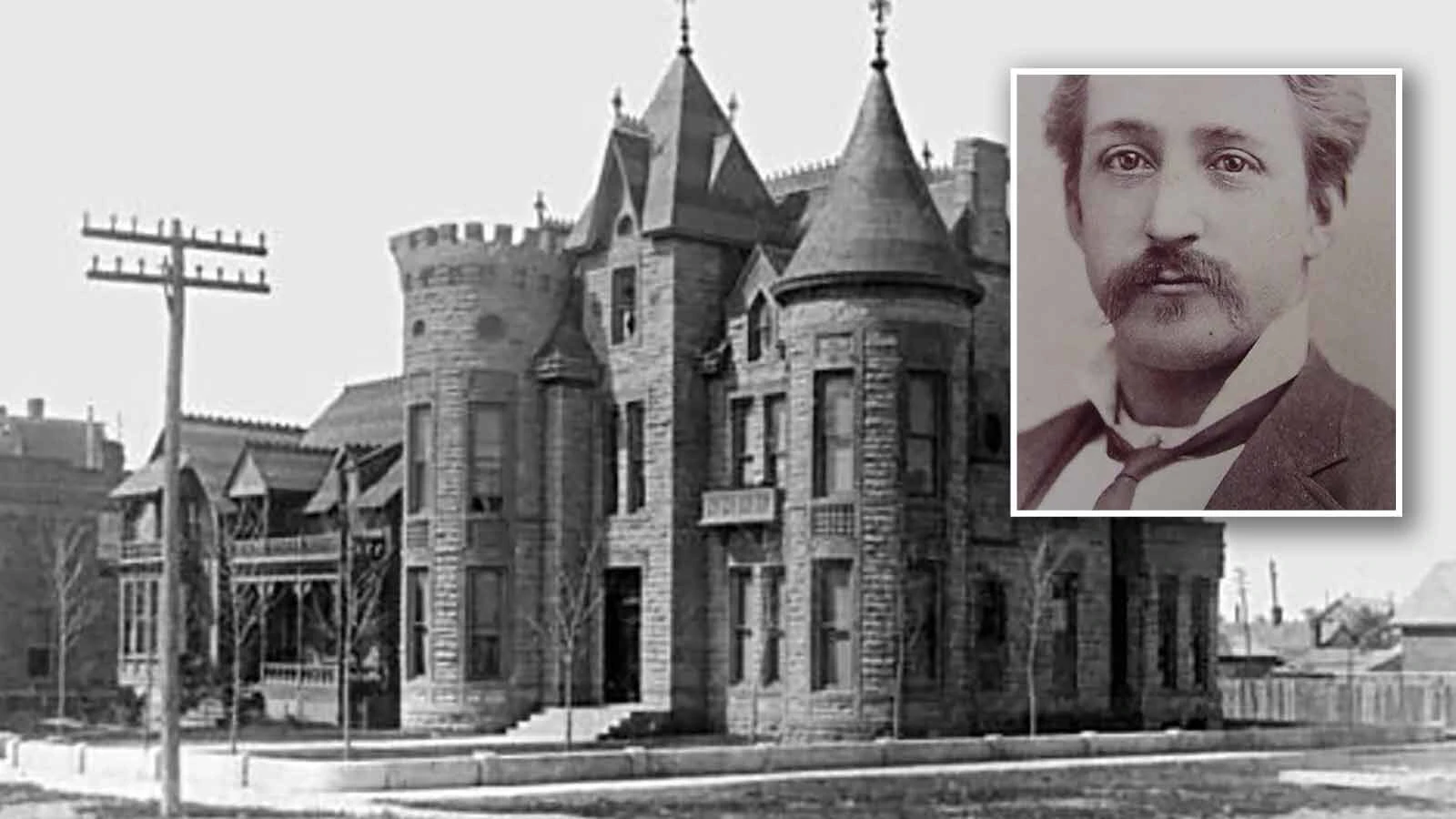
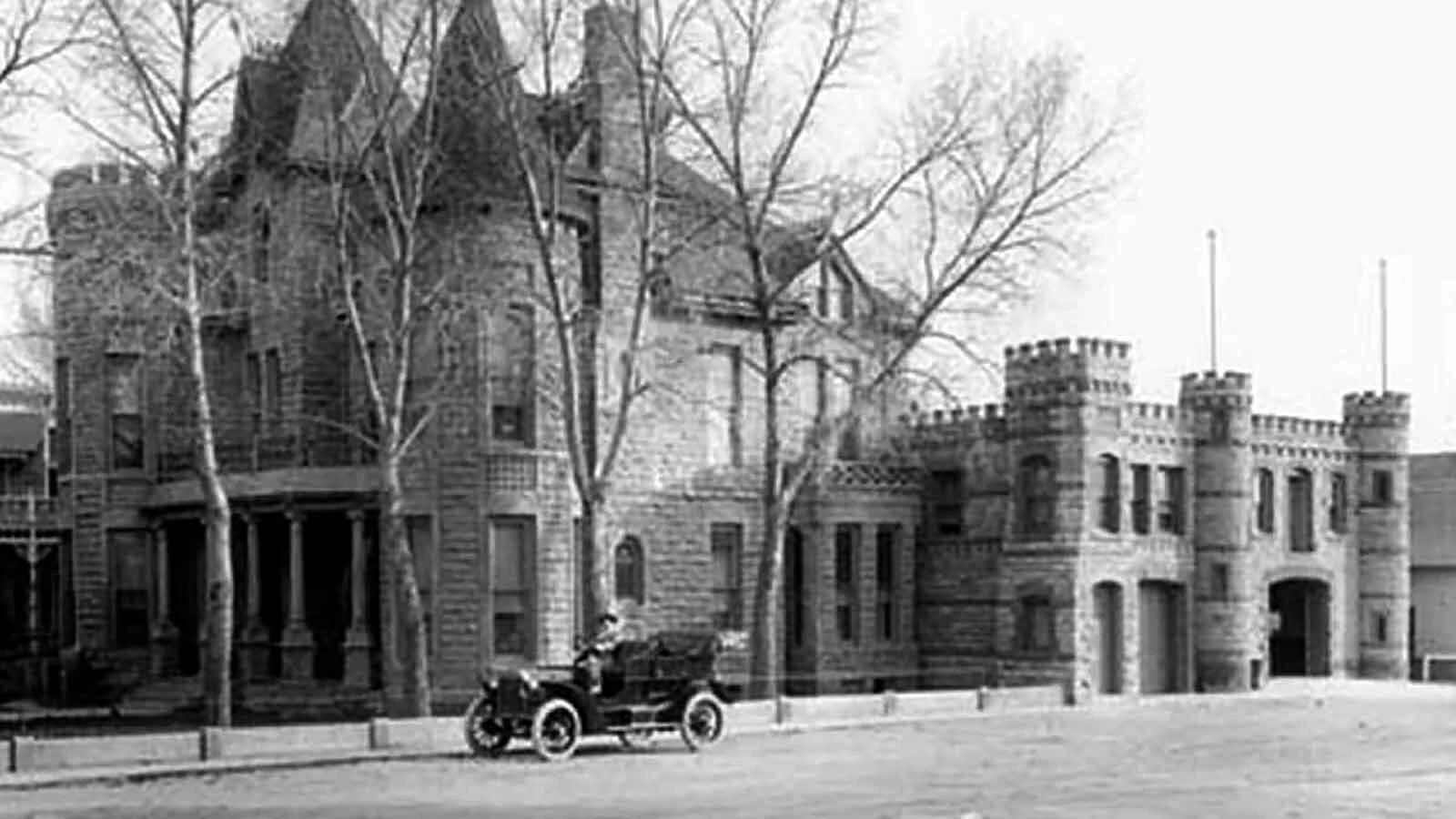
Castle Dare was quite the home. It had turrets rising to slender cones, fancy bay windows, and mansard roofs swooping and crowned with lacy ironwork.
The roof had ornamentally laid shingles and scattered stained glass. The castle’s interior was done in rich mahogany, and it featured two parlors, a music room and a library.
But what was considered over-the-top in a city that had a “Millionaires Row” was that it had not one, not two, but three bathrooms with marble-topped sinks. This was at a time when a single indoor bathroom was becoming the accepted norm across the nation.
On to California
By the end of 1887, Dare had severed most of his business connections to Cheyenne and made his way to San Diego, where he opened California National Bank with Collins. The Dares moved into the Brewster Hotel, which wasn’t nearly as lavish as Castle Dare but still posh.
In a series of convoluted business transactions, Dare sold his Cheyenne home in December 1889 to Charles Barber of San Diego for the sum of “one dollar and other valuable considerations." A few days later, Barber sold it to Dare’s wife, Della.
In December, the Dares sold the castle to Jesse Shepard, a flamboyant poet and pianist who once played for a Russian czar during a trip to that country, for $25,000. David Dare then bought Shepard’s Villa Montezuma in San Diego for $29,000; a man named W.E. High was also involved in the deal in an unknown manner.
Villa Montezuma was definitely a step up from the Brewster Hotel. It had an onion dome tower with Palladian windows, some Second Empire woodwork, a second turret and lots of stained glass specially designed by a San Francisco company.
The same month Dare bought it, the San Diego Sun gushed that it was “the most ornately furnished and artistically furnished house in the city … itself a museum.” Which is what it is today: the home of the San Diego Historical Society.
Here’s where things get stranger yet. In March 1891, Shepard sold Castle Dare to the aforementioned W.E. High of San Diego. High sold it to E.J. Swayne, and the castle came under the control of Charles W. Riner in a receivership. It then reverted back to R.W. Bradley, the original contractor.
Only two months after Dare purchased Villa Montezuma, he sold it to H.P. Palmerston of Spokane Falls, Washington, for $29,000, the same amount he paid Shepard for it.
A Second Castle
Five months later, Dare started construction on another mansion in San Diego that was essentially a replica of Castle Dare in Cheyenne. It was made of stone from the basement to the top of the tower and had 16 rooms, including a parlor, library, kitchen and dining hall finished in oak with cove ceilings and brackets down the four corners displaying carvings of California fauna.
There were balconies on the east and west sides and a large porte-cochere in the rear. One bedroom was done in bird's-eye maple with a canopy top mantle containing five mirrors.
In this version, though, the new castle only had two bathrooms, which proves that even rich California bankers have to cut corners somewhere.
But how did Dare get the money to start the California Bank? In his unpublished memoirs, Herbert C. Hensley wrote that Collins arrived in San Diego with $15,000 and Dare with $8,000.
“The balance of the capital needed for their new enterprise [was] supplied by eastern people won over by the persuasive arts of the two,” wrote Hensley. He added that Dare and Collins “both had an uncanny knack of influencing people and in time obtained the use of considerable capital.”
William H. Barton, in a 1979 article published in the Annals of Wyoming, speculated about their motives: “The possibility exists that the two men never intended the bank to be an honest, permanent institution, but only a means to their ends.”
In July 1890 Collins, who had moved to San Diego, became president of Cheyenne National Bank, a position he also held at the California institution. At the latter, Dare served as the first vice president.
In early 1891 David and Della Dare left for Europe, but told people in San Diego that they were traveling to the East Coast for the banker’s health.
Before the Dares left, he transferred ownership of his new mansion to John H. Gay in exchange for 905 acres of Linda Vista Mesa land. According to Barton, a few days before that transaction Dare transferred 105 acres of San Diego County land to his mother-in-law, Mary Cronkleton, for “one dollar and other valuable considerations."
By late 1891, the Dares had taken up residence at the elaborate Alexander the Great Hotel in Athens, Greece.
Back in San Diego, things were unraveling for Collins at the bank when a sight draft for $10,000 could not be met. Suspicious, San Diego's mayor unsuccessfully tried to withdraw $45,000 in city funds from the bank. Another $52,000 in county money had also disappeared.
The bank supposedly had $1.5 million in assets and over $135,000 on hand to meet sight demands of individual depositors, who had a combined total of $865,000 in their accounts.
A bank examiner discovered that $200,000 was unaccounted for. Coincidentally, of course, that’s the amount Dare brought with him to Athens.
Financial Ruin In Cheyenne
A Cheyenne newspaper reported the demise of California Bank without mentioning that it was connected to the Cheyenne National Bank through Collins. But the following day there were bold headlines exposing the fact that Collins’ home institution in California had failed, and the repercussions in Cheyenne were swift.
A run on the capital city bank began at 10 a.m. the next day. The $35,000 the bank had on hand quickly evaporated as the first depositor in line withdrew $1,000, the next $3,500, and the third $13,000. By 11 a.m. a sign was posted on the bank’s window notifying customers that business was "temporarily suspended.”
George Beard, a cashier at the Cheyenne bank, had a good reputation around town, and the Cheyenne Daily Leader assured its readers that what happened at the bank needn’t worry the community because its future was sound.
On Sunday morning, Oct. 15, 1891, Beard met with bank examiner J.G. Griffiths of Omaha, Nebraska. After a lengthy time at the bank, the two men dined at the Cheyenne Club, with Beard in a somber mood.
Shortly before 10 p.m., Beard said good night to Griffiths and headed to his apartment.
Beard was scheduled to meet his attorney at the bank at 9 a.m., but was a no-show. The attorney learned that Beard did not have breakfast at the Cheyenne Club, which was part of his daily routine.
The lawyer met two people at the bank and the trio headed to Beard’s apartment. There was no response to their knocking so, fearing the worst, they broke out a panel of the door and unlocked it. A large chair had been used to brace the door.
The men found Beard’s lifeless body in the bedroom. They notified the town marshal, who came over with the coroner. They determined that Beard had shot himself in the right temple and his death was instantaneous. He did not leave behind a suicide note, or destroy any personal papers.
It turned out that Beard had authorized a check to Collins for $25,000 with no collateral. Still, he had believed that the California bank was solvent and would bail out its poorer relative in Cheyenne, since Collins was in charge of both.
When he learned the truth, that the empire of Dare and Collins had been a house of cards with little capital, Beard must have seen suicide as his only way out of the mess.
Back in San Diego, Collins was arrested and charged with embezzling $200,000. Concerned for his personal safety at the jail, he was taken to the Brewster Hotel under the watch of a U.S. marshal.
Collins’ bond was set at $50,000, which none of his friends, to his growing consternation after all he had supposedly done for them, would pony up.
The ex-banker was informed that if he didn’t post bail, he would be transferred from the luxurious hotel and taken to jail in Los Angeles.
Collins reportedly told a friend who visited at the hotel that he was “entirely innocent of this dreadful embezzlement charge.”
The friend later quoted Collins to authorities: “What do I have to live for? My property is all gone, my friends gone, my prospects utterly ruined. I am hounded to death and may as well die.”
On March 3, 1892, he lunched with an attorney general who had been dispatched from Washington, D.C., to investigate the bank situation. Collins returned to his rooms to pack for his trip to Los Angeles. He asked the deputy marshal who was guarding him to let him step into the bathroom.
About a minute later, a pistol shot was heard. The deputy marshal and Collins’ attorney rushed in and found him prostrate with blood gushing from his mouth. No one knew where he had obtained the pistol, which was still smoking in his right hand. A physician was summoned, but according to the deputy marshal, he said, “He is beyond all human aid. He is quite dead.”
Or was he? With no evidence to back up the claim — and in fact a mountain of evidence from authorities who witnessed his body being taken from the room — a rumor quickly spread throughout San Diego that Collins had faked his own death. Friends allegedly had whisked him onto a boat so he could join up with Dare in Europe.
Simon Manasse, a San Diego store owner who was born in 1874, was interviewed by a reporter in 1957 about Collins. He claimed, again with no proof, that the body that was buried was a wax dummy, and that the banker “had to escape some way to get his money left in the bank.”
In reality, sometime before his San Diego bank failed, Collins had bought a $65,000 life insurance policy and named the bank as his beneficiary.
What Happened To Dare?
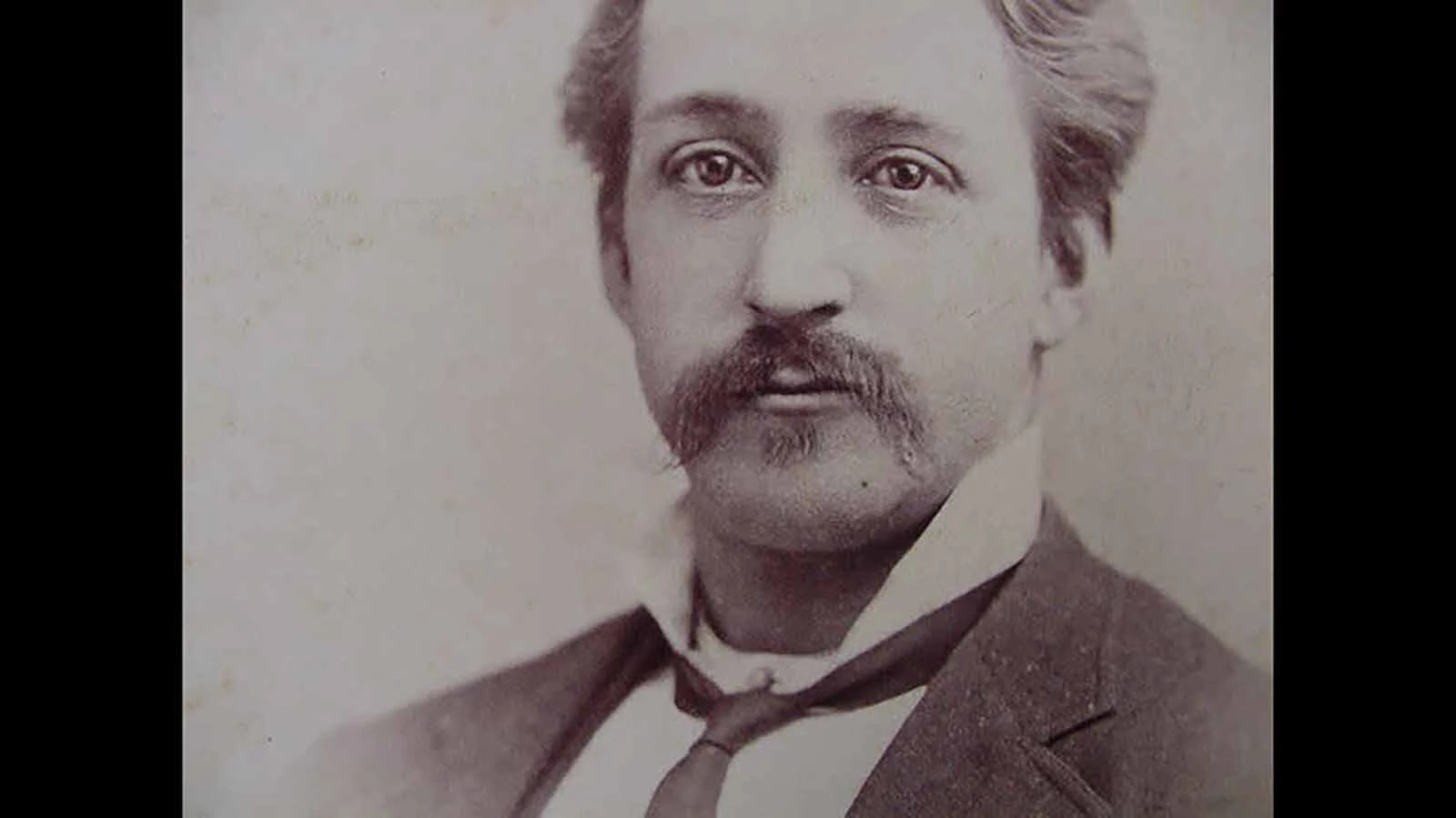
So, whatever happened to Dare, whose theft of $200,000 led to all this misery for scapegoats Collins and Beard and bank customers?
Dare was spotted in Athens selling rugs. He denied being a fugitive from justice, repeating the claim that he left San Diego for health reasons.
Later Dare was seen in Jerusalem, where it was reported that he was involved with the project of a railroad to run from that city to Jericho. In what is now Israel, there was no possibility of extradition to the U.S.
After that, Dare was seen in Alexandria, Egypt. He wore a full beard and had changed his name, but the people who reportedly found him had no doubt it was D.D. Dare. There was no extradition from Egypt, either.
Dare returned to Athens to manage his rug business. Although the date is undetermined, he died and was buried in the city. At the end of his life he had abandoned all of his aliases, and was once again David Dare.
Della Dare returned to America in 1901. Somewhere along the way, she and Dare were formally divorced. She moved to Telluride, Colorado, to live with her parents. Later she remarried, tying the knot with another banker, Otto Brandes. They lived in a Denver bungalow that was described as “comfortable.”
Mrs. Brandes wrote to Edward Capps of the American School of Classical Studies in Athens in 1926, inquiring about what property her former husband left when he died.
Capps responded with a letter that answered her question: Not much, just his house and the goods in his rug store.
In 1933, Della’s second husband died, and was buried in Telluride. She took a third, marrying George A. Stow five years later when she was 76. Stow died too, but there is no record of when or where he was buried.
Unable to care for herself, Della's daughter assisted her until she died in July 1948. According to her neighbor, Barton wrote, Della remembered little about the man who had built her two castles, then whisked her away to Athens to live in anonymity. She had some beautiful possessions, including a parasol, fans, elegant statuary and some large tapestries.
Whatever secrets she had about her exploits with Dare went with Della to her grave.
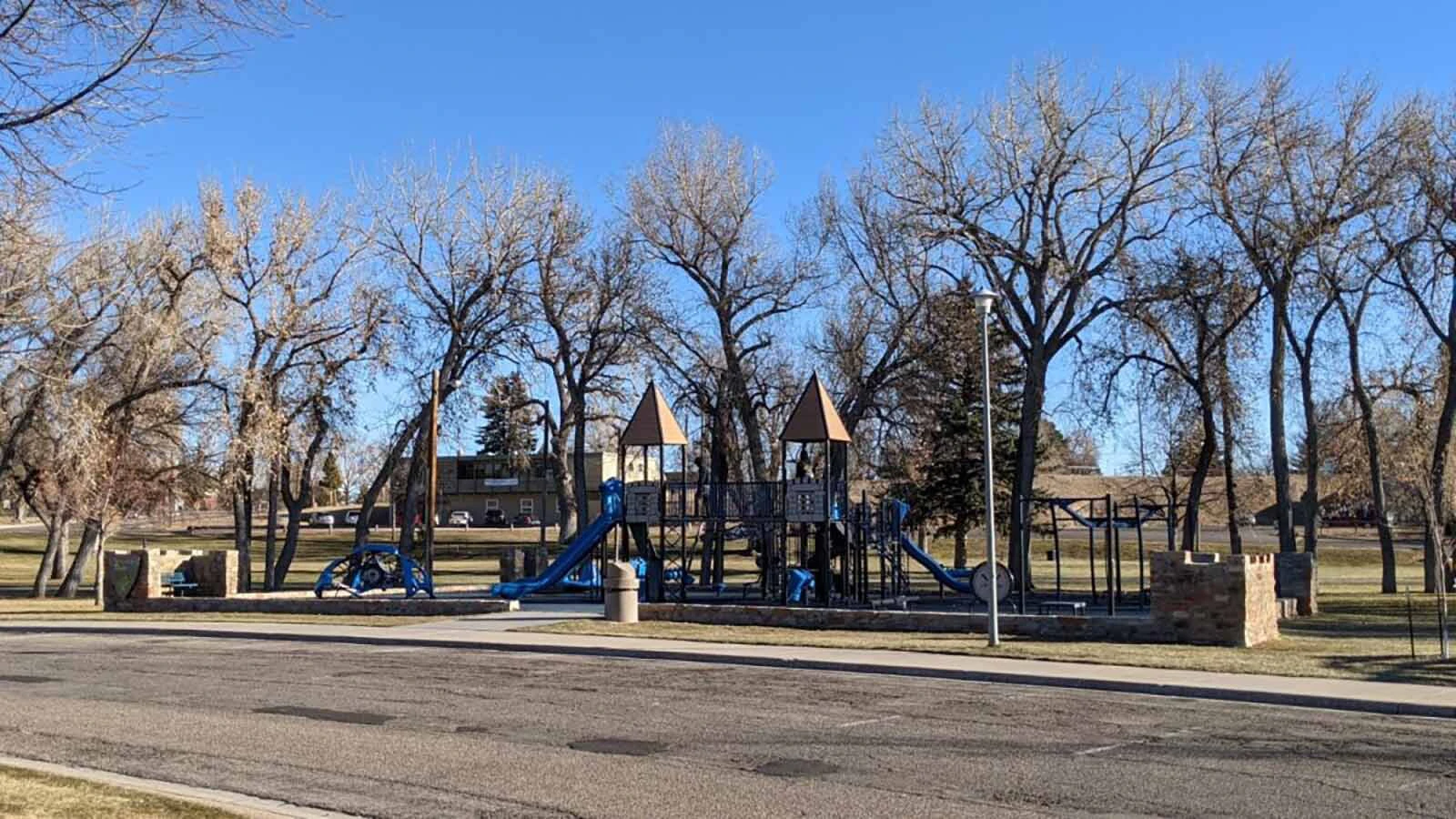
And what became of Castle Dare? It was razed for a parking lot in 1963.


