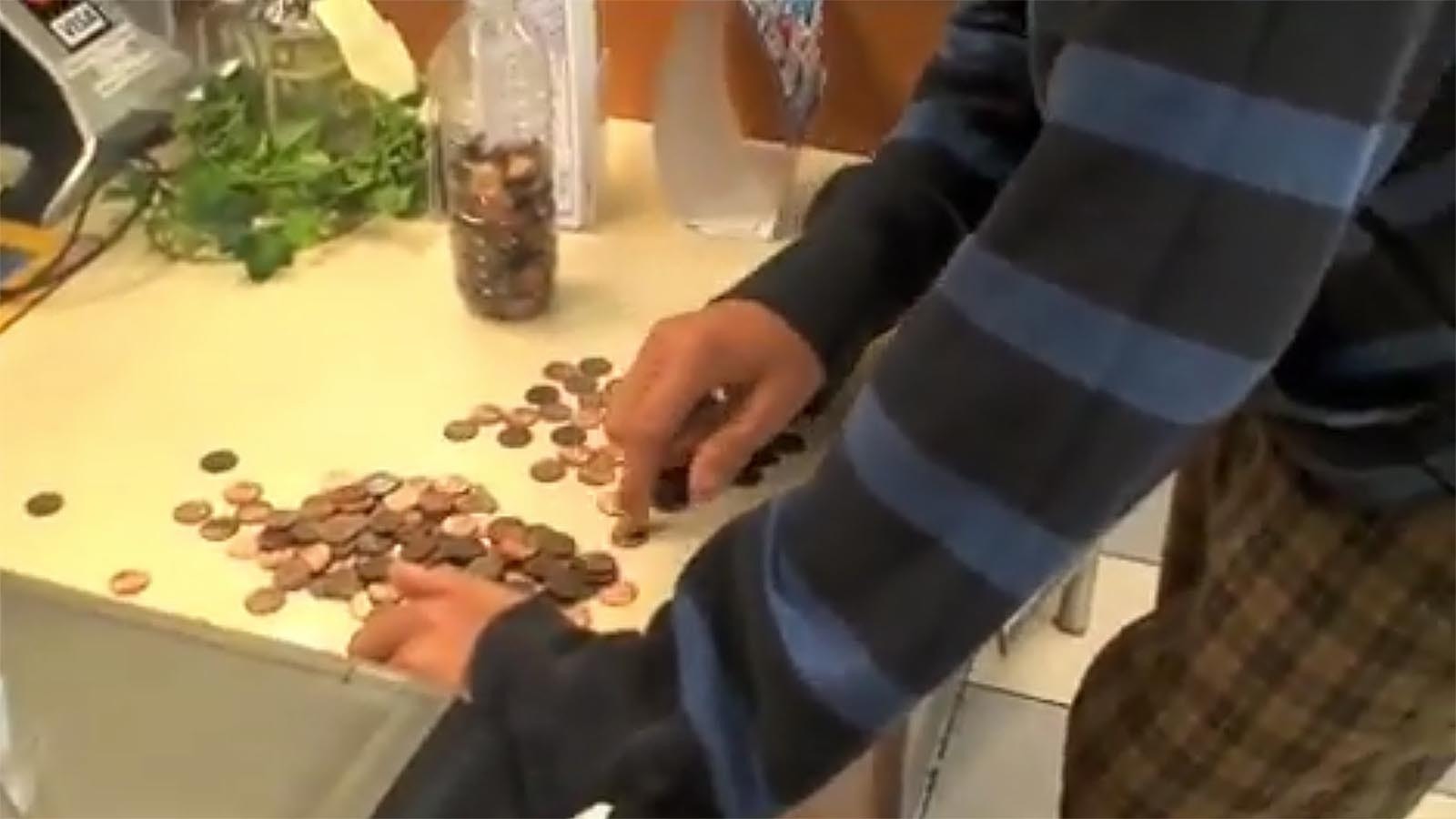
Turns out, the pennies are an issue.
President Donald Trump told the U.S. Treasury to stop making pennies in early 2025. It halted production later that year.
The U.S Mint’s 2024 report showed an $85.3 million price tag to build 3.2 billion pennies – a mint cost of 3.7 cents per coin.
When the penny shortages hit, Wyoming businesses scrambled to adjust.
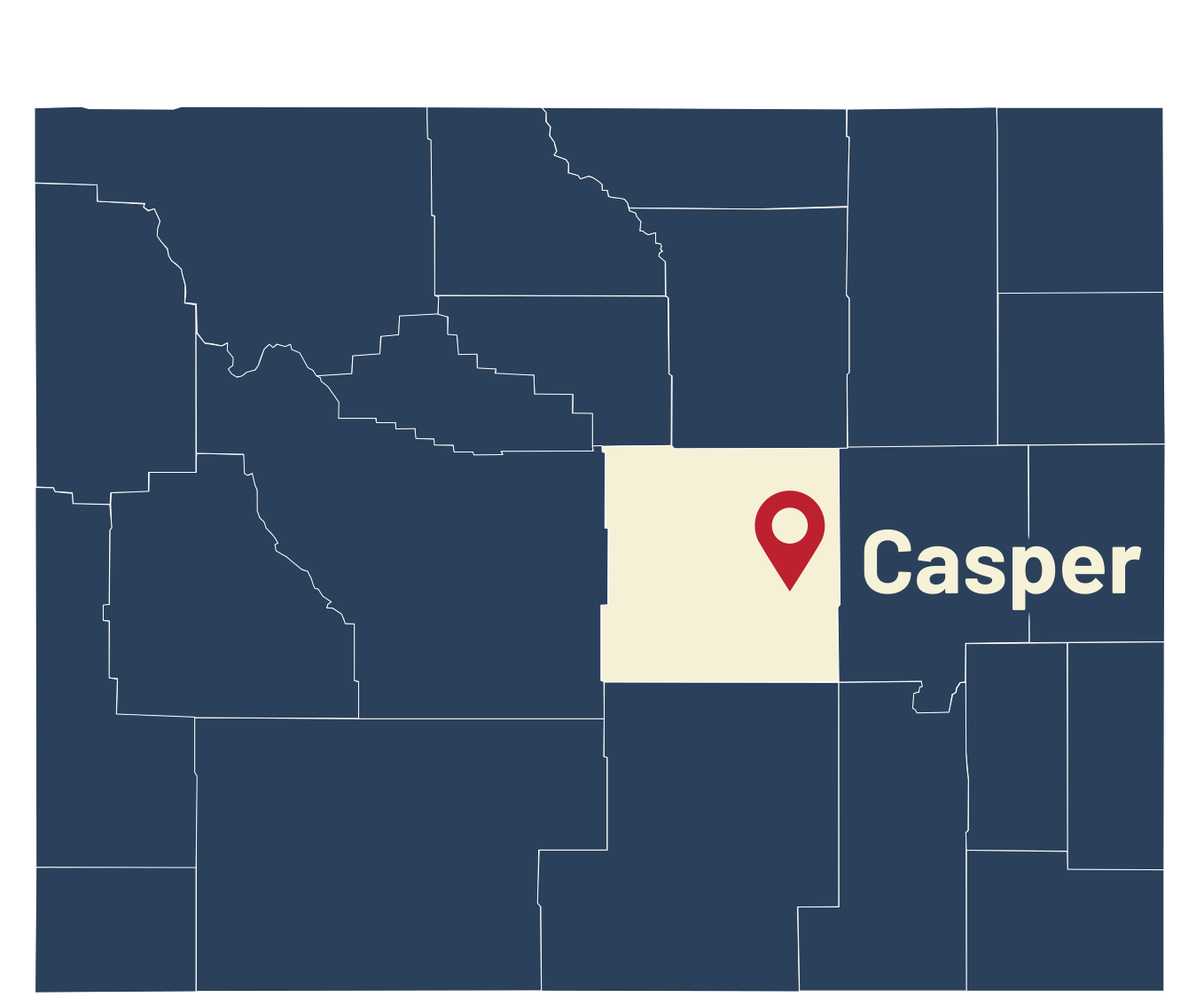
“I’m very confident that a constituent or a business or a retailer in each one of your districts has likely either reached out to me, my staff, or somebody asking for guidance about penny rounding,” Brett Fanning, Wyoming Department of Revenue Director, told the state Legislature’s Joint Revenue Committee in Casper on Tuesday.
The department is seeing impacts, said Fanning.
“Many of you may have noticed if you start going to convenience stores, small mom and pop restaurants, (or) the biggest restaurants you can think of, they've all got signs on there saying, ‘Hey, we're going to round pennies this way or that way,’” he said. “Right now when they call me and they ask, ‘Director, what's your guidance on how to round pennies?’ Can't tell them either way.”
He said the confusion also hits the state Department of Revenue when it tries to give a refund to a vendor who pays taxes in cash.
“We go to the bank several times a week – our bank in Cheyenne says, ‘Sorry. We’re not going to give you any more pennies,’” reflected Fanning. “What’s the Department of Revenue supposed to do now?”
Yin Proposed Rounding Bill
Fanning asked the committee for clarity.
State House Minority Leader Mike Yin, D-Jackson, tried pushing that clarity into law with a bill draft he proposed earlier this year, at the February-through-March legislative session.
Yin gathered a diverse little group of Republicans as co-sponsors: Reps. JT Larson (Rock Springs), Bob Wharff (Evanston) and JD Williams (Lusk), and Sens. Brian Boner (Douglas) and Bill Landen (Casper).
The House did not consider the bill for introduction and it died.
Fanning noted Tuesday that about 20 states have enacted some sort of legislation related to penny-rounding. A couple of those have adopted a “Wild West” approach by which vendors can round however they wish as long as they’re consistent. And if they’re consistent and display their methods, they don’t face liability.
All the states with penny-rounding laws in place have said, “you’ve got to calculate the final tax due first,” said Fanning.
Yin’s bill proposed “symmetrical penny rounding” – a direction Congress is also leaning with the bipartisan Common Sense Act. That bill cleared the U.S. House of Representatives in July and now sits before the U.S. Senate Committee on Banking, Housing and Urban Affairs.
Symmetrical penny rounding would send one- and two-cent-over amounts back down to the flat number. It would send three- and four-cent-over amounts up to the next nickel; and six- and seven-cent overages back down to that same nickel.
Any figure ending eight or nine cents over the dollar would round up to the higher dime.
Grade-School Method
The “grade-school method,” Fanning said, would send the first four-cents-over back down to the flat figure, and the fifth through ninth-cent-over up to the dime.
Some vendors may round everything up or everything down, Fanning added.
“No matter which approach you take, it’s not going to be fair,” he said later. But the symmetrical method impacts everyone the least, he said.
Senate Revenue Chair Troy McKeown, R-Gillette, warned of a human element.
McKeown runs a supermarket chain in Campbell County, his website says.
“You know how hard it’s going to be to train cashiers to do this?” asked McKeown. “I’m lucky to get them to count change back.”
Other lawmakers laughed.
Chris Brown, executive director for the Wyoming Hospitality and Travel Coalition, testified that the group hasn’t taken a stance on one approach, but said restaurants operate on paper-thin margins and a round-down policy would be bad for them.
‘Wild West’ Approach
McKeown indicated that the businesses would handle the “Wild West” approach responsibly because, “If a retailer takes advantage of people for four cents, they’re going to lose business. They’ll get a reputation as rounding up all the time.”
Sen. Cale Case, R-Lander, asked staffers to draft a bill adopting the symmetrical rounding system for Wyoming.
Sen. Bob Ide, R-Casper, asked that the bill apply only to state agencies and let the private sector work through the rounding without government regulation.
Rep. Ann Lucas, R-Cheyenne, asked the bill to include all government agencies, down to cities, towns and local governments.
And Rep. Kevin Campbell, R-Glenrock, asked to include the “safe harbor” provision shielding businesses that adopt a consistent and transparent rounding method from liability.
The committee has another meeting slated for Nov. 19-20, in Cheyenne.
House Committee Chair Rep. Tony Locke, R-Casper, said the committee will discuss the bill draft more then.
This bill draft, if enacted, still could leave a lack of clarity for the Department of Revenue, Yin told Cowboy State Daily in a Wednesday phone interview.
“Little disappointed the bill wasn’t introduced last year, but happy we’re going to deal with it now,” said Yin. He said the Legislature would have had time to address it and should have.
Often when legislators say “last year” they refer to a prior session within this calendar year.
Clair McFarland can be reached at clair@cowboystatedaily.com.